
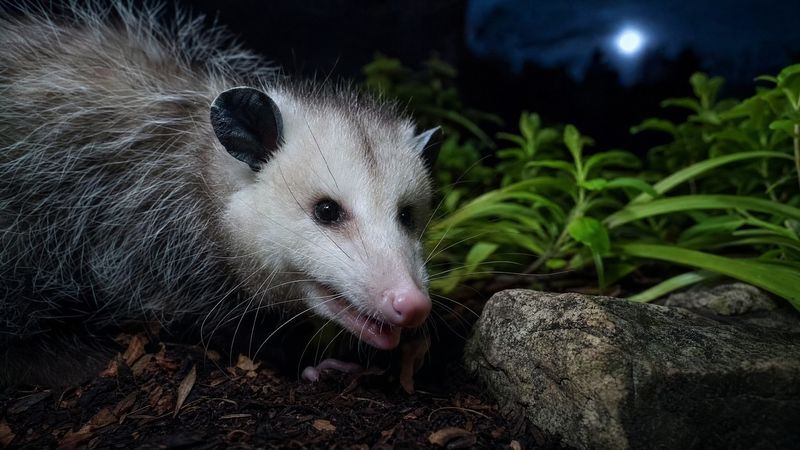
Spotting a possum shuffling through your yard after dark can catch you off guard, especially if it keeps happening night after night. Most of the time, that animal is telling you something useful about what your property is offering after sunset.
Understanding what draws it in gives you a practical starting point, whether you want to reduce visits, protect a structure, or simply know when to leave well enough alone.
A Nighttime Visit Is a Clue, Not a Diagnosis
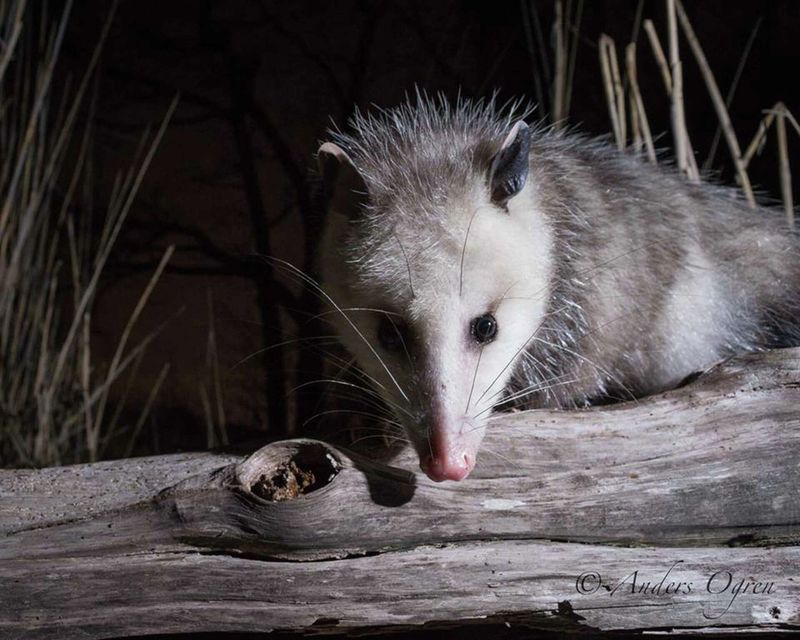
Finding a possum in your yard after dark is less a problem to solve and more a question to answer: what is this property making available right now? Texas Parks and Wildlife guidance on urban wildlife points to food, water, and shelter as the basic reasons wild animals turn up in residential areas.
A single sighting cannot tell you which of those resources mattered most, but it is a reliable signal that at least one of them is accessible.
Some homeowners jump to alarming conclusions when they see an opossum: the yard must have a pest infestation, the soil must be unhealthy, the plants must be struggling, or a drought must be pushing animals in from rural land. None of those explanations follow automatically from one nighttime visit.
Research on urban wildlife use of residential landscapes supports the broader point that opossums move through neighborhoods because yards routinely provide usable habitat, not because a specific crisis has driven them there.
The more useful question is simply: what does my yard make available after dark? That reframe turns a startling encounter into a practical inspection.
Studies on opossum habitat use in urban settings show that these animals respond to a mix of resources and may use a property as a food stop, a sheltered travel route, or a daytime refuge, sometimes all three. Treating the visit as information rather than an indictment of your garden is the most productive place to start.
Why Central Texas Yards Can Work as Opossum Habitat
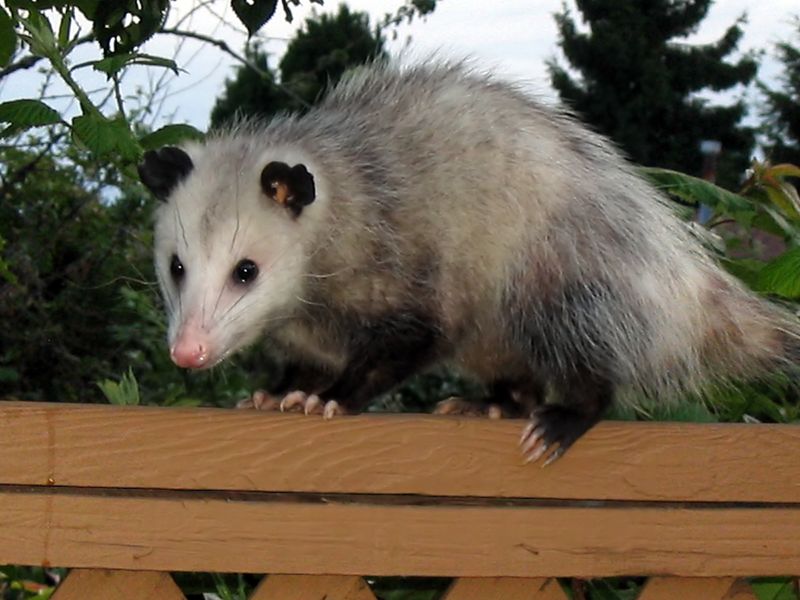
The animal you are most likely seeing is the Virginia opossum, Didelphis virginiana, North America’s only native marsupial. Texas Parks and Wildlife describes it as nocturnal and generally solitary, active after dark, and present throughout most of Texas, with the main range gap in the arid Trans-Pecos and Llano Estacado regions.
If you live in or around Austin, San Antonio, Waco, or the Hill Country, the Virginia opossum is the expected species.
Nighttime movement is completely normal behavior for this animal. A sighting at 10 p.m. or 2 a.m. is not a red flag on its own.
What makes Central Texas yards appealing is their variety: mature oak and pecan trees drop edible mast, creek corridors and drainage easements provide connected travel routes, and the mix of dense older neighborhoods and newer subdivisions means food and shelter can show up within a short foraging radius.
Central Texas is not ecologically uniform, and that matters when you are trying to interpret a visit. A wooded lot near Barton Creek offers very different resources than a flat, recently built subdivision lot in Round Rock or a landscaped quarter-acre in a San Antonio suburb.
USGS backyard biodiversity research confirms that residential yards vary widely in the wildlife habitat they provide, so the clues worth looking for depend on what your specific property actually contains. Dense plantings, old sheds, creek-adjacent fencing, and mature tree canopy all raise a yard’s usefulness to a foraging opossum.
Start the Yard Audit With Easy Food Sources
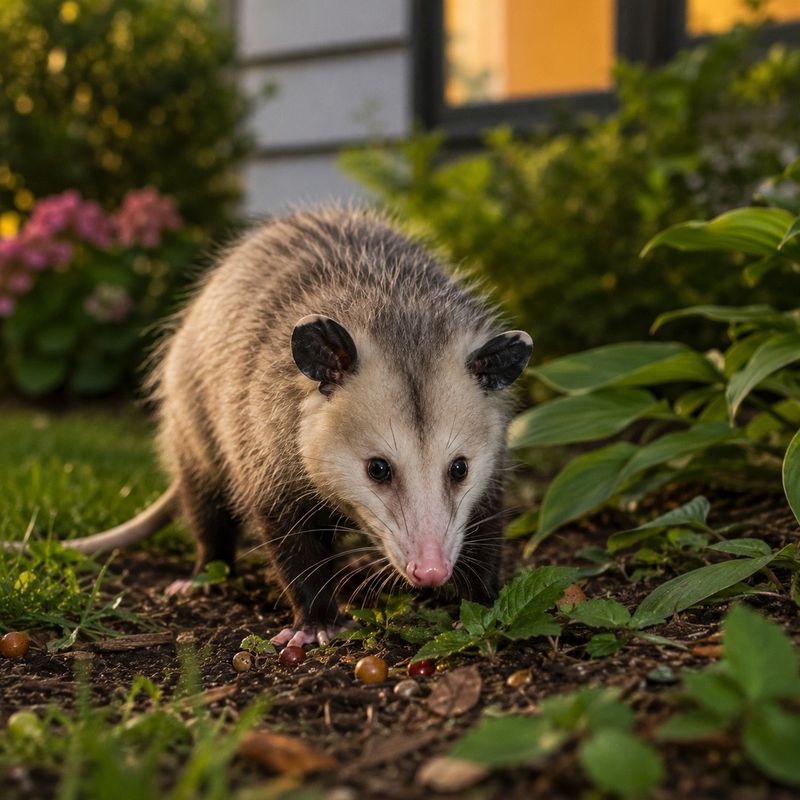
The first thing to check is the simplest: anything edible left outside after dark. Texas A&M AgriLife Extension specifically names pet food, fallen fruit, pecans, bird-feeder seed, and unsecured garbage as the most common attractants for opossums in residential settings.
Walk your yard at dusk and look at it the way a foraging animal would.
Outdoor dog and cat bowls are among the easiest fixes on the list. A bowl of kibble left on the porch from dinnertime is essentially an open invitation, and because opossums are omnivores, they will take advantage of it without hesitation.
Birdseed scattered beneath a feeder is a close second, especially after a windy day when seed has spread across a wider area of ground.
Fruit trees deserve a close look too. Figs, persimmons, plums, and mulberries are common in Central Texas yards, and ripe or overripe fruit on the ground is one of the more reliable food draws through late summer and fall.
Pecan trees, which are widespread across the region, drop mast that attracts a range of wildlife, opossums included. Picking up fallen fruit every day or two can make a noticeable difference.
Natural food sources are harder to control. TPWD notes that opossums eat insects, invertebrates, and other naturally occurring prey, so a yard with healthy soil, leaf litter, and dense ground cover may attract foraging even after all human-supplied food has been removed.
That does not mean the yard has a pest problem. It means the habitat itself is functional, and the opossum is simply using it the way it was built to use any productive patch of land.
Shelter and Water May Matter as Much as Food
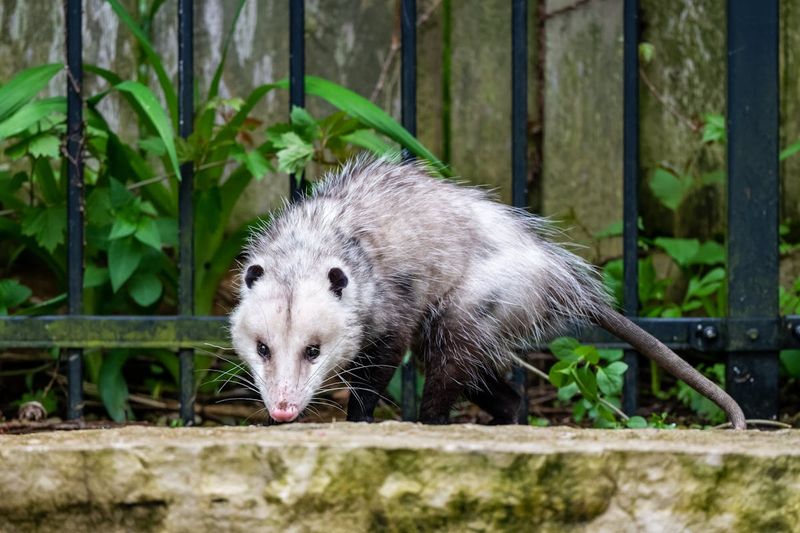
After checking for food, the next step is to look at what your yard offers in the way of cover and protected space. TPWD lists woodpiles, rock piles, hollow trees, sheds, attics, crawl spaces, decks, porches, and abandoned burrows as places opossums commonly use for daytime shelter.
Any of these can make a yard attractive even when no obvious food source is present, because a safe place to rest is a resource in its own right.
Spend a few minutes checking the perimeter of any outbuilding, the gap beneath your deck or back porch, and any stacked material that has sat undisturbed for a while. Opossums do not dig their own burrows but will readily move into a space that already exists.
A gap in lattice skirting, an unsecured shed door, or a low opening beneath a concrete slab can all serve as an entry point to a sheltered spot the animal may return to each day.
Water is worth considering as a possible draw, though it should not be assumed to be the primary reason for a visit. Texas Parks and Wildlife’s urban wildlife guidance treats water as one of the basic habitat requirements alongside food and shelter.
A birdbath, a leaky hose bib, a low spot that holds rainwater, or a decorative pond can all provide a drinking stop. During dry stretches, that may add to a yard’s appeal, but TPWD has cautioned against assuming that wildlife is simply migrating into neighborhoods in search of water during drought.
A single sighting is not evidence of drought stress.
A sheltered travel route can also be enough on its own. If your yard connects two wooded areas, runs along a creek corridor, or sits between a greenbelt and a neighborhood with food sources, the opossum may simply be passing through rather than settling in.
Remove Attractants Before Trying to Remove the Animal
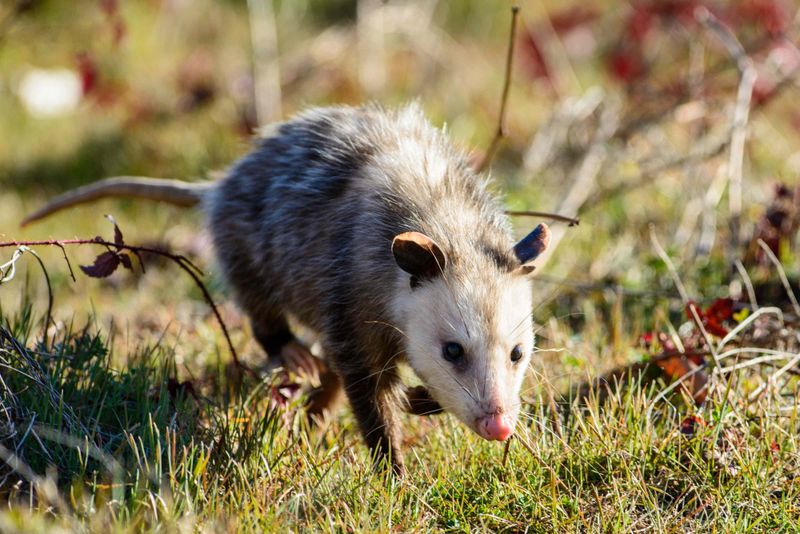
Once you have identified what your yard is offering, the most effective first response is to make it less convenient, not to chase the animal away. Bringing pet food and water bowls indoors before dark is one of the quickest changes you can make.
USDA APHIS recommends keeping pet food and water inside at night and using trash cans with tight-fitting lids as basic steps to reduce wildlife visits across the board.
Garbage and compost deserve attention too. Opossums can work open a loosely covered bin or nose through an exposed compost pile with little effort.
A locking lid or a bungee cord across the top of a trash can costs almost nothing and removes one of the most reliable food draws in a residential yard. Compost bins should be fully enclosed, not open-topped, if wildlife access is a concern.
Feeding the opossum directly is a path that tends to create more problems than it solves. TPWD advises against feeding opossums because regular handouts can reduce an animal’s natural wariness around people, increase the frequency and boldness of visits, and raise the chances of a conflict.
Leaving out cat food, building a den box, or maintaining any kind of regular feeding station is not a low-conflict option, even if the animal seems calm and harmless.
For an opossum that is simply passing through the yard at night without entering any structure, Texas A&M AgriLife Extension identifies attractant removal and habitat modification as the most practical responses. Securing food, picking up fallen fruit every day or two, reducing spilled birdseed, and keeping pets away from wildlife at night is usually enough to discourage repeat visits over time.
Coexistence with a passing wild neighbor is often the lowest-effort, lowest-conflict outcome available.
Use Exclusion When an Opossum Enters a Structure
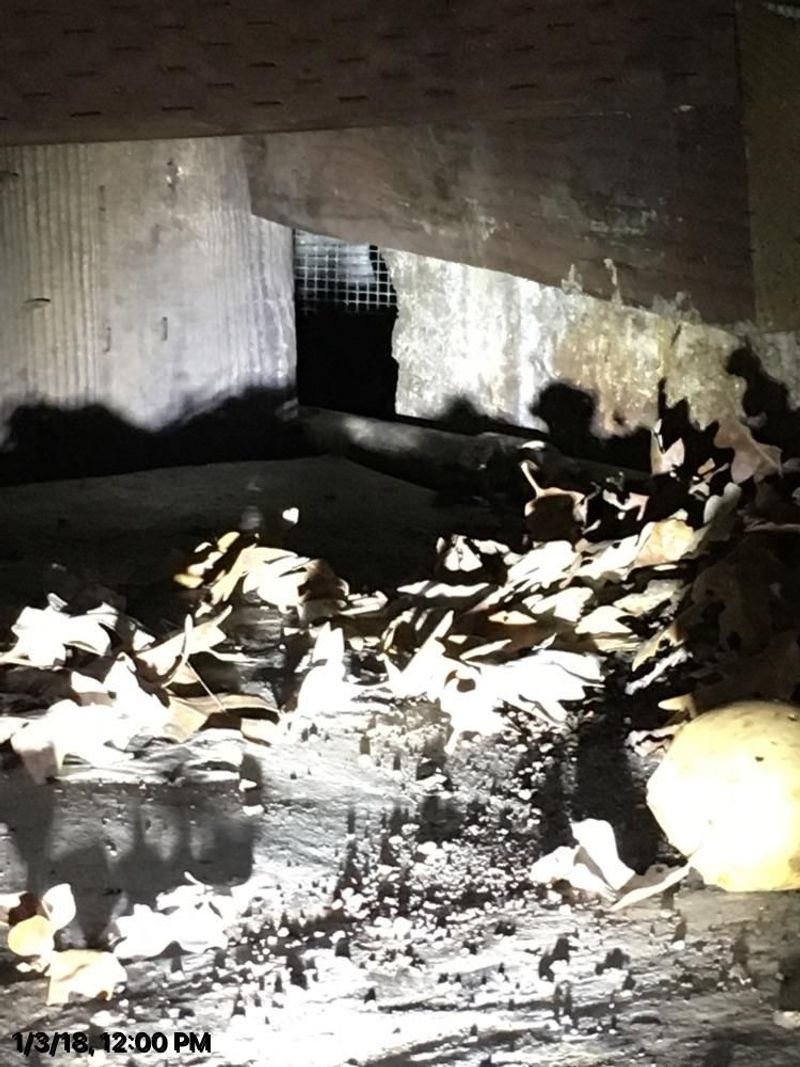
A passing visitor in the yard is one thing; an opossum that has moved into a crawl space, beneath a porch, or into an attic is a different situation that calls for a more deliberate response. The Internet Center for Wildlife Damage Management identifies habitat modification and physical exclusion as the most practical long-term approaches for keeping opossums out of structures.
Sealing entry points, installing hardware cloth, and using one-way exclusion doors are generally more effective than repeated trapping because they address the access problem rather than just removing one individual animal.
Before closing any opening, take time to confirm that no animal or young are still inside. Opossums can have young that are not immediately visible, and sealing an occupied space creates a serious welfare problem and can lead to an animal dying inside the structure.
Observe the entry point at dusk for several evenings, or place a light layer of flour or newspaper at the threshold to check for tracks. If you see signs of activity, wait before proceeding.
For most homeowners, this is the point where professional help makes sense. A licensed wildlife-control operator or your local animal-control agency can assess the space, identify all entry points, and install a one-way door that lets the animal leave but not return.
University of Georgia Extension guidance on nuisance wildlife conflicts recommends consulting professionals for exclusion work in structures precisely because the details matter and errors can create new problems.
Trapping and relocating an opossum may seem straightforward, but it carries real complications. TPWD lists the opossum among Texas furbearers, which means state and local regulations apply to how the animal can be handled, transported, and released.
Relocation can also be stressful or fatal for the animal and may simply move the problem to a neighbor’s yard. Exclusion is the more durable fix.
Know Which Behavior Requires Caution
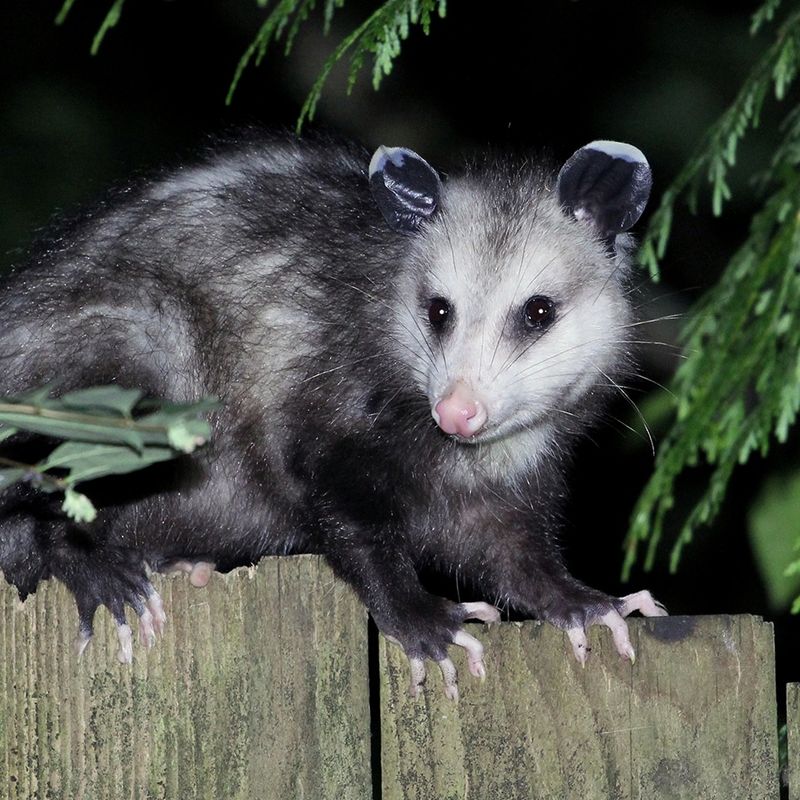
Most nighttime opossum encounters require nothing more than giving the animal space and letting it move on. TPWD confirms that nocturnal activity is completely normal for this species, so seeing one after dark is not a reason for alarm.
Daytime activity is less typical but is not, on its own, proof of illness. The behavior that warrants real caution is staggering, circling, paralysis, unprovoked aggression, or any obvious physical injury, not simply being awake at an unusual hour.
Do not try to pick up, corner, or handle a wild opossum, even if it appears calm, tame, or unable to move. The animal’s well-known “playing dead” response can make it look approachable, but a frightened or injured opossum can bite.
TPWD advises keeping a respectful distance from all wildlife and contacting a licensed rehabilitator when an animal appears genuinely orphaned or injured. TPWD’s orphaned and injured wildlife page can help you find a local contact.
If a person or pet is bitten or scratched, wash the wound immediately and thoroughly with soap and water, then contact a health-care provider, your local health department, or a veterinarian for a rabies-risk assessment. CDC guidance on rabies prevention recommends prompt medical attention after any possible exposure to a wild animal, regardless of how the encounter looked.
The risk assessment is a medical decision, not one to make on your own based on the animal’s appearance.
One more claim worth correcting: seeing an opossum does not mean your yard has gained a pest-control service. Opossums eat a wide range of foods, including insects and small animals, but their presence does not establish that they are meaningfully reducing ticks, snakes, rats, or any other pest.
Penn State Extension reports that the popular “thousands of ticks” claim came from limited laboratory work and was not supported by later diet evidence from wild populations. Treat the opossum as a foraging wild neighbor rather than a hired service.
Read the Visit as Information About Your Yard
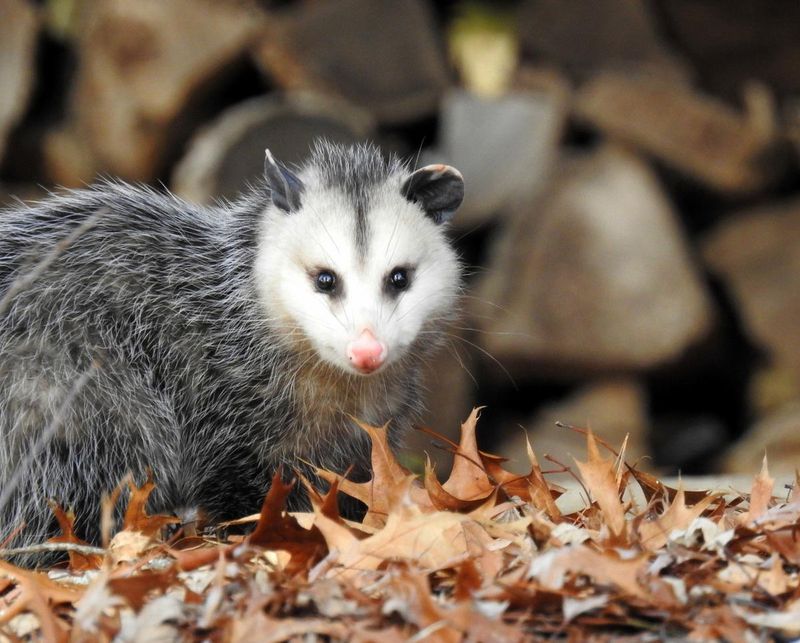
The most useful thing a nighttime opossum visit can do is prompt you to look at your yard through a different lens. Observe first, then inspect: check for food sources, look for shelter access points, note any water features, and consider whether your property sits along a natural travel corridor.
Texas Parks and Wildlife’s urban wildlife guidance frames this kind of audit as the right starting point for any residential wildlife encounter.
From there, the response scales with the situation. Secure attractants if the animal is passing through.
Call a professional if it has moved into a structure. Seek medical advice immediately if there has been any bite or scratch.
TPWD and USDA APHIS both emphasize that feeding wildlife or allowing repeated unmanaged access creates more conflict over time, not less. The opossum is not a pest to eliminate or a helper to recruit; it is a wild animal responding to what your yard offers.
That single question, “what is available here after dark, and do I want to keep making it available,” turns a startling backyard encounter into something genuinely useful: a prompt to manage your property with a little more intention.