
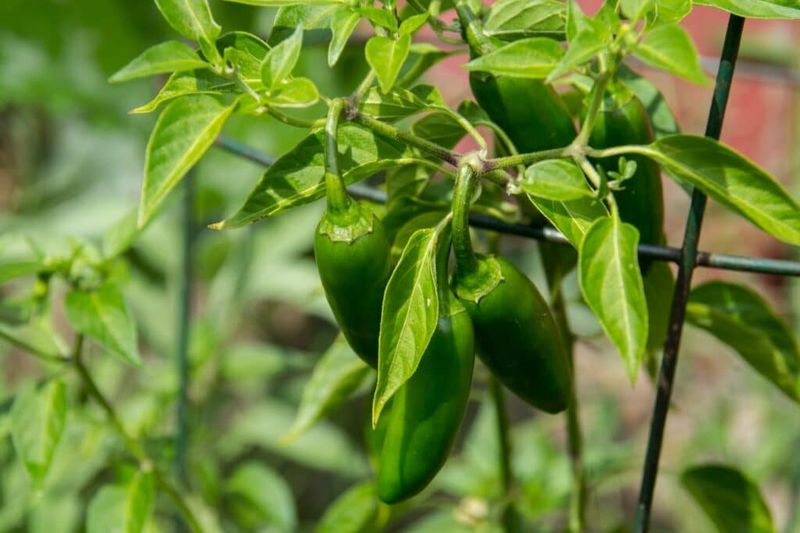
Growing jalapeños in Central Texas can feel like a battle when summer heat takes over and your pepper plants stop producing the way they should. Flowers fall off, fruits stay pencil-thin, and the harvest you were counting on seems to stall for weeks.
Understanding why this happens, and what you can actually do about it, makes the difference between a frustrating summer and a productive one. The answer is more nuanced than one hot night ruining everything, and the fixes are closer to hand than most gardeners realize.
Sustained heat can reduce jalapeño production without creating a hard stop
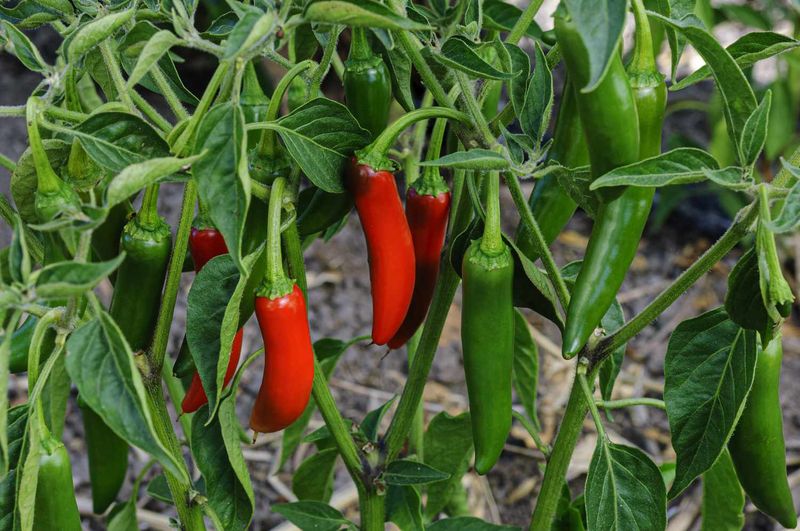
Blaming a single scorching afternoon for a stalled pepper harvest misses the bigger picture. What matters more is a pattern: several consecutive days of high heat combined with warm nights that give the plant no real recovery window.
When that pattern holds for a week or more, jalapeños can drop flowers, produce smaller or misshapen fruit, and slow down noticeably, even if they do not quit entirely.
Texas A&M AgriLife’s jalapeño production guide notes that jalapeños prefer hot days around 85-95 degrees F with cooler nights around 65-70 degrees F, and that excessively high temperatures can reduce fruit size and cause bloom drop. Importantly, hot peppers like jalapeños tolerate heat better than bell peppers and can often keep producing through a Texas summer, even when conditions are tough.
That resilience does not mean heat is harmless, but it does mean a prolonged warm spell is not automatically a total crop failure.
Extension sources point to daytime temperatures above roughly 85-90 degrees F and nighttime temperatures above roughly 70-75 degrees F as ranges where problems become more likely. Oklahoma State University’s pepper production guide adds that fruits setting above 85 degrees F are often small and poorly shaped, and that very little fruit set tends to occur when daytime temperatures exceed 90 degrees F.
These are useful warning ranges, not biological on-off switches. Cultivar genetics, relative humidity, soil moisture, plant health, and how long the heat lasts all shape how a specific plant responds.
The clearest diagnostic signal is a run of hot days and warm nights, not one temperature reading. Symptoms may show up in flowers formed during the stress window and can persist for a short time even after temperatures ease.
Tracking the weather pattern alongside what you see on the plant gives you a much more accurate diagnosis than any single thermometer reading.
Heat affects flowers, pollen, and fruit growth at different stages
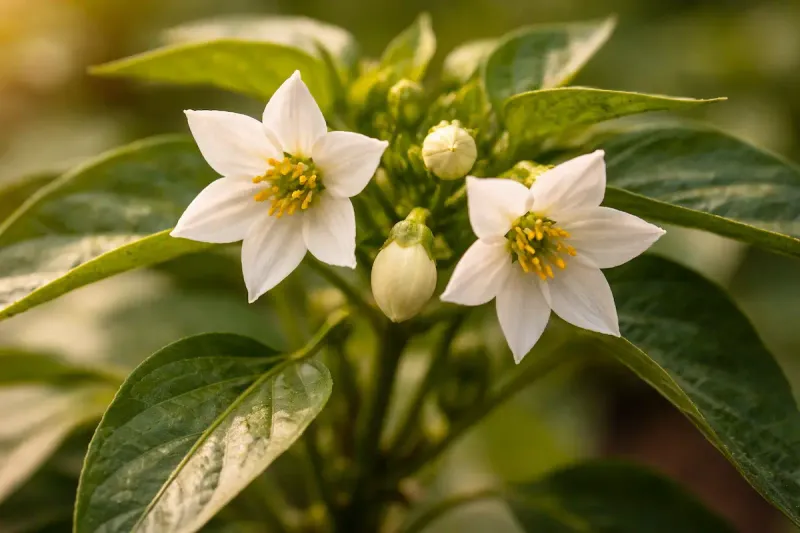
Not all heat damage looks the same because heat can interrupt pepper production at several separate points. Flower abortion, poor fruit set, and stalled fruit expansion after the fruit has already formed are three distinct problems, and confusing them leads to the wrong fix.
Pepper research, including studies on bell pepper and broader Capsicum responses, shows that high temperatures can impair pollen development or germination under some conditions. Research on high temperature and bell pepper pollen germination found measurable effects on pollen under heat, and a study on pollen development at high temperature points to stress during pollen formation before flowers even open.
These findings apply to peppers broadly and do not establish one universal temperature at which jalapeño pollen stops working entirely. The picture is probabilistic: sustained heat raises the risk of pollen problems, but the outcome varies by cultivar, humidity, and plant condition.
One point worth correcting: peppers generally self-pollinate, meaning they do not require bees to produce fruit. Heat can affect the plant’s reproductive processes directly without involving insects at all.
Reduced bee activity during hot afternoons is not the primary reason jalapeños struggle in summer heat. Texas A&M’s jalapeño guide confirms that excessive heat can cause bloom drop and reduce fruit size, but this is a plant-level response, not a pollinator-access problem.
Fruit that has already set faces a different set of challenges. Even a pepper that successfully formed still needs consistent soil moisture, healthy foliage to drive photosynthesis, and tissue temperatures low enough to support active growth.
University of Arizona guidance on reading plant stress notes that heat can reduce photosynthesis and slow growth even after fruit is present. Flowers formed during a stressful period may also fail after the weather improves, because the damage happened earlier in their development.
Separating these stages helps you understand why a plant can look green and healthy while its fruit remains stubbornly small.
Inspect the plant before blaming heat
Before heat gets the blame for thin or stalled jalapeños, a quick inspection of the whole plant can rule out several look-alike problems that need a different response. Start with the fruit itself.
A naturally slender jalapeño is not automatically a failed one. Oklahoma State’s pepper production fact sheet notes that jalapeño types vary considerably in fruit size and shape, and cultivar genetics set the baseline for what normal looks like on your specific plant.
Moisture inconsistency mimics heat damage closely. Irregular watering can cause flower shedding, stunted fruit, and the dark, sunken patches at the blossom end known as blossom-end rot.
University of Minnesota’s pepper fruit diagnosis tool walks through the visual differences between blossom-end rot, sunscald, and disease damage. If the problem tracks closely with a stretch of dry soil followed by a big watering, irrigation is the more likely culprit than heat alone.
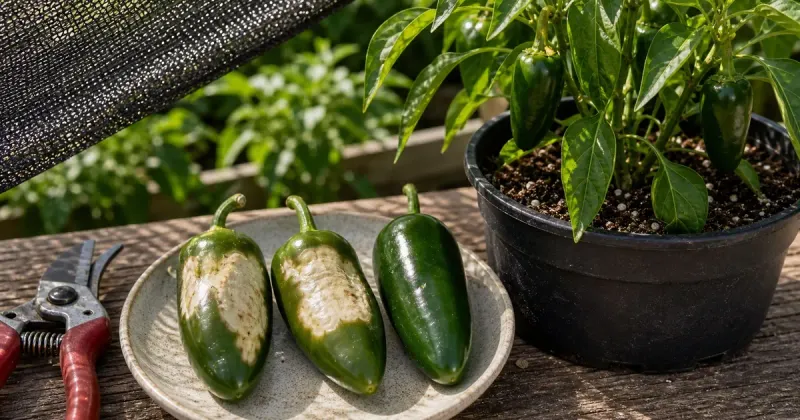
Sunscald deserves its own check. Pale, tan, bleached, blistered, or wrinkled patches on the side of a pepper that faces the sun point toward sunscald rather than poor pollination, especially after foliage thins out from drought or leaf loss.
The pattern follows sun exposure, not fruit development stage.
Disease and virus symptoms require a completely different response. Mosaic or mottled leaves, unusual leaf distortion, raised scabby spots on fruit, soft water-soaked lesions, or sudden whole-plant wilting are not ordinary heat stress.
University of Minnesota’s guidance on bacterial spot describes the raised, scabby fruit lesions that distinguish bacterial infection from heat or water problems. Suspected Phytophthora blight, which causes rapid wilting and crown rot, calls for removal of affected plants, improved drainage, and crop rotation, not shade cloth.
When disease or virus symptoms appear, contact your local Texas A&M AgriLife Extension office for a diagnosis before taking action.
Stabilize root-zone moisture while the heat persists
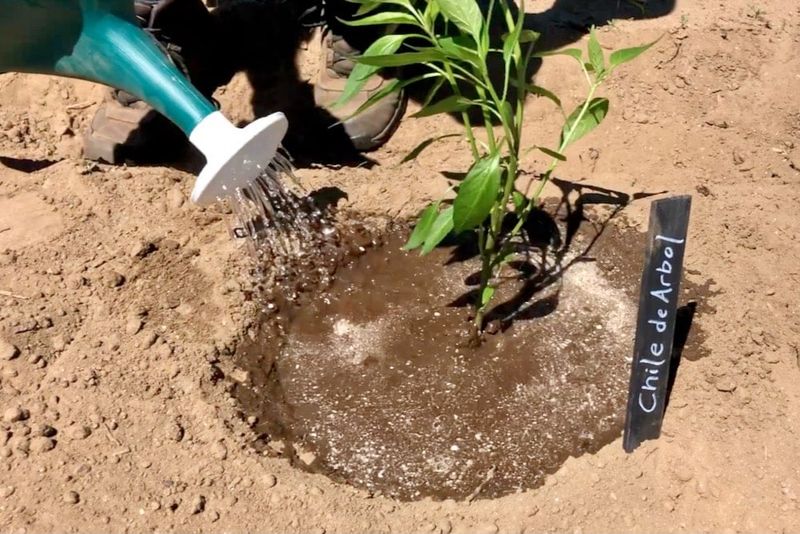
Consistent soil moisture is the most actionable lever available during a Central Texas heat spell. Texas A&M AgriLife’s pepper growing guide recommends slow, deep watering and notes that wilting reduces both pepper yield and quality.
The goal is to moisten the full root zone and then maintain relatively even moisture between irrigation cycles, rather than letting the soil bake dry before flooding it again.
Repeated cycles of severe drying followed by heavy soaking are more damaging than most gardeners expect. Oklahoma State’s pepper production guide connects irregular moisture directly to blossom-end rot and to shedding of flowers and small fruit.
Drip irrigation or soaker hoses deliver water slowly at the root zone and give you better control over consistency than hand-watering or overhead sprinklers. If you rely on overhead watering, be aware that it is not a dependable way to cool plants and can increase the risk of foliar disease, particularly bacterial spot and other leaf pathogens that spread in wet conditions.
Mulch is one of the most effective tools for holding moisture between waterings. Utah State University’s pepper guide recommends organic or plastic mulch to conserve soil moisture and reduce weed competition.
University of Georgia’s pepper production guide supports this approach and notes that mulch also moderates soil temperature. Keep mulch pulled a few inches away from the main stem to reduce the risk of stem rot and disease at the crown.
Saturated soil creates its own problems. Waterlogged roots are more susceptible to Phytophthora and other root pathogens that thrive in warm, wet conditions.
The target is steady, even moisture, not standing water. In heavy Central Texas clay soils, this may mean shorter, more frequent irrigation cycles rather than one long soak per week.
Use temporary shade without trapping heat or removing too much light
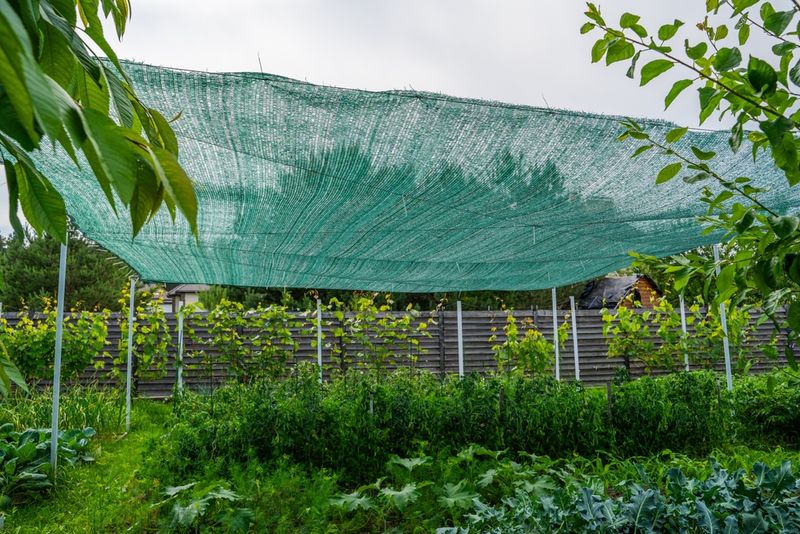
During the worst of a Central Texas heat wave, reducing the heat load on pepper plants can buy them time to survive until conditions improve. A shade cloth rated at roughly 20-40% and installed above the plant canopy with open airflow on the sides is the practical approach most extension sources support.
Utah State University’s guide to extending the garden season recommends shade as a heat-management tool, and University of Arizona’s June gardening reminders include temporary afternoon shade among the protective measures for summer vegetables.
The cloth should sit above the foliage rather than rest on it, so air can move freely around the plants. Afternoon shade matters most because that is when temperatures peak and direct sun is most intense.
Oklahoma State’s sunscald guidance notes that maintaining a healthy canopy and using temporary shade can help protect developing fruit from bleaching and blistering during extreme heat.
Shade should come down or be reduced once the extreme heat passes. Leaving heavy shade in place through moderate weather cuts the photosynthesis your plants need to build fruit, and the productivity loss can offset whatever benefit the shade provided during the hot spell.
Think of it as emergency protection, not a permanent fixture.
Sealed plastic row covers are a completely different category and should not be used as a heat fix. Texas A&M’s vegetable growers handbook recommends removing or partially opening covers when temperatures under them approach about 86 degrees F.
Utah State University’s row cover guidance advises removing covers once pepper plants begin to flower or when heat builds. A sealed plastic tunnel during a Texas summer can push internal temperatures high enough to kill plants outright, so breathable shade cloth and sealed plastic covers are not interchangeable.
Avoid quick fixes that cannot repair heat-stressed flowers
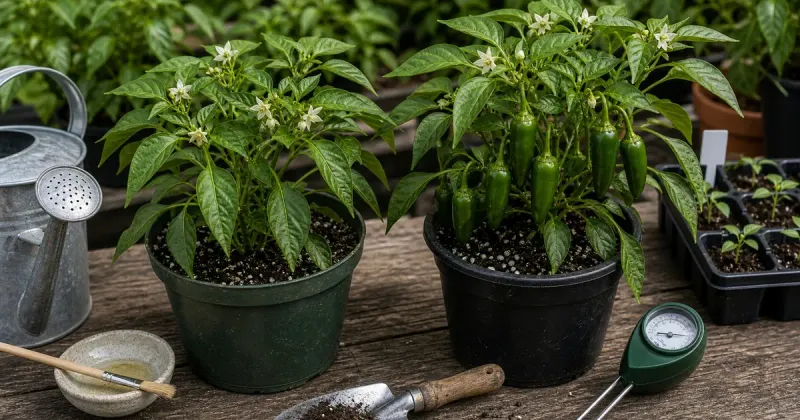
Several popular remedies circulate online for thin or stalled peppers, and most of them will not solve a heat problem. Sorting the useful from the useless saves time and prevents making things worse.
Hand-pollinating every flower is one of the most commonly recommended fixes, but University of Minnesota’s pollination requirements guide confirms that peppers generally self-pollinate and do not need bees or hand assistance to produce fruit. Gently tapping a flower may help move pollen within it, and that is harmless, but it cannot reverse heat-damaged pollen, correct flower abortion that has already started, or compensate for drought stress and poor plant nutrition.
Treating hand-pollination as the primary fix misidentifies the actual problem.
Extra fertilizer, especially nitrogen-heavy formulas, is another common impulse during a production slump. Texas A&M’s pepper FAQ and Utah State’s pepper guide both caution against excessive nitrogen, which tends to push lush foliage growth while delaying fruit set and maturity.
Fertilize according to a soil test or the product label, and resist the urge to feed stressed plants heavily in hopes of forcing a recovery. Texas A&M’s soils and fertilizers chapter notes that salt buildup from excess fertilizer can worsen plant stress in hot conditions.
Calcium products marketed for blossom-end rot or skinny peppers should not be applied as a blanket treatment. University of Georgia’s guidance on blossom-end rot and calcium nutrition explains that the condition is typically linked to localized calcium-transport problems driven by inconsistent water supply rather than a soil calcium shortage.
Correct the irrigation pattern first. If a soil or tissue imbalance is suspected, get a soil test before adding any amendment.
Let new growth recover and judge peppers by their normal harvest stage
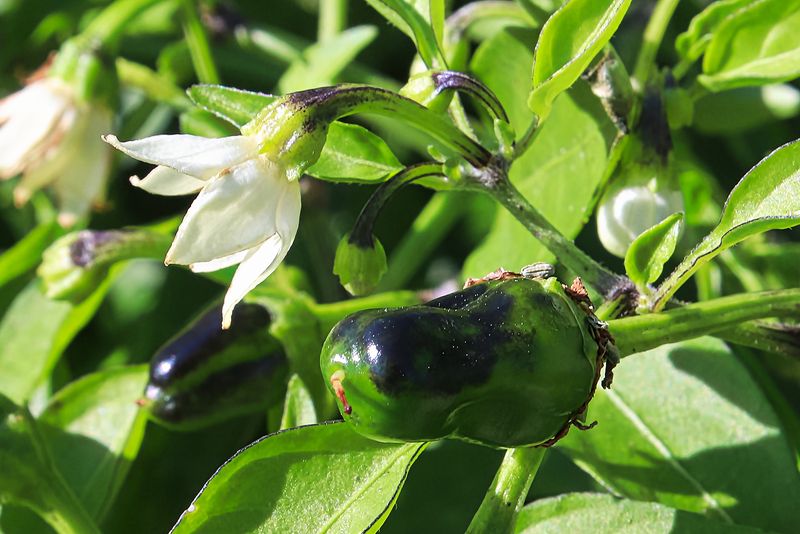
After a heat spell, the flowers and fruit that formed during the worst days may not recover fully, and that is normal. Flowers that aborted during sustained heat are gone, and fruit that set poorly during that window will likely stay small.
The more productive focus is on the new growth coming after conditions stabilize.
Later blooms, produced once soil moisture is steady, canopy health improves, and temperatures ease even slightly, have a better chance of setting and developing normally. Texas A&M’s pepper FAQ notes that peppers can resume production once stressful conditions moderate.
Patience with the plant matters more than trying to force every existing bloom to develop during the heat.
A small jalapeño is not automatically a failed one. Oklahoma State’s pepper production guide points out that jalapeño types vary considerably in size and shape, and cultivar genetics set the normal range for your specific variety.
Jalapeños are edible at multiple stages, from small green fruits through full-sized red ones, so a harvest of compact peppers from a stressed plant is still a usable harvest.
Texas A&M’s pepper FAQ also notes that mature jalapeños often develop small cracks or corking around the shoulders, a normal sign of maturity that appears regardless of fruit size. Oregon State University’s pepper growing guide reinforces that harvest timing and growing conditions both shape the fruit you get, and that smaller fruit from a stressed plant is not evidence of crop failure.
Removing all summer flowers as a universal treatment is not justified for mature plants; the better approach is stabilizing the plant and letting new growth come in under improved conditions.
Plan the next Texas crop around the heat pattern
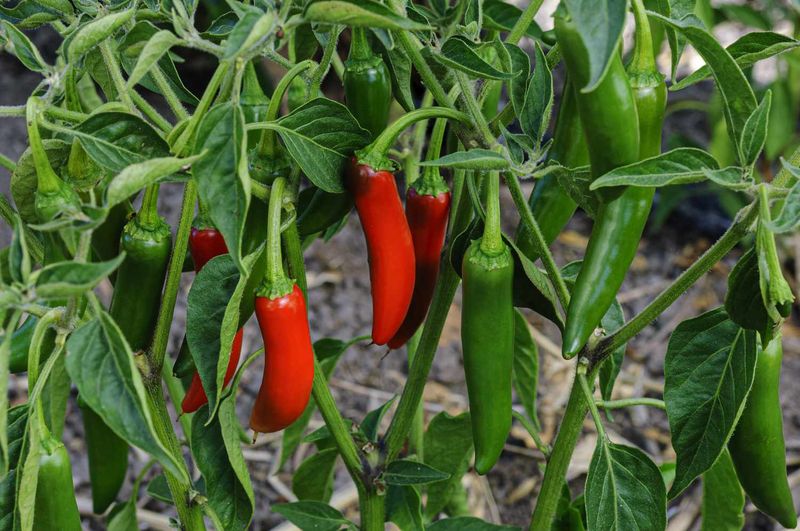
The most reliable way to improve jalapeño production in Central Texas is to work with the heat pattern rather than fight it at its peak. Timing is the tool most gardeners underuse.
Starting transplants early enough to set fruit before the most intense summer heat gives plants a productive window when conditions are closer to ideal. Texas A&M’s jalapeño production guide provides fall planting guidance of approximately 120 days before the average first frost as a planning reference for a second crop.
Counting backward from your expected first frost date gives you a target transplant date for fall, when temperatures ease and peppers can set fruit reliably again. Texas A&M’s pepper FAQ supports this two-season approach as a practical strategy for Central Texas conditions.
The practical sequence for managing heat stress comes down to a few clear steps. Check the weather pattern over several days rather than reacting to one hot afternoon.
Inspect plants carefully for look-alike problems including sunscald, moisture stress, and disease before assuming heat is the sole cause. Stabilize root-zone moisture with slow, deep, consistent irrigation and mulch.
During extreme heat, add temporary ventilated shade at roughly 20-40% and remove it once conditions moderate. Skip unsupported quick fixes like heavy fertilizer loads, calcium supplements without diagnosis, or hand-pollination as a primary remedy.
Central Texas summers are genuinely hard on peppers, but the plants are more durable than their thin summer fruit suggests. Working the spring and fall windows, keeping roots consistently moist, and protecting plants during the worst heat weeks gives you a far better chance of a usable harvest than trying to force peak production through August.
A jalapeño plant that survives the summer with its root system intact is already set up for a productive fall run.