
Fall nights in Central Texas can sneak up on a basil patch fast, and gardeners who walk outside the morning after a cool night sometimes find leaves that looked perfect the day before now black, soft, and drooping. Cold stress is often the culprit, but it is not the only one, and not every cool night will wreck every plant.
Knowing what really happened, and acting before the next cold event, can mean the difference between a big harvest and a compost pile. This guide walks through the diagnosis, the salvage steps, and the decisions that matter most right now.
Why basil can turn black before frost arrives
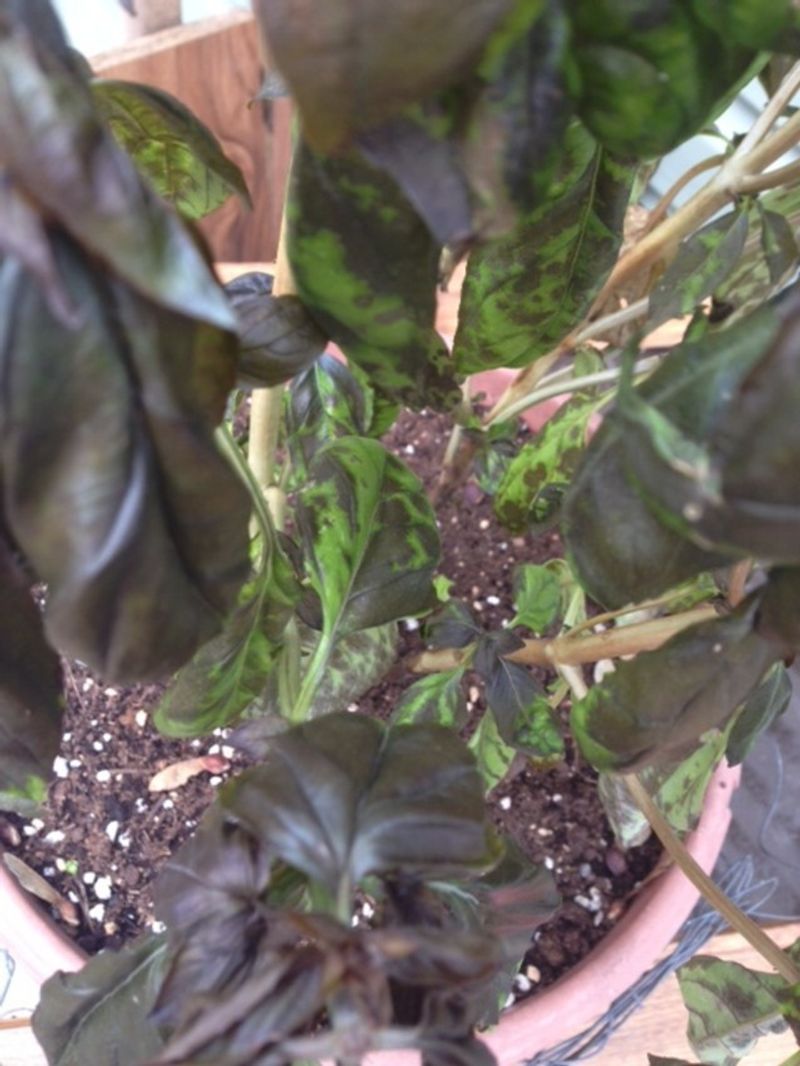
Basil earned its reputation as a warm-season herb the hard way. Illinois Extension guidance on basil notes that air or soil temperatures around 50°F can stunt growth and cause blackened leaves, well before the thermometer hits the freezing mark.
That means a Central Texas October night that dips into the upper 40s can begin damaging a healthy plant while the official forecast still shows no frost.
The tissue damage that results is called chilling injury. Utah State Extension’s chilling injury advisory describes affected leaves as water-soaked, soft, wilted, limp, and darkened.
The cells essentially break down when cold disrupts their internal chemistry, and the damage can appear within hours of exposure. A plant that looked lush at sunset may be a collapsed, blackening mess by sunrise.
Chilling injury and a freeze are not the same thing. National Weather Service freeze definitions place a freeze at 32°F or lower, when ice crystals form in plant tissue and cause more severe structural damage.
Basil can begin suffering well above that threshold. Think of roughly 45 to 50°F as a chilling-risk zone, not a precise kill point.
How long the plant sits in that range, how much wind is moving, how well-watered it is, whether it is in a container or in the ground, and the specific cultivar all shape the final outcome. Texas A&M AgriLife’s fall vegetable gardening guide classifies basil as a tender annual that Texas gardeners should expect to lose at the first sign of frost, which underscores just how little margin this crop carries once temperatures start dropping.
The key takeaway is conditional: cool nights can cause the collapse you are seeing, but they do not always do so, and the degree of damage depends on conditions that vary from yard to yard and night to night.
Read the pattern across your patch
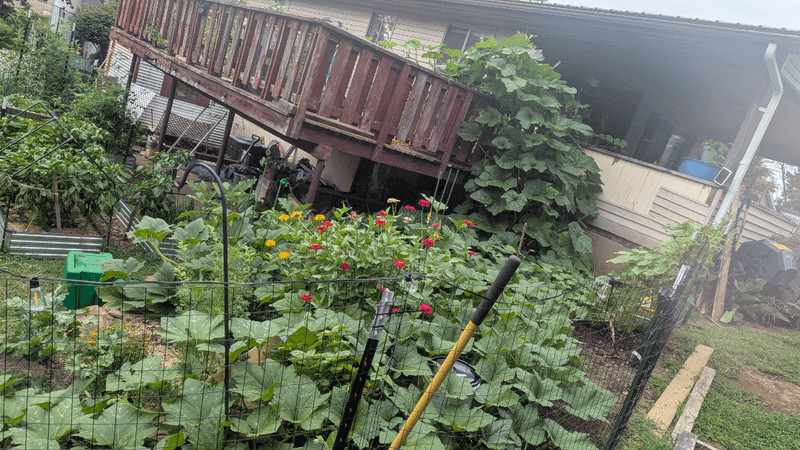
Before reaching for a diagnosis, walk the entire patch and look at the big picture. Chilling injury tends to show up fast and broadly after a cold night, affecting much of the planting at once rather than creeping from plant to plant over several days.
If you woke up to widespread collapse that appeared overnight, and the previous evening was notably cool, cold stress is a strong candidate.
USU Extension’s chilling injury advisory supports looking at exposure as a key factor. Container plants sitting on an exposed patio or driveway often show worse damage than plants tucked against a south-facing wall or under a porch overhang.
Cold air drains into low spots and open spaces, so a basil pot on a raised deck may fare better or worse than one sitting at ground level depending on your specific layout.
Central Texas is not one climate. NWS San Angelo freeze statistics illustrate how much frost timing varies across the region.
A gardener in San Antonio may have several weeks more growing season than one in the Hill Country or Waco. Use your own overnight low from your local forecast, not a generalized regional date, when deciding how much risk your plants faced.
A microclimate near a brick wall, a covered porch, or a drip-irrigated bed can shift the effective temperature by several degrees.
Pattern recognition is useful but not proof. Texas A&M AgriLife’s fall gardening guide reminds gardeners that basil is tender and that cool-season conditions can begin causing problems even before a true frost arrives.
Rapid, widespread collapse after a documented temperature drop strongly suggests chilling injury, but you still need to check the leaves more closely before ruling out other problems.
Check the undersides before blaming the weather
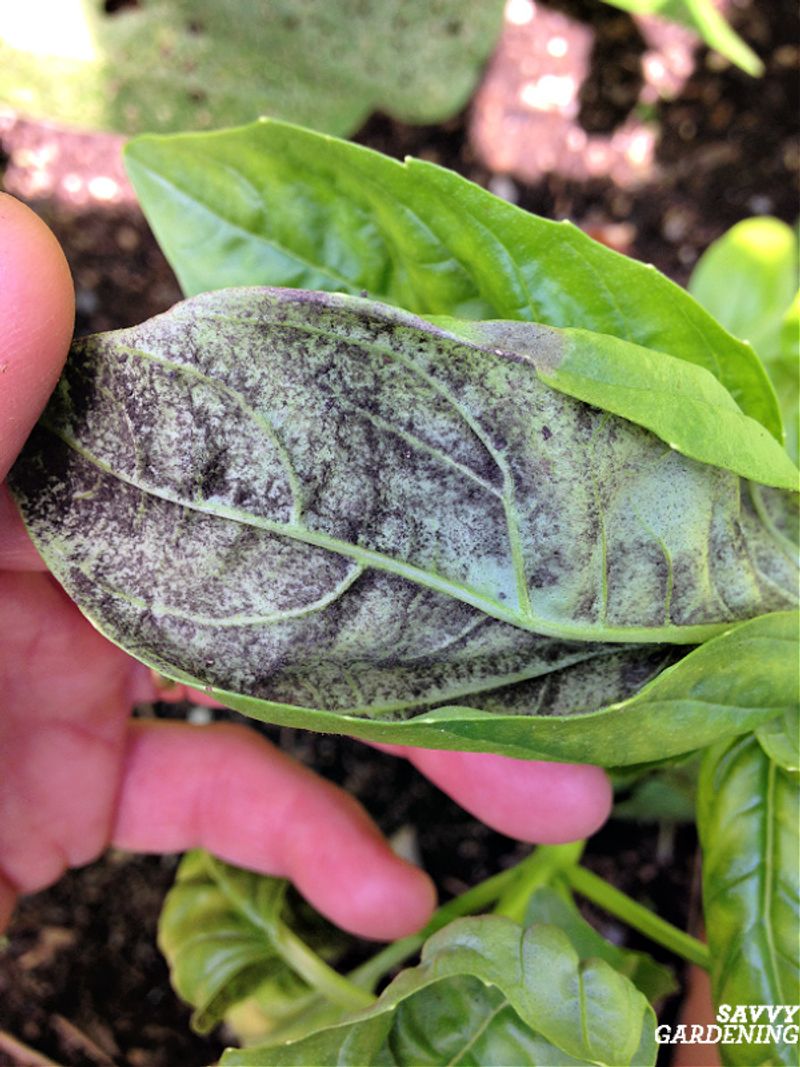
Black, limp leaves do not automatically mean cold injury. Basil downy mildew produces symptoms that can look similar at first glance, and missing that diagnosis leads to the wrong response.
Flip the leaf over before you decide what happened.
University of Minnesota Extension’s basil downy mildew guide describes the typical progression: yellow areas appear on the upper leaf surface first, often between the veins, while the underside develops a gray or velvety coating of spores. As leaves age, they can darken and turn black.
The disease spreads through the patch progressively rather than collapsing everything at once overnight. If your plants were showing yellow patches on the tops of leaves before the cool night, downy mildew deserves serious consideration.
Cold injury looks different in its timing and texture. The USU chilling injury advisory describes affected tissue as water-soaked, soft, and limp, appearing rapidly across exposed areas rather than progressing leaf by leaf.
There is no velvety underside growth with chilling, and the damage tends to be uniform across leaves that were equally exposed rather than concentrated on the oldest or lowest foliage.
A third possibility is root or water stress. Overwatered or poorly drained basil can wilt and decline without showing the same cold-linked overnight collapse.
Check the soil moisture and root zone if neither cold injury nor downy mildew fits the pattern you are seeing. USU’s basil growing guide notes that basil prefers well-drained soil, and soggy roots can cause decline that mimics other problems.
If downy mildew is the likely culprit, remove and destroy affected plants rather than composting them. Improve air circulation around remaining plants, stop wetting the foliage when you water, and do not assume a general-purpose fungicide from the garden center will fix the problem.
University of Minnesota Extension is direct on this point: products available to home gardeners are not effective against basil downy mildew. Act quickly to limit spread rather than waiting to see if the plants recover on their own.
Harvest healthy basil before the next cold night
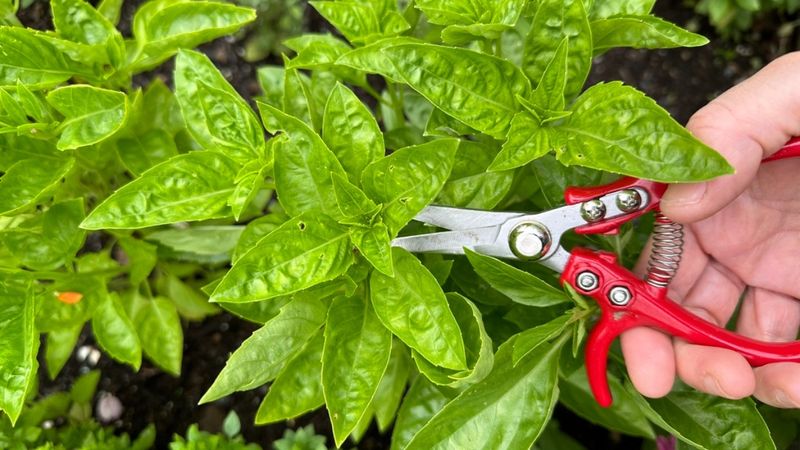
Once you have identified which plants still have healthy green tissue, the most useful thing you can do right now is harvest it. Waiting for the next cold night to pass risks losing usable leaves that are perfectly good today.
Cut stems just above a pair of leaves rather than stripping the plant bare; Texas A&M AgriLife’s fall vegetable gardening guide for Texas recommends harvesting basil just before flowering, and cutting above leaf pairs encourages the plant to branch and stay productive while it remains viable.
Be selective about what you bring inside. Blackened, diseased, decaying, or slimy leaves should not be eaten, regardless of whether the damage came from cold or disease.
The goal is to capture healthy tissue before the next cold event takes it. If only the outer or uppermost leaves are affected and the interior of the plant still looks green and firm, those inner stems and leaves are worth harvesting now.
University of Minnesota Extension’s basil growing guide recommends storing fresh-cut basil at room temperature with the stems standing in a small amount of water, much like a bouquet of flowers. Refrigeration is a common mistake: cold storage can discolor basil leaves, which defeats the purpose of saving them.
Keep your cut stems on the counter away from drafts and direct sunlight.
For longer storage, freezing works better than refrigerating. Penn State Extension’s herb freezing guide supports freezing as a suitable preservation method, though thawed basil becomes limp and works best in cooked dishes like soups, sauces, and stews rather than fresh salads or garnishes.
Blanching briefly before freezing can help preserve color. One more caution: do not pack basil into oil and leave the mixture at room temperature.
Illinois Extension’s basil page warns that oil-herb mixtures should be frozen rather than stored at room temperature because of food safety concerns. Freeze the oil mixture in small portions and thaw only what you need.
Protect basil when the forecast gives you a chance
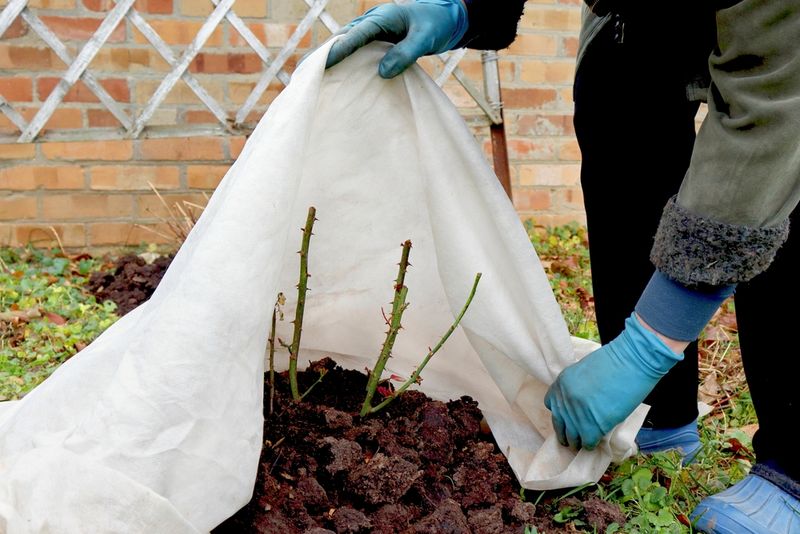
When the overnight forecast drops toward the chilling-risk range and you still have healthy plants worth saving, protection is worth the effort. The approach depends on whether your basil is in containers or in the ground.
Container basil has the easiest solution: bring it inside before temperatures fall. Penn State Extension’s indoor herb guide notes that basil grows well indoors when given bright light and kept at temperatures of at least 65 to 70°F during the day and 55 to 60°F at night.
A sunny windowsill or a spot under a grow light can keep a container plant productive for weeks longer than the outdoor season allows. Move the pot back outside once overnight lows are safely above the chilling threshold.
Illinois Extension’s basil feature also confirms that basil is suitable for indoor culture when light conditions are adequate.
For in-ground plants, a frost cloth or row cover placed over the bed before the cold event can help buffer temperatures. Texas A&M AgriLife’s fall gardening guide explains that fabric row cover provides some insulation but less cold protection than plastic sheeting.
Anchor the edges of any cover to the ground so cold air cannot draft underneath, and make sure the fabric or plastic does not rest directly against the foliage. Leaves touching cold plastic can still suffer damage even when the cover is in place.
Remove or vent the cover during the day as temperatures rise to prevent overheating; plastic especially can build heat quickly in morning sun.
Do not count on a lightweight fabric cover to carry basil through a hard freeze. Texas A&M AgriLife’s frost and freeze protection guide notes that spunweb fabric provides less cold protection than plastic and may require a supplemental heat source when temperatures drop below freezing.
If you use an electrical light or heater beneath a cover for added warmth, use only equipment that is specifically rated and safely installed for outdoor use. Keep any heat source away from the cover fabric and from plant foliage.
Texas A&M AgriLife’s horticulture newsletter cautions against placing heat sources against covers because of fire risk. Improvised indoor heaters or extension cords not rated for outdoor use should not be part of this setup.
When to wait and when replacement may be best
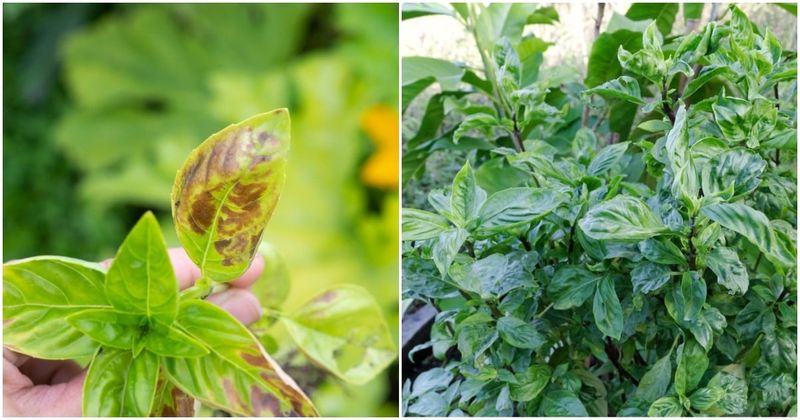
A plant with blackened outer leaves is not automatically a dead plant. After a cool night causes visible damage, give yourself a short window, a few days at most, before pulling anything out of the ground.
The key is what the stems and growing points look like, not just the leaves.
Squeeze the main stem gently near the base and check the growing tips. If they remain green and firm after the cold event, the plant may still be capable of pushing new growth once warmer days return.
USU Extension’s chilling injury advisory supports the distinction between leaf injury and more severe damage to growing points, and that distinction matters when deciding what to do next. Mild chilling may leave the plant structurally intact even when the outer foliage looks terrible.
Recovery after chilling is a real possibility, not a guarantee. Plants that experienced a brief dip into the chilling-risk range with green stems remaining may surprise you.
Plants that sat through temperatures at or below 32°F for several hours, or that show completely blackened and mushy stems all the way to the base, are far less likely to come back. Texas A&M AgriLife’s freeze protection guide makes clear that severe freezing damage to tender annuals is often fatal.
Plants showing signs of downy mildew should not be left in place on the chance they will recover. University of Minnesota Extension’s downy mildew guide is clear that affected plants should be removed and destroyed promptly to limit spread.
Waiting to see if a disease-suspect plant recovers only gives the pathogen more time to reach healthy plants nearby. When the stems are green and firm, wait briefly and watch.
When they are black, mushy, or diseased from top to bottom, replacement is the practical next step.
Use tonight’s forecast to make the basil decision
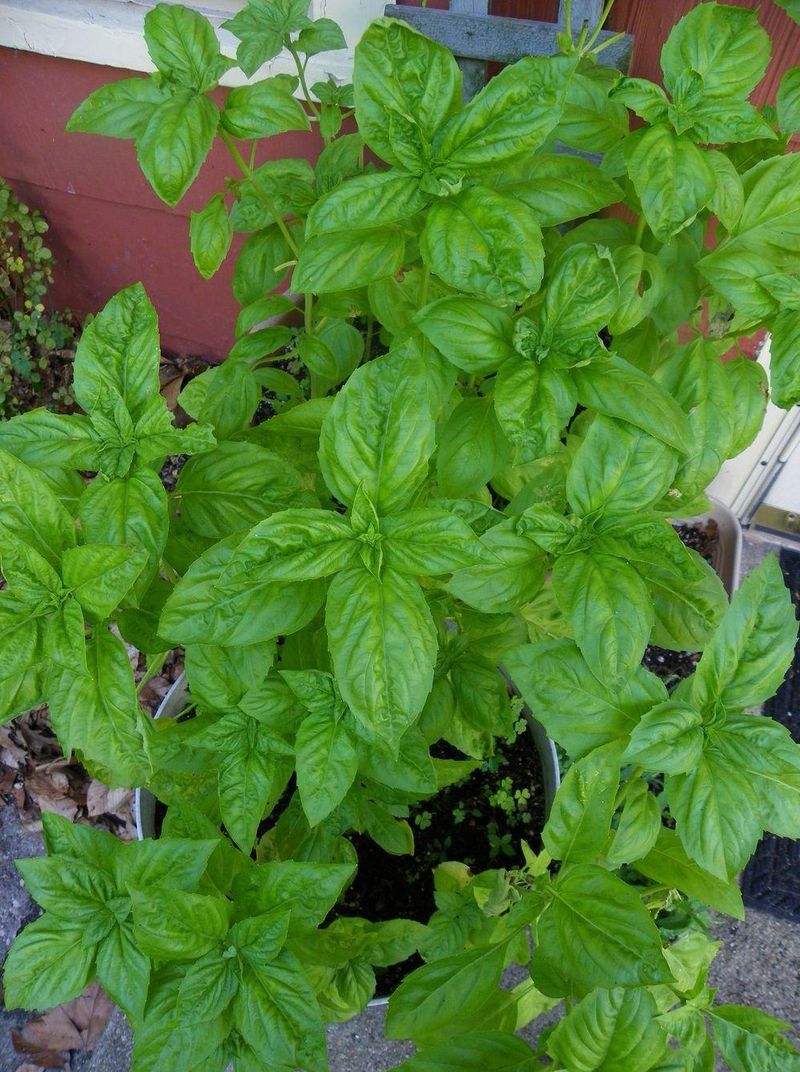
Pull up your local overnight forecast right now and check the actual low for your zip code, not a regional average. If temperatures are heading toward the mid-40s or lower, your basil is at risk of chilling injury whether or not frost appears in the forecast.
Your garden’s microclimate, a sheltered corner, a south-facing wall, or an open exposed bed, can shift that risk meaningfully in either direction.
Run through a quick decision sequence before dark. Harvest any healthy green stems and leaves you want to keep, cutting just above leaf pairs and bringing the cuttings inside to stand in room-temperature water.
Move container plants indoors to a bright, warm spot. Cover in-ground plants with anchored frost cloth, keeping the fabric off the foliage and planning to remove it once temperatures rise the next morning.
If you have not already inspected the undersides of your leaves for gray or velvety growth, do that now, because University of Minnesota Extension’s downy mildew guidance recommends removing and destroying affected plants rather than leaving them to spread the disease.
After the cold night passes, check your stems before making any final calls. Green, firm growing points mean the plant still has a chance.
Black, mushy stems from top to bottom mean it is time to clear the bed. Texas A&M AgriLife’s freeze protection guide and Illinois Extension’s basil page both support this patient, evidence-based approach.
Discard any tissue that looks diseased, decaying, or slimy, and replace only the plants that show no meaningful signs of life. A basil patch that collapsed after one cool night is not always gone; sometimes it just needs a few warmer days to prove it is not.