
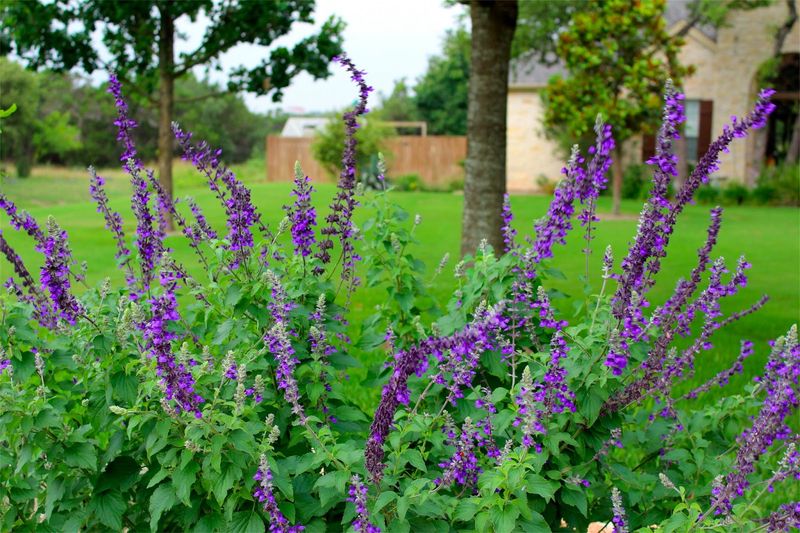
Mexican oregano is one of those patio plants that earns its space through looks, fragrance, and toughness rather than one single trick. If you have heard that growing it near your back door keeps cockroaches away, the truth is more interesting and more useful than that.
The living plant has not been shown to repel roaches, but choosing the right variety and pairing it with a solid pest-management routine gives you a good-looking, low-water herb and a realistic plan for reducing cockroach pressure around your Central Texas home.
Start with the right Mexican oregano
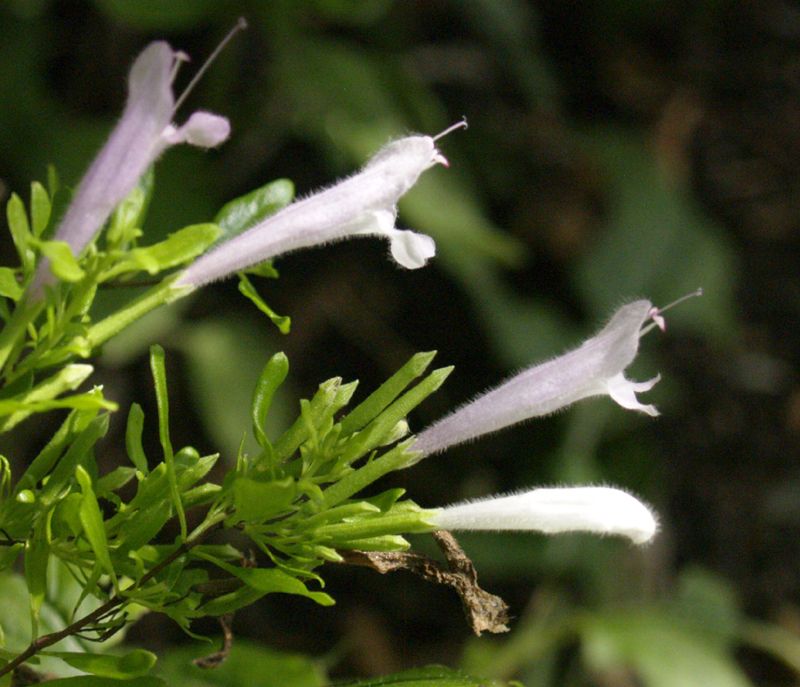
“Mexican oregano” sounds like a single plant, but walk into a Texas nursery and you may find several completely different species sharing that label. Texas A&M sources identify Origanum vulgare and Lippia species as plants sold under the Mexican oregano name in Texas, and Central Texas gardening guidance adds Poliomintha longiflora to that list.
Each plant has its own chemical profile, growth habit, and regional suitability.
For a Central Texas patio, the plant worth seeking by name is Poliomintha longiflora. Austin’s plant guide lists it as a low-water, aromatic perennial suited to the region’s heat, rocky soils, and long dry spells.
Ask for it by its botanical name at the nursery counter, because a tag that reads only “Mexican oregano” could refer to any of the plants above.
The species distinction matters beyond shopping convenience. Laboratory studies on oregano essential oils typically use Origanum vulgare, not Poliomintha longiflora, and essential-oil chemistry can vary significantly between unrelated plants.
A finding about one oregano’s extracted oil does not automatically tell you anything about a different plant growing in a pot on your patio. Getting the botanical name right is the first step toward making accurate decisions about both gardening and pest control.
What Poliomintha longiflora offers a Central Texas patio
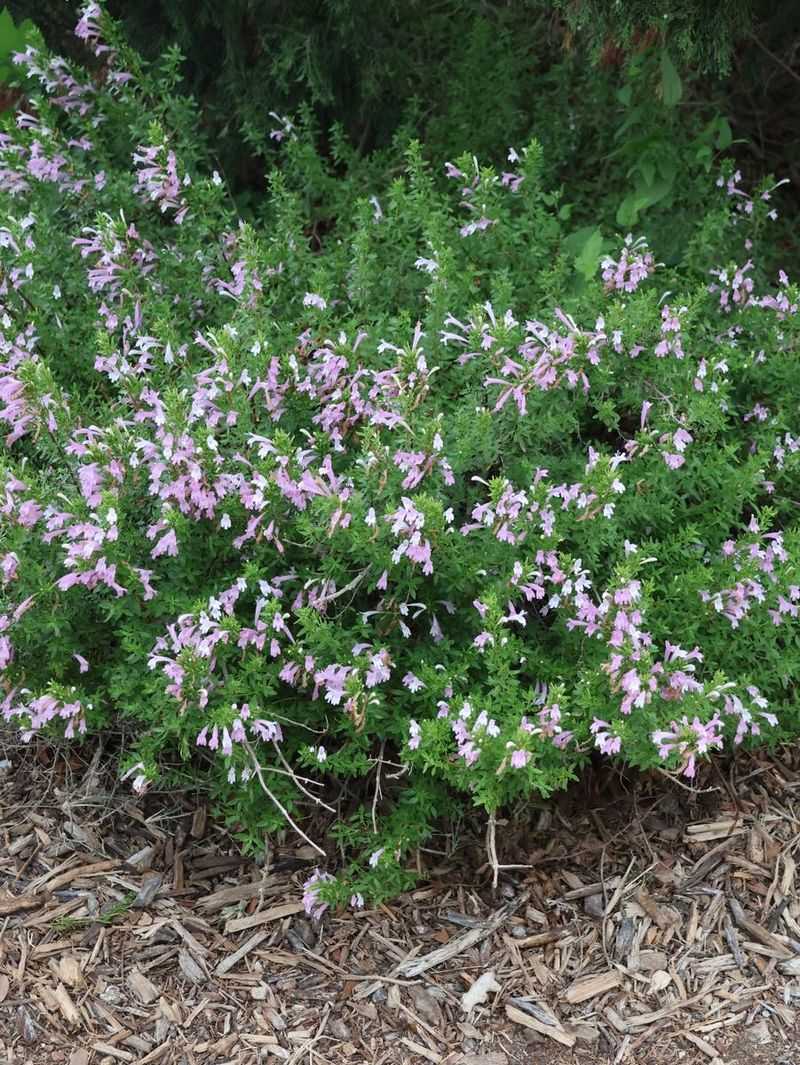
Poliomintha longiflora earns a patio spot on its own merits before pest control even enters the conversation. Austin’s plant guide describes it as an evergreen perennial that reaches roughly 3 feet tall and 4 feet wide, with aromatic foliage and small purple flowers that add color to a border or container planting.
The leaves carry a warm, spicy fragrance that releases when you brush them, making the plant a natural fit near a seating area or kitchen door where you will actually notice it.
Low water needs are a genuine selling point in a region where summer rainfall is unreliable and municipal restrictions are common. Full sun to part shade tolerance gives you flexibility: a south-facing patio with reflected heat from concrete is workable, and so is a spot that gets afternoon shade from a fence or overhang.
Texas A&M’s South Texas landscape guidance describes Mexican oregano as shrubby, aromatic, and drought tolerant at around 3 feet tall, which matches the Austin profile closely.
On the culinary side, the leaves can substitute for common oregano in salsas, marinades, and slow-cooked dishes where a slightly stronger, more citrusy note works well. That dual role as ornamental and kitchen herb makes it practical in small patio spaces where every plant needs to carry its weight.
The purple flowers add visual interest through warm months, and the evergreen foliage means the plant stays present in the landscape even when the garden is otherwise quiet. Just keep expectations calibrated: drought tolerance does not mean the plant thrives on complete neglect, and the evergreen description applies under normal Central Texas winters rather than severe freeze events.
The roach study tested oil, not a living patio plant
A peer-reviewed study published in a parasitology journal found that concentrated Origanum vulgare essential oil showed strong repellency against brown-banded cockroaches under controlled laboratory conditions. That research tested extracted oil applied at measured concentrations in enclosed test chambers – a setup designed to isolate the chemical effect under repeatable conditions.
The results are real and worth knowing about, but the setup is nothing like a potted herb sitting on an outdoor patio.
Outdoors, wind disperses aromatic compounds within seconds. Distance between the plant and a foraging cockroach reduces exposure further, and the concentration of volatile oils released by intact leaves is far lower than the concentrated extract used in laboratory testing.
A cockroach moving across a concrete patio is not confined to a test chamber, and it is not being exposed to measured doses of purified oil. The conditions that produced the laboratory finding simply do not exist in a residential landscape.
Clemson Cooperative Extension notes that volatile compounds from aromatic plants dissipate outdoors and that laboratory or companion-planting repellency effects generally do not scale up to reliable landscape-level protection. That is a consistent finding across extension research on aromatic herbs as pest barriers.
Two additional distinctions sharpen the point. First, the study used Origanum vulgare oil, not an extract from Poliomintha longiflora, and the chemical profiles of different plants sold as Mexican oregano are not interchangeable.
Second, the brown-banded cockroach tested in that study is one of several species common in Texas, and a finding against one species under one set of conditions does not predict results against American, German, or Turkestan cockroaches in the field. The oil research is genuinely interesting, but it does not translate into a case for treating a patio herb as a pest barrier.
Place the herb for enjoyment, not as a scent barrier
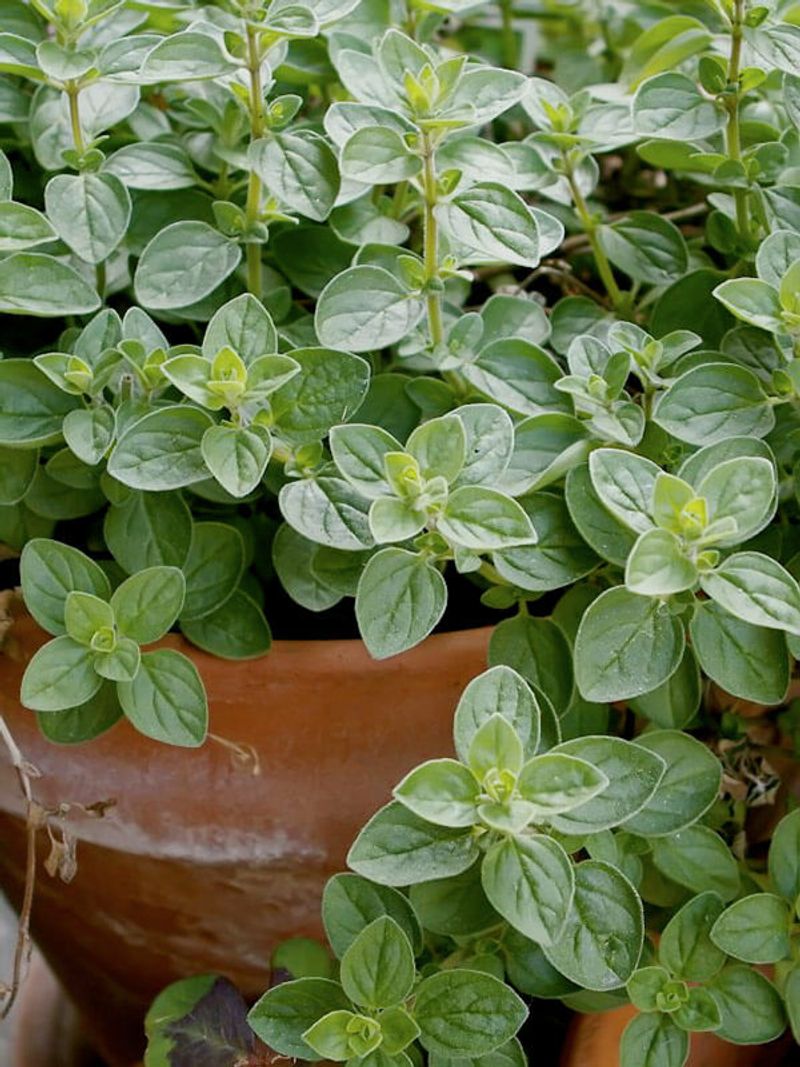
Choosing where to put Poliomintha longiflora on your patio comes down to convenience, fragrance, and access rather than pest strategy. A spot near the kitchen door or beside an outdoor seating area puts the aromatic leaves within arm’s reach for cooking and lets you enjoy the scent when you brush past.
Those are legitimate reasons to pick a location, and they hold up regardless of what the pest-control evidence does or does not show.
What proximity does not do is create a protective perimeter. Clemson Extension’s research review is direct on this point: aromatic compounds from landscape plants dissipate in outdoor air, and the repellency effects measured in controlled settings have not been shown to scale to a yard or patio.
Placing the plant near a doorway is a practical choice for a gardener, not a pest-control strategy.
For the best results from a placement standpoint, match the site to the plant’s needs first. Austin’s plant guide recommends full sun to part shade and well-drained soil.
A container on a south- or east-facing patio edge, or a border spot that gets morning sun and afternoon shade in summer, tends to work well. Good drainage matters more than most other factors: Poliomintha longiflora handles dry periods far better than it handles wet roots.
Pick the location that suits those conditions and happens to be convenient for you, and let the plant’s genuine qualities – fragrance, color, and culinary use – be the reasons it earns that spot.
Give the plant establishment care and freeze-aware maintenance
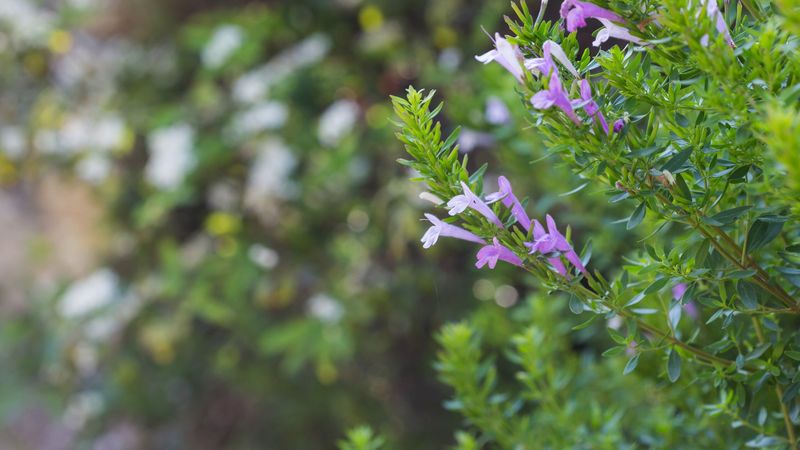
Getting Poliomintha longiflora established takes more attention than maintaining a mature plant. Even though it is drought tolerant once rooted, the first season calls for regular watering while the root system develops.
Texas A&M’s herb guidance notes that many herbs perform well through warm weather but can decline in August’s extreme heat, so do not interpret drought tolerance as permission to stop checking the plant during the hottest weeks of summer.
Well-drained soil is the single most important site requirement. Poliomintha longiflora tolerates lean, rocky, or sandy soil far better than it tolerates compacted or constantly moist ground.
If you are growing it in a container, use a mix that drains quickly and make sure the pot has drainage holes that actually work. In clay-heavy spots, amending the planting area or choosing a raised bed improves survival odds significantly.
Austin’s plant guide recommends pruning after bloom or after cold damage, which is practical advice for Central Texas winters. The plant is listed as evergreen, but that description reflects typical Austin winters rather than hard freeze events.
A severe freeze – especially one that lasts multiple nights – can damage stems or temporarily remove above-ground growth. Container plants face more cold exposure than established in-ground specimens because their roots lack the insulating mass of surrounding soil.
After a damaging freeze, wait until new growth signals which stems are still viable before cutting everything back, and prune selectively rather than all at once. The plant’s appearance can change with heat, drought, and cold, and recovery after a hard freeze depends on the severity of the event and how well established the root system was beforehand.
Build a real cockroach plan around the house
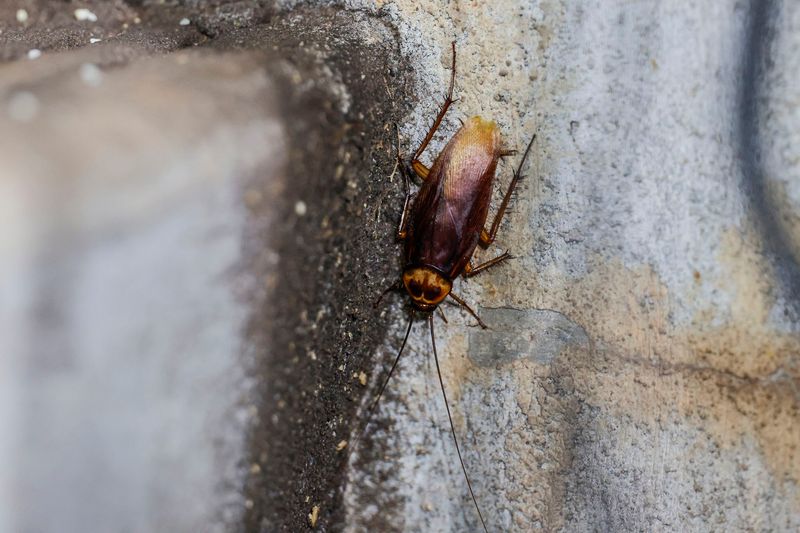
Cockroach management that actually works starts with removing what roaches need, not with planting a deterrent. Food scraps, pet dishes left out overnight, standing water in saucers or low spots on the patio, and dense leaf litter or wood stacks near the foundation all support cockroach activity.
Clearing those conditions is more effective than any aromatic plant, and Cornell IPM’s cockroach guidance identifies sanitation and elimination of harborage as the foundation of control.
Exclusion comes next. Cockroaches enter buildings through gaps around pipes, utility penetrations, worn door sweeps, and cracks in the foundation or siding.
Sealing those openings with caulk, foam, or appropriate weatherstripping reduces the pathways that outdoor roaches use to get inside. Drains and vents are common entry routes that homeowners often overlook.
The Texas A&M School IPM action plan for outdoor cockroaches specifically calls out inspecting exterior openings as a priority step.
Monitoring traps placed along walls, in cabinets, and near suspected hiding areas tell you where activity is concentrated and whether a problem is growing or shrinking. Traps are diagnostic tools, not control methods, but they take guesswork out of deciding where to act.
When control products are needed, gel baits applied near harborage areas are a dependable option for many species.
Species identification shapes the strategy. German and brown-banded cockroaches typically breed indoors and require indoor-focused control.
American, Oriental, and Turkestan cockroaches often live outdoors and enter buildings through the gaps described above. UC IPM’s cockroach resource explains these behavioral differences and why control methods vary by species.
If indoor activity is persistent despite sanitation and exclusion efforts, species identification – through a trap catch or a pest professional – helps you apply the right approach rather than treating every sighting the same way.
Treat oregano oil as a regulated-product question, not a homemade remedy
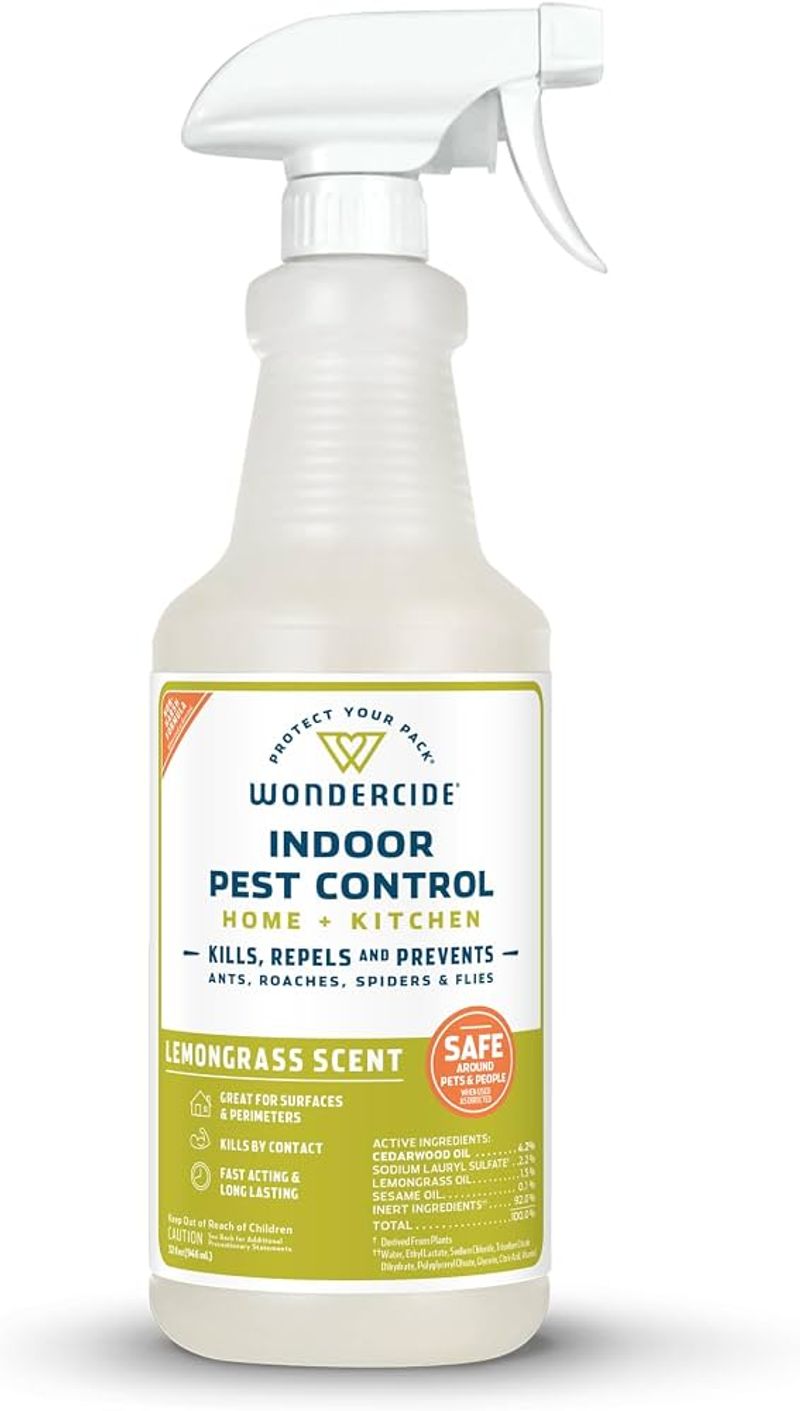
Concentrated oregano essential oil is not a safe, simple swap for conventional pest products. Texas A&M’s botanical insecticides guidance notes that concentrated essential oils can irritate skin and mucous membranes and may be toxic if ingested. “Natural” does not mean harmless, and treating plant-derived products as automatically gentler than conventional options is a mistake that can lead to real harm.
Pet safety is a specific concern. The ASPCA lists oregano as toxic to dogs, cats, and horses when ingested, and warns that pets exposed to essential oils can develop health problems through skin contact, inhalation, or accidental ingestion.
Applying oregano oil to patio surfaces, furniture, or plants where pets rest or groom puts them at risk.
Homemade oregano-oil sprays, dried herb piles, and scattered leaves are not recommended control methods. Rutgers extension guidance and Nebraska’s cockroach management research both characterize common herb-based home remedies as insufficiently supported for primary pest control.
Beyond effectiveness concerns, homemade mixtures have not been evaluated for safety at home-use concentrations, and applying them to food-contact surfaces, foliage, or people is a separate risk.
If you want to use an oregano-based pest product, the right path is a commercially formulated and registered product used exactly according to its label. EPA guidance on safe pest control makes clear that registered pesticide products have undergone review for the uses listed on their label, and that following label directions is not optional – it is legally required.
That standard applies to botanical products just as it does to conventional chemistry. The label specifies where the product can be applied, at what rate, and around which surfaces, plants, people, and animals.
A product without a label permitting patio, structural, or indoor cockroach use should not be used for those purposes, regardless of its ingredient list.
Grow the herb for its real benefits
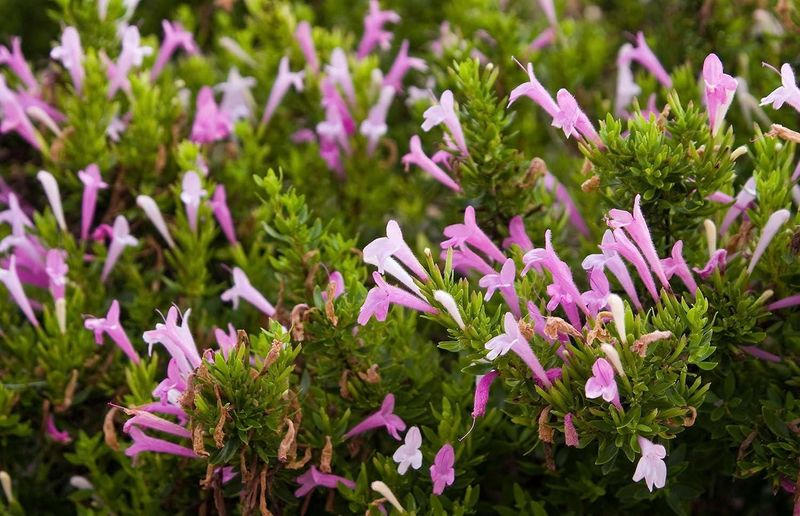
Poliomintha longiflora is a genuinely strong choice for a Central Texas patio when you pick it for the right reasons. Austin’s plant guide backs its low-water needs, aromatic foliage, purple flowers, and suitability for full sun or part shade – qualities that hold up through the long Central Texas warm season without much fuss.
It pulls double duty as an ornamental and a culinary herb, which is a practical advantage in any patio planting.
What it has not been shown to do is keep cockroaches away year-round or create any kind of pest-control perimeter around your outdoor space. Severe freezes can alter its appearance, and the living plant’s fragrance outdoors bears no resemblance to the concentrated oil conditions used in laboratory pest research.
Keeping those limits clear protects you from wasted effort and lets the plant succeed at what it actually does well.
For cockroaches, the dependable path runs through sanitation, exclusion, monitoring, and properly labeled control products applied where and how the label directs. Grow Mexican oregano for fragrance, color, and flavor – and handle the pest problem with tools that have a track record behind them.
A patio with both is genuinely better than one with neither.