
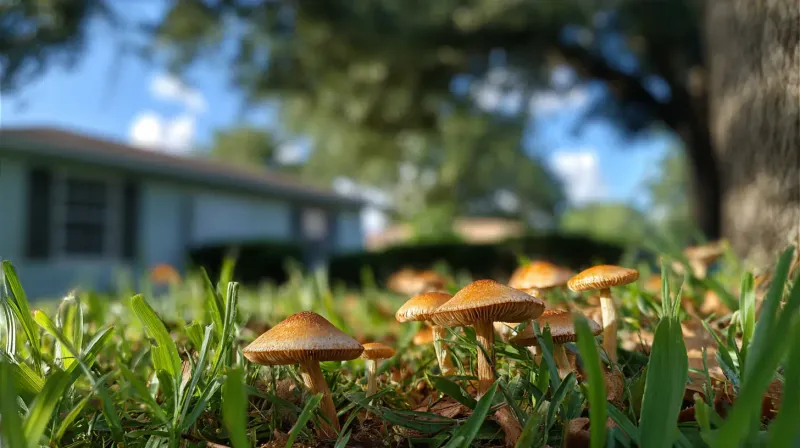
After a summer downpour in Florida, mushrooms can seem to appear out of nowhere overnight, dotting a lawn that looked perfectly normal just the day before. What most homeowners don’t realize is that those mushrooms were never created by the rain itself.
The fungi were already living beneath the surface, and the moisture simply gave them a reason to show up. Understanding what triggers that flush, and what it actually means for your lawn, can save you from unnecessary worry, wasted water, and the wrong treatments.
The mushrooms were already living beneath the lawn
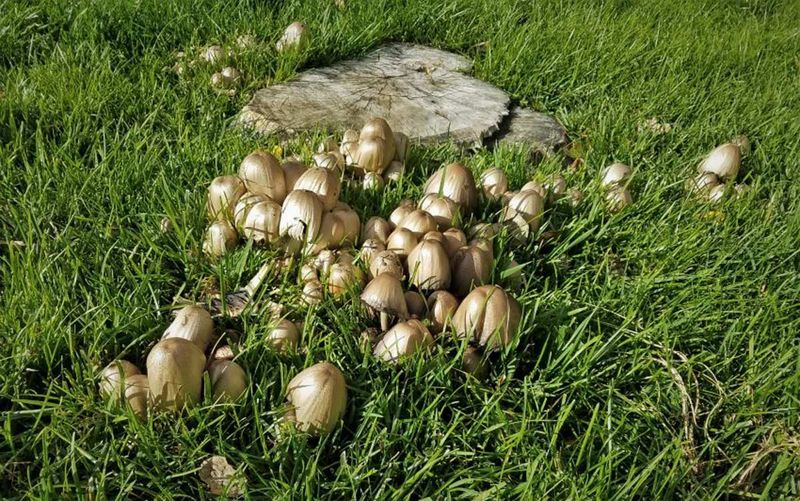
Somewhere beneath that patch of St. Augustine or Zoysia, a fungus has been quietly going about its business long before any rain arrived. Mushrooms are fruiting bodies, temporary reproductive structures that fungi push up through the soil when conditions are right.
The real organism, a branching network of thread-like cells called mycelium, stays underground and can occupy the same spot for years.
Those underground fungi are usually eating. University of Minnesota Extension notes that many lawn fungi decompose dead roots, thatch, leaves, wood, and other organic matter in the soil.
In a Florida yard, that food source might be a buried stump from a removed palm, a mat of old roots left by a previous tree, a thick layer of thatch, or a pile of mulch worked into the ground during landscaping. Any of those materials can feed a fungal colony for a long time.
That explanation also answers a common follow-up question: does this mean the lawn is sick? Probably not.
Most mushrooms appearing in lawns are not grass pathogens, meaning they are not infecting or attacking the turf itself. They may be a nuisance, but they are not the same thing as a disease-causing organism invading your grass blades or roots.
UF/IFAS mushroom resources point out that Florida lawns host a range of fungal species, most of which are simply decomposers going about their work below the surface.
Mushrooms also cannot confirm that your soil is in excellent health. Fungi do participate in breaking down organic matter and cycling nutrients, but a flush of fruiting bodies after rain is evidence of fungal activity and available food, not a soil-health certificate.
The lawn might be thriving, struggling, or somewhere in between, and the mushrooms alone won’t tell you which.
Rain flips the fungal switch
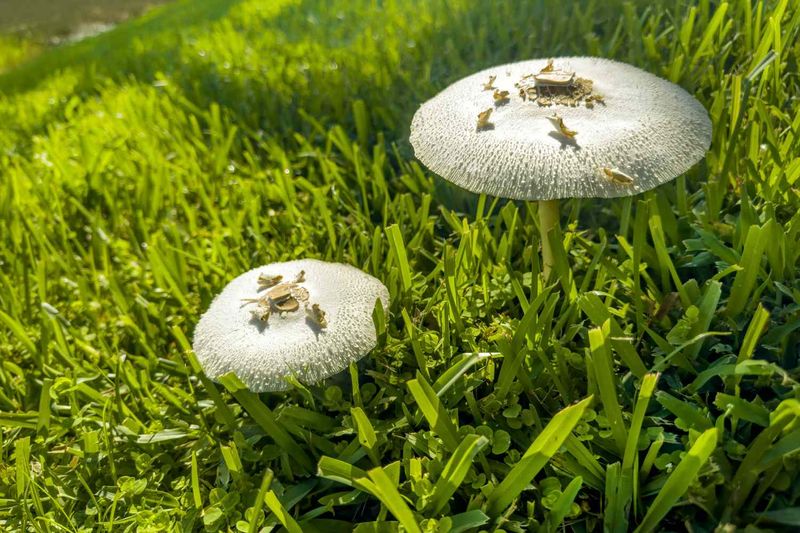
Overnight mushroom flushes feel almost magical, but the biology behind them is straightforward. Fungi spend most of their lives as mycelium, the hidden underground network, and they produce fruiting bodies mainly when moisture and temperature line up in their favor.
Florida’s summer rain pattern, heavy downpours followed by warm, humid air, is essentially a perfect trigger.
That timing explains why mushrooms seem to materialize from nothing. UF/IFAS research on fairy rings describes mushrooms as normally appearing during rainy weather, and extension sources also report that emergence is especially common when rain follows a dry period.
The fungal network was already there; the water just gave it the signal to fruit.
Heavy irrigation can produce the same effect. A sprinkler system that runs while the lawn is already saturated from recent rain can push soil moisture high enough to trigger fruiting, even without a natural storm.
That’s a useful clue for homeowners who notice mushrooms appearing on a regular schedule rather than only after downpours.
Once the caps appear, they typically don’t last long. Florida heat dries them out within a day or two, and the visible flush ends on its own.
University of Georgia Extension makes an important point here: removing the caps, whether by hand or by mowing, does not remove the underground mycelium or its food source. The fungus remains in place, and the next time moisture conditions are favorable, new fruiting bodies can emerge from the same spot.
Rain triggered the mushrooms, but it did not create the fungus, and drying out the caps does not end the story underground.
Do mushrooms mean your Florida yard drains poorly?
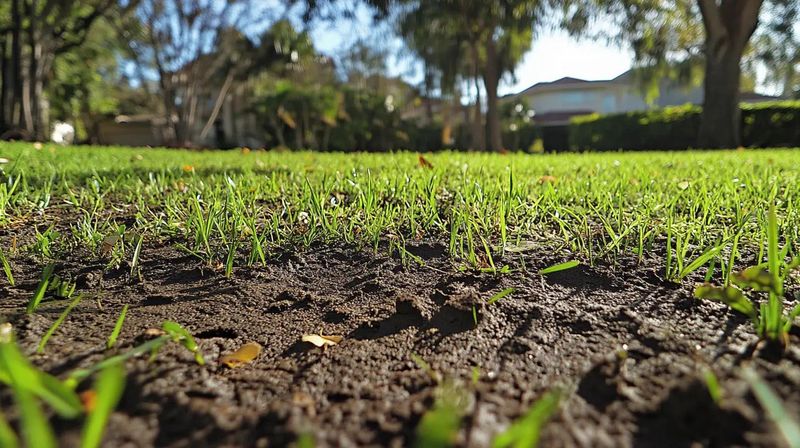
Mushrooms after rain are not a drainage report. They reflect recent moisture reaching a fungal network that already had an underground food source, and that combination can happen in a yard that drains perfectly well.
Treating a mushroom flush as automatic proof of a drainage problem leads homeowners toward unnecessary and sometimes counterproductive fixes.
Actual drainage problems leave different evidence. UF/IFAS guidance on preparing Florida lawns explains that compacted soil reduces pore space, slows water infiltration, and increases runoff, while also restricting the root growth that keeps grass healthy.
If your yard has compaction, you’re more likely to see puddles that linger for hours after rain, water sheeting across the surface rather than soaking in, or areas where the grass is thinning because roots can’t penetrate. Those are the signs worth investigating.
Persistently soggy ground is a separate concern. Excessive irrigation can keep turf roots sitting in saturated soil, which stresses grass over time and can create conditions where some fungi do thrive.
But the fix for that is adjusting the irrigation schedule, not treating mushrooms as the primary symptom.
Compaction and poor drainage may also coexist in the same yard, especially in Florida’s clay-heavy subsoil zones or in areas with heavy foot traffic. When compaction is confirmed by observation, a screwdriver test, or soil probing, core aeration can help by opening channels for water and air to move through the soil profile.
Aeration is a conditional tool, though, not an automatic response to mushrooms. UF/IFAS watering guidance recommends suspending irrigation after rain until drought stress returns, which helps prevent unnecessary saturation regardless of whether compaction is present.
So if mushrooms appear after a heavy Florida rain and the lawn drains normally, the water soaks in quickly and no soggy areas persist, the drainage is probably not the issue. Look instead at what organic matter might be underground and feeding the fungal network.
Fairy rings reveal patterns beneath the surface
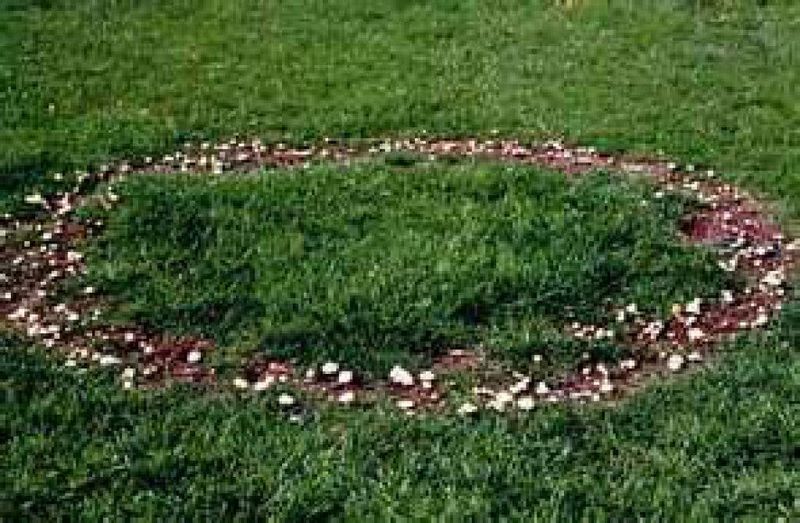
A single cluster of mushrooms after rain is one thing. A visible arc or full circle of them is something worth paying closer attention to, because it usually points to a specific underground feature rather than a general moisture event.
Fairy rings form when fungi colonize a concentrated underground food source, often a buried stump, a section of dead roots, an old log, or a dense accumulation of thatch or organic debris. The mycelium spreads outward from that central food source in a roughly circular pattern, and when conditions favor fruiting, mushrooms emerge along that arc.
UF/IFAS fairy ring research describes how these rings can develop anywhere fungi colonize buried organic matter in turf.
Not all fairy rings look the same or cause the same effects. Some produce a ring of mushrooms with little visible turf damage, and the grass inside and outside the circle stays essentially normal.
Others create a band of noticeably greener grass, fueled by nitrogen released as the fungi break down organic matter. Still others are associated with brown or dead turf within the ring, which can result from altered nutrient availability or from soil in the ring becoming temporarily water-repellent, meaning rain and irrigation can’t penetrate it as easily, leaving grass in that zone drought-stressed even when the surrounding lawn is adequately watered.
University of Georgia Cooperative Extension guidance on fairy rings in turfgrass distinguishes among these different expressions and notes that they should not be treated as a single interchangeable condition. A ring that produces mushrooms with no turf color change calls for a different response than one with a dead band that resists wetting.
If you notice a recurring circle in the same area of your lawn, inspect that spot for buried organic material. A stump that was ground down but left in place, old root mass, or a buried construction debris pile can all feed a ring for years.
Georgia Extension also confirms that the fungus can persist underground long after the visible mushrooms are gone, returning each time moisture conditions are favorable.
A temporary flush usually needs observation, not rescue
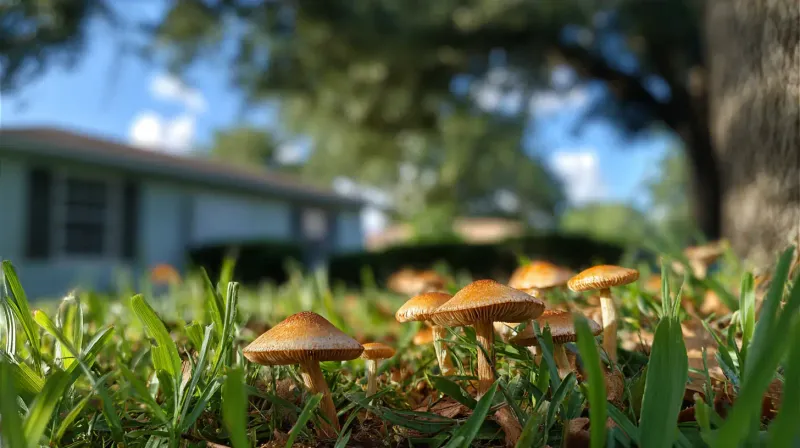
Most post-rain mushroom flushes in Florida are temporary, and a calm, methodical response works better than an urgent one. The first thing to do is simply watch the lawn for a day or two.
If the mushrooms dry up and don’t return, and the grass looks otherwise healthy, you’ve likely seen a normal fruiting event tied to a buried food source and favorable moisture.
For appearance and safety, you can knock mushrooms over, remove them by hand, or mow them down. UF/IFAS recommends collecting and discarding mushrooms when children or pets have access to the yard, since some species are toxic and young children may not distinguish lawn mushrooms from edible ones.
Bag them rather than composting them, and handle them with gloves if you prefer.
After a rain event, also check whether your irrigation system is adding unnecessary water. UF/IFAS watering guidance for Florida lawns recommends suspending irrigation after rainfall until the turf shows visible signs of drought stress, such as folded or bluish-gray grass blades, footprints that remain visible, or a wilted appearance in the hottest part of the day.
The appropriate amount per irrigation event, generally around one-half to three-quarters of an inch for established turf, varies with your grass type, season, soil, rooting depth, and how well your system distributes water evenly across the lawn.
While you’re checking the system, look for sprinkler heads that are leaking between cycles, zones that are overlapping and creating wet spots, or areas where water pools at the surface and runs off rather than soaking in. A rain shutoff device or a moisture-based controller can automatically prevent the system from running during or after rainfall.
UF/IFAS Florida-Friendly Landscaping guidelines recommend these controls as practical tools for avoiding overwatering without requiring constant manual adjustments.
The goal is to give the lawn what it needs based on actual conditions, not to water on a fixed schedule that doesn’t account for what just fell from the sky.
Safety comes before mushroom identification
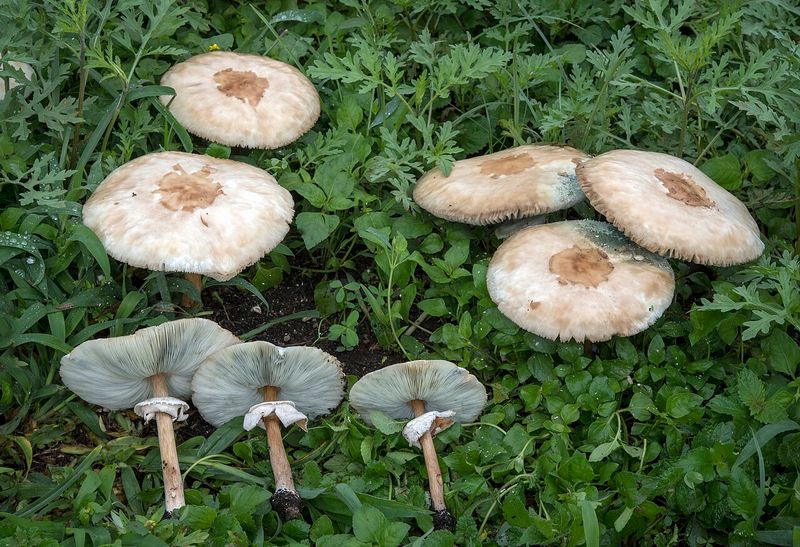
Florida lawns are not a safe foraging ground, and that point deserves plain language. The state’s warm, humid conditions support a wide variety of fungal species, and not all of them are harmless.
Some are genuinely toxic, and a few grow in ordinary suburban grass rather than remote forests.
One of the most common poisonous lawn mushrooms in Florida is Chlorophyllum molybdites, the green-spore poison parasol. UF/IFAS documentation on this species identifies it as a poisonous mushroom found in Florida lawns, where it can appear in large numbers, especially in summer.
It causes gastrointestinal illness and is responsible for a significant share of mushroom poisoning cases in North America. Children and pets face particular risk because the caps can look appealing and unremarkable.
Cap color, size, and general shape are not reliable identification tools. Look-alike species are common across many mushroom families, and even experienced foragers can be fooled.
Mowing a mushroom or picking it does not change its chemical composition. Photographs taken on a phone and compared to online images are not a safe identification method either, a point that Poison Control specifically warns against, noting that look-alikes make visual identification dangerously unreliable.
If a child or pet may have eaten a lawn mushroom, do not wait for symptoms to appear. Call Poison Control immediately at 1-800-222-1222.
Bring a sample of the mushroom if possible, or take a clear photograph of the cap, gills, stem, and base to help with identification. UF/IFAS mushroom resources can help connect Florida homeowners with local extension expertise, but in a possible ingestion situation, Poison Control is the right first call.
Mushrooms are not proof of lawn disease
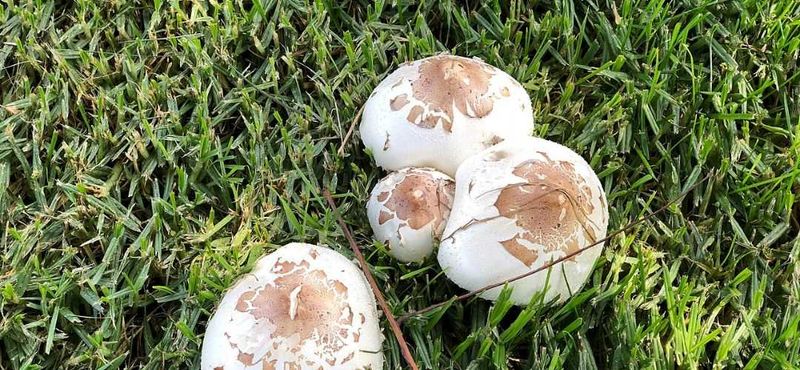
Seeing mushrooms in the grass can trigger alarm, but the mushrooms themselves are not the disease. A fungal fruiting body sitting on top of healthy-looking turf is a very different situation from a pathogenic fungus actively infecting and killing grass tissue.
Confusing the two can lead to treatments that the lawn doesn’t need and that won’t address what’s actually happening underground.
The distinction comes down to what the grass is doing. University of Minnesota Extension guidance on lawn mushrooms explains that most mushrooms appearing in lawns are not lawn pathogens and may be a nuisance without causing any turf damage.
If the grass around and between the mushrooms looks green, dense, and healthy, there is no strong reason to suspect a disease problem.
Turf disease shows up in the grass itself. Expanding dead or brown patches, leaf lesions that follow a recognizable pattern, thinning areas that don’t recover with adequate water, or roots that appear rotted or discolored when pulled up are the kinds of symptoms worth investigating.
Those observations, not the presence of mushrooms, are the cue to consider a disease diagnosis and, only if a diagnosis supports it, a fungicide application.
UF/IFAS guidance on fungicides for lawn disease is clear that these products are intended for diagnosed plant diseases and should be selected and applied according to the label after proper identification. Fungicide is not a routine response to mushrooms, and applying it without a confirmed disease target wastes money and may not resolve anything.
For fairy rings specifically, fungicide may not eliminate the underlying symptoms or the buried food source driving the ring.
Organic debris removal and aeration are similarly conditional. If recurring mushrooms trace back to a buried stump or a heavy thatch layer, addressing that source makes sense.
UF/IFAS lawn preparation research notes that thatch and compaction both affect turf health in measurable ways, but neither removal nor aeration is a universal prescription for every yard where mushrooms appear. Match the response to the observed problem rather than applying a standard fix to a symptom that may not need one.
And if the UF/IFAS fairy ring guidance applies to your situation, it reinforces that underground roots can keep mushrooms returning for years even after surface debris is cleared.
Read the lawn, not just the mushrooms
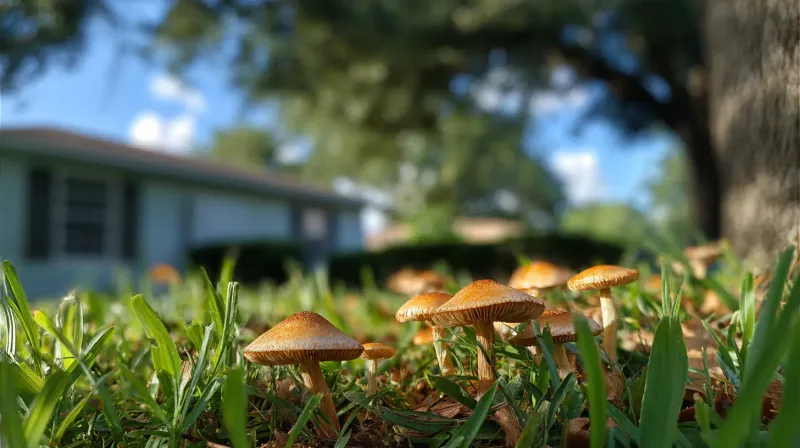
A post-rain mushroom flush is best read as a cue to look around, not as a verdict about your lawn. Extension guidance consistently frames lawn mushrooms as temporary fruiting events tied to moisture and an underground food source, not as diagnoses in themselves.
The practical question is always what else you’re seeing.
Check whether wet areas persist long after the rain stops. Look for fairy-ring patterns that suggest a buried stump or root mass.
Notice whether the grass near the mushrooms looks healthy or shows any thinning, browning, or lesions. Confirm that children and pets can’t access caps before they’re removed.
Review your irrigation schedule against recent rainfall rather than running it on a fixed timer. And if compaction or drainage issues show up in that walk-around, address those on their own terms.
Most temporary flushes call for observation and sensible watering rather than alarm or chemical treatment. The mushrooms showed up because the conditions were right; your job is to decide whether those conditions point to something worth changing or simply to a fungus doing what fungi do after Florida rain.