
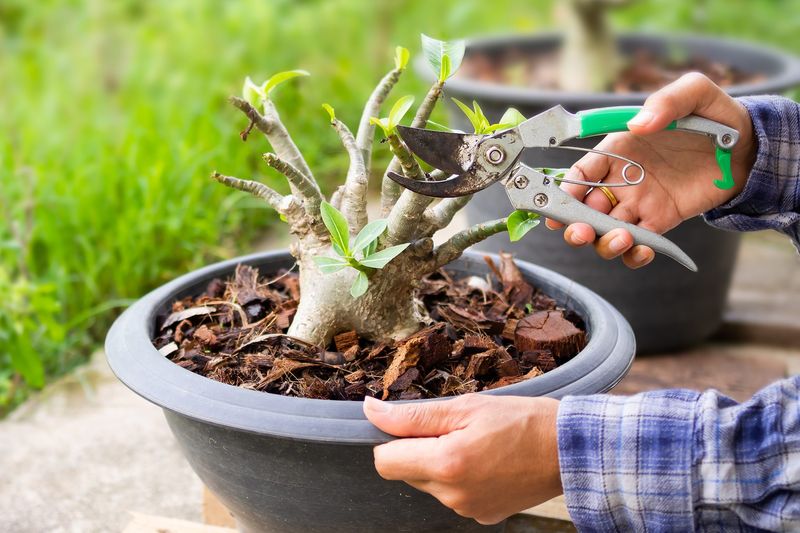
Desert rose is one of the showiest plants Florida gardeners can grow, and taking cuttings is the fastest way to multiply a favorite variety. The problem is that many people treat every cutting the same way, letting it sit dry for days as if it were a cactus or a generic succulent.
For a fresh, leafy desert rose stem, that approach works against the cutting rather than helping it. Matching the handling method to the cutting type is the most important shift a Florida gardener can make when trying to root adeniums successfully.
Match the method to the cutting
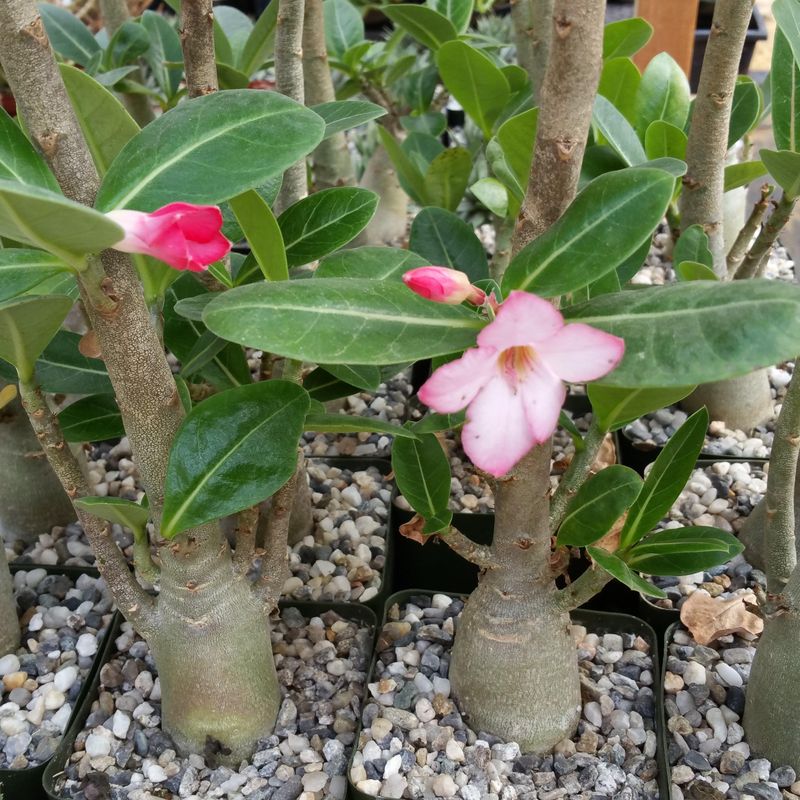
Every desert rose cutting is not the same, and the method that works for one type can easily damage another. Before reaching for rooting hormone or a propagation pot, take a few seconds to look at what you are actually holding.
A fresh, leafy stem taken from actively growing new growth behaves very differently from a thick, older branch that has already hardened off.
Leafy softwood cuttings are the primary focus here. These are current-season stems with green tissue, visible leaves, and a fresh, slightly moist cut surface.
They are actively metabolizing, which means they need consistent moisture management from the moment they leave the parent plant. Letting this type of cutting sit dry on a shelf for several days is asking it to lose water it cannot afford to lose while its tissue is still soft and vulnerable.
Older, more mature or leafless branches are a different case entirely. University of Arizona Cooperative Extension guidance on adeniums notes that longer, older branches can also root but generally require less moisture and humidity than leafy cuttings.
Applying the same high-humidity, keep-it-moist approach to a firm, leafless stem can create more rot risk than rooting success.
Before you do anything else, assess the cutting honestly. Is the stem firm or soft?
Does it carry healthy leaves, or is it bare wood? Is the tissue fresh and green, or has it already begun to harden?
UF/IFAS plant propagation guidance emphasizes that cutting condition at the time of collection strongly influences rooting outcome. Choosing a healthy stem from a disease-free parent plant, and knowing which propagation category it falls into, puts you ahead of most common mistakes before you even mix a single drop of rooting hormone.
Handle a leafy softwood cutting while it is fresh
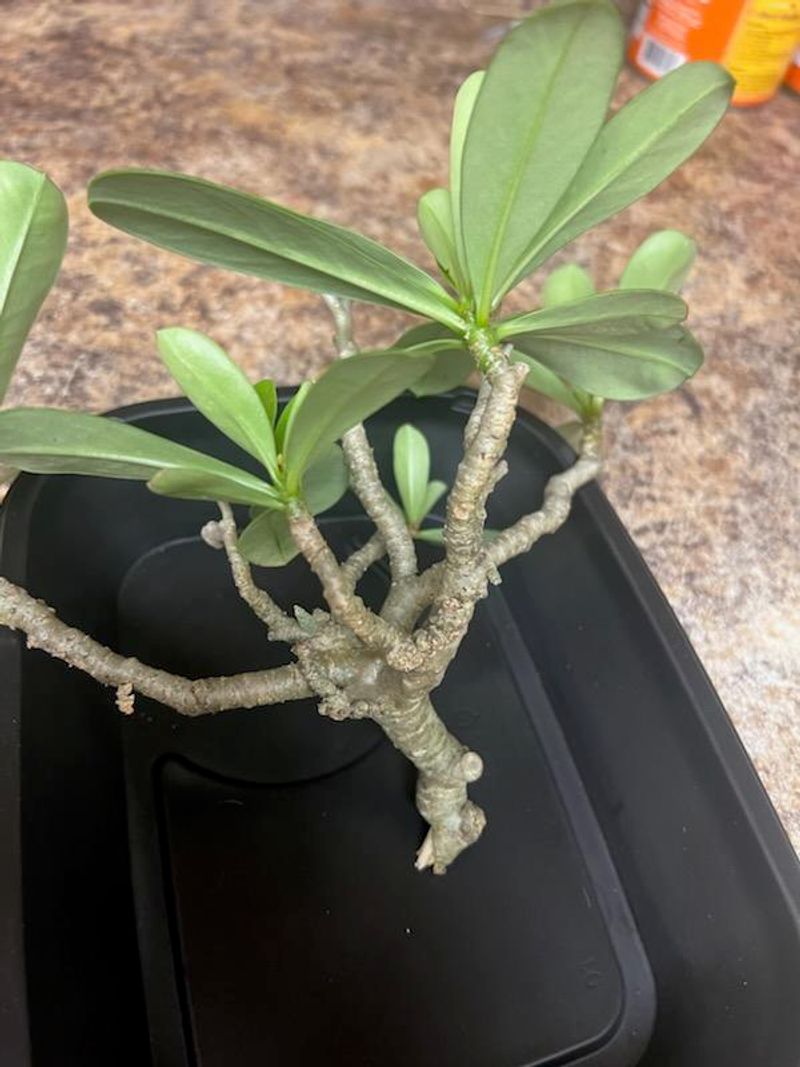
The single most useful adjustment for a leafy, soft-tissue desert rose cutting is also the simplest: do not let it dry out before planting. Arizona Cooperative Extension’s adenium guide specifically advises against allowing leafy soft-tissue cuttings to dry out or form a prolonged callus before insertion.
The cut end should be treated and placed into a very well-drained medium promptly, not set aside to air-dry on a potting bench for days.
This recommendation applies to fresh, leafy softwood cuttings and should not be generalized to every desert rose cutting or every succulent in your collection. The logic behind it is straightforward: a leafy cutting is still losing water through its leaves even after it has been separated from the parent plant.
A prolonged drying period that might protect a thick cactus pad from rotting at the cut surface can instead dehydrate a leafy adenium stem before it ever gets a chance to produce roots.
The practical routine is direct. Take the cutting, treat the cut end if you are using rooting hormone, and insert it into a prepared medium the same day.
Some growers work within an hour of taking the cutting. The key is to minimize the time between the cut and the moment the stem is in contact with a moist, supportive medium.
One important qualifier: published adenium propagation advice is not completely uniform across all sources, and cutting condition, cultivar, season, and your specific environment all affect results. What the Arizona Extension guidance establishes clearly is that the leafy softwood case does not benefit from the prolonged dry callusing period sometimes used for other succulents.
Working while the cutting is fresh and healthy is the best-supported starting point for this type of stem.
Prepare the cutting safely and use hormone selectively
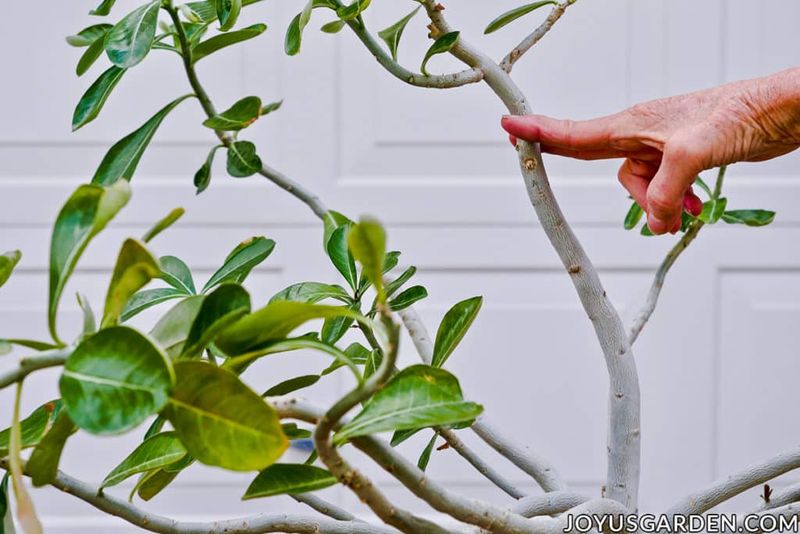
Clean tools matter more than most gardeners expect at the propagation stage. A dull or dirty blade crushes stem tissue and can carry disease from one plant to the next.
Use a sharp knife or pruner, and wipe the blade with a clean cloth or dip it in a dilute bleach solution between cuts. UF/IFAS propagation guidance recommends clean, sharp cutting tools and disease-free media as baseline practices for successful stem cuttings.
Desert rose sap is not something to take lightly. UF/IFAS guidance on houseplants and pet toxicity identifies desert rose as containing cardiac glycosides, compounds that can cause serious illness or death if ingested by pets or people.
Wear gloves every time you handle cuttings, wash your hands thoroughly after finishing, and keep fresh cuttings, trimmed leaves, and any sap-coated tools away from children and animals. Do not leave cut stems sitting where a pet could reach them.
Rooting hormone is optional, not mandatory. A University of Florida graduate study on adenium tip cuttings found that untreated control cuttings sometimes reached 100% rooting after four weeks under greenhouse mist.
Hormone treatments in that research tended to increase root number or root length rather than consistently raising the percentage of cuttings that rooted at all. That does not mean hormone is useless, but it does mean skipping it is not automatically a mistake.
If you choose to use a commercial rooting hormone, follow the product label rather than copying concentrations from research papers. The UF study tested IBA concentrations from 1,000 to 8,000 mg/L under controlled greenhouse mist, conditions that differ significantly from a home patio setup.
Commercial products vary in formulation and strength, so the label is your most reliable guide for safe and effective use at home.
Build the container around drainage
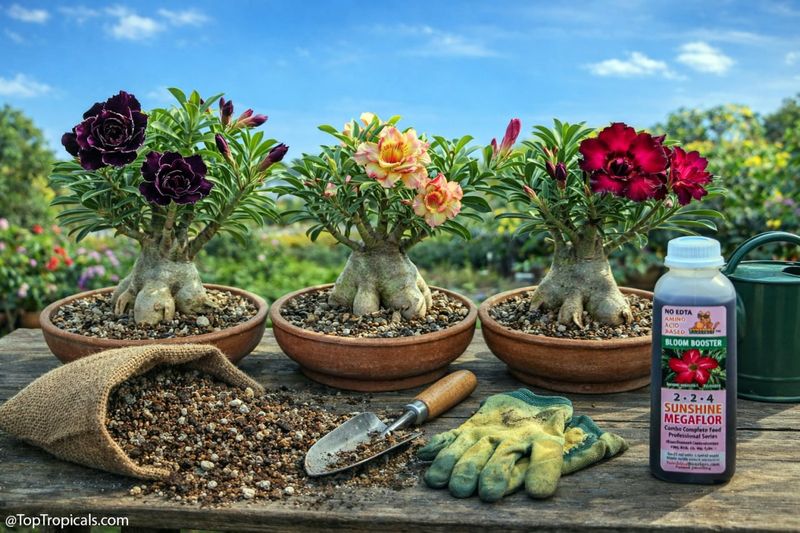
The container and medium you choose will either support rooting or undermine everything else you do correctly. Garden soil is not appropriate for the propagation stage.
Dense standard potting mixes can hold more moisture than a rooting desert rose cutting can tolerate, especially in a small container that sits in Florida rain. UF/IFAS plant propagation guidance calls for disease-free, freely draining media, and that standard should be the minimum for adenium cuttings.
Practical medium options include perlite and peat blends, coarse sand mixed with perlite, vermiculite, or coir-based combinations that drain quickly and resist compaction. UF/IFAS adenium care guidance notes that desert rose requires well-drained conditions and does not tolerate waterlogging.
No single formula is mandatory, but the common thread across all workable options is that water moves through quickly and the medium does not stay soggy between waterings.
Container size and drainage hole quality matter just as much as the mix itself. A small pot with a single small drainage hole can stay wet for days after a Florida afternoon downpour.
Arizona Extension’s adenium guide warns that excessive irrigation causes rot in adeniums, a risk that is amplified in Florida’s rainy season when a container can receive an inch of rain before you have a chance to move it.
Choose a pot with generous drainage holes and consider elevating it slightly so water can exit freely. Terracotta pots dry out faster than plastic and can be a practical advantage during rooting, particularly in humid Florida conditions where evaporation from the pot walls helps prevent the medium from staying wet too long.
Whatever container you use, check that it drains completely within a few minutes of watering rather than pooling water at the bottom.
Control warmth, light, and moisture during rooting
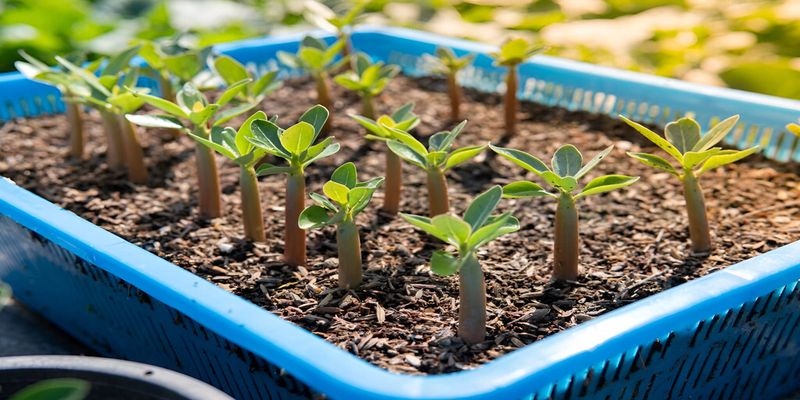
Once the cutting is in the medium, the rooting environment becomes the main variable you can still manage. Arizona Extension recommends a very warm, moderately illuminated rooting environment for adenium cuttings, and notes that an enclosed chamber can be used to maintain humidity around the cutting.
The target is a medium temperature in the range of 80 to 90 degrees Fahrenheit, which Florida’s warm season naturally supports outdoors.
Moderate light means bright indirect light rather than direct Florida afternoon sun beating down on a fresh cutting or a covered container. A clear plastic dome or bag placed over the cutting can trap enough heat to scorch tissue quickly if left in full sun.
A shaded porch, the north or east side of a structure, or a spot under a shade cloth gives the cutting the warmth it needs without the dehydrating intensity of direct midday exposure.
UF/IFAS guidance on adenium confirms that the plant performs best between approximately 75 and 95 degrees Fahrenheit, which means Florida’s warm season already provides useful ambient heat without supplemental heating mats in most cases. The challenge is not generating warmth but preventing the medium from swinging between bone-dry and waterlogged.
Check the medium every day or two by pressing a finger about an inch into the mix. It should feel slightly moist, not wet and heavy, and not powdery dry.
Florida humidity does reduce evaporation from leafy tissue, which is a modest advantage, but it does not protect a poorly drained pot from rot. UF/IFAS propagation guidance notes that pathogens like Pythium and Rhizoctonia thrive in constantly wet propagation media, so protecting cuttings from rain saturation with a covered or sheltered location is a practical precaution rather than an optional extra.
Lift a cover briefly each day to allow fresh air in and prevent the stagnant, overly moist conditions that encourage fungal problems.
Give mature stems a less humid routine
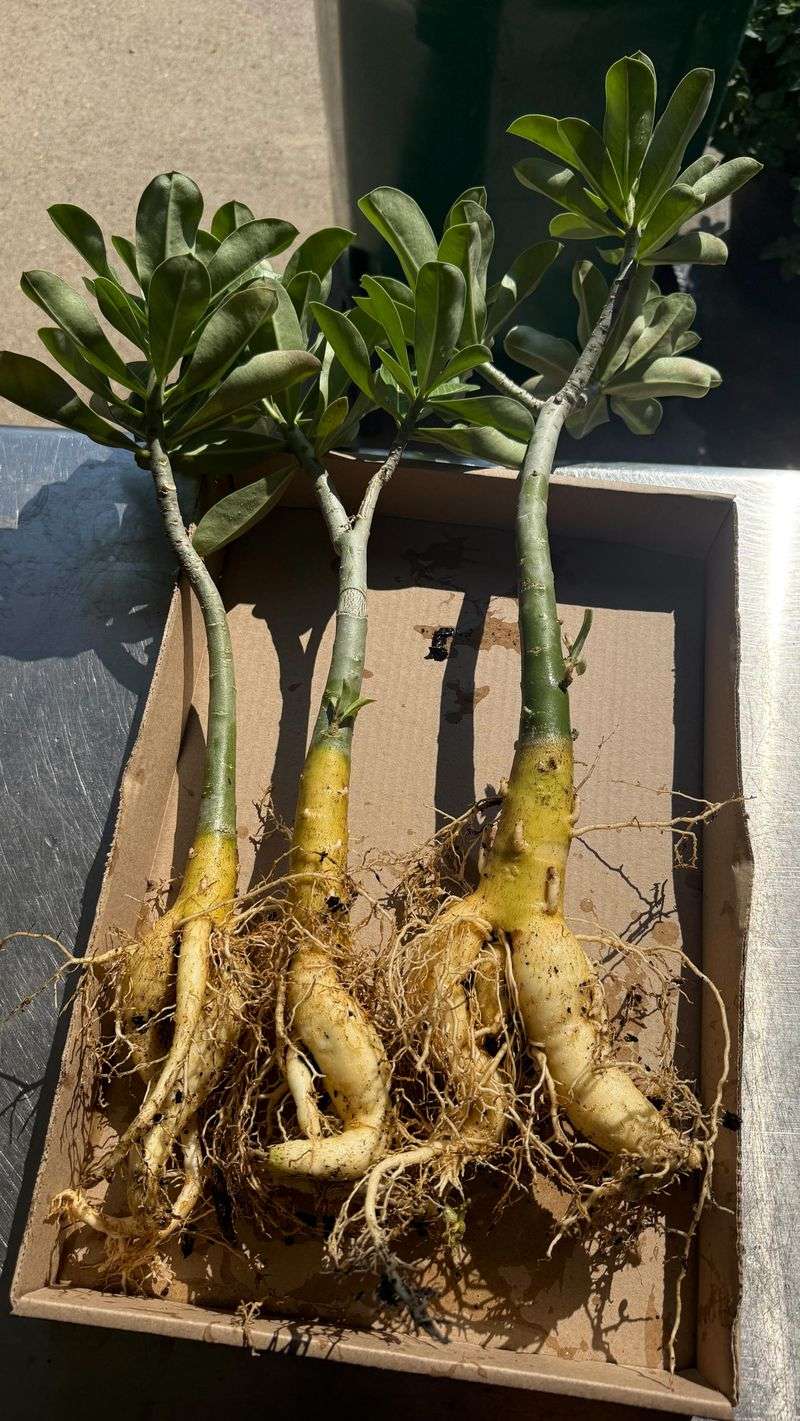
Not every desert rose cutting you take will be a fresh, leafy softwood stem. Older branches, including thicker sections taken during pruning or from a plant that has dropped its leaves seasonally, follow a different set of rules.
Treating them exactly like a leafy cutting is one of the more common ways to lose a stem that had a reasonable chance of rooting.
Arizona Extension’s adenium propagation guidance acknowledges that longer, older branches can root but generally need less moisture and humidity than leafy cuttings. A mature stem carries less active leaf surface, loses less water through transpiration, and is more tolerant of a drier rooting environment.
Keeping it in a high-humidity enclosed setup for weeks can encourage rot at the cut end rather than root development.
For mature or leafless stems, a more conservative moisture approach makes sense. Allow the cut surface to rest in open air for a day or two before inserting it into a dry or barely moist medium.
Check for softening or discoloration at the base regularly, and water only when the medium has dried out rather than on a fixed schedule.
Published adenium propagation advice is not perfectly consistent across all sources, and the right approach for a specific mature stem will depend on its condition, the time of year, and how much humidity your propagation spot already has. The useful working rule is to move toward drier conditions as the stem gets older and woodier, and to reserve the fresh-handling, keep-it-moist approach for the leafy softwood cuttings it was designed for.
When in doubt, err on the side of less moisture for a thick, leafless stem rather than more.
Harden the new plant before normal care
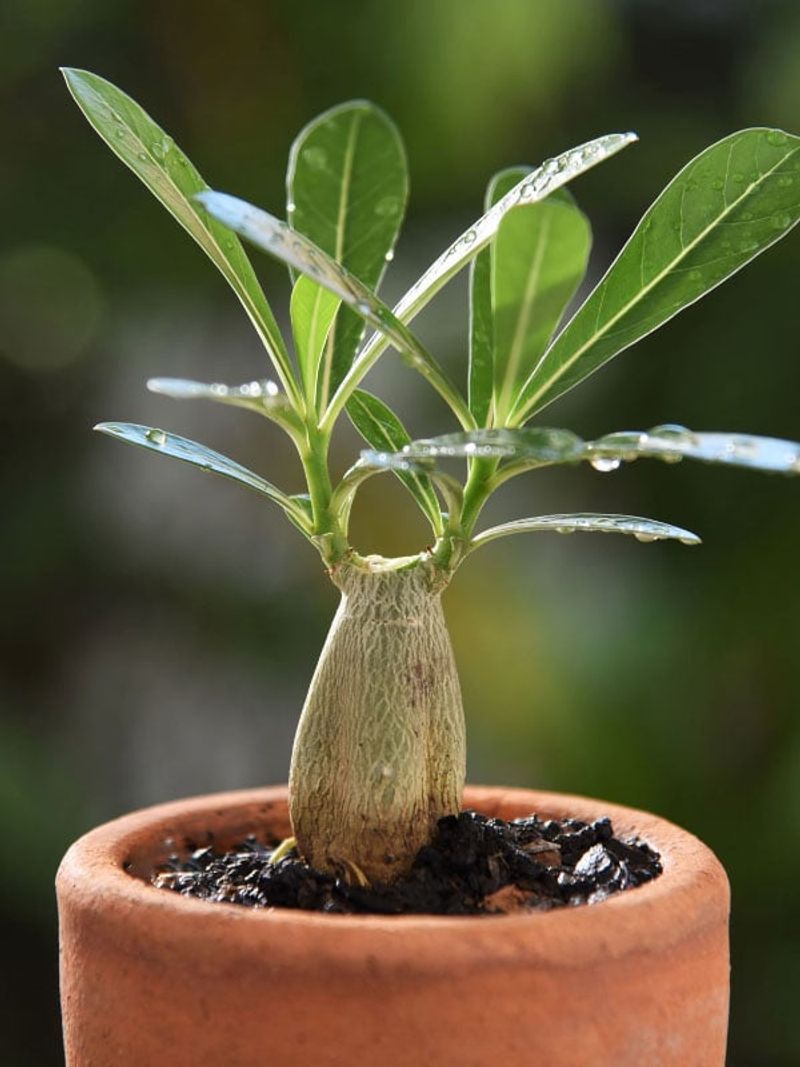
Roots and new leaf growth are encouraging signs, but a cutting that has just rooted is not ready for the full Florida sun and irregular watering of a mature plant. The transition period, called hardening off, is where many otherwise successful propagations fail.
UF/IFAS propagation guidance warns that inadequately hardened cuttings are significantly less likely to survive after leaving a protected propagation environment.
Start by removing any humidity cover for progressively longer periods each day over the course of one to two weeks. Then move the cutting from its shaded propagation spot toward brighter indirect light before introducing it to direct sun.
Transplant into a slightly larger container with a well-draining potting mix only after the root system looks established enough to handle the disturbance, and water carefully rather than soaking the new pot immediately.
Arizona Extension notes that vegetative propagation produces plants genetically identical to the parent, which is the main reason gardeners take cuttings from a named cultivar they want to preserve. However, cuttings do not instantly develop the thick, sculptural caudex associated with mature or seed-grown desert roses.
Research on adenium growth management confirms that seed-grown plants are often favored specifically for stronger early caudex development, while cuttings are valued for trueness to type. A rooted cutting will develop its own caudex over time, but the timeline is measured in years, not weeks.
Florida gardeners also need to account for cold weather, particularly in northern and inland parts of the state. UF/IFAS identifies desert rose as cold-sensitive, noting that it does not tolerate freezing temperatures.
South Florida growers enjoy a longer warm-season window, but gardeners in central and north Florida should plan to move newly rooted cuttings to a protected spot as temperatures drop in late fall, giving the young plant the best possible chance to establish before any cold risk arrives.
Use the evidence-backed decision rule
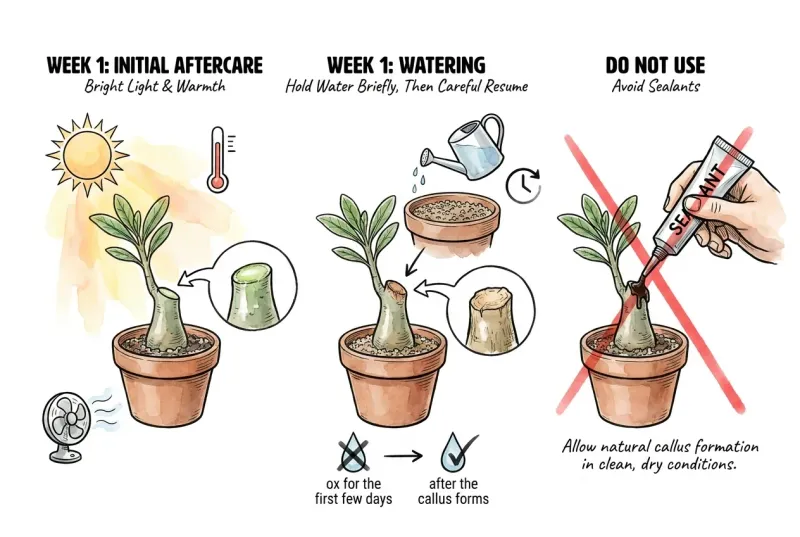
For a fresh, leafy desert rose cutting, the best-supported approach is straightforward: work while the cutting is fresh, skip the prolonged dry callusing period, and insert the stem promptly into a very well-drained medium. Use a labeled rooting hormone if you want to, knowing it may improve root number or length but is not a guaranteed requirement.
Keep the medium moist without letting it stay wet, provide warmth, and protect the cutting from direct sun and rain saturation.
Arizona Extension adenium guidance and UF/IFAS adenium care recommendations together support fresh handling, fast drainage, and controlled moisture as the core of a reliable propagation routine for this cutting type. University of Florida research on adenium tip cuttings shows that results vary by cultivar, cutting condition, hormone treatment, and environment, so no single method guarantees success across every situation.
Switch to a drier, less humid approach when you are working with an older, leafless, or mature stem. Adjust your moisture management as Florida’s weather shifts between the rainy and dry seasons.
The adjustment that matters most is knowing which type of cutting you have in your hand before you decide how to treat it. A gardener who reads the cutting first and matches the method to the material will lose fewer stems than one who applies a single rule to every adenium branch they take.