
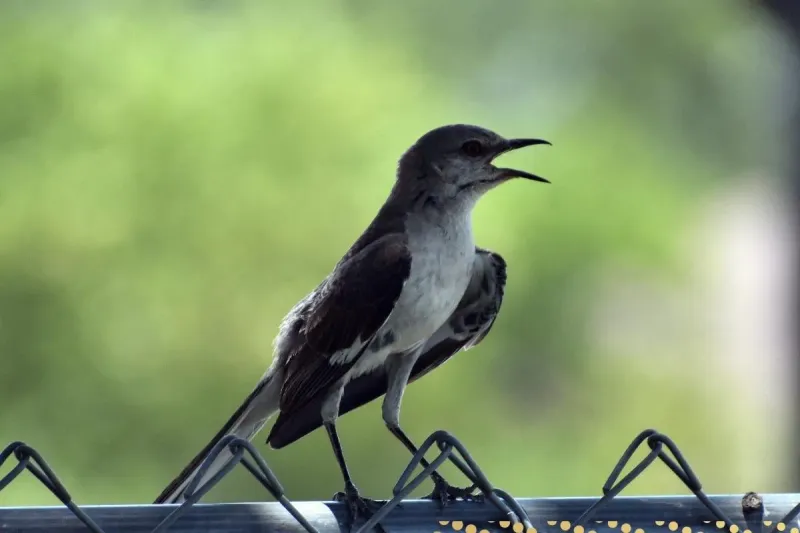
Something is singing outside your Florida bedroom window at midnight, and it sounds like an entire flock of birds rolled into one. Chances are good it is a single Northern Mockingbird running through a rapid-fire set of borrowed sounds, and understanding why it shows up after dark makes the situation a lot easier to handle.
Knowing what drives the behavior, and what you can do about it without harming the bird, is the practical goal here.
A varied, imitative song often points to one mockingbird
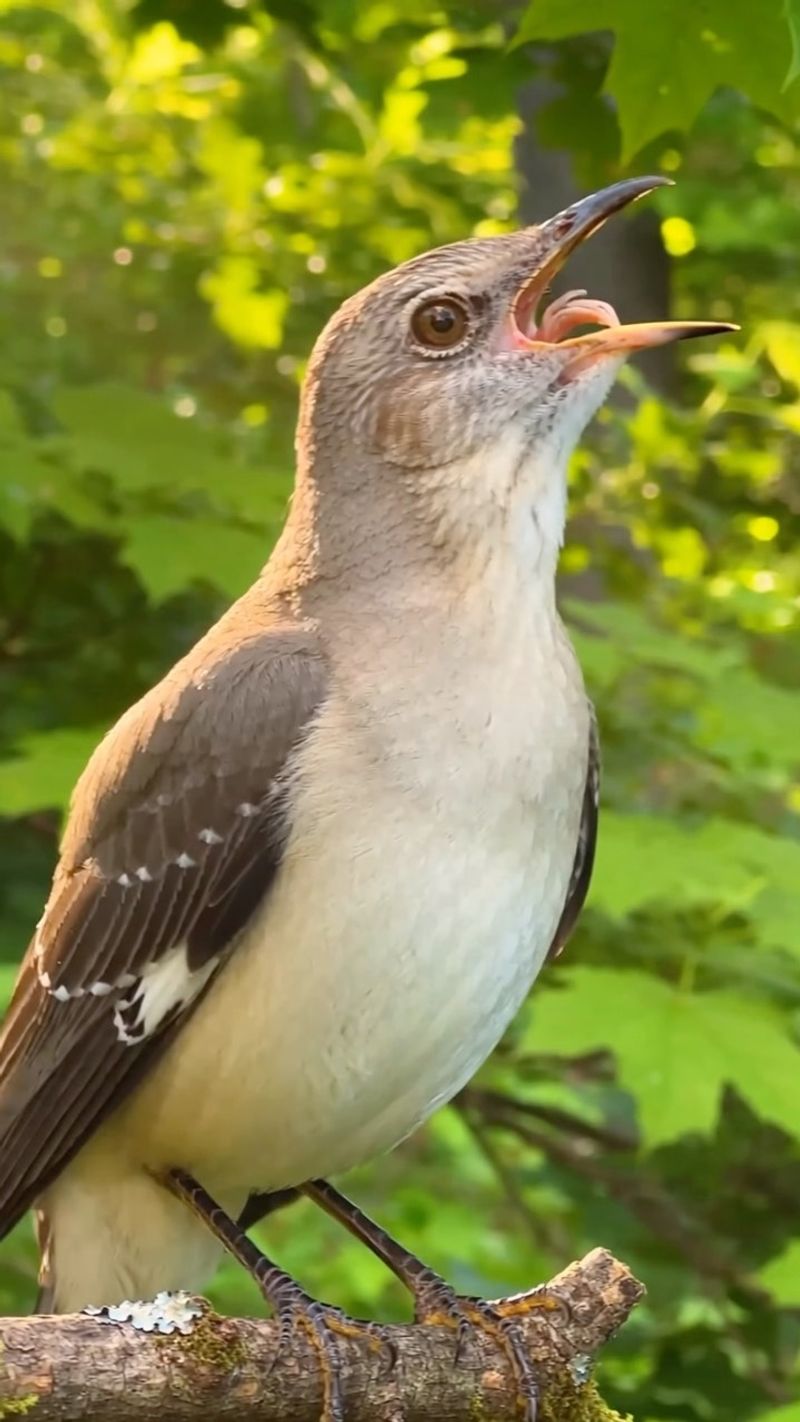
Rapid-fire phrases that keep changing, sounds borrowed from other birds, car alarms, frogs, and even squeaky gates – if that description matches what you heard outside your window, a Northern Mockingbird is the most likely explanation. Cornell Lab’s Northern Mockingbird profile describes the species as capable of imitating dozens of other birds, animals, and mechanical noises, cycling through phrases so quickly that one bird can sound like an entire nighttime chorus.
That mimicry is the clearest field mark you have at night, when seeing the bird is not an option.
Each phrase gets repeated a few times before the bird switches to something completely different. A robin call, then a blue jay scold, then something metallic, then back to a warbler-like trill – all from the same perch, the same throat.
Audubon’s Northern Mockingbird field guide notes that an adult bird may accumulate a repertoire of well over 100 distinct sound types over its lifetime, adding new ones as it encounters them.
Timing alone cannot confirm the species, though. Other nighttime callers share Florida nights, including Eastern Screech-Owls, Northern Bobwhites, nightjars, frogs, toads, and crickets.
The combination of a long, varied, persistently imitative song with rapid phrase switching is what points toward a mockingbird. A single repeated hoot, a steady insect buzz, or a chorus of frogs suggests something else entirely.
Why does a mostly daytime bird sing after dark?
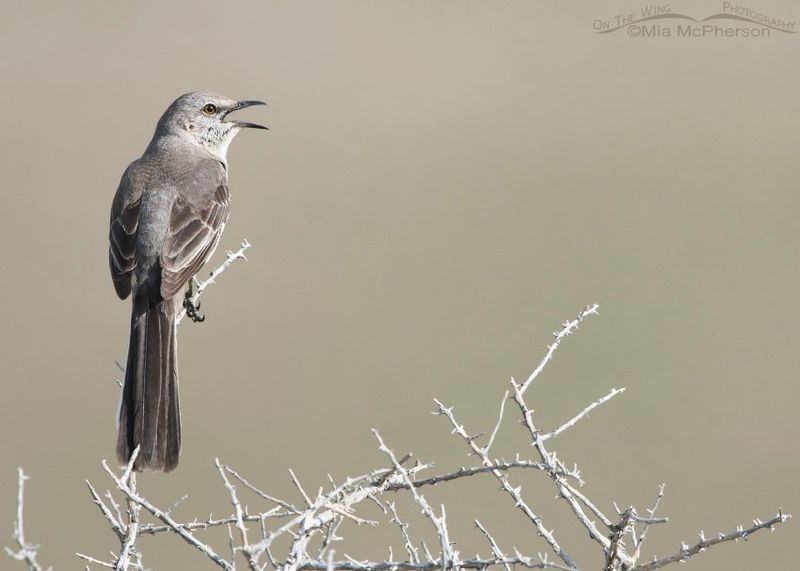
Hearing a mockingbird at midnight does not mean the species has gone nocturnal. Northern Mockingbirds are primarily daytime birds, and historical survey work on bird song held at the Florida Museum confirms that sustained nighttime performance is an extension of normal activity rather than a sign that the species has switched schedules.
Think of it as overtime, not a shift change.
The strongest pattern researchers have found ties nighttime singing to unmated males. A study on singing behavior in mated and unmated Northern Mockingbirds found that unmated males sang disproportionately more at night than mated males did.
The working explanation is that a male without a partner has more to gain from advertising around the clock, since a female responding to his song at 2 a.m. is still a potential mate.
That does not mean every nighttime singer is unmated, though. A mated male may continue singing to hold his territory against rivals.
A male whose partner is sitting on eggs may stay active while she incubates, keeping competitors away from the nest site. Pair-related behavior, territorial pressure, and individual temperament can all push a bird to sing past sunset, and you cannot determine which factor applies to the bird outside your window just by listening.
The honest answer is that nighttime singing has more than one possible cause, and those causes can overlap. The bird is not confused, lost, or distressed.
It is doing what mockingbirds sometimes do, extending vocal activity into hours when most other songbirds go quiet, for reasons that may involve mate attraction, territorial defense, or simply individual variation that researchers have not fully mapped.
Florida’s broad breeding season makes the timing plausible
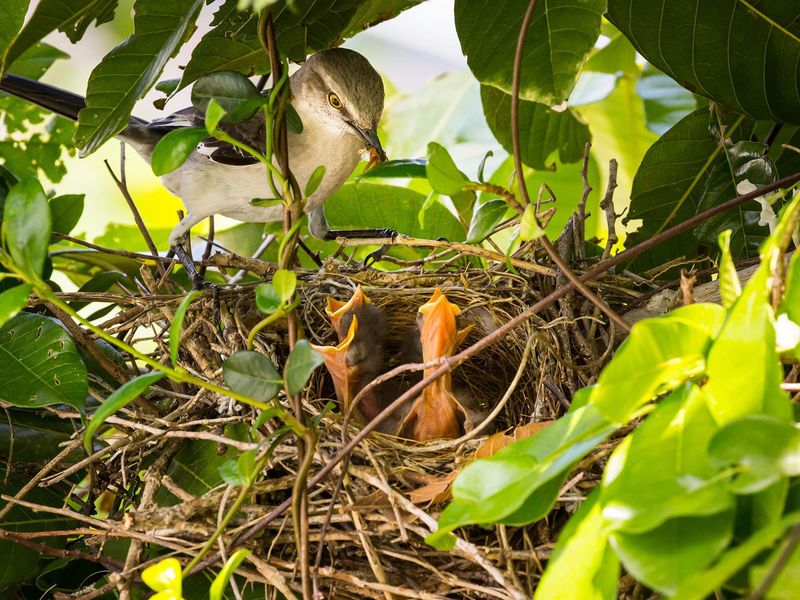
Florida’s mockingbird nesting season runs roughly from late February through early August, though local conditions shift those boundaries considerably. University of Florida research on mockingbird nesting biology across seasons shows that timing varies with latitude, local weather, available habitat, and how many broods a pair attempts in a single year.
A pair that completes one brood early in the season may begin a second or third, which means active nesting behavior can stretch across most of the warm months.
Within that long window, a nighttime singer could be at any stage of the reproductive cycle. Early in the season, an unmated male advertises for a partner.
Once a pair forms and a nest goes up, the male shifts toward territorial defense, though singing continues. During incubation, when the female sits on eggs for roughly twelve days, the male may remain vocal nearby.
After chicks hatch, both parents focus on feeding, but territorial singing does not necessarily stop.
Knowing this context helps set realistic expectations. If you hear persistent after-dark song in March, April, May, or June, the timing fits squarely within active nesting activity.
A song in July is still plausible, particularly if the pair is on a second or third brood. Research linking nighttime singing to unmated males suggests that early-season singers may be birds still looking for partners, while later-season singers may be defending established territories.
What the broad season does not provide is a predictable end date. The singing may quiet down when a bird finds a mate, when a brood fledges, or when the season winds down, but none of those transitions comes with a calendar guarantee attached.
Nearby perches explain the window; light may contribute indirectly
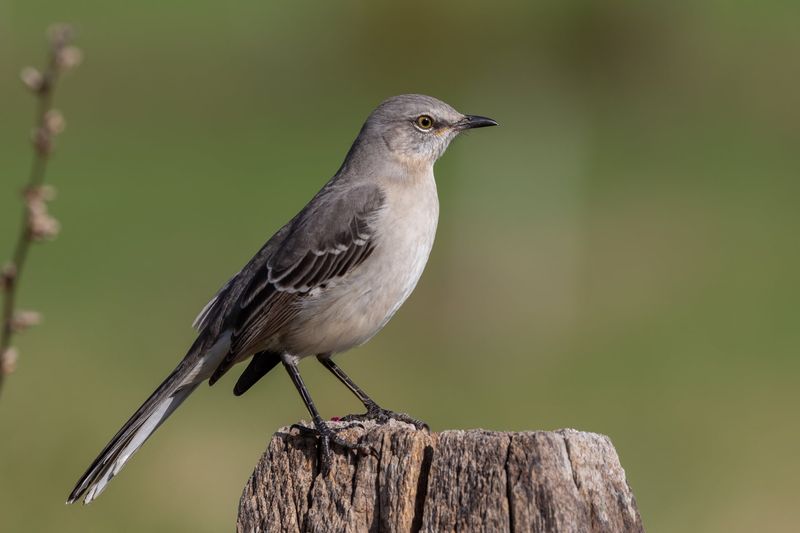
Mockingbirds are drawn to exactly the kind of habitat most Florida suburban yards provide. Audubon’s field guide to the Northern Mockingbird describes the species as favoring open areas with scattered shrubs, hedges, and elevated perches, which is a near-perfect description of a typical Florida residential lot.
A roofline, a utility wire, a fence post, or the top of a podocarpus hedge next to a bedroom window can all serve as a singing platform. The bird is not targeting your house specifically; it is using the best available perch in its territory.
Moonlight adds another layer. Cornell Lab notes that mockingbirds are more likely to sing at night around bright full moons, though the exact mechanism behind that pattern is not established.
Brighter conditions may simply make nighttime activity more feasible, allowing the bird to see predators, navigate its territory, or assess its surroundings with less risk. The moon correlation is real, but it does not mean the bird is reacting to moonlight the way a light switch responds to a flip.
Artificial light is a plausible contributor, though the evidence is more indirect. A Florida study published in The Wilson Journal of Ornithology found that mockingbirds near brighter sites fed nestlings later after sunset than birds at darker sites.
That finding is about feeding behavior, not singing, and residential sites in the study did not behave identically to the brightest parking-lot locations. It is reasonable to think that artificial light may make nighttime activity easier for a mockingbird, but your porch light is not making the bird believe it is still afternoon.
The practical takeaway is that your yard’s structure matters more than any single factor. A bird with a good elevated perch near food, cover, and a possible nest site has every reason to stay close, and to keep singing from the spot that works best.
Start with the quietest, lowest-risk fixes

Before trying anything elaborate, start with the two changes that cost nothing and carry no risk to the bird. Turn off exterior lights near the perch, including porch lights, floodlights, landscape uplighting, and any decorative string lights close to the area where the bird sings.
Audubon’s bird FAQ specifically notes that turning off bright outdoor lights may help quiet a nighttime mockingbird, framing it as a reasonable trial rather than a certain fix. If the light has been making the bird’s overnight activity easier, removing it may shorten the performance.
The second step is managing what comes through the window itself. Close blinds or curtains before dark, particularly on the side of the house closest to the bird’s perch.
Indoor light leaking through uncovered glass can create a lit surface that is visible from outside, and reducing that glow lowers one more possible stimulus. Cornell Lab’s practical advice on all-night singers recommends closing windows and using a fan or white noise machine as a way to reduce how much of the song reaches you, which addresses the sleep problem even if the bird keeps singing.
Neither of these steps is guaranteed to stop the song. A bird that has been using a perch for weeks may continue using it regardless of light changes, especially if the territory and habitat remain attractive.
The goal at this stage is to reduce stimulation and protect your sleep without doing anything that could harm the bird, disturb a nest, or create a bigger problem. If the low-risk steps do not help enough, the next question is whether the bird is singing or doing something different at the glass entirely.
Separate singing from a bird attacking its reflection
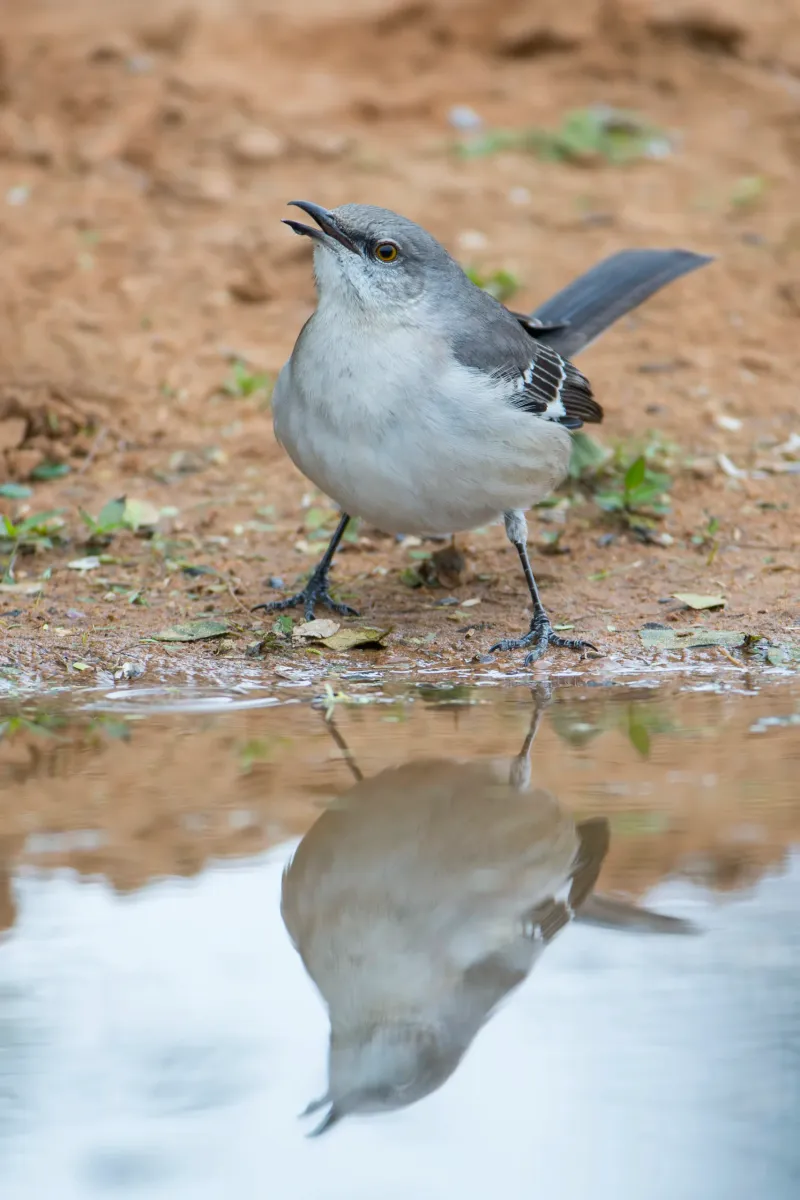
A mockingbird perched nearby and vocalizing is a different situation from a mockingbird repeatedly striking, lunging at, or fanning its wings toward a window. The second behavior is territorial, not vocal.
The bird sees its own reflection in the glass, reads it as a rival male, and responds the way it would respond to any intruder: with displays, charges, and repeated attacks on the surface.
Reflection-related behavior calls for glass management, not lighting changes or nest searches. Audubon recommends breaking up the reflection with exterior window markings, tape strips, or screens placed on the outside of the glass.
Soap or tempera paint applied to the outer surface in a pattern also works. The goal is to interrupt the mirror-like quality of the glass so the bird no longer sees a convincing rival staring back.
Do not respond to window-striking behavior by going outside to inspect nearby shrubs, pruning vegetation around the window, or attempting to locate and remove a nest. Those actions disturb the bird’s habitat and can push a nesting pair toward abandoning eggs or young.
The bird is not attacking the window because of a nest problem; it is reacting to its own image. Fix the glass surface, and the behavior typically fades once the visual trigger disappears.
If you are unsure whether you are dealing with a singer or a striker, spend a few minutes watching from inside. A singer perches, stays relatively still, and fills the air with sound.
A striker moves repeatedly toward the glass, may leave smudge marks or feather impressions on the surface, and shows agitated wing and tail postures between approaches. The two problems look and sound different, and they need different responses.
Protect active nests and avoid harmful deterrents
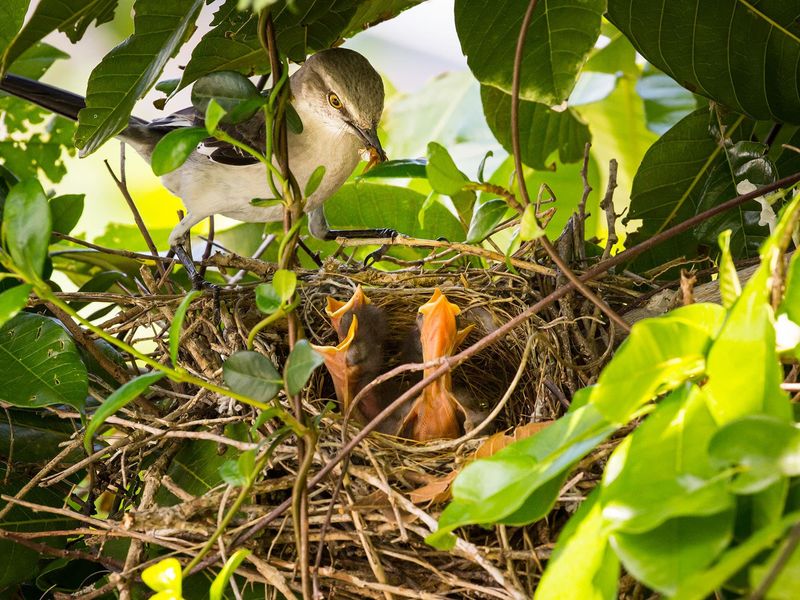
Mockingbirds commonly nest in dense shrubs, small trees, and hedges close to houses. If you notice a bird making repeated trips to a particular shrub near your window, or if you can see a cup-shaped nest from a distance, treat the area as off-limits until the nesting cycle ends.
Observe from inside or from well across the yard, and avoid walking up to inspect the nest closely, handling any part of it, or pruning the surrounding vegetation while it is active.
The precaution here is practical as well as legal. U.S.
Fish and Wildlife Service guidance on bird nests explains that active nests containing eggs or dependent young are protected under the Migratory Bird Treaty Act, which covers Northern Mockingbirds. Disturbing, damaging, or destroying an active nest, or taking eggs or young, can constitute a federal violation.
This is a separate point from the general precaution to leave wildlife alone: the legal protection applies specifically to active nests with eggs or chicks present.
At the state level, Florida Fish and Wildlife Conservation Commission’s protected wildlife permit page addresses what permits are available for wildlife conflicts. For most residential situations involving a singing or nesting mockingbird, no permit pathway exists for removing an active nest; the appropriate step is to wait out the nesting cycle.
If the situation creates a genuine safety or structural problem, contact FWC directly for guidance rather than acting on your own.
Two deterrents to avoid entirely: cutting down the shrub while a nest is active, and draping loose netting over vegetation as a general bird repellent. Cornell Lab warns that small birds can become entangled in netting, which can cause injury or death.
Removal of a nesting shrub during an active cycle destroys the nest along with it. Neither action is a safe first-line response to a singing bird.
As the Florida Department of State notes, the Northern Mockingbird is Florida’s state bird, a native songbird that consumes insects and fruit and plays a role in local ecosystems. The practical path forward focuses on reducing stimulation and protecting sleep, not on eliminating a bird that belongs here.
The singing may lessen without changing the yard
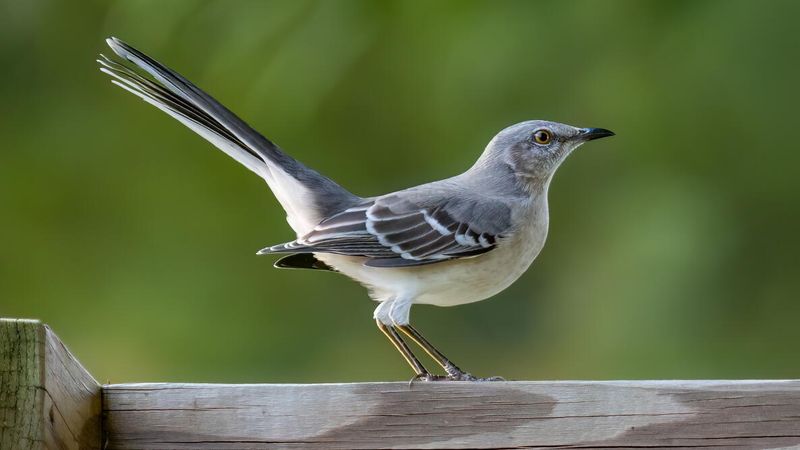
Singing tied to a specific breeding episode often fades on its own as circumstances shift. A male that finds a mate may reduce nighttime output once the courtship pressure eases.
A bird focused on feeding nestlings has less energy to spare for extended vocal performances. When a brood fledges and the young birds disperse, the territorial pressure that drove some of the singing may drop as well.
None of those transitions comes with a predictable date, and individual birds vary considerably, but the pattern suggests that patience is a reasonable strategy alongside the low-risk steps already described.
Before assuming the singer outside your window is definitely a mockingbird, run through the checklist one more time. Is the song long, varied, and imitative, with rapid phrase switching?
Does it come from a single perch rather than moving through the yard? Audubon’s bird FAQ and Cornell Lab’s mockingbird overview both note that Eastern Screech-Owls, Northern Bobwhites, nightjars, frogs, toads, and crickets all vocalize after dark in Florida.
A steady trill, a repeated two-note whistle, or a chorus rising from the ground points away from a mockingbird and toward something else.
If the sound pattern fits, the sequence is straightforward: reduce exterior lighting near the perch, close blinds to limit window glow, add white noise inside to soften the intrusion, and leave any active nest or nesting vegetation completely undisturbed. Cornell Lab’s all-night singer guide frames the situation clearly: the bird is not malfunctioning, and neither is your yard.
A mockingbird performing at midnight is simply doing what Florida mockingbirds sometimes do, and most of the time, the season eventually catches up with it.