
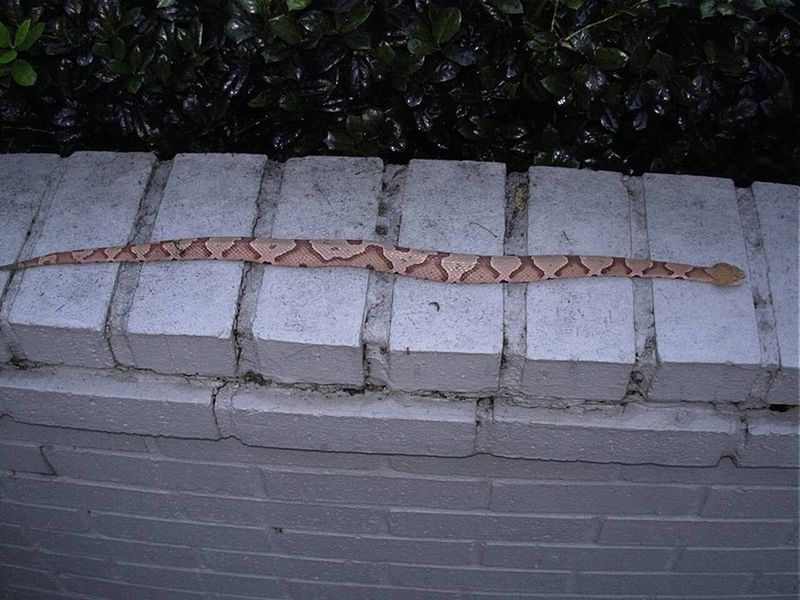
Every fall, North Carolina homeowners spend more time stacking firewood, clearing garden beds, and poking around retaining walls without a second thought about what might be resting just out of sight. Copperheads are the state’s most common venomous snake, and a shaded opening in a stone wall or block system can offer the kind of sheltered refuge they favor.
That does not mean every crack hides a snake, but it does mean blind reaching into wall gaps deserves more caution than most people give it. Understanding what actually raises the risk, and what to do when it does, can protect you, your kids, and your pets this season.
Why a North Carolina wall deserves caution this fall
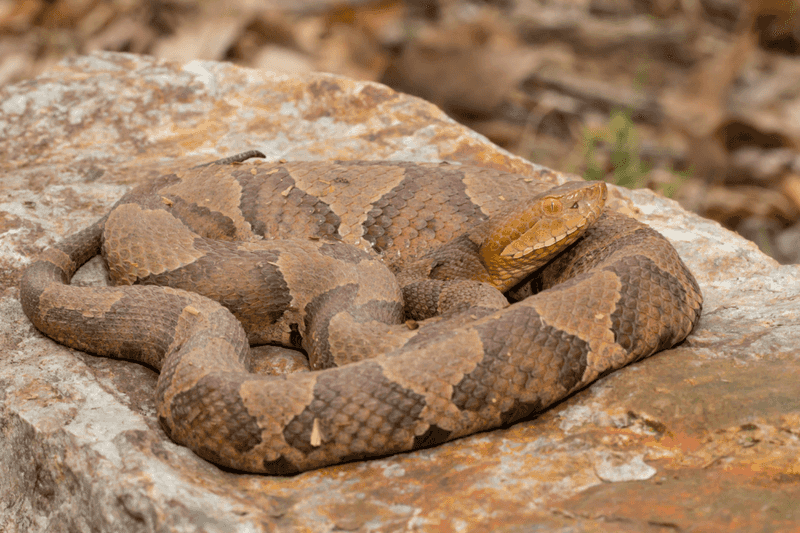
Copperheads live in every county in North Carolina, and they tolerate neighborhoods, yards, and garden edges better than most venomous snakes. According to the N.C.
Wildlife Resources Commission, copperheads account for probably more than 90 percent of venomous snakebites in the state, while the large majority of snakes North Carolinians encounter are completely harmless. That statistic is not a reason to panic, but it is a reason to slow down around any concealed space where a snake could rest unseen.
Fall adds a layer of seasonal relevance. North Carolina’s reptile database records a mating period running from September through October, and the Wildlife Commission notes that females give birth in late summer or early fall.
Snakes may be more active during this window, moving through yards and gardens in ways that bring them near hardscape.
What that does not mean is that copperheads are flooding into every stone wall or retaining-block system in a statewide fall surge. Seasonal activity supports cautious awareness, not alarm.
The real hazard that sources consistently flag is a person placing a hand or foot near a camouflaged snake without realizing it is there.
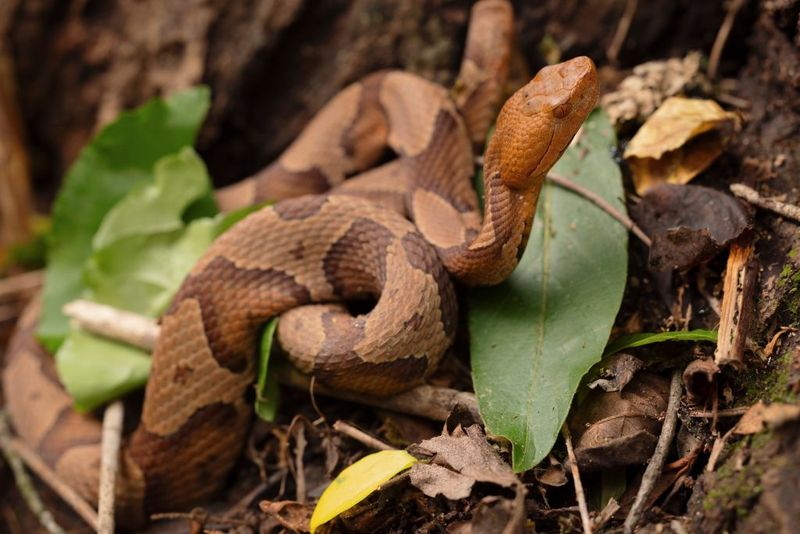
N.C. Wildlife guidance on venomous snakes notes that copperheads rely heavily on camouflage and may stay completely motionless when a person is close.
That combination, excellent camouflage plus a concealed space a homeowner reaches into without looking, is where bites happen. A wall opening deserves caution not because it is certain to contain a snake, but because it is exactly the kind of blind spot where a defensive bite can occur before anyone knows there is a problem.
The sheltered void matters more than the wall material
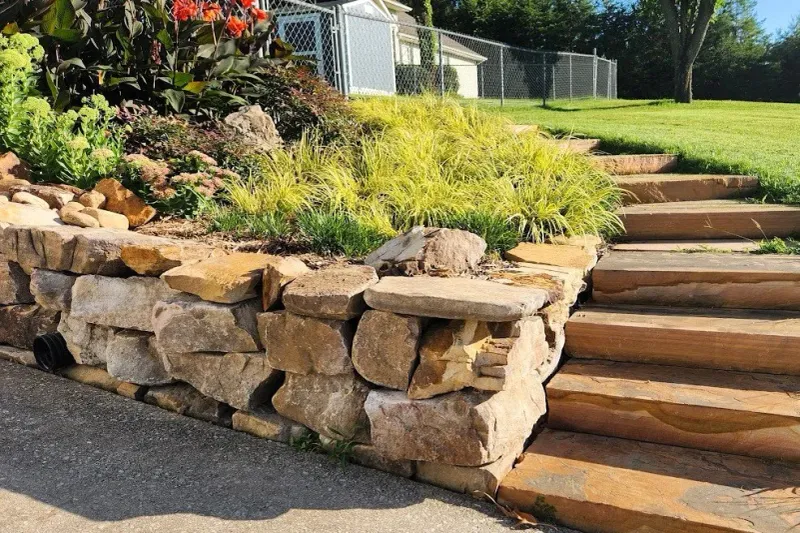
Stone walls and retaining-block systems are not inherently copperhead habitat, but some of them share physical features with the places copperheads actually use. N.C.
Wildlife documentation describes copperheads using rock fissures and sheltered sites for overwintering, and National Park Service natural history notes describe them resting under rocks, near logs, and in rocky areas with crevices. A loose stone wall with deep, shaded voids offers similar physical structure to a natural rock outcrop.
The key word is “similar.” That is an ecological inference, not proof that a particular wall contains or attracts a snake. The stronger evidence connects copperheads to natural rocky terrain, boulder fields, forest edges, and general crevices, not to modern concrete retaining blocks specifically.
A block wall can offer shelter if it has the right combination of conditions: deep voids, nearby soil openings, moisture, adjacent vegetation, leaf litter, or rodent activity that brings prey close.
Wildlife guidance from Massachusetts, where copperheads also use rocky cover, reinforces that surrounding landscape conditions matter as much as the structure itself. A retaining wall at the edge of a wooded lot, backed by leaf litter and near a brush pile, sits in a very different risk context than a wall surrounded by open, well-maintained lawn.
One more thing worth knowing: snakes are not the only wildlife that uses wall gaps. Rodents, lizards, salamanders, insects, and other small animals all shelter in the same kinds of voids.
Georgia Extension research on retaining walls identifies hollow wall spaces as harborages for a range of insects and other small creatures. A gap in your wall is a sheltered microhabitat shared by many species, which is one more reason not to assume its occupant before you can see clearly.
A gap signals caution, not a confirmed copperhead
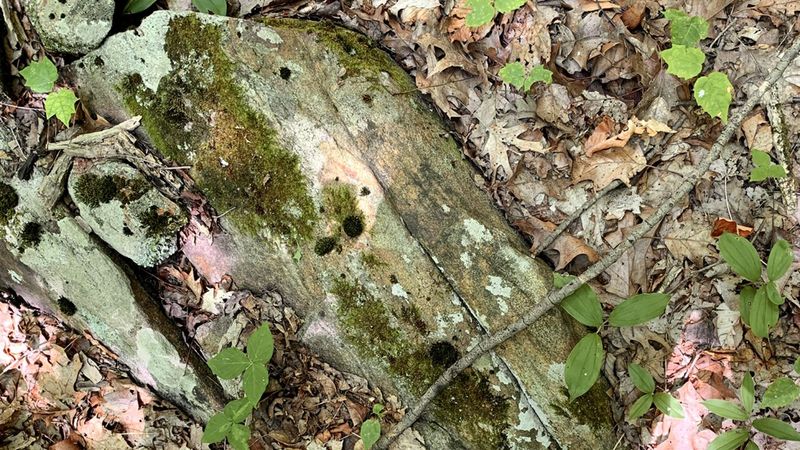
Cracks and openings in a stone wall can tell you that shelter is available. They cannot tell you who is using it.
Rodents, lizards, salamanders, insects, and spiders all occupy wall voids, and any of them may be the current resident. A gap is a reason to be careful before reaching in, not confirmation that a copperhead is waiting.
The same logic applies to other supposed signs. A shed skin, an unfamiliar odor, disturbed debris at a wall base, or even the absence of visible movement does not establish that a copperhead is present or absent.
Wildlife writing on copperhead behavior describes how effectively these snakes hold still, relying on their pattern to blend into leaf litter, bark, and stone surfaces. A snake that is invisible to a casual glance may be resting just inside an opening.
Identification clues are worth knowing as background. Copperheads have a pattern of reddish-brown hourglass-shaped bands on a lighter body, and a distinctly coppery or reddish head.
NC State Extension notes on western North Carolina snakes point out that many harmless snakes are misidentified as copperheads because patterned snakes can look similar at a quick glance. If you spot a snake near a wall from a safe distance and want to try to identify it, that is reasonable, but never approach, crouch close, or reach toward a snake to inspect its head, pupils, or facial features.
Safety takes priority over certainty every time.
N.C. Wildlife Resources Commission guidance is consistent on this point: copperheads generally avoid people, but they will bite defensively when touched, cornered, or surprised.
A gap in your wall deserves caution and a flashlight, not a bare hand.
Inspect hardscape without reaching into blind openings
Safe inspection of a stone wall or retaining-block system starts with a simple rule: if you cannot see clearly into a space, your hand does not go in. CDC guidance for outdoor workers on venomous snakes recommends avoiding hand contact with any space that cannot be visually confirmed as clear, and that standard applies equally to homeowners clearing garden beds, stacking firewood, or pulling weeds near a retaining wall.
Before any hands-on work near wall openings, rock gaps, brush piles, or spaces beneath objects, take a moment to look. Use a flashlight to illuminate dark voids, especially during early morning or evening when visibility is lower.
Wear sturdy, closed-toe footwear and thick gloves when handling visible yard materials like loose rocks, firewood, or debris. Gloves reduce the risk from materials you can see, but they do not make blind reaching safe.
A copperhead resting inside a wall gap can still bite through a typical garden glove.
CDC travel and environmental hazard guidance also recommends watching where you step and place your hands near rocky or vegetated terrain. That advice translates directly to yard work: look at the surface before you touch it, and treat any dark, inaccessible opening as potentially occupied.
A long-handled tool such as a rake or hoe can help you cautiously move leaf litter or debris away from a wall base so you can see more clearly before working closer. Use it only for careful inspection from a safe distance, never to prod, pin, or corner a snake.
Texas Parks and Wildlife notes on southern copperheads reinforce that disturbing or cornering a snake significantly increases the chance of a defensive bite. When an area cannot be inspected safely from a distance, stop work and contact a qualified wildlife-control professional rather than pressing forward.
Reduce nearby cover without promising a snake-proof wall
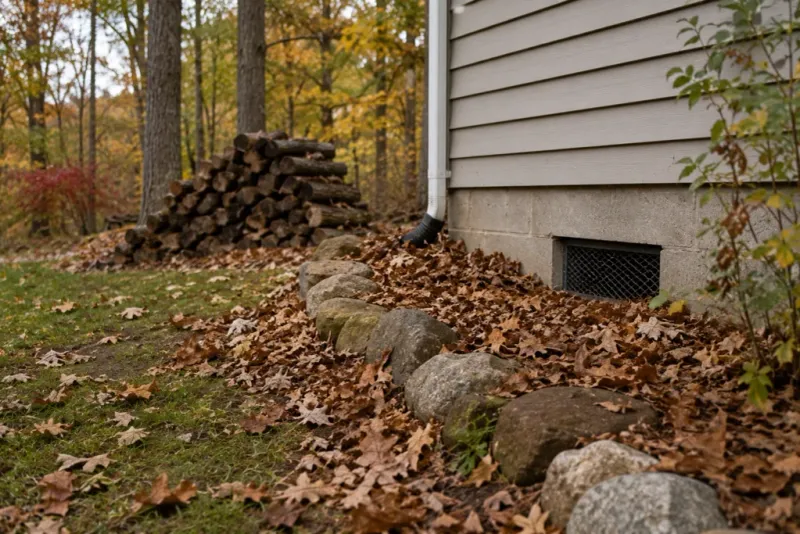
Making the area around frequently used hardscape less appealing to wildlife starts with the things that attract prey. Rodents are a primary food source for copperheads, so reducing rodent shelter near a wall reduces one of the conditions that can make the area more favorable.
N.C. Wildlife Resources Commission spring guidance consistently recommends keeping grass and weeds trimmed near areas where people and pets spend time, clearing leaf and debris accumulations from wall bases and garden borders, and removing unnecessary rock and wood piles that provide shelter for both snakes and the small animals they eat.
NC State Extension’s wildlife chapter adds that reducing dense ground cover and clutter near structures can make a yard less suitable as shelter. These are practical steps that take a weekend afternoon, not a major renovation.
None of them guarantee that a snake will never pass through, because snakes move and yards are not sealed environments, but they can reduce the conditions that make a particular wall or bed more likely to be used as a resting spot.
Commercial snake repellents are a different story. NC State Extension’s snake guidance states plainly that commercial repellents have not been scientifically shown to be effective and may harm people or pets if misused.
Mothballs, sulfur, smoke, homemade mixtures, and similar remedies share the same problem: no reliable evidence supports them, and some carry real safety risks. Use any product only as its label and applicable regulations allow, and do not treat unapproved household items as proven solutions.
One additional caution: regional wildlife guidance on wall maintenance recommends never sealing or filling a wall void while a snake could still be inside. If you suspect a void is occupied, wait, watch, and consult a professional before closing any opening.
Sealing a snake inside a wall creates a more dangerous situation, not a safer one. Georgia Cooperative Extension habitat management guidance echoes the broader point: habitat modification reduces opportunity but does not eliminate the possibility of a snake moving through.
Give a visible snake room to leave
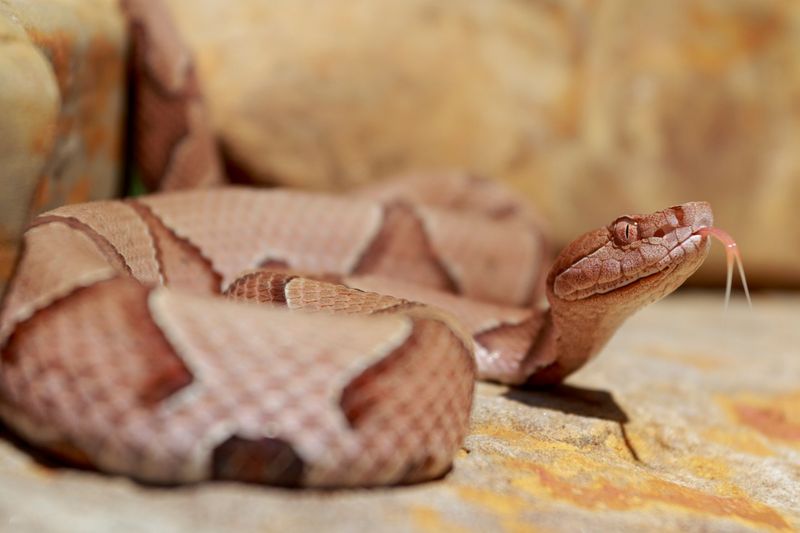
Spotting a snake near a wall or retaining block is unsettling, but the right response is calm and deliberate. Move children and pets away from the area immediately, keeping a wide berth of at least several feet from the snake.
Do not shout, stomp, or make sudden movements near it. N.C.
Wildlife Resources Commission notes that copperheads generally avoid people and will move away on their own when given the opportunity.
The most useful thing you can do in most situations is give the snake an obvious escape route and wait. N.C.
Wildlife spring guidance suggests that a garden hose, used from a safe distance, can gently encourage a snake to move along without anyone needing to get close. Direct a slow stream of water near, not on, the snake to prompt it toward nearby vegetation or cover away from the area you need to use.
Never attempt to handle, pin, kill, or relocate a suspected venomous snake yourself. Even a snake that appears sluggish or injured can strike quickly.
Handling or cornering a copperhead dramatically increases the risk of a defensive bite, and a dead snake can still deliver a bite through reflex for a short time after death. Leave the snake alone and keep your distance.
When a snake will not leave on its own, occupies a space where children or pets are at real risk, or is inside a structure, contact a licensed wildlife-control professional. N.C.
Wildlife’s wildlife problem resource page can help you find qualified help in your area. Attempting to photograph a snake for identification is only reasonable from a distance that keeps you completely safe, and it should never delay getting people and pets clear of the area first.
A bite calls for medical care, not a home remedy

A suspected copperhead bite is a medical emergency. Move away from the snake right away so there is no risk of a second bite, then call 911 or get to an emergency room as fast as possible.
CDC wildlife safety guidance is direct: seek emergency medical care immediately after any suspected venomous snakebite, without stopping to attempt treatment on your own.
While waiting for help or en route to the hospital, keep the person as still as possible. Movement speeds venom circulation.
Remove rings, watches, or anything tight near the bite site before swelling begins, because swelling can be rapid and removal becomes much harder once it starts. Wash the wound gently with soap and water if available, and cover it loosely with a clean bandage or cloth.
CDC guidance for outdoor workers is explicit about what not to do: do not apply a tourniquet, do not cut the wound, do not attempt to suck out venom, and do not apply ice or immerse the limb in cold water. None of these measures help, and some cause additional harm.
Do not give the person alcohol, aspirin, or other pain medications unless directed by medical personnel.
Do not attempt to capture, kill, or handle the snake to bring it to the hospital for identification. CDC travel and environmental hazard guidance notes that a photograph taken from a safe distance, if one is already available, can assist medical staff with identification, but taking a photo must never delay getting the patient to care.
North Carolina Wildlife describes copperhead bites as serious but generally not life-threatening when treated promptly. Prompt treatment is the part that matters most.
Use distance, not guesswork, around wall openings
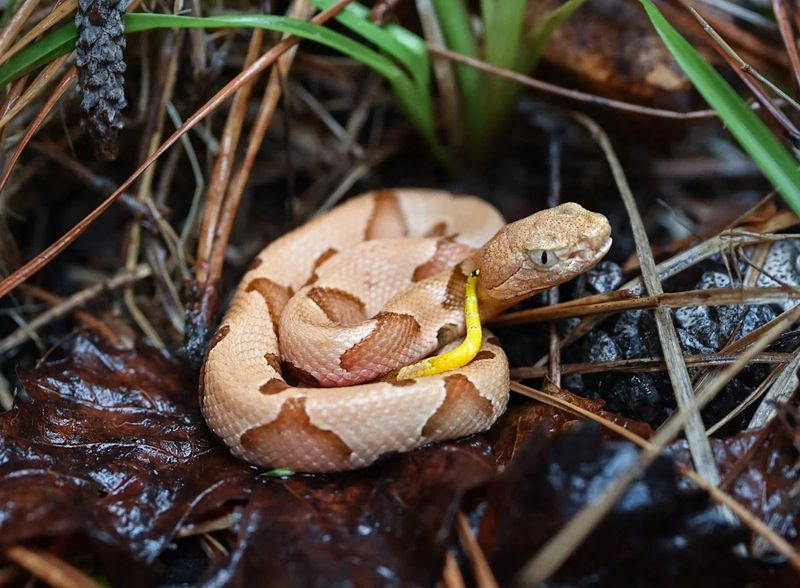
A deep, shaded opening in a stone wall or retaining-block system deserves caution, not panic. Fall activity and mating season make copperheads seasonally relevant in North Carolina, but that does not mean every gap in every wall contains a snake or that a statewide movement into residential hardscape is underway.
The more honest framing is simpler: concealed voids near wooded edges, leaf litter, or rodent activity are worth treating carefully, and the surrounding landscape conditions matter as much as the wall itself.
Manageable steps, trimming cover, clearing debris, and reducing rodent shelter, can make an area less favorable, though no yard modification eliminates the possibility of a snake passing through. N.C.
Wildlife Resources Commission and CDC outdoor worker safety guidance both point to the same practical foundation: look before you place a hand or foot, leave suspected venomous snakes alone, and get qualified help when a snake creates a real hazard. The gap in your wall may hold nothing more than a salamander and a spider.
Treat it with care anyway, because the one time it matters, the distance you kept will have been worth it.