
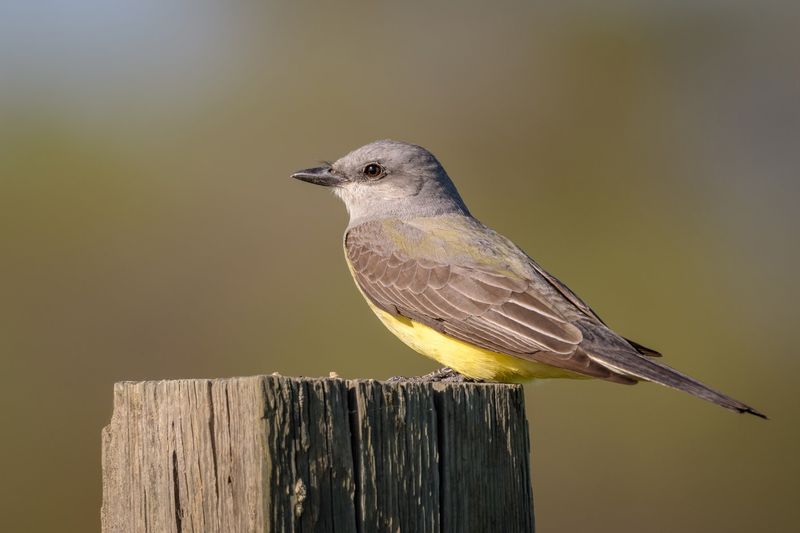
Grasshoppers can shred a California yard fast, and most homeowners reach for a spray bottle before they ever think about the birds already hunting overhead. The Western kingbird is a native insect predator that commonly eats grasshoppers, crickets, beetles, and a wide range of other insects during its spring and summer stay across the state.
Adding a simple exposed perch near open ground may give one a better hunting spot, though it cannot promise the bird will show up or solve a serious infestation. Understanding what this bird actually does, and what it cannot do, helps homeowners build a smarter, more wildlife-friendly pest plan.
Western kingbirds eat grasshoppers—but they will not erase a yard outbreak
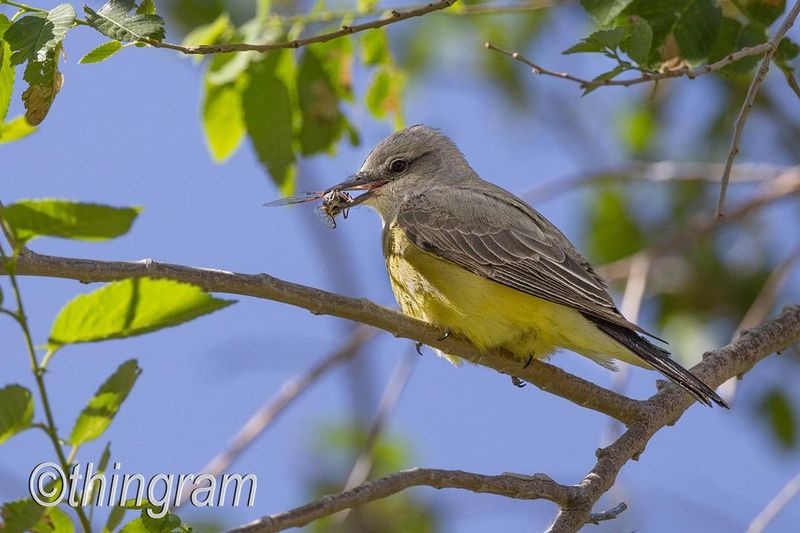
Bright yellow belly, gray head, and a habit of sitting right out in the open – the Western kingbird is hard to miss once you know what to look for. This medium-sized flycatcher is a common spring-and-summer visitor across California, and grasshoppers are a genuine part of its diet.
Audubon’s field guide confirms the species eats grasshoppers, crickets, beetles, flies, moths, caterpillars, bees, and wasps, along with spiders and the occasional berry or fruit.
That broad menu matters for managing expectations. A kingbird hunting your yard will likely take whichever insects are most available at the moment, not necessarily the ones causing the most damage to your plants.
Cornell Lab’s Western Kingbird life history account makes clear that the species is an opportunistic aerial and ground hunter, not a specialist locked onto one prey type.
Research on insectivorous birds as a group does show real suppression effects. A multi-experiment analysis by Letourneau and colleagues found that vertebrate insectivores, including birds, can reduce herbivorous arthropod numbers and sometimes lower plant damage, but the strength of that effect shifts with habitat type and food-web conditions.
No study reviewed there, or anywhere else in the available literature, measured how many grasshoppers a single Western kingbird removes from a California residential yard.
What the evidence supports is this: a kingbird present in or near your yard may contribute to lower local insect pressure over the course of a season. That is genuinely useful, and it is worth encouraging.
It is not, however, a guarantee of control, and a serious grasshopper outbreak will not disappear because one bird is hunting nearby. Treat the kingbird as one helpful layer of a larger yard strategy, not as the solution on its own.
An exposed perch gives the bird a better hunting lookout
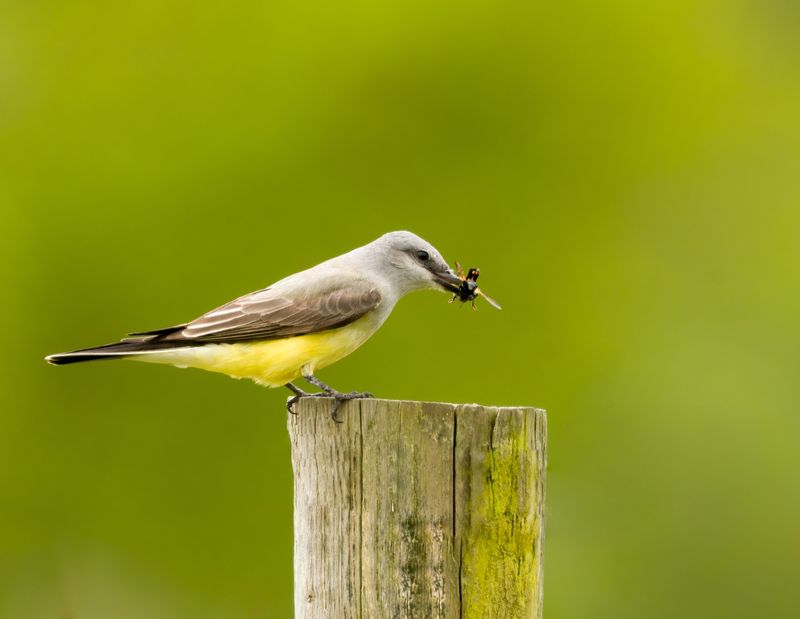
Watch a Western kingbird for a few minutes and its hunting pattern becomes obvious. The bird picks a high, open spot, holds still, and scans the ground and air below.
When it spots something, it launches out in a short, fast flight, snatches the insect, and returns to the same perch or one nearby. Cornell Lab notes that an individual may capture several insects before settling back down, which means a good perch is not just a resting place – it is the command post for an entire foraging run.
That hunting sequence is why an exposed lookout matters more than almost any other yard feature you could offer this bird. A perch surrounded by dense shrubs or tucked under a tree canopy blocks the sightlines and launch angles the bird depends on.
An open post, dead branch, or sturdy fencepost that rises above the surrounding vegetation and overlooks a patch of low ground cover gives the bird exactly what its natural behavior calls for.
The American Bird Conservancy’s Western Kingbird profile emphasizes the species’ reliance on conspicuous elevated perches in open country, which matches what Cornell describes for its aerial and ground-foraging style. A yard that offers that structure is simply more usable to a passing kingbird than one that does not.
One important qualifier: a perch improves opportunity, not certainty. If kingbirds are not already present in your neighborhood or the surrounding landscape lacks suitable habitat, adding a post will not conjure one.
The perch makes your yard a better candidate when a bird is already in the area – and that is a reasonable, honest goal. No specific height or placement formula has been established by research as a reliable attractant, so treat any setup as a practical experiment rather than a proven prescription.
California habitat and season determine whether the idea fits
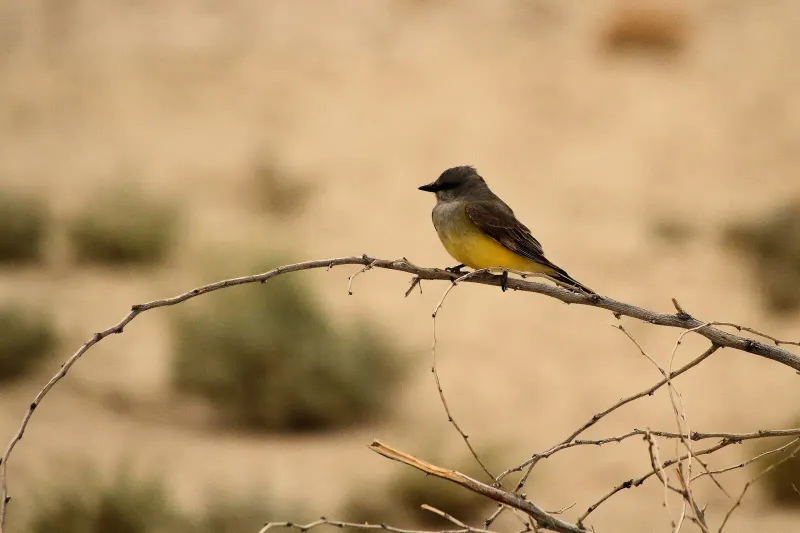
Not every California yard is kingbird country, and knowing the difference saves a lot of disappointment. The California Department of Fish and Wildlife’s habitat account for the species describes Western kingbirds as common spring-and-summer breeders in arid, unforested lowlands, particularly in drier interior regions.
Their preferred settings include grasslands, croplands, open shrublands, and open areas edged by trees or large shrubs – the kind of semi-open landscape that gives them both foraging ground and nesting cover.
Dense suburban neighborhoods with continuous tree canopy, heavily shaded yards, or very little open ground are less likely to attract them. A home on the edge of an open field, near a dry creek corridor, or in an inland valley community surrounded by low-growing vegetation is a much better fit.
Coastal yards with persistent marine layer and limited open airspace are generally less suitable than sunny interior settings, though the bird does appear along the coast during migration.
Seasonally, the window matters too. The American Bird Conservancy and Cornell Lab’s range maps both show California as core breeding territory, with birds generally arriving in late March and remaining through summer before departing in late summer.
Stragglers occasionally turn up into October, but the reliable window for seeing them actively hunting in yards runs roughly from April through August.
If your yard sits in suitable habitat during that window, a perch has a reasonable chance of being noticed by a bird already working the area. If kingbirds have never appeared in your neighborhood despite years of observation, installing a post is unlikely to change that on its own.
Regional presence, nearby prey populations, and open foraging airspace all play a role that no single yard feature can fully substitute for.
Add one safe lookout beside open insect habitat
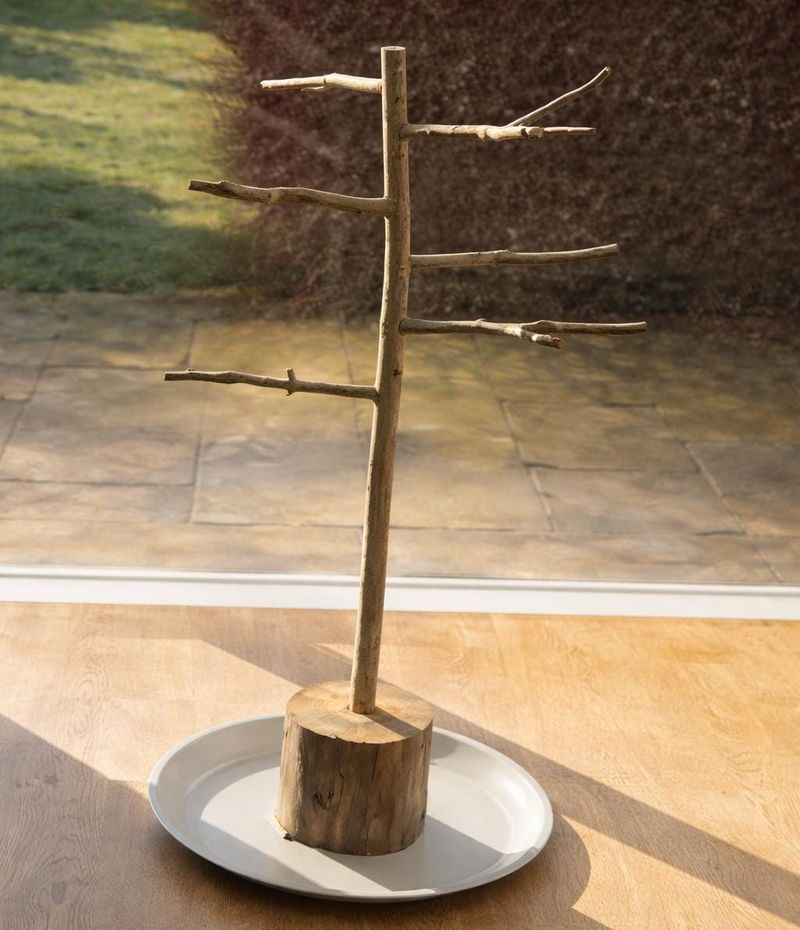
The practical setup is simpler than most people expect. Look for an existing fencepost, a dead branch that is still firmly rooted, or a standalone garden post you can sink into the ground near an open patch of yard.
The key qualities are stability, height above the surrounding vegetation, and clear airspace in at least two or three directions so a bird can launch and return without threading through branches or structures.
Cornell Lab’s species overview and the American Bird Conservancy’s kingbird page both document the species using fenceposts, utility poles, trees, and large shrubs as perch sites in the wild. A plain wooden post replicates that structure without requiring any special materials or tools.
No research reviewed here established a required height or a tested placement formula for residential yards, so treat the setup as an informed approximation of the bird’s documented preferences rather than a guaranteed recipe.
One firm boundary: do not attach homemade perches to utility lines, power poles, or any electrical infrastructure. The species does use utility structures in the wild, as the California Department of Fish and Wildlife account notes, but encouraging birds toward live electrical equipment is unsafe for both the bird and the homeowner.
Stick to safe existing structures or a purpose-driven standalone post in the yard.
A hunting perch is also not a nest box. Audubon’s field guide describes Western kingbirds as open-cup nesters that build in trees, large shrubs, and sometimes on human-made structures – not in enclosed cavities.
A standard birdhouse will not serve this species, and putting one up alongside the post is not a substitute. The goal here is a hunting lookout, plain and simple, placed where a bird scanning for insects will have both a view and a clear flight path.
Keep enough insect habitat for the bird to find prey
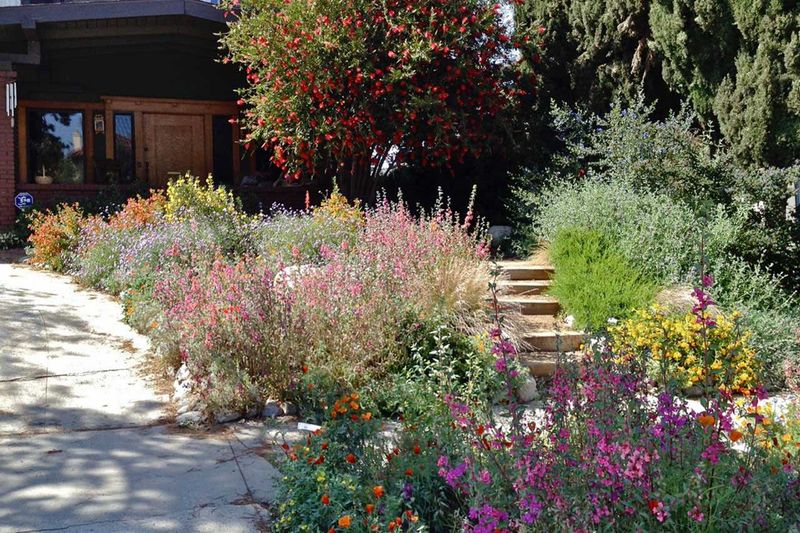
A perch without nearby insects is just a stick in the ground. For a Western kingbird to find the setup worth using, the surrounding area needs to actually support the flying and ground-dwelling insects the bird hunts.
That means some of your yard should stay vegetated in a way that invites insect activity rather than eliminating it.
Cornell Lab’s guide to supporting aerial insectivores recommends allowing some grasses and wildflowers to grow a bit longer in low-traffic areas, and maintaining plant diversity that supports flying insects. A mix of flowering plants at different heights gives insects more surfaces to use and more shelter, which in turn gives a hunting bird more targets to choose from.
NC State Extension’s urban bird habitat guidance reinforces that point: plant diversity and foliage density directly influence insect diversity, and insect diversity is what keeps insectivorous birds returning to a site. A monoculture lawn kept uniformly short and treated regularly offers very little for a bird like this to work with.
For California homeowners, that advice comes with important local conditions. Letting vegetation grow longer in fire-prone areas or wildland-interface communities can conflict with defensible-space requirements and local fire ordinances – rules that exist for good reason and should not be ignored for the sake of bird habitat.
Work within your zone’s guidelines by choosing low-growing, fire-resistant native plants for any wilder patch, keeping that area modest in size, and placing it away from structures.
Water restrictions and drought also shape what is realistic. California Department of Fish and Wildlife data shows kingbirds thriving in naturally dry, low-irrigation landscapes, so the goal is not a lush, heavily watered garden border – it is a modest, drought-adapted patch of diverse vegetation near the perch.
No specific plant list has been shown by the available sources to reliably draw Western kingbirds to residential yards, so focus on general insect support rather than chasing a particular species roster.
Use the bird as one layer of integrated pest management
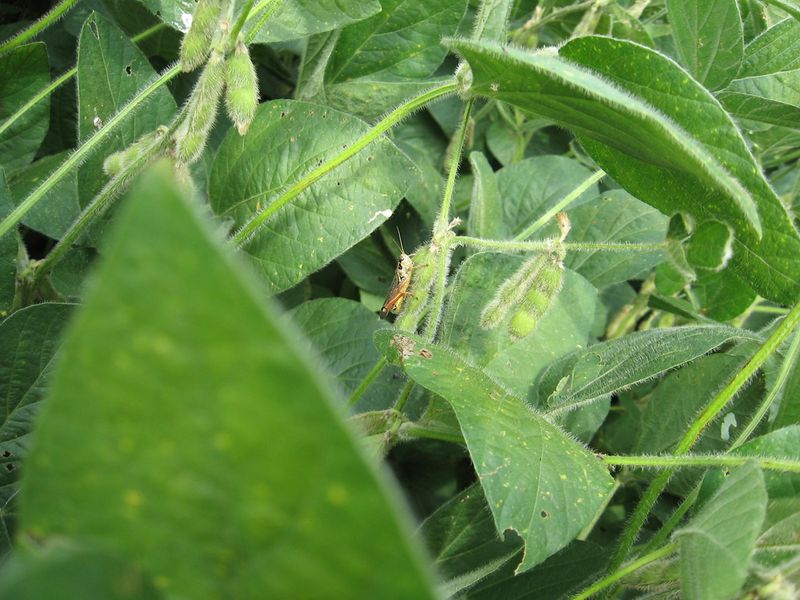
Encouraging a kingbird to hunt nearby is a reasonable habitat choice, but it does not change the responsibility you carry for protecting your plants. Grasshopper pressure can outpace what any single bird contributes, and a solid response starts with your own inspection, not with waiting to see whether a predator shows up.
Walk the yard and look closely at damaged plants. Identify which species are being hit hardest and whether the damage is actively worsening.
Plants that are especially vulnerable – young transplants, heavily chewed perennials, anything that has already lost significant leaf area – may need physical protection like row cover or netting while you assess the broader situation. Removing or relocating the most at-risk plants temporarily is also a legitimate option when damage is severe.
EPA guidance on reducing pesticide impacts on wildlife recommends treating only the area that actually requires intervention, following product labels precisely, and choosing the least disruptive option available when treatment is genuinely necessary. That approach protects the insects a kingbird would otherwise be hunting, keeps beneficial pollinators safer, and reduces the risk of contaminating water or soil.
EPA’s documentation of common pesticide incidents shows that wildlife exposure often comes from drift, runoff, over-application, or contaminated food sources – not just direct spray contact. Spraying on windy days, applying more than the label directs, or treating large areas when only a small patch is affected all increase that risk significantly.
One assumption worth correcting: organic or natural-origin pesticides are not automatically safe for birds, beneficial insects, or nearby waterways. EPA’s ecological risk assessment framework evaluates all pesticides by exposure pathway and toxicity to non-target organisms, regardless of whether they come from synthetic or natural sources.
Read the label, time applications to avoid periods when beneficial insects are most active, and consider whether treatment is actually necessary before reaching for any product.
The evidence supports help, not guaranteed grasshopper control
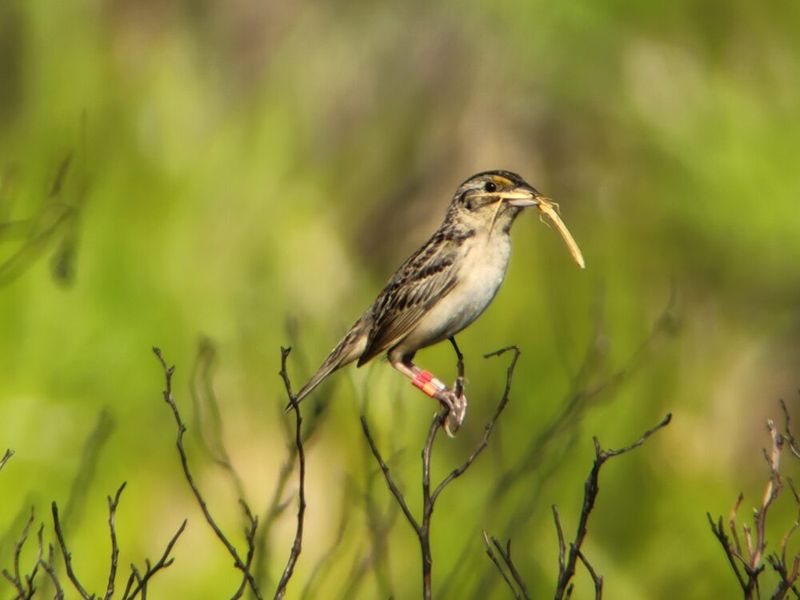
The honest picture from the research is more nuanced than most backyard bird articles suggest, and that nuance is worth understanding before you make any decisions based on it. Studies do show that insectivorous birds can reduce arthropod numbers in some settings.
The Letourneau et al. multi-experiment analysis found that vertebrate predators, including birds, suppressed herbivorous arthropods and sometimes reduced plant damage across a range of ecosystems – a real and meaningful finding for conservation and agriculture.
Grassland-specific work adds more detail. A field experiment by Bock in an Arizona grassland found higher grasshopper abundance in plots where birds were excluded, suggesting that bird predation does suppress grasshopper numbers under natural conditions.
That is encouraging for anyone thinking about the value of native insectivores in open landscapes.
The gap between those findings and a California residential yard, however, is significant. A meta-analysis by Monteagudo and colleagues on avian regulation of crop and forest pests emphasizes that suppression effects vary considerably with habitat type, prey abundance, season, and the broader food web.
Results from one ecosystem type do not transfer automatically to another, and the research reviewed here did not measure Western kingbird activity in California residential yards specifically.
No study located quantified how many grasshoppers an individual Western kingbird removes from a suburban yard during a season, or tested whether installing a perch measurably reduces plant damage in that setting. The best-supported claim is that a kingbird present in a yard with good hunting structure may contribute to lower local insect pressure over time.
That is a reasonable benefit worth supporting. It is not a predictable outcome that a homeowner can count on to replace direct plant protection or careful pest management decisions.
Support the habitat, then judge success by plant damage
The practical sequence is straightforward. Preserve any safe trees and large shrubs already in your yard – they provide both nesting cover and additional hunting perches that no post can fully replace.
Cornell Lab’s life history account lists oaks, cottonwoods, willows, and similar trees as documented nest substrates, so existing mature trees are an asset worth keeping where fire-safety rules allow.
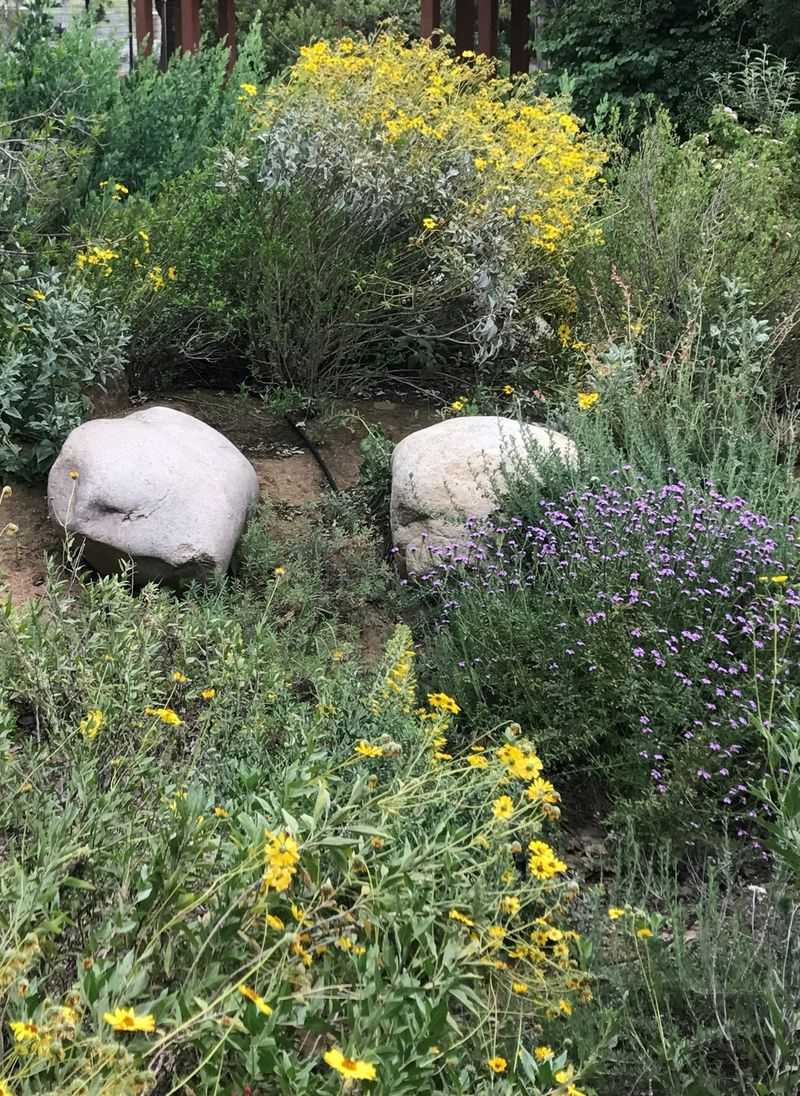
Set aside a modest insect-supporting patch near your planned perch location – low-growing, drought-adapted plants that can sustain flying and ground insects without heavy irrigation. Add one exposed post or use an existing safe fencepost that overlooks that area with clear airspace around it.
Then watch. Cornell’s range and behavior data put the reliable California window between roughly April and late August, so that is when to pay closest attention to whether the perch gets used.
After a season, assess the outcome by the metric that actually matters: plant damage. If grasshopper pressure stayed manageable and your plants came through in reasonable shape, the combined approach of habitat support plus targeted pest management worked.
If damage remained high despite your efforts, EPA-aligned integrated pest management gives you a clear path to more direct intervention without undermining the wildlife habitat you have built. A yard that supports a native predator and still protects its plants is not a compromise – it is simply good stewardship.