
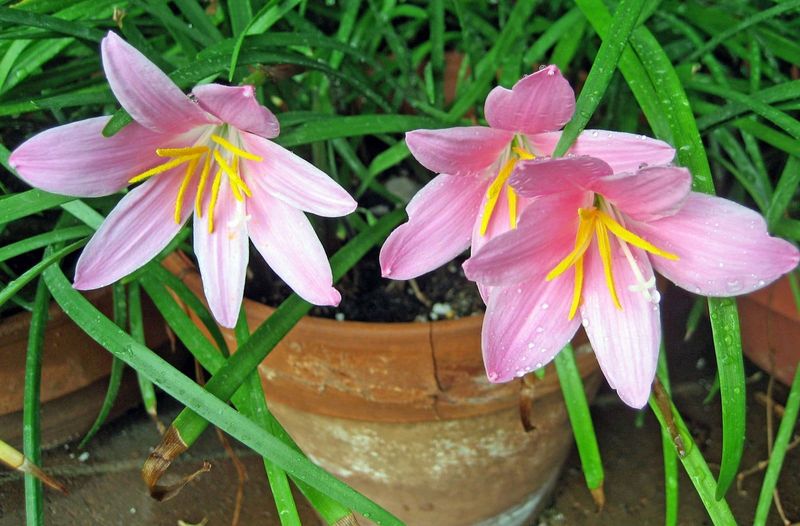
By late summer, most Texas flower beds look like they’ve given up. The heat has beaten back the color, the soil feels spent, and the next big planting season still seems weeks away.
A correctly identified rain lily can change that picture fast, pushing up funnel-shaped flowers within days of a meaningful fall rain. Getting the right species into the ground now is what makes the difference between a tired bed and one that surprises you in October.
A rain lily can refresh a tired bed—but not every rain lily works the same way
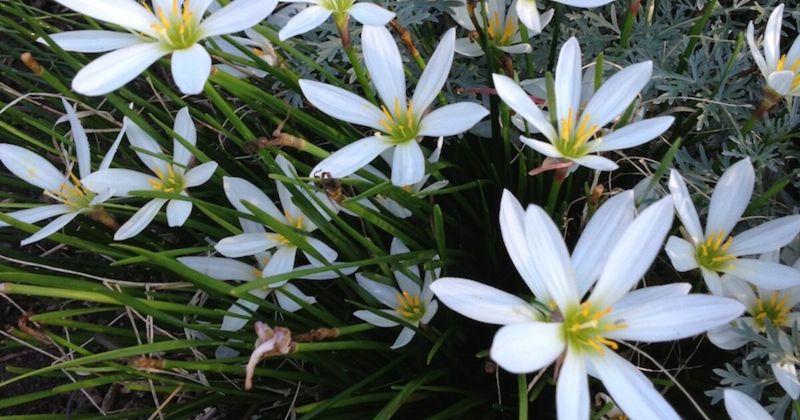
Hot Texas summers leave flower beds looking exhausted long before fall actually arrives. Perennials go limp, annuals give out, and even tough groundcovers lose their edge by August.
Rain lilies offer a real remedy for that gap, but only when the right species is planted in the right place, and only when gardeners plant enough of them to create a visible flush of color rather than a single quiet bloom.
Rain lilies are small bulbous perennials belonging to the amaryllis family, not true lilies or daylilies. Their flowers are funnel-shaped, six-parted, and come in white, pink, yellow, rose, orange, or red depending on the species or cultivar.
UF/IFAS rain lily guidance describes them as bulbous perennials with flowers that can appear quickly after significant rain, making them genuinely useful for late-season color in Southern gardens.
The phrase “Texas rain lily” is a convenient shorthand, but it covers multiple species, hybrids, and cultivated selections. University of Georgia Extension reporting on rain lilies confirms that cultivated plants sold under this common name may belong to Zephyranthes, Habranthus, or related genera.
The name alone does not tell you when a plant will bloom, whether it is native to your county, or how it will handle your specific soil.
One bulb will not transform a bed. A single plant produces one or a few flowers at a time, and the effect is easy to miss from a few feet away.
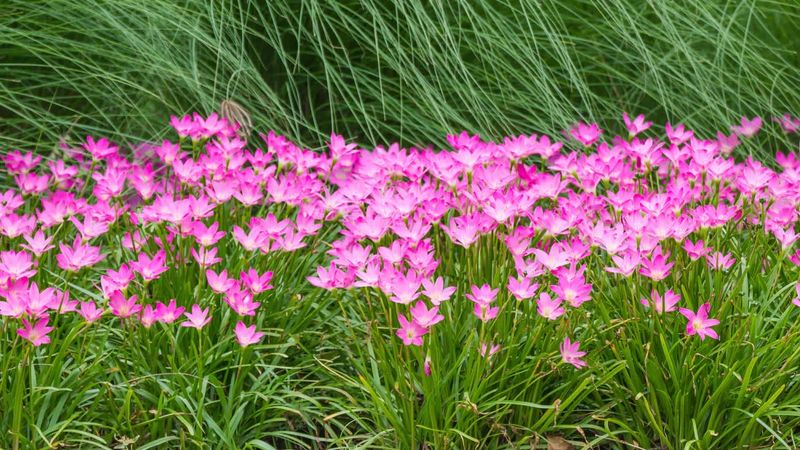
The strongest visual reset comes from a clump or mass planting, where dozens of flowers open together after a substantial rain event. NC State Extension’s rain lily profile supports grouping bulbs for a more impactful display.
Treat the species name on the nursery label as the starting point for every decision that follows.
Why rain can precede a quick burst of flowers
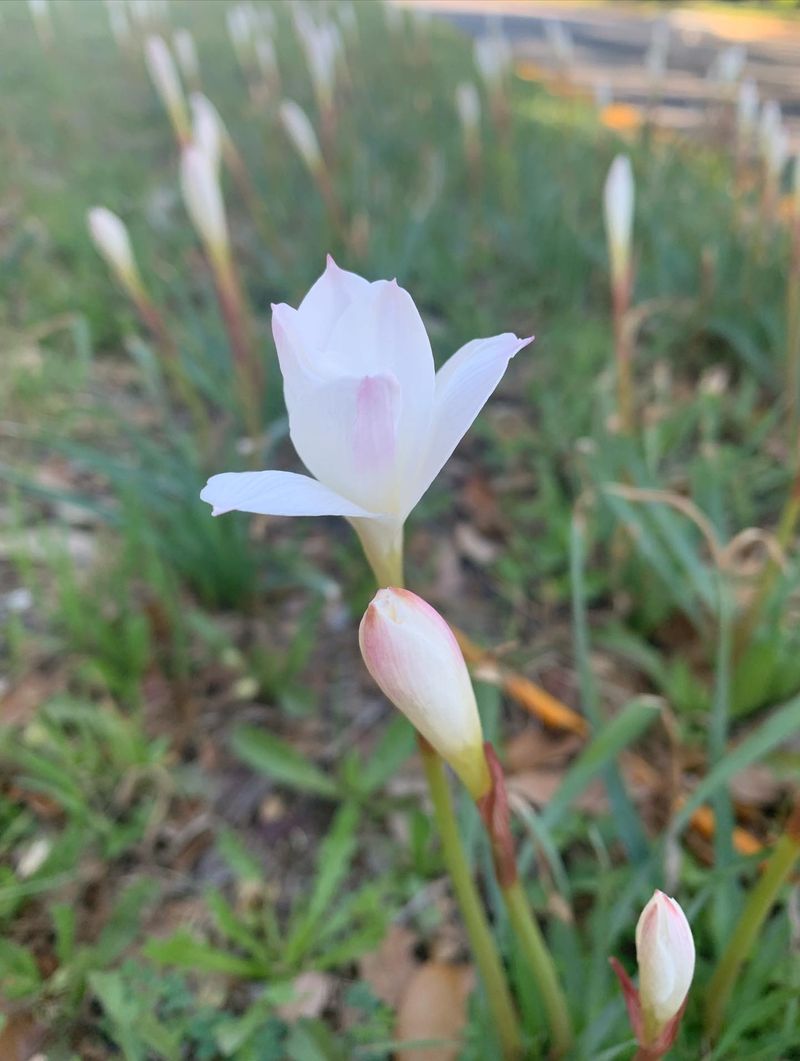
Rain lilies earned their name from a pattern that gardeners across the South have watched for generations: a good soaking rain arrives, and within a few days, flowers appear from soil that looked bare the day before. The response is real, but calling it a guaranteed trigger overstates what actually happens in the garden.
NC State Extension’s rain lily entry notes that many cultivated rain lilies can flower without a strict drought-then-rain cycle, even though alternating dry and wet conditions or thunderstorms often coincide with heavier flushes. Irrigation can also support flowering, which means a gardener willing to water deliberately does not have to wait on weather to see results.
Several factors beyond rainfall contribute to whether a flush actually happens. A preceding dry period, shifting temperatures, changing day length, soil moisture levels, the plant’s developmental stage, and overall maturity all play a role.
A young bulb in its first season may not respond the same way a well-established three-year clump does. Temperature drops that often accompany fall rains in Texas may themselves contribute to triggering a flush.
Texas A&M AgriLife’s prairie rain-lily page notes that individual flowers are short-lived, often lasting roughly a day to several days. Established clumps compensate by producing successive flushes rather than a single brief show.
A mature planting hit by two or three significant rains across a fall season can deliver color across several weeks, even though no single bloom lasts long. Expect a conditional, variable response rather than a clockwork show, and plan the planting accordingly.
Choose a documented fall-oriented candidate, then check the label
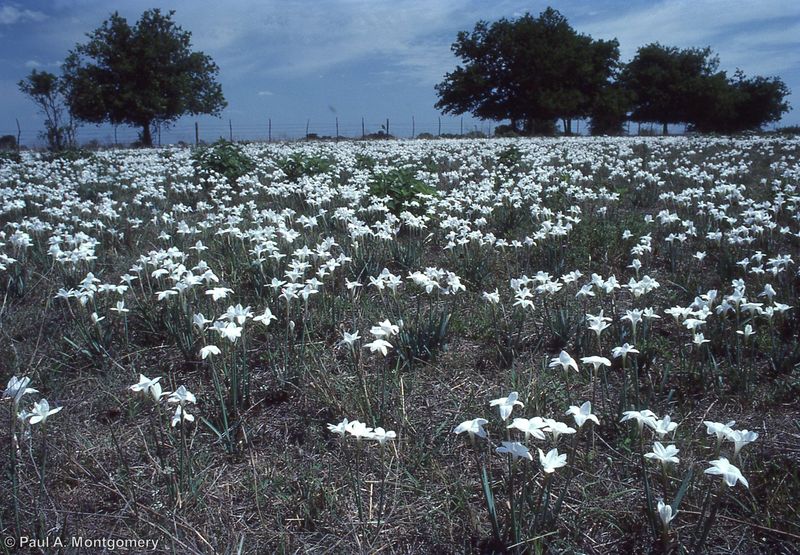
Before purchasing any bulb marketed as a Texas rain lily for fall color, the species name on the label matters more than the common name on the sign. Rain lily is a category, not a single plant, and the bloom season shifts significantly from one species to the next.
For a fall-rain angle, the University of Texas Plant Resources Center identifies Zephyranthes chlorosolen as the Brazos rain-lily or cebolleta, a species historically associated in botanical literature with the name Cooperia drummondii. This plant is a documented fall-oriented candidate for Texas gardens seeking post-rain color later in the season.
Describing it as a leading candidate is fair based on the sources available; calling it the single best option would require direct comparisons the current evidence does not supply.
The naming situation around this group is genuinely complicated. Sources use Zephyranthes chlorosolen, Cooperia drummondii, prairie rain-lily, and Zephyranthes drummondii in overlapping ways, and Texas A&M AgriLife’s range plant database distinguishes the more fall-blooming Cooperia drummondii from the generally spring-blooming prairie rain-lily as separate discussions.
Treating all of these names as freely interchangeable would be a mistake that leads to buying a spring bloomer when a fall bloomer is the goal.
The University of Texas also lists Zephyranthes drummondii separately, which adds another layer of potential confusion at the nursery. NC State Extension confirms that rain lily covers multiple species, each with its own native range, bloom season, and cultural requirements.
Ask the seller for the full scientific name, check it against a current botanical authority before planting, and apply bloom-season or safety claims only to the exact taxon printed on your label.
Plant several bulbs where the color will show
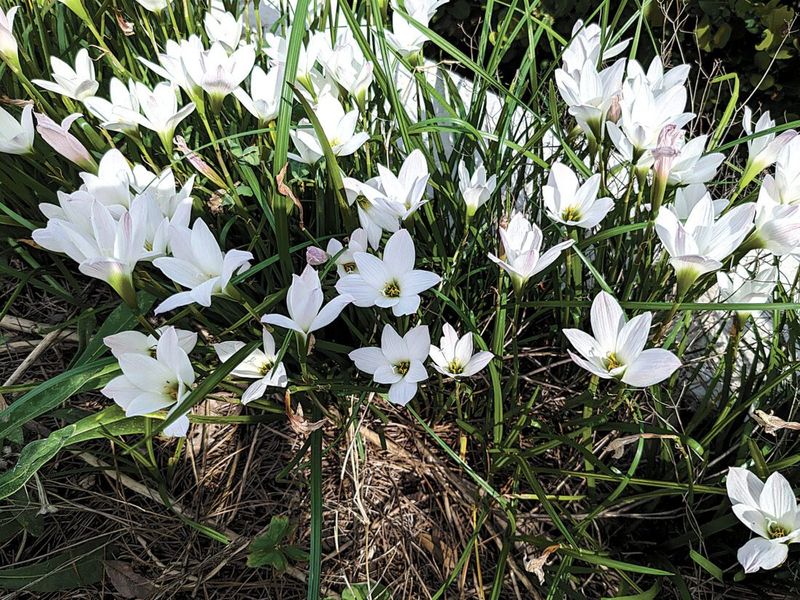
Placement decisions made before the first bulb goes in the ground determine how much color a rain lily planting actually delivers. Scattered bulbs tucked into random gaps rarely produce the kind of sudden visual reset that makes this plant worth growing.
Concentrated groups do.
UF/IFAS guidance on Zephyranthes describes rain lilies as suitable for borders, rock gardens, containers, and naturalized clumps, with flowering generally better where plants receive substantial direct light. Full sun to partial shade covers the range, but a bed that gets at least five or six hours of direct sun daily gives the plants a stronger base for producing flowers.
Shadier spots tend to favor foliage over bloom.
Soil drainage matters as much as sun exposure. Rain lilies tolerate a range of soils, but prolonged stagnant wetness creates bulb rot and disease problems that quickly undermine an otherwise healthy planting.
A raised bed, a sloped border, or a spot where water moves through rather than pools gives bulbs the conditions they need to establish and persist.
Groups work because rain lily foliage is narrow and modest between bloom events. A single plant disappears visually against a mulched bed.
University of Georgia Extension reporting on rain lilies supports planting bulbs in groups of at least several to create a noticeable display. Place clumps along paths, at the front of borders, or in containers near a porch or entry where the sudden post-rain flush will actually be seen.
NC State Extension also recommends massing for the strongest visible effect. When the label on your purchased bulbs specifies spacing or depth different from general guidance, follow the label, because bulb size and species vary enough to make one-size-fits-all planting depths unreliable.
Use fall planting to help bulbs establish
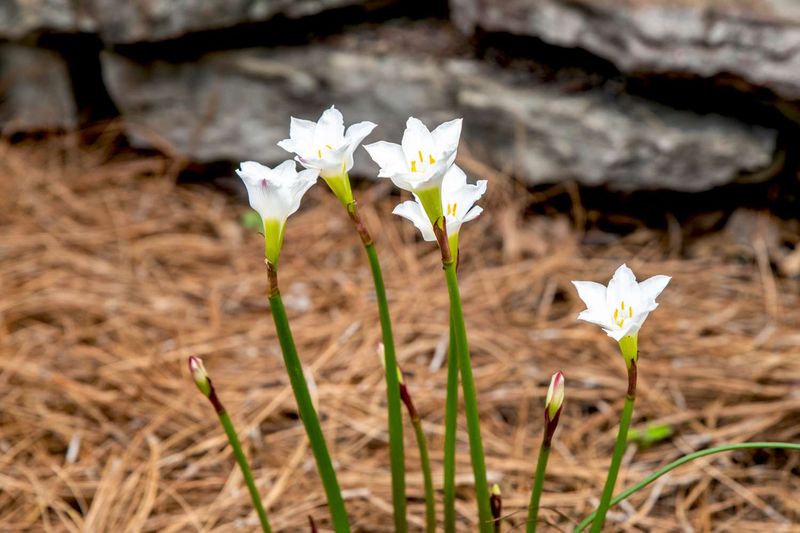
Fall planting lines up well with the goal of having rain lilies ready to perform the following season. Regional guidance supports planting in Texas Zones 7 through 10 during fall, giving bulbs time to develop roots and settle into the soil before the next growing season demands anything from them.
That head start matters more than most gardeners expect.
University of Georgia Extension rain lily coverage recommends placing bulbs roughly 2 to 3 inches deep and 2 to 4 inches apart as a general starting point. Treat those numbers as a baseline, not a universal prescription.
Bulb size and species vary enough that the instructions on the purchased bulb’s packaging should take precedence whenever they differ from general guidance.
Texas A&M AgriLife’s bulb guidance for Central Texas reinforces fall as a productive planting window for bulbs intended to establish before the next warm season. Central Texas timing does not automatically apply to North, West, or South Texas, where soils, freeze risk, and rainfall patterns differ substantially.
Check local extension resources or ask a county agent to confirm timing for your specific area.
Newly planted bulbs need consistent moisture while they establish, regardless of how drought tolerant the species becomes once mature. UF/IFAS notes that drought tolerance does not mean establishment neglect, and that regular watering can improve both foliage and flowering during the first season.
In colder parts of Zone 7, tender selections may need lifting before a hard freeze or a layer of mulch for winter protection. Confirm cold hardiness for the exact species on your label before leaving bulbs in the ground through a North Texas winter.
Let an established clump build the repeat performance
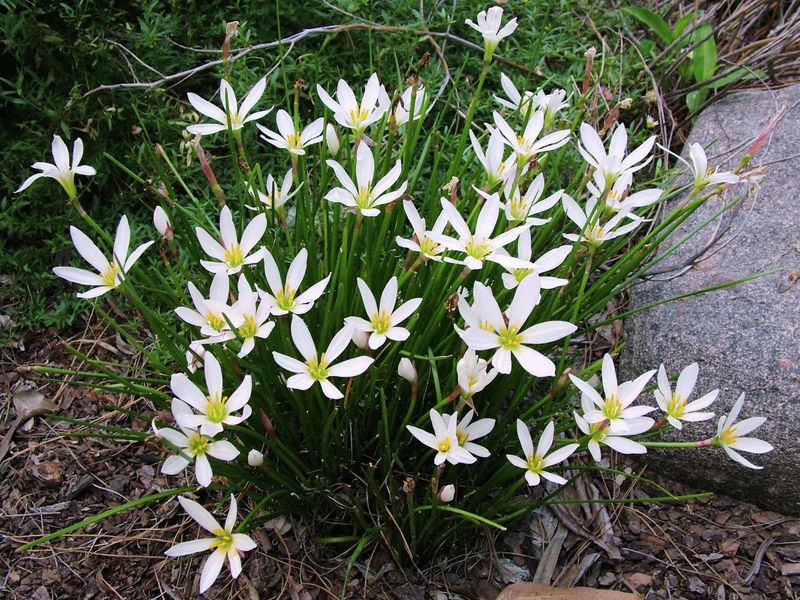
Patience after planting pays off with rain lilies in a way that few other bulbs deliver as visibly. A young clump in its first season may produce only a handful of flowers, or none at all if conditions do not align.
A three- or four-year-old clump that has spread through offsets can cover a broad patch with simultaneous blooms after a good fall rain.
Between bloom events, the foliage stays narrow and relatively low, which means the bed looks quiet most of the time. That modesty is worth accepting because the payoff when flowers do appear is sudden and concentrated.
UF/IFAS rain lily guidance explains that propagation happens naturally through offsets and seed, and that established clumps can be divided after flowering or during dormancy to spread plants to new areas of the garden.
Division is straightforward but requires attention to drainage after replanting. Bulbs left sitting in waterlogged soil after division are vulnerable to rot, so replant into a prepared, well-draining spot and water in without overdoing it.
NC State Extension’s rain lily profile confirms that the plants tolerate a range of conditions once established, but sustained wet feet remain a problem regardless of maturity.
Texas SmartScape lists rain lily as adapted for North Central Texas with low-to-medium water demand and summer-to-fall interest, which reflects the regional value of a plant that asks for relatively little once it has settled in. That low-water profile makes rain lily a practical choice for gardeners dealing with municipal water restrictions or simply trying to reduce maintenance.
The benefit compounds as the clump matures: more offsets, more flowers per flush, and a planting that largely manages itself between seasons.
Treat identification and handling as part of the planting plan
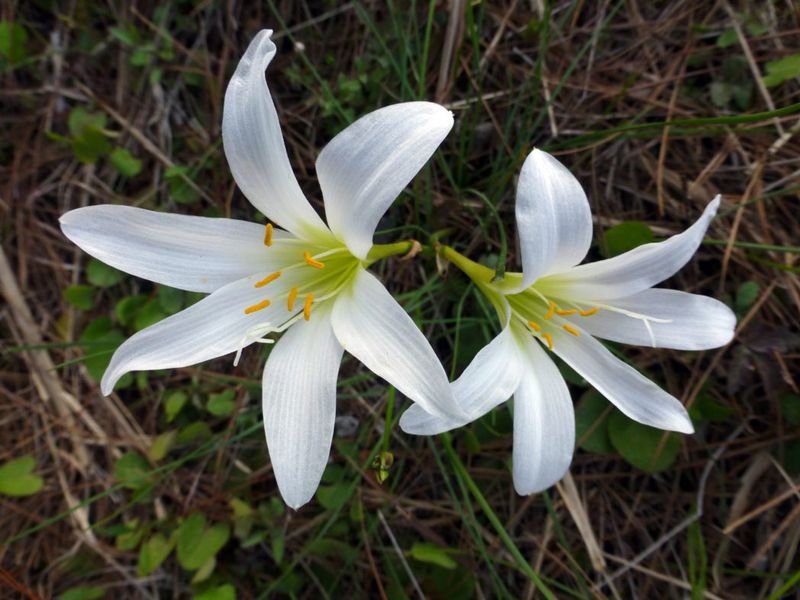
Knowing what you have planted matters beyond bloom season. Rain lily bulbs contain alkaloids, and several species in this group carry genuine toxicity risks for people and animals.
Before purchasing, planting, or handling any bulb sold as a rain lily, the scientific name on the label is the only reliable guide to what the safety picture actually looks like for that specific plant.
NC State Extension’s rain lily entry identifies alkaloids and poisoning risk in several rain lily species, with potential symptoms including nausea, vomiting, diarrhea, and more severe effects depending on species and the amount involved. Do not treat any rain lily bulb as edible or broadly harmless around children or pets.
Pet safety claims require species-level precision. The ASPCA lists Zephyranthes drummondii as non-toxic to dogs and cats, but that listing applies to that specific taxon and cannot be used as evidence about Zephyranthes chlorosolen or any other plant sold under a rain lily common name without confirmed taxonomic identity from an authoritative botanical source.
The nomenclature overlap discussed earlier in this article makes species-level verification especially important before drawing any safety conclusion.
Texas A&M AgriLife’s range plant database notes an unusual photodynamic toxicity associated with dead leaf tips of prairie rain lilies collected from a limited area of Texas, particularly around DeWitt, Gonzales, and Caldwell counties, following rain. This is a localized, species-specific caution rather than a reason to avoid rain lilies broadly, but it is a clear reason not to casually handle or consume unidentified wild specimens from that region.
If a person or animal ingests any part of an unidentified rain lily plant, contact Poison Control for guidance rather than waiting to see whether symptoms develop.
Plant for a possible fall flush, not a guaranteed weather show
The usable decision at the end of all this is straightforward. Find a clearly labeled species or selection, confirm it is fall-oriented rather than spring-blooming, and plant several bulbs together in a sunny, well-drained spot.
Water them consistently while they establish, then let the planting mature over a season or two before expecting a strong show.
Texas A&M’s rain lily documentation and UF/IFAS rain lily guidance both support the core premise: a well-sited, established clump can respond to substantial fall rain with a visible flush of flowers within days, refreshing a bed that summer heat has left looking spent. University of Georgia Extension reporting reinforces that the effect is real, while also making clear that it is conditional rather than automatic.
Expect weather-sensitive color rather than a bloom after every passing shower. Once a compatible clump matures in a Texas bed, a good October rain may reveal more flowers than you thought possible from a plant that looked like bare ground the week before.
That kind of quiet surprise is exactly what a tired fall bed needs.