
You walk out to your garden bed at sunrise and find that a seedling that looked perfectly healthy the evening before is now stripped to a nub. Before you reach for any spray or pull every plant, take a breath, because sudden chewing damage has several possible causes and earwigs are just one of them.
In California gardens, the European earwig is a real threat to young vegetable and flower seedlings, but confirming the culprit after dark is the single most important step you can take right now.
Confirm the culprit after dark
Grab a flashlight and head outside after 9 p.m. That simple step will tell you more than a week of daytime inspection ever could.
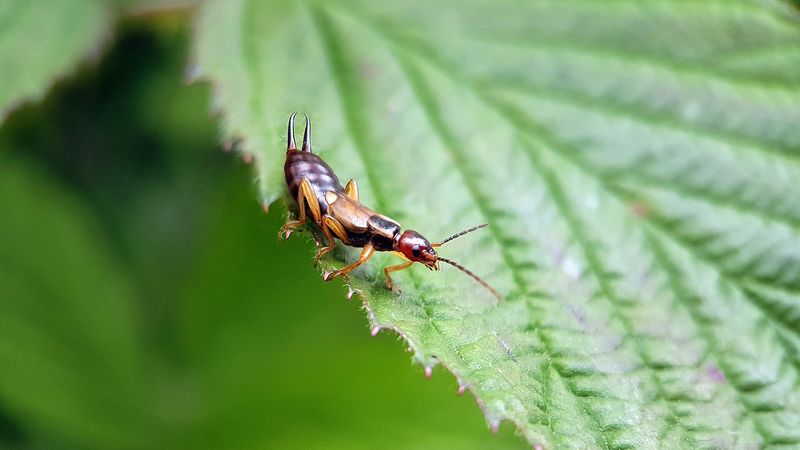
Earwigs are nocturnal insects, and the ones responsible for seedling damage will be actively feeding or moving across the soil surface well after sunset.
When you reach the damaged bed, look closely at the plants themselves and at the soil around their bases. UC IPM’s earwig pest note describes the European earwig, Forficula auricularia, as the most common plant-damaging species in California gardens.
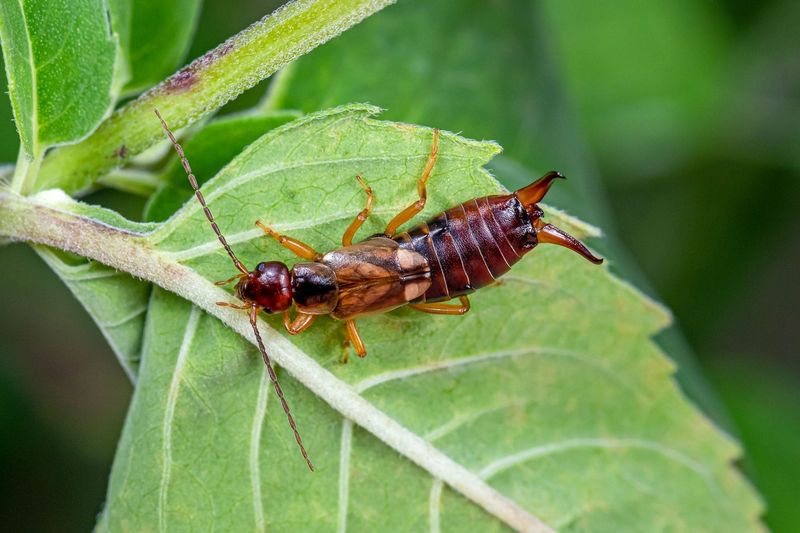
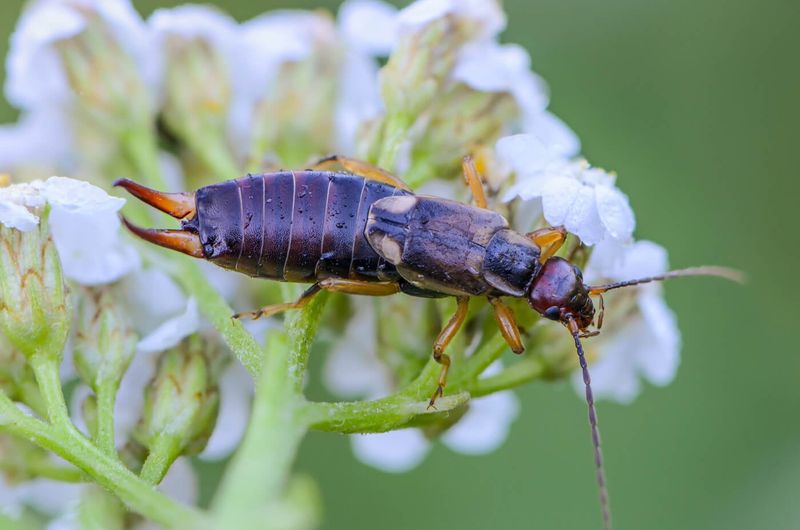
Adults are reddish-brown, roughly three-quarters of an inch long, and easy to recognize by the forceps-like cerci curving from the rear of the abdomen. Those pincers are distinctive, so once you see one up close, you will not confuse it with a caterpillar or a beetle larva.
The plant symptoms that point toward earwigs include irregular holes in leaf tissue, ragged chewed edges, and, on very young seedlings, stems or growing tips that are partially or completely gone. Older seedlings may show scattered holes through the leaf blade rather than clean, round cuts.
None of these symptoms alone confirm earwigs as the cause.
A confident diagnosis requires three things together: the right damage pattern, at least one earwig spotted at night near the injured plant, and nearby damp hiding places such as mulch, a board, a pot, or dense leaf litter. Finding a single earwig on the far side of the yard does not mean earwigs are destroying your seedlings.
Focus your evidence on the immediate area around the damage, and act on what you actually observe rather than on suspicion alone.
Why the damage appears overnight
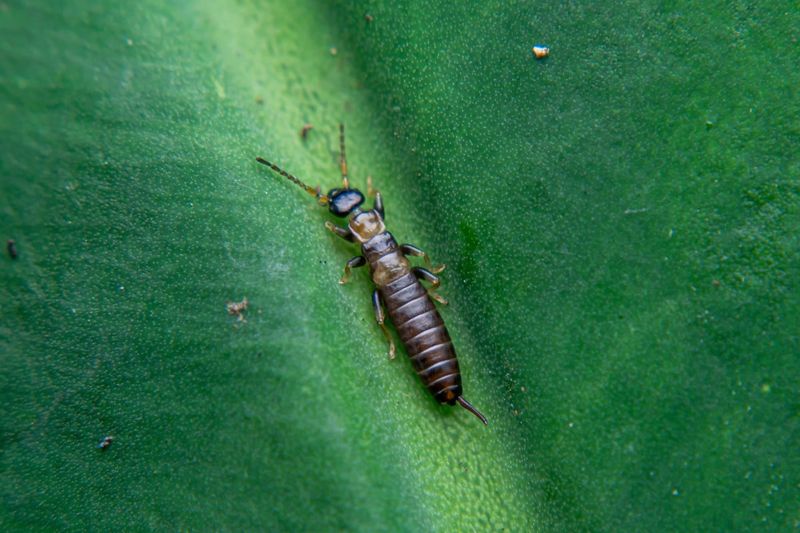
Earwigs do not destroy seedlings in a single dramatic night in most cases, but their feeding pattern makes the injury feel that way. They come out after dark, chew on whatever soft plant tissue is within reach, and then disappear before sunrise into cool, dark, moist hiding places.
When you check the garden in the morning, the feeding has already stopped and the insects are nowhere to be seen.
UC Cooperative Extension Kern County guidance on earwigs notes that earwigs shelter during the day in any place that is dark, cool, and damp. Common refuges in a typical California garden include thick or wet mulch, boards left on the ground, overturned pots, dense clumps of weeds, leaf litter, soil clods, and the gaps around irrigation emitters.
A bed that has all of these features close to young plants gives a hungry population somewhere safe to spend the day and a short commute to dinner.
Young seedlings are particularly exposed because losing even a few leaves or the growing tip can stunt or kill a plant that has not yet developed enough leaf area to recover. A larger, established vegetable plant can tolerate similar feeding with little lasting effect, but a two-week-old transplant or a freshly germinated seedling has almost no margin.
This vulnerability, combined with high earwig populations and favorable conditions, is what turns a modest feeding event into what looks like overnight destruction.
California is not uniform in earwig pressure. Activity depends on local climate, irrigation habits, shade, mulch depth, and soil moisture.
UC IPM notes that earwigs may be less active during hot, dry California summers but can remain active year-round in milder coastal areas. Understanding your local conditions helps you judge how urgent the response needs to be.
Trap earwigs repeatedly
Trapping is the fastest low-risk action you can take once earwigs are confirmed. Set traps in the evening, check them the next morning, and repeat the process every day while catches remain high.
The goal is to reduce the population feeding near your seedlings to a level where the plants can survive and grow, not to eliminate every earwig in the yard.
Rolled newspaper, corrugated cardboard, short sections of garden hose, or bundled bamboo tubes all work as shelter traps. Place them directly on the soil within a foot or two of the damaged plants just before dark.
Earwigs will move into these refuges as they settle in for the day. In the morning, pick up each trap carefully, hold it over a bucket of soapy water, and shake or unroll it so the earwigs drop in.
A sealed container works just as well if you prefer to dispose of them away from the garden.
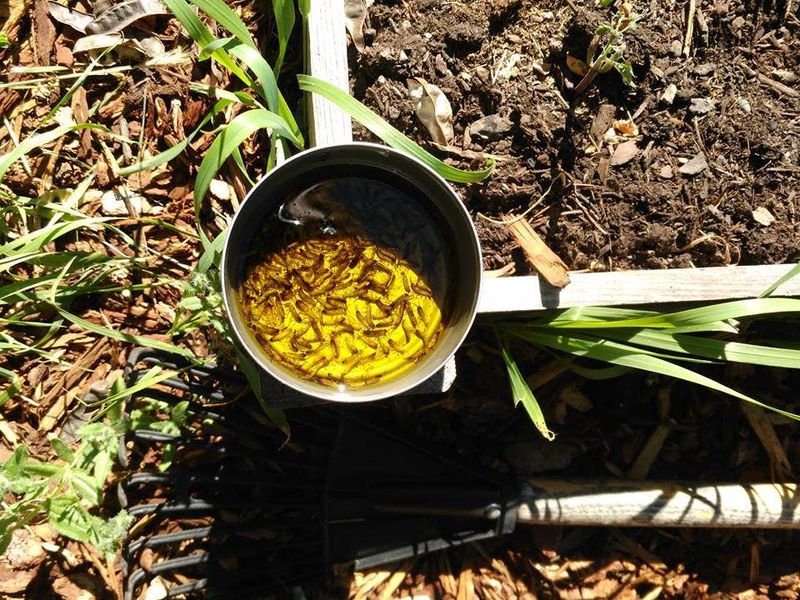
Oil traps offer a second option, particularly useful when you want a passive setup that works without daily retrieval. UC IPM recommends using shallow, low-sided cans sunk approximately level with the soil surface and filled with vegetable oil plus a small amount of fish oil, tuna oil, or bacon grease.
Earwigs are drawn to the scent, fall in, and cannot escape. Check and refill the cans regularly, because the attractant breaks down and the oil fills up with debris.
Set realistic expectations before you start. Daily trapping can reduce earwig populations to tolerable levels over time, but a single night of trapping will not necessarily prevent the next feeding event, especially if shelter and food remain plentiful nearby.
UC IPM is clear that results depend on placement, competing food sources, population size, and how consistently you maintain the traps. Treat the first few mornings of high catches as a signal that the population is large and that trapping needs to continue, not as a sign that the problem is almost solved.
Reduce damp shelter without drying the bed
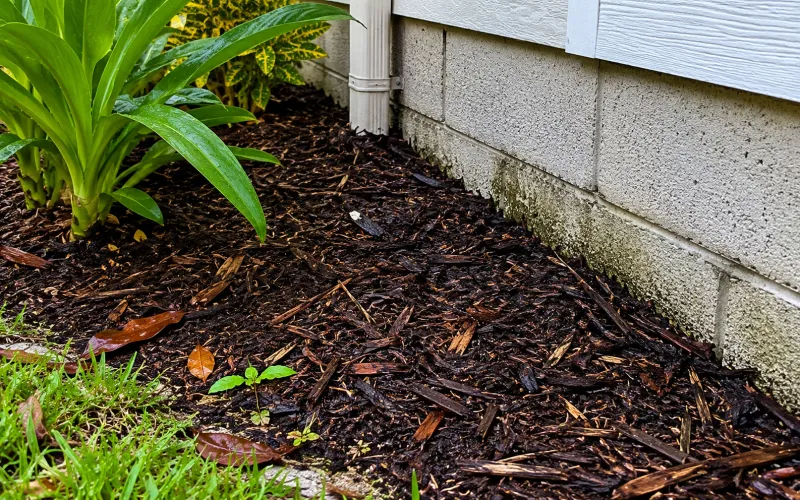
Traps work better when you remove the competing refuges that earwigs prefer over your bait. Walk around the damaged bed and look for anything that stays cool, dark, and moist during the day.
Boards left on the ground, flat rocks, stacked pots, boxes, heavy leaf litter, weedy ground cover, and dense vegetation immediately around the bed all qualify. Move or remove as many of these as practical, starting with the ones closest to your seedlings.
Mulch deserves a careful, targeted response rather than wholesale removal. Mulch supports soil health, conserves water, and moderates soil temperature, all of which matter in a California garden.
The problem is thick or persistently wet mulch that stays damp against plant stems. Pull mulch back a few inches from the base of vulnerable seedlings and check whether the surface underneath dries out between waterings.
Remove only the material that is excessively wet or obviously harboring earwigs, and leave a reasonable layer in place elsewhere.
Surface moisture management follows the same targeted logic. UC Cooperative Extension Ventura County notes that drip irrigation can reduce the wet soil surface and foliage that broad sprinkler watering creates, which makes the area around plants less hospitable for earwigs during the day.
Switching to drip or soaker irrigation, if your setup allows it, is worth considering, but the goal is to reduce unnecessary surface wetness, not to cut back on the water young seedlings need to establish.
Seedlings in California summers can fail quickly if they are underwatered, so do not let pest pressure push you into stressing your plants. UC IPM cucurbit pest management guidelines reinforce that irrigation management should reduce habitat for pests without compromising plant health.
Check soil moisture at root depth, not just at the surface, and water according to what the plant needs rather than what makes earwig control easier.
Rule out other chewing pests
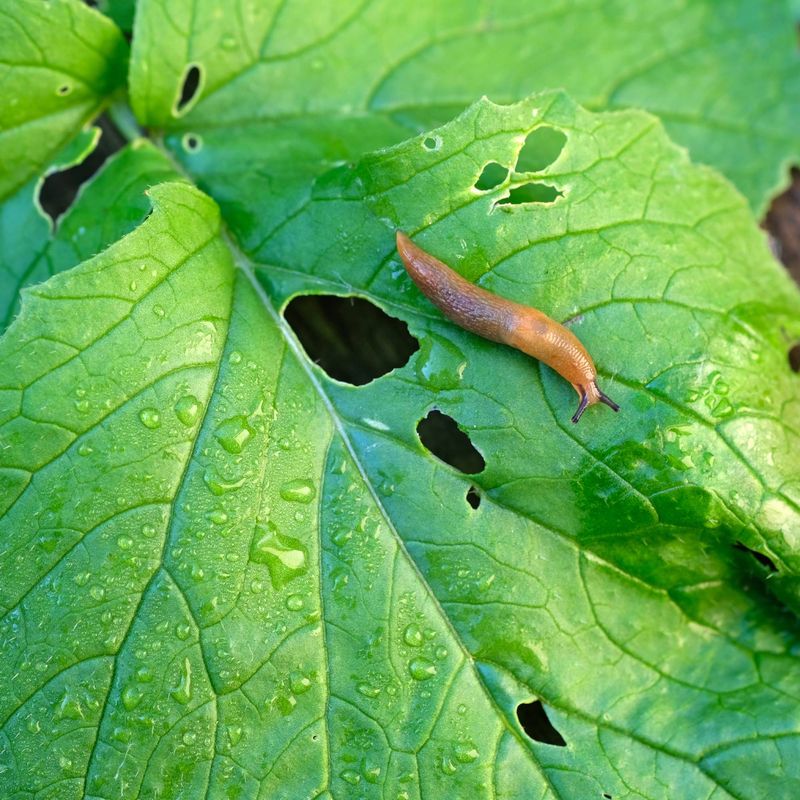
Ragged holes in seedling leaves are not a signature that belongs to earwigs alone. Several common California garden pests leave similar-looking damage, and treating for the wrong one wastes time while the actual culprit keeps feeding.
A quick nighttime inspection can usually separate the possibilities.
Snails and slugs are among the most frequent lookalikes. They feed at night on soft plant tissue and can strip seedlings just as aggressively as a large earwig population.
The key difference is the slime trail they leave on leaves, stems, and soil. If you find a shiny, silvery track leading to or from the damage, UC IPM’s snail and slug resources offer targeted guidance specific to those pests.
No slime trail does not automatically point to earwigs, but it does rule snails and slugs out.
Caterpillars are another possibility. Loopers, armyworms, and other moth larvae feed at night and produce damage that can look nearly identical to earwig injury.
Look for frass, which is small, dark pellet-shaped droppings, on the leaves or on the soil beneath the plant. Webbing or a rolled leaf sheltering a caterpillar also points away from earwigs.
Some caterpillars are well camouflaged and hide in the soil during the day, so check below the surface around the stem base.
Beetles and cutworms round out the common suspects. Cutworms typically sever young stems at or just below the soil line, leaving a clean cut rather than the ragged chewing earwigs produce.
Flea beetles punch small, round holes rather than irregular tears. The decision rule in all cases is the same: inspect the plant and surrounding soil after dark, identify what is actually present, and match your response to the confirmed pest rather than applying a treatment simply because the damage looks alarming.
Escalate to pesticides only when damage stays unacceptable
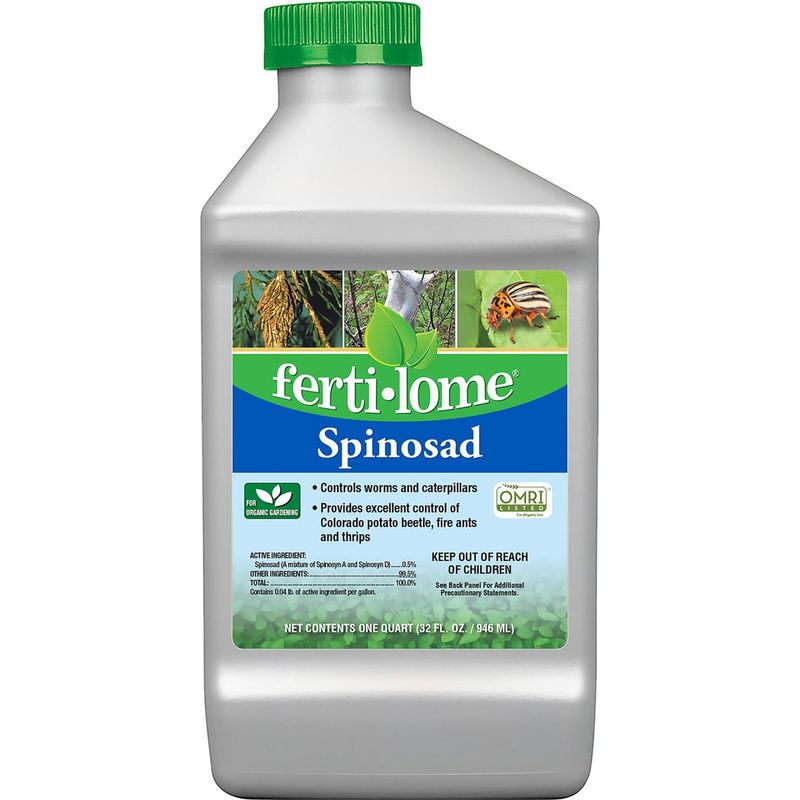
Cultural controls, trapping, and shelter removal should be your first response to confirmed earwig damage. Pesticides enter the picture only when plant injury remains unacceptable after those measures have been tried and the damage is ongoing.
Finding earwigs in the garden is not itself a reason to spray.
European earwigs are omnivores. They consume aphids, mites, insect eggs, and decaying organic matter alongside the plant tissue they damage.
Broad-spectrum insecticides applied indiscriminately can knock out beneficial insects and natural enemies alongside earwigs, potentially making other pest problems worse later in the season. UC IPM explicitly warns that broad-spectrum treatments can harm natural enemies, which is one reason the guidance leads with cultural controls.
When injury is genuinely unacceptable and cultural measures have not brought it under control, UC IPM identifies spinosad products as among the more effective options for earwigs. Spinosad availability, registration, permitted crops, application sites, and required harvest intervals vary by product and formulation.
A product labeled organic or natural is not automatically safe for bees, pets, or aquatic life. The current product label is the only authoritative source for what is permitted and what precautions apply.
Checking the label is not optional. EPA guidance on why pesticide labels matter explains that labels specify where, how much, and how to apply a product, along with required protective equipment and reentry or harvest intervals.
Applying more than the label rate is not more effective and is illegal. For California-specific registration status, the California Department of Pesticide Regulation product information system allows you to verify whether a product is currently registered for use in the state.
A few additional cautions apply. Carbaryl became a restricted-use material in California on August 1, 2020, so older recommendations referencing it may no longer be valid.
Do not use homemade sprays or off-label applications. EPA’s garden-specific label guidance reinforces that any treatment must match the labeled crop, site, and pest.
If you do apply a pesticide, do so at night to reduce exposure to bees, but still follow every label direction, including protective equipment requirements and pre-harvest intervals.
Protect seedlings without eradicating every earwig
A practical response to earwig damage follows a clear sequence: confirm activity after dark, set traps and check them daily, remove excessive damp shelter near vulnerable plants, pull wet mulch back from stems, and manage irrigation to reduce unnecessary surface moisture without stressing seedlings. Reassess the damage after several days of consistent effort before deciding whether to escalate.
Escalation to a pesticide is warranted only when injury remains unacceptable and a currently registered, labeled option exists for your crop and site in California. Even then, treat the labeled product as the controlling authority on rate, timing, protective equipment, and harvest intervals.
Check California registration separately, because state status can differ from federal registration.
UC IPM notes that European earwigs can feed on aphids and other organisms, and UC Cooperative Extension Ventura County guidance reinforces that not every earwig in a California yard damages plants. The striped earwig found in parts of Southern California, for example, is primarily a nuisance around lights rather than a plant feeder.
Success here means reducing injury around the seedlings that are actually at risk, not promising instant control or pushing for total yard-wide elimination. A garden that has fewer earwigs near vulnerable plants, adequate moisture at root depth, and minimal damp refuge piled against stems is a garden that is already doing most of what the evidence supports.