
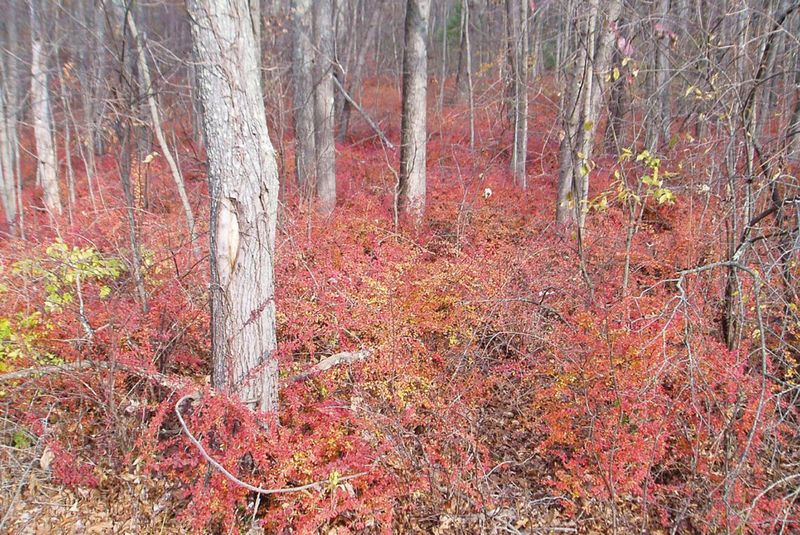
A thorny ornamental shrub called Japanese barberry has quietly spread into yards and wild edges across North Carolina’s mountains and Piedmont, and many homeowners have no idea what it is. Research from Connecticut found that dense stands of this plant were linked to higher numbers of blacklegged ticks, the same ticks that can carry Lyme disease.
While that evidence does not prove the shrub causes disease in every North Carolina yard, it gives homeowners a solid reason to learn what this plant looks like, understand its real ecological impact, and decide whether removal makes sense for their property.
Identify the shrub before deciding what to do
Japanese barberry is easy to overlook at first glance. It often blends into a mixed shrub border or woodland edge as just another rounded, thorny plant.
Getting the identification right before taking any action matters, because several shrubs share a similar silhouette and misidentifying one could mean removing the wrong plant or leaving the right one in place.
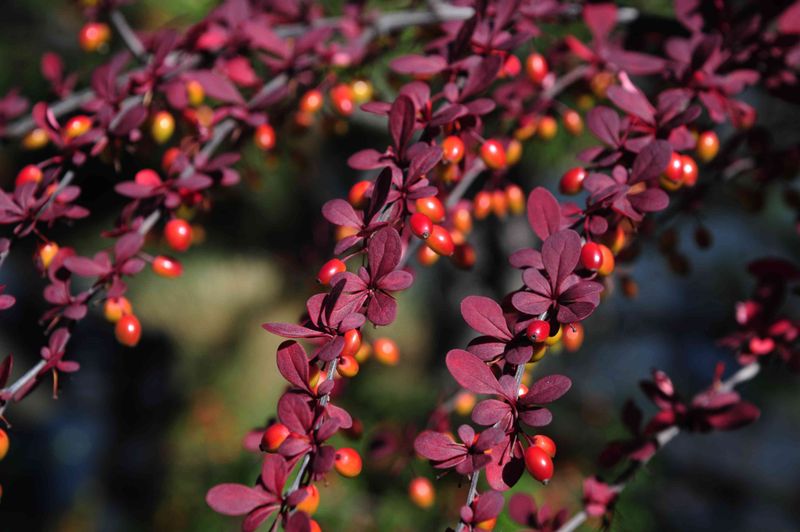
The shrub typically grows 3 to 6 feet tall and forms a dense, arching mound covered in stiff spines. Leaves are small and spoon-shaped or oval, and the foliage color can range from green to red, purple, or gold depending on the cultivar.
Bright-red berries often cling to the stems well into winter, which makes the plant noticeable even after leaves drop.
The single most useful identification clue is the spine arrangement. NC State Extension’s plant profile for Japanese barberry notes that each stem node carries one spine, not three.
Some other barberry species have a three-spine cluster at each node, so counting spines at a single point on the stem is the most reliable way to separate Japanese barberry from look-alikes.
Foliage color and berry presence alone are not enough to confirm identity. Purple-leafed cultivars, gold-leafed cultivars, and green-leafed forms all exist, and some nursery-sold cultivars are marketed as sterile, meaning they may produce fewer or no viable seeds.
Sterile cultivars do not automatically disappear from the landscape, and existing nonsterile plants nearby can still spread by seed.
When identification is uncertain, take a stem sample or clear photographs to a local Cooperative Extension office before removing anything. A confident ID protects both the plants you want to keep and the time you will spend on removal.
Its invasive impact stands apart from the tick question
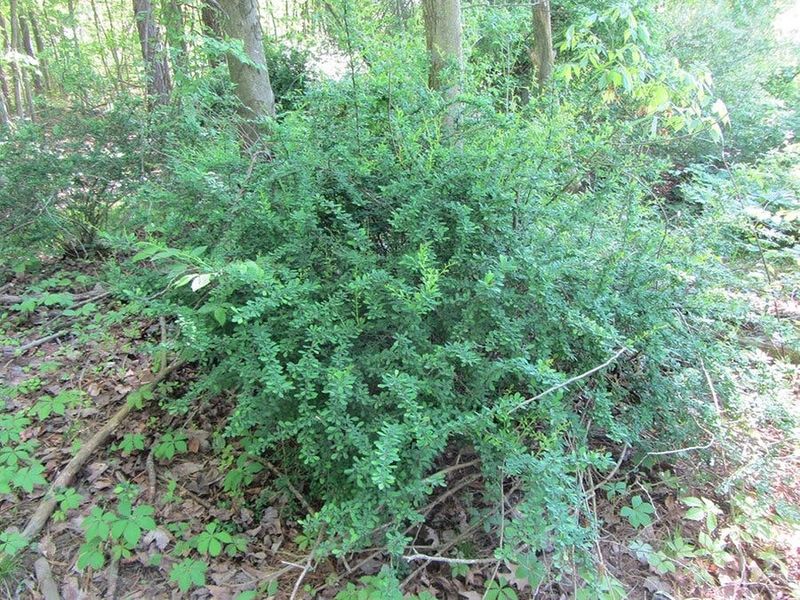
Even if no tick study had ever been conducted, Japanese barberry would still warrant attention in North Carolina yards. Its status as an invasive plant is independently supported and does not hinge on any public-health argument.
Understanding that distinction matters, because the ecological case for removal is solid on its own terms.
NC State Extension classifies Japanese barberry as invasive in North Carolina, meaning it spreads beyond where it was planted and can displace the native plants that belong in the landscape. Birds eat the bright-red berries and deposit seeds across a wide area, carrying the plant far from any original planting.
At the same time, established shrubs expand locally through root suckers, sending up new shoots from the root system and gradually widening the footprint of an existing clump.
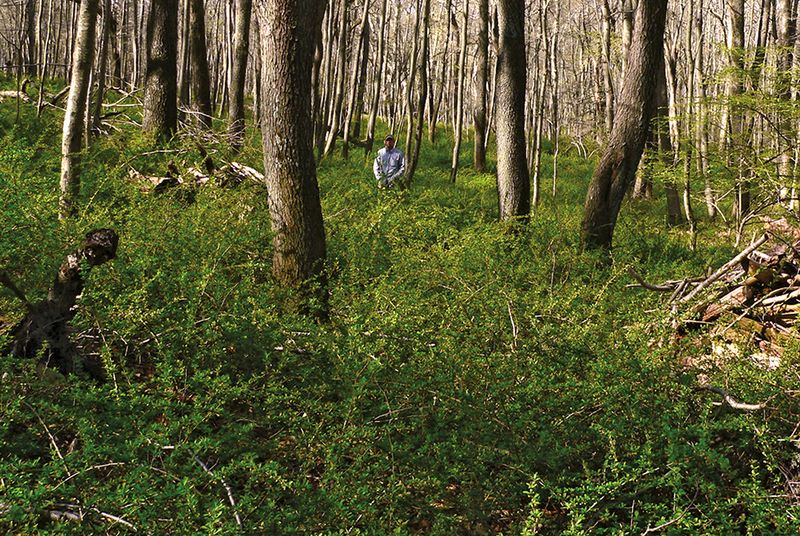
Dense barberry growth can shade out native wildflowers, shrubs, and tree seedlings that would otherwise fill the understory. Once a thicket forms, it tends to persist because the thorny structure discourages browsing by deer and other animals that might otherwise help keep it in check.
The result is a patch that holds ground and keeps expanding season after season.
Japanese barberry’s distribution in North Carolina is uneven rather than statewide. The North Carolina Vascular Plants database describes it as uncommon but probably increasing, with the strongest presence in the mountains and Piedmont.
Coastal plain occurrences are more limited. That means not every homeowner in the state is equally likely to find it, but in the regions where it does appear, the plant is capable of establishing firmly and spreading further.
Removing Japanese barberry from a yard addresses a real ecological problem regardless of any tick-related concern, and that reason alone is worth acting on.
What Connecticut studies suggest about tick habitat
The public-health interest in Japanese barberry grew out of controlled field research in Connecticut, where scientists tested whether managing the shrub changed the number of blacklegged ticks and the proportion of those ticks carrying Lyme disease bacteria. The results were notable, but they describe what was observed in specific northeastern study sites, not what happens in every yard where barberry grows.
A two-year Connecticut study published in 2009 found that larval tick attachment on white-footed mice was higher in intact barberry stands than in areas where barberry had been managed or was absent. Adult blacklegged tick density was also higher in the intact stands.
In the second year of that study, infection prevalence in managed areas dropped to a level statistically similar to barberry-free areas, suggesting that reducing the shrub’s presence was associated with fewer infected ticks over time.
A longer look at the same question added to the picture. A nine-year Connecticut study found that areas where barberry was managed had fewer adult blacklegged ticks infected with Borrelia burgdorferi compared with areas where barberry was left intact, though managed areas did not become identical to sites that had never had barberry.
The mechanism researchers point to is habitat, not biology. Dense barberry stands create a humid, sheltered microenvironment at ground level that can support the small mammals, particularly white-footed mice, that serve as hosts for larval ticks.
More mice in a sheltered spot means more opportunities for larval ticks to feed and potentially acquire the Lyme pathogen. The shrub is not a breeding site for ticks; it may simply make conditions more favorable for the interactions that help ticks complete their life cycle.
These findings suggest a plausible concern worth taking seriously, but they come from wooded Connecticut study plots. Whether the same magnitude of effect occurs in a residential North Carolina yard, with different tick populations, different host communities, and different landscape surroundings, has not been established.
Treat the Connecticut research as informative context, not a guarantee of what is happening in your own backyard.
North Carolina has tickborne disease, but barberry’s local effect is unproven
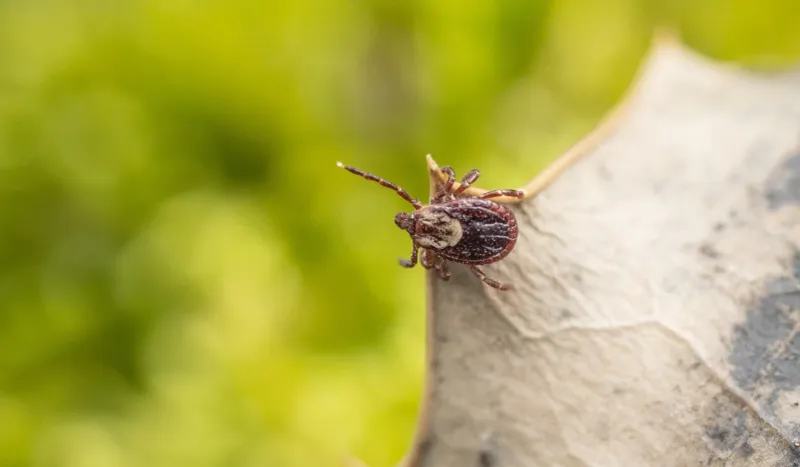
North Carolina homeowners do face genuine tickborne-disease risk, and that risk is worth taking seriously on its own terms. The question is whether Japanese barberry specifically changes that risk in a local yard, and the honest answer is that the evidence does not yet confirm it does.
State flora records show Japanese barberry concentrated in the mountains and Piedmont, described as uncommon but probably increasing. Coastal plain presence is more limited, so the concern about the shrub’s potential role in tick habitat is most relevant to homeowners in those western and central parts of the state rather than statewide.
The North Carolina Division of Public Health documents several tickborne illnesses present in the state, including Lyme disease, ehrlichiosis, spotted-fever illnesses, anaplasmosis, and STARI. These are real diseases with real consequences, and North Carolina residents in tick-prone areas should take precautions regardless of what shrubs grow in the yard.
A recent investigation added detail to the western North Carolina picture. A CDC report on Biltmore Forest in western North Carolina found blacklegged ticks and Borrelia burgdorferi present in that area, with approximately 40 percent of tested adult blacklegged ticks positive for the bacterium.
That finding confirms regional concern about tick-transmitted Lyme disease in the southern Appalachians.
What that investigation does not do is connect infected ticks to Japanese barberry. The ticks and the pathogen were present independently of any shrub-habitat analysis.
CDC guidance makes clear that Lyme disease is transmitted by infected blacklegged ticks, not by plants. The Connecticut research, discussed earlier, suggested a habitat association worth monitoring, but those studies were conducted in northeastern wooded plots, not in North Carolina residential landscapes.
A homeowner who finds Japanese barberry in a mountain or Piedmont yard has a good reason to remove it based on its invasive status. Finding the shrub does not, by itself, confirm elevated Lyme risk, and the absence of the shrub does not guarantee a tick-free property.
Local tick risk depends on many factors, and barberry’s contribution to that risk in any specific North Carolina yard remains uncertain.
Remove small plants completely and control established shrubs carefully
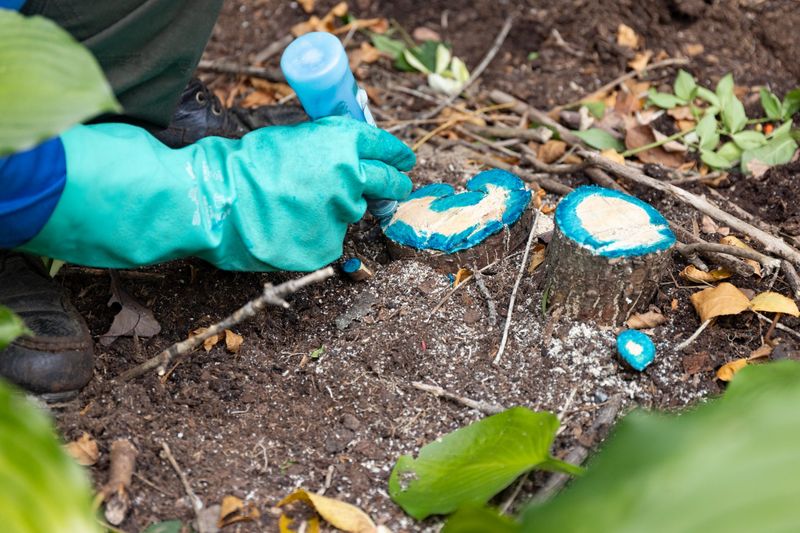
Pulling out Japanese barberry sounds straightforward until the spines draw blood through a thin glove. Before starting any removal, put on thick, puncture-resistant gloves rated for thorny plants.
The spines are stiff and sharp enough to cause painful injuries, and that protection is not optional.
Small seedlings and young plants respond well to hand removal when the soil is damp and loose, such as after a good rain or thorough watering. Grip the base of the plant as low as possible and work the entire root system out of the ground.
Leaving root fragments behind allows the plant to resprout, so take extra time to clear the hole and check for any remaining pieces. Penn State Extension’s Japanese barberry guidance emphasizes complete root removal as the key step for young plants.
Established shrubs are a different challenge. Cutting the stems at ground level may seem like it finishes the job, but Japanese barberry can resprout from stump tissue, and a plant that looks dead in summer may push new growth by fall.
Cutting alone is not a reliable control method for mature plants.
For larger or well-rooted shrubs, UConn Extension’s invasive-plant factsheet describes options including repeated cutting to exhaust root reserves, digging with tools to remove root crowns, or applying a properly labeled herbicide using a cut-stump or basal-bark method. Each approach requires follow-up monitoring over at least one to two growing seasons, because regrowth is common and a single treatment rarely finishes the job.
Any herbicide use must follow the product label exactly. Labels specify rates, timing, buffer distances from water, and required protective equipment, and those instructions carry legal weight.
Protect nearby desirable plants from drift or soil contact, and keep applications away from drainage paths that lead to streams or wetlands.
Extension guidance on removal methods is clear that burning is not a safe option for homeowners. Fire can travel through dry mulch, leaf litter, and ornamental grasses far faster than expected, creating a serious hazard.
Similarly, applying herbicide casually or at higher-than-labeled rates risks harming plants you want to keep and can contaminate nearby soil or water.
Large infestations covering a significant area of a yard or adjoining property are best handled by a qualified invasive-plant contractor who has the tools, training, and access to commercial herbicide formulations that make large-scale removal practical and safe. Getting professional help for a big job is not a sign of failure; it is the most effective path to lasting control.
Reduce tick exposure while improving the surrounding yard
Working near brush and leaf litter puts you in tick territory, and that is true whether or not Japanese barberry is present. Protecting yourself during and after removal is as important as the removal itself, and the same habits apply any time you spend time in the yard during tick season.
Wear long sleeves and long pants tucked into your socks before heading into brushy areas. Apply an EPA-registered repellent to exposed skin and clothing, following the product directions for reapplication timing.
CDC guidance on preventing tick bites specifically notes that people can encounter ticks while gardening and even in their own yards, so treating the backyard as tick habitat during removal work is the right mindset.
When you come indoors, do a thorough tick check from head to toe, paying close attention to the scalp, behind the ears, underarms, and behind the knees. Shower within two hours of coming inside, which helps rinse off any ticks that have not yet attached and makes it easier to spot any that have.
These steps are exposure-reduction measures, not guarantees of disease prevention, but they meaningfully lower the chance that a tick bite goes unnoticed.
Beyond personal protection, adjusting the yard itself can make conditions less hospitable to ticks in general. CDC tick-safe landscaping materials recommend clearing leaf litter and tall brush from areas near the lawn where people spend time regularly.
Adding a dry wood-chip or gravel border between the maintained lawn and a wooded edge creates a transition zone that ticks are reluctant to cross, since they prefer humid, shaded environments.
These landscape adjustments address tick habitat broadly. They are not barberry-specific fixes, and they will not produce a tick-free yard on their own.
Combined with safe removal of invasive plants and consistent personal-protection habits, they form a more complete approach to reducing tick encounters over time.
Replace the shrub with a site-appropriate native
After removing Japanese barberry, the cleared space does not have to stay empty. Filling it with a native shrub suited to your specific site conditions is a practical next step that supports the local landscape and reduces the chance of another invasive plant moving in to fill the gap.
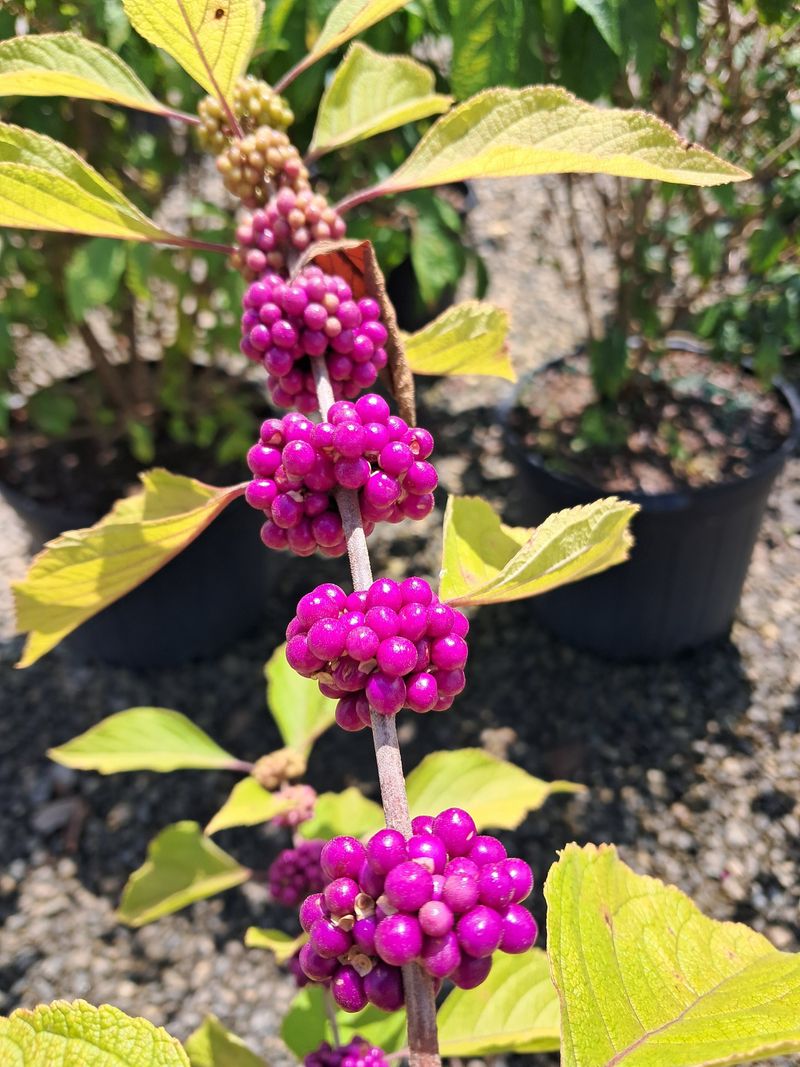
NC State Extension’s native plants handbook lists several shrubs well suited to North Carolina landscapes. American beautyberry produces striking clusters of purple berries in fall and handles a range of soil conditions.
Buttonbush thrives in wet or periodically flooded spots and supports pollinators. Sweet pepperbush, also called summersweet, offers fragrant late-summer blooms and tolerates wet soil and partial shade.
Dwarf fothergilla stays compact and delivers excellent fall color. Inkberry is an evergreen holly that works in wet or moist sites and provides winter berries for birds.
NC Sea Grant’s plant-swap guide also highlights yaupon holly and fothergilla as alternatives worth considering when replacing invasive ornamentals. Yaupon holly is tough, drought-tolerant once established, and produces red berries that attract birds through winter.
Fothergilla, including the dwarf form, offers multi-season interest with spring flowers and vivid fall foliage.
None of these replacements comes with a promise of reduced tick risk. Choosing a native shrub is about restoring a more appropriate plant community and avoiding a repeat of the same invasive-plant problem.
Before buying anything, match the candidate plant to the actual conditions of the planting spot: available light, soil moisture, drainage, mature size, and the amount of maintenance you are willing to provide. A well-matched native plant will establish more easily and deliver better long-term results than a mismatched choice, however ecologically appropriate it might be in the right setting.
Take measured action rather than treating the shrub as a disease source
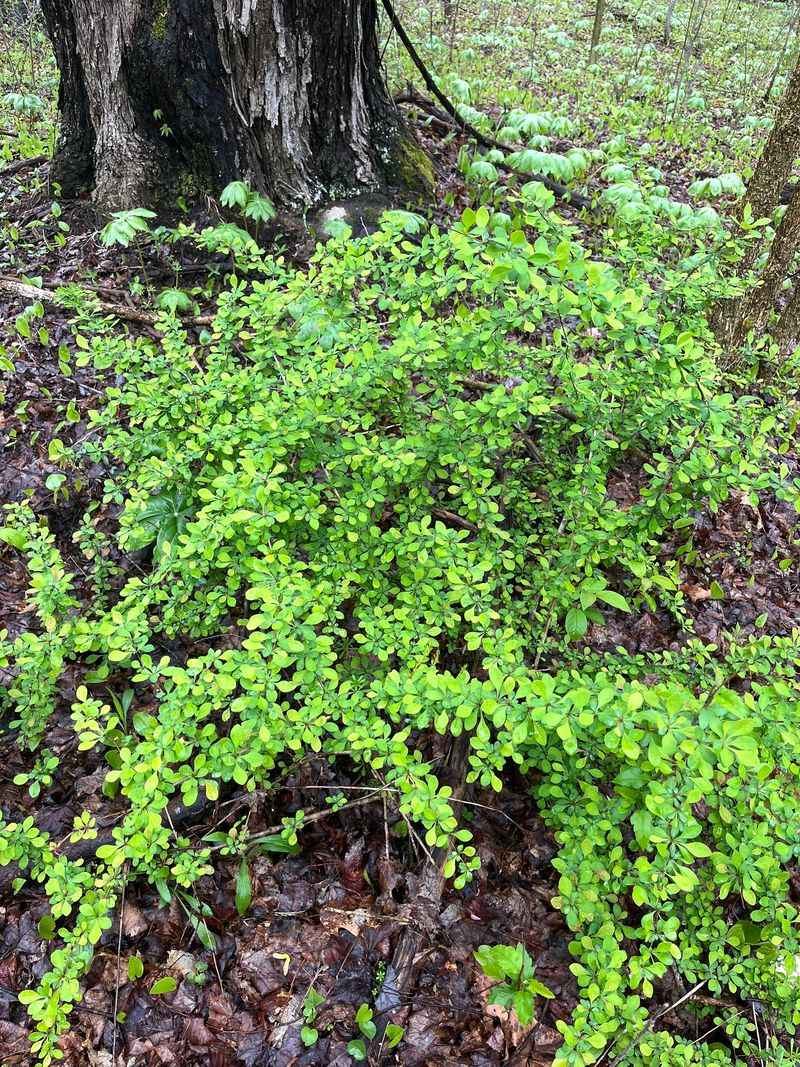
Japanese barberry deserves attention in North Carolina yards, but for reasons that are more nuanced than a single alarming headline can capture. Confirming the one-spine-per-node identification is the right first move, because acting on a misidentified plant wastes effort and may remove something worth keeping.
Once confirmed, the case for removal rests primarily on the plant’s documented invasive status, which NC State Extension supports independently of any tick research. The Connecticut studies showing an association between barberry management and fewer infected blacklegged ticks are credible and worth knowing about, but those findings come from northeastern wooded study sites, not from residential North Carolina landscapes, and they should inform rather than drive a homeowner’s decision.
Careful removal, follow-up monitoring for resprouts, tick-safe gardening habits during the work, broader yard improvements that reduce leaf litter and create dry borders, and a site-appropriate native replacement together form a reasonable and proportionate response. Personal protection against tick bites belongs in that routine year-round, not only during barberry removal.
No single plant-removal decision eliminates ticks or guarantees freedom from tickborne illness. What a thoughtful approach does offer is a yard that is ecologically sounder, managed with honest expectations, and less likely to harbor conditions that make tick encounters more probable.
Inspect the shrubs along your yard’s edges, confirm what you are looking at, and address what you find with the care the situation actually calls for.