
Most California gardeners know the sinking feeling of finding a tomato plant stripped overnight by a hornworm the size of a finger. What fewer realize is that a slender, long-legged wasp hovering around those same plants may be hunting caterpillars to feed its nest.
Paper wasps in the genus Polistes are generalist predators that can capture and carry off pieces of hornworms and other soft-bodied insects. Understanding what they actually do, and what they cannot guarantee, helps you make a smarter call before reaching for a spray can or knocking down a nest.
Identify the paper wasp before judging its value
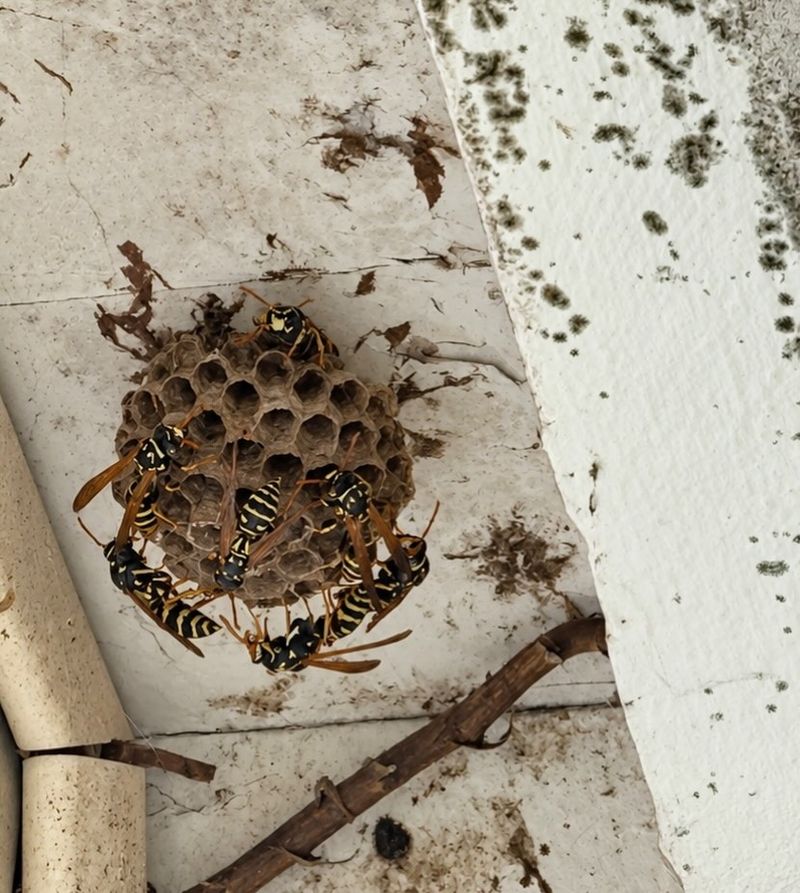
Slender body, long legs that hang down during flight, and a narrow waist connecting the thorax to the abdomen, those are the field marks that separate paper wasps from the stockier yellowjackets many California homeowners confuse them with. The color pattern varies considerably.
Some individuals are mostly brown with yellow markings, others show reddish tones or pale banding, and that variation is not accidental. California is home to several Polistes species and color forms, and a quick photograph rarely provides enough detail to pin down a single species with confidence.
UC Riverside entomology resources on California wasp diversity make clear that multiple native and introduced PolistesPolistes forms share the state, so this article uses “paper wasps” or ” paper wasps” rather than asserting one California species.
Behavior offers additional clues. Paper wasps fly with those long legs trailing visibly beneath them, and they hunt actively across vegetation, pausing to inspect leaves where caterpillars might be hiding.
That hunting posture around tomato plants is part of what makes them worth a second look rather than an immediate swat.
The nest itself is another reliable identifier. Paper wasps build an exposed, umbrella-shaped comb with visible, open cells, typically attached under eaves, porch ceilings, gutters, or other sheltered overhangs.
California Department of Pesticide Regulation wasp IPM guidance distinguishes this open comb clearly from yellowjacket nests, which are usually enclosed in a papery envelope or built underground. Spotting an open, gray comb no larger than a small saucer hanging from a sheltered surface is a strong sign you are looking at a paper wasp colony, not a yellowjacket colony.
This article is about that group of generalist predators, not a claim that one California species dominates hornworm control or that most gardeners remove them in error.
What paper wasps carry back to the nest
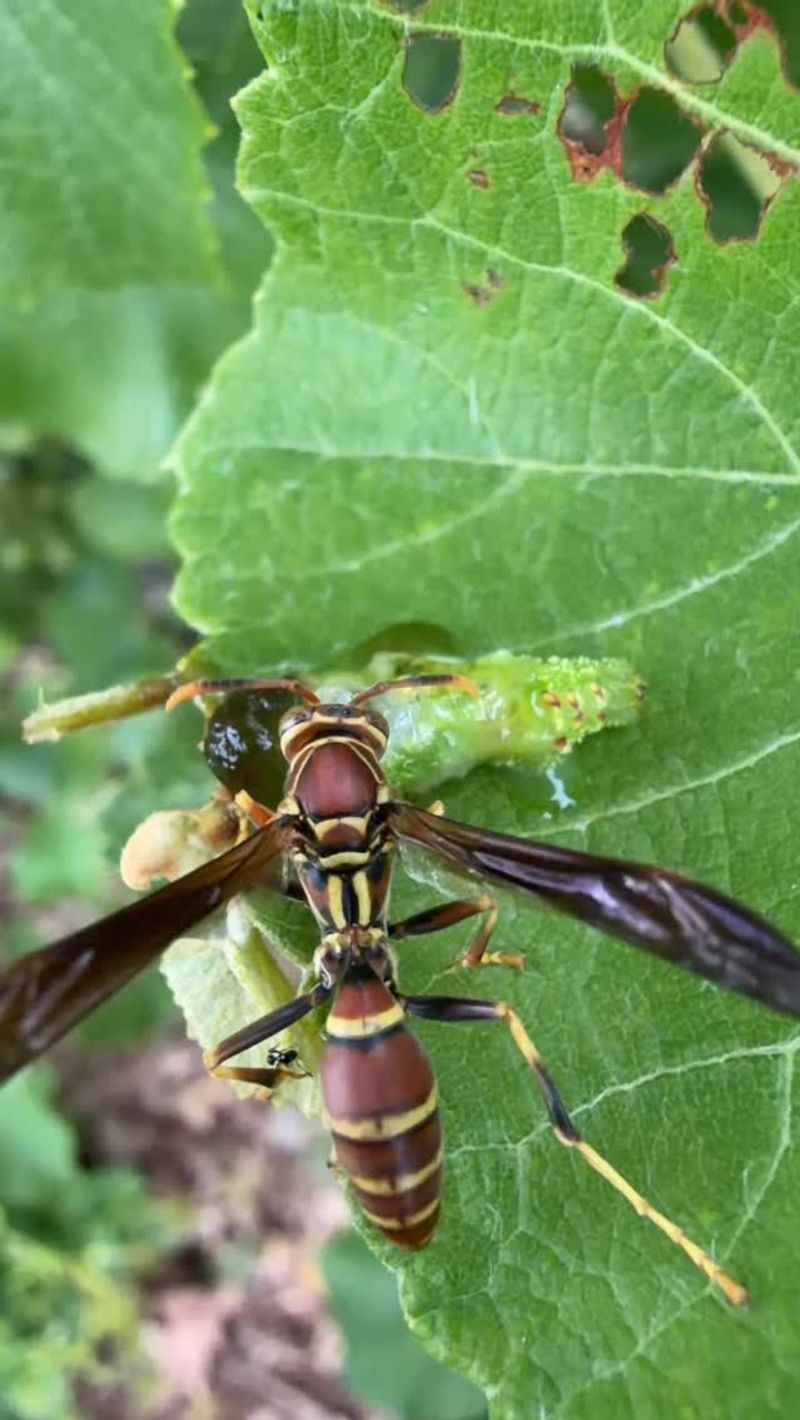
Adult paper wasps do not eat caterpillars themselves. They capture soft-bodied prey, chew it into a manageable ball of protein-rich material, then carry that processed prey back to the nest to feed developing larvae.
University of Florida IFAS documentation on paper wasp feeding biology confirms this predator-to-larvae provisioning behavior, which is fundamentally different from the way a parasitoid wasp works. The adult wasp is the one doing the hunting; the larvae in the nest cells are the beneficiaries.
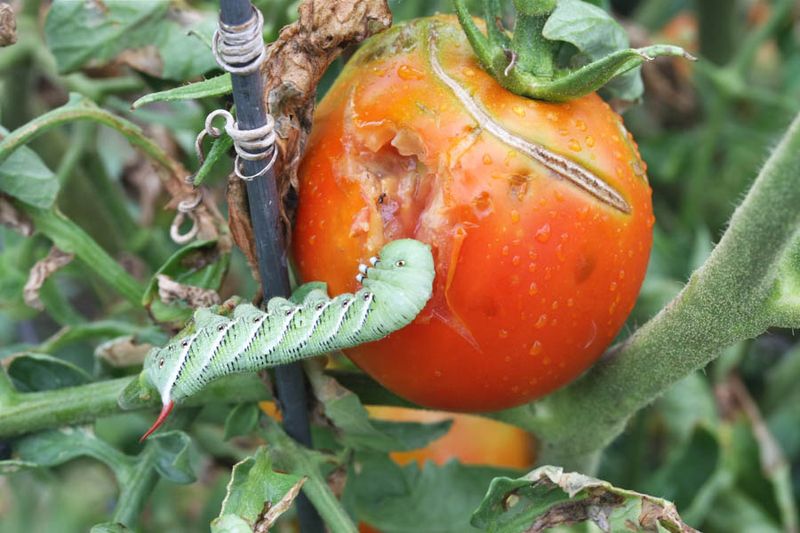
Caterpillars are a preferred prey type because they are soft, relatively slow-moving, and protein-dense. Tomato hornworms and tobacco hornworms, both large Manduca species that can strip tomato foliage down to bare stems, fall into that prey category.
UC IPM’s tomato hornworm pest management page notes that hornworm infestations tend to be more serious in warm inland areas of California, exactly the zones where paper wasp colonies are also active through summer. A wasp patrolling tomato foliage may well capture a hornworm, chew it, and carry pieces of it back to the nest.
The important qualifier is that paper wasps are generalists. The same colony may also take armyworms, loopers, imported cabbageworms, and other soft insects depending on what is available.
Seeing a wasp carry something near your tomato plants does not confirm it captured a hornworm specifically. UC IPM’s social wasp overview describes paper wasps as beneficial predators of plant-feeding insects in a general sense, which is the accurate framing.
They are opportunistic hunters, not hornworm specialists, and the size of a hornworm means a wasp is removing pieces of prey material rather than transporting an intact caterpillar to the nest.
A useful predator cannot promise a hornworm-free garden
Keeping a paper wasp nest near the garden can support natural pest pressure, but it does not guarantee that hornworms will stay off your tomatoes. A colony’s foraging range, the number of adult wasps actively hunting at any given time, the density of caterpillars across the yard, plant structure that hides caterpillars from above, and even summer heat that changes wasp activity patterns all affect how much predation actually happens.
NC State Extension’s beneficial predator profile on paper wasps describes them as generalist predators with value in pest management contexts, while stopping well short of claiming they reliably control any single pest species in a home garden setting.
A tomato plant can suffer significant defoliation before a wasp colony ever locates the caterpillar causing it. Hornworms are cryptically colored and tend to feed from inside the canopy, which makes them harder for aerial hunters to spot than caterpillars feeding on exposed leaf edges.
Colony size matters too: a small, early-season nest with a handful of workers produces far less foraging pressure than a mature midsummer colony. None of these variables can be controlled by the homeowner, and no California field study has measured exactly how much paper wasps reduce hornworm populations in a backyard tomato patch.
UC IPM’s biological control guidance frames natural enemies as one component of an integrated approach, not a stand-alone solution. That framing fits paper wasps well.
Preserving a non-obtrusive nest is a compatible, low-effort IPM practice, but it works alongside regular plant inspection, handpicking, and selective treatment rather than replacing them. The practical takeaway: paper wasps may reduce some caterpillar pressure, and a nearby nest is worth keeping when the location is safe, but they are not a substitute for the gardener’s own eyes on the plants.
University of Minnesota Extension’s hornworm management page reinforces that monitoring and handpicking remain core tools regardless of what natural enemies are present.
Let the nest location determine your decision
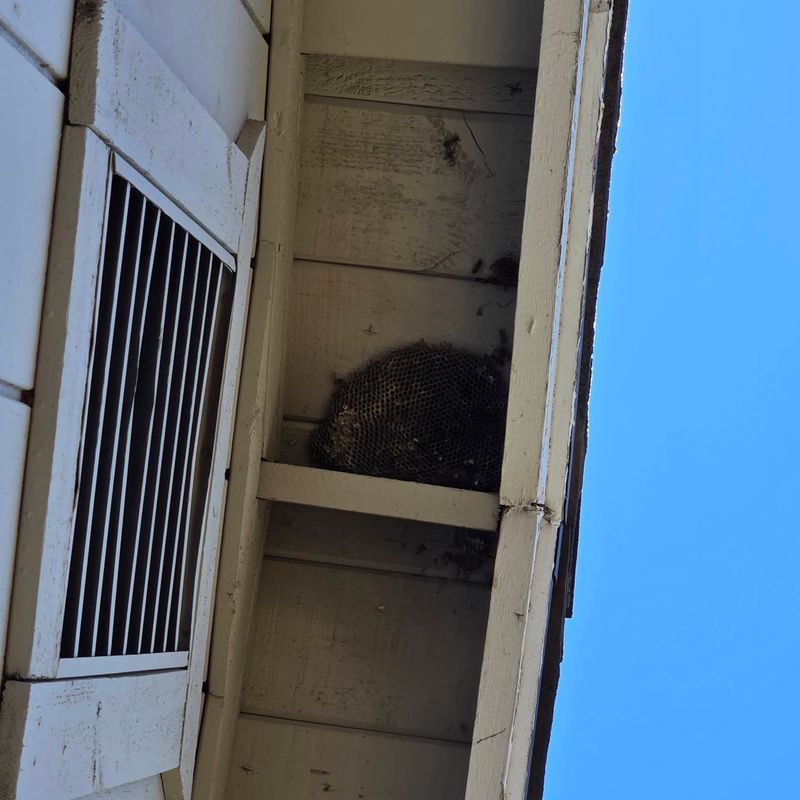
A paper wasp nest under a far eave or in a rarely visited corner of the yard presents a very different situation from one directly above a back-door threshold or over a child’s play area. Location, not species identity alone, should drive the decision about whether to leave a nest in place.
UC IPM recommends protecting beneficial social wasps when they nest in areas with little human or animal activity, and that conditional framing matters. The advice is not to tolerate every nest everywhere.
Paper wasps are generally less aggressive than yellowjackets, but they will sting when the nest is disturbed, and they can sting more than once. A nest in a high-traffic spot, near a frequently used door, along a walkway, close to where pets sleep or children play, or at face height in a shrub someone regularly trims, creates a real risk of accidental disturbance and defensive stinging.
California DPR wasp IPM guidance distinguishes between nuisance situations and genuine hazards, and recommends an IPM evaluation rather than automatic removal or automatic tolerance.
Do not try to knock down, seal, or spray a nest casually. Disturbing an active colony without preparation can trigger a rapid defensive response.
California Department of Public Health guidance on arthropods of public health significance states clearly that people with known sting allergies should not attempt wasp control themselves. If a nest is genuinely hazardous because of its location or because someone in the household has a serious allergy, contact a licensed pest control professional rather than attempting DIY removal.
The goal is a proportionate response: leave a low-risk nest alone to let it do its predatory work, and get qualified help when the location makes that impossible.
Inspect tomato plants before deciding what to do
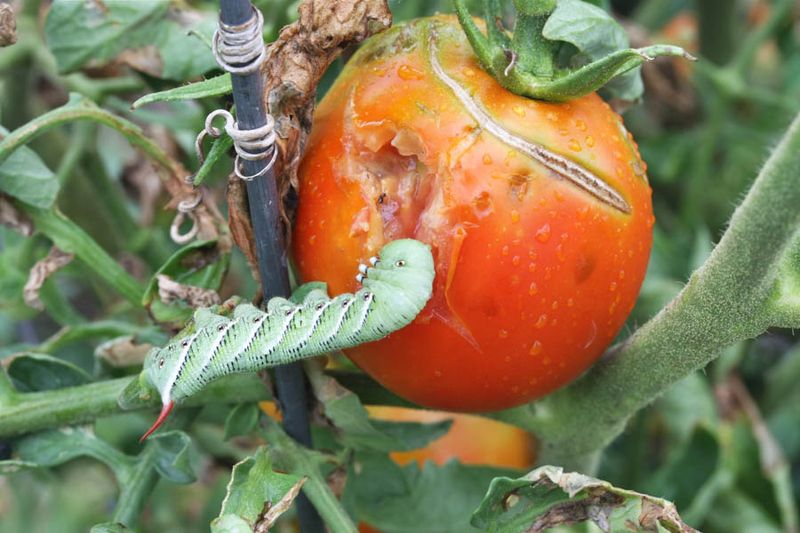
Paper wasps forage on their own schedule, not yours. Waiting for them to find a hornworm before checking your plants is a reliable way to end up with a defoliated tomato by August.
Regular inspection, at least twice a week during midsummer when hornworm pressure peaks, gives you information that no predator can substitute for. UC IPM’s home and landscape hornworm page notes that damage typically becomes noticeable in midsummer and can produce a second flush of caterpillars later in summer in many California areas.
Start by looking down, not up. Dark green or black pellets of frass on the soil or lower leaves are usually the first sign that a hornworm is feeding somewhere above.
Follow the frass up into the canopy, parting branches and checking the undersides of leaves where caterpillars rest during the day. A mature hornworm can reach four inches long and still blend convincingly with green stems.
UC IPM’s tomato agriculture pest management guidelines describe handpicking as a practical control method for large caterpillars in small plantings, and it works well when you find them early.
Handpicking an unparasitized hornworm that is actively damaging plants is a reasonable response. Drop it into soapy water or relocate it well away from the garden.
UC Alameda County’s summer vegetable pest guide reinforces handpicking as a preferred approach before chemical options are considered. Conserving paper wasps does not mean accepting crop damage.
The two practices, nest preservation and active monitoring, complement each other rather than conflict.
White cocoons point to a different natural enemy
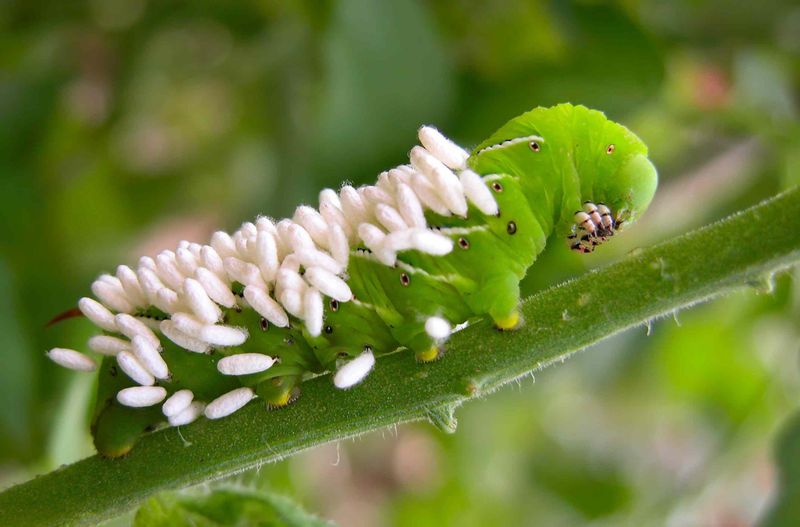
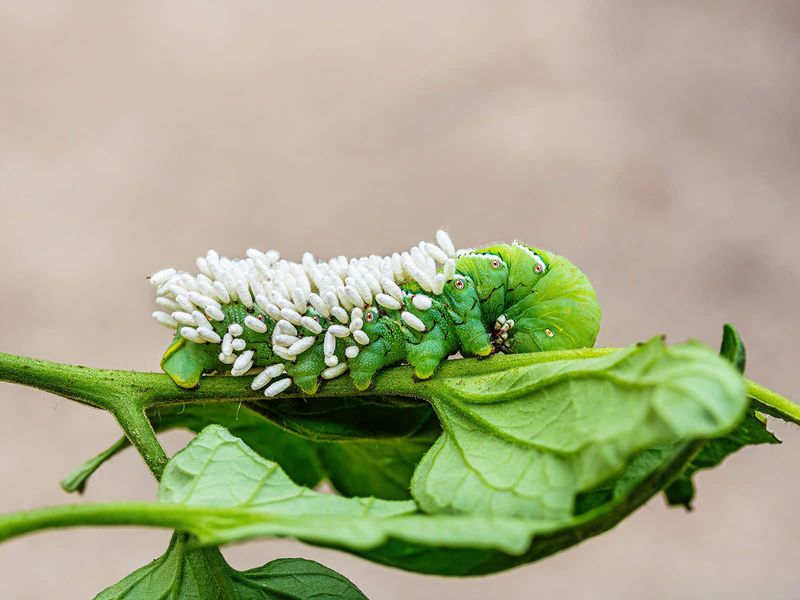
Finding a hornworm covered in small white projections that look like grains of rice is a genuinely good sign, but it has nothing to do with paper wasps. Those structures are the external cocoons of braconid parasitoid wasps, most commonly Cotesia congregata or related species.
University of Minnesota Extension’s hornworm page explains that braconid females lay eggs in or on the hornworm, the larvae develop inside the caterpillar, then exit to spin those visible cocoons on the outside of the host.
The mechanism is completely different from paper-wasp predation. A paper wasp captures and physically removes caterpillar material from the plant.
A braconid parasitoid develops inside a living hornworm, eventually killing it, then emerges as an adult to parasitize additional caterpillars. University of Maryland Extension’s hornworm resource and UC Davis Bohart Museum notes on tomato hornworms both advise leaving a parasitized hornworm in place when practical so the adult parasitoids can emerge and go on to attack more caterpillars in the garden.
This distinction matters when considering treatments. If you apply a caterpillar-targeting product like Bt (Bacillus thuringiensis) to a plant where parasitized hornworms are present, you risk killing both the host and the parasitoids developing inside it before they can emerge.
UC IPM’s biological control overview recommends selecting the least-toxic effective option and timing applications to minimize harm to natural enemies. Bt is more selective than broad-spectrum insecticides when used according to its label, but it can still affect susceptible moth and butterfly caterpillars.
UF IFAS tomato insect pest management guidance reinforces that treatment decisions should account for the natural enemies already working in the garden, not just the target pest.
Use paper wasps as one part of an IPM routine
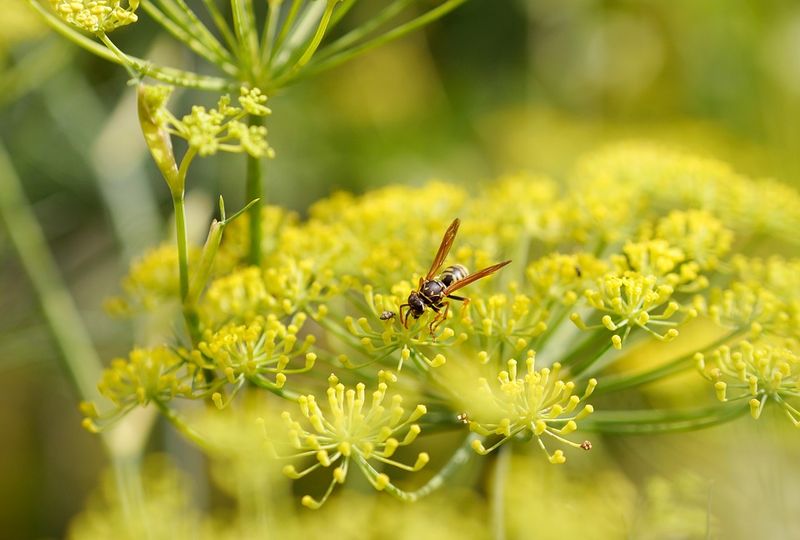
A workable routine for California tomato growers comes down to a clear sequence. First, identify the wasp before making any decision about the nest.
A slender insect with hanging legs and an open comb nearby is likely a Polistes paper wasp, and that identification changes the calculus. Second, check the nest location honestly: a nest far from doors, paths, pets, and play areas can stay.
A nest over a frequently used entry should be handled by a professional, especially if anyone in the household has a sting allergy. UC IPM’s social wasp guidance supports exactly this conditional approach.
Third, keep inspecting the tomato plants at least twice a week through midsummer. UC IPM’s hornworm page confirms that damage can peak and recur across summer, so early detection matters.
Handpick unparasitized caterpillars causing real damage. Leave hornworms carrying white cocoons in place so braconid parasitoids can complete their development.
If treatment becomes necessary despite monitoring and natural predator activity, choose the least-toxic option that fits the situation and follow the label precisely. UC IPM’s biological control principles treat pesticides as a last step, not a first reflex.
Paper wasps may remove caterpillars from your tomato plants, and a non-obtrusive colony is worth keeping. But they are generalists working on their own schedule, not a pest-control service you can direct.
The gardeners who get the most out of their presence are the ones who also stay attentive themselves, because a predator that works quietly in the background is most valuable when it has a watchful partner in the garden.