
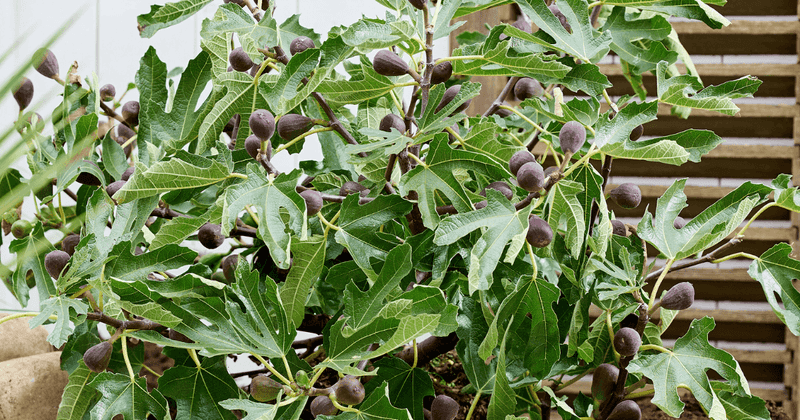
Central Texas summers can push fig trees to their limits, and when the heat really sets in, fruit drop becomes a real concern for backyard growers. The good news is that a few targeted steps before the worst heat arrives can reduce stress on your tree and lower the chance of losing fruit early.
This guide is written for gardeners with established, in-ground fig trees who want practical advice they can actually use in their own yards. What follows is a realistic, step-by-step plan that works with your soil, your schedule, and your local watering rules.
The first move is to stabilize moisture, not chase a temperature number
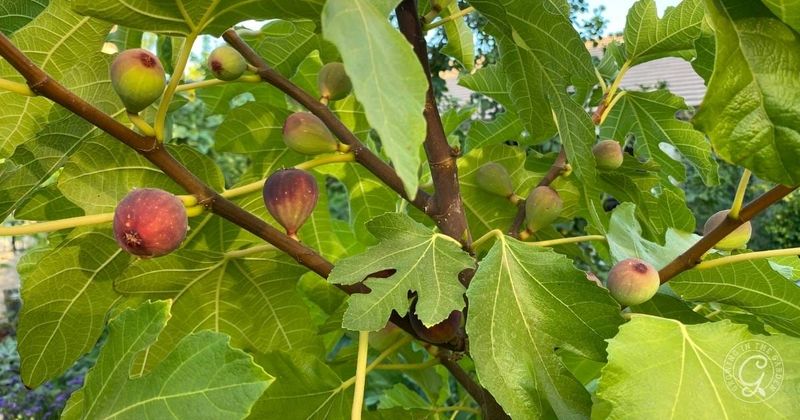
Plenty of gardeners wait for the thermometer to hit a specific number before they act, but the soil around your fig tree does not read a thermometer. Texas A&M AgriLife Extension guidance on figs notes that figs are shallow-rooted, which means the upper layer of soil where most active roots live can dry out faster than you might expect, especially on windy days or in sandy ground.
That shallow root system is exactly why inconsistent moisture is such a problem during hot stretches. UC IPM’s overview of fig drop and fruit problems identifies improper soil moisture, including drought and hot dry periods, as a common contributor to premature fruit drop and reduced fruit quality.
The key word there is “contributor” – heat alone is rarely the whole story.
Fruit drop can also come from excess water, poor drainage, disease, insects, root injury, immaturity, or the tree’s own variety-specific behavior. Stabilizing moisture before a severe heat spell is a practical way to reduce water stress and the likelihood of losing fruit early, but it is not a guaranteed fix.
University of Georgia Cooperative Extension confirms that dry, hot periods before ripening can hurt fruit quality, but the same source makes clear that moisture management reduces the problem rather than eliminating it entirely.
Think of the goal as giving your tree a stable foundation before stress peaks, not as a single action that locks in your harvest no matter what follows.
Check the root zone before you turn on the hose
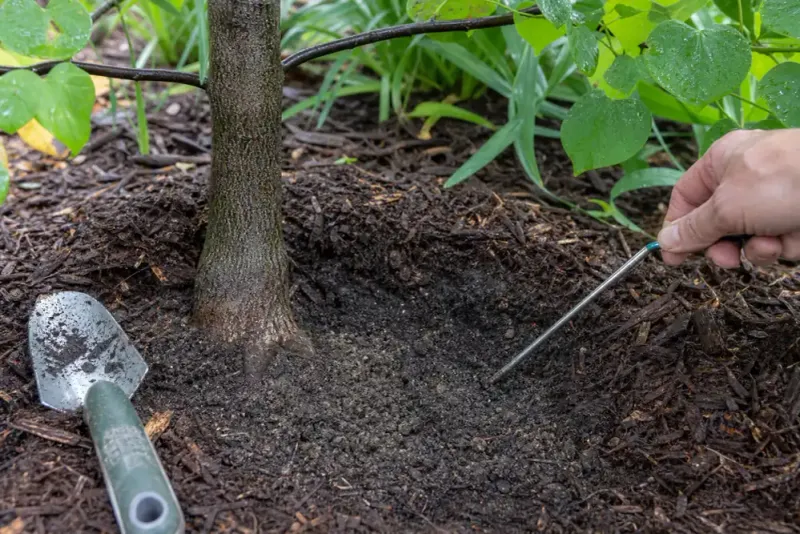
Before reaching for the hose, take two minutes to actually look at what is happening underground. Push a standard screwdriver or a soil probe straight down into the ground somewhere between the trunk and the edge of the canopy.
The Texas Water Development Board’s landscape watering guide recommends this exact method to verify how deeply water has penetrated, and it works just as well for checking whether irrigation is even needed in the first place.
If the screwdriver slides in easily through the first several inches and the soil feels cool and slightly moist, the root zone probably has enough water for now. If it meets resistance quickly and the soil crumbles dry, that is your signal to water.
Clay soils hold moisture longer and can feel damp at the surface while staying dry below, while sandy soils drain fast and may need attention sooner than you expect.
UC IPM’s cultural guidance for growing figs cautions against watering established trees at the trunk and recommends focusing on the active root zone, which extends outward from the tree rather than straight down near the base. Wind, sun exposure, recent rainfall, tree age, and drainage all affect how fast that zone dries out, so a single check after a cloudy week may tell a very different story than a check after three days of south wind and full sun.
Saturated or poorly drained soil is a separate problem that more water will not solve. If the ground feels waterlogged and the tree is still dropping fruit, the diagnosis needs to go in a different direction entirely.
Water slowly across the active root zone
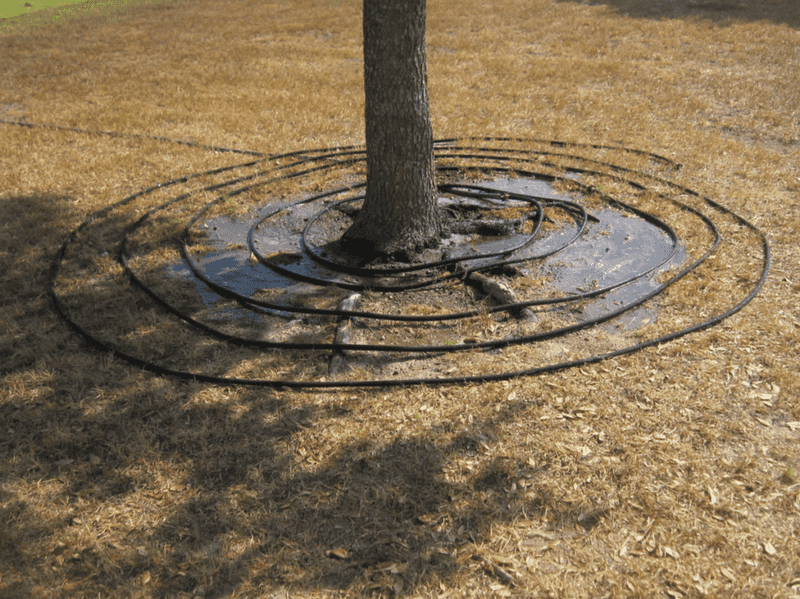
Once you have confirmed the root zone is drying out, the goal is to wet it thoroughly without rushing. Apply water slowly so it can soak in rather than running off across the surface, especially on clay or compacted ground where fast watering tends to pool and then roll away before reaching the roots.
UC IPM advises directing water across the drip line and beyond, not against the trunk, because that is where the active feeder roots are located. A soaker hose or drip line laid in a wide ring around the tree works well for this.
A slow-running garden hose moved around the canopy edge over the course of an hour is another practical option if you do not have drip irrigation in place.
After watering, use your screwdriver again to check how deep the moisture has reached. The goal is to wet the root zone thoroughly, not just to dampen the surface.
Allow any excess water to drain rather than letting it sit; a root zone that stays saturated for extended periods creates its own set of problems.
Timing matters too. Texas watering guidance from the TWDB recommends watering landscape plants during early morning or late evening, when wind speeds are typically lower and evaporation losses are reduced.
Midday watering in Central Texas summer conditions can lose a meaningful fraction of what you apply before it ever reaches the roots. Avoid converting this into a fixed gallon prescription or a rigid daily schedule – the right amount depends on your soil type, recent weather, tree size, and how dry things actually are when you check.
Use a conservative mulch layer to slow moisture loss
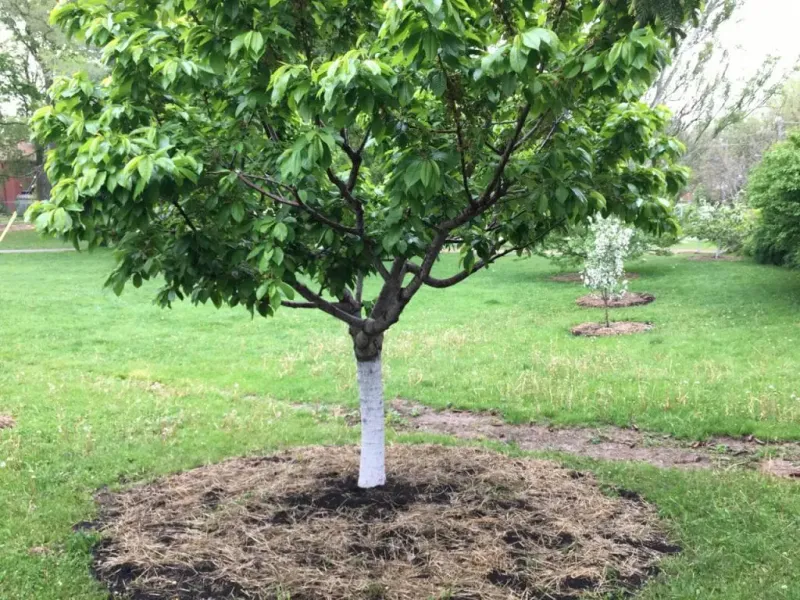
Organic mulch is the part of this sequence that keeps working after you walk away. Spread across the root zone, a moderate layer slows evaporation from the soil surface, moderates soil temperature swings, and gradually improves soil structure as it breaks down.
Texas A&M AgriLife Extension recommends organic mulch for figs specifically because it conserves soil moisture and supports the shallow root system that makes these trees vulnerable during dry heat.
For a home fruit planting, aim for roughly 2 to 3 inches of mulch depth. Penn State Extension’s guidance on mulching home fruit plantings lands on that same 2-to-3-inch range and warns that mulch touching the trunk can keep bark continuously moist and promote decay.
You may see broader landscape-tree references suggest 2 to 4 inches, but that is general guidance for larger trees rather than a prescription for a home fig planting.
Penn State’s landscape-tree mulching guidance also recommends spreading mulch broadly toward the drip line rather than piling it high near the trunk. Keep the trunk flare, the point where the trunk widens at ground level, visible at all times.
A mulch ring that buries the flare or creates a volcano shape around the base traps moisture against the bark and can invite disease and pest problems over time.
Good mulch choices for Central Texas include shredded hardwood, wood chips, or similar organic materials. Whatever you use, remember that mulch conserves moisture but cannot replace irrigation during a prolonged drought.
If the heat continues and rain stays away, recheck the root zone and water again as needed.
Adapt the interval to the yard, not to a rigid calendar
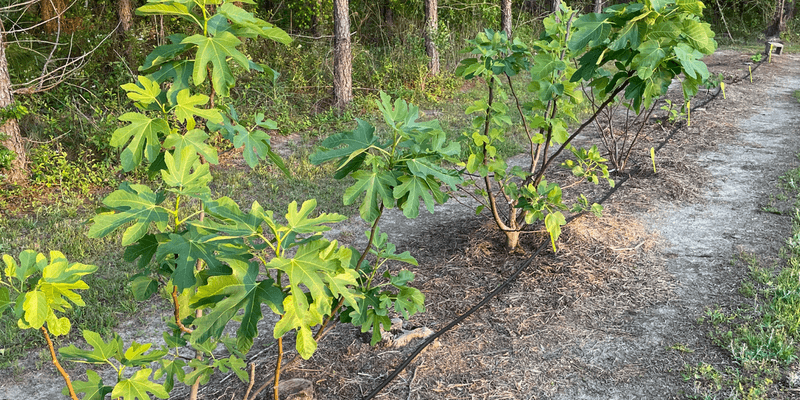
Central Texas is not one climate – it is dozens of microclimates stacked on top of each other. A fig tree growing in Austin’s heavy black clay holds moisture very differently than one in a sandy Hill Country yard or a south-facing spot baking against a limestone wall.
Watering every three days might leave a clay-soil tree waterlogged while leaving a sandy, wind-exposed tree badly stressed by day two.
Rather than following a fixed calendar, recheck the root zone with your screwdriver every few days during continuing heat and adjust based on what you find. The TWDB landscape watering guide stresses that soil type, drainage, wind, and sun exposure all affect how quickly a root zone dries, which is why a probe-based check outperforms any generic schedule.
Local watering restrictions take priority over any recommendation in this article. Before extending your irrigation, check your municipality’s current rules.
Texas A&M’s Water My Yard program uses local evapotranspiration and rainfall data to generate customized watering recommendations for your zip code, and it is a useful reference when restrictions limit how often you can run water. The Texas A&M Landscape Survival Guide During Water Restrictions also covers how to prioritize plants when supply is limited.
Turf grass and weeds growing close to the tree can compete for the same water you are trying to get to the root zone. Removing grass from the immediate area under the canopy and replacing it with properly applied mulch is a reasonable step for most fruit trees.
Utah State Extension’s research on vegetation management around fruit trees supports this as a general fruit-tree practice, though direct fig-specific trial evidence is limited, so apply the recommendation with that in mind.
Avoid emergency fixes that can worsen fruit problems
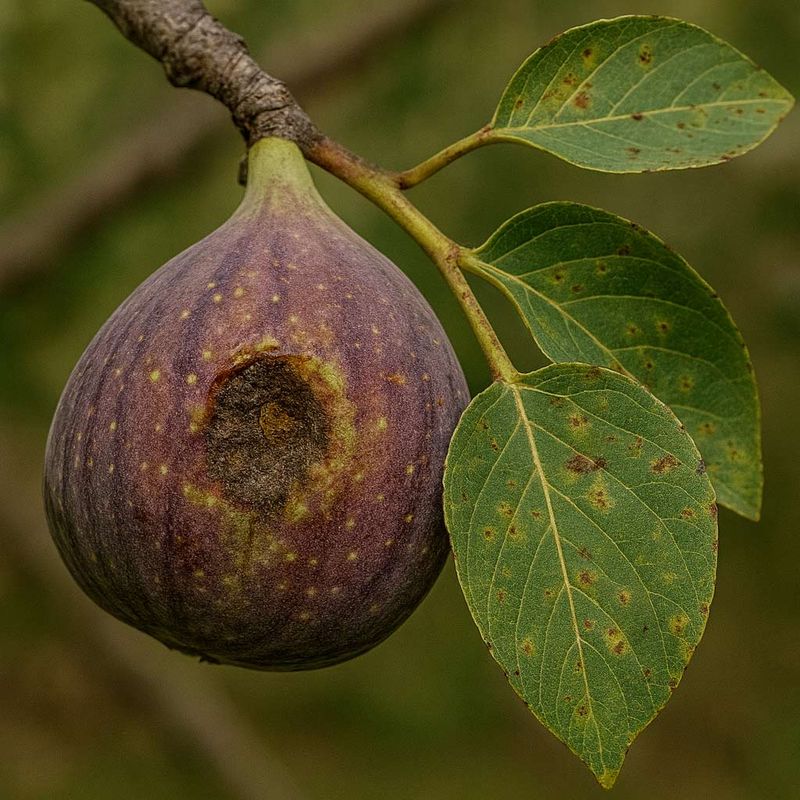
When fruit starts dropping during a heat wave, the instinct is to do something, anything, right away. Heavy daily watering feels proactive, but saturating the root zone repeatedly can deprive roots of oxygen, promote root disease, and create the kind of waterlogged conditions that cause their own version of fruit drop.
Water slowly and deeply when the root zone is actually drying, then wait and recheck before watering again.
Piling mulch against the trunk is another common mistake made with good intentions. Mulch that contacts the bark keeps it continuously moist, which invites decay and can shelter insects or pathogens at the base of the tree.
Keep mulch a few inches away from the trunk and the root flare, as Penn State Extension’s mulching guidance consistently recommends, regardless of how tempting it is to pile it higher during a drought.
Reaching for a bag of nitrogen fertilizer is another reflex to resist. UC IPM’s guidance on nitrogen excess explains that too much nitrogen pushes leafy growth at the expense of fruiting, can delay ripening, and may reduce fruit quality.
UC IPM’s fig drop resource also lists nitrogen excess as a direct contributor to premature fruit drop.
Major summer pruning carries similar risks. UC ANR’s fig production guidance recommends dormant-season pruning and notes that mature figs are productive with or without heavy cutting.
Texas A&M AgriLife Extension adds that heavy pruning of mature trees can reduce the crop. Save any significant shaping for late winter.
Finally, not every dropped fig points to drought. Excess moisture, poor drainage, disease, insects, root injury, and immaturity can all produce the same result.
Variety matters too: University of Georgia Cooperative Extension notes that Celeste specifically may drop fruit prematurely in hot weather regardless of care.
That is a Celeste-specific tendency and should not be assumed to explain what is happening with every Texas fig.
Protect the harvest with timely picking and realistic expectations
After you have checked the soil, watered deeply across the drip line, and applied a conservative mulch layer, the repeating job is simply to recheck and respond. During extended heat, run the screwdriver test every few days.
Water again if the root zone is drying and your local rules allow it. Follow your municipality’s watering schedule if restrictions are in effect, and use the Water My Yard tool as a local reference rather than a substitute for what you find in the ground.
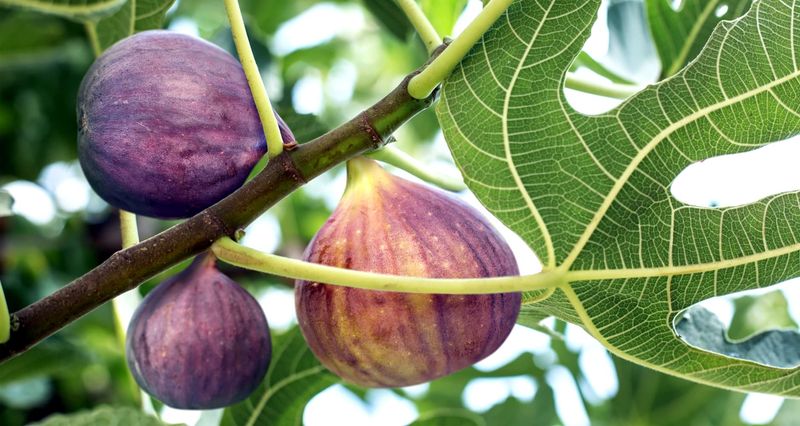
Harvesting at the right moment is also part of protecting the crop. UC IPM’s cultural tips for growing figs describe ripe figs as soft, drooping slightly on the branch, and easy to remove by lifting and bending the fruit back toward the branch.
Leaving ripe fruit on the tree too long invites splitting, souring, insect damage, and bird losses, all of which reduce the harvest just as effectively as heat stress does. Pick promptly and often during peak season.
Texas A&M AgriLife Extension also points out that winter injury, variety selection, and tree age all affect how a Central Texas fig performs in any given year. The moisture-and-mulch sequence described here can meaningfully reduce heat- and drought-related stress and may lower the chance of early fruit loss, but no single preparation step can overcome every combination of variety, drainage, disease, winter injury, and summer heat that Central Texas throws at a tree.
A well-prepared tree still has to deal with the season it gets.