
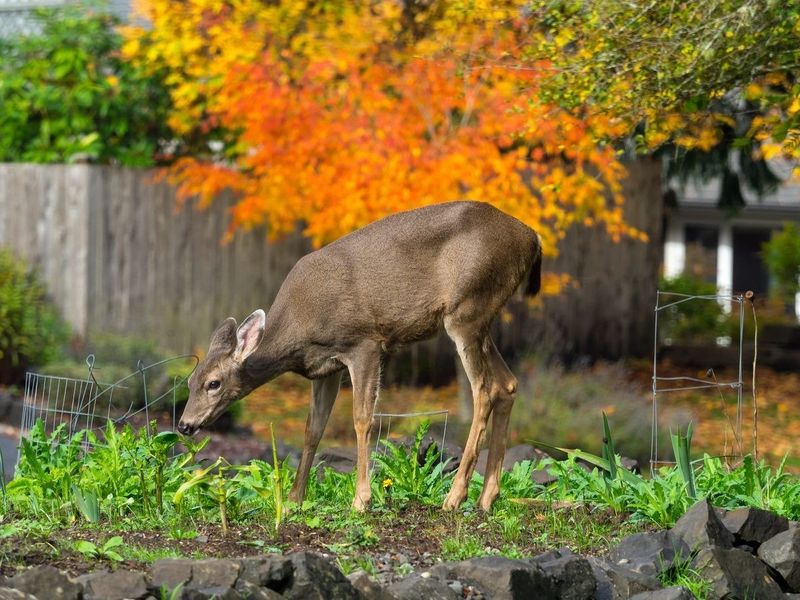
Noticing chewed hostas or stripped shrubs in your North Carolina yard as summer fades into fall can feel frustrating, but the timing is not random. Deer shift their feeding patterns as the season changes, and a garden visit often says something useful about your yard’s layout, plant choices, and relationship to nearby cover.
Understanding what is actually drawing deer in gives you a real starting point for protecting what matters most, rather than chasing a single explanation that may not fit your situation.
The Browsing Spike Is a Clue About Changing Food and Access
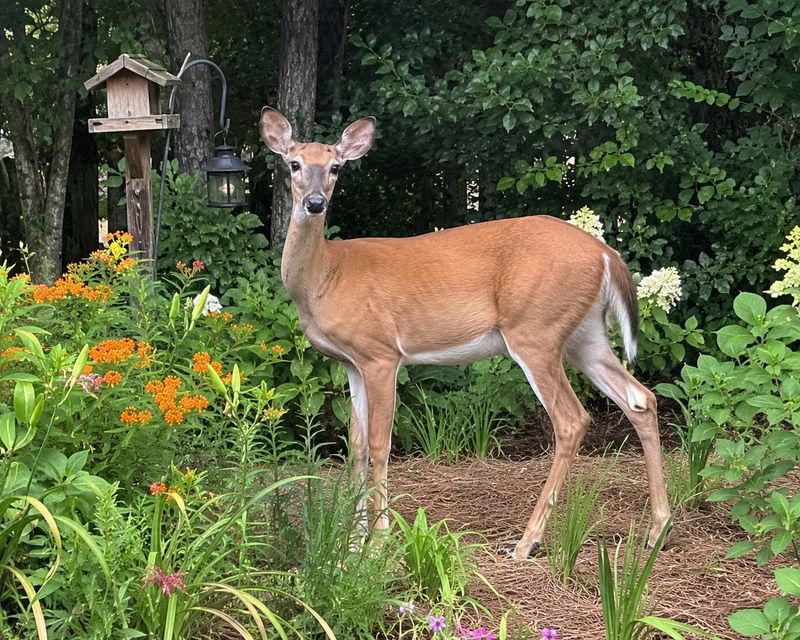
Deer do not follow a fixed statewide script when they begin showing up in gardens each fall. Their diets shift with whatever food is actually available, and NC State Extension’s white-tailed deer profile confirms that fall and early winter foods include acorns and other mast, woody evergreen plants, herbaceous vegetation, and fungi.
When the balance of those natural foods changes, deer adjust where they feed, and a garden full of lush, accessible plants can suddenly look like a very convenient meal.
Rather than assuming the worst, treat a browsing spike as information. The yard may be offering something unusually easy or attractive: tender growth that has been pushed along by late-season watering or fertilizing, ornamental plants that happen to be highly palatable, or a location that sits right next to cover where deer already bed and travel.
Nearby natural forage conditions may also have shifted, making the garden relatively more appealing than it was a month ago.
What the spike does not confirm, on its own, is that deer are starving, that the surrounding woods are depleted, or that a single universal cause is responsible. USDA Forest Service species review data makes clear that white-tailed deer are highly adaptable foragers whose feeding locations respond to local habitat, food availability, and seasonal change rather than a fixed calendar.
The pattern also varies across North Carolina’s Coastal Plain, Piedmont, and mountain regions, so a neighbor’s experience with deer timing may not match yours.
The practical response begins with a question rather than an immediate purchase: why is this yard attractive right now? NC State’s Extension Gardener Handbook emphasizes that diagnosing site conditions before selecting a control method leads to better outcomes.
Knowing whether the draw is a specific plant, a watering habit, a gap in cover, or an open access point tells you exactly where to focus your response.
What Acorn Conditions Can Change
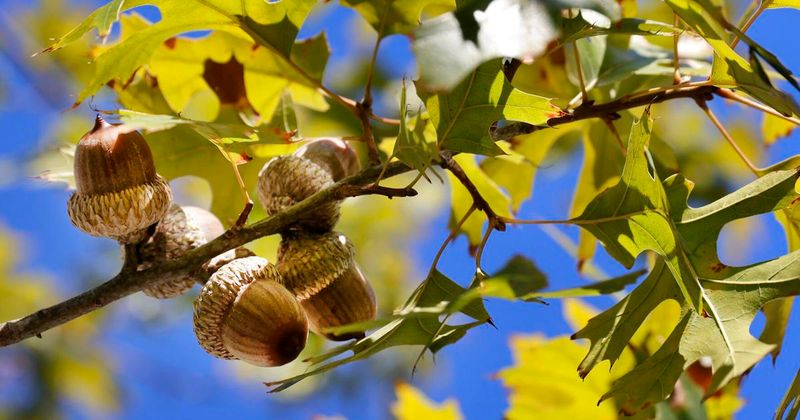
Acorn production across North Carolina is not consistent from one year to the next, and that variability matters far more to deer feeding behavior than most homeowners realize. Mast crops fluctuate by species, region, and weather, so a year with heavy acorn production in the Piedmont does not guarantee the same abundance in the mountains or along the Coastal Plain.
When acorns and other preferred mast are plentiful, deer tend to concentrate on them and may spend less time at the forest edge or in nearby yards. USDA Forest Service research on mast production documents how strongly deer movement and feeding locations can shift in response to hard mast availability.
A poor acorn year, by contrast, can push deer toward browse, cultivated plants, and landscaping that they might otherwise pass over.
A related Southern Research Station study on deer and mast found that acorn abundance influenced how deer used the landscape at a landscape-level scale, with feeding locations shifting substantially depending on what the forest floor offered. Homeowners in oak-heavy neighborhoods may notice this most directly: in a strong mast year, deer may largely ignore the garden, while a failed crop the following fall brings noticeably more pressure to ornamental beds.
The takeaway is not that every garden raid follows a poor acorn year. Deer also respond to soft mast, fungi, herbaceous plants, and the specific palatability of what is growing in your yard.
Mast conditions are one important variable, not the only answer, and checking whether local oaks had a light or heavy crop can help you interpret what you are seeing without overstating the connection.
Why a Well-Watered Garden Beside Cover Becomes an Easy Target
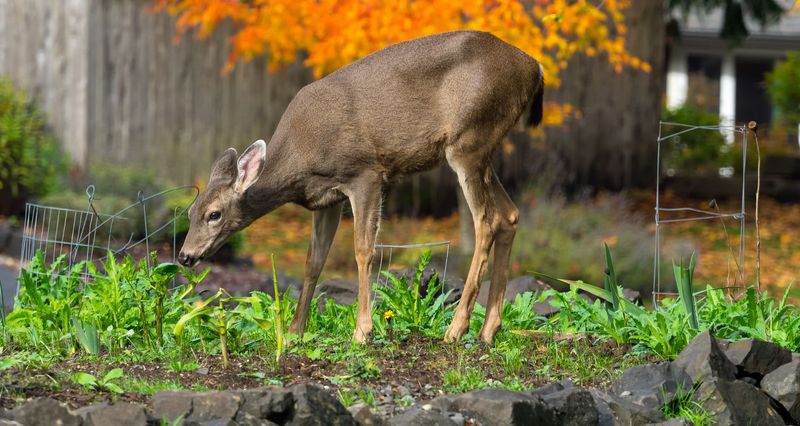
Yard design plays a bigger role in deer browsing than most homeowners expect. A garden that is regularly watered and fertilized produces tender, nitrogen-rich growth that can be more appealing than the tougher, drier browse available in surrounding woods.
NC State’s Extension Gardener Handbook specifically notes that overwatered or overfertilized plants push out new growth that deer find particularly attractive, making irrigation and feeding schedules a factor worth reviewing after damage appears.
Proximity to cover multiplies the appeal. Deer are most comfortable feeding when they can retreat quickly to thick vegetation, and a garden planted close to a tree line, brushy lot, or wooded buffer gives them exactly that.
NC State’s guidance on managing edges for wildlife explains that edges allow deer to bed in one habitat type and feed in another, which is why beds nearest the woods often take the most damage. A yard that backs up to forest, a greenway, or even a neglected hedgerow is essentially positioned at a natural deer travel corridor.
Suburban landscapes add another layer. Research published in Ecosphere on deer use of suburban landscapes found that developed areas with landscaped yards and parks can function as significant forage sources, particularly where deer have learned that human-managed plantings are reliably productive and relatively safe.
Chatham County Cooperative Extension’s deer damage guide reinforces that yards near forest edges face consistently higher pressure.
Seeing deer in a yard does not mean the surrounding woods are out of food. The yard itself may simply be the most convenient, high-quality option available at that moment.
Examining where the beds sit relative to tree lines, brush piles, fence gaps, and natural pathways often reveals exactly how deer are moving through the property and which entry points a protective response should address first.
Is It Feeding Damage or a Sign of the Rut?
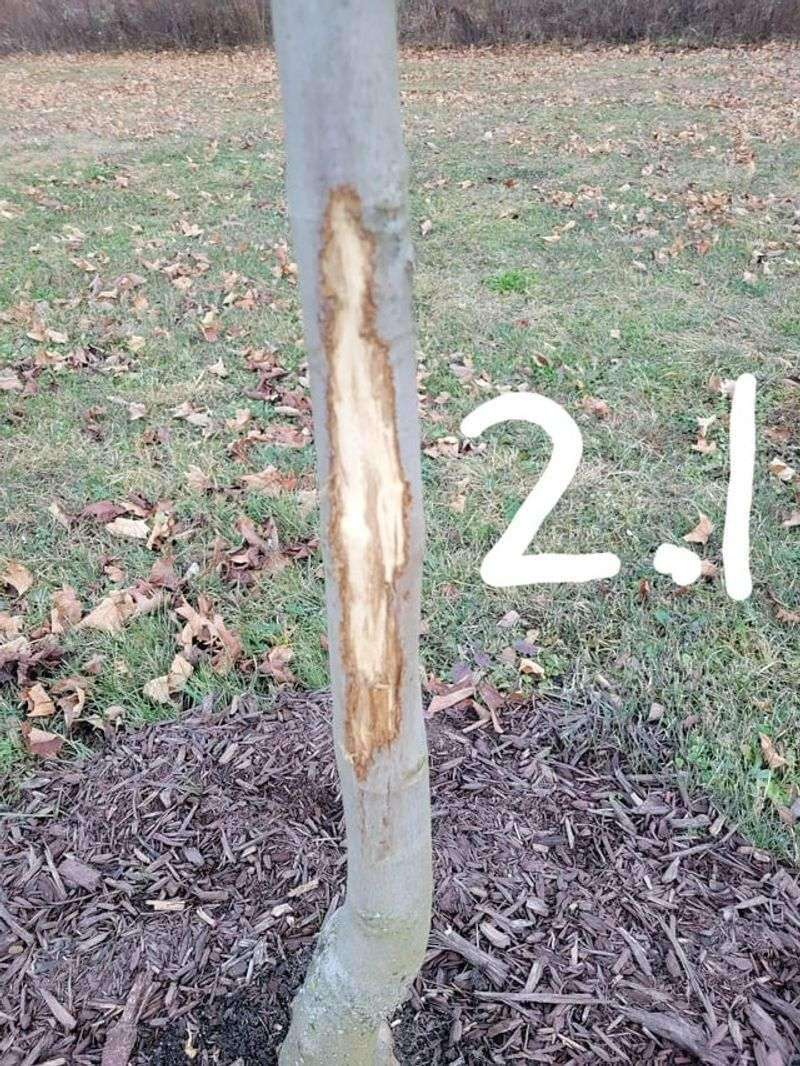
Two very different types of deer activity can show up in a yard at roughly the same time each fall, and mixing them up leads to the wrong response. Browsing damage looks like ragged or torn foliage, with jagged stem ends rather than clean cuts.
Because deer lack upper incisors, they pull and tear vegetation rather than snipping it, and NC State’s soybean deer damage identification guide describes this tearing pattern as a reliable indicator that deer, rather than rabbits or insects, are responsible. Feeding typically happens at dawn, dusk, and overnight, so the damage often appears without the homeowner ever seeing the animal.
Antler rubbing is a separate behavior entirely. Bucks rub their antlers against young trees and shrubs to remove velvet, mark territory, and strengthen neck muscles.
The resulting damage looks quite different: bark is stripped away in vertical patches, small limbs may be broken, and the exposed wood often shows parallel scrape marks. NC State’s pecan production guide and extension research on backyard fruit trees both identify rub damage on young tree trunks as a distinct concern requiring physical protection of the trunk rather than a repellent strategy aimed at foliage.
Timing helps separate the two behaviors. NC State Extension’s white-tailed deer profile notes that antler rubbing typically begins in August and winds down by mid-October, while breeding activity peaks from late October through December.
The NC Wildlife Commission’s species account adds that rut timing shifts across the state, running earlier along the coast and later in the mountains.
Rut-related signs such as rubs, scrapes, and increased buck movement may overlap with garden browsing in early fall, but they do not explain why feeding is happening. The rut influences movement and behavior, but forage availability, plant palatability, yard access, and deer density are more direct explanations for why a particular garden is being used as a feeding site.
Treating rub damage and browse damage separately leads to better-targeted protection for each.
A Quick Yard Audit Reveals Where the Pressure Is Highest
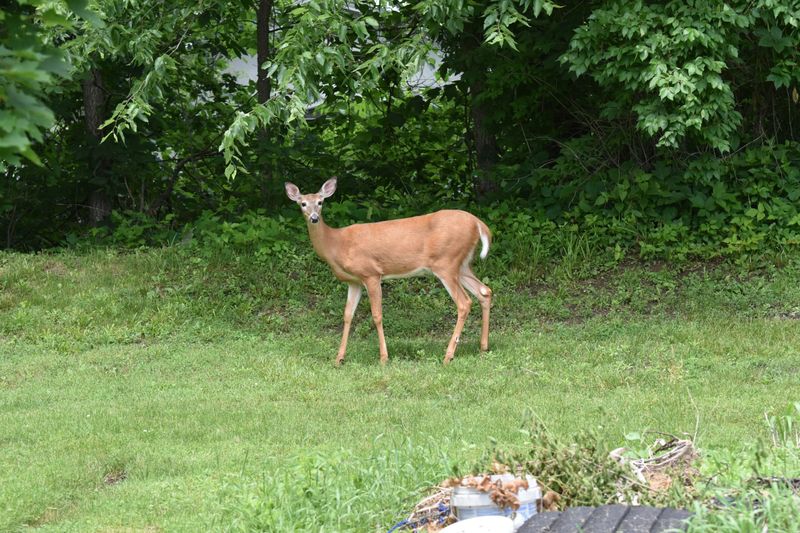
Before buying anything or installing a barrier, spend twenty minutes walking the property with the specific goal of understanding what drew deer in and where they are entering. Start by confirming what was actually damaged.
Torn foliage and ragged stem ends point to browsing, while stripped bark or broken young tree trunks suggest antler rubbing. NC State’s Extension Gardener Handbook recommends confirming the type of damage before selecting a response, because browsing and rubbing call for different protective measures.
Next, identify which plants took the most damage and where they sit on the property. Beds closest to tree lines, fence gaps, brushy areas, or any natural corridor tend to receive concentrated pressure.
Look for tracks, trails, or flattened vegetation that show where deer are entering and moving through the yard. NC State’s edge management guidance notes that entry points near cover are predictable, which makes them practical targets for fencing or other physical barriers.
Consider recent watering and fertilizing as part of the audit. If new, tender growth appeared in the weeks before the damage, that flush of soft tissue may have been the specific draw.
NC State’s deer damage identification resources confirm that young, actively growing plant tissue is consistently more attractive than mature, hardened growth. Check whether damage is concentrated on recently fertilized beds or spread more evenly across the property.
The audit does not establish that deer are hungry, starving, or that the surrounding landscape is depleted. What it does is map the conditions that made your yard an attractive option at this moment, which is exactly what a useful protective response needs to address.
Physical Protection Provides the Dependable First Response
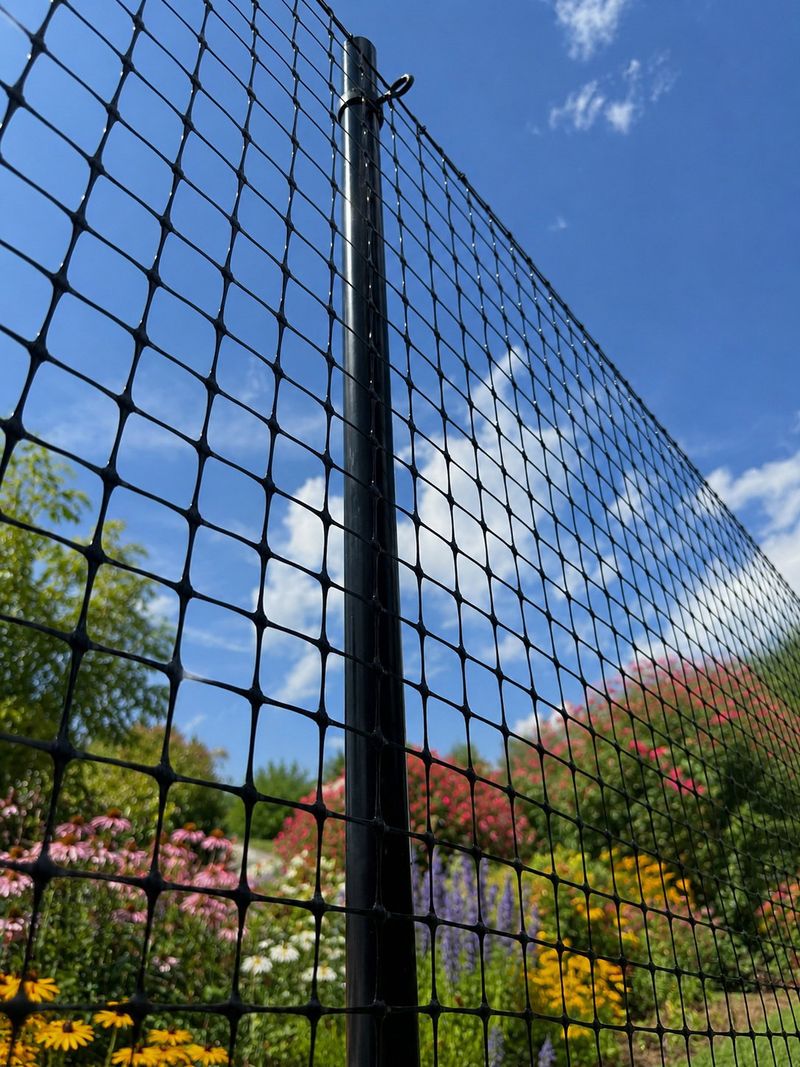
When browsing is persistent or widespread, physical exclusion is the most reliable tool available, and the height requirement surprises many homeowners. Adult deer can clear obstacles well over six feet, and NC Wildlife Commission’s fencing guidance states that a genuinely deer-resistant fence generally needs to be at least eight feet high and constructed from strong, impenetrable material.
Shorter barriers can reduce pressure on small, well-defined areas, but they are not reliably deer-proof over time, especially where deer have already established a feeding habit.
For individual plants, young trees, and small beds, full perimeter fencing is often unnecessary and impractical. Wire mesh cylinders, hardware cloth cages, and individual tree tubes are cost-effective options that protect the most vulnerable plants without enclosing the entire yard.
NC State’s Extension Gardener Handbook specifically recommends cylinders and mesh cages as practical measures for protecting newly planted shrubs and young trees from both browsing and antler rubbing. A cylinder placed around a tree trunk also guards against rub damage, which is structurally different from foliage browsing but equally capable of killing a young plant.
Electric fencing offers a middle option for situations where a full eight-foot perimeter fence is too expensive or visually intrusive, but natural forage conditions make persistent browsing likely. Offset or three-dimensional electric designs can be more effective than a single-strand setup because deer learn to test barriers from multiple angles.
NC State’s winegrape pest management chapter notes that electric fencing requires regular maintenance to remain effective, and that deer who have already established a feeding pattern at a site can be harder to deter.
Matching the protection to the scale of the problem keeps costs reasonable. A few damaged hostas near the tree line may need only individual cages, while a kitchen garden experiencing repeated browsing across multiple beds is a stronger candidate for a full enclosure built to the eight-foot standard.
Starting with the most attractive and vulnerable plants, then expanding protection as needed, is a practical way to work through the problem without over-investing before the audit is complete.
Plant Choices and Repellents Lower Risk Without Promising Immunity
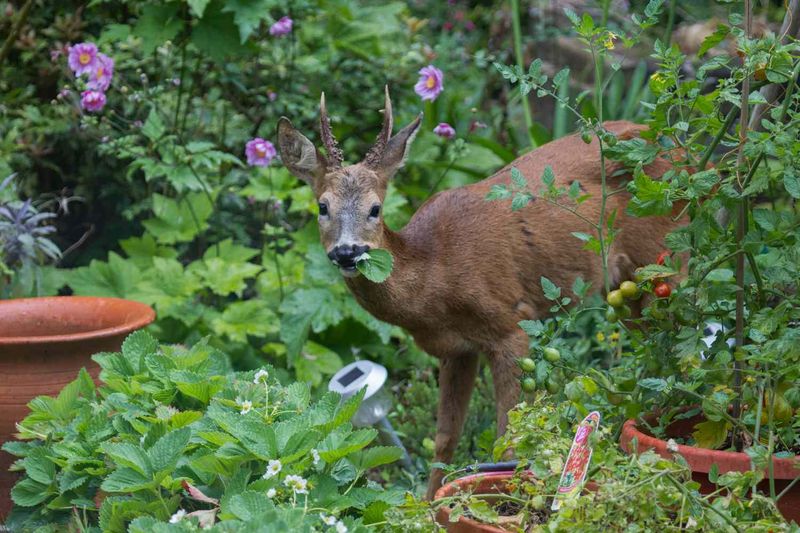
Adjusting which plants grow in the most exposed parts of the yard is a reasonable long-term strategy, but the label “deer-resistant” deserves a realistic definition before anyone relies on it. NC Cooperative Extension’s deer-resistant plant list for North Carolina categorizes plants as frequently damaged, occasionally damaged, or seldom damaged rather than guaranteeing that any plant is immune.
Drought, high deer density, and reduced natural forage can push deer to eat plants they would normally bypass, so a plant that performed well for years can still take damage when conditions shift.
Chatham County Extension’s deer damage reduction guide recommends placing less-preferred plants in the most exposed positions near forest edges and reserving favored ornamentals for areas farther from cover or within protected enclosures. That spatial strategy reduces risk without requiring a complete garden overhaul.
Repellents can be useful, especially when applied before deer establish a strong feeding habit at a site. They work best as a preventive measure rather than a remedy for ongoing heavy browsing.
Weather is a real constraint: rain and irrigation wash off contact repellents, requiring reapplication on a schedule that follows the product label. NC State’s pest management guidance for winegrapes notes that habituation is also a factor, meaning deer can grow accustomed to a repellent over time, particularly if it is applied to the same area repeatedly without variation.
For edible gardens, the label is not optional reading. EPA guidance on pesticide label compliance is clear that the label is a legal document, and some registered deer repellents restrict or prohibit use on food crops, on specific plant parts, or during particular growth stages.
A product approved for ornamentals may not be permitted on vegetables or fruit. Registered repellent label documentation confirms that use-site restrictions vary by formulation and must be followed exactly.
Always verify the specific product’s label before applying anything near edible crops.
Mothballs are not a legal or safe option for outdoor deer deterrence, and their use in that context violates federal pesticide law. Homemade remedies including human hair, bar soap, raw eggs, and hot sauce have inconsistent results in field conditions and should not be treated as substitutes for physical protection or properly labeled commercial repellents.
NC State’s Extension Gardener Handbook addresses several of these approaches and finds the evidence for reliable, lasting effectiveness to be limited.
Treat the Raid as a Seasonal Yard Check
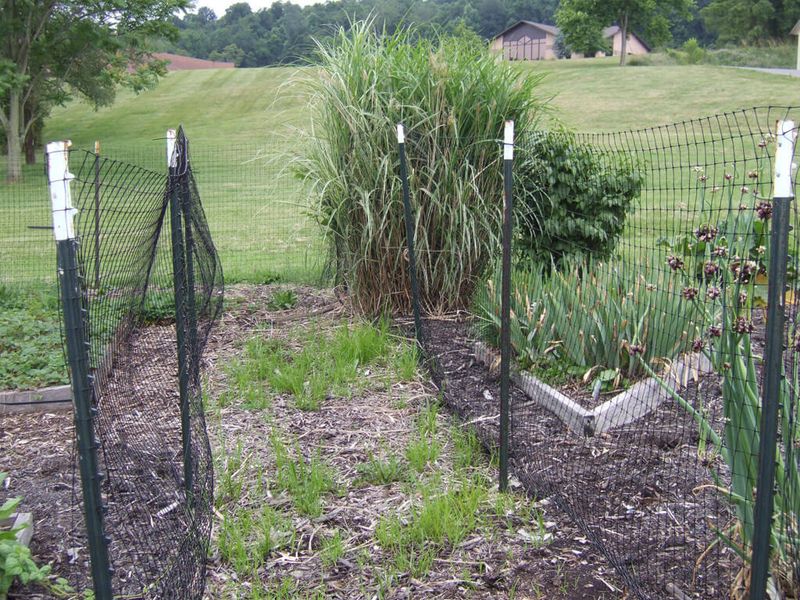
A practical response to early-fall deer browsing follows a short sequence: confirm what was damaged and how, walk the yard to identify the most attractive plants and the likeliest entry points, then protect the most vulnerable targets first. Cage young trees and shrubs that are at risk of both browsing and antler rubbing.
Apply a properly labeled repellent to ornamental plants before pressure builds further, and verify that any product you use is permitted for the specific crop, plant part, and growth stage involved. NC State’s Extension Gardener Handbook and NC Wildlife Commission’s fencing guidance both support this sequence as the most reliable path from diagnosis to lasting protection.
Skip the impulse to redirect deer by feeding them elsewhere. NC Wildlife Commission’s conflict prevention guidance explains that supplemental feeding increases deer concentrations near homes, can encourage bold or aggressive behavior, and may create additional problems rather than solving existing ones.
Move to full perimeter fencing built to the eight-foot standard if browsing continues across multiple beds or returns season after season.
Early-fall browsing is not proof of the rut, starvation, or a depleted forest. More often, it means the yard has become a convenient, high-quality feeding stop, which is useful information.
A yard that consistently draws deer is telling you something specific about its layout, plant selection, and relationship to nearby cover, and that knowledge is exactly what turns a recurring nuisance into a manageable, well-understood part of gardening in North Carolina.