
Dry, empty patches can make a yard look tired fast, especially through California’s long rain-free season. The good news is that some shrubs do double duty by bringing in hummingbirds and covering space that would otherwise need lots of water.
Pick the right ones, and those bare spots can turn into colorful, low-fuss parts of the yard that feel alive almost every day.
1. California lilac
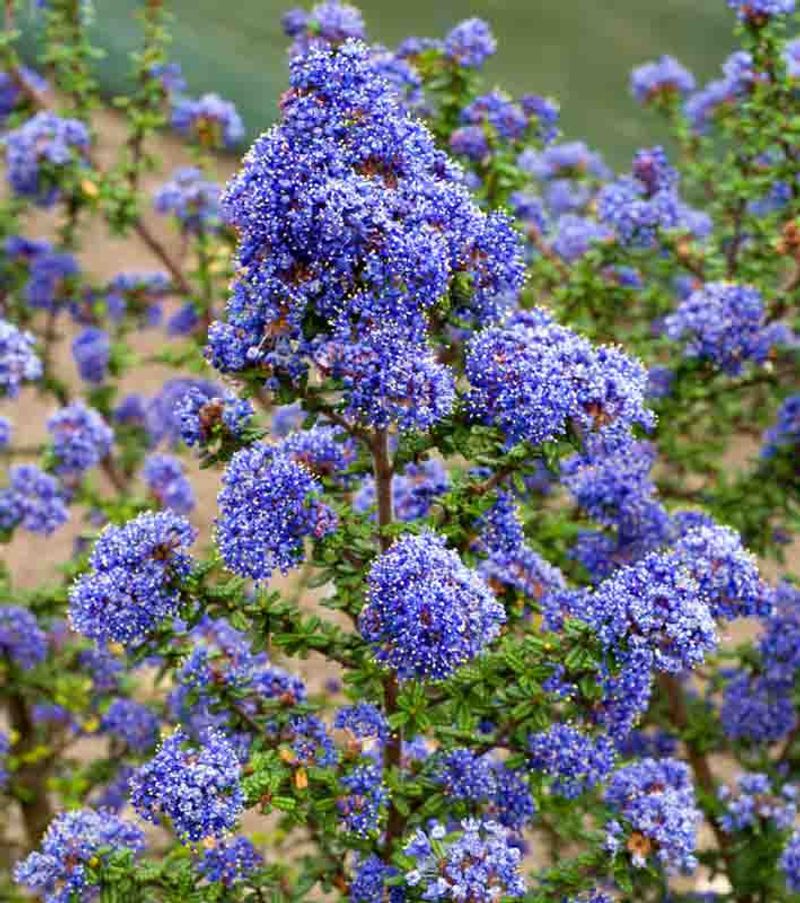
Nothing wakes up a dry hillside or sunny border quite like a cloud of blue bloom in spring. California lilac, also called Ceanothus, earns its place by doing more than adding color.
Many varieties spread wide and dense, which helps cover open soil, reduce weed pressure, and give a finished look to parts of the yard that often bake in summer.
Hummingbirds visit the flowers for nectar, and the shrub also supports other pollinators that help keep a yard lively. For homeowners trying to cut back on irrigation, that matters.
Once established, many California lilac varieties handle the state’s dry summer pattern far better than thirsty foundation plants that always seem to need another drink.
Use lower, spreading forms on slopes, along driveways, or across broad beds where lawn struggles. Give it fast drainage, full sun to light shade depending on the variety, and avoid heavy summer watering once it settles in.
That last part is where many gardeners go wrong, because a plant built for California’s rhythm usually prefers less fuss, not more.
2. Manzanita
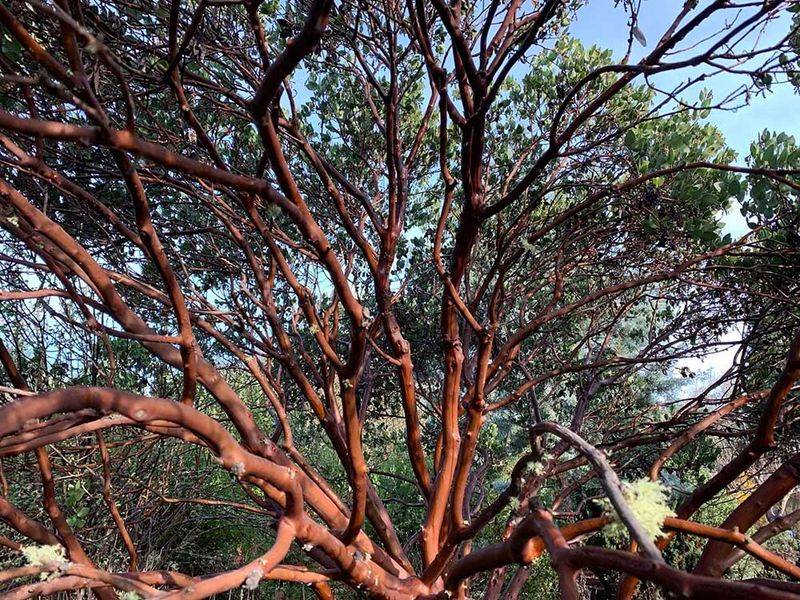
Few shrubs bring year-round character the way manzanita does. Even when it is not in flower, the rich bark, twisting branches, and evergreen leaves make a bare area feel designed instead of forgotten.
Then bloom season arrives, and those little bell-shaped flowers start drawing hummingbirds into corners of the yard that may have looked empty for months.
What makes manzanita different from the others on this list is its strong structure. It is not just a flowering filler.
It acts like living architecture, especially on slopes, dry banks, and wide planting beds where you need a plant that holds visual weight through every season.
Choose a lower-growing or mounding cultivar if your main goal is to cover open ground. In larger spaces, taller types can anchor the back of a bed while smaller companions fill in around them.
Manzanita needs excellent drainage and usually performs best when left alone after establishment, which makes it a smart fit for California homeowners who want wildlife value without turning the hose on all summer.
3. Sticky monkey flower
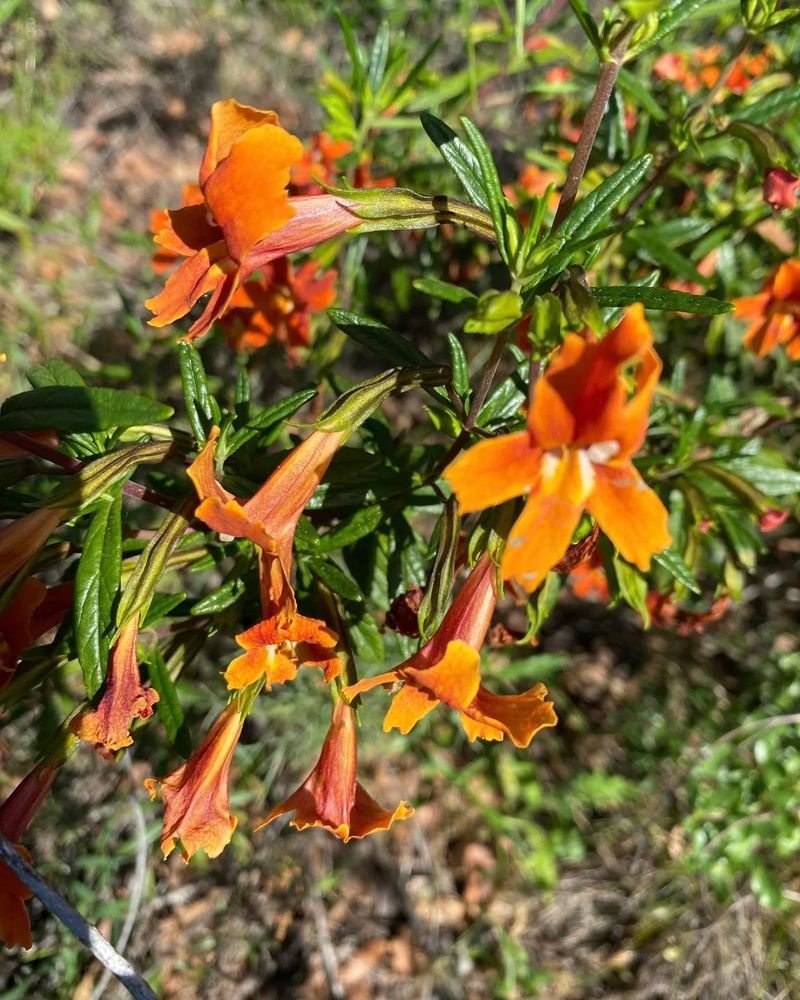
Bright orange flowers can look almost electric against dry mulch and stone, and sticky monkey flower knows how to steal that show. For gardeners staring at a hot, awkward patch near a walkway or slope, this shrub offers a practical fix with personality.
Its blooming habit brings a long season of color, and hummingbirds tend to notice those trumpet-like flowers quickly.
Unlike bulkier shrubs, sticky monkey flower works especially well in tighter spaces where you want coverage without creating a heavy wall of foliage. It fills in with a looser, more natural shape, softening the edges of rocks, retaining walls, and drought-tolerant borders.
That makes it useful for California yards that need movement and color rather than just a block of green.
Plant it in full sun near the coast or give it a bit of afternoon protection in hotter inland areas. Good drainage is essential, and overwatering can shorten its life.
In the right spot, it helps turn a thirsty bare patch into a bright landing zone for hummingbirds, while asking for much less water than traditional bedding plants.
4. Salvia clevelandii
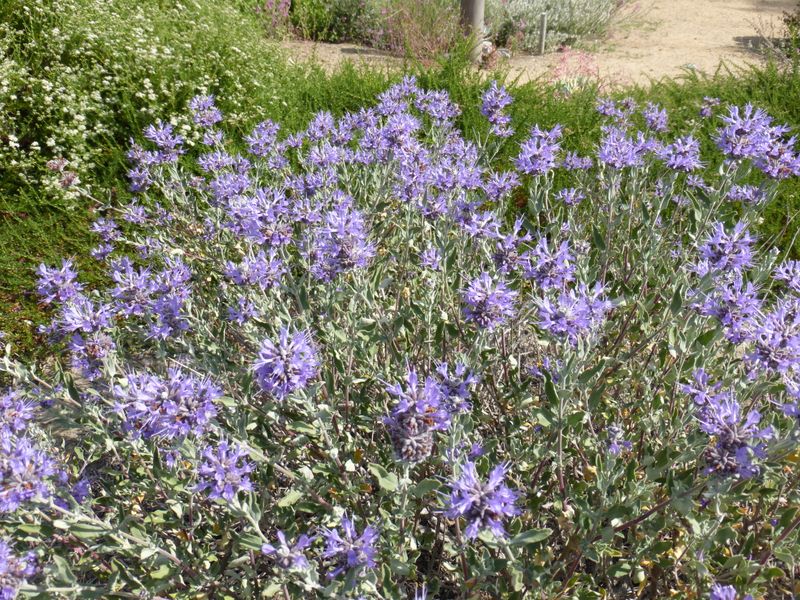
Gardeners usually notice the scent first. Brush past Salvia clevelandii, often called Cleveland sage, and the air picks up a rich herbal fragrance that makes a yard feel instantly more alive.
Hummingbirds come for the nectar-filled purple flower spikes, but people often end up loving it just as much for the way it fills space with color, texture, and that unmistakable aromatic presence.
Here is where it shines: broad sunny areas that need a low-water plant with real volume. The shrub forms rounded clumps that can knit a planting bed together, especially when repeated in groups.
Instead of a scattered look, you get a more complete scene that hides bare soil and makes the yard look intentional.
It is a strong choice for inland Southern California where heat can wear out thirstier ornamentals. Plant it where drainage is sharp and air moves freely.
A light trim after flowering can help keep it tidy, but it rarely needs pampering. For homeowners trying to build a hummingbird-friendly yard without committing to constant upkeep, this shrub hits a sweet spot between beauty and resilience.
5. Red flowering currant
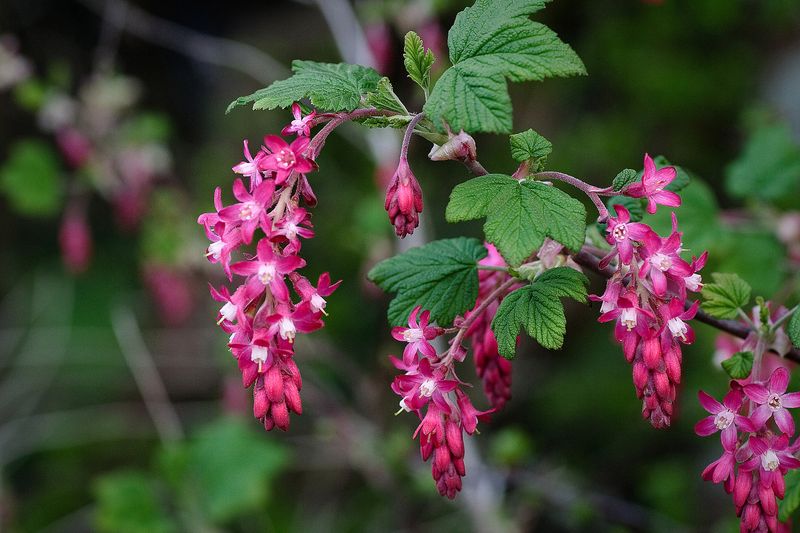
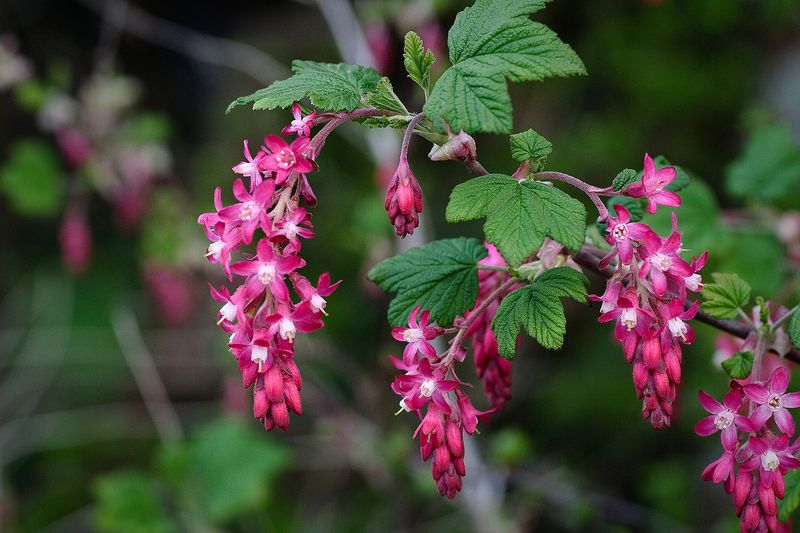
Early in the season, when much of the yard still looks sleepy, red flowering currant steps up with dangling pink-red blooms that hummingbirds waste no time finding. That early nectar matters, especially in California gardens where wildlife support can start before summer color really gets going.
It is one of the best ways to make a partly shaded area feel useful instead of underplanted.
Compared with the sun-loving shrubs on this list, red flowering currant offers a different kind of solution. It helps fill those in-between spots near fences, under open-canopy trees, or along the side of the house where full-day sun is hard to come by.
In bloom, it adds softness and movement rather than a stiff, formal look.
Give it decent drainage and a site that avoids the harshest late-day inland heat. It may go partly summer dormant in drier conditions, which is normal for many California natives.
If you plan around that habit and pair it with mulch or compatible dry-garden companions, it can help turn a patchy, awkward bed into a hummingbird stop that feels seasonal, natural, and much easier to manage.
6. Island bush snapdragon
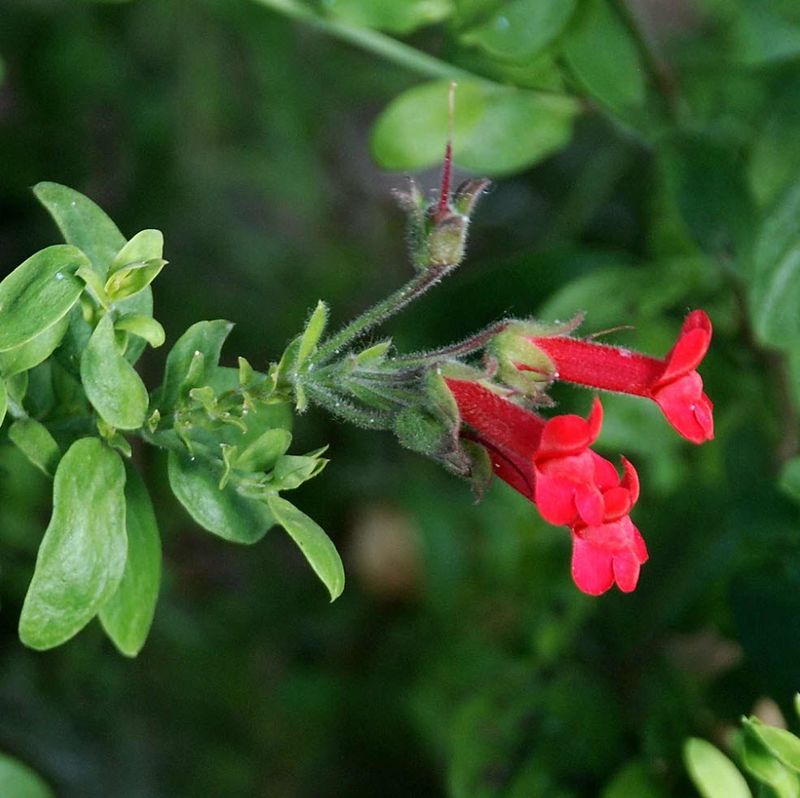
If you have a wall, slope, or raised bed edge that always seems too stark, island bush snapdragon can change the whole mood. Its vivid red flowers and slightly spilling habit give the plant a lively, almost playful look, and hummingbirds are drawn to the tubular blooms again and again.
That mix of motion and color makes it especially useful in spots that need softening.
One reason it belongs on this list is the way it handles awkward spaces. Some shrubs stand upright and leave gaps below, but island bush snapdragon can drape and spread enough to hide hard edges and cover exposed soil.
In a water-wise California yard, that helps a bed look fuller without relying on extra annuals or thirsty fillers.
Best results usually come in full sun with well-drained soil, especially in coastal and mild inland areas. It appreciates occasional pruning to keep a dense shape and encourage fresh growth.
For homeowners who want a shrub that feels cheerful rather than heavy, this one gives strong hummingbird appeal while helping bare, dry pockets look planted on purpose.
7. Baja fairy duster
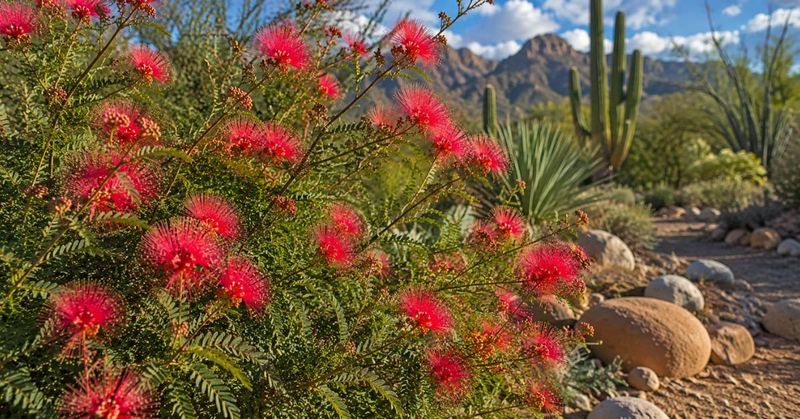
For pure hummingbird magnet power, Baja fairy duster is hard to ignore. Those fuzzy red flowers look almost like tiny fireworks, and they stand out in a dry landscape where many plants fade into the background by midsummer.
When a sunny bed feels flat and thirsty, this shrub can bring energy back fast.
The big advantage here is bloom impact during heat. While some shrubs have a brief show and then settle into green, Baja fairy duster often keeps the yard visually active for a longer stretch in warm conditions.
That makes it useful in California regions with hot inland summers, where homeowners need plants that still look engaged when the weather turns tough.
Place it in full sun with sharp drainage and room to spread naturally. It works well in desert-style gardens, gravel-based landscapes, and mixed native or low-water borders.
If your goal is to replace a needy patch of open ground with something that feeds hummingbirds, brightens the yard, and asks for far less irrigation once established, Baja fairy duster offers a strong finish. Grouped in a drift, it can make a dry area look full instead of forgotten.