
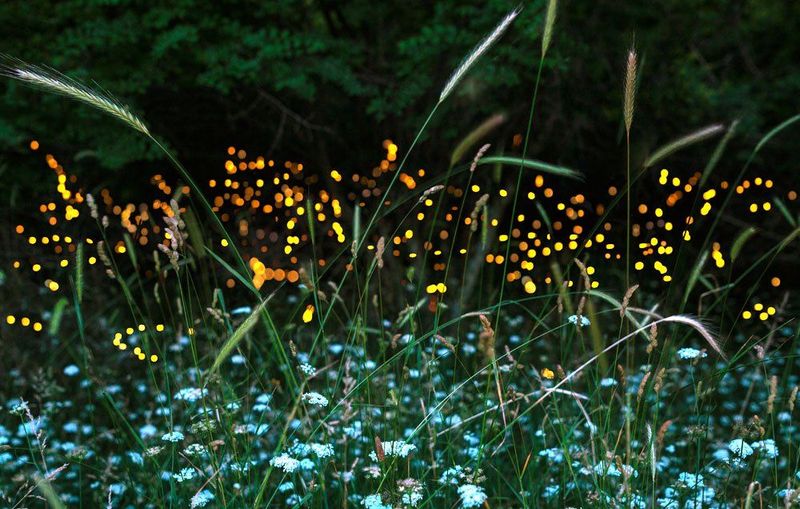
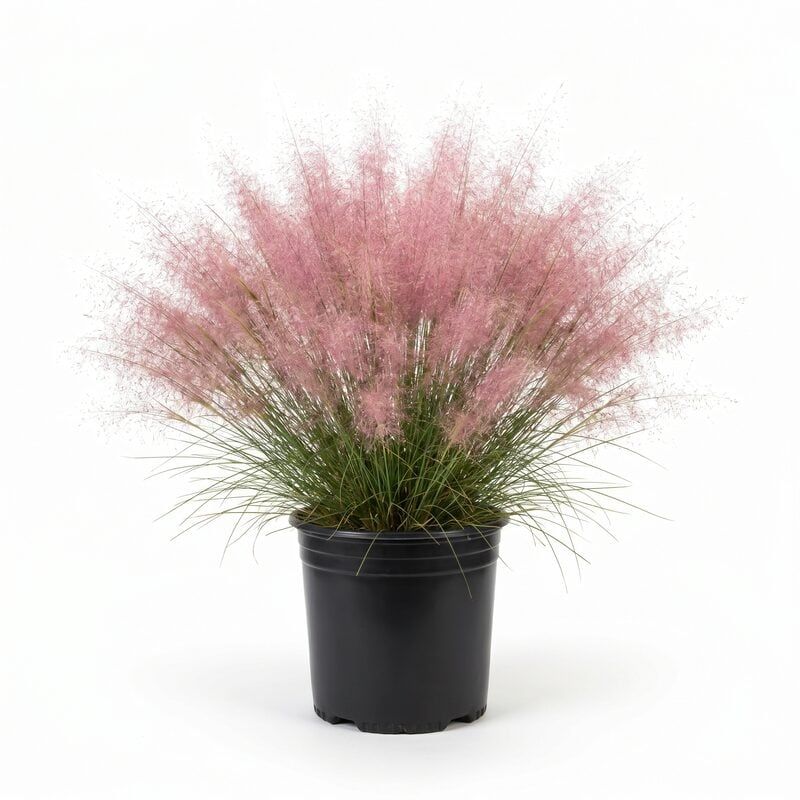
Gulf muhly is a native Texas grass that puts on a stunning cloud of purple-red blooms every fall, but its value for your yard goes beyond good looks. Many Texas homeowners are discovering that low-maintenance native plantings can quietly support backyard wildlife, including fireflies.
Before you plant one clump and wait for a light show, though, there are some honest things worth knowing about what this grass can and cannot do for the fireflies in your neighborhood.
Gulf muhly supports firefly habitat indirectly
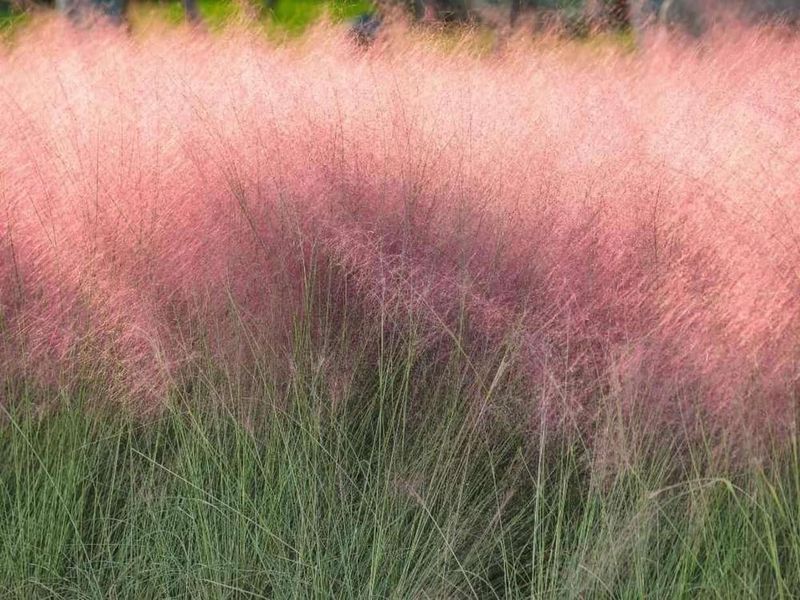
Gulf muhly can play a real role in a firefly-friendly Texas yard, but that role is narrower than most people expect. No current research identifies Muhlenbergia capillaris as a species-specific firefly attractant or shows that planting it will reliably produce a visible firefly display.
What the grass genuinely offers is clumping above-ground structure: dense foliage where adult fireflies can rest and shelter during the day, and vegetation that adds variety to an otherwise open landscape.
Adult fireflies do use low vegetation for perching and resting, so a stand of muhly can serve as useful cover. However, the larvae that eventually become those adults spend most of their development underground or in leaf litter, feeding on soft-bodied invertebrates.
Penn State Extension research on firefly biology makes clear that larval habitat depends on moist soil, undisturbed leaf litter, and access to prey, none of which a clumping grass alone can provide.
Firefly habitat is a combination of conditions, not a single plant. Suitable moisture, ground-level cover, soft-bodied prey, low pesticide exposure, and reduced artificial light all matter as much as or more than which grass you choose.
UF/IFAS guidance on attracting fireflies lists varied vegetation, leaf litter retention, and minimizing chemical use as the practical priorities.
Gulf muhly fits into that picture as one component, not the whole solution. Thinking of it that way sets realistic expectations and helps you build the rest of the conditions fireflies actually need.
The Xerces Society’s firefly habitat guidance consistently frames the challenge as a whole-yard question rather than a single-plant fix.
Why Gulf muhly fits a low-care Texas landscape
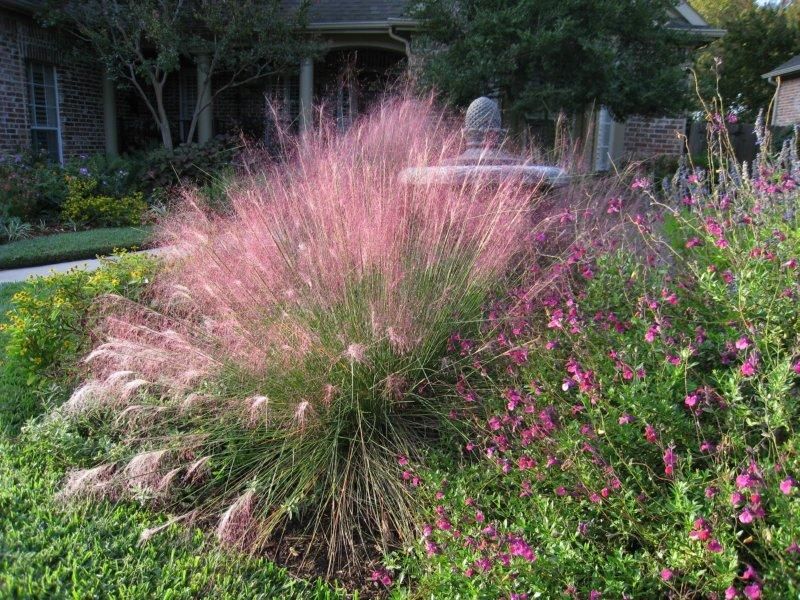
Muhlenbergia capillaris is a perennial, clumping grass native to Texas and the southeastern United States. Texas Tech University’s plant database describes it as typically reaching 2 to 4 feet tall and wide, with finely textured foliage that stays tidy through the growing season.
Its most dramatic feature is the haze of purple-red seed heads that emerges in late summer and fall, making it one of the more visually striking natives available to Texas homeowners.
From a practical standpoint, Gulf muhly handles the conditions that defeat many ornamental plants in Texas. It tolerates full sun, performs well across a wide range of well-drained soils, and once established, handles heat and extended dry periods without much intervention.
Texas A&M AgriLife Extension describes it as a Texas Superstar selection, recognizing its reliable performance across the state under challenging conditions.
The bloom period matters for the yard’s overall habitat quality, though not in the way some sources imply. The plant’s flowers are not a significant food source for fireflies.
University of Georgia Cooperative Extension recommends planting Gulf muhly in groups of three or more for stronger visual impact, with the main bloom period running September through October depending on location and conditions.
What does connect Gulf muhly to a firefly-supportive yard is its structural value. Dense clumping foliage provides above-ground cover that adult fireflies can use, and the grass’s low-maintenance profile means fewer chemical interventions and less soil disturbance over time.
Those indirect benefits are real, even if the grass itself is not drawing fireflies in from neighboring properties.
Match the planting site to both the grass and nearby habitat
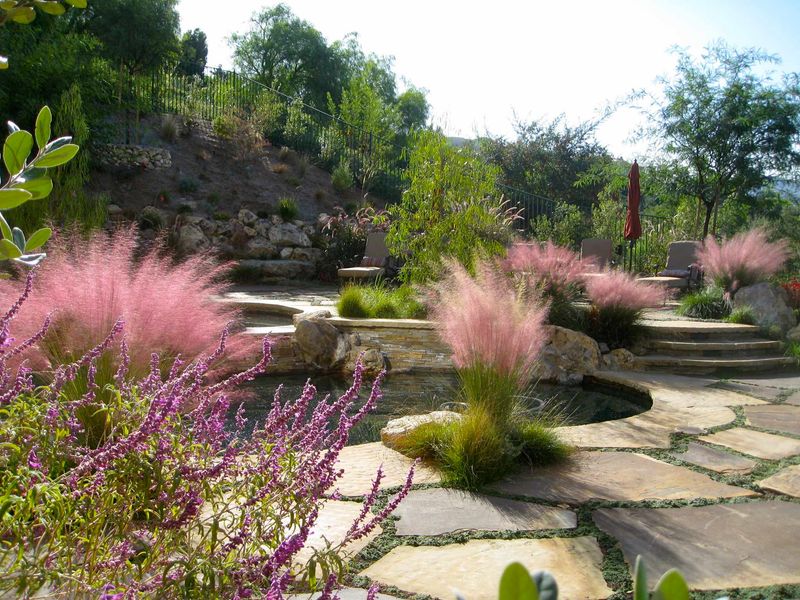
Picking the right spot for Gulf muhly is partly about the grass and partly about setting up the surrounding habitat conditions fireflies need. Start with what the plant requires: full sun is ideal, though light shade is tolerable.
Good drainage is the most critical soil factor. Avoid low spots that stay wet after rain or areas that receive frequent overhead irrigation, since standing water around the crown can damage or kill the plant over time.
Good drainage does not mean a dry, barren patch of ground. Gulf muhly can tolerate dry conditions once established, but the area around the planting should still hold enough moisture to support soil life and ground-level habitat.
Texas Tech’s plant profile emphasizes well-drained soil as the primary concern, while Texas A&M AgriLife Extension notes its adaptability to a wide range of soil types. The practical balance is a site that sheds excess water without becoming a dusty, cracked surface between rains.
Placing Gulf muhly near other regionally appropriate native plants strengthens the habitat value considerably. A small group or border planting combined with low shrubs, flowering perennials, or other native grasses gives fireflies more varied vegetation to work with.
UF/IFAS firefly habitat guidance supports varied vegetation as a key feature of a firefly-friendly yard, and a monoculture of one grass species does not meet that standard on its own.
One naming detail deserves attention before you shop. Common names for muhly grasses overlap enough to cause confusion at the nursery.
Gulf muhly or pink muhly typically refers to Muhlenbergia capillaris, but purple muhly or dune hairgrass may refer to Muhlenbergia sericea, a related but distinct species with different cultural requirements. University of Georgia Cooperative Extension distinguishes these two clearly.
Check the plant tag for the scientific name Muhlenbergia capillaris before buying to make sure you are getting the right species for your site and region.
Low maintenance starts after the grass establishes
The phrase “almost no upkeep” applies to Gulf muhly only after it has rooted in and settled into your site. A newly installed plant is not yet drought-tolerant.
During the first growing season, regular supplemental watering is necessary, especially during hot or dry stretches in Texas where temperatures can climb well past 100 degrees Fahrenheit for weeks at a time.
Texas A&M AgriLife Extension describes Gulf muhly as very low maintenance after establishment, and Texas A&M AgriLife Extension in Victoria County reinforces that new plantings still need consistent moisture to get established. Plan to water at least weekly during dry or hot periods in the first season, and more often if conditions are extreme.
Letting a new planting dry out completely before roots have spread is the fastest way to lose the plant.
Weed control during the establishment phase is the other practical task. Young Gulf muhly clumps are not dense enough to shade out competition, so hand-pulling or shallow cultivation around them can prevent weeds from taking over before the grass fills in.
Avoid deep soil disturbance, which can undermine the developing root system and disrupt any nearby ground habitat you are trying to preserve.
Once established, the maintenance calendar is genuinely simple. The main task is cutting the grass back to roughly 6 inches during winter dormancy if the old growth looks ragged or if the base begins to accumulate dead material.
Some gardeners skip this step entirely in mild years without harming the plant. No fertilizing, no frequent watering, and no elaborate seasonal treatment is needed.
That low-intervention profile is one of the real benefits Gulf muhly offers once it has settled in.
Protect the soil, leaf litter, moisture, and prey fireflies need
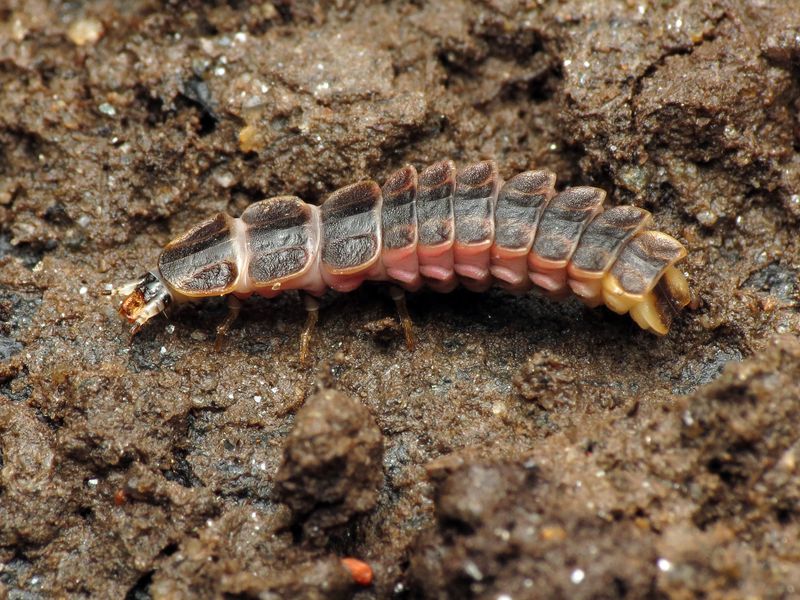
Firefly larvae spend most of their lives underground or in leaf litter, not on grass blades. They feed on soft-bodied invertebrates, primarily slugs, snails, and earthworms, so a yard that supports those prey animals is also building the food base fireflies need to complete their life cycle.
Penn State Extension’s firefly resource describes larval fireflies as predators of these ground-level invertebrates, making the health of your soil community directly relevant to firefly success.
Retaining some natural leaf litter around and near your Gulf muhly planting is one of the most practical steps you can take. Leaf litter holds moisture, insulates the soil, and provides both shelter and hunting ground for firefly larvae.
You do not need a deep, undisturbed layer across the entire yard, but completely raking out all organic material from a bed eliminates the habitat value that layer provides. A modest, natural accumulation at the edges of plantings and under shrubs is enough to make a difference.
Soil disturbance is worth managing carefully too. Frequent tilling, aggressive cultivation, or heavy compaction from foot traffic can disrupt the larval habitat and reduce the invertebrate populations fireflies depend on.
Keeping some sections of the yard relatively undisturbed, particularly near the muhly planting, helps preserve the conditions larvae need. UF/IFAS firefly guidance specifically recommends leaving some areas undisturbed and retaining leaf litter as practical habitat steps.
Moisture management around the planting matters as well. The soil near your Gulf muhly should drain well to suit the grass, but the broader yard area, especially shaded spots, low edges near shrubs, or sections with leaf litter, should retain enough moisture to support soil life.
The Xerces Society identifies moisture as one of the key habitat variables for fireflies, and excessively dry, barren ground limits the invertebrate prey larvae need to survive.
Reduce pesticides and unnecessary nighttime light
Two management habits can affect firefly populations as much as any plant choice. The first is pesticide use.
Routine applications of broad-spectrum insecticides, molluscicides, mosquito sprays, and standard lawn treatments in or near your habitat planting can harm fireflies directly or eliminate the prey their larvae depend on. The Xerces Society’s firefly habitat guidance is explicit about this: chemical treatments that target other insects or invertebrates do not spare fireflies, and reducing or eliminating their use near the habitat area is one of the most consequential steps a homeowner can take.
If mosquito pressure in your yard feels unmanageable without spraying, consider whether targeted, localized control can replace broadcast treatments. Eliminating standing water, using physical barriers, and accepting some tolerance for other insects are all lower-impact approaches.
UF/IFAS firefly guidance also cautions against pesticide use near firefly habitat, reinforcing that the chemical environment around your planting shapes what can live there.
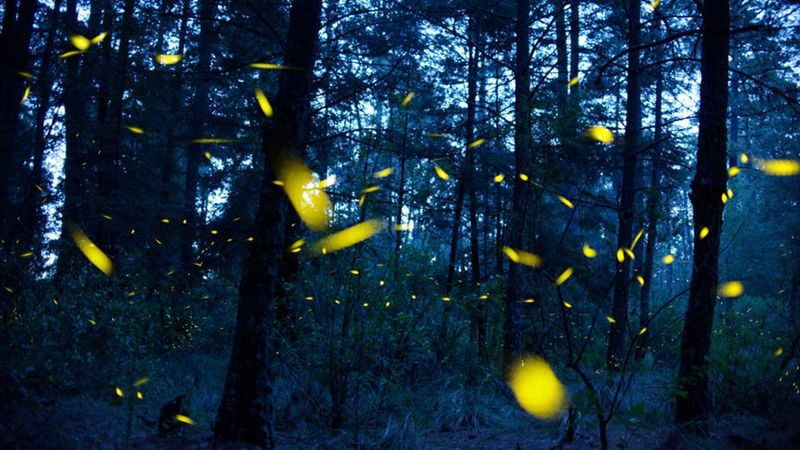
Artificial light is the second major factor. Many firefly species, particularly those that communicate through timed light flashes, use visual signals to find mates at night.
Bright porch lights, flood lights, and landscape lighting can interfere with that signaling and suppress activity in the area. Positioning your Gulf muhly planting away from the brightest outdoor fixtures, or simply turning off unnecessary lights on summer evenings, can make a meaningful difference for light-signaling fireflies.
Not every firefly species relies on flash communication in the same way, so reduced lighting is not a guaranteed fix for all species. A North American firefly risk assessment published in PMC notes the diversity among firefly species and the varied threats they face.
Still, reducing unnecessary nighttime illumination near your habitat planting supports nocturnal behavior broadly and costs nothing to try.
Build a firefly-friendly setting without promising a spectacle
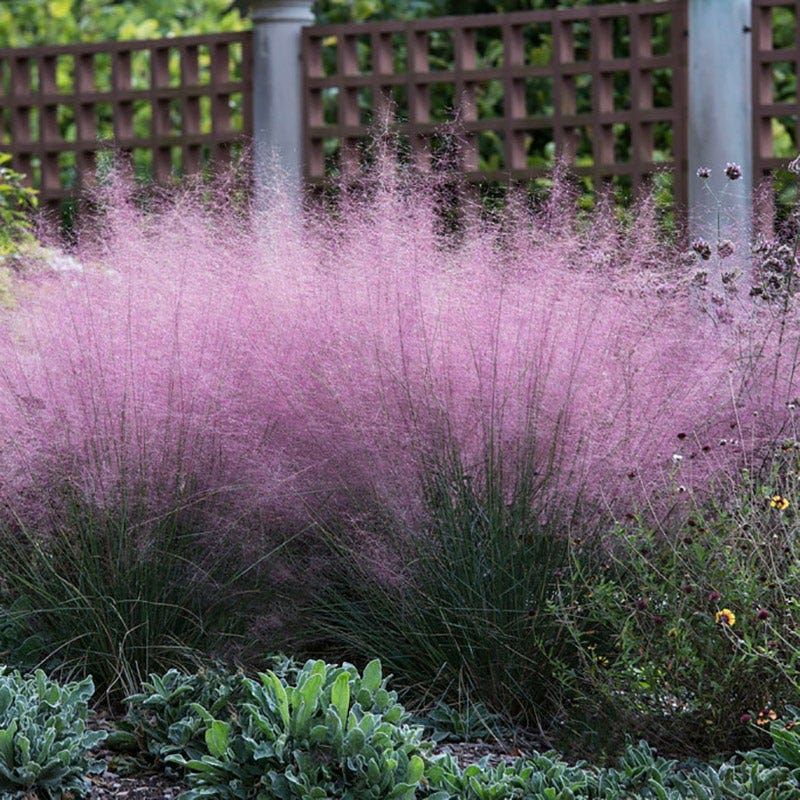
Putting all of this together looks like a specific setup rather than a vague aspiration. Group three or more Gulf muhly plants in a well-drained, sunny or lightly shaded location.
Surround them with other suitable native vegetation, including flowering perennials, low shrubs, or additional native grasses, to create the varied plant structure that supports more insects and more shelter options. Texas A&M AgriLife Extension notes that Gulf muhly performs reliably across the state when sited correctly, making it a practical anchor for this kind of planting.
Keep some natural leaf litter at the edges of the bed and in adjacent shaded areas. Avoid routine pesticide applications in or near the planting.
Turn off or redirect unnecessary outdoor lighting on summer evenings, particularly flood lights and bright landscape fixtures pointed toward the habitat area. University of Georgia Cooperative Extension recommends planting Gulf muhly in groups for visual impact, and that same grouping strategy strengthens the structural habitat value as well.
Firefly activity in your yard will still depend on factors outside your control: species present in your area, local rainfall and soil moisture, the season, surrounding development, and nearby light or pesticide sources. North American firefly research shows that population trends vary significantly by species and region, and no single yard improvement guarantees an increase in adult activity.
Some homeowners who make all the right changes will see more fireflies; others in denser suburban settings may see modest or no visible change.
UF/IFAS firefly habitat guidance frames the goal accurately: create better conditions and let the local population respond on its own timeline. Gulf muhly earns its place in that effort as a low-care, post-establishment native that adds real structure and seasonal beauty to your yard.
The best reason to plant it is that it genuinely belongs here, and a yard that fits its landscape tends to support more life than one that fights it.