
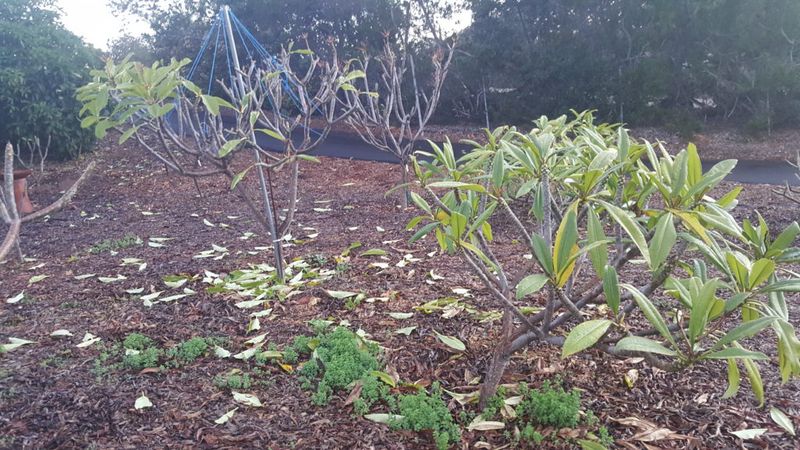
Plumeria is one of those plants that can look perfectly healthy one week and then suddenly appear limp, yellow, or half-bare the next as fall rolls in. For California gardeners, that shift can feel alarming, especially when it happens fast.
The good news is that some of what you’re seeing may be completely normal seasonal behavior, but drooping on its own is not a simple answer, and a few quick checks can tell you whether your plant needs help or just some patience before spring.
Seasonal leaf loss can be normal, but drooping needs a separate diagnosis
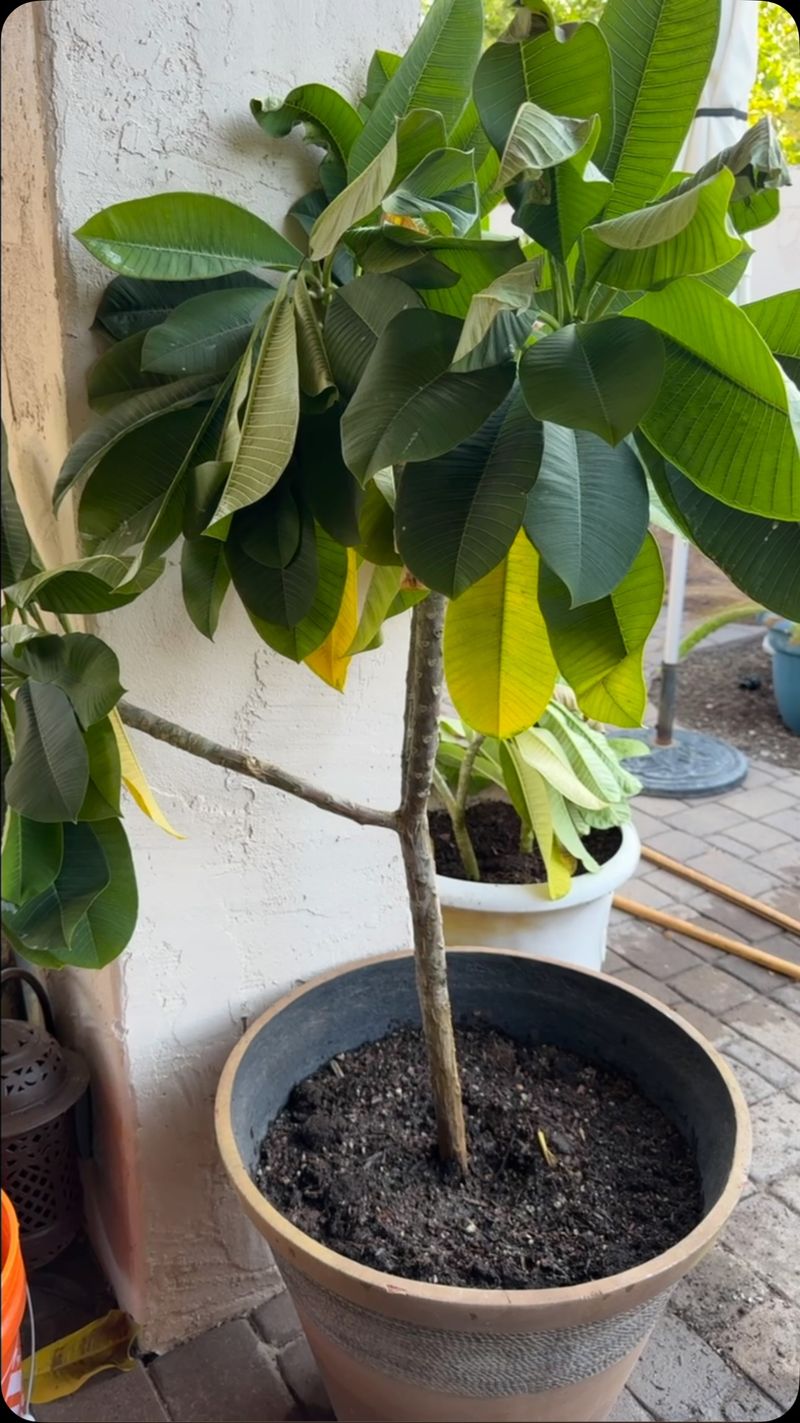
Many plumerias slow their growth and shed their leaves during the autumn and winter months, and gardeners who have not seen this before can mistake a completely normal seasonal change for a dying plant. Research on the deciduous behavior of Plumeria acuminata found that the cessation of leaf formation and the shedding of foliage corresponded with the longer-night, shorter-day period of autumn and winter, pointing to photoperiod as an important seasonal cue.
That finding is most directly relevant to deciduous types and the specific cultivar studied, so gardeners should not assume every plumeria on every patio responds identically.
What often catches people off guard is how intact the stems look after the leaves fall. University of Florida IFAS guidance on plumeria confirms that stems can remain green and photosynthetically active even when a plant has dropped all of its foliage, which means a bare plant is not automatically a dead one.
Firm, green stems on a leafless plant during fall or winter are broadly compatible with seasonal dormancy, though they are not a guarantee that everything is fine deeper in the root zone.
Cultivar matters here more than many gardeners realize. UF/IFAS notes that some plumeria types, including Plumeria pudica, may retain foliage under favorable conditions, meaning leaf retention or leaf drop alone cannot establish whether a plant is healthy or struggling.
A cultivar described as semi-evergreen can still drop leaves under drought or cold stress.
Drooping is a separate matter from ordinary leaf yellowing and shedding. A plant whose leaves hang limp, whose shoots lean without support, or whose entire canopy collapses may be signaling drought, root problems, cold injury, pest damage, or disease rather than peaceful dormancy.
Iowa State University Extension guidance on diagnosing plant problems reinforces that wilting and drooping are nonspecific symptoms that require a structured inspection rather than a single assumed explanation. The sections that follow walk through exactly that inspection, starting with the stems and soil.
Check the stems and soil before changing the care routine
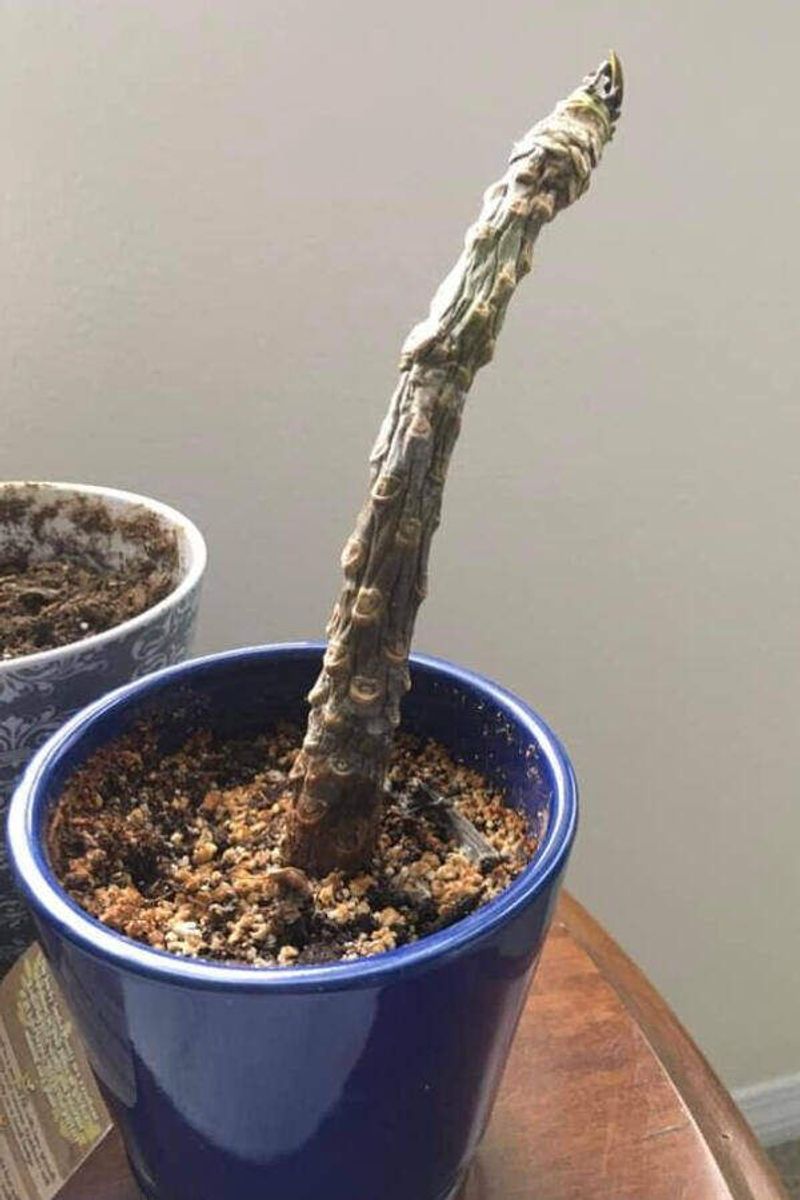
Before adjusting anything about how you water or care for your plumeria this fall, take ten minutes to look carefully at two things: the stems and the soil. Start at the tips and work your way down, pressing gently along the length of each stem.
Firm stems that give slightly but spring back, and that are still green or greenish-gray on the surface, are broadly consistent with a plant that is slowing down for the season rather than one in active distress.
Soft, mushy, blackened, or severely shriveled sections tell a different story. UF/IFAS plumeria guidance notes that root rot and cold injury are real risks for this plant, and the visible signs often show up in the stem tissue before gardeners think to look.
A stem that collapses under light pressure, feels hollow, or shows dark discoloration spreading downward deserves closer attention rather than reassurance. No single visual symptom is definitive on its own, but soft or blackened tissue combined with other warning signs is worth taking seriously.
Next, check the soil. Push a finger or a wooden dowel several inches into the mix and hold it there for a few seconds.
UC Master Gardener guidance on plumeria recommends stopping irrigation once a plant enters dormancy, which means wet soil under a leafless plant in fall is a warning sign rather than a neutral condition. If the soil feels damp several inches down, the plant does not need more water regardless of what the leaves are doing above ground.
A genuinely dry root ball is a different situation. University of Wisconsin Extension’s plumeria care guide emphasizes well-drained soil and allowing the mix to dry between waterings, particularly for container plants where poor drainage can deprive roots of oxygen even when the surface looks fine.
If the soil is bone dry and the plant is still actively pushing growth, that dry root ball is the problem. If the plant is slowing down and the soil is already moist, leave it alone.
ISU Extension’s plant-problem guide points out that overwatering and underwatering can produce similar surface symptoms, which is exactly why checking the soil directly matters more than reading the leaves alone.
Use the local forecast to judge cold risk
California is not a single climate, and what a gardener in Encinitas needs to do in October is genuinely different from what someone in Redding, Clovis, or a foothill community above 1,500 feet should plan for. Coastal Southern California yards often stay mild enough through fall that a plumeria in the ground faces little immediate cold threat, while an inland valley site can see frost by mid-November and a foothill or elevated location can experience damaging cold even earlier.
The most useful tool is your actual local forecast, checked several days out, not a statewide calendar rule.
Container plants have the most flexibility and the greatest vulnerability. Because their root zone is exposed on all sides rather than insulated by surrounding soil, containers can lose heat rapidly on a cold night.
Penn State Extension guidance on bringing tender tropicals indoors recommends moving them to a sheltered location before nights approach the low 40s to low 50s Fahrenheit as a general precautionary threshold for tender tropical plants. That range is not a plumeria-specific injury point.
Actual cold tolerance depends on the cultivar, how long temperatures stay low, wind exposure, whether the plant has had time to acclimate, and its overall condition going into fall. Use the range as a prompt to act before frost arrives, not as a precise damage line.
UF/IFAS lists plumeria as best suited to USDA Zones 10B-11, with even Zone 9B carrying recurring frost risk. Most of California’s inland, foothill, and elevated areas fall into zones where frost is a real seasonal possibility, and container plants there should be moved to a frost-free garage, covered porch, or sheltered spot before a frost is forecast.
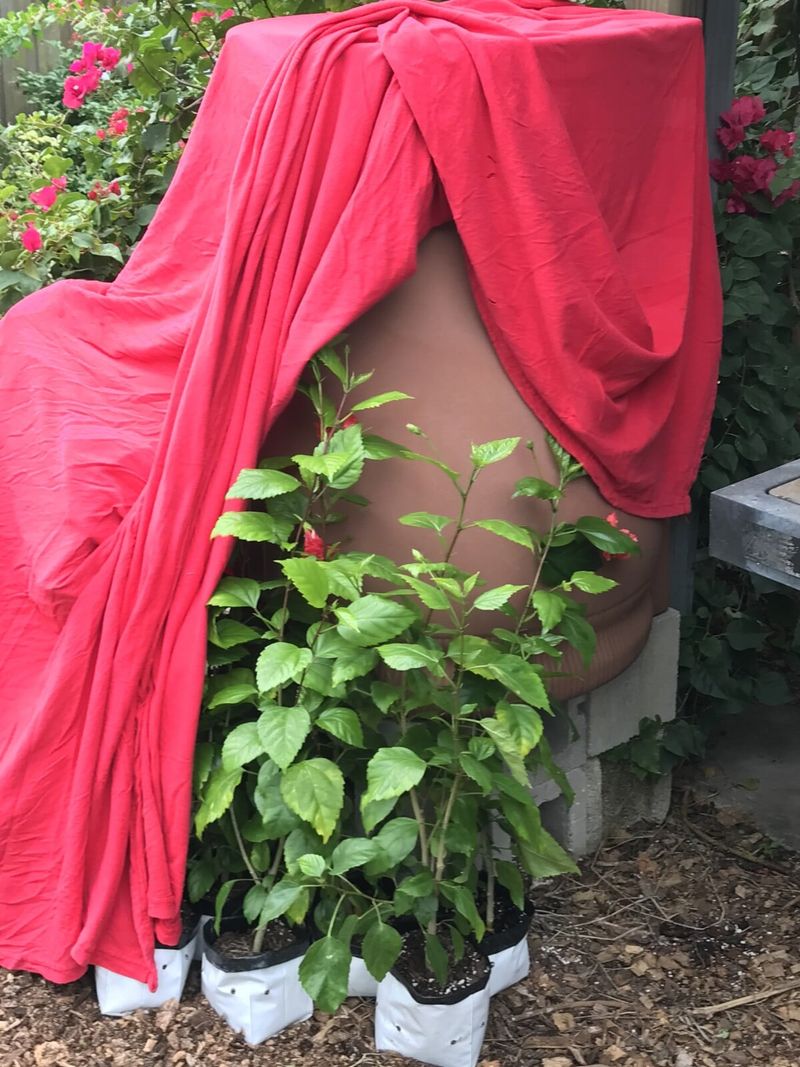
For established in-ground plants in mild, frost-free microclimates, moving them is not an option and may not be necessary. When a frost is forecast for locations where the plant must stay outdoors, UC guidance on frost protection recommends draping frost cloth or a breathable sheet over the plant and extending the cover to the ground to trap soil warmth.
Covers protect reasonably well against a brief frost but offer limited defense against prolonged extreme cold. UGA Extension warns that plastic sheeting can heat rapidly in sunlight and may damage foliage if it rests directly on the leaves, so breathable fabric is the better choice and nothing should press against the plant’s tissue overnight.
Reduce water as dormancy develops without ignoring drought
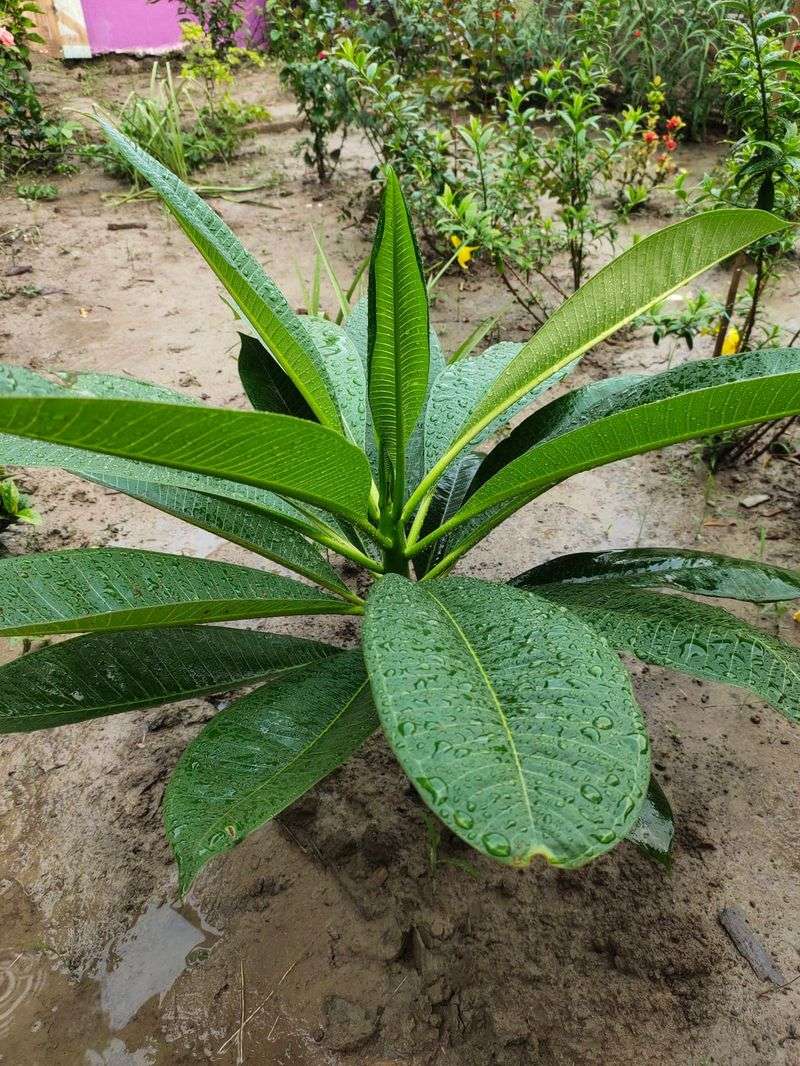
Drooping leaves or falling foliage can trigger an instinct to water more, but adding water to a plumeria heading into fall dormancy often makes things worse rather than better. Cooler temperatures slow evaporation, and roots that are sitting in persistently wet soil lose access to oxygen, which can set the stage for rot even in a plant that looked perfectly healthy a month earlier.
UC Master Gardener plumeria guidance recommends stopping irrigation once the plant enters dormancy and not resuming until new spring growth appears. That guidance applies most directly to a fully dormant, leafless deciduous plant.
A plant that is still pushing new leaves or actively growing, or one that is an evergreen or semi-evergreen type kept in a warm, bright location, may still need occasional moisture through fall and winter. The key is to check the soil and observe the plant rather than follow a fixed weekly schedule.
For container plants, water deeply when an actively growing plant’s soil is genuinely dry several inches down, then allow the excess to drain completely. University of Wisconsin Extension’s plumeria guide highlights that containers with poor drainage are especially risky, since water can pool at the bottom of the pot and keep roots wet long after the surface feels dry.
A pot that drains freely and is allowed to dry between waterings gives roots the air they need.
Fertilizer follows the same seasonal logic. UF/IFAS plumeria care information ties fertilizing to active growth, not to calendar date.
Pushing a dormant or slowing plant with fertilizer in fall does not accelerate recovery, and it can encourage soft new growth that is especially vulnerable to cold damage. Hold off on any feeding until the plant shows clear signs of renewed growth in spring, then resume with an appropriate formulation for the growth stage.
Spots and webbing point to problems beyond seasonal dormancy
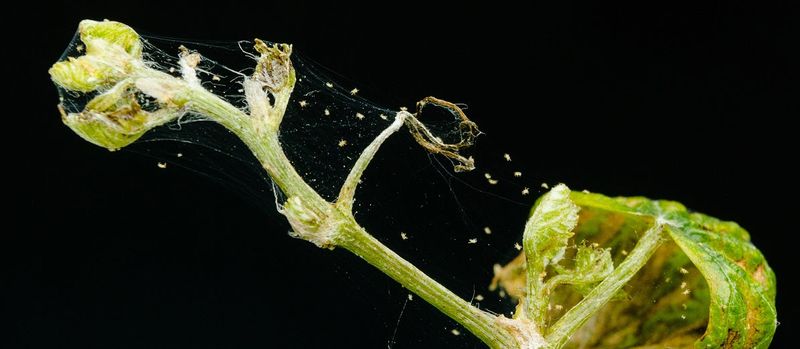
Not every plumeria that drops leaves in fall is simply going dormant. Two common culprits, sixspotted spider mites and plumeria rust, can cause leaf loss that looks seasonal on the surface but signals a problem that will get worse without attention, especially if a pest-infested container gets moved indoors alongside your other plants.
UC IPM’s profile on sixspotted spider mites on plumeria describes the warning signs as webbing on stems or leaves, distorted or blistered leaf tissue, unusual leaf drop, and dieback at the shoot tips. These mites are active in late fall, winter, and early spring, which means a plant that looks like it is simply shedding seasonal foliage might actually be under mite pressure.
Check carefully before moving any container indoors, because introducing mites to a warm indoor environment gives them ideal conditions to spread to nearby houseplants.
UC IPM specifically notes that pesticide registrations change and that oils and soaps should not be applied to stressed plants or in excessive heat or direct sun. Rather than reaching for a spray without reading the label, focus first on a thorough inspection and on whether the plant’s condition and environment make any treatment appropriate.
Follow label directions completely if you choose to treat.
Plumeria rust is a fungal disease with a distinctive appearance. UF/IFAS guidance on rusts on ornamentals describes yellow spots appearing on the upper surface of infected leaves, with yellow-orange powdery pustules visible on the undersides.
Infected leaves may curl, turn brown, and drop prematurely, which can mimic the look of normal fall shedding. Rust does not automatically mean the entire plant will die, but it can cause severe or near-total defoliation if left unchecked.
For rust, sanitation matters more than any spray. Remove and dispose of infected fallen leaves rather than leaving them beneath the plant, since the spores can reinfect new foliage.
Improving airflow around the plant and avoiding prolonged leaf wetness, from overhead irrigation or dense planting, reduces the conditions the fungus needs to spread. Check the undersides of any remaining leaves carefully before assuming the problem has resolved on its own.
Match the winter routine to the plant and its location
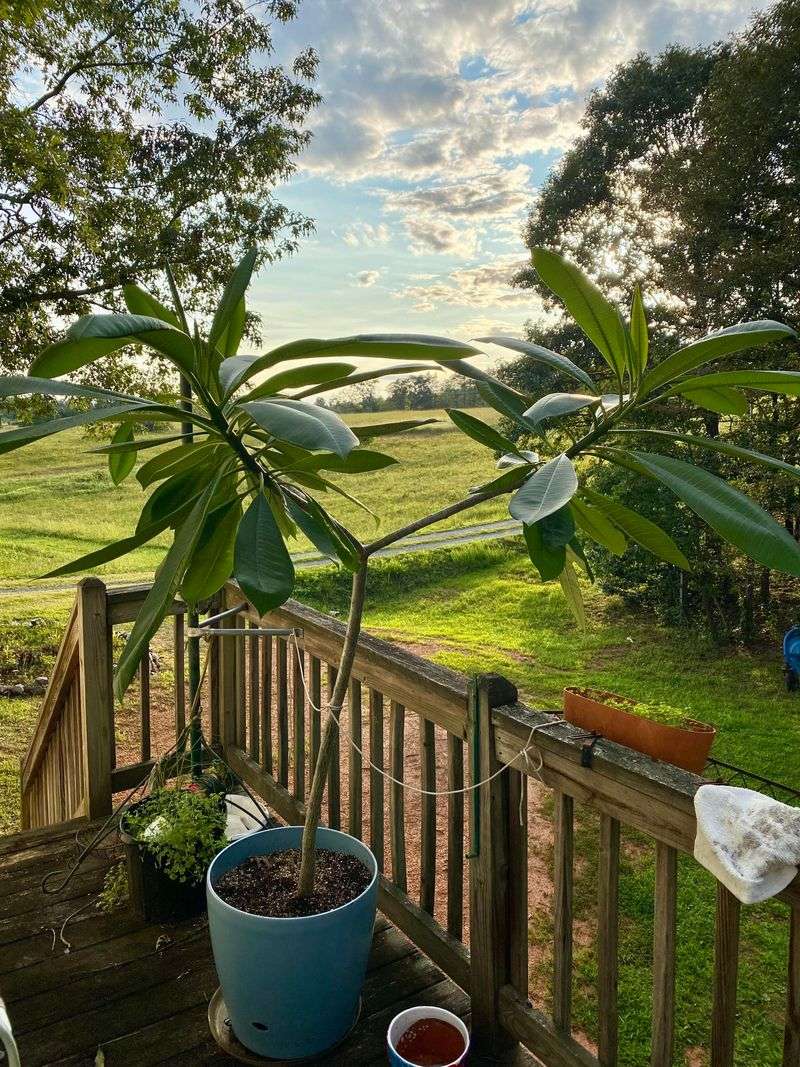
Once you have looked at the stems, tested the soil, and checked the leaves for spots or webbing, the next step is to turn those observations into a practical plan that fits both the plant and where it lives. A container plumeria on a frost-prone inland patio needs different handling than an established in-ground plant in a mild coastal yard, and treating both the same way leads to unnecessary stress in one direction or the other.
For container plants, the sequence looks like this: inspect stems for firmness and color, test soil moisture several inches down, examine leaves and shoot tips for mite webbing or rust pustules, remove any diseased fallen debris from the pot surface, and then decide on protection based on your local forecast. UC IPM recommends checking for sixspotted spider mites before moving containers indoors, specifically to avoid spreading pests to other plants in a warm indoor environment.
Move the container to a frost-free garage, covered porch, or sheltered area before frost is forecast, and reduce watering to match the plant’s reduced activity.
For in-ground plants in frost-prone locations, UC frost-protection guidance recommends using frost cloth or a breathable cover extended to the ground during a forecast frost event. In mild coastal areas where frost is rarely a risk, an established in-ground plumeria may need little more than reduced irrigation and removal of diseased leaf litter as the season progresses.
Stop fertilizing as growth slows, and do not resume until the plant shows clear new growth in spring. University of Wisconsin Extension’s plumeria guide ties fertilizing to active growth stages, not to calendar months.
One more practical note: plumeria sap contains irritating compounds. UF/IFAS advises wearing gloves when pruning, moving, or taking cuttings, and keeping the sap away from eyes, mouth, and broken skin.
Let the symptoms and forecast determine the next step
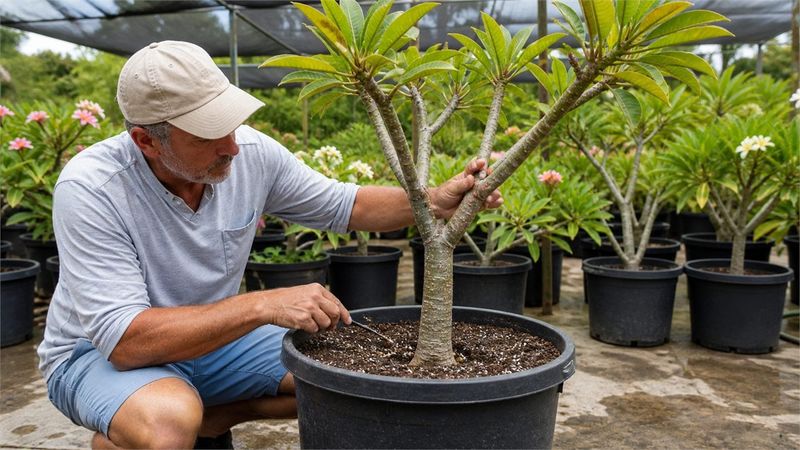
Ordinary yellowing and leaf drop paired with firm, green stems fits the pattern of seasonal dormancy in deciduous plumeria types, and that combination generally calls for patience rather than intervention. Reduce watering as growth slows, stop fertilizing, and let the plant rest.
A dry root ball, persistently wet soil, soft or blackened stem tissue, yellow-orange pustules on leaf undersides, fine webbing on shoots, or an approaching frost in your local forecast each point toward a different response. UF/IFAS plumeria guidance and UC Master Gardener recommendations both reinforce that watering decisions should follow soil and plant condition, not a reflex reaction to drooping leaves.
Adding water to a dormant plant in cool, wet fall conditions creates more problems than it solves.
Protection decisions belong to your actual microclimate and forecast. UC guidance on California frost risk is clear that local topography and exposure matter as much as the calendar.
A plumeria that gets the right diagnosis in October is far more likely to push healthy new growth when the days start lengthening again in spring. The plant has been doing this longer than most of us have been gardening.