
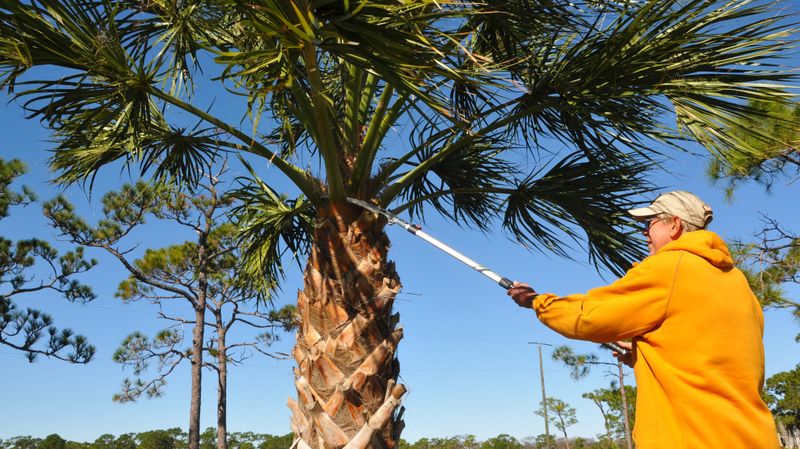
Every hurricane season, well-meaning Florida homeowners reach for the pruning saw and give their palms a severe haircut, convinced that stripping most of the green fronds will make the tree more aerodynamic. Researchers and extension agents who surveyed Florida landscapes after the brutal 2004 and 2005 hurricane seasons found the opposite pattern: palms with heavily stripped crowns were more likely to suffer crown failure than palms left with fuller canopies.
Knowing what to cut, what to leave alone, and when to call a professional can make a real difference for the palms in your yard.
Why severe hurricane pruning can increase crown-failure risk
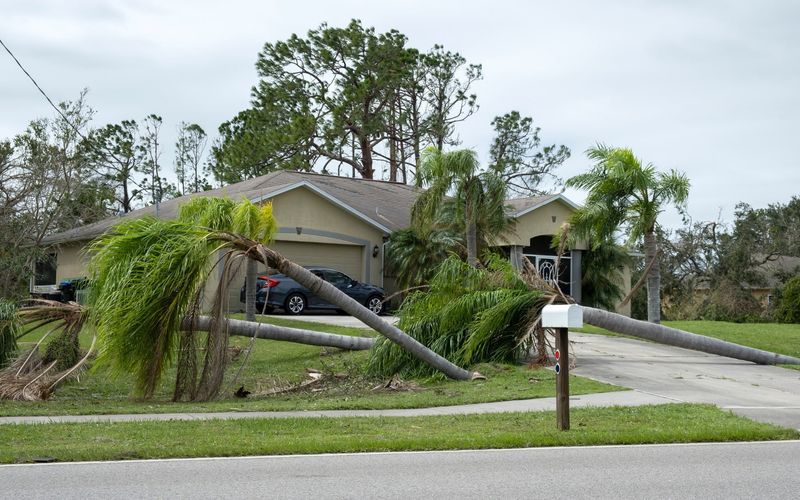
Every June, across Florida neighborhoods, homeowners watch landscapers reduce healthy palms to what looks like a feather duster on a stick. The practice goes by several names: hurricane cut, hurricane pruning, pineapple cut.
The idea behind it sounds logical enough: fewer fronds mean less surface area for wind to push against, and a leaner tree might bend rather than break.
The problem is that UF/IFAS guidance on pruning palms describes this practice as unsupported by science and potentially harmful. Field observations conducted after Florida’s 2004 and 2005 hurricane seasons found that hurricane-cut palms were more likely to have their crowns snapped than palms with fuller canopies.
Removing most green fronds does not appear to make a palm more aerodynamic in a helpful way; instead, it may strip away the structural support and physical protection that older fronds and their bases provide to the younger leaves and the crown’s growing point.
This evidence supports a strong warning against severe pre-storm pruning, but it does not mean every heavily trimmed palm will fail. Survival after a hurricane depends on several overlapping factors: the species involved, the palm’s overall health, the condition of its trunk and root system, how exposed the site is, and the intensity of the storm itself.
UF/IFAS research on wind-resistant tree species makes clear that species differences alone can produce very different outcomes in the same storm.
The central lesson is straightforward. Severe hurricane pruning is not a neutral act performed for the palm’s benefit; it is a risk-increasing practice dressed up as storm preparation.
Homeowners who skip the extreme haircut and instead remove only genuinely hazardous material give their palms a better starting position, without guaranteeing any particular result.
The crown protects the palm’s growing bud
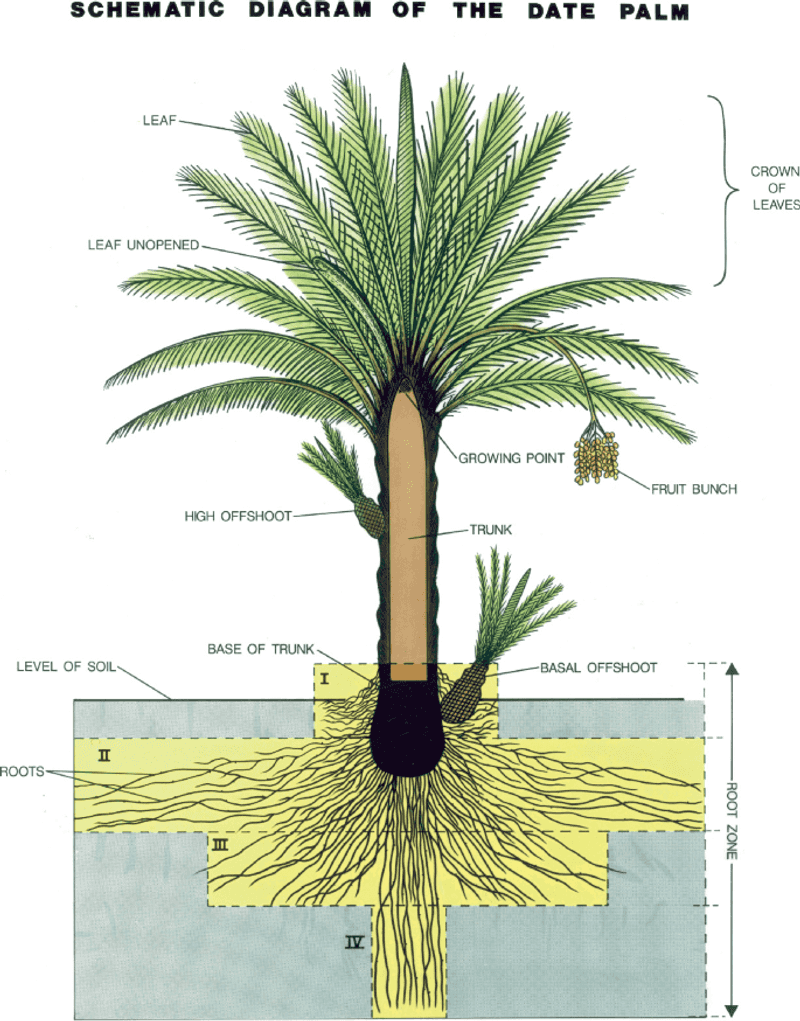
At the very top of every palm trunk, tucked inside the crown, sits a single structure that controls the tree’s entire future: the apical meristem, commonly called the growing bud. Every new leaf that a palm will ever produce emerges from this one point.
Unlike a typical hardwood tree, which can sprout new growth from buds scattered along many branches, a palm has no backup. If the growing bud is severely damaged or destroyed, the palm cannot produce new leaves and will eventually die.
This biological reality is what makes severe pre-storm pruning genuinely risky rather than merely cosmetic. UF/IFAS guidance on hurricane-damaged palms explains that older fronds and their persistent bases form a physical collar around the base of the crown, helping to shield and support the younger, more tender leaves that surround the growing bud.
When those older fronds are removed, the bud and the youngest emerging leaves lose that buffer. Storm winds, flying debris, and sudden temperature swings can then reach tissues that would otherwise have been protected.
Homeowners sometimes assume that a palm stripped down to a tight tuft will simply regrow its fronds once the storm passes. That can happen, but only if the growing bud survives intact.
A palm that loses most of its leaves to hurricane winds may look dead and yet still recover slowly if the bud is undamaged. A palm whose bud is crushed, snapped, or rotted through has no path to recovery.
Understanding this distinction helps clarify the entire pruning question. Temporary leaf loss is not the same as bud death.
Practices that protect the bud improve the odds of recovery; practices that expose it to additional risk work against the palm at the moment it needs support most.
Before landfall, remove hazards—not healthy green foliage
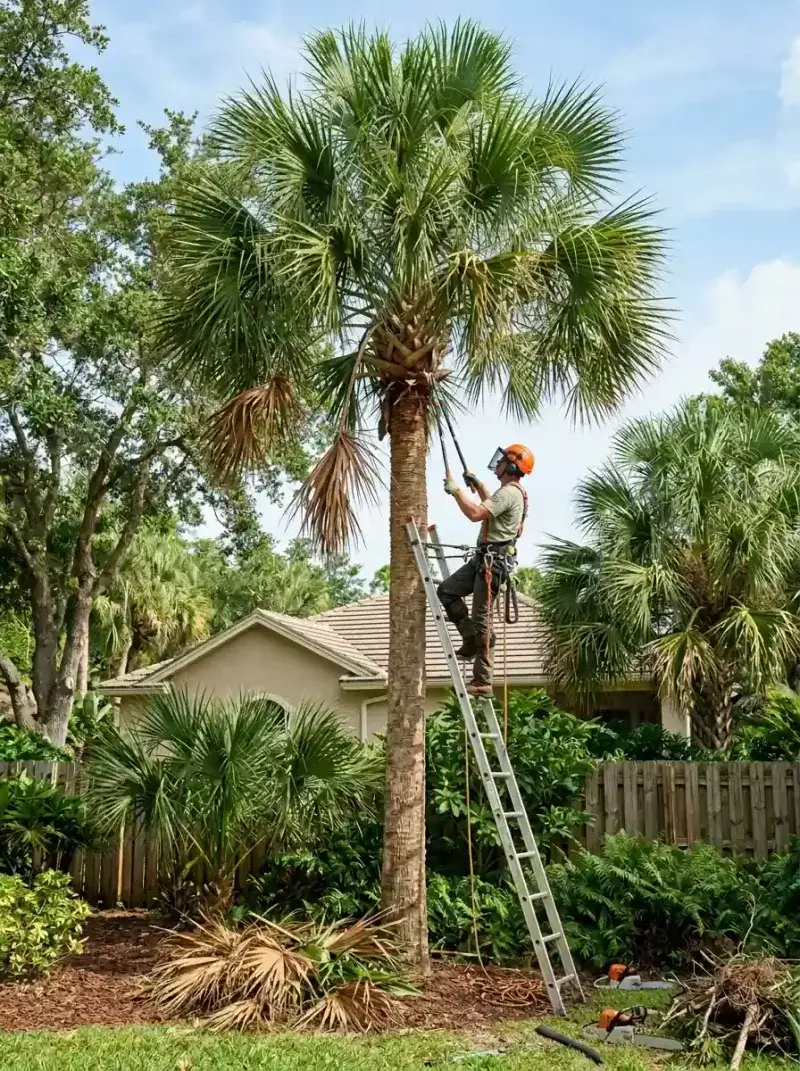
A practical pre-storm inspection starts on the ground with your eyes, not with a chainsaw. Walk around each palm and look for fronds that are completely brown and dead, hanging loosely from the crown, already broken, or visibly detached and held in place only by neighboring fronds.
Those materials can become airborne projectiles in high winds, so removing them before a storm has a clear, legitimate safety purpose.
That targeted removal is very different from stripping healthy green foliage in an attempt to reduce wind resistance. UF/IFAS pruning guidance and UF/IFAS wind-damage minimization recommendations both distinguish between removing genuinely hazardous material and cutting healthy fronds.
The former reduces debris risk; the latter increases the palm’s vulnerability without delivering the aerodynamic benefit homeowners expect.
One of the most common mistakes involves partly yellow, brown-tipped, or otherwise discolored fronds. When a frond still contains green tissue, it is not dead.
Partly discolored fronds may still photosynthesize and, more critically, may be actively transferring mobile nutrients, especially potassium, to newer growth. Removing them can accelerate decline in palms that are already nutrient-stressed, which is a widespread condition in Florida’s sandy soils.
The decision rule is straightforward. Ask whether the frond is completely dead, structurally loose, already broken, or poses a clear falling hazard.
If the answer is yes, removing it when conditions are safe is reasonable. If the frond is green, partly green, or simply aging in appearance, leave it.
UF/IFAS guidance on restoring trees after a hurricane reinforces this point by treating pre-storm and post-storm care as distinct decisions, each governed by what is actually hazardous rather than what looks tidy.
Preserve a full, rounded crown during routine pruning
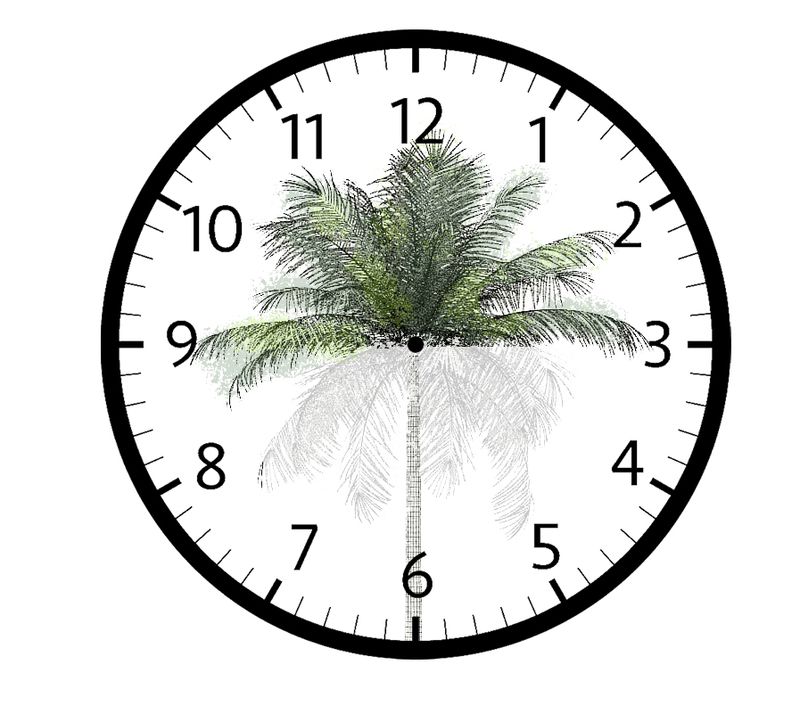
Routine maintenance pruning is not the enemy of storm readiness; careless routine pruning is. The goal during any scheduled trim should be to preserve the palm’s natural, rounded crown shape rather than to sculpt it into a pineapple or pencil-point silhouette.
A full crown keeps the growing bud buffered and the palm’s nutrient pathways intact between storms, which matters more than appearances.
A practical way to protect that crown shape is the 9-to-3 clock-face rule. Imagine the palm’s crown as a clock face: fronds growing between the 9 o’clock position on the left and the 3 o’clock position on the right, meaning fronds that grow horizontally or upward, should generally stay.
UF/IFAS Extension Orange County’s palm pruning guidance presents this approach as a way to maintain a full, functional crown. The preferred standard, though, is to remove only fully dead material.
The clock-face guideline helps homeowners avoid over-pruning when they are tempted to tidy up fronds that are merely aging.
Flower and fruit stalks are a separate category. The UF/IFAS Florida-Friendly Landscaping Handbook and other UF/IFAS materials note that stalks creating a mess, a falling-object hazard, or unwanted seedlings can be removed.
Coconuts deserve particular attention: a large coconut can become a serious projectile in high winds, and removing them before a storm is a reasonable safety step rather than unnecessary pruning.
Technique matters as much as timing. Never pull or tear a living frond from the trunk, cut into living trunk tissue, or use climbing spikes.
ISA pruning guidance explains that palm wounds do not compartmentalize and seal the way typical tree wounds do. Damage to the trunk or living tissue creates permanent entry points for pests and pathogens, compounding any stress the palm already faces going into storm season.
Disinfect tools and limit unnecessary cuts
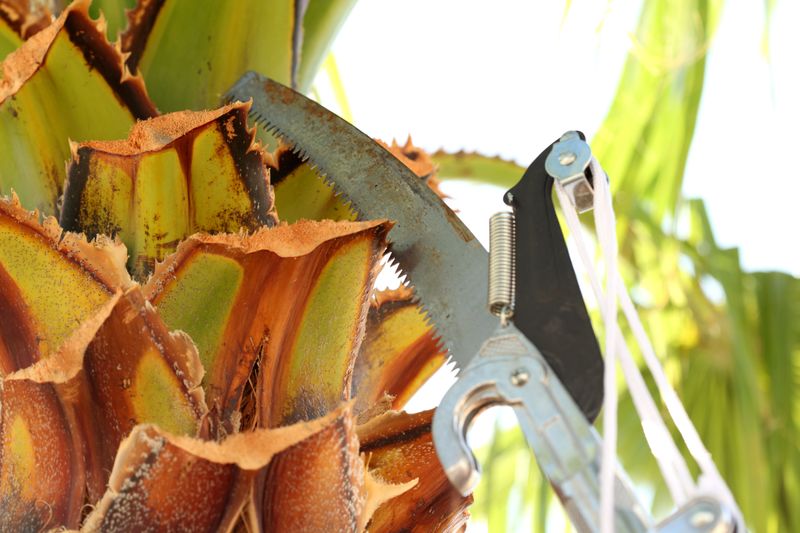
Tool hygiene is the step most homeowners skip entirely, and skipping it can spread disease from one palm to the next faster than any storm. Certain fungal pathogens, including those responsible for Fusarium wilt in queen palms and Canary Island date palms, travel on contaminated blades.
A single pass through an infected crown is enough to carry the pathogen to the next healthy tree.
UF/IFAS detailed pruning guidance directs readers to disinfect pruning tools between palms, with specific attention to Phoenix species, queen palms, and other varieties known to be vulnerable to diseases spread by contaminated equipment. The same guidance covers specific disinfectant concentrations and soaking times.
Rather than summarize those details here in a way that could become outdated or imprecise, consult the UF/IFAS materials directly for the exact protocol. UF/IFAS guidance on Fusarium wilt of queen palm and guidance on Fusarium wilt of Canary Island date palm provide additional disease-specific context that informs how seriously to take cross-contamination risk.
Limiting the number of cuts made is also part of disease management. Every wound is a potential entry point, which means that unnecessary pruning creates unnecessary risk even when the cuts look clean and the tools are disinfected.
The fewer healthy fronds removed, the fewer opportunities pathogens have to gain a foothold. Combining disciplined pruning decisions with proper tool sanitation between palms is the most reliable way to reduce disease spread during storm-season preparation.
Do not brace a healthy palm or tackle unsafe work
Tying a healthy palm to a stake or strapping it to a nearby structure before a hurricane sounds like an intuitive precaution, but UF/IFAS Extension Pasco County’s hurricane preparation guidance warns that tying palms can actually increase their vulnerability to breakage. A palm’s trunk is designed to flex under wind load; restraining that natural movement concentrates stress rather than distributing it.
Routine bracing or strapping is not a recommended pre-storm practice for a healthy, standing palm. If a specific structural concern about a particular tree warrants an individual assessment, that conversation belongs with a qualified arborist, not a general storm-prep checklist.
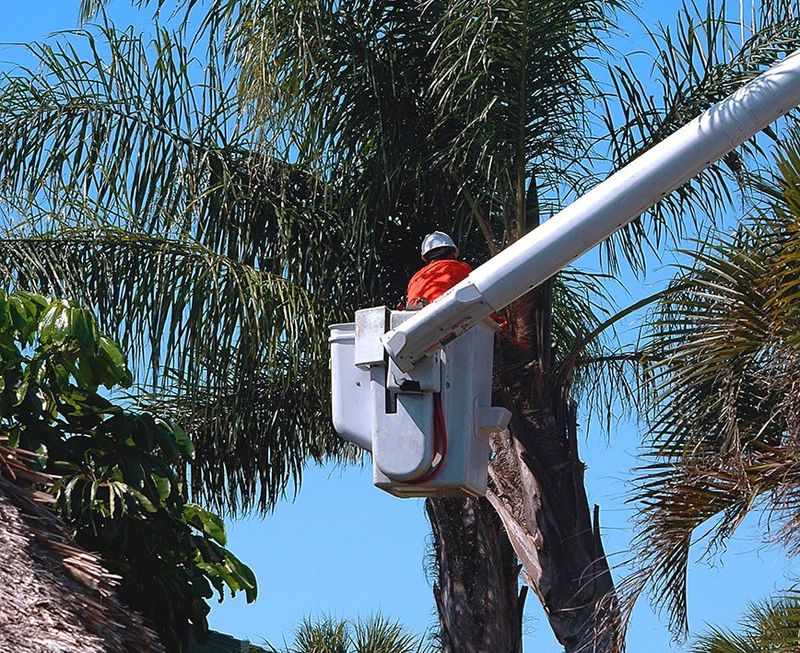
Safety boundaries matter even more than pruning decisions when it comes to protecting the person doing the work. Tall palms, palms growing near buildings, palms that are already damaged or leaning, and palms growing near utility lines all require qualified professional help.
These are not situations where a homeowner with a pole saw and good intentions can safely substitute for trained expertise.
The utility-line hazard carries a specific legal and safety threshold. OSHA’s line-clearance tree trimming requirements mandate that any tree trimming work occurring within 10 feet of energized power lines must be performed by trained, qualified line-clearance tree trimmers.
That standard applies before a storm and becomes even more critical after one, when downed or partially energized lines may not be visibly obvious.
Beyond the electrical hazard, pre-storm and post-storm conditions create compounding dangers: high or gusty winds, unstable crowns loaded with water and debris, chainsaws used at height, and heavy fronds that fall unpredictably. OSHA hurricane response guidance on tree trimming and warnings about working safely around downed electrical wires document why these tasks injure and kill workers even with proper training.
Homeowners without that training should stay clear.
After the storm, judge the bud—not the missing leaves
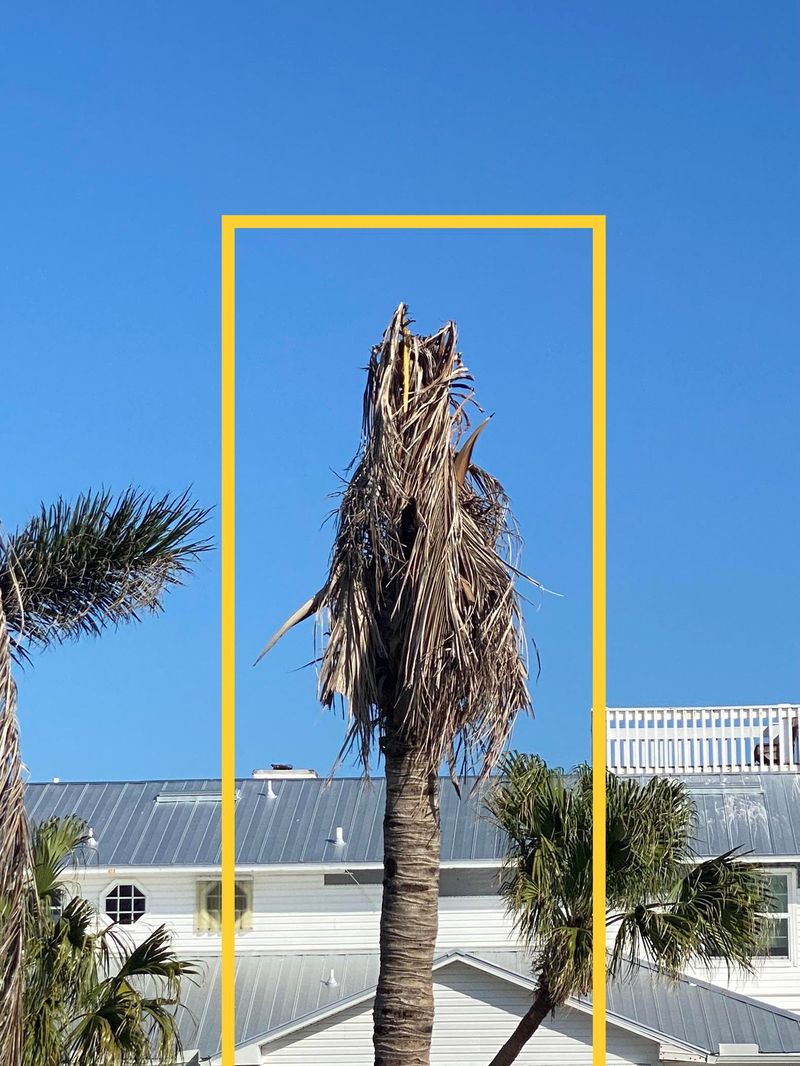
Post-storm palm care follows a different logic than pre-storm preparation. A palm that comes through a hurricane looking ragged, with fronds bent, tattered, or stripped away entirely, may still be very much alive.
The critical question is not how many leaves remain but whether the growing bud at the center of the crown survived intact.
UF/IFAS guidance on hurricane-damaged palms advises patience before making any decisions about a damaged tree. A palm may lose most or all of its leaves and still recover if the growing bud is undamaged.
After a storm, remove dead or hazardous material and any fronds that are smothering or pressing against the bud, but generally leave bent green fronds attached until new foliage emerges from the center. Cutting away green fronds that are still photosynthesizing, even bent ones, removes a resource the palm needs to fuel new growth.
Realistic timelines matter here. UF/IFAS post-hurricane tree guidance recommends waiting at least six months before concluding that a damaged palm is not recovering, and a full canopy can take a year or longer to return.
Pulling a palm that is quietly regenerating underground and inside the crown is a costly and irreversible mistake.
Saltwater flooding is a separate injury from wind damage and needs to be treated differently. Salt accumulation in the root zone can cause leaf-tip damage and long-term decline.
UF/IFAS notes that freshwater leaching may help when saltwater has receded and significant rainfall has not followed, but that recommendation comes with qualifications tied to local water restrictions and site conditions. Check current UF/IFAS guidance and local ordinances before running irrigation for this purpose.
Routine post-hurricane fungicide application is not a universally recommended treatment. UF/IFAS states that research has not documented a general benefit from applying fungicides to storm-damaged palms without a specific diagnosis.
A qualified plant health professional can assess whether a fungal problem is actually present before any chemical treatment is considered.
Use a simple storm decision rule
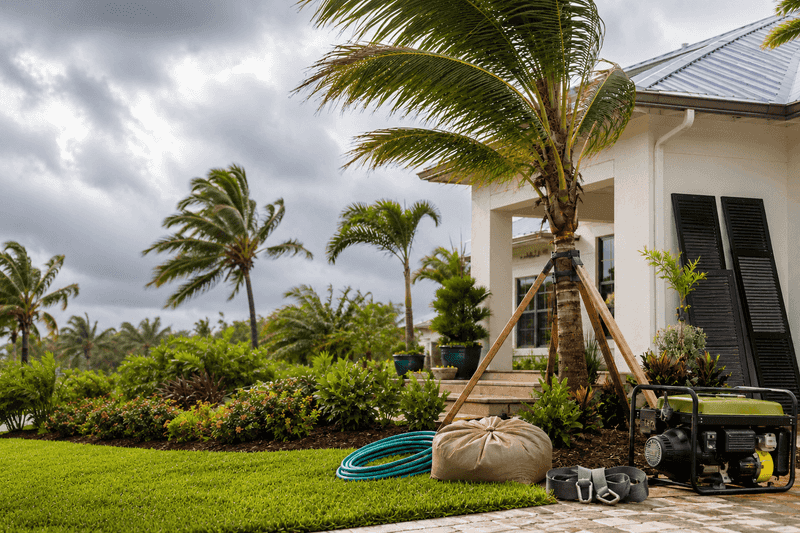
When the next storm threat appears on the forecast, run through this short checklist before reaching for any tool. Skip the severe haircut entirely: do not remove most healthy green fronds or leave a small tuft at the top.
Pull only material that is completely dead, visibly loose, already broken, or presents a clear falling hazard. Leave every green or partly green frond in place, because those leaves are still working for the palm.
Avoid routine tying or bracing of healthy standing palms. Disinfect pruning tools between each palm, especially if Phoenix species, queen palms, or Canary Island date palms are in your yard.
If any palm is tall, structurally damaged, close to a building, or growing near a power line, stop and hire a qualified professional. UF/IFAS pruning guidance and UF/IFAS wind-resistance research both reinforce that careful preparation improves a palm’s position without making it hurricane-proof, because species, health, site exposure, and storm intensity still shape what happens when the wind arrives.
Careful preparation puts a palm in the best position possible. UF/IFAS guidance on hurricane-damaged palms is a useful resource to revisit after every storm season as a reminder that the growing bud, not the leaf count, is what determines whether recovery is possible.
A palm that keeps its crown going into a storm has more to work with coming out of one.