
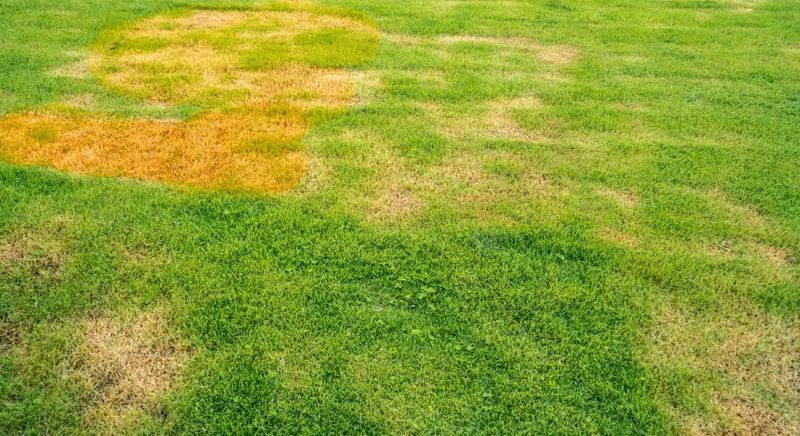
Walking out to find a spreading brown patch in your Florida lawn can send you straight for the sprinkler, but extra water is not always the right move. September is a tricky month because heat, pests, disease, and irrigation problems can all produce the same tan, lifeless-looking turf.
Knowing what to check first saves you time, money, and the risk of making a pest or disease problem worse by treating the wrong thing.
Start with the grass and the patch setting
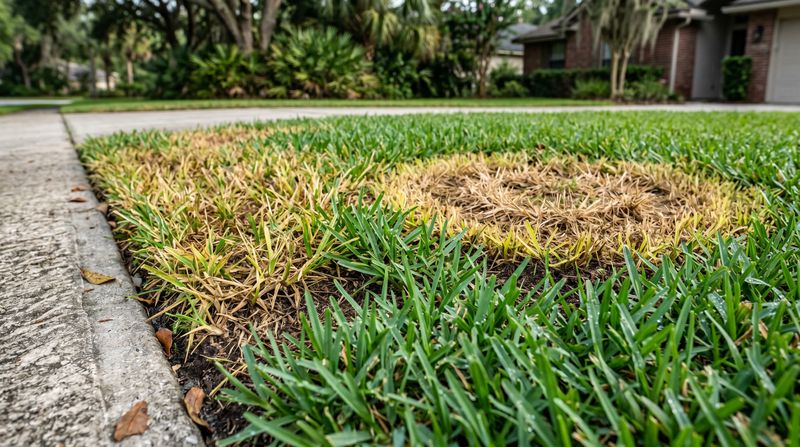
Turf type matters before any diagnosis begins. Southern chinch bugs are closely tied to St. Augustinegrass, Florida’s most widely planted home-lawn grass, and they tend to show up first in the hottest, sunniest corners of a yard, near driveways, sidewalks, or south-facing exposures that hold heat.
If your lawn is bermudagrass, bahiagrass, centipedegrass, or zoysiagrass, UF/IFAS guidance on St. Augustinegrass makes clear that chinch bugs are not the default suspect for those grasses, and you should look at pest and disease profiles specific to whatever turf you have.
Once you know the grass, look at where the patch sits. A brown area hugging a sidewalk or baking in full sun with otherwise healthy soil moisture is worth checking for chinch bugs.
A patch that follows the rough arc of a sprinkler zone, sits at the far edge of a head’s throw, or mirrors the outline of a shaded tree canopy points toward irrigation coverage or competition from roots. A wet, low-draining corner with thin turf suggests a disease environment rather than an insect problem.
Location is a clue, not a verdict. UF/IFAS Gardening Solutions on chinch bugs lists poor irrigation distribution, drought, disease, and mowing problems as possible look-alikes for chinch-bug injury, which means a sunny brown patch still needs inspection rather than an assumed cause.
No single pest or disease is established as the usual cause of all September brown patches statewide. Florida’s geography, weather, turf type, and site conditions vary enough that the same symptom can have a half-dozen different explanations depending on where you live and how your lawn is managed.
Use the setting to narrow the list, then go look.
UF/IFAS watering guidance for Florida lawns also notes that localized dry patches are frequently tied to irrigation failures rather than overall drought, which is a reminder that the patch’s shape and position can tell you which problem to investigate first before you change your watering schedule or reach for a product.
Scout the healthy-to-damaged border for chinch bugs
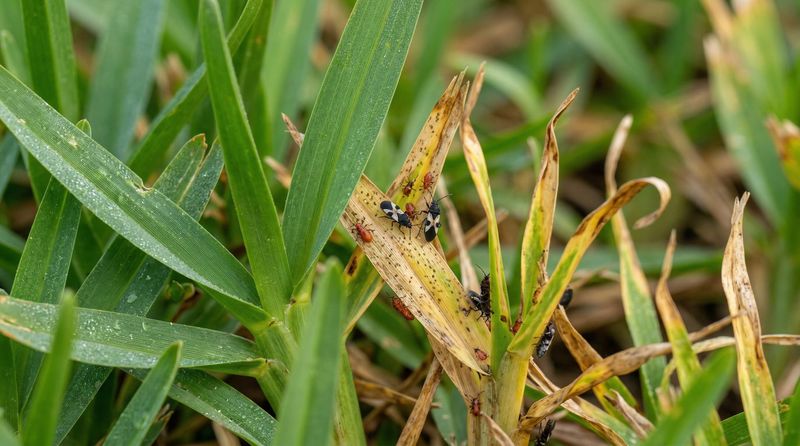
The strip of turf where green grass meets the dead or yellowing area is one of the more productive places to look when chinch bugs are a possibility. These insects tend to feed outward from the center of a damaged area, so the active population often concentrates near the leading edge.
Crouch down and part the grass at that border, pushing aside the thatch layer and looking close to the soil surface for tiny black-and-white adults roughly the size of a sesame seed, or for smaller orange-red nymphs that have not yet reached adulthood.
Good light helps. UF/IFAS guidance on chinch bugs describes the adults as having black bodies with white wings folded flat across the back, while the nymphs shift from orange-red to darker tones as they mature.
Both stages feed by piercing grass blades and injecting a toxin that causes the turf to yellow and then brown, which is why chinch-bug injury is so easy to confuse with drought stress at a glance.
A soap flush can help reveal insects you might otherwise miss. Mix about two tablespoons of liquid dish soap into a gallon of water and pour it over a square foot or two at the damaged-to-healthy border.
Wait a few minutes and watch for insects moving toward the surface. UF/IFAS Florida-Friendly Landscaping guidelines describe this approach as a scouting method for surface-feeding turf insects, and UF/IFAS materials on chinch-bug monitoring support using soapy water to help locate chinch bugs, armyworms, sod webworms, and other pests hiding in the thatch.
A soap flush is a monitoring tool, not a diagnosis by itself. Insects may be absent from a particular test spot even if they are present a few feet away, and finding a few insects does not automatically mean the threshold for treatment has been reached.
Confirm the pest visually, check multiple spots along the border, and follow product-label directions before applying anything.
Chewed blades point toward caterpillars
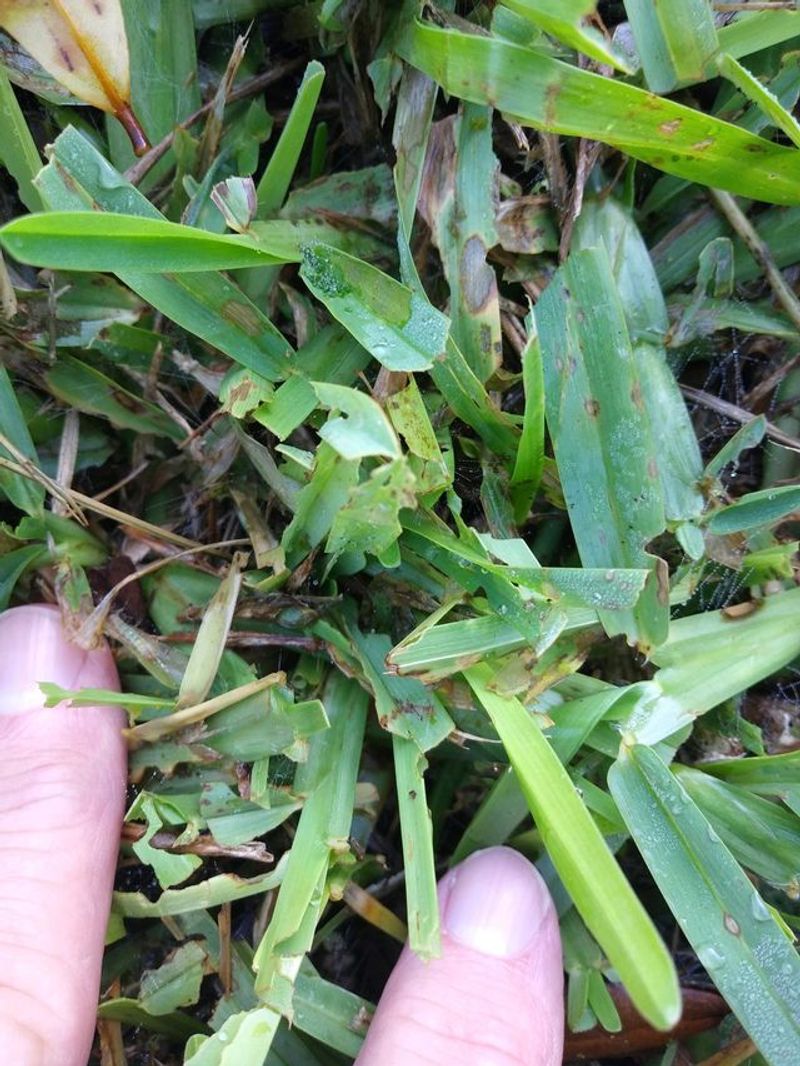
Caterpillar feeding leaves a very different pattern than chinch-bug injury, and knowing the difference can keep you from treating the wrong pest. Tropical sod webworms are a common late-summer and fall culprit in Florida lawns.
Their larvae feed at night and hide in the thatch during daylight hours, so you may not see the caterpillars themselves. What you will see are grass blades with ragged, notched, or “window-fed” edges where the green tissue has been eaten away but the blade skeleton remains.
Green pellet-shaped frass on the soil surface and silken shelters woven into the thatch are two more signs worth looking for.
UF/IFAS research on tropical sod webworms notes that a useful field test is to walk across the lawn and watch for small tan or gray moths flushing up from the grass. Those adult moths lay eggs that hatch into the feeding larvae, and their presence during daylight hours suggests active populations.
Damage can spread quickly when larval numbers are high, so early detection matters.
Fall armyworms are another possibility in late summer and fall. UF/IFAS fall armyworm information describes chewed or ragged blades, thinning turf, and rapid expansion of damaged areas as characteristic signs.
UF/IFAS September lawn pest guidance supports checking for caterpillars during this period, particularly when turf thins quickly over a short stretch of days.
Finding a caterpillar does not automatically mean you need to spray. Check whether the damage is actively expanding, confirm the pest identity, and consider whether natural predators or rainfall might reduce the population before reaching for an insecticide.
Apply any product according to label directions, and avoid broad-spectrum sprays when a targeted option is available.
Roots and leaf bases reveal different diseases
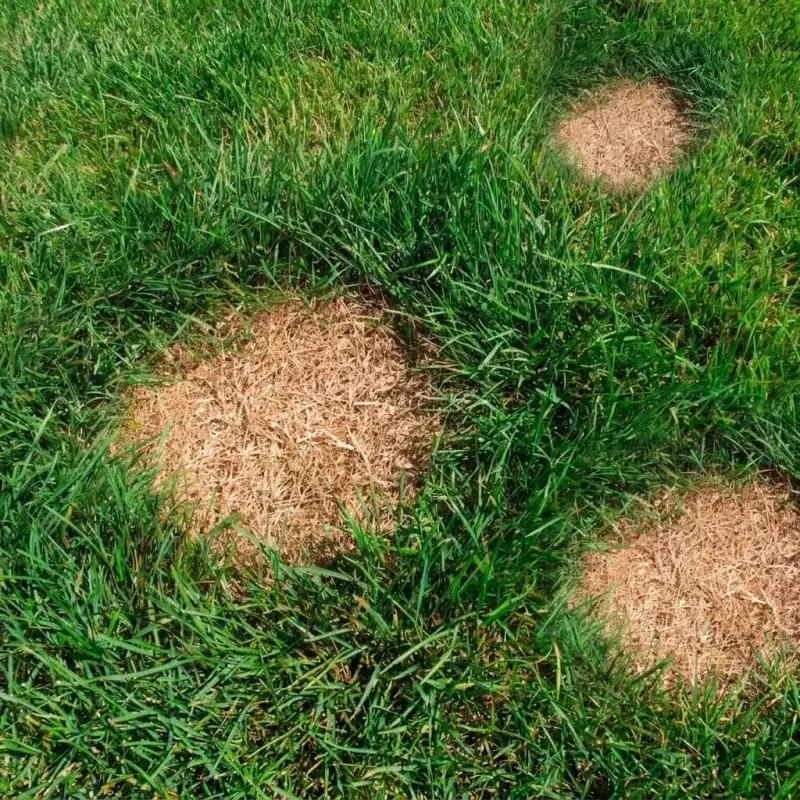
Two diseases that can affect Florida lawns in late summer and fall look similar from a distance but work differently underground and require different management. Confusing them costs time and money, so the distinction is worth understanding before you buy anything.
Take-all root rot is favored by the prolonged rainfall and turf stress that Florida’s rainy season brings, and UF/IFAS research on take-all root rot identifies late summer and early fall as a relevant window for this disease. The key diagnostic step is to pull up a sample of affected turf and look at the roots.
Roots affected by take-all root rot tend to be short, dark, and rotted rather than white and firm. Aboveground, the lawn may show irregular yellow or thinning areas that do not respond to irrigation, because damaged roots cannot deliver water even when the soil is moist.
Large patch, sometimes called brown patch, has a different biology entirely. UF/IFAS guidance on large patch describes it as primarily a cooler-weather disease, generally most visible from November through May, though fall can be a prevention window for lawns with a history of the problem.
Large patch produces expanding circular or irregular areas with yellow, orange, or dark borders. The diagnostic clue is at the base of the blade: affected grass may have soft, dark, rotted tissue where the leaf meets the stem, and blades may pull away from the stem with very little resistance.
Large patch does not attack roots the way take-all root rot does.
UF/IFAS Gardening Solutions on large patch notes that treating one disease as the other wastes effort and may not protect the lawn at all. If you cannot identify the disease visually, contact your county extension office rather than applying a fungicide based on color alone.
Test whether drought or irrigation failure fits
Brown color by itself does not confirm drought. A few specific signs make the drought explanation more credible: grass blades that fold lengthwise rather than lying flat, a blue-gray cast to the turf instead of its normal green, and footprints or mower tracks that stay visible for several minutes after you walk across the lawn.
UF/IFAS homeowner best management practices describe these wilt indicators as the reliable triggers for irrigation, not brown color alone. A patch that looks dead but shows none of those wilt signs deserves a closer look at the irrigation system before you adjust the schedule.
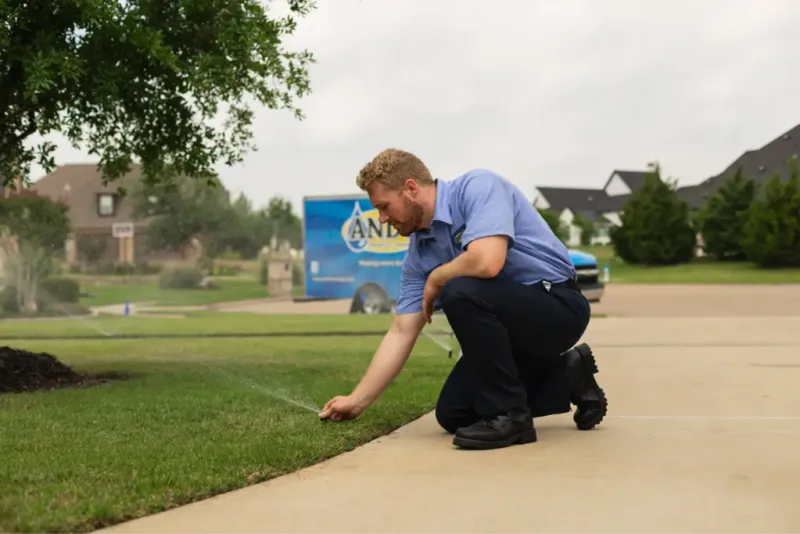
Sprinkler coverage problems are a common source of localized dry patches that have nothing to do with the overall watering schedule. Place straight-sided cans, empty tuna or cat-food cans work well, around each sprinkler zone while it runs and measure the depth of water collected across the zone.
Uneven collection points to a broken head, a clogged nozzle, a misaligned rotor, or a head blocked by overgrown vegetation. UF/IFAS watering guidance recommends this kind of catch-can audit to identify coverage gaps that create dry patches even when the timer runs regularly.
Florida’s sandy soils have low water-holding capacity and can dry out faster than lawns in heavier soils, but frequent shallow watering creates its own problems. UF/IFAS turfgrass irrigation research advises watering established turf less frequently and more deeply, applying roughly half to three-quarters of an inch per irrigation event and waiting until a meaningful portion of the lawn shows wilt signs before running the system again.
Daily watering encourages shallow root systems that make the lawn more vulnerable to future stress, not less.
UF/IFAS frequently asked questions on landscape irrigation also reminds homeowners that local water restrictions govern how often you can legally irrigate, regardless of what the lawn looks like. Verify your local rules before increasing your schedule, and remember that genuine drought stress in an otherwise healthy lawn can recover with appropriate irrigation once you have confirmed that is actually the problem.
Investigate roots when turf stays thin
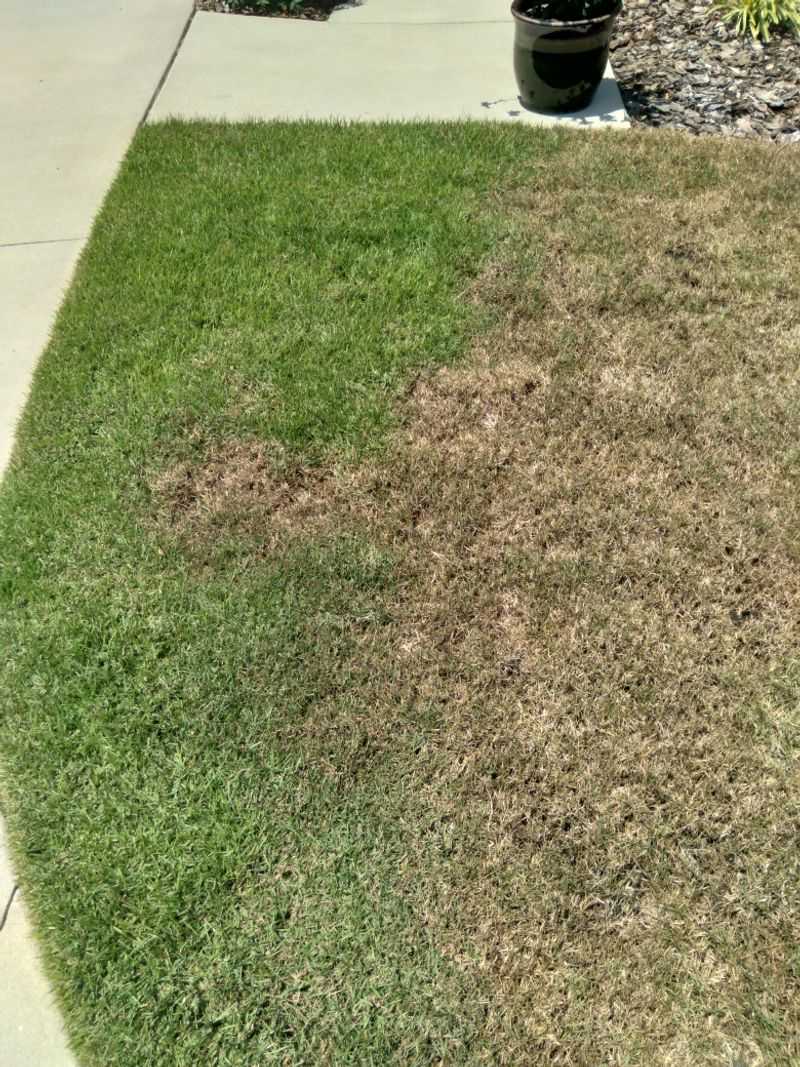
Some lawns stay thin and weak despite receiving what seems like adequate irrigation and no obvious sign of insects or disease at the surface. When that pattern persists after rain or irrigation without any recovery, the root zone deserves a closer look.
Pull a small plug of turf and examine the roots. Healthy roots should be white or cream-colored and firm.
Roots that are short, sparse, brown, or nearly absent despite moist soil point toward a deeper problem.
Nematodes are one possibility in Florida’s sandy soils. These microscopic roundworms feed on grass roots and can cause poor establishment, thin turf, and weak recovery after stress.
UF/IFAS nematode management guidance is clear that visual symptoms alone cannot confirm nematodes. A soil and root sample sent to a diagnostic laboratory is the only reliable way to identify nematode species and population levels.
UF/IFAS St. Augustinegrass management information also lists nematodes among the stresses that can thin this grass in Florida’s sandy conditions.
If the root zone appears abnormal or the lawn fails to respond to corrected irrigation and pest management, contact your county UF/IFAS Extension office for diagnostic help. They can direct you toward laboratory testing and help interpret results before you spend money on treatments that may not address the actual cause.
Routine fungicide use is not appropriate when the cause is unclear. UF/IFAS homeowner fungicide guidance explains that different diseases require different fungicides, some products work best preventively rather than after symptoms appear, and applying the wrong product wastes money and can miss the actual problem.
UF/IFAS turfgrass disease management resources reinforce that disease symptoms are difficult to identify by appearance alone, making professional diagnosis worth the effort when the cause is not clear.
Use the evidence before you water or treat
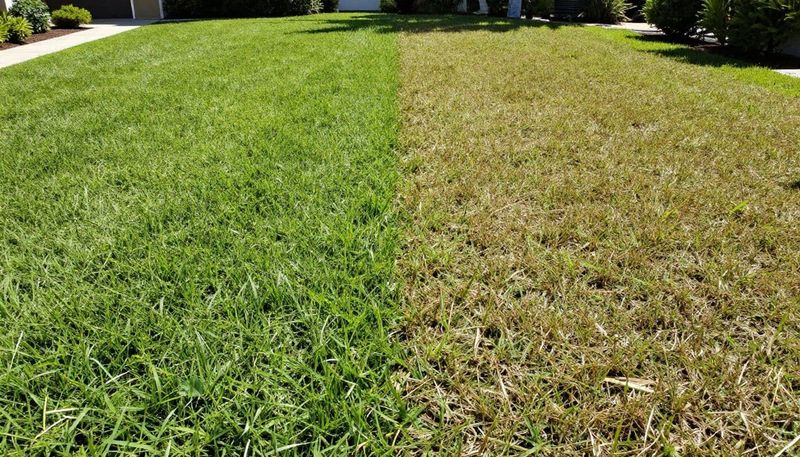
A practical sequence keeps you from spending money on the wrong fix. Start by identifying your grass type, then observe where the patch sits and what the surrounding conditions look like.
Sunny location in St. Augustinegrass with adequate soil moisture? Check the healthy-to-damaged border for chinch bugs using the visual inspection and soap-flush methods described above.
Ragged or notched blades with frass present? Look for caterpillars before assuming anything else.
Soft, dark leaf bases or short black roots? Consider disease and get a proper diagnosis before buying a fungicide.
Verify soil moisture and sprinkler coverage before increasing your irrigation schedule. If wilt signs are present and coverage checks out, appropriate irrigation can help genuine drought stress.
UF/IFAS lawn drought management guidance notes that warm-season grasses can enter dormancy and recover after sufficient moisture returns, though severe or prolonged damage may cause permanent loss. That means a brown lawn is not automatically a dead one, but it also is not a reason to delay investigation.
Avoid daily rescue watering, broad-spectrum pesticide applications, and fungicide use based on brown color alone. UF/IFAS fungicide guidance and Florida-Friendly Landscaping principles both support targeted treatment after a confirmed cause, following product-label directions, and respecting local water restrictions.
UF/IFAS irrigation research reinforces that deep, infrequent watering serves established turf better than daily shallow runs. The narrowest response that fits the actual evidence is almost always the right one.