
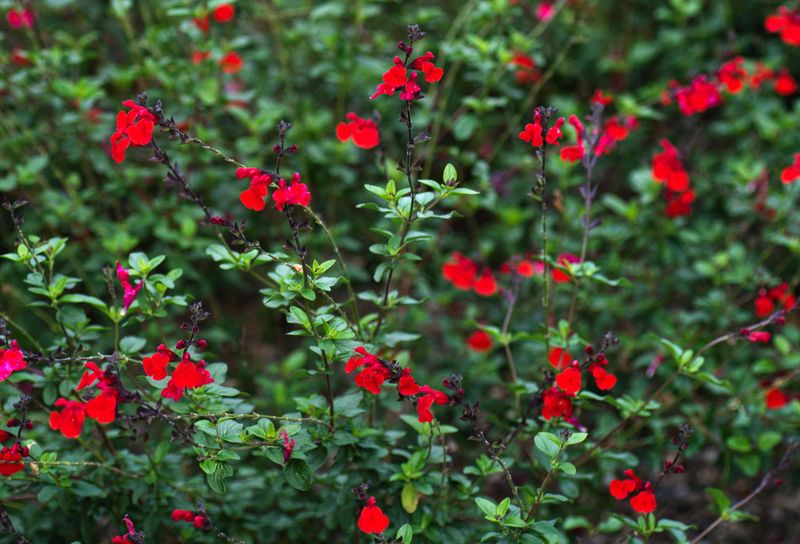
When a Central Texas flower bed starts looking tired by midsummer, the problem is often the plant, not the gardener. Salvia greggii, commonly called autumn sage, is a Texas-native perennial shrub that can carry color from spring through fall in a sunny, well-drained border with less routine watering than many bedding plants need once it settles in.
Matching this plant to the right site makes a real difference, and understanding what it can and cannot do on its own helps set expectations that hold up through a hot Texas summer.
Autumn sage offers a Texas-native option for the Central Texas border
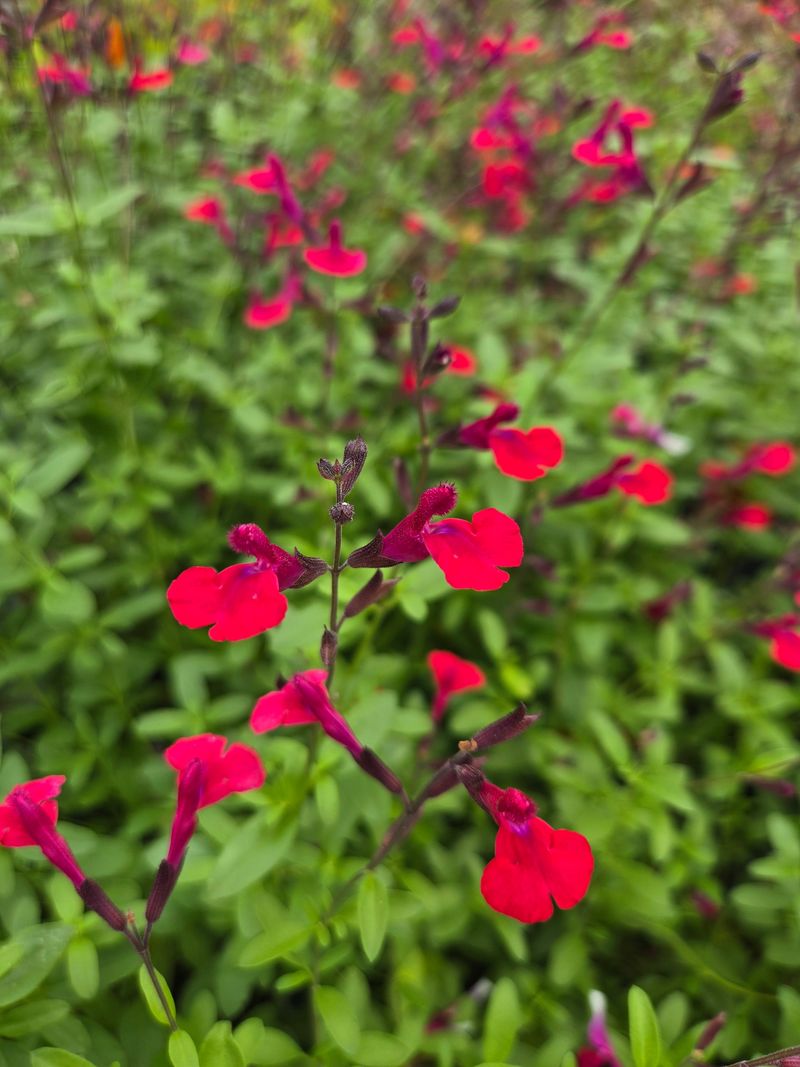
Gardeners searching for a smaller flowering plant that fits a Central Texas bed without demanding constant attention have a solid native option worth knowing well. North Carolina Extension’s plant profile identifies Salvia greggii as a semi-woody subshrub native to Texas and adjacent Mexico, with its U.S. range concentrated in south-central and west Texas.
That native origin matters because the plant evolved in conditions that mirror what Central Texas gardeners deal with every summer: rocky soil, intense sun, and stretches of dry heat.
Common names for this plant can create real confusion at the nursery. “Texas sage” appears on tags for Salvia greggii, but the same name is widely used for Leucophyllum species, a completely different group of shrubs sometimes called Texas ranger or Texas barometer bush. Using the scientific name Salvia greggii is the clearest way to make sure you are buying the right plant. “Red Chihuahuan sage” shows up occasionally as well, but again, that name does not appear consistently across nurseries or regions.
What makes Salvia greggii a strong Central Texas border candidate is its combination of traits: a manageable mature size, a long bloom window under suitable conditions, real drought tolerance once established, and tubular flowers that can attract hummingbirds. Texas A&M AgriLife’s native and adapted plant presentation lists it among low-water plants suited for hummingbird gardens in the region.
That combination is harder to find than it sounds, and it makes autumn sage worth a closer look before the next planting season.
Its moderate size brings color without taking over the border
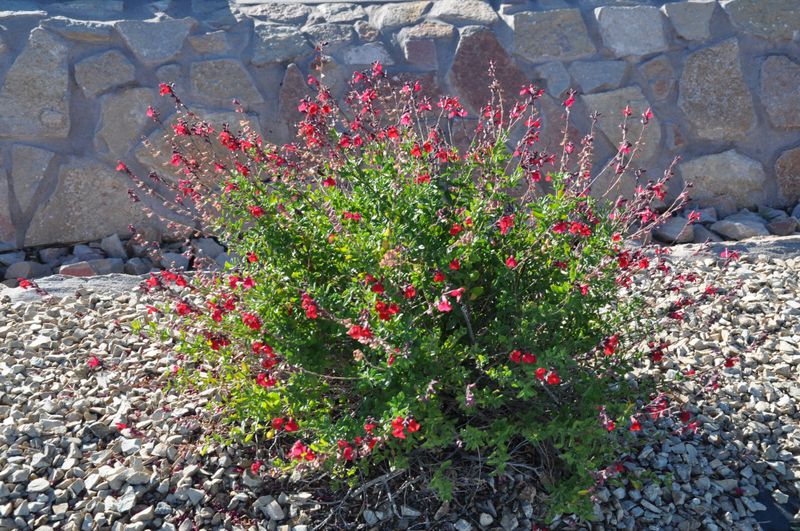
One practical advantage of Salvia greggii is that it fits comfortably into a standard residential border without requiring major editing a few seasons later. The NC Extension plant profile puts the typical mature size at roughly 2 to 3 feet tall and 2 to 3 feet wide.
That range makes it large enough to carry visual weight in a planting but small enough to pair with perennials, ornamental grasses, or low shrubs without crowding them out.
The form is worth understanding before you place it. Autumn sage does not always grow as a tight mound.
Depending on cultivar, growing conditions, and how much it has been pruned, the plant may develop an arching or somewhat spreading habit. Spacing based on the cultivar label rather than a fixed number is a better approach, since named selections can vary noticeably in their growth pattern and ultimate spread.
Flower color is another area where cultivar selection pays off. The species is most associated with red, but the University of Arizona Extension’s autumn sage profile notes that cultivated forms also come in pink, white, salmon, fuchsia, burgundy, orange, and bicolored combinations.
A plant in bloom at the nursery is the most reliable guide to the actual flower color you will get at home. Autumn sage works well along borders, in mass plantings, in rock gardens, on slopes and banks, and in dedicated pollinator beds, giving gardeners several ways to work it into a Central Texas landscape without it feeling like a single-purpose plant.
The planting site matters more than the drought-tolerant label
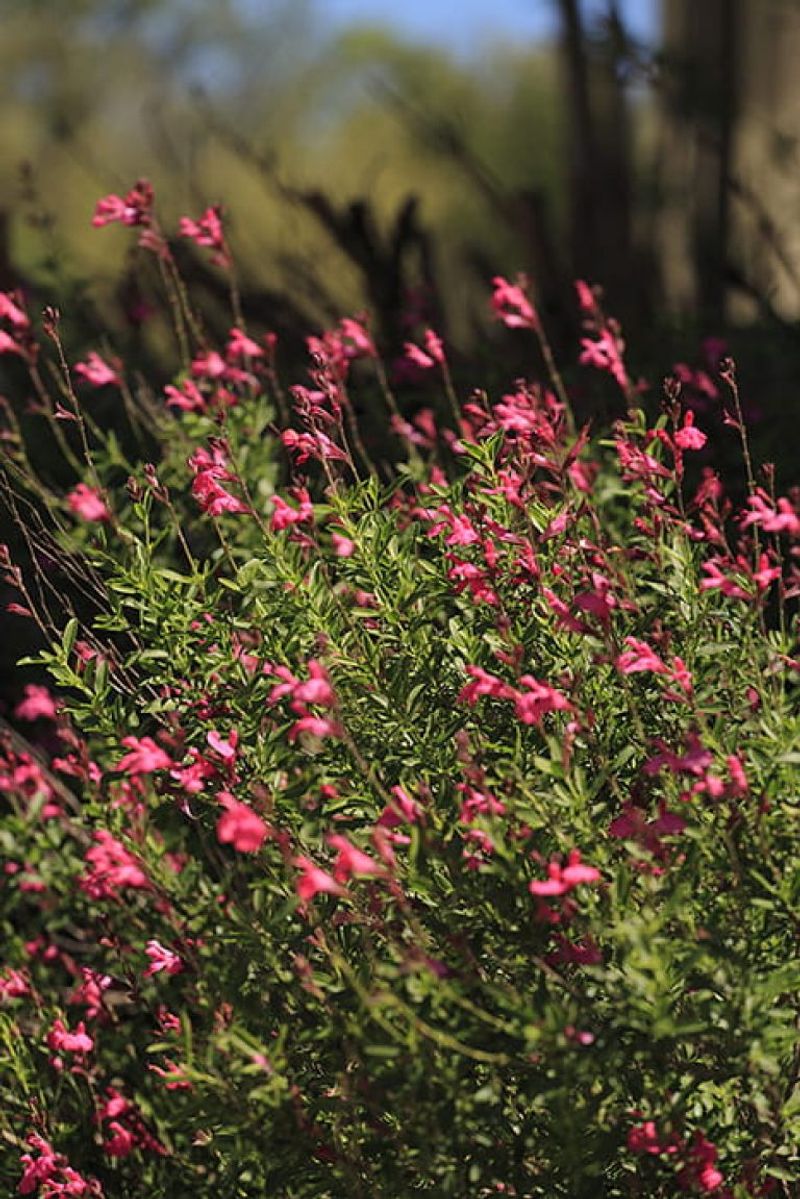
Drought tolerance is a real trait in Salvia greggii, but it does not override the plant’s need for a good site. Before buying, run a simple check on the spot you have in mind.
Full sun is the baseline requirement, and most Central Texas beds that face south or west can deliver that. NC Extension notes that some afternoon shade can be acceptable in areas with particularly intense summer heat, so a spot with morning sun and light afternoon relief is workable, though full sun generally produces the strongest flowering.
Drainage is the factor that separates a site where autumn sage thrives from one where it slowly declines. The plant is adapted to rocky, lean soil and handles those conditions well.
What it cannot handle is a bed that stays saturated after rain or irrigation. Persistently wet roots invite root rot and undermine the very drought tolerance that makes the plant appealing in the first place.
If water pools in a bed for more than a few hours after a good rain, autumn sage is not the right choice for that spot without significant drainage improvement first.
Even in a well-chosen site, extreme heat and drought can still reduce flowering, cause wilting, or lead to dieback. University of Arizona Extension guidance on drought and extreme heat makes clear that landscape plants under sustained heat and water stress can show reduced growth and damage regardless of their drought-tolerant reputation.
Suitable light and drainage improve the odds of healthy growth and long seasonal color, but they do not guarantee a compact, floriferous plant through every prolonged heat wave without any supplemental water.
Establishment watering turns a tough plant into a reliable one
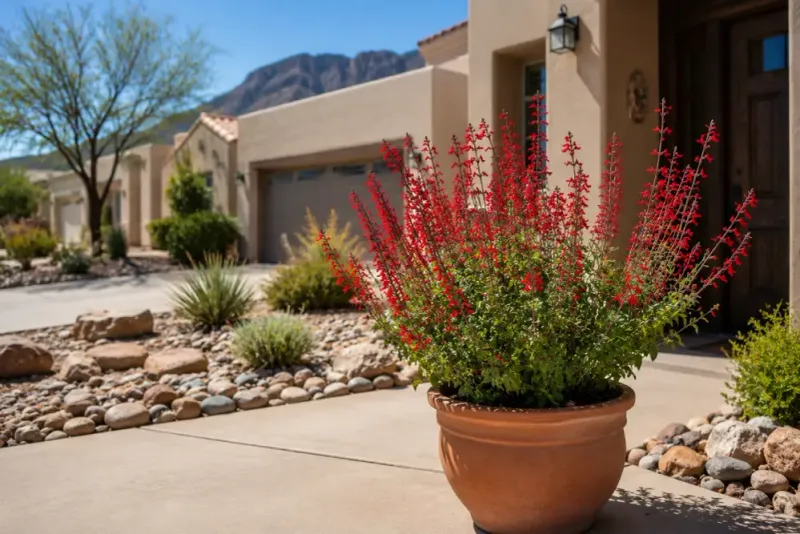
Drought tolerance is something autumn sage earns over time, not something it arrives with. A newly planted Salvia greggii needs regular watering to develop the root system that will later let it handle dry stretches.
Skipping that establishment phase is one of the most common reasons a drought-tolerant plant fails in its first Texas summer.
Texas A&M AgriLife’s watering guide advises watering thoroughly and infrequently rather than applying small amounts too often. Deep, less frequent watering encourages roots to grow downward in search of moisture, which builds the drought resilience the plant is known for.
Shallow, frequent watering keeps roots near the surface, where they are more vulnerable when the soil dries out quickly in July heat. As the plant settles in over the first growing season, you can gradually extend the interval between waterings and reduce the volume, transitioning toward a lower-maintenance routine.
Once established, autumn sage does not need constant irrigation, but that does not mean it can go without water through a prolonged drought. During extended heat or dry spells, occasional deep watering helps maintain flowering and prevents the wilting or browning that stress brings on.
Think of it as a plant with lower routine water needs, not zero water needs.
Adding a roughly 3-inch layer of plant-derived mulch around the base helps stretch each watering further. Texas A&M’s Earth-Kind landscaping guidance identifies mulch as a way to reduce water loss, moderate soil temperatures, and suppress weeds.
Keep the mulch pulled back a few inches from the stems so moisture does not collect against the crown, which can cause rot at the base of the plant.
Tubular flowers extend the border’s value beyond color
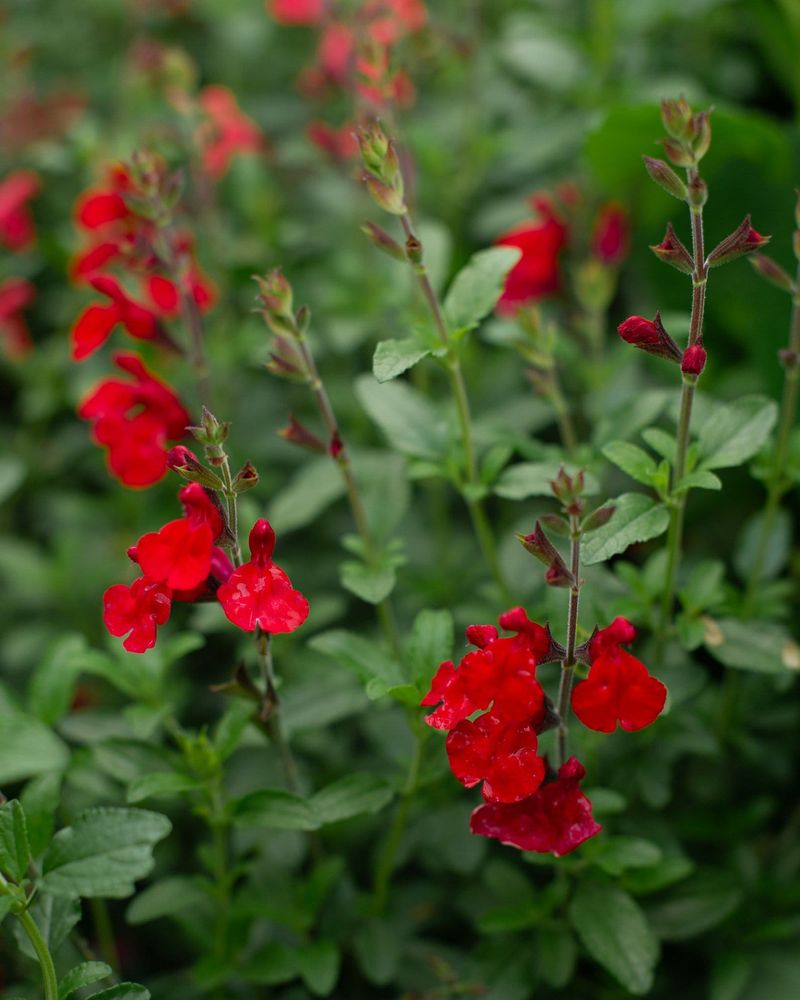
Color is the most visible reason to plant Salvia greggii, but the flowering period carries additional value for the broader yard. Texas A&M AgriLife’s Central Texas bee-friendly plant list identifies autumn sage as a spring-to-fall bloomer, which means the plant can provide nectar across a substantial portion of the growing season when it is properly sited and receives supplemental water during prolonged dry spells.
The tubular flower shape is particularly useful for hummingbirds. Texas A&M’s Texas Wildscapes resource describes native plantings as one component of wildlife habitat that also needs to include food, water, shelter, and space.
A single autumn sage plant offers one nectar source, not a complete habitat. Hummingbirds using a yard still need water, insects for protein, nesting cover, and a sequence of blooming plants that carries them through migration and the breeding season.
Beyond hummingbirds, the plant draws butterflies and other pollinators as well. Texas A&M’s native and adapted plant presentation notes that hummingbirds are especially drawn to red tubular flowers, though they visit flowers of many colors.
Red-flowered cultivars of Salvia greggii may see more hummingbird activity, but flower color alone does not guarantee visits. After flowering finishes, seeds can be eaten by seed-feeding birds, adding a secondary wildlife benefit that extends past the bloom season.
Planting autumn sage alongside other native nectar plants strengthens the overall value for pollinators without requiring a complete landscape overhaul.
Prune for a tidy plant, not for a forced year-round shape
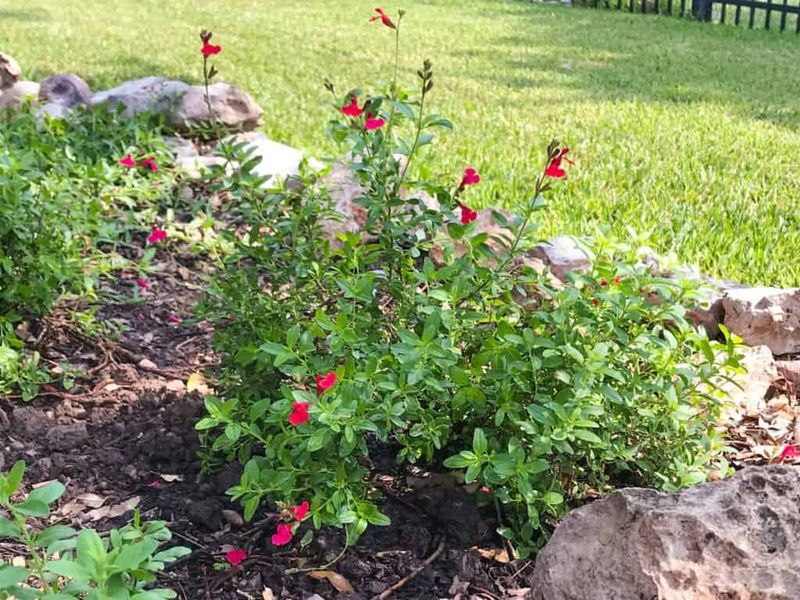
Pruning autumn sage well comes down to reading the plant rather than following a fixed calendar. University of Arizona Extension’s guide on pruning flowering shrubs recommends removing spent flower stems as they finish, cutting back old growth in winter or early spring before new growth pushes out, and giving vigorous plants a further reduction after summer flowering if the form has gotten loose or leggy.
Those recommendations come from Arizona’s hot, dry conditions, which share some overlap with Central Texas summers but differ in freeze patterns, humidity, and timing.
Treat the Arizona calendar as a starting point rather than a fixed rule. In Central Texas, late winter or very early spring is generally a reasonable window for a harder cutback, after the risk of severe freezes has passed but before strong new growth begins.
A separate Arizona Extension autumn sage profile suggests cutting plants back to about 4 inches in late winter and reducing by roughly half in August to maintain a tidy form, but adjust that August timing based on your plant’s actual condition and whether a drought or heat wave is underway.
Heavy pruning during peak heat or drought is a practice to avoid. Arizona Extension’s drought and heat management guidance warns that removing too much foliage during stress periods can expose shaded tissue to sunscald and reduce the plant’s ability to photosynthesize when it needs that capacity most.
One more expectation worth resetting: autumn sage is semi-evergreen, not fully evergreen. NC Extension confirms that hard freezes, drought, pruning, and site stress can all reduce foliage or cause dieback.
After a rough Central Texas winter, some stems may die back entirely. Cut those back to living wood in early spring and let the plant push new growth before deciding whether it needs replacement.
Choose autumn sage when the bed drains well and expectations stay realistic
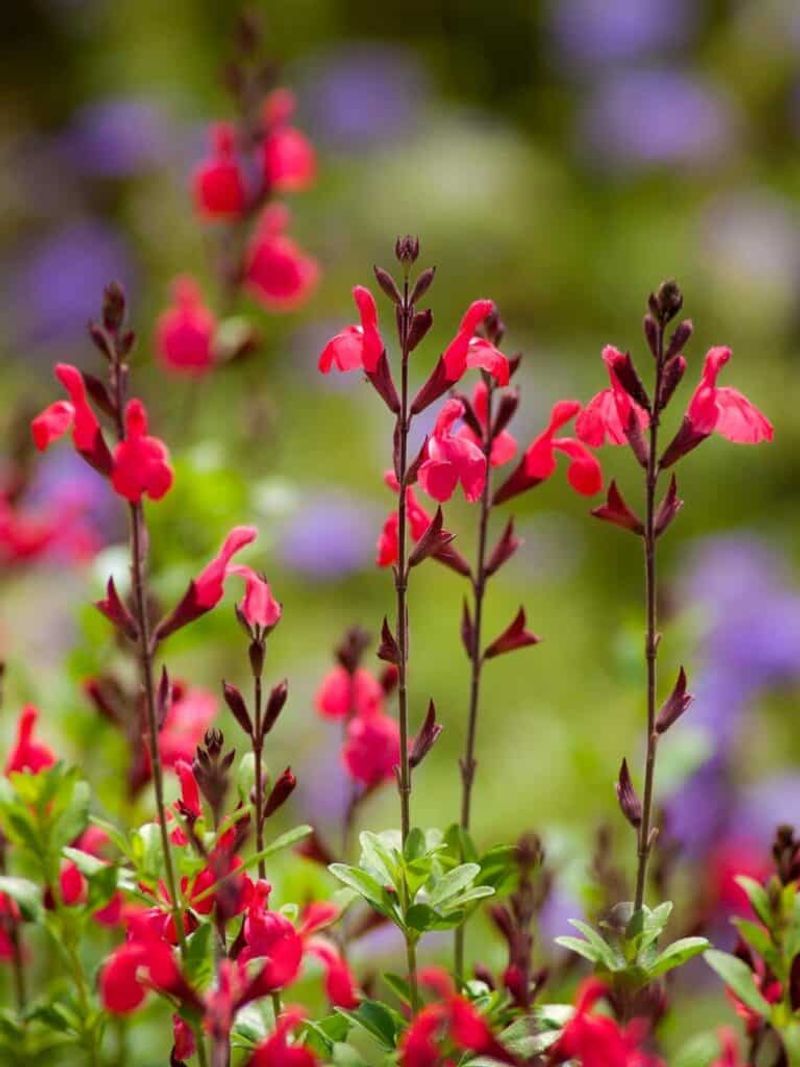
Salvia greggii earns its place in a Central Texas border when the conditions match what it actually needs: full sun, good drainage, and a watering plan that covers establishment and steps in during prolonged heat or drought. NC Extension and Texas A&M AgriLife both support it as a lower-water flowering option with real wildlife value for the region.
Under suitable conditions, a well-established plant can carry seasonal color from spring through fall with less routine irrigation than many bedding plants require.
A few limits are worth keeping in mind before committing to a planting. Cultivars vary in size, flower color, and habit, so read the label and buy from a nursery that can tell you what you are actually getting.
Supplemental watering during extended dry periods is still necessary, even for established plants. Freeze dieback can happen in a hard Central Texas winter, and the plant may need time to recover in spring.
Deer browsing is possible; Texas A&M’s deer-resistant plant guidance includes autumn sage among plants that tend to receive less browsing pressure, but no plant is deer-proof in every yard. Hummingbird visits depend on the broader landscape, not on one plant alone.
Match autumn sage to a site that suits it, and it rewards that care with months of color and reliable pollinator traffic. Ask it to perform through every extreme without support, and it will eventually show the strain.