
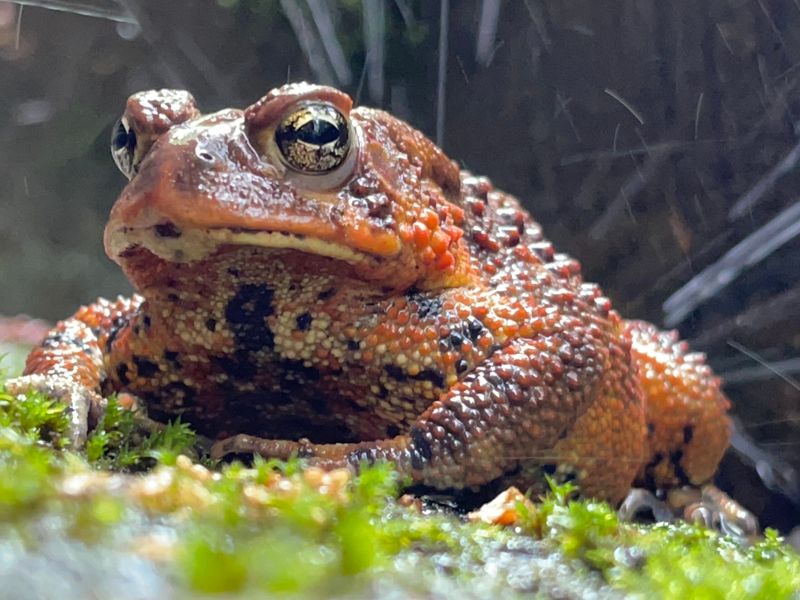
Spotting a toad tucked under a garden pot or hopping across the patio at dusk is one of those small yard moments that feels like good news. For Texas gardeners who deal with grasshopper damage every summer, it is tempting to connect those two things and assume the toads are keeping the insects in check.
The relationship is real but more complicated than it first appears, and understanding it can actually make you a better observer of your own yard. Getting the details right helps you protect your plants without giving up the native wildlife that belongs there.
More native toads are a hopeful sign, not proof of fewer grasshoppers
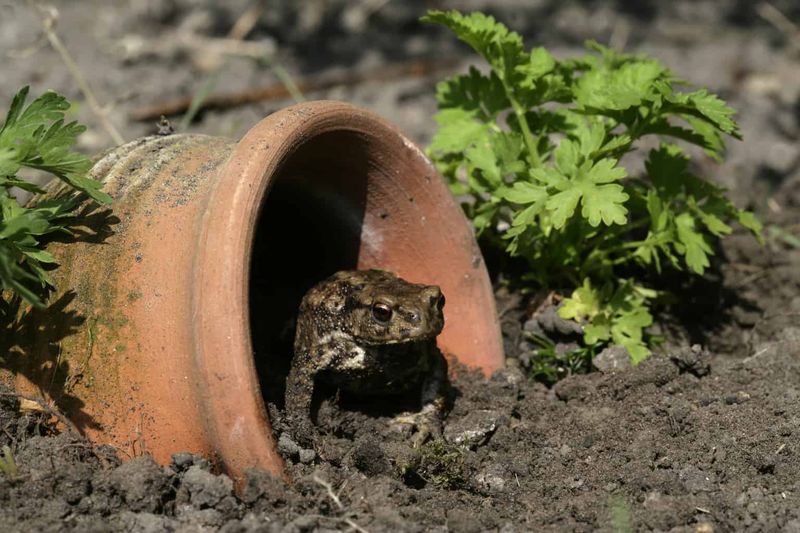
Finding more toads in your yard during summer is genuinely encouraging. Native toads do eat grasshoppers, and extension entomology guidance identifies toads among the predators that feed on grasshopper eggs, nymphs, and adults throughout the warm season.
That feeding relationship is real, and a yard that supports toads is doing something right.
What that sighting cannot tell you is whether your grasshopper numbers are actually going down. No reliable evidence shows that a rise in toad activity in a residential Texas yard consistently produces fewer grasshoppers.
Toads are generalist predators, meaning they eat whatever moves within reach and fits in their mouths, not just the insects you most want gone.
A 2026 field study of American toads in a vegetable agroecosystem found no detectable change in pest abundance or crop productivity, even when toads were present. That study was conducted in Pennsylvania, not Texas, and it was a preliminary experiment, so it does not settle every question about toad predation.
But those results are a clear signal that “more toads equals fewer pests” is too broad a claim to stand on its own.
A more honest and still useful way to read the situation: more correctly identified native toads can indicate that your yard offers moisture, shelter, and enough insect prey to sustain them. That is a sign of a functioning habitat, and toads may contribute some natural pressure on grasshoppers as part of that system.
Treat them as one welcome member of a larger cast of beneficial wildlife, not as a guaranteed pest-control solution.
Toads eat grasshoppers, but they do not target them exclusively
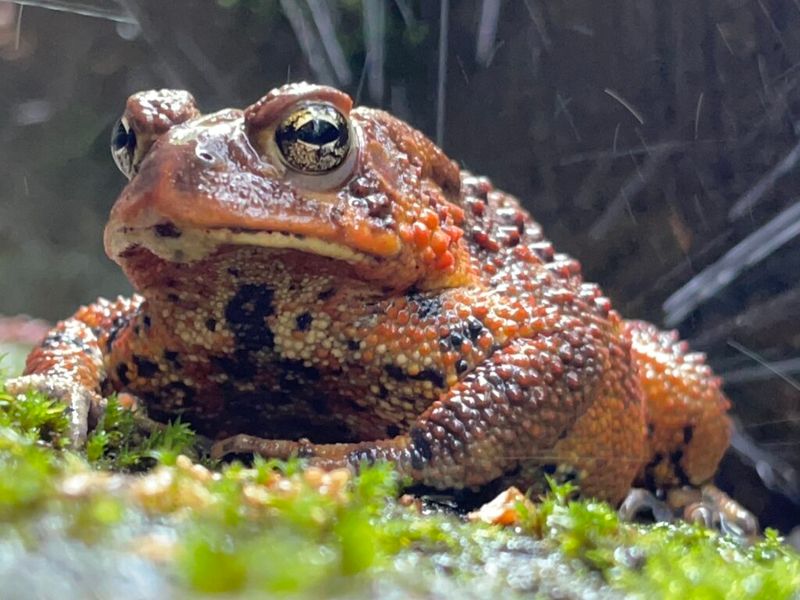
Toads are opportunistic hunters, and grasshoppers are absolutely on the menu. During summer, when grasshopper nymphs are active at ground level and adults move through garden beds, a foraging toad will take them when the opportunity arises.
Kentucky Extension entomology research lists toads as predators of grasshoppers at every life stage, from eggs to adults, particularly during the warmest months.
Prey size, movement, and availability drive what a toad actually eats on any given night, though. A grasshopper that is resting on a stem above a toad’s strike zone, or one that has already moved to the canopy of a tall plant, is simply out of reach.
Ground-level prey that is small enough to swallow and active enough to trigger a strike response gets eaten first.
That is why the generalist-predator label matters here. The 2026 American-toad agroecosystem study found that more than 80 percent of recorded prey consisted of rove beetles, ants, ground beetles, and spiders, not grasshoppers.
Several of those prey items, including ground beetles, are themselves predators of pest insects and pest eggs. So a toad feeding heavily on ground beetles could, in theory, reduce one form of natural pest pressure while adding another.
None of that makes toads bad neighbors. A yard with active toads is a yard with a functioning food web, and some grasshopper predation will happen as a side effect of normal toad foraging.
The practical takeaway is to welcome that contribution without treating it as a pesticide substitute. Toads do some pest work, but the mix of what they eat on any given night depends far more on what is moving near their feet than on what you most want them to control.
Texas conditions can outweigh the help from backyard toads
Texas is home to roughly 150 grasshopper species, but Texas A&M AgriLife Extension identifies five as responsible for most agricultural damage: the differential, red-legged, migratory, two-striped, and Packard grasshoppers. Each of these can build up to damaging numbers under the right conditions, and the right conditions in Texas show up with some regularity.
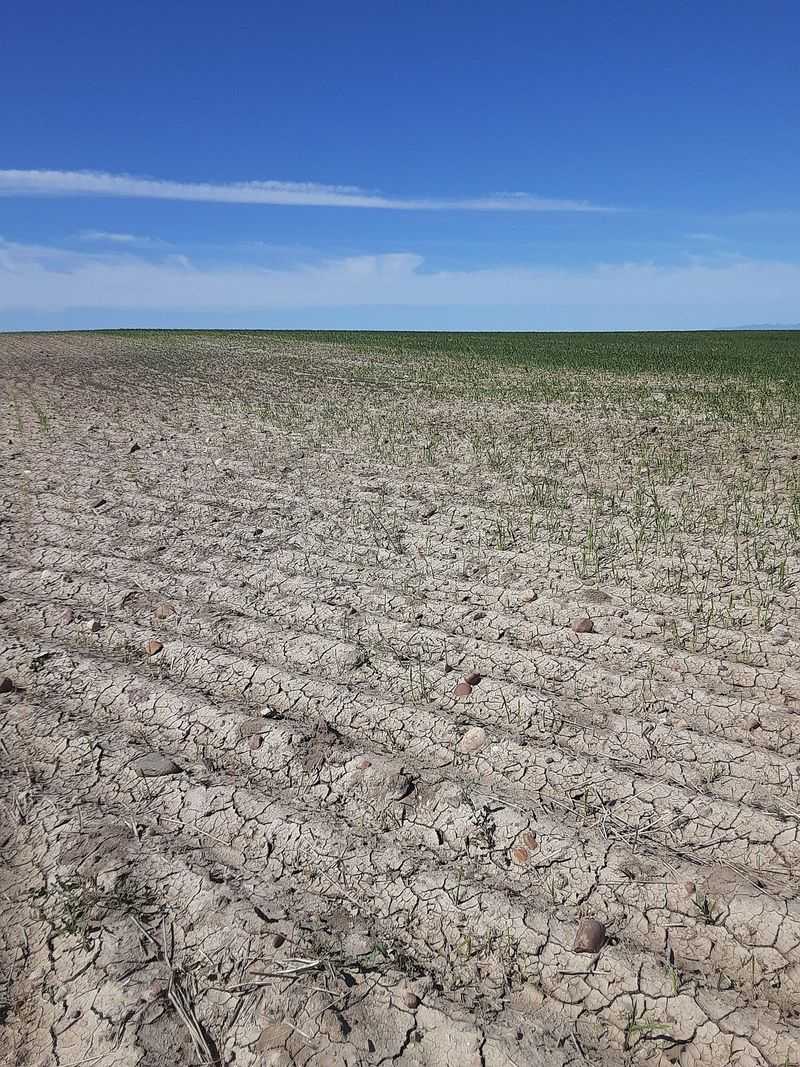
Hot, dry summers favor grasshopper outbreaks. Warm, low-humidity weather speeds up egg hatching and nymph development, allowing populations to climb fast.
Cool, wet conditions work the opposite way, slowing grasshopper development and encouraging the spread of Entomophaga grylli, a naturally occurring fungal disease that can knock down grasshopper populations before they peak. When Texas delivers its typical summer heat, the biological brakes come off.
Yards near farmland, rangeland, or large weedy areas face an additional challenge that no number of resident toads can offset. Texas A&M’s urban entomology guidance notes that homeowners have limited control over surrounding landscapes, and winged adult grasshoppers can move into a yard from breeding grounds well beyond the property line.
A few toads foraging in your beds at night simply cannot consume an incoming wave of adults that flew in from a neighboring field.
Weather and habitat can also cause toad sightings and grasshopper activity to rise at the same time. A stretch of warm nights following a brief rain can bring toads out to hunt and allow grasshopper nymphs to hatch and begin feeding simultaneously.
Seeing both in your yard on the same week does not mean one is controlling the other; it may just mean conditions suit both. Tracking what is actually happening to your plants gives you far better information than counting either toads or grasshoppers from a distance.
Judge the problem by plant damage, not by toad counts
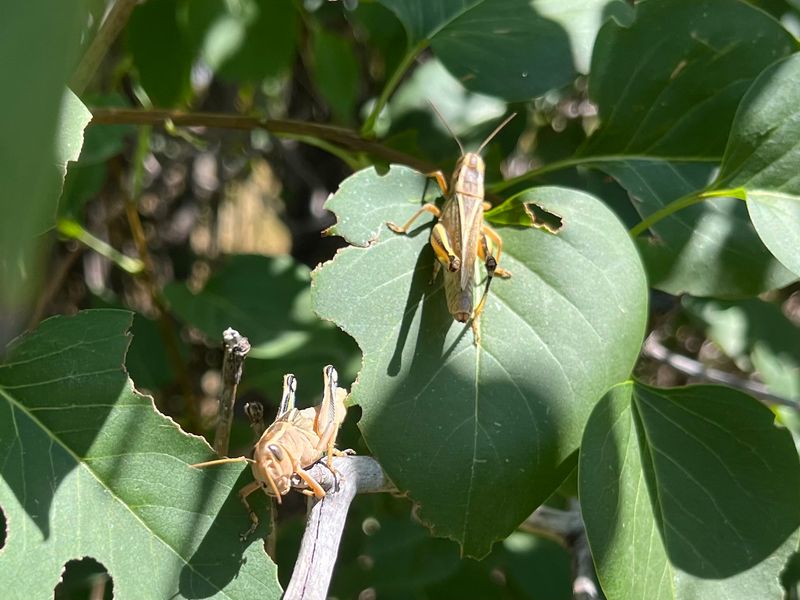
A grasshopper sitting on a fence post is not a problem. A grasshopper actively stripping the leaves off your pepper transplants is.
The difference between those two situations is what your management decisions should be based on, and the only way to see that difference is to look at the plants themselves.
Walk your beds and check for ragged leaf edges, missing foliage, and chewing damage that moves progressively from plant to plant. Pay attention to which plants are being hit: young transplants and soft-leafed vegetables are far more vulnerable than established woody ornamentals.
The plant’s growth stage matters too, because a seedling defoliated at 30 percent may not recover, while a mature tomato plant that loses some outer leaves during a hot week may push through without any lasting effect.
Texas A&M’s grasshopper management guidance makes clear that thresholds vary by crop and that many vegetables and ornamentals have no standard residential action threshold at all. A figure sometimes cited for rangeland and field crops, such as eight grasshoppers per square yard, was developed for large-scale agricultural contexts and does not translate cleanly to a home garden bed with mixed plantings and high-value specimens.
Applying it automatically can lead you to treat a situation that does not yet require treatment.
The practical approach is to combine a visual check of damage level with an honest look at what is planted and how much defoliation that crop can absorb. If a plant you prize is losing ground fast, that observation is your action trigger, not a toad count or a field-crop threshold pulled from a rangeland management guide.
Support native toads with habitat that fits a Texas yard
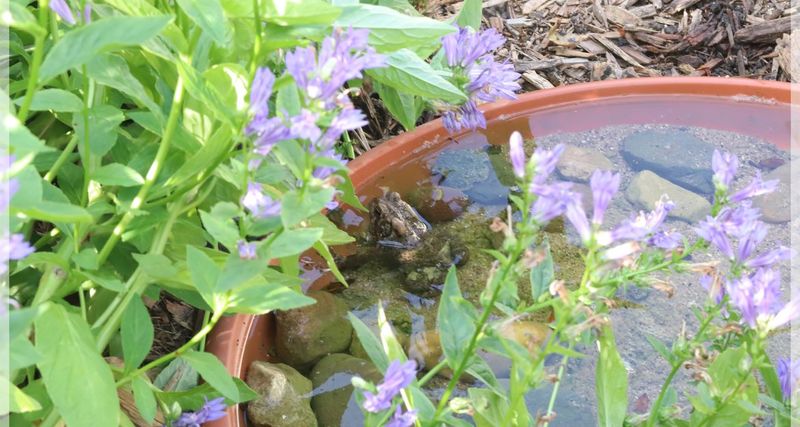
Making part of your yard more suitable for native toads does not require a major renovation. The features that attract toads are the same ones that make a yard feel lived-in and ecologically grounded: shade, moisture, ground-level shelter, and enough insect activity to make foraging worthwhile.
Leaf litter left in place under shrubs and along fence lines gives toads a place to rest during the day and stay cool during Texas heat. Logs, flat rocks, and dense groundcover serve the same purpose.
A shallow water container, placed at ground level and fitted with a rough edge or a small ramp so a toad can climb in and out easily, can make a real difference during dry stretches. Penn State Extension’s toad habitat guidance recommends keeping that water clean and refreshing it frequently to prevent mosquito breeding and bacterial buildup.
Native vegetation ties the whole system together. Texas Parks and Wildlife’s Wildscapes program emphasizes that native plants are adapted to local soils and rainfall patterns, which means less supplemental water and fewer chemical inputs overall.
Fewer chemicals in the yard means less risk to toads, whose permeable skin makes them sensitive to pesticide residues even at low concentrations.
A designated wildlife corner, perhaps a back fence line or a shaded bed under a live oak, can provide all of these features without competing with your maintained vegetable or ornamental beds. NC State Extension’s guidance on amphibian pools reinforces that even small water features with shallow edges and clean water can support amphibian activity in a residential setting.
The goal is not to transform the whole yard but to give native toads enough of what they need to stick around.
Protect prized plants without removing all wildlife cover
Keeping toad habitat and a well-protected garden in the same yard is a real goal, not a contradiction. The key is to think about where each function belongs rather than treating the whole yard as a single zone to either manage intensively or leave completely wild.
Around high-value vegetables and ornamentals, removing tall weeds and dense vegetation immediately adjacent to the planting bed reduces the cover that grasshoppers use to rest and move. Texas A&M’s grasshopper guidance recommends eliminating weedy growth close to plants that need protection, and that targeted clearing does not require stripping a wildlife-friendly corner on the other side of the yard.
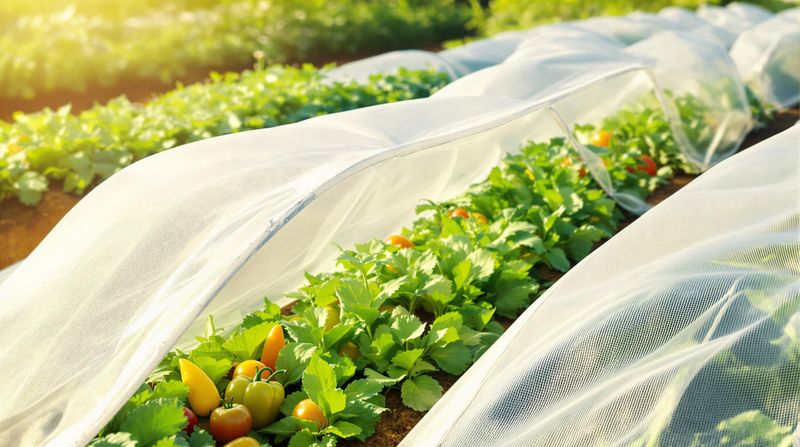
For the plants themselves, physical barriers offer the most reliable early-season protection. Texas A&M AgriLife’s urban pest factsheet specifically recommends geotextile row cover fabrics for protecting individual plants from grasshopper feeding.
These lightweight covers let in light and air while keeping grasshoppers off the foliage. They work best when installed before populations build, and severe infestations can eventually push through gaps or around edges, so they are a first line of defense rather than a complete solution.
If chemical control becomes necessary after physical measures have been tried, use only a product labeled for the specific crop you are protecting and follow label directions exactly. Texas A&M’s grasshopper control publication cautions that broad-spectrum treatments remove beneficial organisms along with pests, and amphibians absorb substances through their permeable skin, meaning a toad that crosses a recently treated bed is at real risk even if the label does not list amphibians explicitly.
Spot-treat where damage is concentrated rather than blanket-spraying the entire yard, and apply treatments in the evening when pollinators are less active.
Identify the toad before you attract, handle, or relocate it
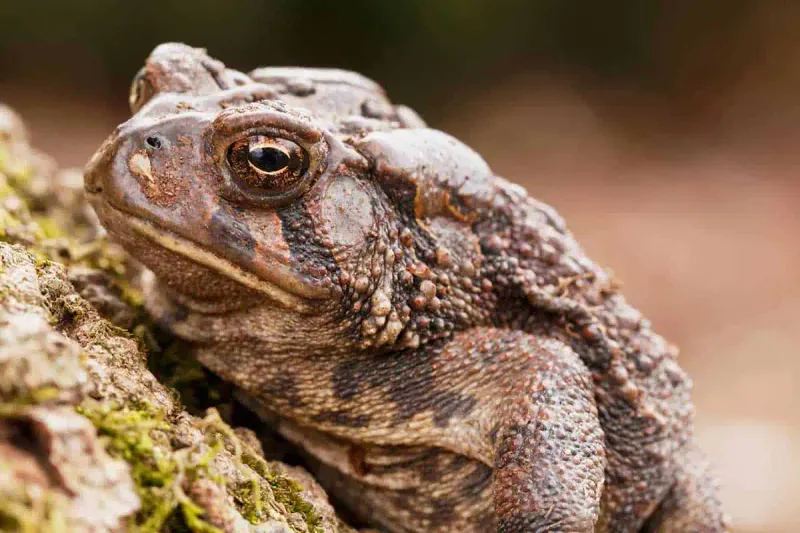
Texas has a genuinely diverse toad community. Texas Parks and Wildlife’s amphibian species list includes Gulf Coast toads, Texas toads, Woodhouse’s toads, Great Plains toads, and several others, each with different habitat preferences, ranges, and behaviors.
Getting a positive identification before you deliberately encourage, handle, or relocate a toad protects both you and the animal.
Cane toads, also called Bufo toads or giant toads, are the species that require the most caution. They are established in Florida and occur in extreme southern Texas, particularly in the Rio Grande Valley.
University of Florida IFAS guidance on cane toads explains that the large parotoid glands behind a cane toad’s eyes secrete a toxic milky substance that can be lethal to dogs and cats that bite or mouth the animal. This is a genuine pet-safety concern in areas where cane toads are known to occur.
That said, not every large, warty toad in your yard is a cane toad. Native species can be big, bumpy, and slow-moving, and misidentifying a native toad as a cane toad can lead to killing beneficial or legally protected wildlife.
If you are in southern Texas and unsure about a toad’s identity, photograph it and consult your local Texas Parks and Wildlife office or a university extension resource before taking any action.
One species worth a specific mention is the Houston toad, listed as federally threatened. Texas Parks and Wildlife’s Houston toad profile makes clear that this species requires deep sandy soils, specific woodland or savanna structure, and shallow breeding waters within a geographically limited range in central Texas.
A generic toad-friendly yard outside that range will not attract a Houston toad, and no habitat improvement will change that geographic reality.
Let native toads contribute while the plants guide your response
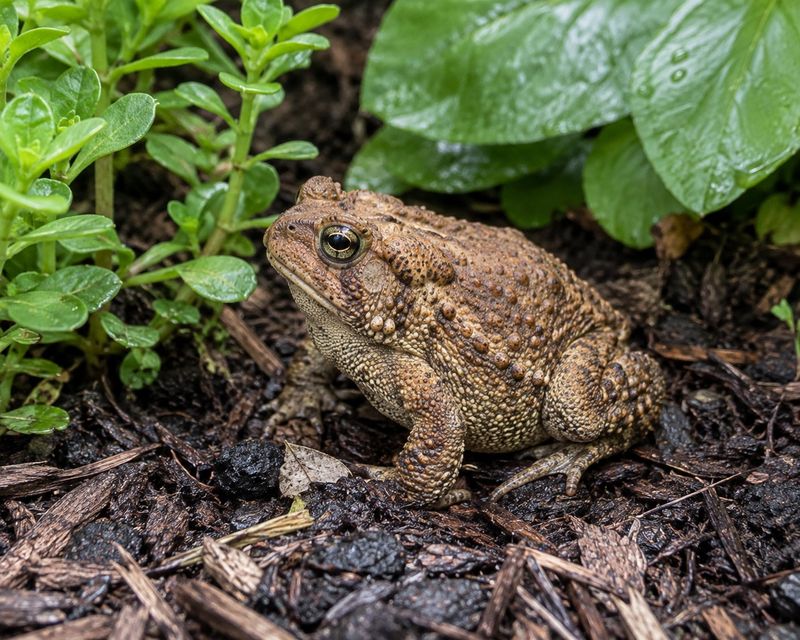
Native toads belong in a Texas yard. They eat a wide range of insects, they are harmless to people and most pets when correctly identified, and their presence generally reflects a yard that offers enough moisture, shelter, and prey to sustain wildlife.
That is worth protecting.
At the same time, the documented feeding relationship between toads and grasshoppers is real but not a management guarantee. Toads may add some natural pressure on grasshopper populations as part of normal foraging, but current field evidence does not support treating that pressure as reliable pest control.
Texas weather, surrounding land use, and the vulnerability of specific plants will almost always have more influence on your grasshopper situation than the number of toads in your yard.
The practical decision rule is straightforward. Preserve suitable habitat where you can, keep water features clean, reduce unnecessary pesticide use, and let toads do what they do.
Then monitor your plants separately. Plant damage, crop vulnerability, and defoliation level are the signals that tell you whether grasshoppers need a response, not the number of toads you spot on a summer evening.
A yard full of native toads and healthy plants is the goal, and those two things work better together when you manage each one on its own terms.