
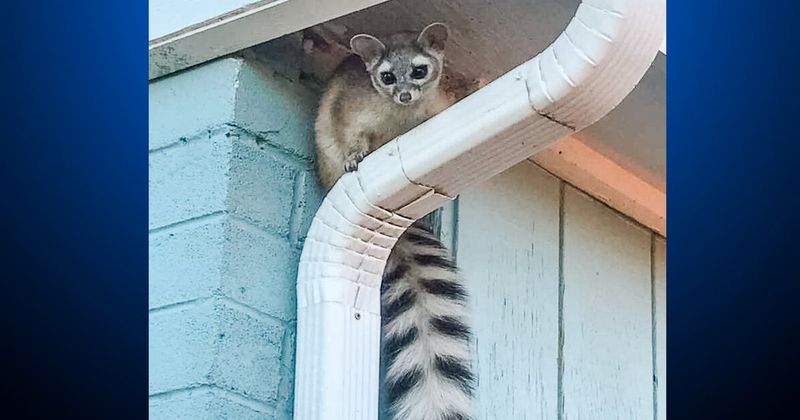
Spotting a ringtail near your California home at night can feel like a rare wildlife encounter, and in a way, it is. These small, secretive mammals are far more common than most people realize, but they are so nocturnal and cautious that most residents never see one.
If one has turned up near your yard this fall, the sighting probably says more about your property than about any seasonal migration.
A fall sighting does not prove a fall arrival
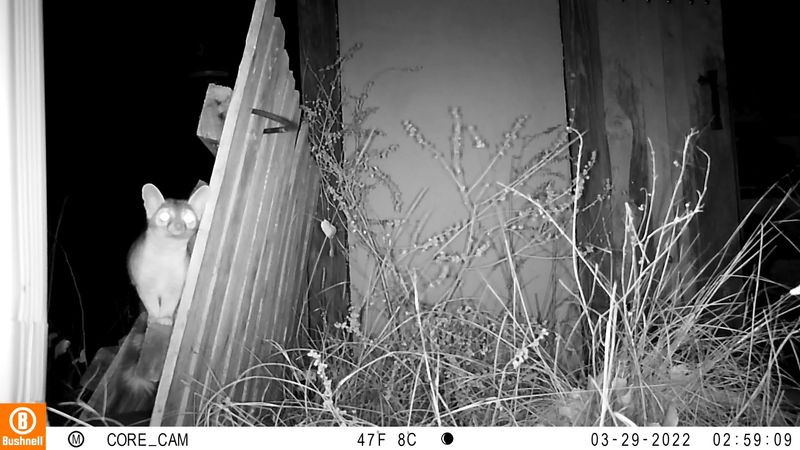
Seeing a ringtail near your fence or patio in October feels like discovering something new, but the animal was almost certainly in the area long before you noticed it. California’s official ringtail habitat account describes the species as a year-round, non-migratory resident that remains active throughout all seasons, usually under cover of darkness.
There is no documented statewide pattern of ringtails moving into residential neighborhoods each fall.
So what explains a cluster of fall observations? Several things can make a permanently resident, nocturnal animal seem newly present.
Cooler evenings often push people outdoors later, increasing the odds of an accidental sighting. Wildlife cameras, which many California homeowners install before or during fire season, capture footage that would have gone unnoticed in earlier years.
Changes in outdoor lighting and longer nights can also make a quick pass through a yard easier to catch on video or in the beam of a flashlight.
One study does document autumn movement by ringtails, but its limits matter. Research conducted in New Mexico found that female ringtails moved most during autumn, which is a genuinely interesting finding.
That study, however, was carried out in a different state with different habitat conditions, and it cannot be used as evidence that California ringtails follow the same pattern statewide.
Texas Parks and Wildlife describes ringtails as nocturnal and elusive animals that spend most daylight hours resting in dens or protected cover. That behavior makes them easy to miss for months at a time, even when they are actively using a nearby habitat corridor.
A fall sighting most likely means the conditions that suit ringtails were already present in or around your yard, and something this season made the animal easier to detect.
Ringtails follow habitat, not a calendar
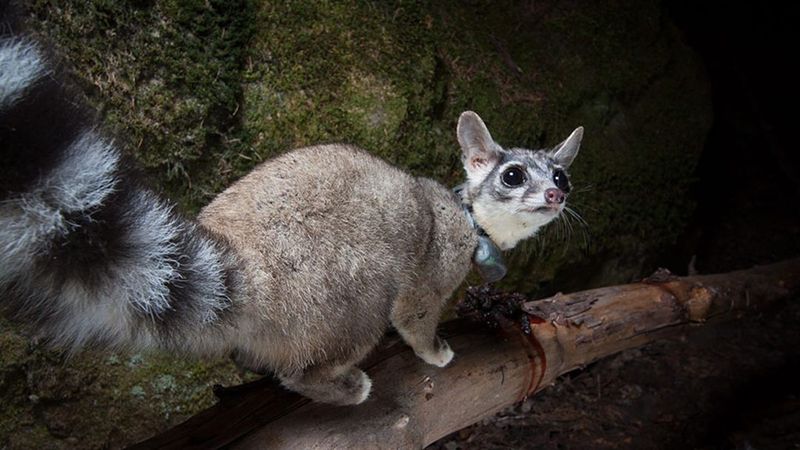
Rather than moving seasonally toward neighborhoods, ringtails move through landscapes that already offer what they need. California’s habitat guidance identifies a combination of shrubland or woodland, rocky terrain, and riparian corridors as core ringtail habitat, with most animals occurring within roughly one kilometer of permanent water.
A property that borders a creek, seasonal drainage, or wooded hillside is simply closer to that habitat than a yard surrounded by open pavement.
Cover is just as important as water. Ringtails use hollow trees, large logs, rock crevices, abandoned animal burrows, and dense vegetation as dens and resting sites.
California state park ringtail monitoring records reinforce that the species consistently associates with rocky outcrops and dense riparian growth rather than open or manicured spaces. A retaining wall with gaps, a brush pile at the property edge, or an old log near a fence can all provide the kind of shelter a ringtail uses during daylight hours.
Connected vegetation matters too. A continuous belt of shrubs, native groundcover, or unmaintained hedgerow linking a yard to larger natural habitat gives a ringtail a travel corridor it can use without crossing exposed open ground.
Texas Parks and Wildlife notes that ringtails favor rocky, brushy terrain and tend to stay close to den sites and food sources rather than wandering broadly.
None of these features individually guarantees that a ringtail will appear. The evidence supports the idea that they make a property part of a usable landscape, not that any single backyard element reliably draws the species in.
The animal is using what was already there, not colonizing a new neighborhood because the calendar turned to fall.
Fall can change the menu and the chance of detection
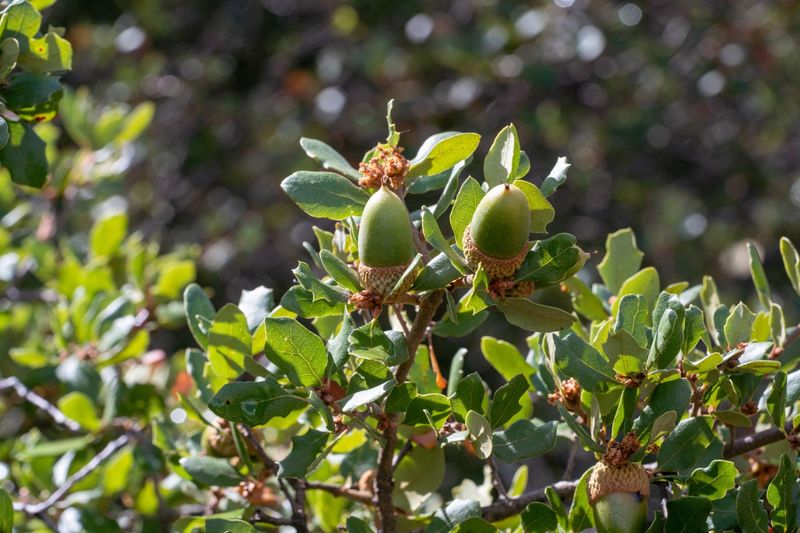
Food availability does shift in fall, and that shift can influence where a ringtail forages on a given night. California’s wildlife account for the species notes that insects make up a substantial part of the summer and fall diet, while birds and mammals become a larger share of the diet in spring and winter.
Fallen fruit, ripening nuts, and late-season insect activity can all concentrate near yards with fruit trees, oaks, or dense plantings, making those spaces worth investigating on a nightly circuit.
Animal Diversity Web’s species account confirms that ringtail diets are highly varied, including insects, small rodents, birds, reptiles, amphibians, fruit, nuts, and carrion. Texas Parks and Wildlife similarly describes an opportunistic predator and forager that adjusts its diet to whatever is available locally.
That flexibility means a yard offering almost any of those resources could be worth a visit, though the evidence does not point to one food type as a universal fall attractant in California.
Detection bias is the other half of the story. Ringtails are secretive enough that they can use a property for months without a human ever noticing.
Fall brings earlier sunsets, meaning people are outside or awake in darkness for longer stretches. Wildlife cameras installed ahead of fire season capture footage through September and October that would have gone unrecorded in summer.
A ringtail that has been cutting through a side yard all year may finally appear on camera simply because the camera is now running in the right window of darkness.
Separating these two factors matters. Seasonal food changes are a plausible reason a ringtail might linger near a yard longer than usual.
Improved detection explains why a resident might see the animal for the first time in fall even though it was never far away.
Look at the whole yard instead of one supposed attractant

When a ringtail appears near a home, the instinct is to identify the one thing that drew it in. A birdbath, a fruit tree, a bag of birdseed left on the porch.
That framing is appealing but too simple. California’s habitat guidance describes ringtails as animals that require a combination of water access, cover, and food within a usable landscape, not a single trigger.
A useful diagnostic starts with the surroundings, not the yard itself. Is there a creek, pond, seasonal drainage channel, or irrigation ditch within a short distance?
Does the property border a canyon, hillside, or undeveloped open space? Those connections to natural habitat are more likely to explain a sighting than anything inside the fence line.
Texas Parks and Wildlife consistently associates the species with rocky, brushy terrain and riparian corridors rather than with specific food items left out by homeowners.
Inside the yard, look at the structural features rather than the food sources. Rock piles, retaining-wall gaps, brush piles, hollow trees, stacked wood, dense low shrubs, and connected hedgerows all provide the kind of cover and travel routes a ringtail uses.
California wildlife diet records confirm that ringtails forage on insects, rodents, reptiles, fruit, and nuts depending on what is available, so a yard with active rodent populations, late-ripening fruit, or abundant insect life offers a range of possible resources without any of them being a guaranteed draw.
The practical takeaway is to read the full picture. A yard with a nearby drainage corridor, rock-wall gaps for shelter, a connected shrub border, and fallen fruit in October offers several overlapping reasons for a ringtail to pass through.
Remove one element and the animal may still use the others. That is why habitat context, rather than a single attractant, is the more honest explanation for most sightings.
Remove accessible food and waste to reduce conflict
Sharing a landscape with a ringtail does not require doing anything special, but a few precautions can keep the relationship low-conflict. The starting point is not adding to what the yard already offers.
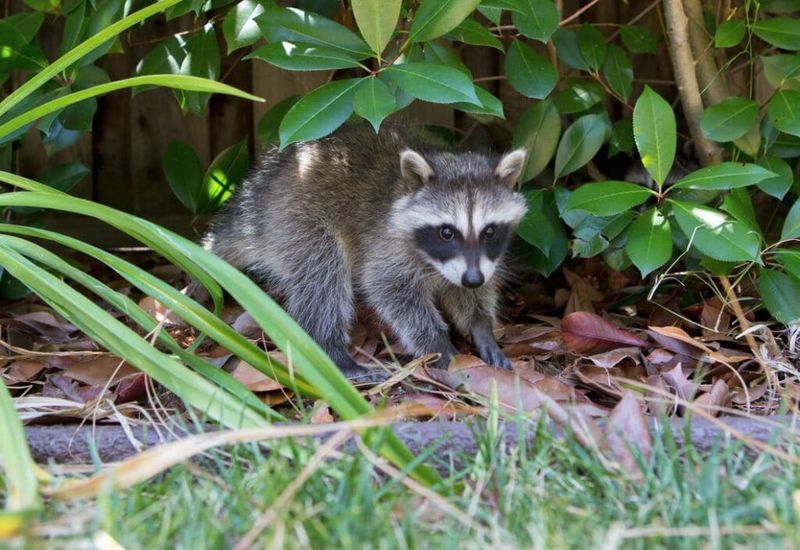
California wildlife officials caution that deliberately feeding wild animals can cause habituation, concentrate multiple species in one spot, increase disease transmission risk, and create conflicts that would not otherwise develop. That guidance applies to ringtails as much as to raccoons or coyotes.
Practical steps center on reducing accessible food and waste after dark. Bring pet food and water bowls indoors before nightfall.
Secure garbage cans and compost bins with latching lids. Pick up fallen fruit from the ground rather than leaving it to accumulate under trees.
Store birdseed in sealed containers and consider suspending feeders overnight. California’s wildlife conflict guidance and Florida Fish and Wildlife’s general wildlife tips both recommend securing outdoor feed, poultry, and small pets as standard precautions when wild predators are active in the area.
CDFW’s wildlife emergency guidance also warns against leaving food or water out to assist wildlife, noting that artificial feeding concentrates animals and raises the risk of disease spread. A water bowl left outside is not a neutral act when multiple wild species are moving through the area at night.
Rodenticide deserves a specific warning. Reaching for rat poison after seeing a ringtail near the house is counterproductive.
California’s Wildlife Health Lab documents that predators and scavengers can suffer secondary poisoning after eating rodents that have ingested anticoagulant rodenticides. A ringtail that eats a poisoned mouse can absorb a lethal dose without ever contacting the bait directly.
For long-term rodent management, habitat modification and removal of food sources are the recommended approach, not broadcast poison use.
A nighttime sighting usually calls for distance
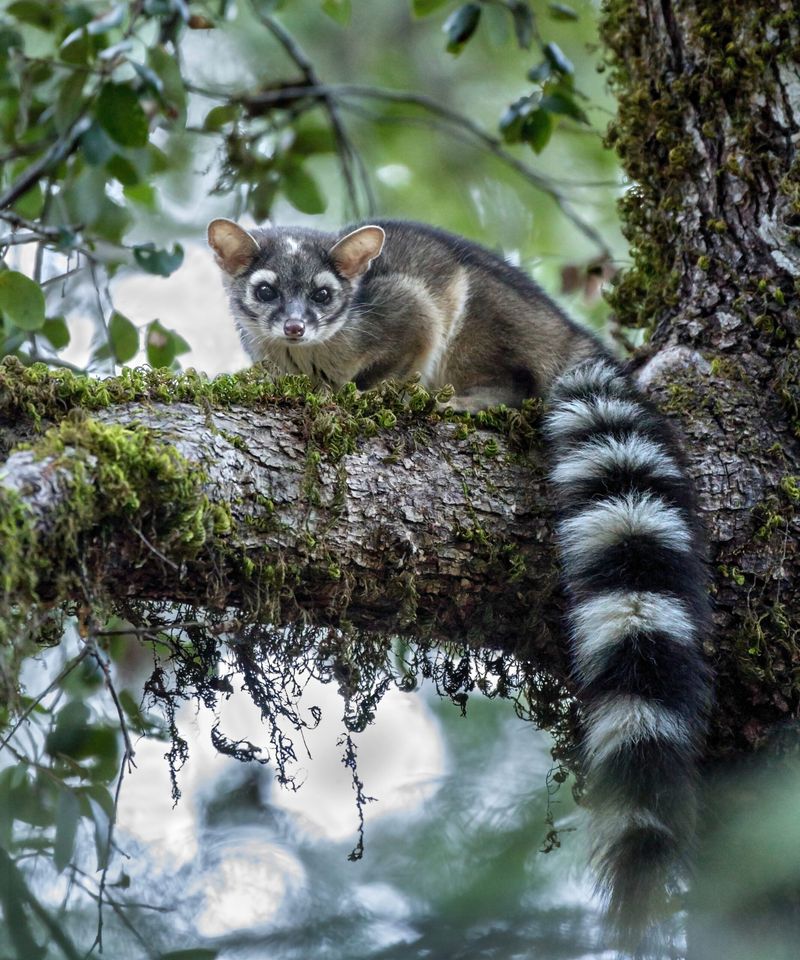
Most ringtail sightings near a California home require nothing more than staying back and watching quietly. Texas Parks and Wildlife describes ringtails as primarily nocturnal animals that spend daylight hours resting in dens or sheltered cover, so a healthy individual moving through a yard after dark is behaving normally.
Keeping people and pets at a distance gives the animal space to continue on its way without feeling cornered.
Handling, chasing, or cornering a ringtail is never a good idea. Any wild mammal can bite or scratch when restrained or threatened, and physical contact is unnecessary in the vast majority of sightings.
A California public-health vertebrate reference notes that ringtails have minimal public-health importance under normal conditions, but that framing assumes the animal is healthy and free to move. A frightened or injured ringtail is a different situation.
Certain observations do warrant professional advice rather than a wait-and-see approach. An animal that appears during daylight hours and cannot retreat, one that seems disoriented or is moving in circles, one visibly caught in netting, fencing, or debris, or one showing obvious injury should prompt a call to CDFW’s living-with-wildlife resources or a licensed wildlife rehabilitator.
The California Department of Fish and Wildlife’s rehabilitation program directory can help locate a qualified professional near you.
Improvised rescue attempts, including placing the animal in a box, offering food or water, or transporting it to a different location, can cause additional stress or injury and may put the animal in a worse position than leaving it alone. When in doubt, observe from a distance and make a phone call before taking any action.
California law prohibits the usual removal response
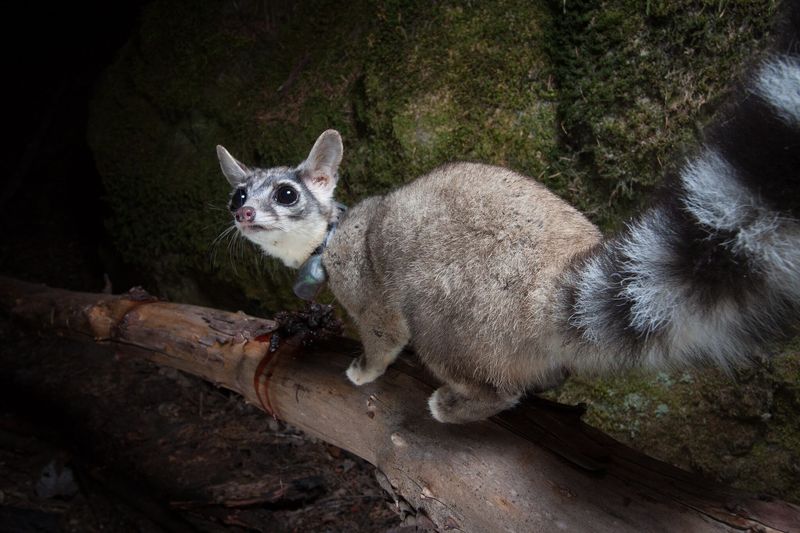
Before reaching for a trap or calling a pest-control company, California homeowners need to understand the legal status of the animal they are dealing with. The ring-tailed cat genus Bassariscus is listed among California’s fully protected mammals.
California Fish and Game Code Section 4700 generally prohibits taking or possessing any fully protected mammal, with only narrow statutory exceptions. That prohibition applies regardless of whether the animal is inside a structure, near a chicken coop, or simply passing through a yard.
CDFW’s trapping regulations reinforce that fully protected species cannot be trapped, captured, relocated, or harmed by private individuals acting on their own. The common homeowner impulse, trap it and move it somewhere else, is not a legal option for ringtails in California.
Neither is killing, injuring, or attempting to keep one.
The practical alternative is habitat-based conflict prevention. Securing food, waste, and accessible shelter reduces the conditions that make a property attractive without touching the animal at all.
If a genuine welfare concern exists, such as an injured animal or one that cannot retreat from an enclosed space, the appropriate step is to contact CDFW or a licensed wildlife professional rather than attempt removal independently.
Understanding the legal boundary also protects homeowners from unintended violations. A ringtail that wanders into a garage or storage shed is not an emergency requiring immediate capture.
Propping a door open and giving the animal time to leave on its own is usually sufficient. When that is not possible, a licensed wildlife rehabilitator or CDFW regional office can advise on lawful next steps without putting the homeowner or the animal at risk.
Treat a fall visit as a habitat clue
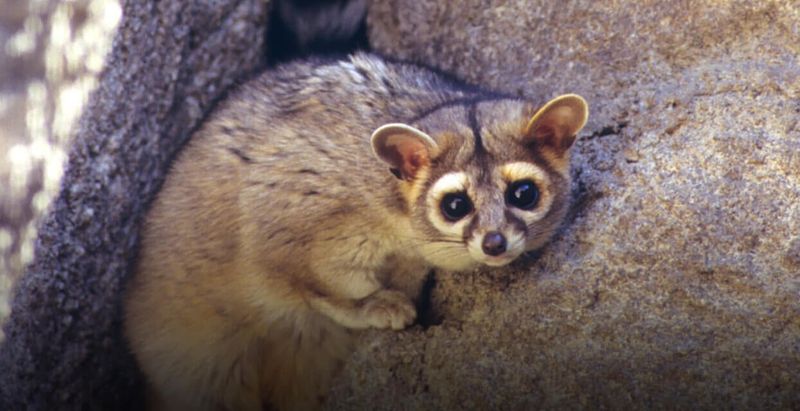
A ringtail near a California yard in fall is most honestly read as a sign that the surrounding landscape already offers what the species needs year-round. California’s habitat account is clear that ringtails are permanent, non-migratory residents.
The fall timing of your sighting likely reflects a shift in food availability, a change in your detection habits, or simply a lucky moment of overlap between a nocturnal animal’s nightly circuit and your own schedule.
The right response is straightforward. Leave the animal unfed and unhandled.
Secure human food, pet food, garbage, and compost so those resources are not accessible after dark. Skip the rodenticide, which can harm predators that eat poisoned prey.
CDFW’s guidance on wildlife feeding and California’s fully protected mammal regulations both point in the same direction: reduce accessible resources, avoid direct contact, and seek qualified help only when the animal appears injured, trapped, or unable to retreat on its own.
A yard that a ringtail moves through at night is a yard connected to functioning California habitat, and that connection is worth preserving rather than disrupting.