
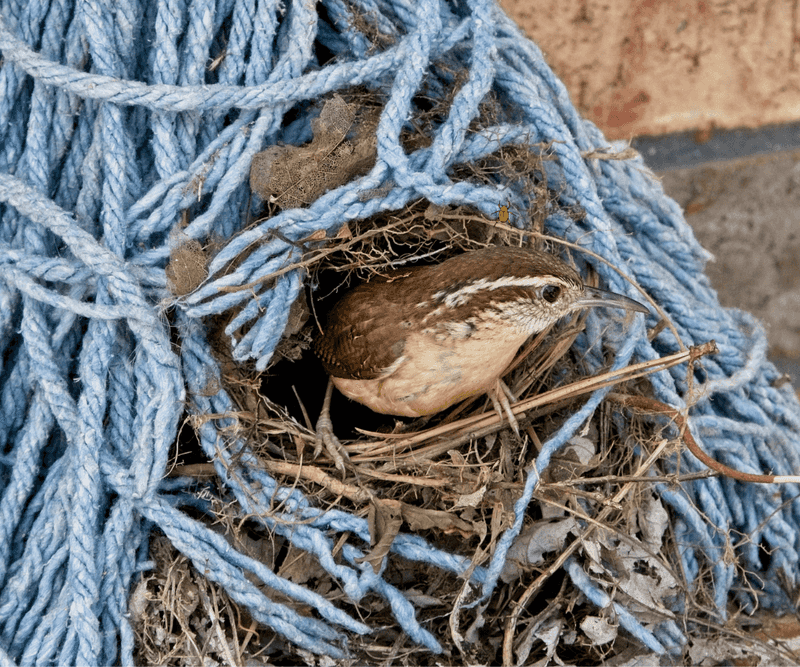
Carolina Wrens are tough little birds, but a hard winter cold snap can push even year-round residents to their limits. One simple fall project, hanging a roosting pocket before the coldest weather arrives, may offer these familiar backyard birds a drier, more sheltered place to spend winter nights.
The idea is backed by real observations of wrens seeking out enclosed, insulated spaces, and it takes only a few minutes to set up correctly.
Carolina Wrens Stay in North Carolina Through Winter
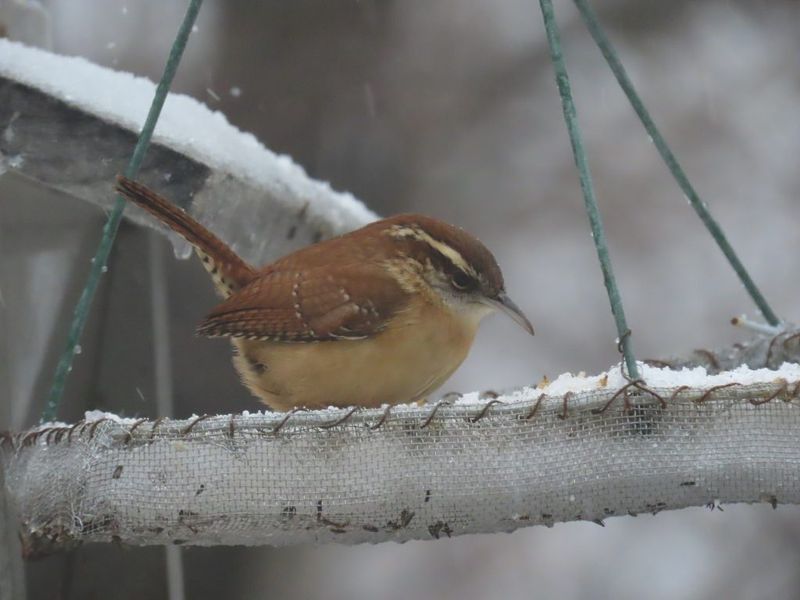
Carolina Wrens are one of the few songbirds that stay put in North Carolina no matter the season. Unlike many species that head south when temperatures drop, these birds hold their territory year-round across much of the state, from the coastal plain to the Piedmont and into the mountain foothills.
Cornell Lab’s Carolina Wren life history notes that they regularly use cavities, nest boxes, garages, barns, hanging plants, and other partly enclosed human-made spaces, which tells you a lot about what kind of shelter appeals to them.
That adaptability is part of why a roosting pocket makes sense as a fall project. Wrens are already looking for protected spaces, and a pocket installed before cold weather arrives simply adds one more option to their search.
Cornell’s NestWatch Carolina Wren profile specifically mentions that these birds may use nest boxes for winter roosting, which supports the idea that a purpose-designed shelter could appeal to them as well.
Winter weather is not equally severe across the state. The mountains and Piedmont tend to see colder temperatures, heavier snow, and longer cold snaps than much of the coastal plain.
Research on Carolina Wren overwinter survival found that abundance and survival can decline after severe winters, particularly at the colder edges of their range. That does not mean every wren in the state needs a pocket.
Most birds find shelter in natural cavities, dense shrubs, and other protected spots without any help from homeowners.
Still, offering one additional dry, less exposed refuge costs little and carries no real downside. Think of it as adding one more option, not replacing the habitat and cover that wrens depend on every day of the year.
The NC Wildlife Resources Commission seasonal bird checklist confirms the species as a year-round resident statewide, so the birds are present and the opportunity is real.
What the Hornet-Nest Evidence Actually Shows
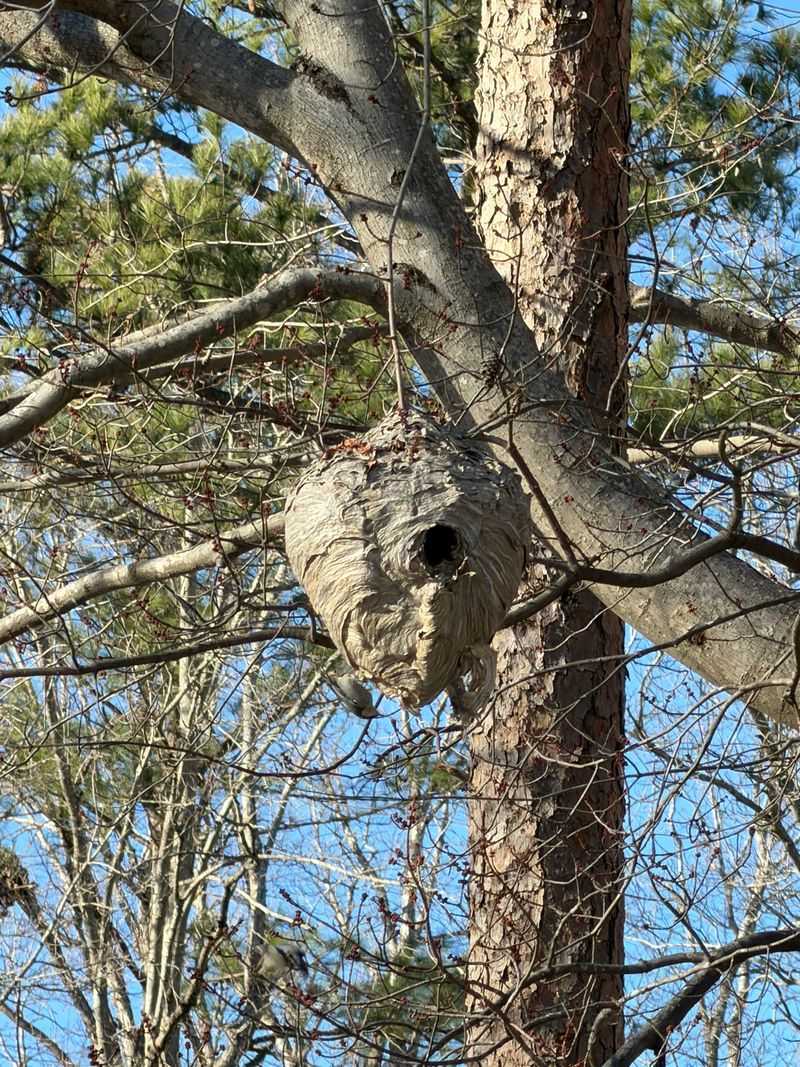
The most specific piece of evidence behind the roosting-pocket idea comes from western North Carolina. A 2017 report published in The Chat by the Carolina Bird Club documented Carolina Wrens repeatedly entering and roosting inside abandoned bald-faced hornet nests after autumn frosts had cleared the insects out.
The thick, layered paper walls of those nests could plausibly act as insulation, and the enclosed shape offers shelter from wind and rain. The wrens returned to the same nests over multiple nights, which suggests the birds found something worth returning to.
The report also cited older accounts of wrens roosting in coat pockets left hanging in garages, folds of curtains, and similar soft enclosed spaces. A published observation of a Carolina Wren pair winter roosting adds another data point in the same direction.
Taken together, these accounts paint a consistent picture of a bird that seeks out small, enclosed, protected spaces when overnight temperatures fall.
What the evidence does not show is equally important to understand. The hornet-nest report was observational.
The authors did not measure temperatures inside the nests, did not compare survival rates between birds that roosted in them and birds that did not, and explicitly called for more research before drawing stronger conclusions. No study has confirmed that a commercial woven roosting pocket stays measurably warmer than outside air, improves wren survival through a freeze, or produces any population-level benefit.
One practical caution the evidence makes clear: do not collect or disturb hornet nests, especially active ones. The observations involved nests that were already abandoned after autumn frosts.
A commercial roosting pocket or a purpose-built wooden roost box is the safe, practical alternative for any homeowner who wants to act on this idea without handling wildlife structures.
A Roosting Pocket Is Not a Nest Box
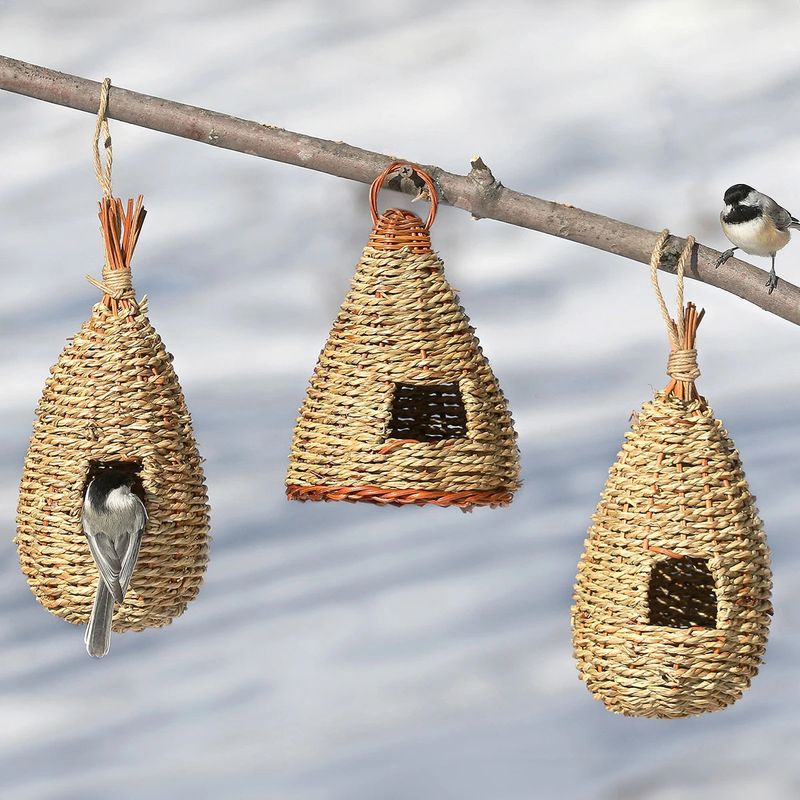
Before buying anything, it helps to understand the difference between a roosting shelter and a nest box, because they serve different purposes and are built differently. Audubon’s overview of how birds spend cold winter nights explains that outside the breeding season, birds seek protected sleeping sites that are separate from the nests they use for eggs and young.
A roosting pocket is meant for overnight shelter during fall and winter, not for raising a family.
Purpose-built wooden roost boxes reflect that distinction in their design. Cornell Lab’s guidance on roost boxes explains that a good one typically has fewer ventilation openings than a nest box, an entrance positioned low to keep warm air from escaping, and roughened interior surfaces or built-in perches that give birds something to grip.
Those features make sense for an overnight shelter but would create problems for a breeding box, where ventilation and drainage matter for nestling health.
Woven grass pockets sold as roosting shelters vary widely in construction. Some offer real wind protection and concealment; others are loosely woven and provide little more than visual cover.
One commercial grass roosting pocket advises storing the product during spring and summer because its dimensions are not considered as safe for nestlings as a purpose-built wooden nest box. That is manufacturer guidance, not an independent safety standard, but it underlines the point: a winter roosting pocket is not automatically a safe nesting structure.
When shopping, check the product’s stated purpose. Cornell’s features-of-a-good-birdhouse checklist is a useful reference for what a well-built structure should offer, even if you end up choosing a woven pocket rather than a wooden box.
Never stuff a roosting pocket or roost box with cotton, dryer lint, yarn, hay, or loose synthetic fibers. Those materials can trap moisture and create entanglement hazards rather than providing safe insulation.
Install the Shelter Before the Coldest Weather
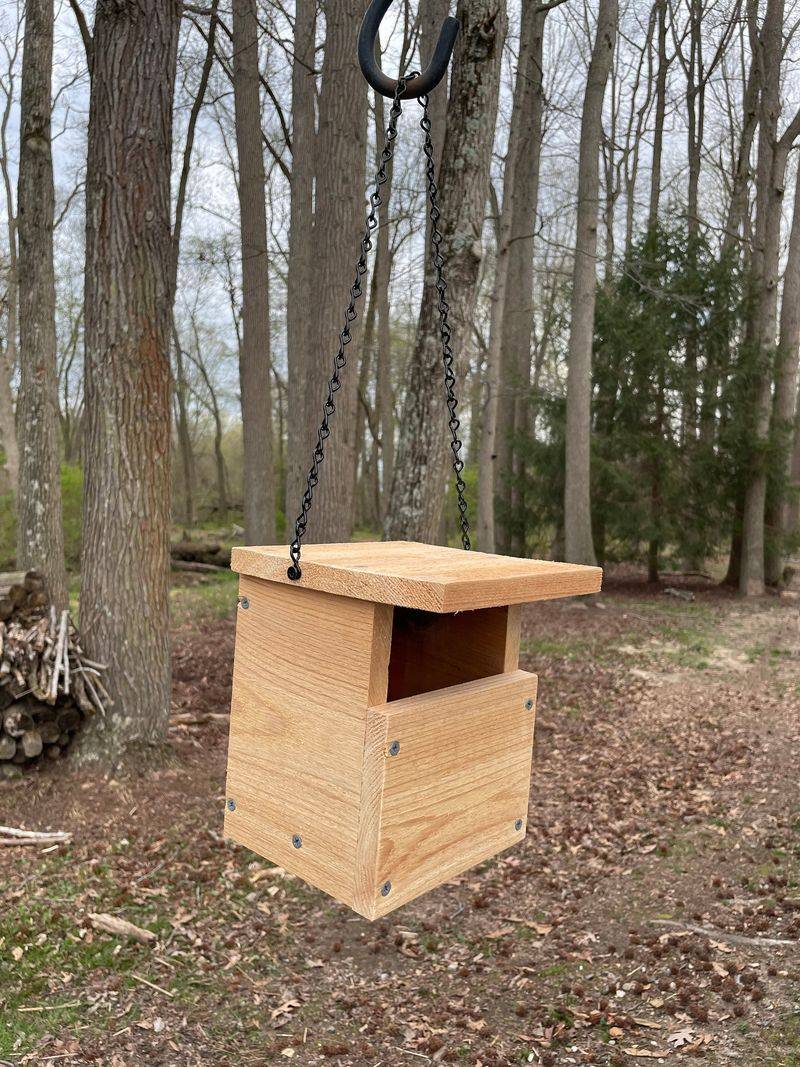
Getting the timing right is straightforward: put the shelter up in fall, before the first hard cold snaps arrive. The North Carolina hornet-nest observations documented in the 2017 Carolina Bird Club report involved shelters that were available and in use after autumn frosts, which supports a fall installation window without pinning down a specific calendar date.
The goal is simply to have something in place before wrens need it most.
Placement matters as much as timing. Cornell’s winter-proofing guidance for birdhouses recommends choosing a spot protected from prevailing winds and driving rain.
A location under a porch, beneath an eave, inside an open shed, or under another solid overhang checks that box well. Where practical, afternoon sun on the shelter’s exterior can add a small passive warmth benefit without any added equipment.
Orient the entrance away from the direction your coldest winter winds typically come from. In much of North Carolina, prevailing winter winds arrive from the northwest, so facing the opening southeast or south is a reasonable default.
This is a practical step, not a guarantee of comfort, but it reduces the chance that cold air funnels directly into the pocket on the worst nights.
The goal for the shelter is to be dry, less exposed, and reasonably sheltered from wind. Lamps, heating elements, or any other powered devices have no place inside or near a roosting pocket.
The pocket is not meant to create artificial warmth; it is meant to give a wren a spot that is less exposed than an open branch while still being a natural, low-effort solution. Keep those expectations clear and the setup stays both safe and honest about what it can actually provide.
Keep Cats and Climbing Predators Away
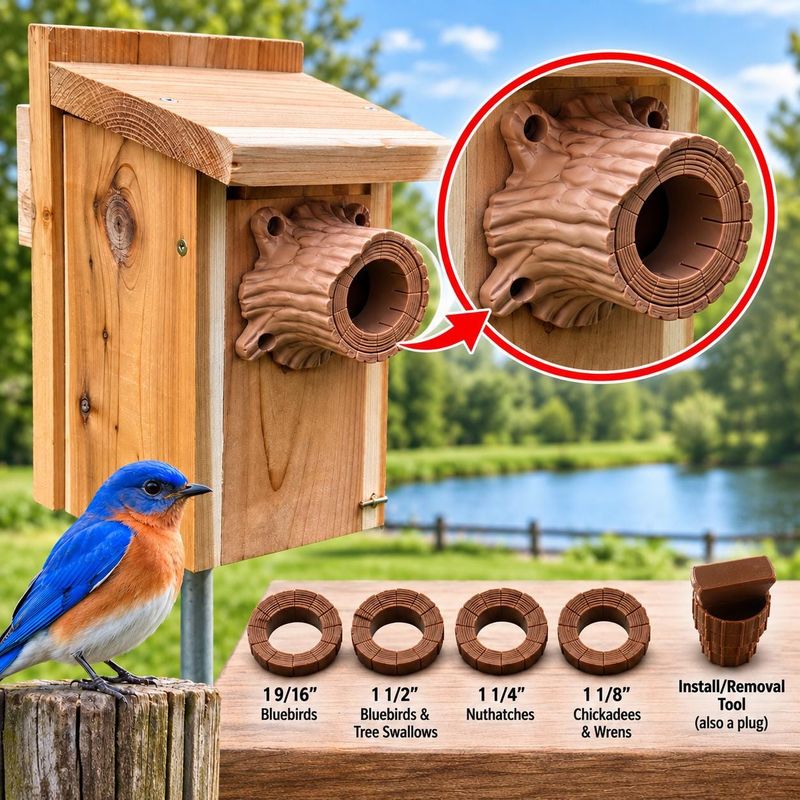
A roosting pocket placed where a cat, raccoon, squirrel, or snake can easily reach it may cause more harm than good. Predators that learn a small bird spends the night in a fixed location will return, and a wren that cannot escape quickly from an enclosed shelter is in a worse position than one roosting on an open branch.
Predator-aware placement is not a minor detail; it should be part of the decision before the first nail goes in.
Cornell’s NestWatch predator guidance recommends keeping bird shelters away from trees, fences, and other structures that give climbing animals easy access. For a rigid wooden roost box, a smooth metal pole with a cone or cylinder baffle is the most reliable mounting option.
Baffles stop raccoons and squirrels from climbing up from below, and a smooth pole with no nearby branches removes the route from above.
Woven grass pockets present a harder problem because they are typically hung rather than pole-mounted. Cornell’s birdhouse features guidance also recommends avoiding exterior perches on any bird shelter, since perches give predators a foothold as much as they give birds a landing spot.
When hanging a pocket, choose a hook or bracket under a solid overhang rather than a tree limb, and make sure no nearby surface gives a cat or raccoon a comfortable launching point.
Snakes are often overlooked but are capable climbers. A smooth metal pole with a properly fitted baffle addresses snake access from the ground, but if the pocket is hung from a wooden beam or fence rail, snake access remains a real possibility.
The simplest approach is to mount the shelter on a freestanding baffled pole whenever possible, or to choose a location under a porch or eave where the surrounding structure itself limits climbing access from multiple directions.
Natural Cover Provides More Than One Pocket
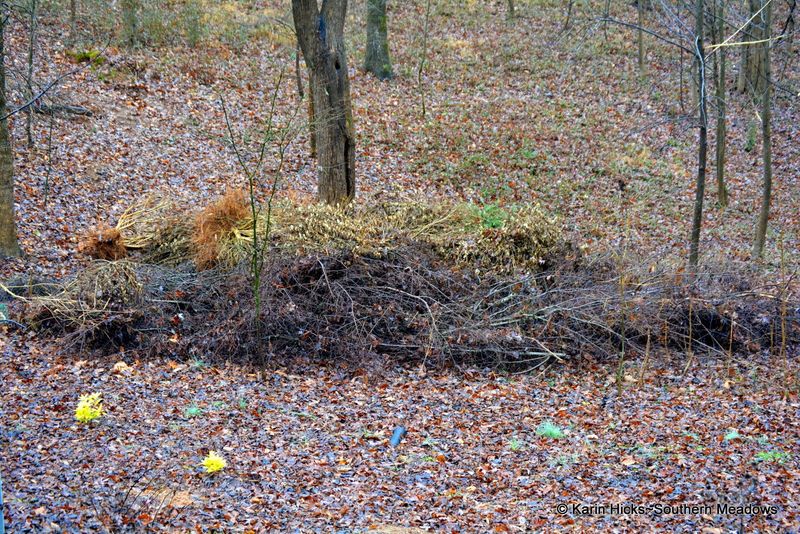
A roosting pocket is one small addition to a yard, not a complete shelter plan. Carolina Wrens spend their days foraging through tangled vegetation, downed wood, root cavities, and leaf litter, and those same spaces provide overnight cover when no pocket is available.
Cornell Lab’s wren life history describes a bird built for low, dense, protected spaces, which means the habitat in your yard matters at least as much as any single manufactured shelter.
Preserving or adding native shrubs, evergreen cover, and brush piles gives wrens options across the whole yard rather than a single fixed point. The NC Wildlife Resources Commission’s suburban backyard habitat guidance encourages homeowners to maintain native plantings and layered cover as the foundation of backyard wildlife support.
A yard with dense native shrubs, a brush pile in one corner, and a roosting pocket under the eave offers wrens a genuinely richer set of choices than a pocket alone.
If you also want to add a feeder or birdbath for winter birds, keep the sanitation side of that separate from the roosting setup. Cornell’s guidance on seeds and shelter for backyard birds is a good starting point for feeder basics.
Clean feeders and birdbaths regularly, and do not let water sit stagnant in a birdbath between refills.
Standing water in a neglected birdbath can breed mosquitoes even in cooler months. USGS guidance on bird feeders, birdbaths, and West Nile risk recommends eliminating standing water, cleaning equipment regularly, and washing hands after handling any bird-feeding gear.
USGS’s bird feeder safety publication reinforces those steps as routine precautions, not just disease-specific responses. Those habits protect both the birds visiting your yard and the people who care for them.
Offer a Refuge Without Expecting a Miracle
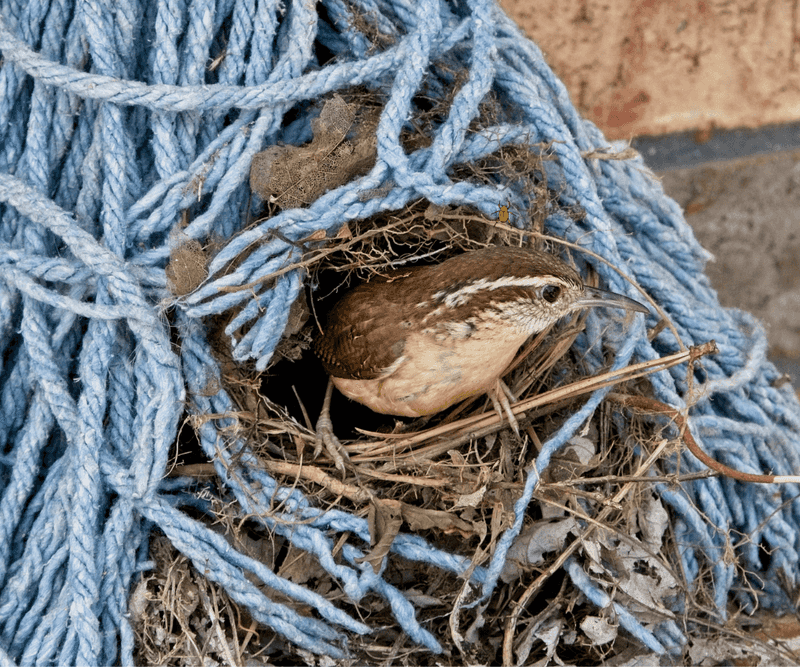
Putting this project together comes down to a short, sensible sequence. Choose a roosting pocket or purpose-built roost box designed for winter use, not a standard nest box repurposed for the season.
Install it in fall, under an overhang or other protected spot, with the entrance facing away from prevailing winter winds. Mount it where cats, raccoons, squirrels, and snakes cannot easily reach it, and leave the interior empty rather than stuffing it with any kind of fiber or fabric.
Cornell’s NestWatch profile for Carolina Wrens notes that these birds are adaptable and may use many unusual sites, but that also means they may simply ignore the pocket in favor of a dense shrub, a garage corner, or a natural cavity they already know. The 2017 Carolina Bird Club hornet-nest report shows that wrens seek out enclosed spaces in winter, but it does not promise that a commercial pocket will be used or that it will carry any bird through a hard freeze.
Occupancy is uncertain, and that is fine.
Pair the pocket with dense native cover, keep any feeders or birdbaths clean, and think of the whole setup as expanding the options available to wrens in your yard rather than solving a problem on their behalf. Cornell’s winter-proofing guidance frames the goal well: a sheltered, dry, less exposed space is a genuine contribution.
A wren that finds and uses it on a bitter January night got exactly what you offered.