
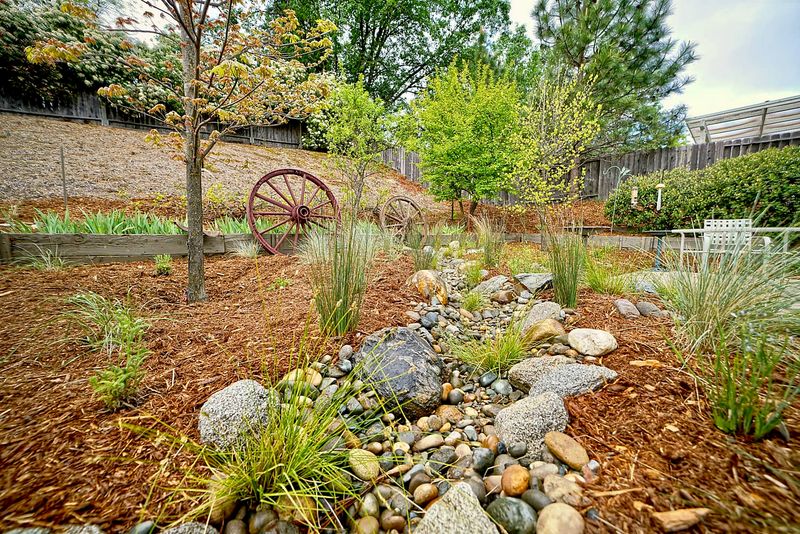
A firewise front yard does not have to look bare, gray, or unfriendly. In California, the best designs balance beauty, water savings, and smart wildfire planning in one space.
With the right layout, plants, and hardscape, you can keep curb appeal high while lowering risk around your home. The choices below show how to make a front yard feel rich and welcoming without leaning on risky, thirsty planting.
1. Gravel-and-boulder entry garden
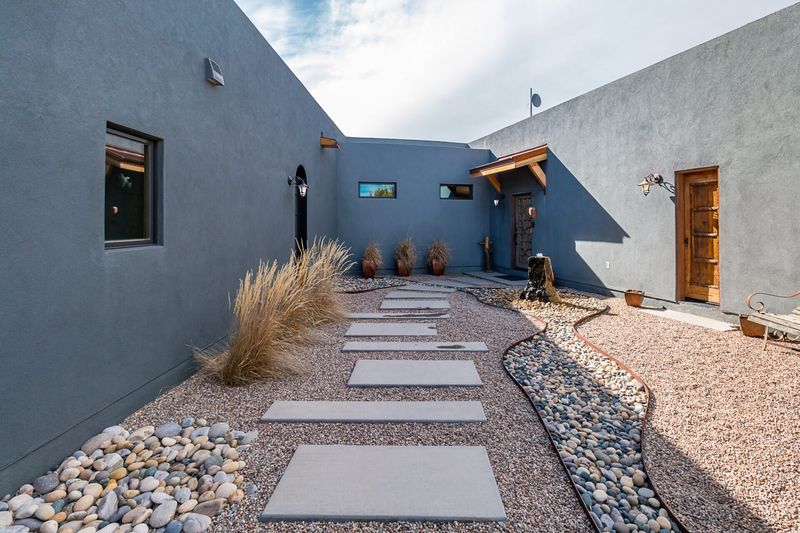
Nothing makes a front yard feel more intentional than a strong entry sequence, and gravel paired with boulders does that job beautifully. Instead of reading as empty space, a well-designed gravel garden creates structure, contrast, and a clean backdrop for plants that need breathing room.
In fire-prone California neighborhoods, that spacing matters because it can reduce the way flames move through tightly packed vegetation near the house.
Color is what keeps the look from turning cold. Golden gravel, weathered stone, and a few well-placed accent plants can make the whole yard feel warm and settled into the landscape.
Boulders also give the eye a place to rest, which helps the planting feel curated rather than sparse.
For the best result, use gravel as a field material and vary the size of the stone elements. Keep the area closest to the house neat and low, and let larger rocks anchor corners or frame the walkway.
That mix creates a finished California look that feels calm, expensive, and practical all at once.
2. Succulent ribbons with open spacing
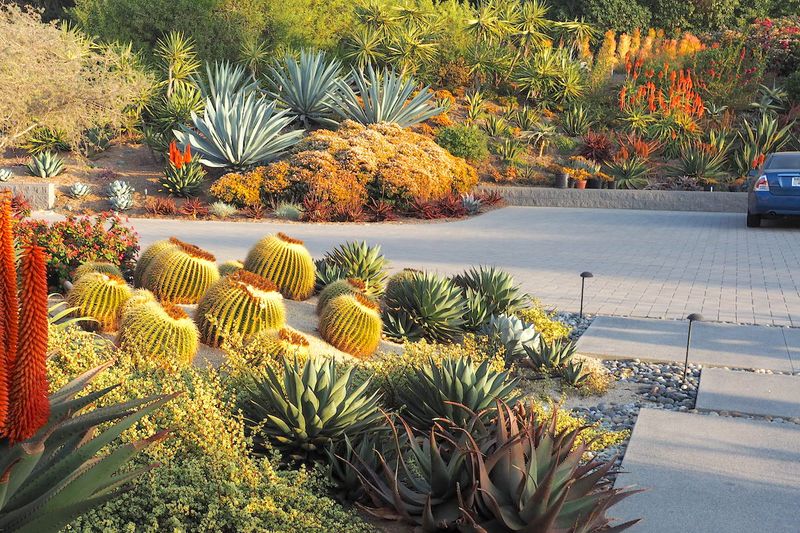
Curving bands of succulents can bring real drama to a front yard without creating a dense, risky mass of fuel. Agaves, aloes, and other fleshy plants hold water in their leaves, so they often become the visual stars in firewise landscapes.
The trick is not to cram them together, but to let each plant stand out with gravel or decomposed granite around it.
Shape does a lot of the work here. A ribbon-like layout guides your eye across the yard and keeps the planting from looking like random dots in rock.
That sense of movement is what makes a low-water design feel stylish instead of stripped down.
There is also room for personality in the plant palette. Blue-gray rosettes, lime tones, copper edges, and winter flower spikes can add months of interest, especially in Southern and coastal California.
Just be mindful of placement near walkways and entries, since some succulents have sharp tips. With smart spacing and a few bold forms, the yard feels sculptural and alive rather than severe.
3. Native bunchgrass islands
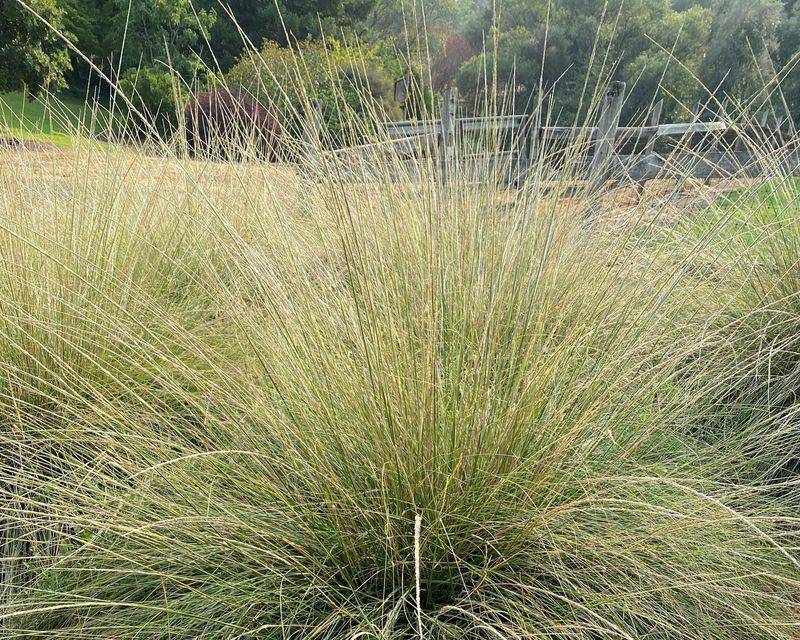
Here is where a firewise yard starts to feel soft again. Native bunchgrasses bring movement, texture, and a little glow when the light hits them in the morning or late afternoon.
Used in separate islands rather than one continuous sweep, they can give a front yard a natural California character while still respecting defensible-space thinking.
That island pattern is what makes them useful. Instead of forming a blanket of dry growth, the grasses are broken up by hardscape or low-combustible mulch, which helps interrupt the path fire could take.
The effect is lighter, airier, and far more polished than many people expect from a safer landscape.
Choose species that fit your local climate and maintain them well. Trimming, cleaning out dead material, and keeping a tidy shape matter just as much as the initial design.
Deer grass, blue grama, and other regionally appropriate choices can pair beautifully with stone, succulents, or low flowering perennials. The result feels loose and local, not overdesigned, and it proves that firewise planting can still look graceful from the street.
4. Decomposed granite pathways
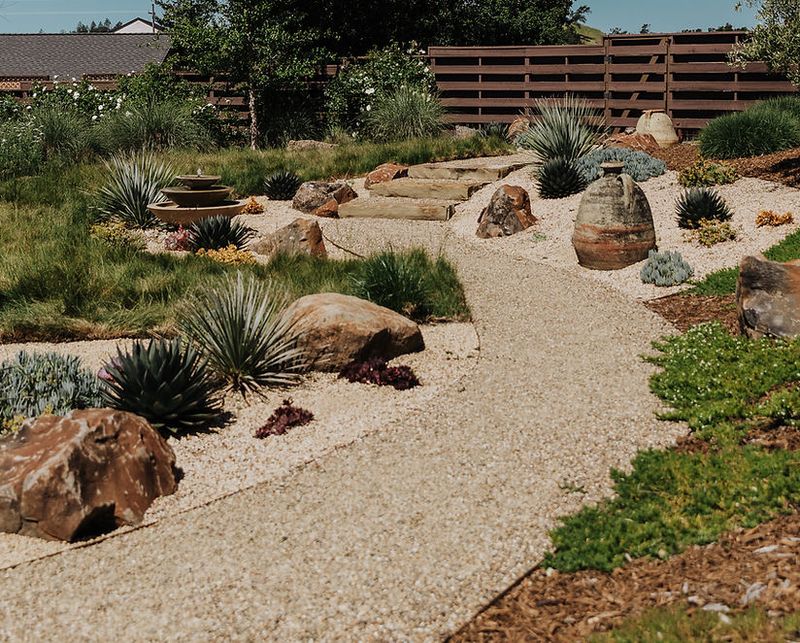
A front yard can feel generous and finished simply because the paths are done well. Decomposed granite gives you that soft, natural look that fits California homes from Spanish revival to modern farmhouse, and it also creates useful separation between planted areas.
In a firewise design, those breaks are not just pretty. They help define where plants go and where open, more manageable space begins.
Unlike a large slab of plain paving, decomposed granite keeps the yard from feeling hard or sterile. Its texture has a relaxed look, almost like a trail, which makes the landscape feel approachable.
At the same time, it can direct foot traffic and keep visitors off fragile planting areas.
Widths matter here. A slightly broader path reads as welcoming, and crisp edging keeps the material from looking messy.
Pair it with low plantings, a few focal rocks, or a small seating spot near the entry for a layered look. If your goal is a front yard that feels more designed and less defensive, a decomposed granite pathway is one of the easiest ways to get there.
5. A small irrigated oasis by the door
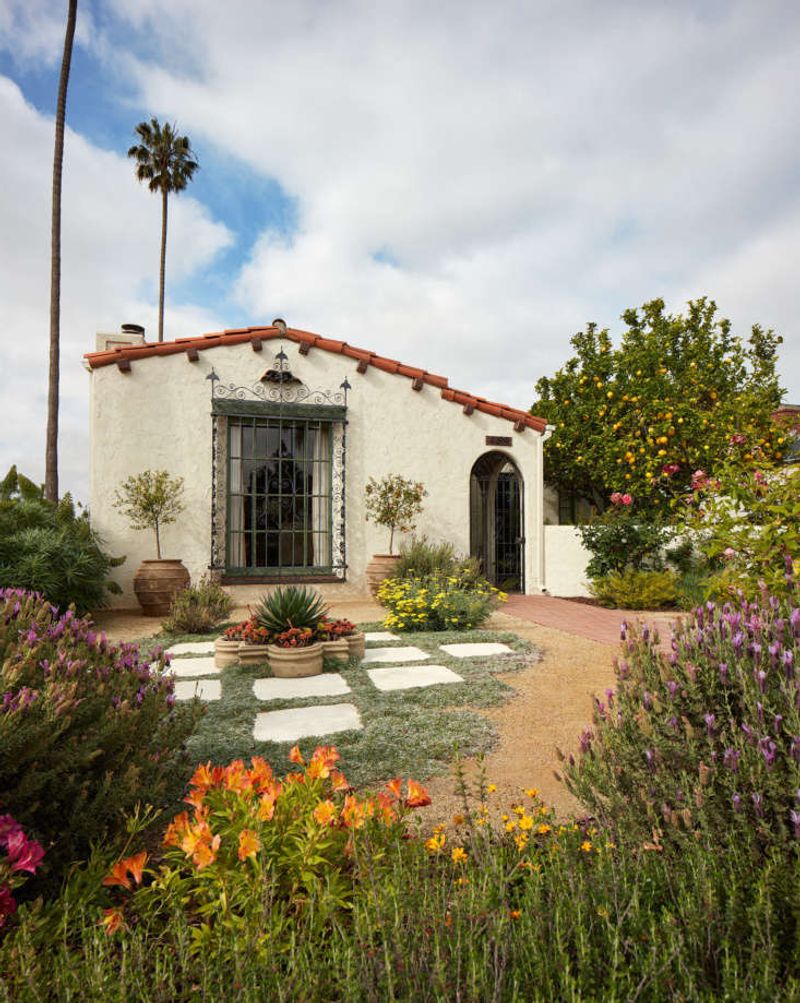
One of the smartest tricks in a firewise front yard is not trying to make every inch behave the same way. A small, carefully maintained oasis near the front door can bring that fresh, welcoming look people love, while the rest of the yard stays leaner and more open.
That contrast makes the whole landscape feel balanced instead of stripped down.
The key is scale and placement. Near the entry, where plants are often watered and watched more closely, you can use a limited pocket of lower, greener planting to soften the house and frame the porch.
Because the area is defined and maintained, it reads as a design feature rather than an overgrown exception.
Think of it as a visual exhale. After seeing gravel, stone, and spaced plantings across the front yard, the eye lands on a compact area of richer texture and color near the door.
Done carefully, it feels inviting and human. Just keep the planting low, avoid dense woody growth right against structures, and choose plants that stay tidy with regular care.
A little lushness in the right place can carry the whole yard.
6. Flowering groundcovers instead of wall-to-wall mulch
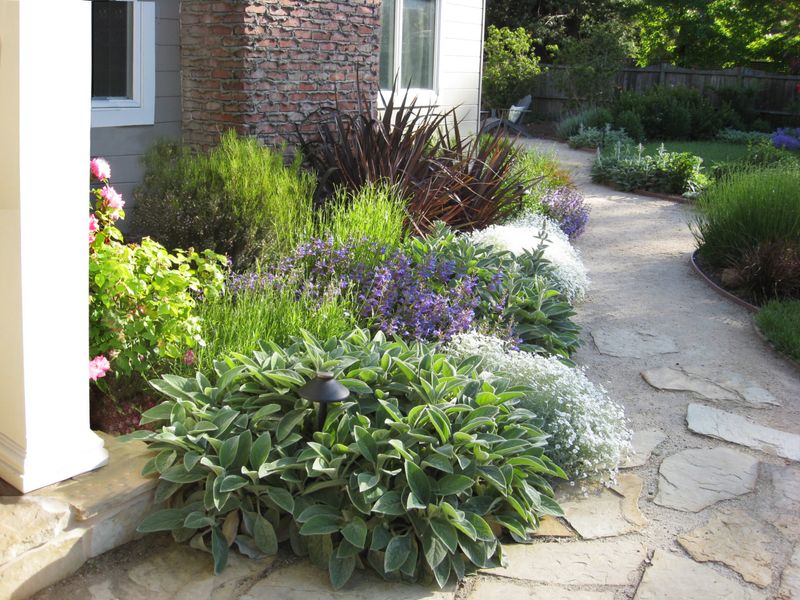
Plenty of homeowners worry that firewise landscaping means replacing every bit of life with plain mulch. It does not.
Low, well-chosen flowering groundcovers can add color and seasonal change without creating the heavy, layered look that often feels risky and hard to manage.
What makes groundcovers work is restraint. Rather than covering the whole yard in one continuous carpet, use them in distinct patches with noncombustible materials between them.
That gives you cheerful bloom and pollinator interest while keeping the design cleaner and more defensible.
California-friendly options vary by region, but the winning formula stays the same: keep plants low, avoid tangled thickets, and give each planting pocket a clear edge. Groundcovers can soften the base of boulders, brighten a path, or spill lightly over a low retaining edge.
Visually, they break up all the mineral surfaces that sometimes make safer landscapes feel severe. For curb appeal, that matters a lot.
A few flowering mats in the right places can make a front yard feel cared for, lively, and far more personal than a wide field of bark or stone alone.
7. Sculptural manzanita as a focal point
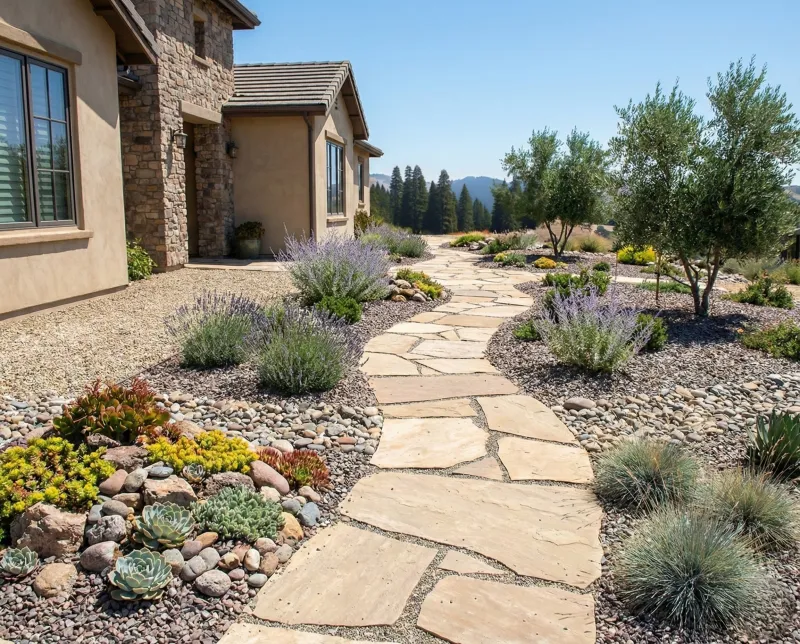
Some plants earn their spot by acting like garden art, and manzanita is one of them. With smooth reddish bark and twisting branches, it can anchor a front yard in a way that feels unmistakably Californian.
A single beautiful specimen often does more for style than a dozen ordinary shrubs packed too closely together.
That is part of why it suits a firewise approach so well. Instead of relying on dense mass planting, you get shape, color, and year-round character from one standout plant surrounded by simpler materials.
Gravel, stone, or low companions let the form shine and keep the area visually open.
Manzanita also gives a yard a sense of maturity, even when the design is fairly new. It looks settled, almost storied, which can soften modern hardscape and make a minimalist front yard feel less stark.
As with any plant in a fire-prone region, local suitability and maintenance matter, and homeowners should match species to site and guidance in their area. Still, as a focal point, few choices prove the point better: a safer landscape can be artistic, local, and full of personality.
8. Stone seat walls and low terraces
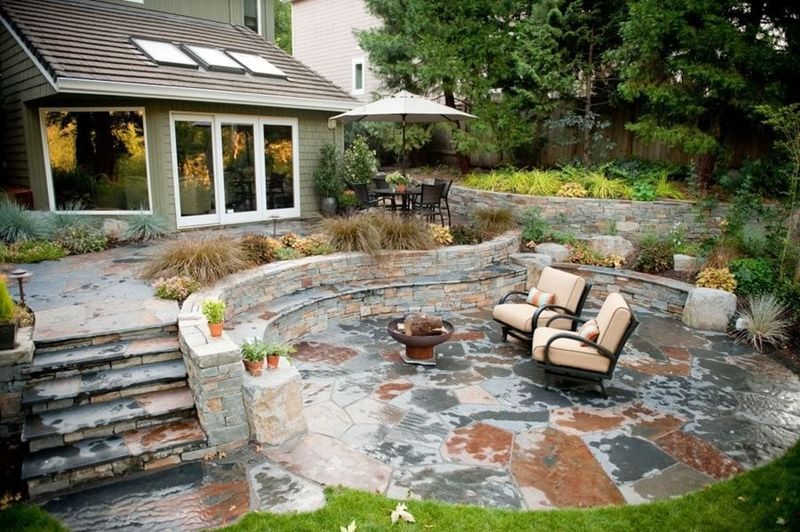
On a slope, beauty often comes from structure first. Stone seat walls and low terraces can turn a difficult front yard into something layered and inviting, while also reducing the amount of continuous planting on the site.
For California hillsides and uneven lots, that is a practical upgrade with a clear visual payoff.
Terracing breaks up space in a way that feels architectural. Instead of one broad expanse of shrubs, you get defined levels with room for compact plant groupings, pathways, or even a small sitting area near the street.
The yard starts to feel designed as an outdoor room, not just filled land around a house.
Seat walls also pull extra weight. They offer function, frame garden beds, and introduce durable material that balances softer planting.
Choose stone tones that match the house or local landscape so the hardscape feels grounded rather than imported. When people say firewise yards can feel unwelcoming, this is the kind of feature that proves otherwise.
A wall at just the right height invites people to pause, while the overall layout keeps the yard easier to maintain and visually calm.
9. A dry creek bed that looks natural
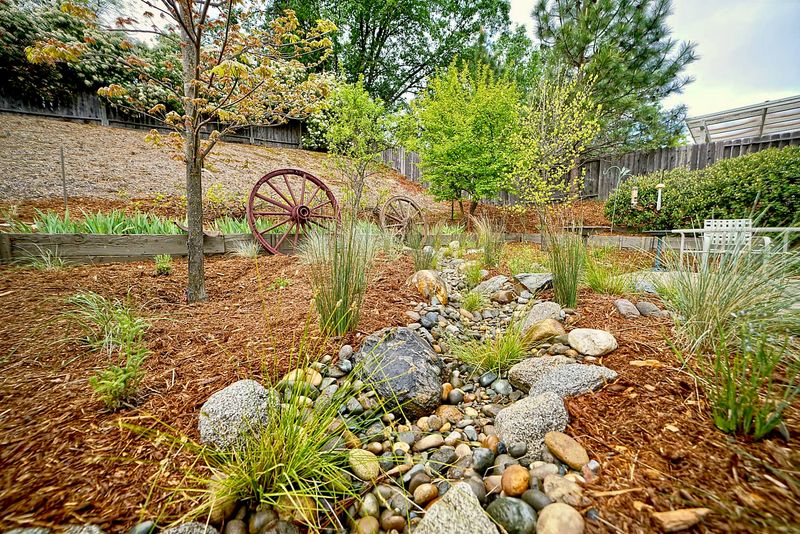
Rain may be seasonal in much of California, but a dry creek bed can bring year-round interest to a front yard. It introduces a sense of flow, solves some drainage challenges, and adds a natural pattern that keeps mineral-heavy landscapes from feeling flat.
Best of all, it can work with a firewise plan because the feature itself is mostly stone.
The secret is making it believable. A mix of rock sizes, gentle curves, and a few larger anchor stones helps the creek bed feel like part of the land instead of a decoration dropped in place.
Add low plantings along the edges, but keep them spaced enough that the channel still reads clearly.
On the visual side, a dry creek bed gives the eye something to follow from the sidewalk toward the house. That movement can make even a simple front yard feel more layered and custom.
It is especially helpful in homes with broad, open setbacks where gravel alone might look too still. Firewise does not have to mean rigid.
A well-shaped dry creek bed proves that safer design can still feel relaxed, regional, and full of landscape character.
10. Porch containers for color and seasonal change
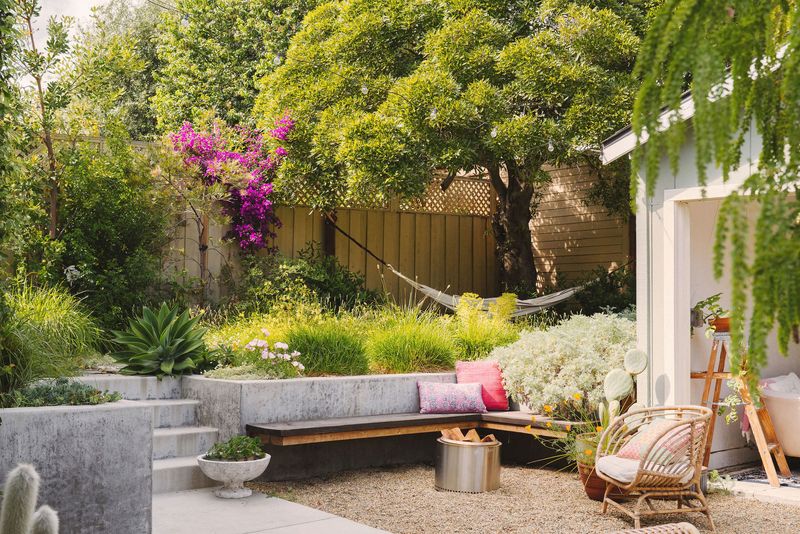
Sometimes the easiest way to keep a firewise front yard from feeling static is to move the color closer to the house in a controlled way. Porch containers let you refresh the look through the year without redesigning the whole landscape.
They also give the entrance a personal, lived-in quality that broad hardscape areas sometimes lack.
Containers are useful because they are flexible. You can feature seasonal bloom, bold foliage, or a pair of upright succulents that echo the rest of the yard.
Since they are concentrated near the porch, they create a focal moment right where guests naturally look.
Good container design is about scale and editing. Larger pots usually look better than several tiny ones, and repeating a material or color helps them relate to the house.
Keep placement thoughtful and avoid cluttering the entry path. In a front yard designed for lower fuel loads and easier maintenance, containers are like the finishing jewelry.
They deliver charm and variety without asking the entire landscape to do all the decorative work at once.
11. A shade tree with a clean understory
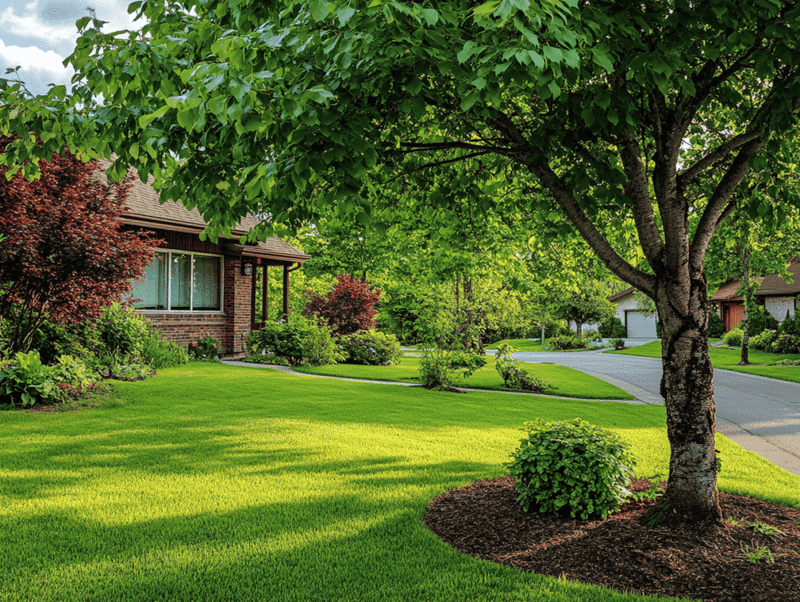
Ask most people what makes a yard feel finished, and many will mention a tree. One well-placed shade tree can add comfort, scale, and real presence to a front yard without turning the space into a tangle of risky planting.
The key is pairing that canopy with a simple, clean understory instead of crowding the base with dense shrubs.
That clean understory matters for both looks and management. It highlights the trunk and branch structure, makes maintenance easier, and keeps the area under the tree from becoming a hidden mess of dry debris and overgrowth.
Visually, it gives the yard a calm, park-like feel.
Choose species carefully for your region, lot size, and local guidance. Deciduous trees can be especially appealing because they shift with the seasons, offer summer shade, and let in more winter light.
Around the base, stick with low plantings, gravel, or other simple materials that keep the composition open. The result is welcoming and established, not stark.
In fact, a good tree often becomes the feature that ties the whole front yard together and makes every other firewise choice feel more generous.
12. Artful fencing, screens, and gates
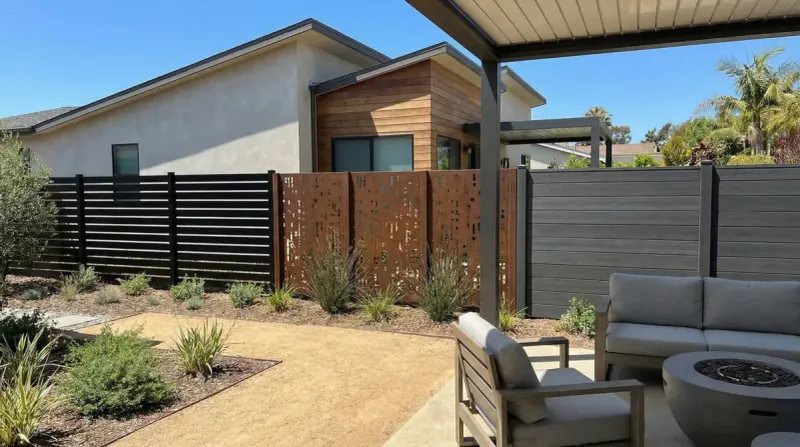
Not every front yard improvement has to come from plants. A thoughtfully designed gate, screen, or section of fencing can add warmth and personality while helping define outdoor space in a cleaner, more fire-aware layout.
For homes with sparse planting near the entry, that vertical detail can make the whole landscape feel more complete.
Materials do a lot of storytelling here. Powder-coated metal, weather-friendly wood accents used appropriately, or simple horizontal slats can give a home privacy, rhythm, and style without asking shrubs to do all the visual work.
Screens can also hide utility areas or create a backdrop for a small, controlled planting pocket.
The beauty of this choice is that it brings richness without adding plant density. Decorative fencing frames views, sharpens the architecture, and can make a modest front yard feel custom.
Keep the design in scale with the house and repeat lines or colors already present on the exterior so the effect feels connected. When the plant palette is intentionally restrained, architectural elements like these keep the yard from reading as empty.
They prove that firewise curb appeal often comes from composition, not just from the number of plants in the ground.