
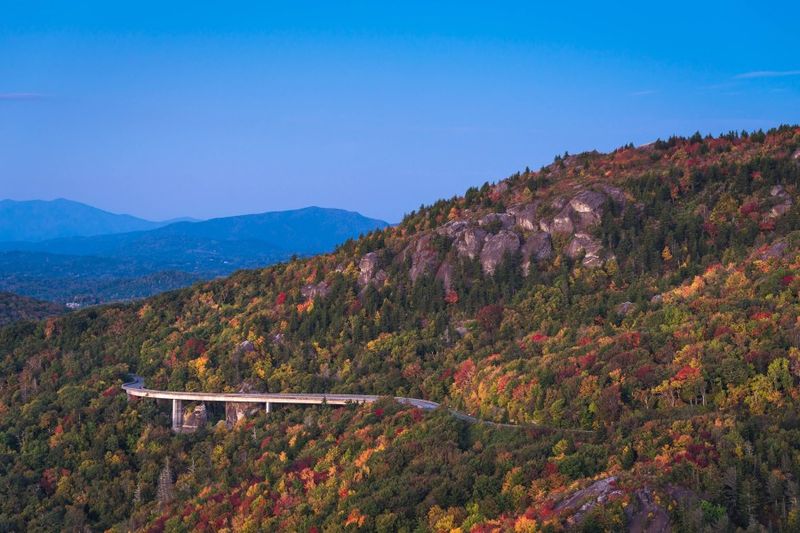
Fall color in North Carolina is shaping up to be anything but uniform this year. An August 2026 forecast from NC State predicts a patchwork display, with some areas showing vivid color while others may see muted tones, early browning, or leaves dropping before peak.
Drought, warmth, uneven rainfall, and the natural variety of tree species across the state are all part of the picture. September and October weather will still play a big role in how the season actually turns out.
The 2026 outlook points to patchy fall color, not a statewide verdict
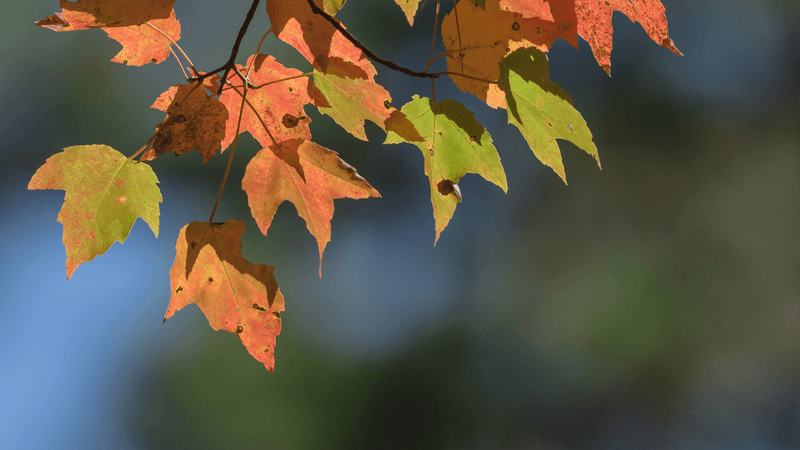
NC State forestry professor Robert Bardon described the 2026 fall foliage forecast as a “patchwork” of fall color across North Carolina, not a uniform statewide display. That word choice matters.
The forecast, issued August 26, 2026, is an outlook based on current conditions, not a final assessment of how the season will look once it actually unfolds in September and October.
The reasoning behind the patchwork prediction comes down to how differently conditions vary from one part of the state to another right now. The Piedmont and Coastal Plain have been dealing with ongoing drought and a warm fall temperature outlook, which can push trees toward early browning or leaf drop before they develop their strongest colors.
Meanwhile, parts of western North Carolina, including areas near Asheville, and portions of the northeastern Coastal Plain may see better color if adequate moisture continues through the fall season.
None of those regional examples should be read as a ranking of where the sharpest contrasts will appear. The forecast uses them to illustrate that site conditions, not a single statewide cause, are driving the expected variation.
A tree in a well-watered yard in the Piedmont may look completely different from a stressed tree of the same species two streets away.
The most useful way to read this forecast is as a heads-up that variation is expected, not as a guarantee of either poor color or vivid color in any specific place. Weather between now and peak season can shift the outcome considerably.
A stretch of sunny days with cool nights and adequate rainfall could improve the display in areas currently looking unfavorable, while unexpected heat or drought could worsen it in places that now look promising. The season is still being written.
Daylight starts the color change while weather shapes the display
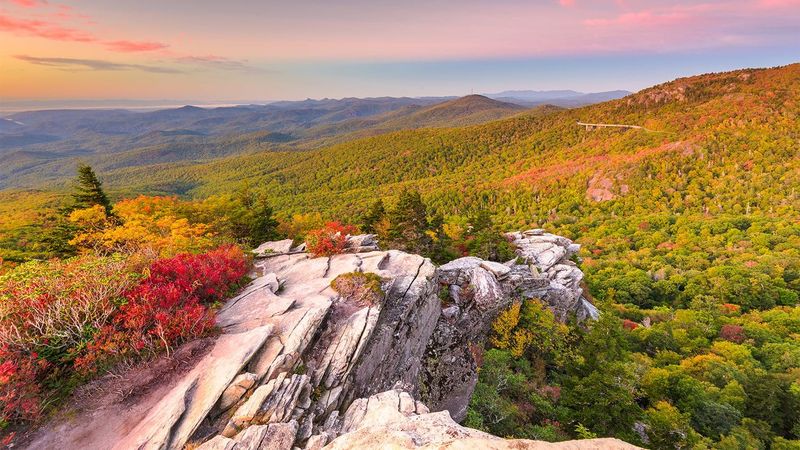
Leaves do not change color because of frost, and they do not wait for a single cold snap to begin the process. Shortening daylight is the primary seasonal trigger, and NC State Extension forestry materials explain that as days grow shorter, trees gradually reduce chlorophyll production.
Chlorophyll is the green pigment that dominates leaves through the growing season, and as it breaks down, the yellow and orange carotenoid pigments that were always present underneath become visible.
Red and purple colors follow a different path. Anthocyanins, the pigments responsible for those tones, are not hidden under the green the way carotenoids are.
They are actively produced during autumn under the right conditions: sunny days that allow sugars to accumulate in the leaf, combined with cool nights that slow the movement of those sugars out of the leaf. The result is a chemical reaction that generates the red and purple tones many people associate with peak fall color.
Weather can support or undermine that process at every step. A hard freeze does not help the display; it can damage leaf tissue or force leaves to drop before they develop their full color.
NC State Climate Office notes that extended cloudy weather can reduce sugar production and limit red-pigment development, while heavy rain and wind can physically strip leaves from trees before peak color arrives. The ideal setup is adequate soil moisture from the growing season, a run of sunny days, and cool but not freezing nights.
Understanding this process helps separate normal seasonal change from weather-related disruption. If a tree is coloring on schedule and the leaves look healthy before they drop, the biology is working.
If color is arriving unusually early, browning before it develops, or disappearing faster than expected, conditions during the growing season or the fall itself may be interfering.
Drought and warmth may brown leaves before peak color
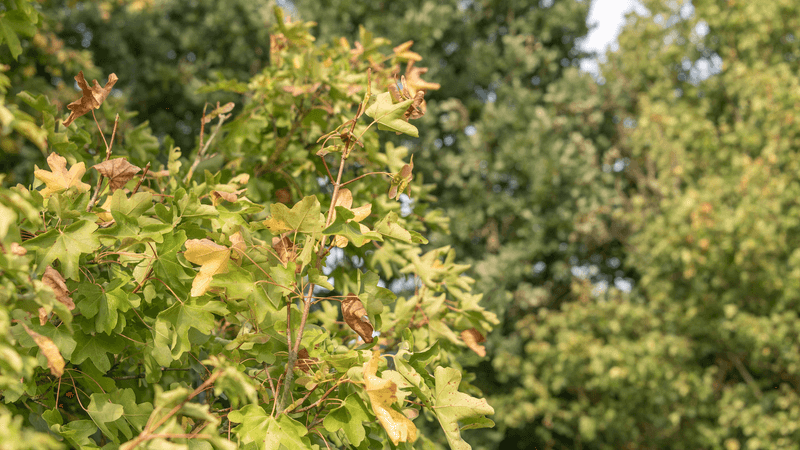
Water stress is one of the more important explanations behind the 2026 patchwork forecast, particularly in parts of North Carolina that have been running dry through the growing season. When a tree cannot pull enough water from the soil, it has a built-in response: shed leaves to reduce the surface area losing moisture.
That process can happen weeks ahead of normal autumn timing, and the leaves that drop early often skip the vivid color stage entirely, going from green to brown without much in between.
The 2026 outlook from NC State specifically flags drought and above-normal temperatures as factors working against favorable color in some parts of the state. The forecast notes that wetter locations, including eastern trees near rivers, streams and lakes, may retain healthier leaves and potentially better color if adequate moisture continues.
That kind of site-level difference can put two trees of the same species on very different seasonal schedules.
Drought stress does not automatically mean every tree in a dry area will have a poor fall. Individual trees vary in root depth, access to groundwater, species tolerance, and the amount of shade or wind exposure they face.
NC Cooperative Extension guidance on drought stress notes that symptoms like brown leaf margins, curling, and premature leaf drop can have multiple causes, and that diagnosis requires looking at the whole picture.
Above-normal temperatures compound the drought problem by increasing the rate at which trees lose water through their leaves. Warmer nights also reduce the temperature contrast that helps trigger red-pigment production.
Together, drought and warmth can push a tree toward early senescence, meaning the leaf-shedding process begins before the season’s color chemistry has fully run its course. NC State’s Extension Gardener Handbook reinforces that early discoloration or drop should be evaluated in context rather than assumed to have a single cause.
Elevation, rainfall and exposure create different fall-color calendars
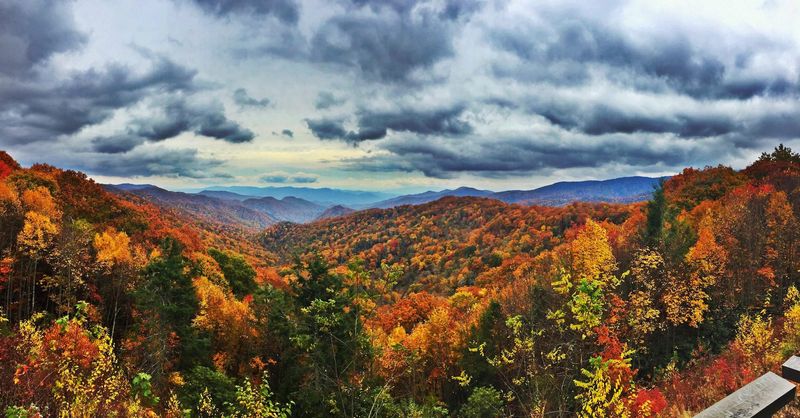
North Carolina’s geography alone guarantees that fall color never arrives all at once. According to NC State’s College of Natural Resources fall foliage guide, color typically begins at the highest mountain elevations in late September, works down through lower mountain elevations and the foothills through October, reaches the Piedmont in late October or early November, and arrives in the Coastal Plain in early to mid-November.
Every one of those windows shifts depending on the actual weather in a given year.
Elevation matters because temperature drops as altitude increases, and cooler conditions arrive earlier at higher elevations. A tree at 5,000 feet on a western North Carolina ridge may be approaching peak color while a tree of the same species in Charlotte is still deep green.
That natural lag is part of what makes fall color in the state feel like a moving wave rather than a single event, and it is also part of why the 2026 patchwork forecast is not automatically bad news for every region.
Rainfall complicates the picture in both directions. Rain can relieve drought stress in areas that have been dry, giving trees a better foundation for healthy color development.
The NC State Climate Office explains that persistent cloud cover accompanying that rain can reduce the sunlight needed for red-pigment production, so a rainy stretch does not automatically translate to vivid color. Heavy rain and wind during or after peak color can knock leaves down early, shortening the display window even when the color itself is good.
Slope and aspect add another layer. The NC State 2026 forecast points to sun exposure and moisture access as key variables that can make two adjacent hillsides look completely different in the same week.
A south-facing slope dries out faster and warms up more during the day, while a north-facing slope may hold moisture longer and stay cooler, supporting different timing and intensity even within the same forest stand.
Species and yard conditions can make neighboring trees disagree
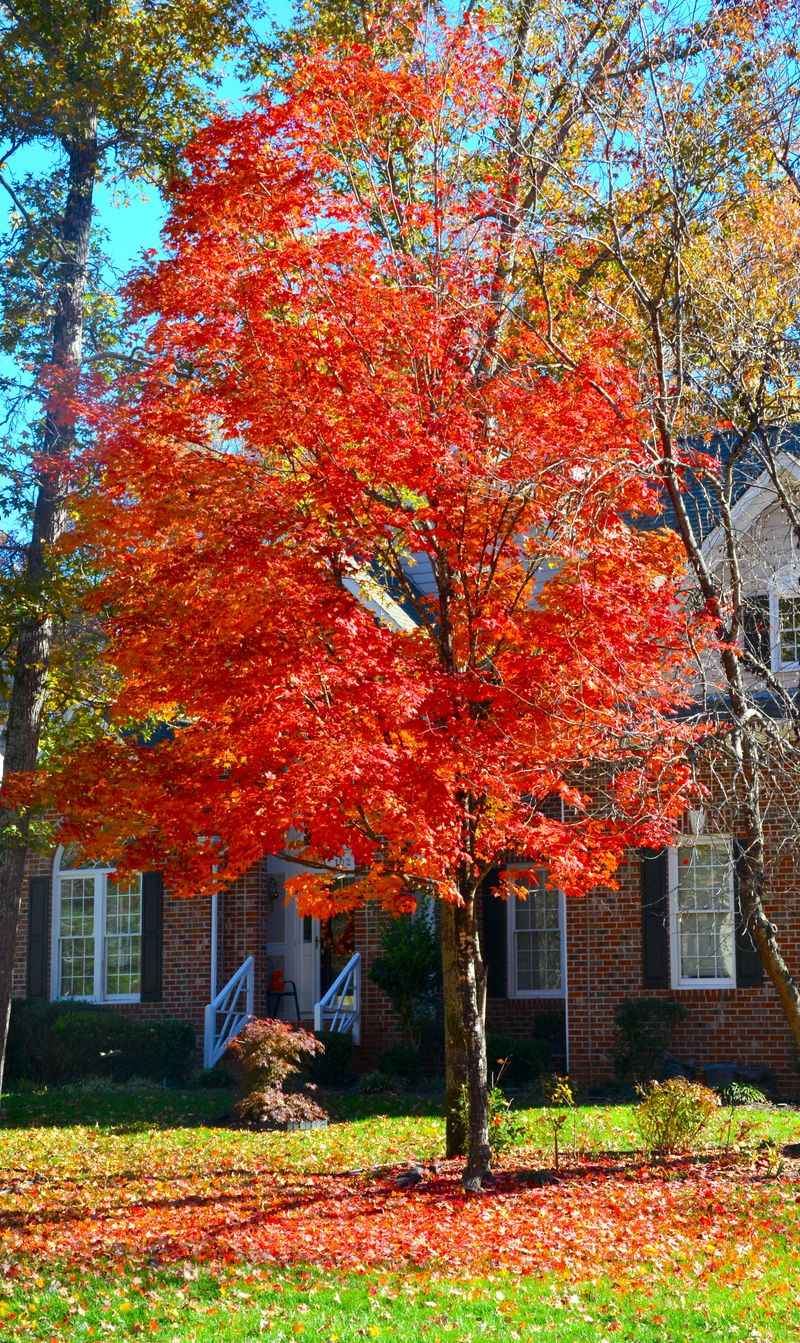
Even a single yard can look like several different seasons at once, and that is not a sign that something is wrong. Different tree species follow different internal schedules, produce different pigments, and respond differently to the same soil and weather conditions.
A red maple may be blazing orange while the white oak beside it is still mostly green, and the sourwood along the fence has already dropped half its leaves. NC State Extension forestry materials note that oaks, maples, sourwood, blackgum, sassafras, sweetgum and dogwood all color at different times and produce different pigment combinations, so a mixed yard will naturally look uneven under even the most favorable conditions.
Yard conditions add another layer of variation on top of species differences. A tree growing in compacted soil near a driveway faces more root stress than the same species planted in a mulched bed with good drainage.
A tree in full sun dries out faster than one shaded by a structure or a taller neighboring tree. NC State’s 2026 forecast specifically notes that trees near streams, rivers and lakes may hold healthier leaves because of better moisture access, a dynamic that can play out at the neighborhood scale when one property sits near a retention pond and another is on a dry ridge.
Slope, irrigation history, soil depth and root competition from nearby pavement or construction all contribute to how a tree enters fall. A tree that received consistent moisture through the growing season, even from a nearby lawn irrigation system, may color more normally than a stressed tree of the same species in a drier spot on the same block.
Before assuming that an unevenly colored tree has a specific problem, take a moment to consider its site conditions. Species identity, sun exposure, soil type and recent watering history can explain a lot of variation without pointing to disease or decline.
Observation first, conclusions second.
Brown margins and early leaf drop can signal water stress
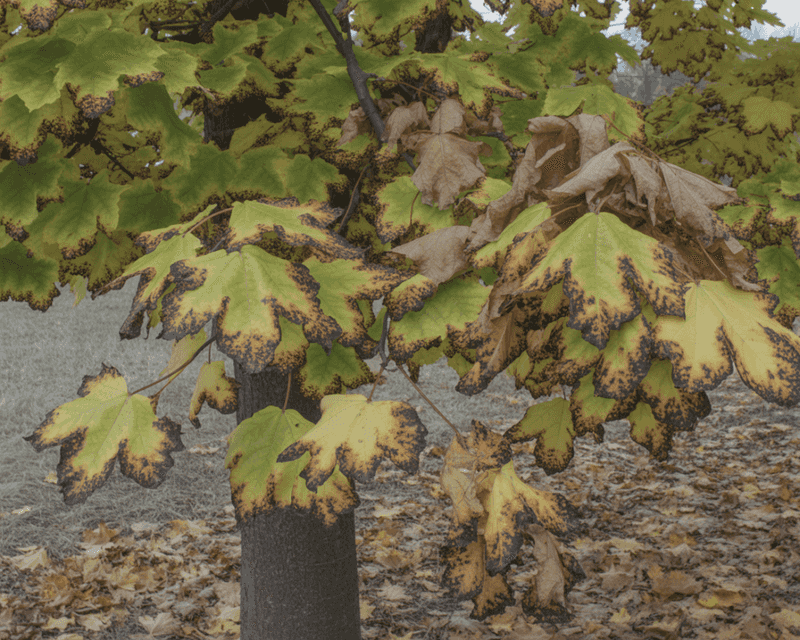
Knowing what to look for makes it easier to tell the difference between a tree that is simply entering fall on its own schedule and one that is struggling. Several visual symptoms are commonly associated with drought stress, and NC Cooperative Extension’s drought-stress guidance lists brown leaf margins, leaf curling, wilt that persists into the morning hours, scorched leaf surfaces, and premature leaf drop as recognized signs worth paying attention to.
These symptoms tend to appear across the canopy rather than in one isolated section, and they often affect the outermost or uppermost leaves first because those positions lose water fastest.
Timing and distribution are the two most useful diagnostic tools available to a homeowner without lab equipment. Drought-related browning typically shows up during or after extended dry, hot periods and affects multiple leaves or branches in a pattern that follows sun exposure or root zone.
If a tree is browning uniformly across its canopy in late summer after a dry stretch, water stress is a reasonable explanation to consider.
The complication is that several other problems can produce overlapping symptoms. Heat, root damage from construction or compaction, soil-borne issues, insect feeding, foliar disease, and normal seasonal senescence can all cause discoloration or early leaf drop.
NC State’s Extension Gardener Handbook on diseases and disorders makes clear that brown leaves do not identify a single cause, and that symptoms need to be read alongside the plant species, the timing, and the distribution pattern before drawing any conclusions.
A tree that browns and drops leaves in August after a hot, dry summer is telling a different story than one that shows the same symptoms in a small, isolated section while the rest of the canopy stays green and healthy. Recognizing that difference is the first step toward figuring out what, if anything, needs to happen next.
Support stressed trees without trying to manufacture brighter color
The most useful thing most North Carolina homeowners can do for trees showing drought stress right now is focus on reducing ongoing stress rather than chasing a brighter fall display. Watering can help, but the goal is supporting tree health, not producing more vivid color.
NC Cooperative Extension landscape guidance recommends prioritizing newly planted trees and shrubs, young trees, shallow-rooted plants, and established trees already showing visible stress symptoms. Those are the plants most vulnerable to lasting damage from a drought year.
Water slowly and thoroughly across the full root zone rather than applying frequent, shallow sprinkling. Shallow watering encourages roots to stay near the surface, which makes trees more vulnerable during the next dry stretch.
A commonly cited rule of thumb from older Extension materials suggests about one inch of total water per week, including rainfall, as a rough landscape guideline, but soil type, drainage, plant age, species tolerance and any current local water restrictions all matter more than that number in practice. Check soil moisture a few inches down before watering; if it still feels moist, hold off.
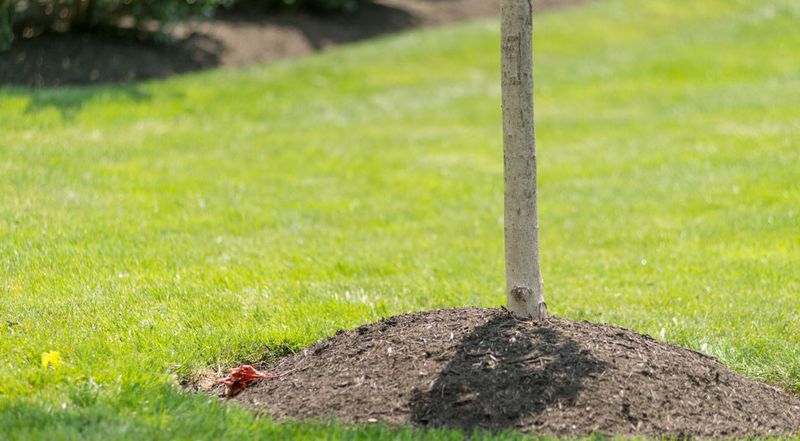
A 2- to 3-inch layer of organic mulch spread across the root zone is one of the most effective low-effort steps available. Mulch slows evaporation from the soil surface, moderates soil temperature, and reduces competition from grass and weeds.
Keep it a few inches away from direct contact with the trunk and root collar to avoid creating conditions that favor rot or pest problems.
NC Extension drought guidance advises against hard pruning, routine fertilizing, or pesticide applications during serious drought unless a specific problem has been diagnosed and treatment is actually necessary. Fertilizer pushes new growth that the tree may not have the water reserves to support, and unnecessary pruning adds wounds the tree must heal under stress.
None of these steps will restore leaves that have already browned or dropped, and none of them should be sold as color-enhancement treatments. They are health investments, and a healthier tree is simply better positioned to perform well in future seasons.
Unusual spots or isolated dieback deserve a diagnosis
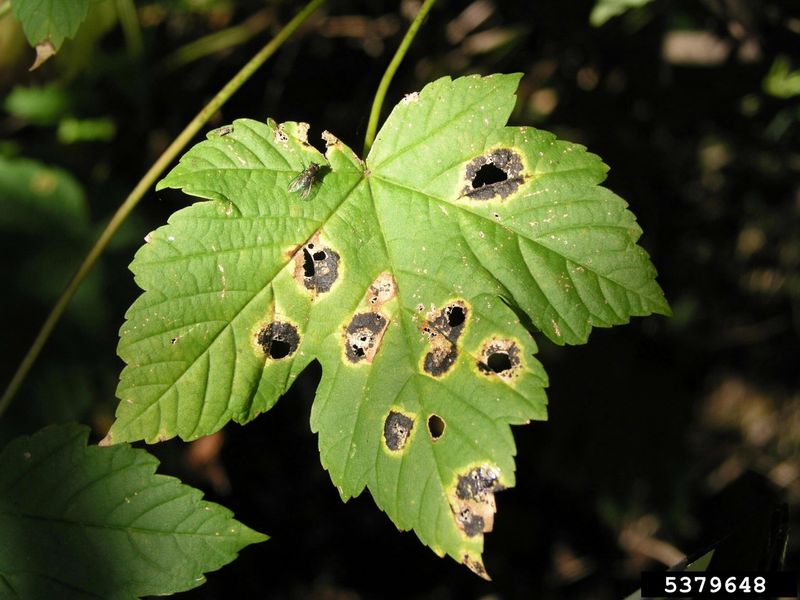
Drought stress can explain a lot of early browning, but certain visual patterns suggest something else may also be at play. If leaves show distinct spots with defined edges, lesions, holes, or small black fruiting bodies on the leaf surface, those symptoms go beyond what water stress typically produces.
Similarly, if one branch or one side of a tree changes color weeks ahead of the rest while the surrounding canopy stays green and healthy, that isolated pattern warrants a closer look before assuming drought is the whole story.
NC State Extension’s anthracnose guide identifies anthracnose as a fungal disease that can cause irregular brown lesions, blighted shoot tips, and premature leaf drop in shade trees, including oaks and maples. NC State’s maple disease resource also covers maple leaf spot diseases that can produce discoloration patterns easily confused with drought or heat scorch.
Scorch diseases on shade trees, meanwhile, can mimic drought symptoms closely enough that distinguishing them without closer examination is difficult.
None of those names should be treated as a self-diagnosis tool. Symptoms are not unique to a single disease, and the same visual pattern can result from different causes depending on the species, the season, and the tree’s history.
Applying fungicide before identifying the actual problem is both ineffective and potentially harmful, and it does nothing for symptoms caused by drought, insects, or root damage.
The practical path forward is straightforward. Photograph the entire tree from a distance and then take close-up shots of affected leaves, branches, and the trunk.
Note when the symptoms appeared, which parts of the tree are affected, and whether neighboring plants show similar signs. Then contact your county Extension office or NC State’s plant-disease diagnostic services for guidance before reaching for any treatment.
A correct diagnosis is the only reliable starting point.
Read the forecast tree by tree, not as a statewide verdict
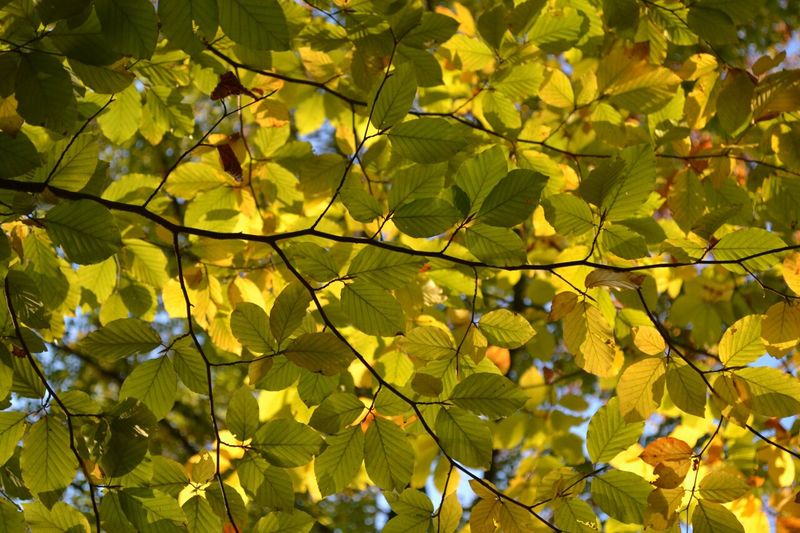
The 2026 NC State forecast points toward uneven fall color across North Carolina, driven by the interaction of drought, above-normal temperatures, uneven rainfall, elevation, site conditions and species differences. That is not a prediction that the entire state will have a poor season.
The forecast itself acknowledges that September and October weather can still shift the outcome, and that some areas, particularly those with better moisture access, may see stronger color than the current conditions suggest.
For homeowners, the most practical takeaway is to read what is happening in your own yard rather than waiting for a statewide summary. Notice which trees are coloring early, which ones are showing brown margins or curling leaves, and which ones look healthy.
Consider the site conditions around each tree: how much sun it gets, what the soil drainage is like, whether it has received any water during the dry stretch, and what species it actually is. Those observations will tell you more about what your trees need than any regional average.
Support the trees that matter most by conserving soil moisture, applying mulch where it is missing, and watering according to actual soil conditions and local restrictions. NC Extension drought guidance is clear that these steps reduce ongoing stress, not that they guarantee a vivid display.
If unusual symptoms appear, photograph them and get a diagnosis before treating anything. The season is still unfolding, and the trees in your yard will tell their own story regardless of what any forecast says about the broader region.