
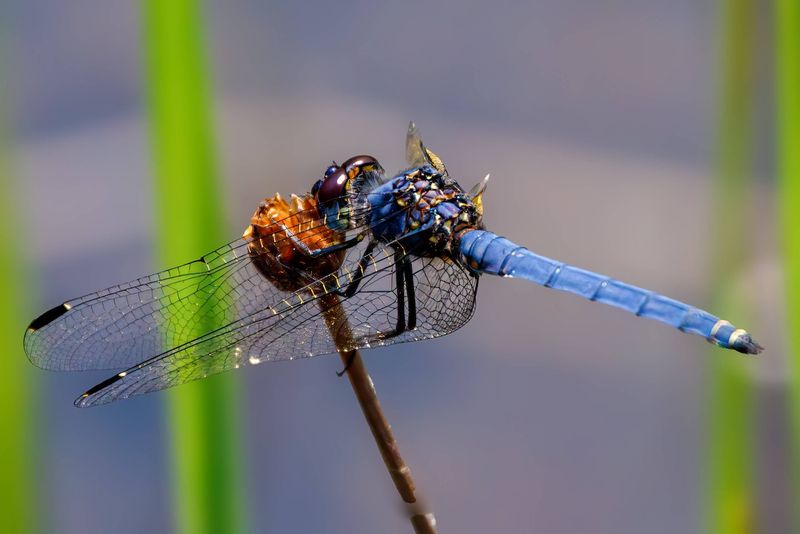
Dragonflies are some of the most effective aerial hunters in the insect world, and California homeowners can make their yards more welcoming to these beneficial insects with a few targeted changes. A sunny perch, open airspace, and the right plants can give dragonflies what they need to bask, patrol, and hunt.
Adding a properly managed water feature may also support the aquatic stage of their life cycle, where young dragonflies called nymphs prey on mosquito larvae. That said, a dragonfly-friendly yard works best as one part of a broader mosquito management plan, not as a stand-alone fix.
Build a usable hunting zone instead of relying on a decorative perch
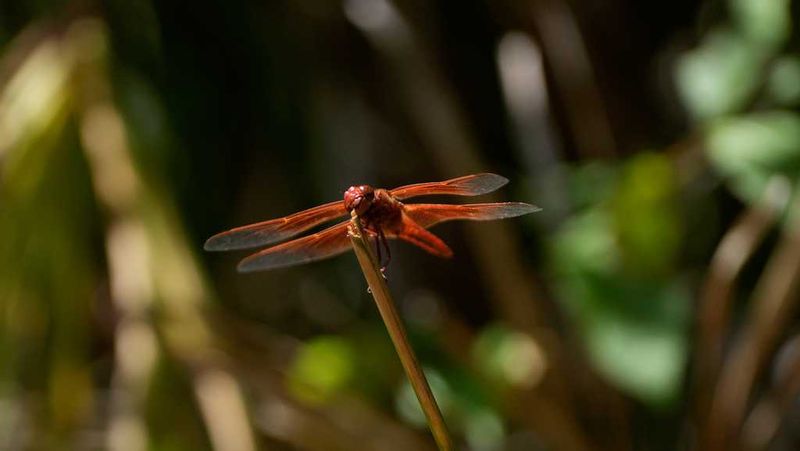
Dragonflies are cold-blooded, sun-dependent hunters that need more than a single decorative object to make a yard usable. Xerces Society habitat guidance describes how dragonflies and damselflies rely on vegetation and exposed structures for basking, territorial patrol, roosting, and emergence from their aquatic nymph stage.
A yard that combines sun, open airspace, upright surfaces, and insect prey gives them the full set of conditions they need, not just a place to land.
Sun is the starting point. Because dragonflies regulate their body temperature by basking, a shaded yard with little direct light is unlikely to hold them for long.
Open airspace matters just as much: hunting species need room to accelerate, change direction, and intercept prey mid-flight. A setup that crowds a perch into a corner between a fence and a dense hedge removes that room entirely.
Nearby shrubs or evergreen plants can buffer strong winds without closing off the hunting zone. The goal is a partially sheltered open area, not a fully enclosed one.
A patch of lawn, a patio edge, or a garden bed with low ground cover in front of taller plantings all create the kind of open corridor where dragonflies can work.
Insect prey rounds out the picture. Adult dragonflies are generalist predators that eat flies, midges, beetles, gnats, and mosquitoes among many other small flying insects.
A pesticide-free planting area that supports a diverse insect community gives them more to hunt. Framing this arrangement as conditions that may help dragonflies use the yard is more accurate than promising a measurable mosquito reduction, but the habitat concept is sound and supported by documented dragonfly behavior.
Place sturdy perches in sunny, open airspace
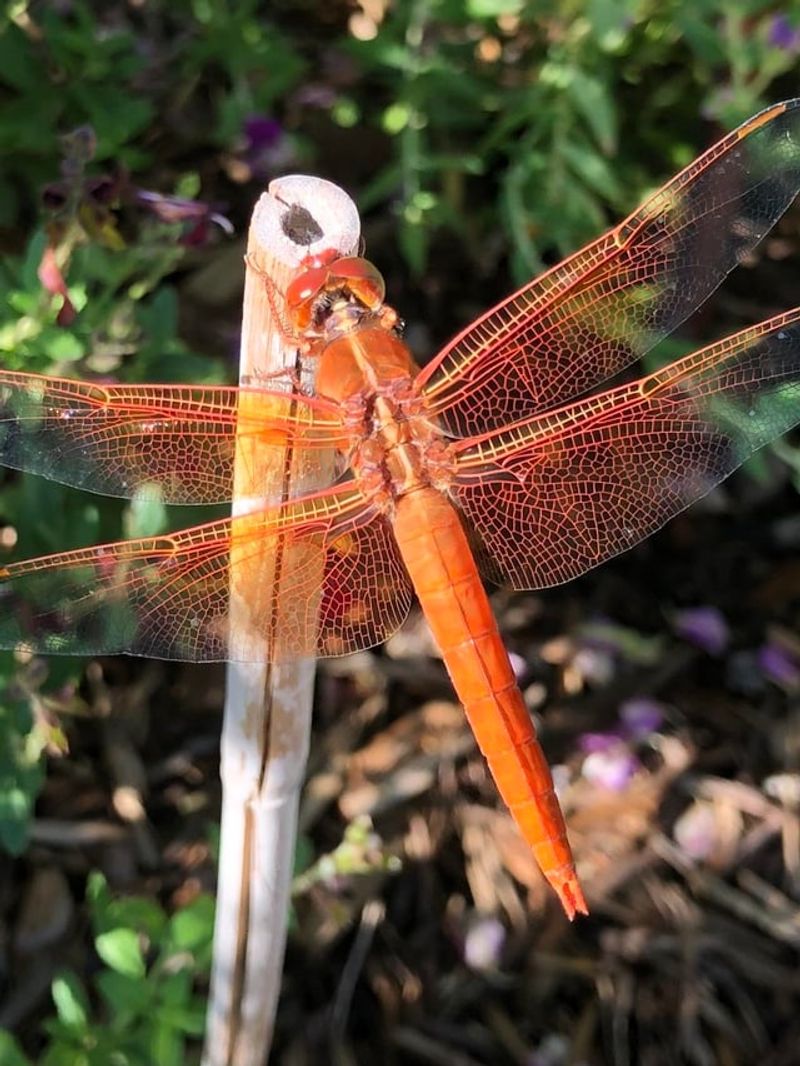
The most immediate habitat improvement most California homeowners can make costs almost nothing. Migratory Dragonfly Partnership pond habitat guidance documents that dragonflies perch on plant stems, sticks, branches, rocks, fence wires, and other exposed upright surfaces.
Preserving tall, stiff stems from ornamental grasses or dried perennials, or adding a few sturdy garden stakes at varying heights, gives visiting adults a ready-made network of landing spots.
Placement matters more than the material. Perches should overlook an open area, whether that is a section of lawn, a meadow planting, a patio edge, or the surface of a pond.
Sun exposure is critical: a stake tucked under a tree canopy or against a shaded fence wall is less useful than one standing in a spot that gets direct sun for most of the day. Penn State Extension notes that open airspace helps hunting species patrol effectively, while sun helps them warm up and stay active.
Scatter several perches across the yard rather than grouping them all in one spot. Dragonflies are territorial, and different individuals may claim different perch points at different times of day.
A mix of heights, from knee-level stakes to shoulder-height stems, accommodates species with different hunting styles.
One important clarification: perches support adult dragonfly behavior, but they have not been shown to reduce mosquito abundance by themselves. An adult using a perch may catch mosquitoes among many other flying insects, but no tested homeowner threshold or universal perch arrangement establishes that adding stakes to a yard will reliably lower mosquito counts.
The perch is a welcome mat, not a mosquito trap.
A well-managed pond may provide aquatic habitat, but it cannot guarantee colonization
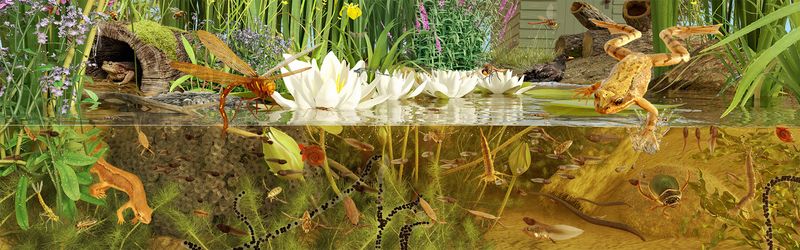
Water is where most of the dragonfly life cycle actually happens. Adults mate and lay eggs near or on water, and the aquatic nymphs that hatch live underwater for months to years before climbing out to emerge as adults.
A properly structured pond or water feature can provide the conditions nymphs need to develop, and it may support colonization when local habitat, water quality, and species allow.
The features that matter most are shallow margins that let nymphs climb out for emergence, emergent plants such as rushes or sedges that provide vertical surfaces, floating or submerged vegetation for shelter and egg-laying, and patches of open water where adults can patrol. Xerces Society backyard pond guidance emphasizes that these structural elements, combined with nearby adult perches and upland vegetation, create a more complete habitat than open water alone.
Odonata Central pond habitat guidelines reinforce that vegetation diversity and structure generally matter more than any single plant species or pond shape. A small but well-planted feature with varied depth zones is more useful than a large, bare-sided ornamental pool.
A persistent, structured wildlife pond is fundamentally different from a stagnant bucket or a birdbath. A birdbath may attract visiting wildlife, but it does not provide the aquatic vegetation, emergence surfaces, refuge, or water permanence that dragonfly development requires.
Do not expect a shallow dish of water to establish a breeding population.
Even a well-designed pond cannot guarantee that dragonflies will arrive, breed, or complete their life cycle. Results depend on local species, nearby wetlands and habitat corridors, water quality, temperature, and disturbance levels.
An unmanaged or poorly designed feature can also worsen mosquito problems rather than help. In California, a pond is an optional addition, not a universal requirement, and homeowners should weigh water availability, local restrictions, drought conditions, and fire-conscious landscaping goals before installing one.
Choose diverse plants that support prey without wasting water
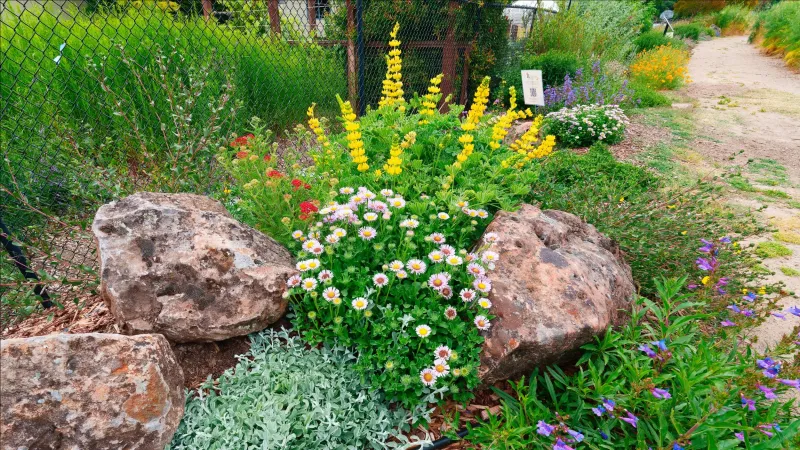
Plant choices shape how useful a dragonfly habitat actually is, both in and around the water. For a pond or water feature, the goal is structural variety rather than any single magic species.
Migratory Dragonfly Partnership guidance explains that aquatic plants contribute shade, oxygenation, shelter, egg-laying surfaces, emergence supports, and habitat for the small prey organisms that nymphs eat. A mix of emergent, floating, and submerged plants covers those functions better than a monoculture of one type.
Above the waterline, the terrestrial planting zone matters just as much. Penn State Extension notes that adult dragonflies are generalist predators that hunt flies, midges, beetles, gnats, and mosquitoes among many other small flying insects.
A pesticide-free, structurally layered planting area, with ground cover, mid-height perennials, and taller shrubs or grasses, supports the diverse insect community that adults actually depend on. Eliminating all pesticides from the area is especially important because broad-spectrum products can strip out both pest and beneficial insects.
Dense, damp, shaded vegetation close to seating areas is a different matter. Unmanaged thickets can shelter resting adult mosquitoes near people.
The distinction to keep in mind is between insect-supporting plant diversity in sunny, open areas and unmanaged, heavily shaded tangles directly adjacent to where people spend time.
California Department of Water Resources guidance on native plants points out that California-native and regionally appropriate species can support biodiversity without demanding high water inputs. For any planting near a water feature or in a yard subject to local restrictions, checking WUCOLS or asking the local water agency for region-specific guidance will help match plant choices to actual water availability.
A dragonfly-friendly yard should not become a high-water landscape in a state where drought and water limits are a year-round reality.
Keep fish and broad-spectrum insecticides out of the habitat
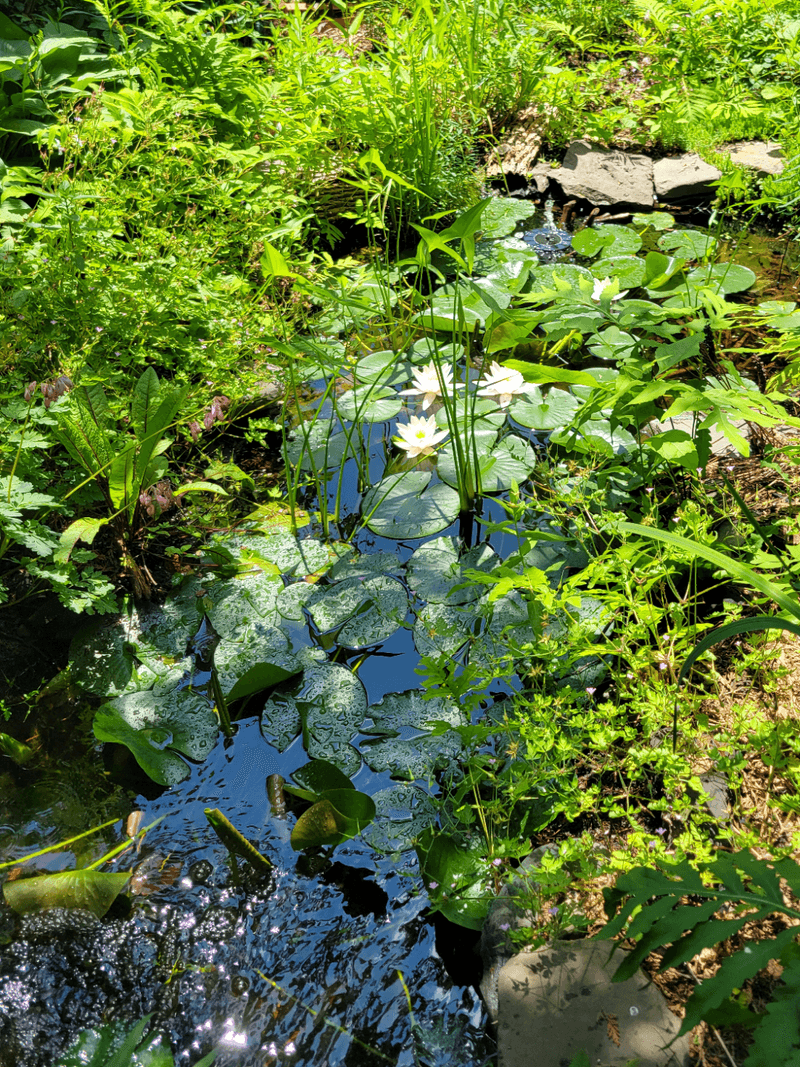
Two management decisions can undo an otherwise well-designed dragonfly habitat: adding fish and using broad-spectrum insecticides nearby. Both remove key elements that dragonflies depend on, and both are worth addressing before the first plant goes in the ground.
Fish are effective predators of aquatic invertebrates, including dragonfly and damselfly nymphs. University of Minnesota Landscape Arboretum research notes that even clean, well-oxygenated water bodies can be poor odonate habitat when they contain too many fish.
A fishless wildlife pond gives nymphs a much better chance of surviving long enough to emerge as adults. Ornamental fish kept in a separate, covered container or a different part of the yard can coexist with a fishless habitat pond nearby.
California homeowners sometimes hear that mosquitofish are a natural solution for ornamental ponds. UC IPM mosquito guidance is clear on this point: releasing nonnative mosquitofish into California streams, ponds, or lakes is illegal.
Beyond the legal issue, mosquitofish eat aquatic invertebrates broadly and can harm the same nymph populations a dragonfly pond is meant to support.
Broad-spectrum insecticides present a parallel problem above the waterline. California Department of Water Resources guidance on native-plant gardening notes that reducing or eliminating pesticides allows beneficial pest controllers to thrive.
Routine backyard spraying for mosquitoes or other insects can remove the flies, midges, and small beetles that adult dragonflies hunt, making the yard less hospitable even if the perches and plants are perfect. Targeted, label-compliant treatments applied only when and where needed are a far better fit for a wildlife-friendly yard.
Fishless does not mean maintenance-free. A pond without fish still needs regular monitoring for mosquito larvae, appropriate water quality management, and plant upkeep to stay functional as habitat rather than becoming a stagnant breeding site.
Make standing-water removal the foundation of mosquito control
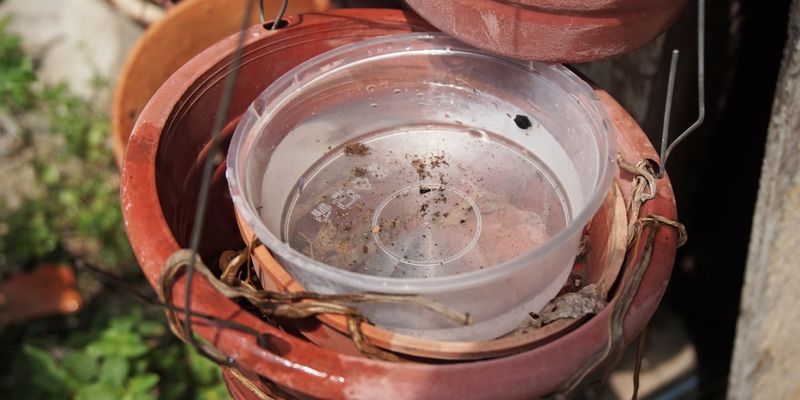
Before any habitat feature goes in, the single most reliable mosquito step is eliminating the small containers that let mosquitoes breed close to the house. CDC mosquito control guidance recommends emptying and scrubbing or covering saucers, buckets, toys, tires, birdbaths, rain barrels, and any other containers that hold water, doing so at least once a week.
Scrubbing matters because mosquito eggs can stick to container walls and survive even after the water is dumped.
California presents a specific challenge. Invasive Aedes mosquitoes, which can transmit diseases and bite aggressively during the day, can develop in very small amounts of standing water, including amounts that collect in a bottle cap or a folded tarp.
UC IPM mosquito guidance recommends checking the yard after every rain and addressing any container or surface that holds water for more than a few days. Gutters, low spots in tarps, and saucers under potted plants are common sources that homeowners overlook.
A dragonfly habitat pond requires its own mosquito monitoring plan. Check the water surface weekly for wriggling larvae.
If larvae appear and the pond cannot be drained, an appropriately labeled larvicide may be necessary. EPA guidance on Bti identifies products containing Bacillus thuringiensis israelensis as targeting mosquito, black fly, and fungus gnat larvae, but homeowners must read and follow the product label and use the product only in water bodies or containers approved for that use.
Local vector-control districts can advise on appropriate products and timing for California conditions.
Dragonflies cannot replace personal protection or public-health mosquito control. Mosquitoes fly in from neighboring properties and from areas well beyond any single yard.
Screens on windows and doors, EPA-registered repellents, and protective clothing remain essential, especially during peak biting hours. A dragonfly-friendly yard is a useful addition to that plan, not a substitute for it.
Use dragonfly habitat as one layer of a healthier California yard
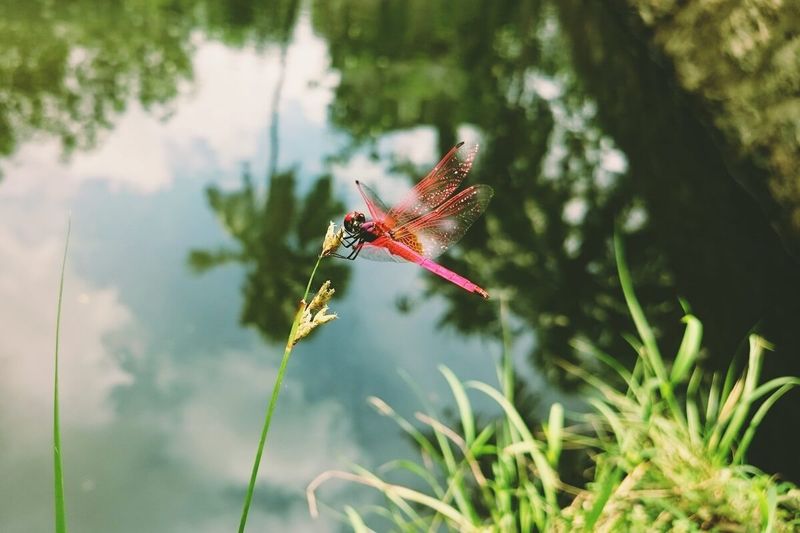
Putting a dragonfly-friendly yard together follows a logical sequence. Start with sunny perches and open airspace, since those cost little and immediately support visiting adults.
Add diverse, pesticide-free planting that feeds the broader insect community dragonflies hunt. Consider a properly managed fishless pond only when local water availability, restrictions, and fire-conscious landscaping goals make it practical.
Xerces Society guidelines frame all of these elements together as habitat support, not as a mosquito-reduction guarantee.
A 2023 meta-analysis found that dragonfly and damselfly nymphs can consume substantial numbers of mosquito larvae under experimental conditions, averaging roughly 40 larvae per nymph per day and reducing larval populations by about 45 percent per day in those settings. That is a meaningful biological contribution, but it applies to nymphs in suitable aquatic habitat, not to adult dragonflies patrolling a yard with a few stakes in the ground.
Continue removing every other mosquito-breeding container on a weekly schedule regardless of how many dragonflies visit. CDC guidance is consistent on this point: source reduction is the homeowner’s most dependable tool, and no single biological element replaces it.
Define success in this yard as supporting dragonflies and broader biodiversity while possibly contributing to local mosquito suppression, not as eliminating bites or standing in for public-health protection. A yard that works well for dragonflies also tends to work well for native bees, beneficial wasps, and other predatory insects, making it a genuinely healthier outdoor space by any measure.