
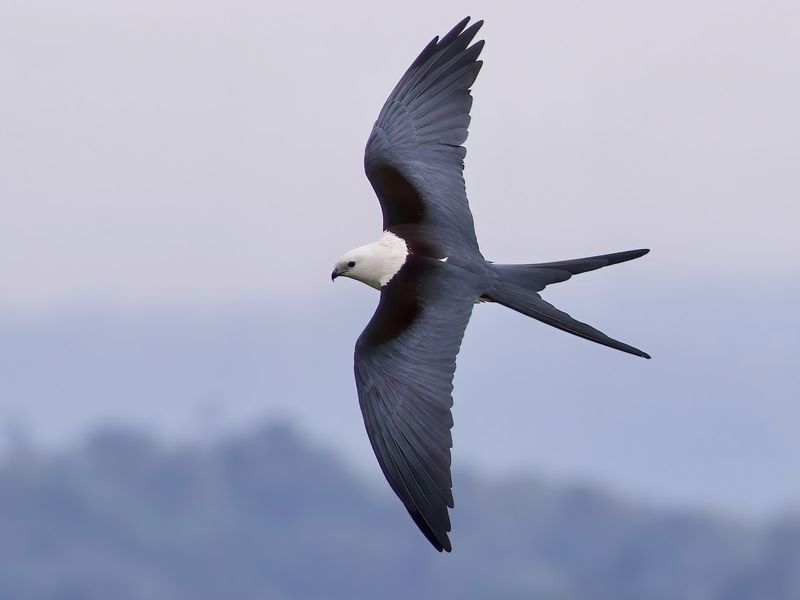
A big black-and-white bird gliding over your yard can stop you mid-step. If it was a Swallow-tailed Kite, you saw one of Florida’s most graceful fliers.
These birds eat flying insects and sometimes small animals like lizards, but a single flyover tells you less than you might think. Here is how to identify them, what they eat, and what a sighting can and cannot mean.
A circling kite does not reveal its exact meal
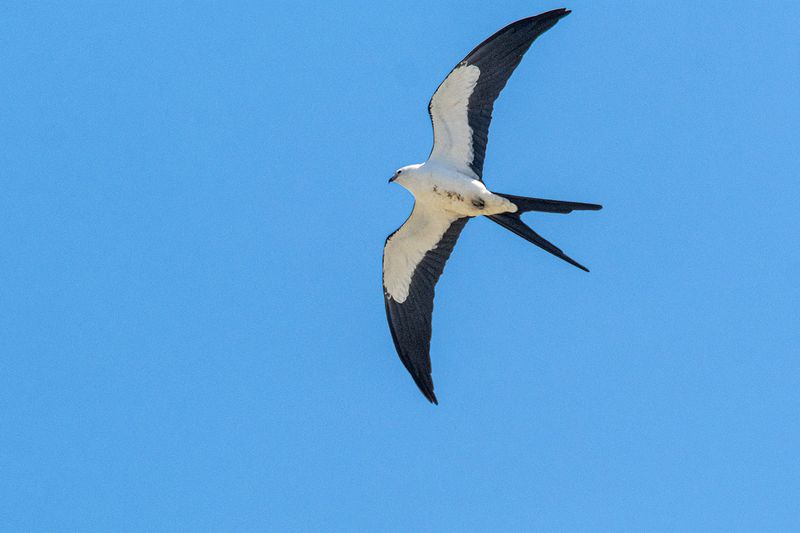
Watching a large bird sweep in slow loops above the treetops is thrilling, and it is natural to wonder what it is chasing. The honest answer is that circling alone cannot tell you.
A bird can glide, scan, ride warm air, or simply travel, and none of those behaviors confirms a catch.
What we do know comes from careful study of the species. Florida Fish and Wildlife Conservation Commission guidance describes Swallow-tailed Kites as birds that hunt on the wing, and it lists flying insects along with frogs, anoles, and snakes among their prey.
Cornell’s life history summary adds that adults mainly eat insects, while small vertebrates such as lizards are taken during the breeding season.
Dragonflies and lizards are both documented possible prey. That is different from saying the bird over your fence caught either one, or that the meal came from your property.
Kites roam widely, so the food could have come from a marsh, a river edge, or a pasture a mile away.
The sections ahead keep those two things apart: what research shows about the species, and what nobody can know from a glance at one bird in the sky.
Look for the deeply forked tail
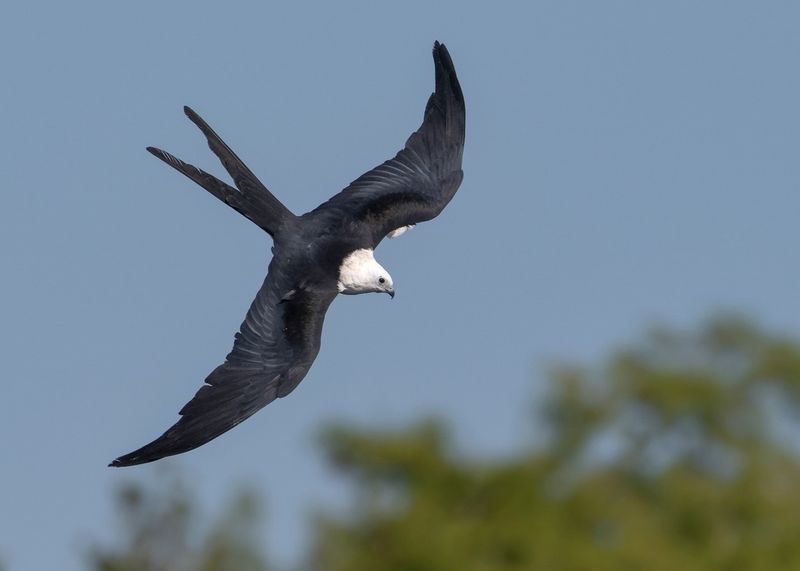
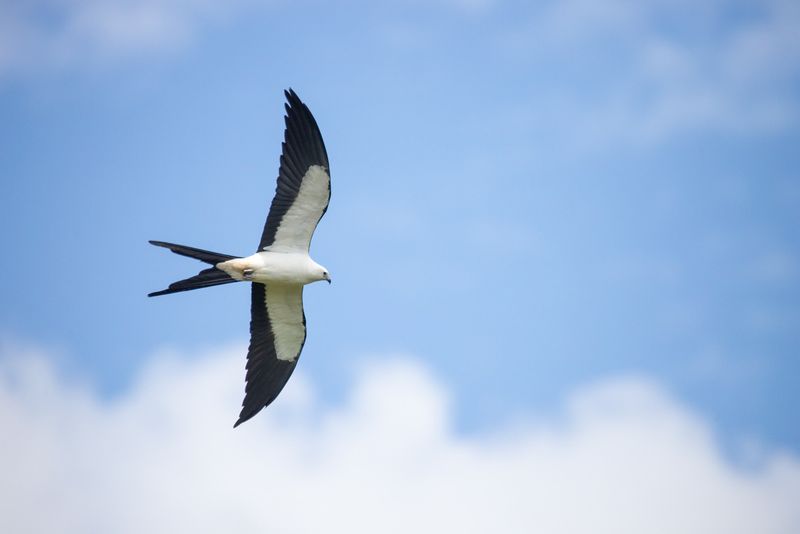
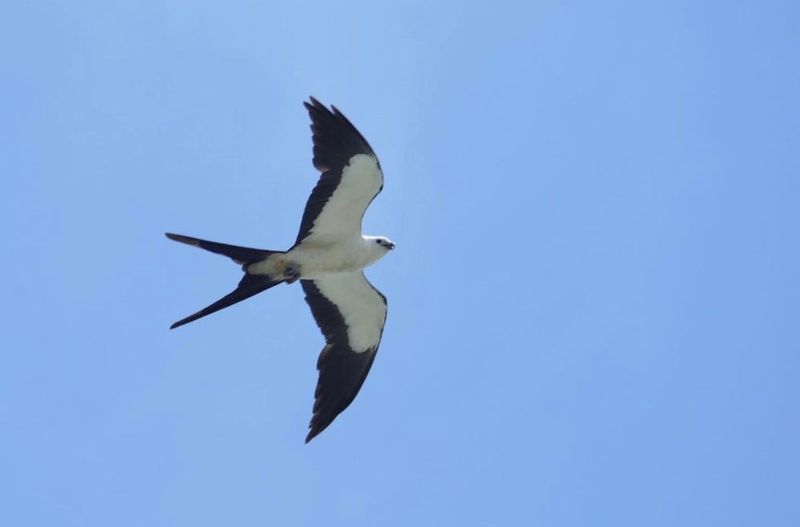
Before wondering what a bird is eating, make sure of what it is. Cornell’s identification page points to two standout features: bold black-and-white plumage and a deeply forked tail.
Picture a white head and belly set against black wings and a black tail. The tail is long and splits into two sharp points, a bit like the tail of a barn swallow scaled up to a hawk-sized bird.
That shape is easy to spot when the bird tilts and turns overhead.
These marks beat behavior as a clue. Vultures, hawks, and other large birds also circle, so loops in the sky prove nothing on their own.
Wing color pattern and tail shape are what separate a kite from look-alikes.
If you only catch a quick glimpse, try to note the tail first. Then look for the sharp contrast between dark and light.
A photo taken with a phone through binoculars can help you check the details later.
Flying insects are a major part of the adult diet
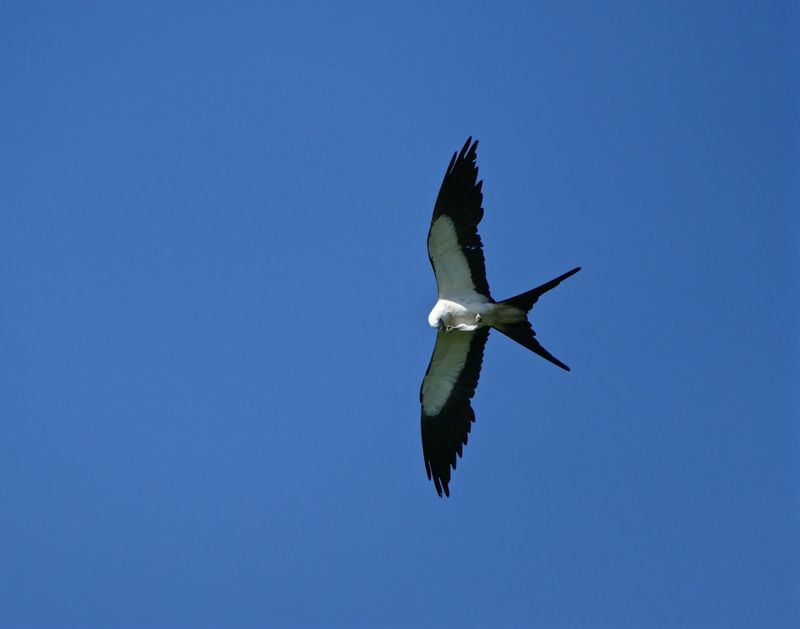
Swallow-tailed Kites catch and eat much of their food while flying. Sources such as FWC’s species profile describe them plucking prey from the air or from treetops without landing.
Flying insects are part of that menu.
Dragonflies are among the documented insect prey. They are fast and agile, which makes them a fitting target for a bird built for aerial turns.
Still, they are one possible meal, not the presumed catch in any particular sighting.
Adults are the key detail here. Cornell’s life history account describes adult kites as mainly insect eaters.
Food brought to nestlings can look different, and that is covered in the next section.
Diet also varies by place, season, and what is available. Not every kite eats the same thing on the same day.
If you see a bird make a sudden swoop, you can say it may have taken an insect. You cannot say which one, or where it came from, without a much closer view.
A practical habit: jot down the date, time, and behavior you saw. Notes like these are more useful than a guess about the meal.
Lizards belong in the nesting-season context
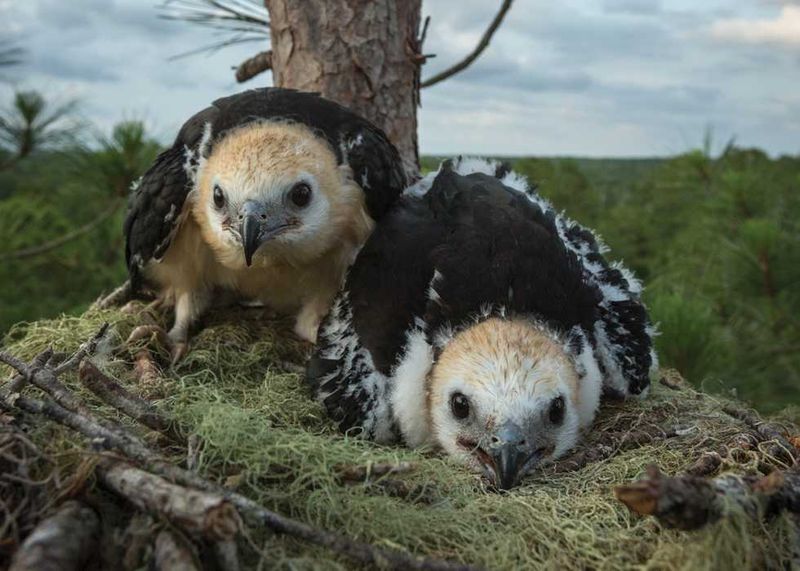
Lizards do show up in accounts of Swallow-tailed Kite prey, but they are not the defining food of adults. Cornell describes small vertebrates, including lizards, as prey taken during the breeding season, when parents are feeding young.
Nestlings need a lot of energy to grow, and animal prey can deliver it. That is why lizards fit best in a nesting-season picture rather than a general description of what every adult eats on any given day.
A Florida study gives a closer look. Researchers recorded food deliveries at eight southern Florida nests in 1988 and 1989.
They found vertebrates made up 97 percent of the biomass delivered to those nests.
That number describes those nests in those years. It is not a survey of all adult kites, and it says nothing about what a kite over your yard this week has eaten.
So if a headline pairs lizards with a circling kite, read it with care. Lizards are documented prey, with the strongest link to feeding young.
Nothing about a flyover shows a lizard was caught.
A kite overhead is not a yard health score
It is tempting to treat a rare bird overhead as a compliment to your garden. The trouble is that kites forage across large areas.
FWC notes they use habitats such as swamps, marshes, rivers, and open country, so one passing bird cannot show your yard is packed with insects or especially healthy.
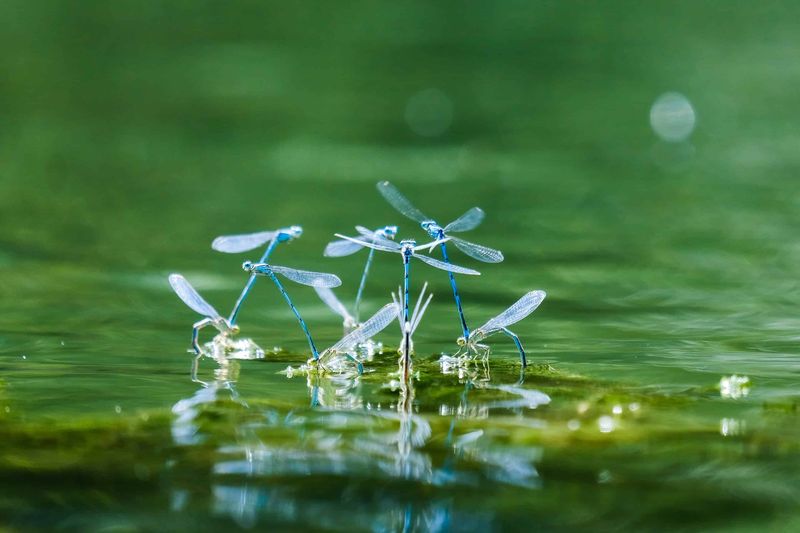
Dragonflies add another twist. Adult dragonflies zipping over a lawn tell you little about water quality.
They can fly some distance from where they grew up.
The water-quality story belongs to the larvae. UF/IFAS Gardening Solutions explains that dragonfly larvae live in water and that some of them are useful indicators of water quality.
Species differ, so the value depends on which ones are present.
If you want to support dragonflies at home, think about aquatic habitat. A pond or wet area with native plants around the edges gives larvae a place to develop.
That is a practical step you can take, and it is far more meaningful than reading a verdict into a bird’s flight path.
Late September is beyond the usual Florida departure period
Today is September 29, 2026, and that date matters. Swallow-tailed Kites are migratory, and published timing points to a departure well before now.
The Avian Research and Conservation Institute tracks their migration through Florida, and Audubon’s field guide describes most U.S.-breeding kites leaving between late July and early September.
A Florida Museum publication on the Aucilla kites supports the same general pattern, with Florida birds usually gone by mid-September.
That is a usual pattern, not a rule. A straggler could still turn up late, so a sighting is not impossible.
What we cannot do is announce a statewide event of kites circling yards this week. No dated local report backs that up.
If you think you saw one, check the field marks first. Then note the date, place, and what the bird did.
If you are unsure, a local birding group or eBird can help you compare your report with others nearby.
Watch the flight without disturbing the birds
Binoculars or a zoom lens are your best tools for enjoying a kite. They let you see the tail, the wing pattern, and the way the bird banks, all while it goes about its day.
FWC’s wildlife viewing ethics advise keeping a respectful distance and avoiding disturbance.
Do not walk toward a bird or approach a group of birds gathered at a roost. Stay put, stay quiet, and let the flight come to you.
Enjoy the sighting for what it is, and skip the guesses about a catch or a verdict on your yard.
A kite is a rare, elegant visitor, and sometimes the best thing you can do is simply look up.