
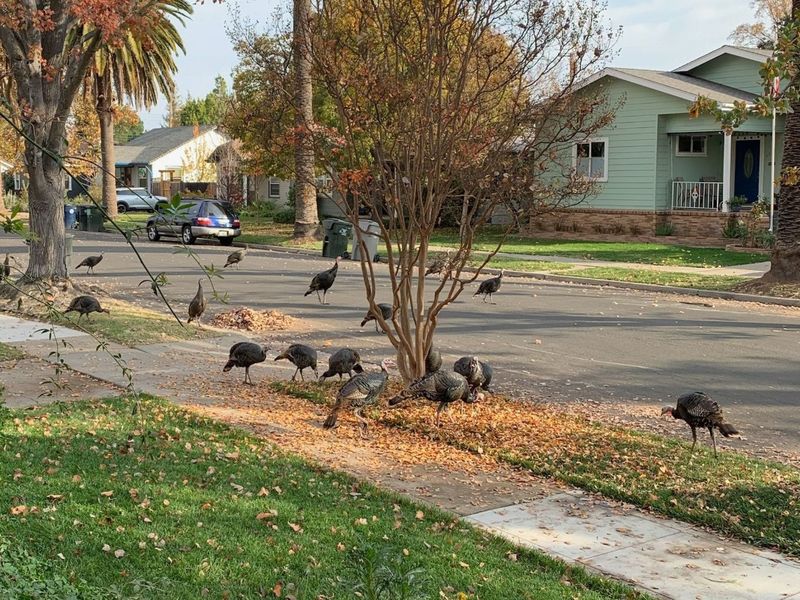
You step outside at dusk and spot a row of big, dark shapes settling into a tree near your fence. Wild turkeys look almost comical up there, but a fall roost raises real questions about your garden, your pets, and even ticks.
The truth is more modest than most guesses, and knowing it helps you decide what to do and what to skip. Here is what a nearby roost can tell you, what it cannot, and how to share the neighborhood with these birds.
A nearby roost points to the wider landscape
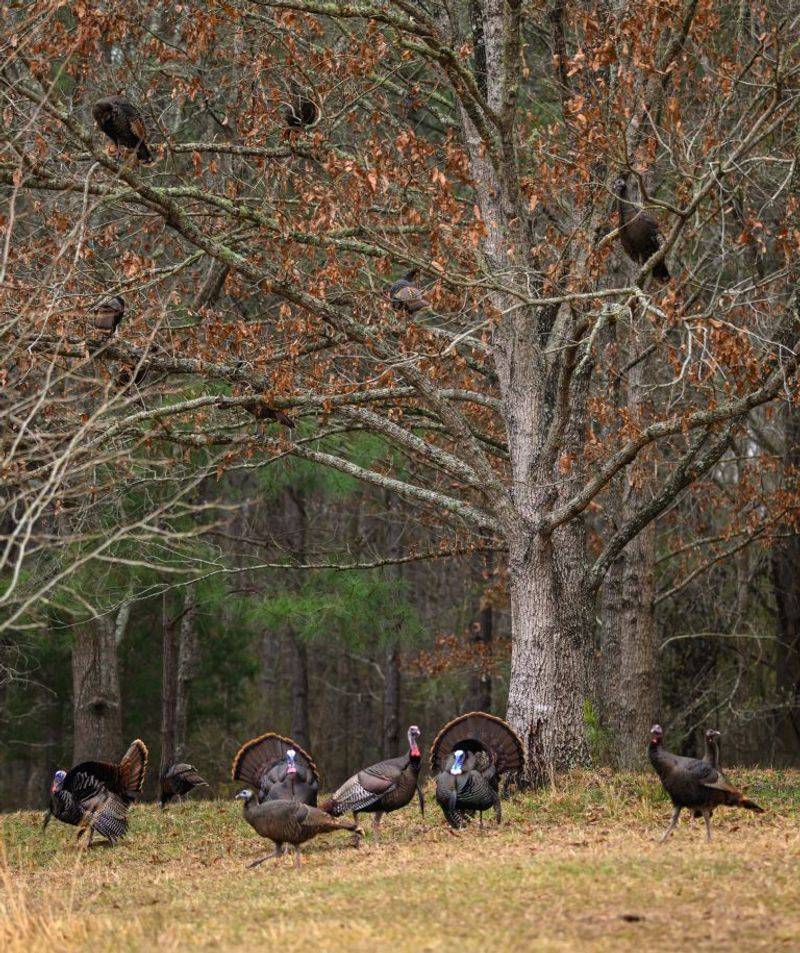
Wild turkeys spend their nights in trees, and they often come back to a favorite one. UC pest guidance notes this habit of returning to a preferred roost tree.
Large trees with strong, horizontal limbs work best, which is why an old oak, sycamore, or eucalyptus so often hosts a row of sleeping birds.
California wildlife guidance ties turkey movements broadly to three things: roost sites, food, and water. A tree that can hold a flock is one piece of that puzzle.
The other pieces may be a creek bed, an open hillside, a neighbor’s orchard, or a nearby park.
So when birds settle into a tree by your property, the safest reading is about the surrounding area. A usable perch exists close by, and the flock can probably find food somewhere within reach.
It does not tell you the flock eats in your yard. Turkeys may leave at first light and spend the day several blocks away.
It also does not tell you when the habit began. If you only noticed the birds this fall, they may have used that tree for a long time, or the leaves may have thinned enough for you to finally see them.
Treat the sighting as a clue about the wider neighborhood, not a report on your own yard, and pay attention to where the birds actually go during the day before drawing conclusions.
Fall can change diets and flock patterns
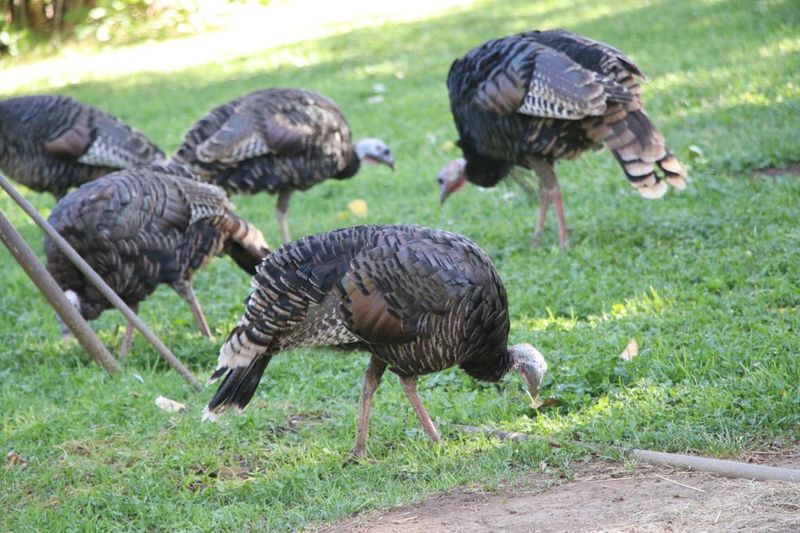
Autumn shifts the menu for many birds, and turkeys are no exception. A California Department of Fish and Wildlife guide says turkeys eat wild grass seeds in summer and fall, and that in one San Luis Obispo County study, acorns took over from wild oat seeds in the fall diet.
That is one county and one study. Across California, turkeys eat seeds, grasses, fruit, acorns, and insects and other arthropods, so a flock near you could be eating almost any mix of these depending on the local landscape.
Group makeup can change too. UC guidance describes family groups, groups of young males, and mature males gathering during the nonbreeding season.
A flock that looks bigger or different in fall may simply be birds sorting themselves into these seasonal groups.
None of this proves the birds just adopted a roost. Flocking and roosting go together year-round, and a group that gathers in fall may be sleeping in the same tree it used last spring.
If you want a hint about what your local birds are eating, watch what they scratch at during the day rather than assuming acorns are the reason.
A turkey sighting is not a yard report card
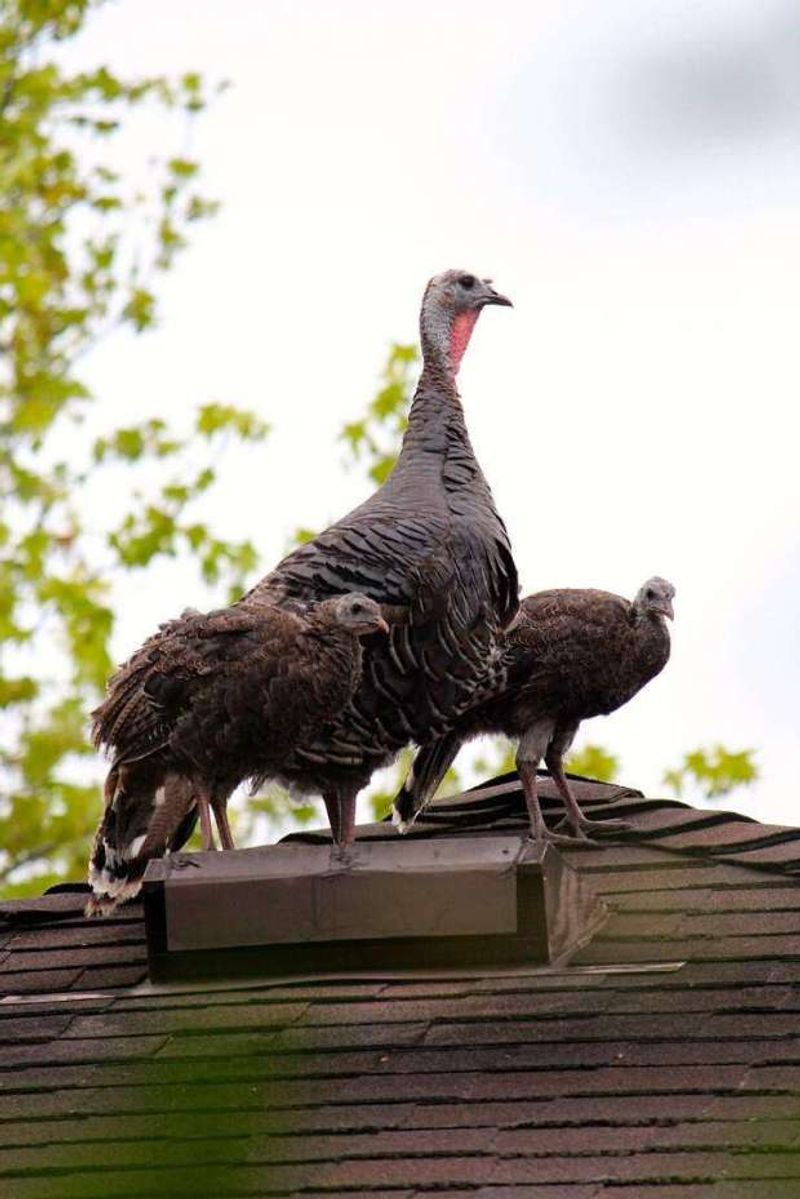
It is tempting to read turkeys as a compliment or a warning. Some people assume a flock means their yard is packed with food, cover, and water.
Others assume it means something is wrong. Neither reading holds up.
A roost tells you a perch exists nearby. As state habitat guidance describes it, turkey movements follow food, water, and roost sites across a broad area.
Your yard might supply one of those, all of them, or none. Only signs on your own property can answer that, such as scratched mulch, pecked fruit, or droppings under a feeder.
The same caution applies to the acorn story. One local study does not explain every flock in every county, and a bird in a valley subdivision may eat entirely different foods than one in oak woodland.
Ticks deserve the same care. Seeing turkeys tells you nothing about tick risk.
UC guidance on controlling ticks points to brushy, wooded, leafy areas as the relevant habitat. Your risk depends on the ground around your home, not on who roosts overhead.
Assess ticks separately from turkey activity
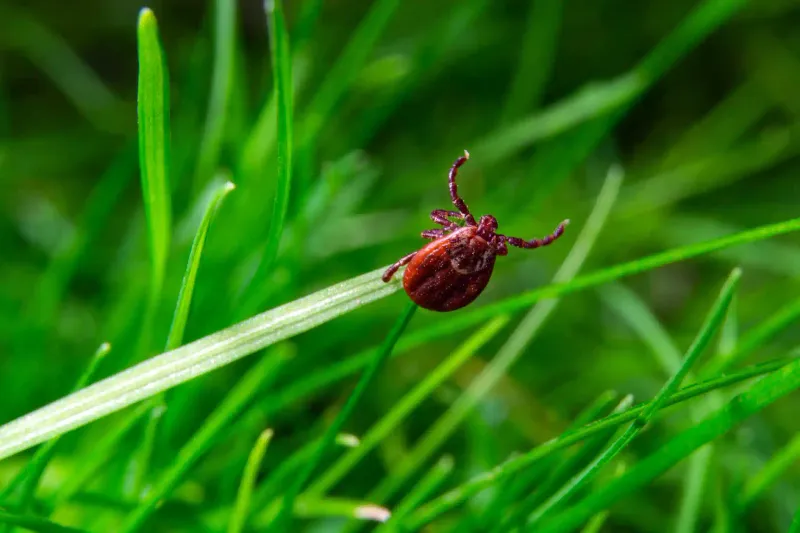
Ticks are worth thinking about in fall, but they belong on a different list than turkeys. The California Department of Public Health says ticks can turn up in backyards near natural areas.
What matters is what borders your yard, not what perches in the tree.
Timing and place matter too. UC guidance says adult western blacklegged ticks begin emerging in fall, especially in northern coastal counties and the Sierra foothills.
A homeowner in those areas has more reason to be alert than someone in a dry inland neighborhood far from brush and woods.
You may hear that turkeys eat ticks. A controlled study tested eastern black-legged ticks in forest enclosures and found turkey foraging did not reduce adult tick numbers.
It did not test California’s western blacklegged tick, so it settles nothing here in either direction. Do not count on turkeys for tick control, and do not blame them for tick danger.
Better steps are simple. Check people and pets after time outdoors, especially near brush.
Mow and trim regularly, and clear leaf and grass litter. Where your lawn meets overgrown natural areas, UC recommends a three-foot border of gravel or wood chips.
Reduce yard conflicts without feeding turkeys
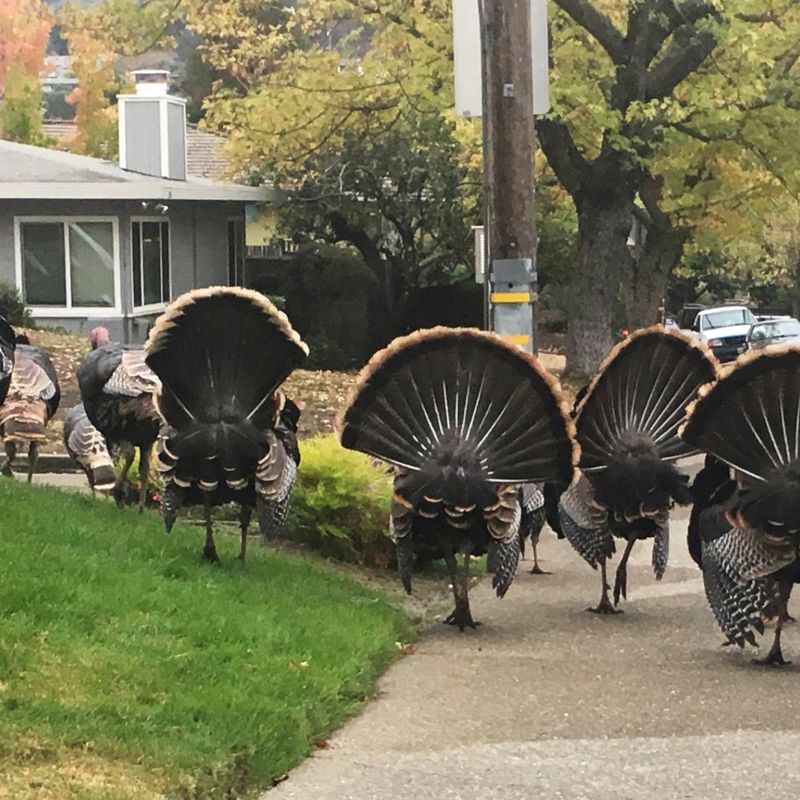
Turkeys can scratch up beds, damage garden plants, and leave droppings on patios and lawns. If you see signs of that, a few habits can make your property less appealing.
The first is the simplest: never feed them. The California Department of Fish and Wildlife says not to feed wild turkeys, and it also recommends picking ripe fruit and promptly collecting what falls.
Next, look at what you leave out. Birdseed that spills under a feeder and pet food left on the porch can draw turkeys in, so bring dishes indoors and clean up seed.
A UC pest note suggests removing these items and protecting vulnerable fruit or garden areas.
For spots that still get raided, try a physical barrier. Small-area fencing around a vegetable bed or a young planting can keep birds out of the places you care about most.
Netting over low fruit is another option.
Motion-detecting sprinklers are also recommended for recurring problems. They may startle birds away from a bed or lawn, and they suit California yards best when aimed narrowly to avoid wasting water.
No deterrent works every time, and birds can get used to one, so expect to adjust and combine methods.
Give turkeys space and seek help for recurring problems
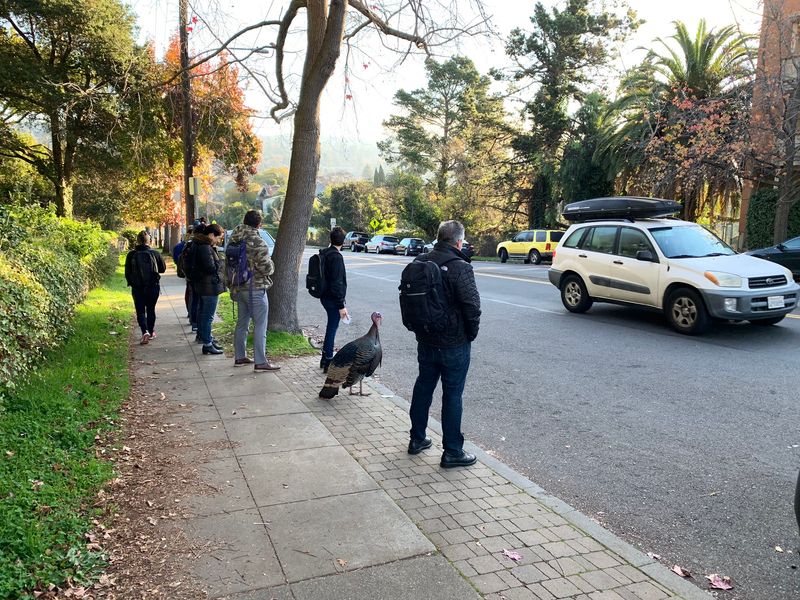
Most turkeys just want to feed and move on, and plenty will keep their distance from you. Still, it pays to watch from afar.
Do not approach them, and never feed birds that seem comfortable around people. Fed turkeys can lose their fear of humans, and that is when trouble starts.
UC guidance notes that males can act aggressively, particularly in breeding season. That does not describe every bird, but it is a good reason to keep children and pets back.
If a turkey has lost its fear of people and blocks your path, the CDFW brochure says an open umbrella may help steer it out of your way. That is about guiding your own walk, not about grabbing or chasing the bird.
Do not try to trap, move, or kill turkeys yourself. When damage keeps happening or you feel unsafe, contact the California Department of Fish and Wildlife.
Its pages on nuisance wildlife explain your options, and the agency handles any permits for hazing or removal.
Read the roost as a clue, not a verdict
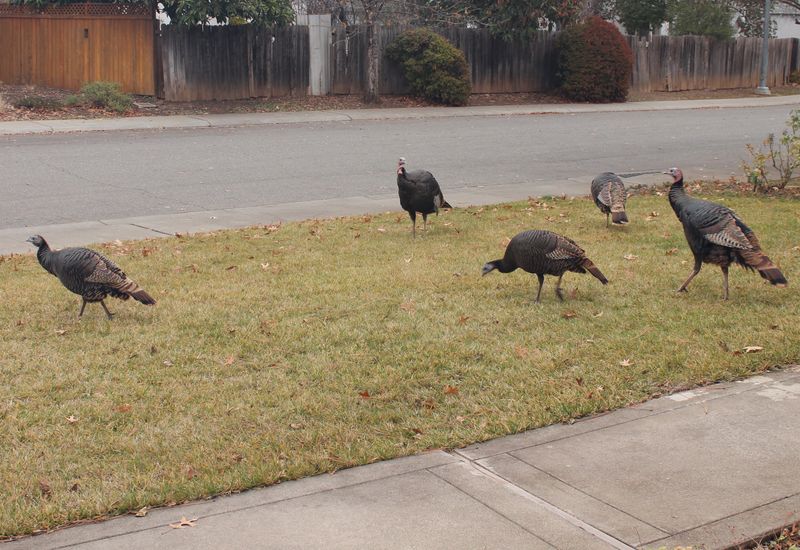
A fall roost most likely means a sturdy tree and some kind of food, water, and perch nearby. It does not grade your yard, prove the birds are new, or say anything about tick control or danger.
Keep the routine simple: skip feeding, guard tender plants, keep your distance, and handle tick precautions on their own. Those sleepy shapes overhead are neighbors passing through, not messages.