
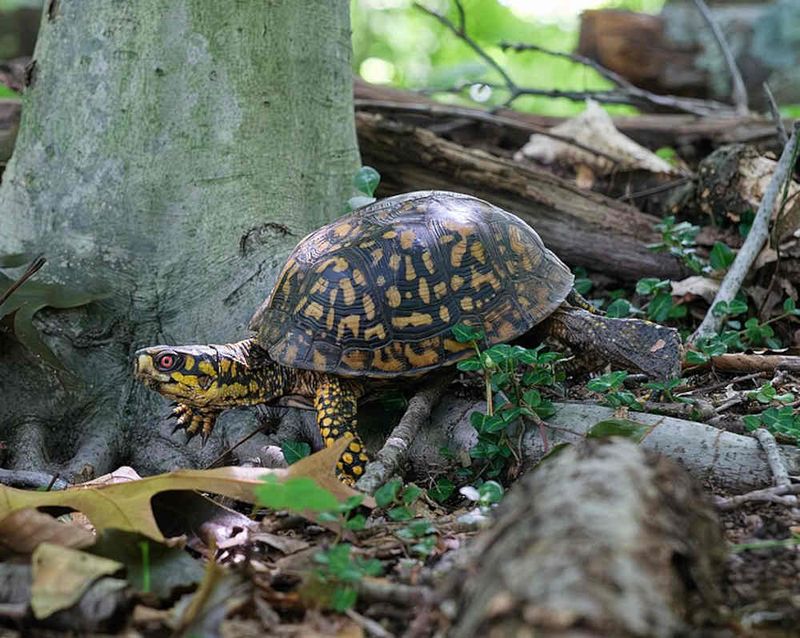
Spot a box turtle plodding across your North Carolina yard and you might wonder if it is doing you a favor. These shelled neighbors do eat slugs, which are a headache for hostas, lettuce, and strawberries.
But eating a slug now and then is very different from protecting a garden. Here is what turtles really do, what leaf litter can and cannot offer, and how to handle slug damage on its own.
Slugs are one item on a varied menu
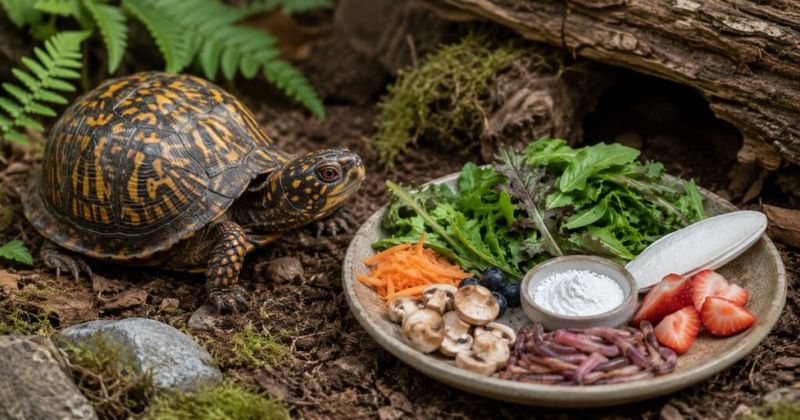
Yes, eastern box turtles eat slugs. According to the NC Wildlife Resources Commission species profile, their North Carolina diet includes slugs and snails along with fungi, plants, and other small animals.
Think of a box turtle as an opportunistic omnivore. It eats what it finds: a mushroom after rain, a fallen berry, an earthworm, a beetle grub, or a slug if one happens to cross its path.
North Carolina State Parks describes the same mixed diet, and nothing in it paints the turtle as a slug specialist.
That matters for anyone hoping for a garden helper. Knowing a turtle will eat a slug is not the same as knowing it will lower slug numbers in your yard.
The sources we reviewed describe what turtles eat. None of them measured what happens to slug populations in a home garden when a turtle wanders through.
So the honest version goes like this: a turtle may eat some slugs, and that is a nice bonus. A single turtle with a menu this wide will also be snacking on mushrooms and berries, and it may only pass through your yard occasionally.
If slugs are chewing holes in your plants, you will need a plan that does not depend on a visiting reptile.
Enjoy the turtle for what it is, a long-lived native animal that belongs in North Carolina landscapes, and keep your expectations about pest control realistic.
Preserve cover without promising a turtle visit
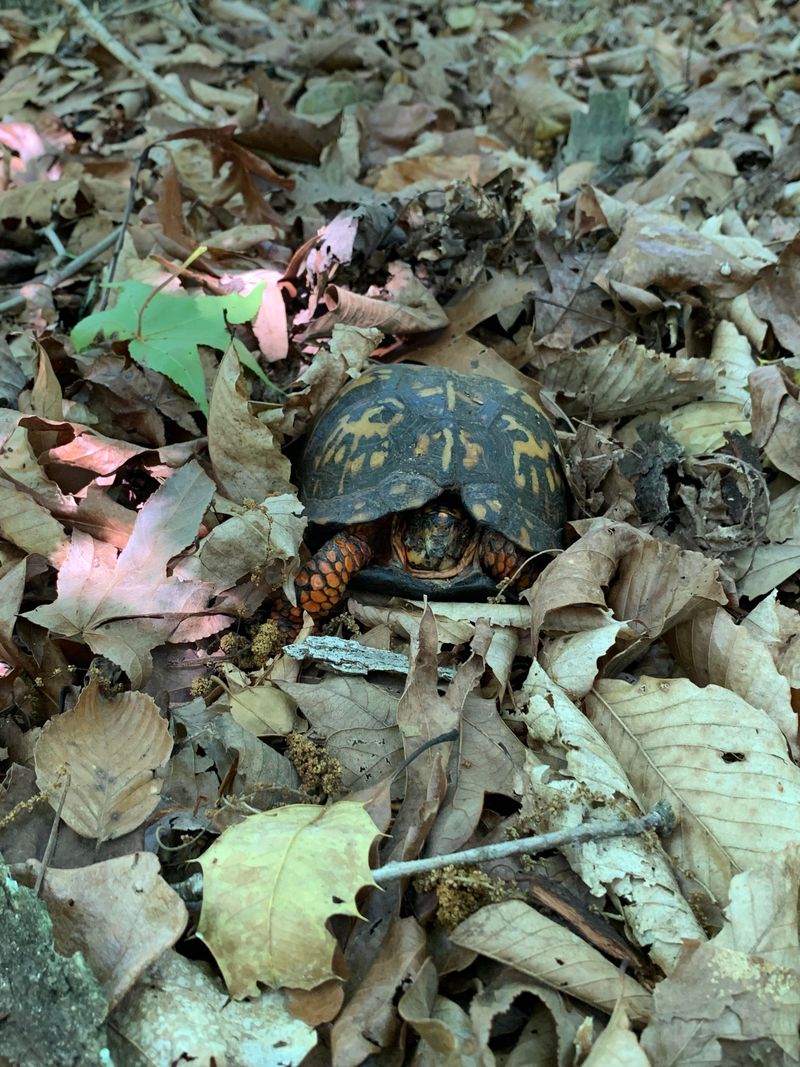
Box turtles like cover. A U.S.
Forest Service review notes that they use leaf litter, moist soil, brush, and woody debris for shelter, and the NC Wildlife Resources Commission says they are often more active after rain.
If you already have a corner of yard where oak and maple leaves pile up under shrubs or along a fence line, leaving it undisturbed is a reasonable, low-effort way to support wildlife. You do not need to build anything.
Skipping the leaf blower in one out-of-the-way spot is enough.
Keep the goal modest, though. Leaf litter is habitat, not a lure.
It will not summon a turtle, and it will not make one stay. Turtles roam across large areas, and whether one crosses your property depends on the woods, streams, and neighboring yards around you.
Here are a few practical ways to put this into action:
Pick a spot away from your vegetable beds and strawberry rows. Leave the leaves where they fell rather than raking them into a fresh heap.
Mow carefully near the edges of that area, especially in the mornings and after rain, when turtles may be moving.
Habitat value and slug control are two separate things. Nothing we reviewed shows that preserving leaf litter reduces slugs, so treat it as a gift to local wildlife and judge your garden’s pest problem on its own terms.
Leaf litter can shelter slugs too
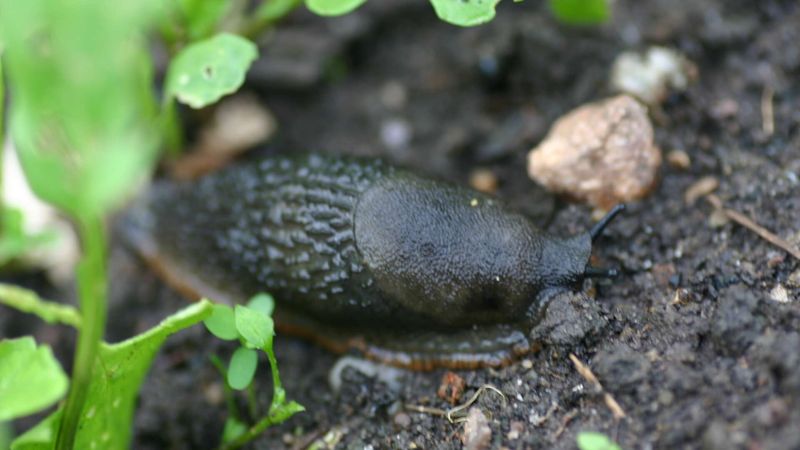
Anything that shelters a turtle can shelter a slug. NC State Extension’s slug guidance for strawberries points out that debris and other cover can act as a slug reservoir, and that slugs favor damp conditions.
Picture a soggy pile of leaves pushed up against a bed of young lettuce or strawberries. By day, slugs can tuck into that cool, moist layer.
By evening, your plants are a short crawl away.
This is why a leaf pile is not a slug-control tool. The same habitat feature that gives wildlife cover can also give slugs a place to hide, and placement makes a difference.
Debris sitting right beside vulnerable plants is the riskiest arrangement.
None of this means every leaf-covered patch is crawling with slugs, and it is not a reason to strip your whole yard bare. A dry, undisturbed stretch of leaves under trees at the back of a lot is a different situation from a damp heap beside the tomatoes.
A simple diagnostic can help. Lift a board, pot, or clump of wet leaves near your plants in the morning.
If you find slugs clustered there, that spot is worth cleaning up or moving farther from the garden. If you find none, you have learned something useful about your own yard without guessing.
Leave a turtle where you find it
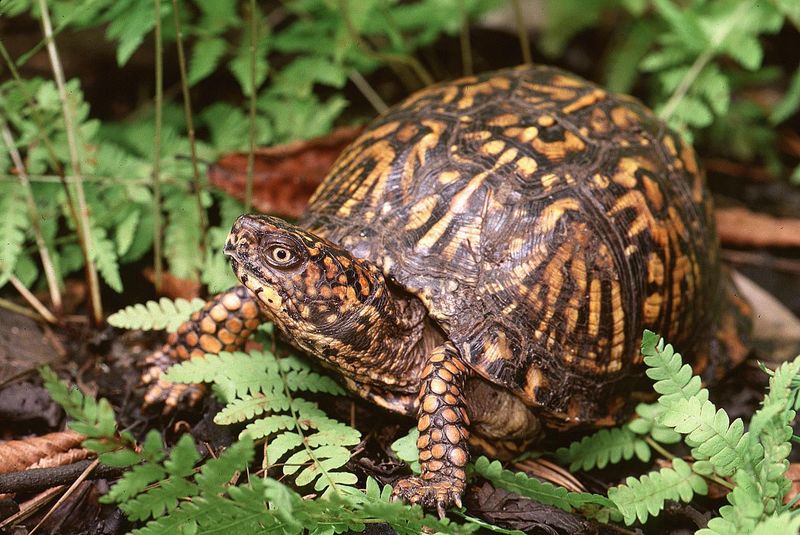
If a box turtle turns up in your yard, the best move is usually none. NC Wildlife’s eastern box turtle page advises leaving turtles in place and not taking them home or relocating them.
Please do not capture one, keep one, or feed one.
The exception is an immediate hazard, like a turtle in the middle of a road. NC Wildlife says to move it only the shortest distance necessary.
When helping it across a road, carry it in the direction it was already heading, even if that seems like the wrong way to you.
Why the caution? A turtle knows its home range.
A study near Davidson, North Carolina followed 20 turtles and found that relocated ones had larger home ranges and moved more each day. Five relocated turtles died or disappeared, compared with none of the resident turtles.
Twenty turtles is a small sample, so this is not proof that every moved turtle will meet the same fate. It is a good reason for care, and it fits the agency’s practical advice to avoid possession or relocation.
A few simple habits help. Mow with your eyes open in spring and fall, and after rain.
Keep dogs back and let the turtle walk on. Then let it go about its day.
Manage slug damage on its own terms
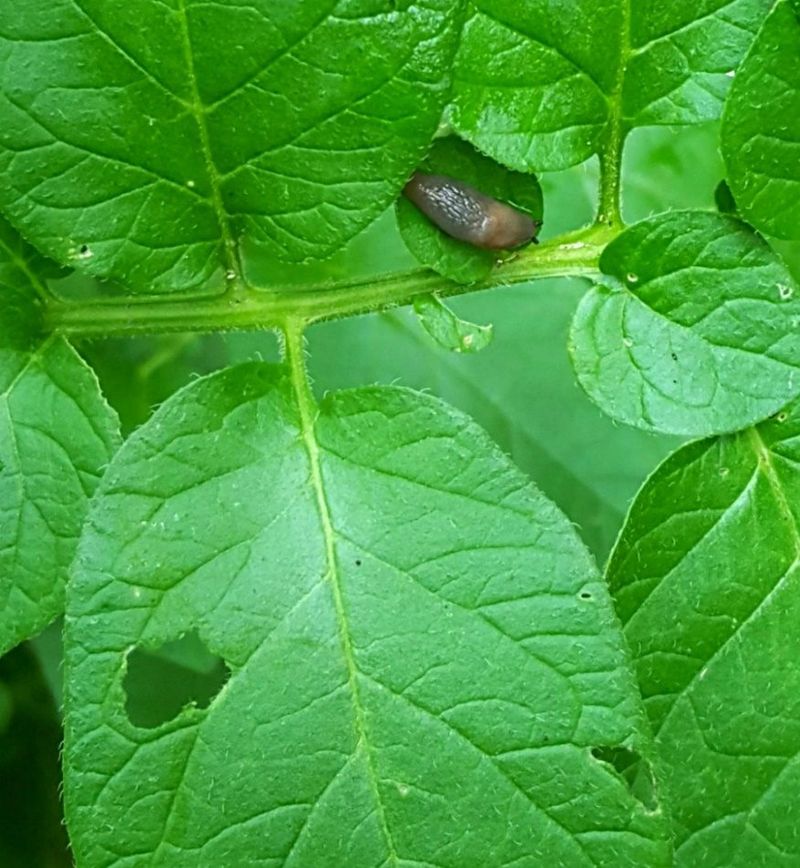
When slugs are chewing your plants, deal with them directly. NC State Extension’s strawberry guidance describes habitat management and slug baits as control options.
Keep the context in mind. That advice was written for strawberry crops, not as a prescription for every yard.
Treat it as a starting point and check what fits your own beds.
Habitat management means making your garden less welcoming to slugs. Since they favor damp conditions and use debris as shelter, look at what sits near your plants: old boards, heaps of wet leaves, thick mulch against stems, and anything else that holds moisture.
Clearing those spots near vulnerable plants gives slugs fewer places to hide.
Slug baits are the other option Extension describes. If you consider them, read the label closely, and know that this guidance does not show any bait is safe around box turtles.
Words like organic or pet-safe on a package do not settle that question for wildlife, so this article does not recommend a particular product.
To see if your efforts pay off, check plants in the evening or early morning with a flashlight, count slugs and damage, and compare after a week or two. That gives you real information about your own garden rather than hoping a turtle will handle it.
Support wildlife; do not count on pest control
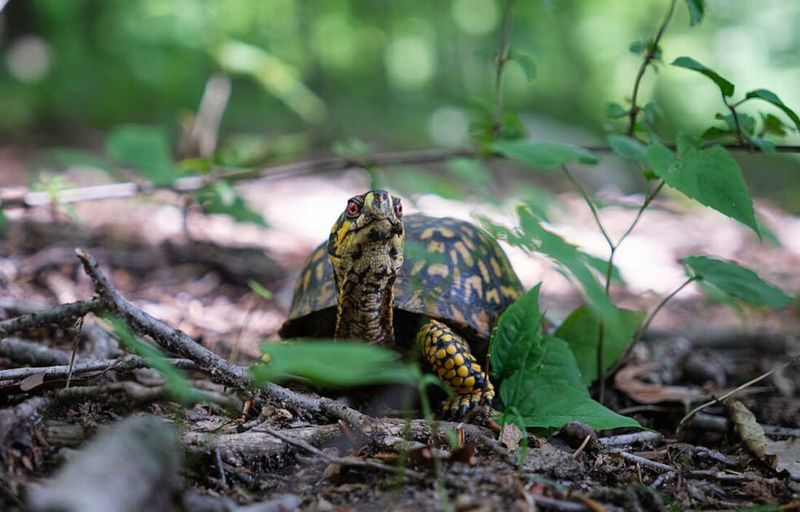
Keep the leaves where they already lie, in a spot away from your crops, and leave any turtle you meet to go on its way. NC Wildlife lists slugs among many foods turtles eat, but nothing reviewed shows they clear a garden of them.
Handle damaged plants separately, using the Extension advice as a guide. A turtle in the yard is a pleasure to see, not a pest contract.