
Nandina shows up along front walks all over North Carolina, but its berries can poison cedar waxwings and it spreads into our woods. The good news is that native shrubs can give you the same year-round color with far more benefits.
They feed songbirds, support pollinators, and handle our heat, clay, and humidity without fuss. Here are seven native picks that look great by your door in every season.
1. Inkberry Holly
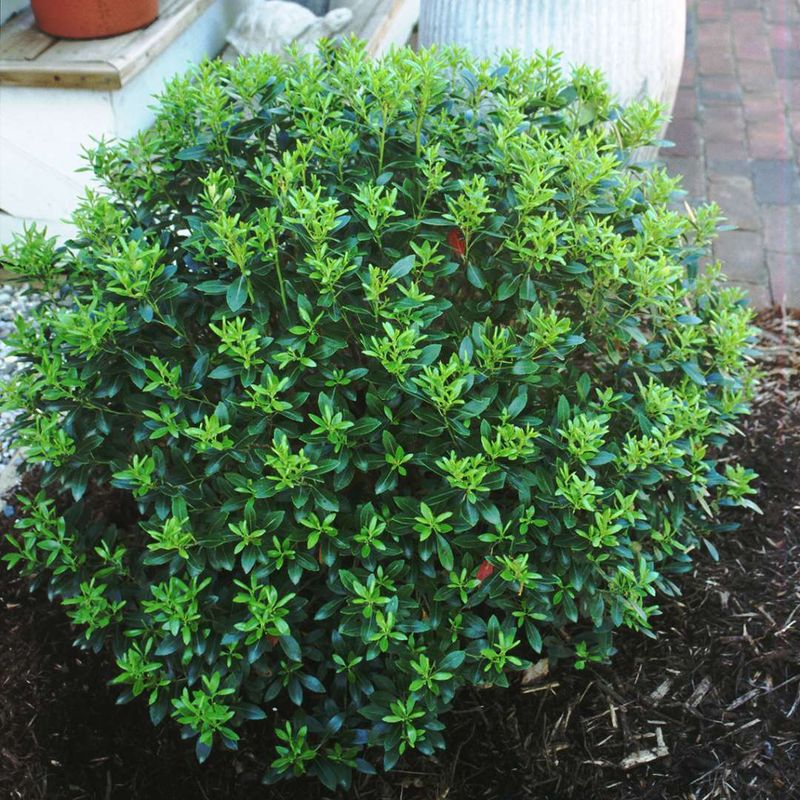
Picture a boxwood that never gets blight and feeds birds all winter. That is inkberry holly (Ilex glabra) in a nutshell, and it grows wild in the wet pine flats of our coastal plain.
Its small, glossy leaves stay green all year, so your walkway never looks bare in January. Female plants carry black berries that bluebirds, mockingbirds, and robins can pick through during lean months.
Tiny spring flowers also bring in native bees.
Compact types like Shamrock or Densa stay about 3 to 4 feet tall, which suits a front bed nicely. Inkberry tolerates soggy clay, part shade, and full sun, and it takes a light trim well.
Plant a male nearby if you want the best berry set.
2. Virginia Sweetspire
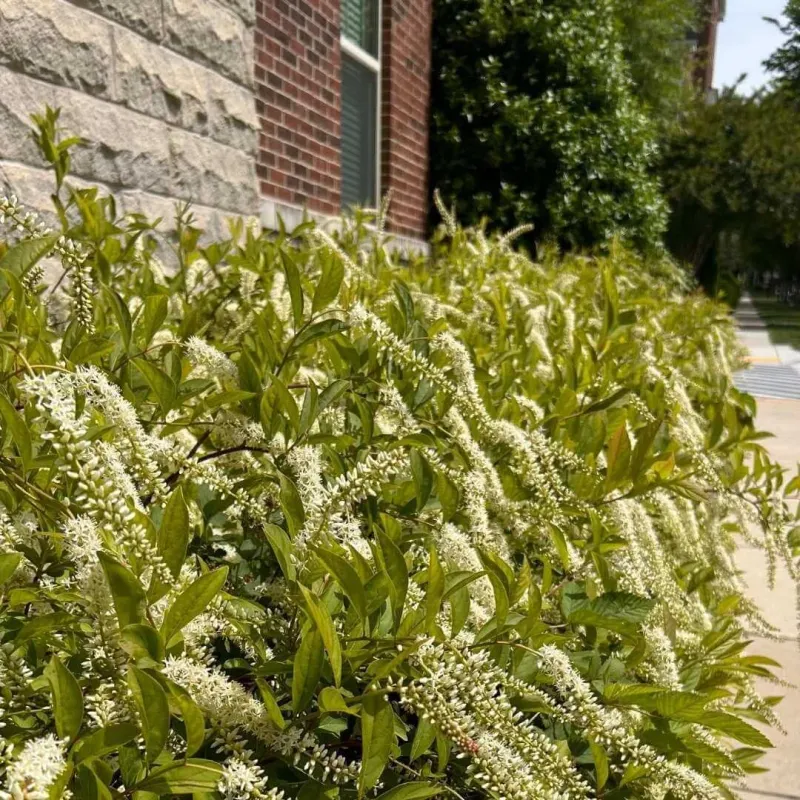
Walk past a sweetspire in May and you will catch a honey scent before you even see the blooms. Long white flower tassels drape over the leaves like little bottle brushes.
Butterflies and bees crowd those flowers, which makes Itea virginica a real pollinator stop by your door. Then fall arrives, and the leaves turn ruby and wine red, often hanging on well into winter in the Piedmont and coastal plain.
Semi-evergreen in milder parts of the state, sweetspire fills out to about 3 feet with cultivars like Little Henry. It handles wet spots, shade, and sun.
It can sucker a bit, which is handy for covering ground along a long walk.
3. Yaupon Holly
Here is a fun bit of history: Native Americans brewed yaupon leaves into a caffeinated tea, and it is the only native North American plant with caffeine. Today it earns its keep as a tough, handsome shrub.
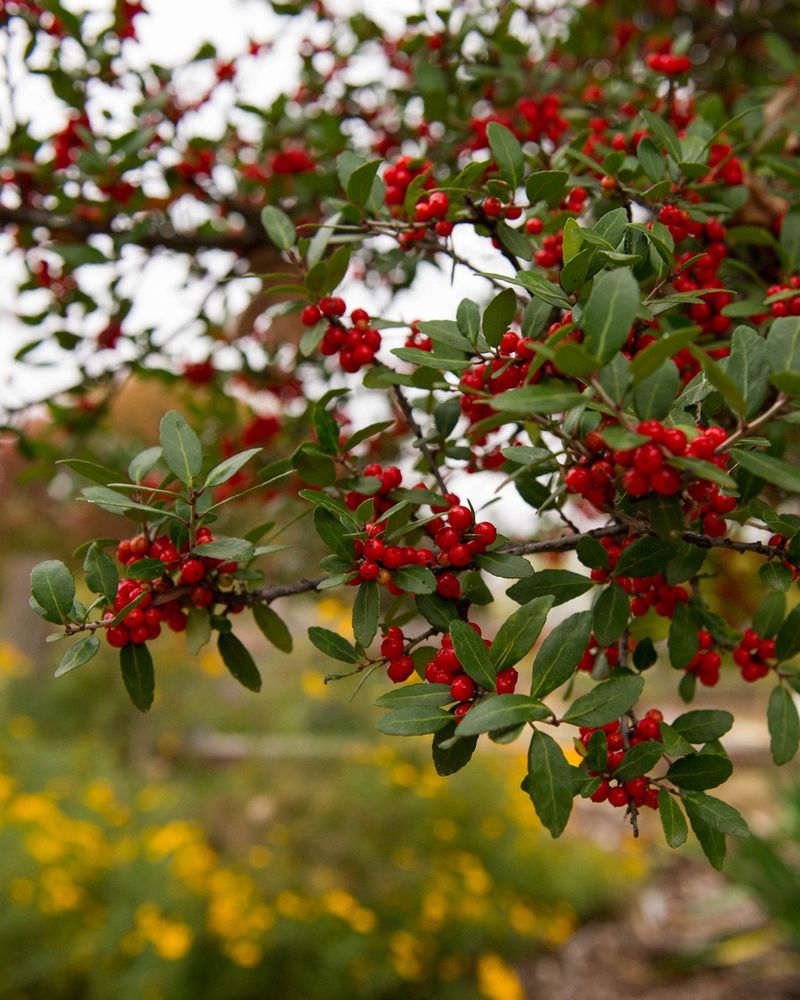
Yaupon (Ilex vomitoria) laughs at salt spray, drought, and sandy coastal soil, yet it also grows fine in Piedmont clay. Dwarf forms make tidy evergreen mounds that can stand in for Nandina with almost no care.
Choose a berrying female selection if you want winter color. Those red berries may help carry cedar waxwings and hermit thrushes through cold snaps, a nice trade compared to Nandina fruit, which can harm birds.
4. Coastal Doghobble
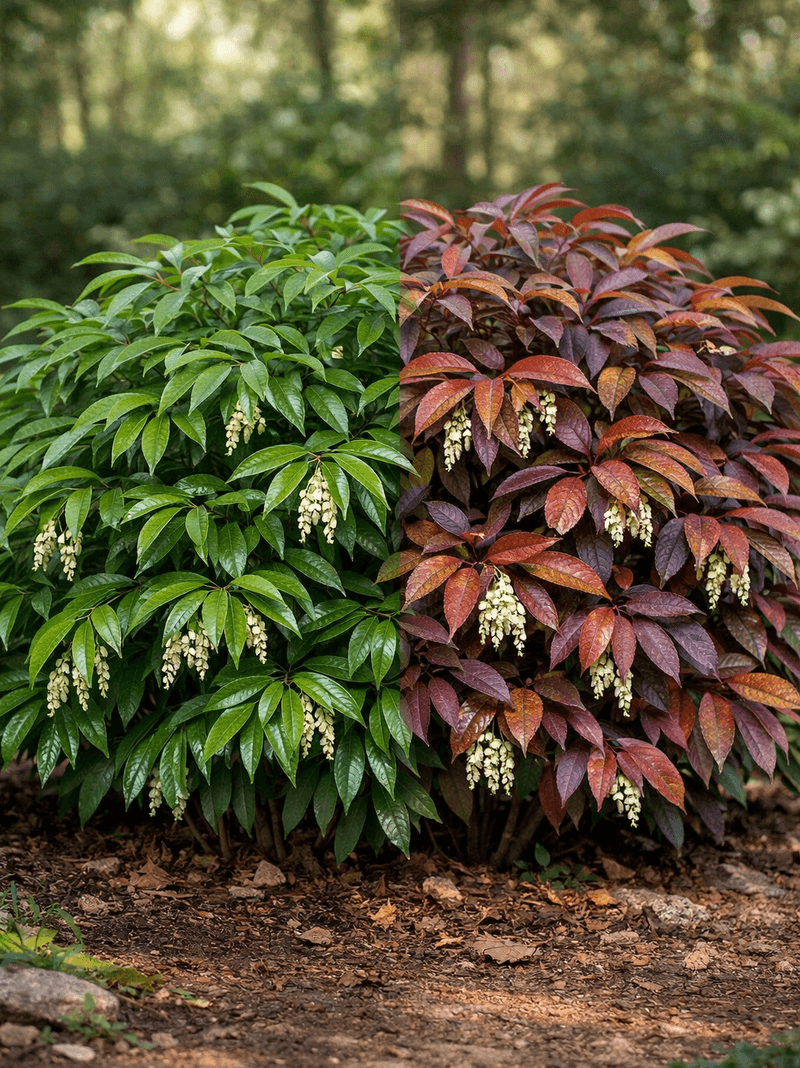
Got a shady front walk under big oaks? Coastal doghobble (Leucothoe axillaris) was practically made for that spot.
Its glossy leaves arch outward in graceful sprays and often pick up bronze tints in cold weather, giving you that same layered look people love in Nandina. In spring, rows of small white bells hang below the stems and draw bees.
Keep it in moist, acidic soil with afternoon shade, and it stays around 2 to 4 feet. The funny name comes from hunters, whose dogs got tangled in thickets of it in the mountains and coastal woods.
5. American Beautyberry
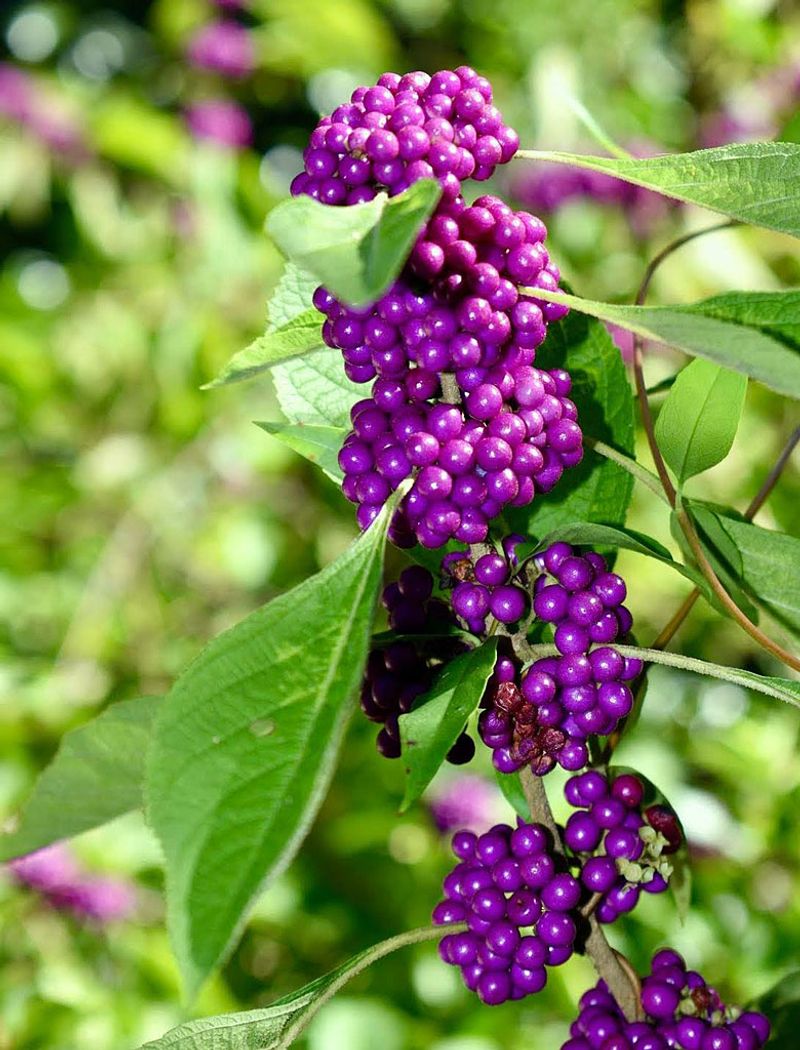
Nothing stops neighbors on a September walk quite like beautyberry. Clusters of shocking purple berries wrap each stem, and they almost look fake.
Callicarpa americana is deciduous, so it trades winter leaves for a fall show, but it earns its spot in other ways. Catbirds, brown thrashers, and mockingbirds gobble the fruit.
Old-timers also rubbed crushed leaves on skin, and research suggests compounds in them may help deter mosquitoes and ticks, though it is no substitute for repellent.
Give it sun to part shade and cut it back hard in late winter to keep it compact near a path. Pair it with an evergreen like inkberry so the walk still looks full in January.
6. Florida Anise
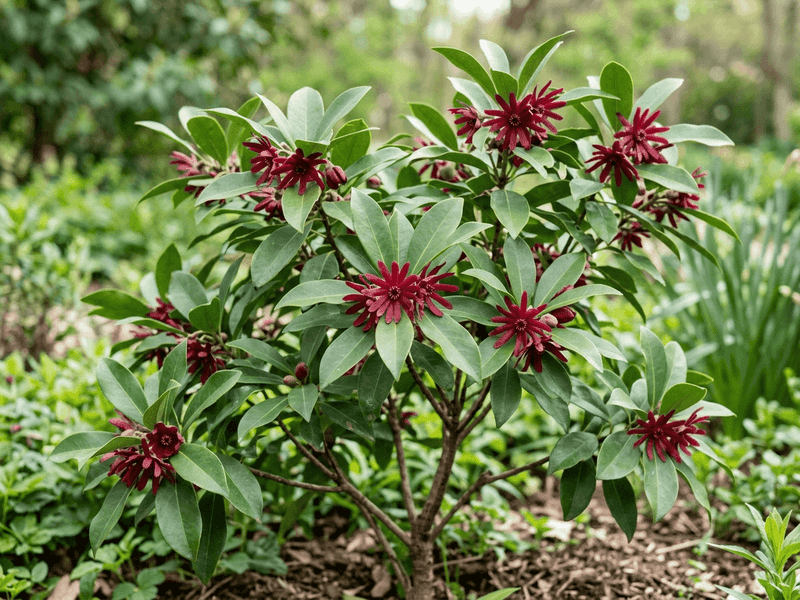
Brush against Florida anise and the leaves give off a spicy, licorice-like scent. Kids love it, and deer usually leave it alone.
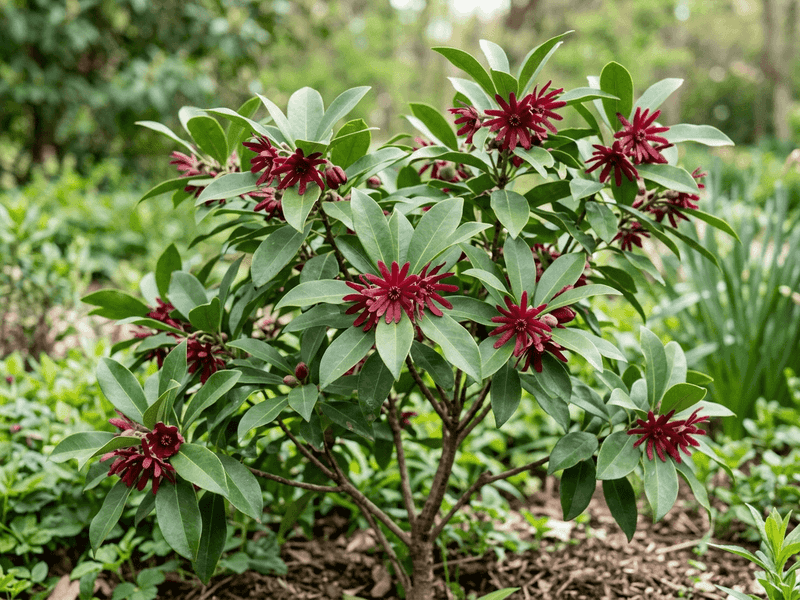
Illicium floridanum is native to the Deep South, and it grows well in eastern and central North Carolina gardens. It forms a dense evergreen screen with odd maroon, star-shaped blooms in spring.
For an entry that feels private, it is a smart choice.
Plant it in part to full shade with moist soil. It can reach 6 feet or more, so use it at a corner or where the walk meets the house rather than right on the edge.
The seeds are toxic, so do not treat it as the kitchen spice.
7. Dwarf Fothergilla
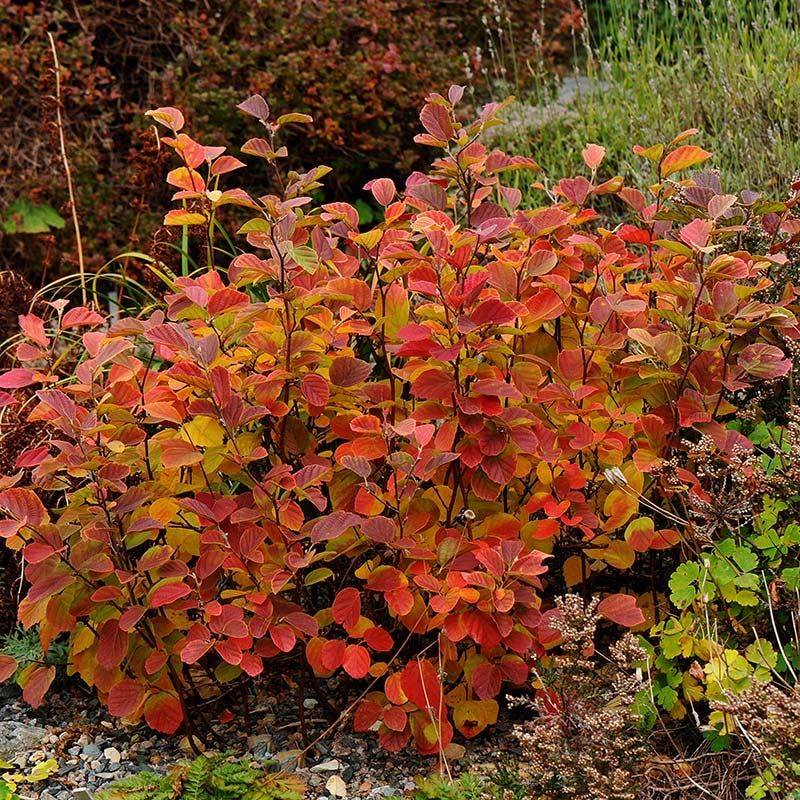
Some shrubs are good at one season. Dwarf fothergilla shows off in two, and it stays small enough for the tightest front bed.
In early spring, fuzzy white bottlebrush flowers smell a bit like honey and feed early bees. In fall, the leaves blaze orange, scarlet, and gold all on one plant, a color show that easily rivals Nandina’s red winter tones.
Fothergilla gardenii grows in the wet pinelands of our coastal plain but does well across the state, including the mountains. It likes acidic soil and sun to light shade, and it rarely needs pruning at 2 to 3 feet.
Tuck it among evergreens for a walk that changes all year.