
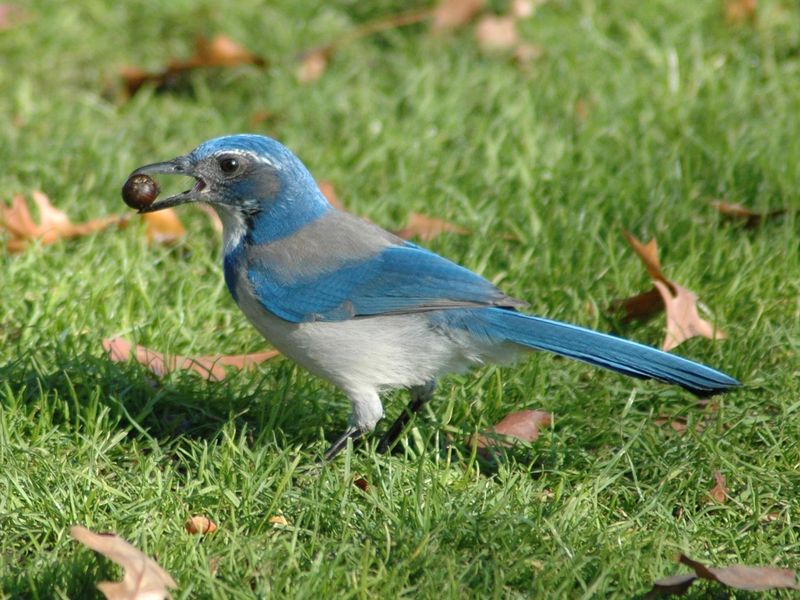
A blue-and-gray bird lands in the same spot, pokes at the soil, and flies off again. If that sounds like your backyard, you may be watching a California Scrub-Jay stash food for later.
These habits can say something real about how your yard works for wildlife, but they do not say everything. Here is what the visits can tell you, what they cannot, and what to do if an oak seedling pops up.
A repeat visit is a clue, not a yard-quality score
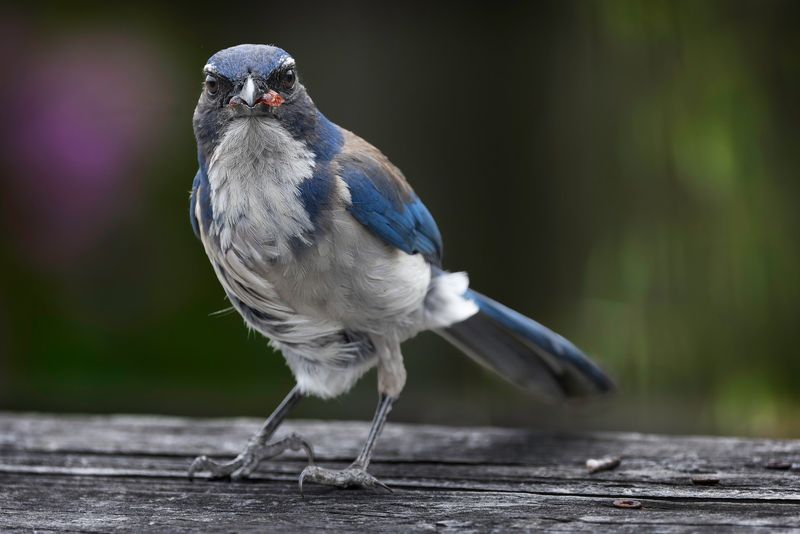
Scrub-jays that keep showing up in one corner are giving you a hint. The bird is Aphelocoma californica, listed by the Integrated Taxonomic Information System as the California Scrub-Jay.
You may still see it called the Western Scrub-Jay, which is a familiar older name.
These jays live in suburban yards and oak woodland. According to Cornell Lab life history notes, their diet shifts toward nuts and seeds, especially acorns, in fall and winter.
They also eat insects, fruit, and other foods, so a visit does not always mean acorns.
Repeated visits fit with a bird that has found a usable place to hide food. That is a useful clue, and it is where the clue stops.
A repeat visit does not prove the bird buried an acorn each time. It does not prove the same bird is coming back, since several jays can look identical from a kitchen window.
It also does not mean your yard is healthier or more wildlife-friendly than the one next door.
Think of it as a small piece of information. If you want to know how your yard really serves wildlife, look at the bigger picture: water sources, native plants, shelter, and how you manage pesticides.
A jay hopping across a flower bed is a nice sign of life, but it is not a report card.
Why might one corner work?
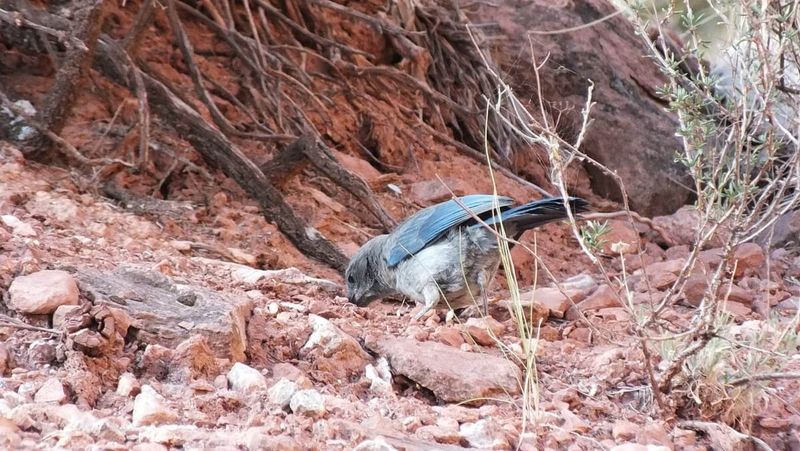
Scrub-jays hide food in soil, and where they hide it may depend on who might be watching. In an experiment on cache protection, jays favored shaded sites when another jay could see them.
When they cached in private, they used shaded and well-lit sites about equally.
That result suggests concealment is one possible reason a bird picks a certain micro-site. A corner with a fence, a shrub, or a shadow may help a jay keep a stash out of view of rivals.
Still, this was an experiment with controlled cache sites, not a study of repeat visits to one home-yard corner. It does not mean every shaded garden corner is a favorite, and it does not explain why your particular jay returns.
Other things could be at play. Soft, easy-to-dig soil, a handy perch nearby, a quick escape route, or simple habit could all matter.
Maybe the bird is also hunting insects there.
If you are curious, watch for a few minutes from a window. Does the bird carry something in its bill?
Does it push it into the ground and cover it with a leaf or bit of mulch? Or does it just hop around and leave?
What you see tells you more than the location alone.
California yards can join the acorn route
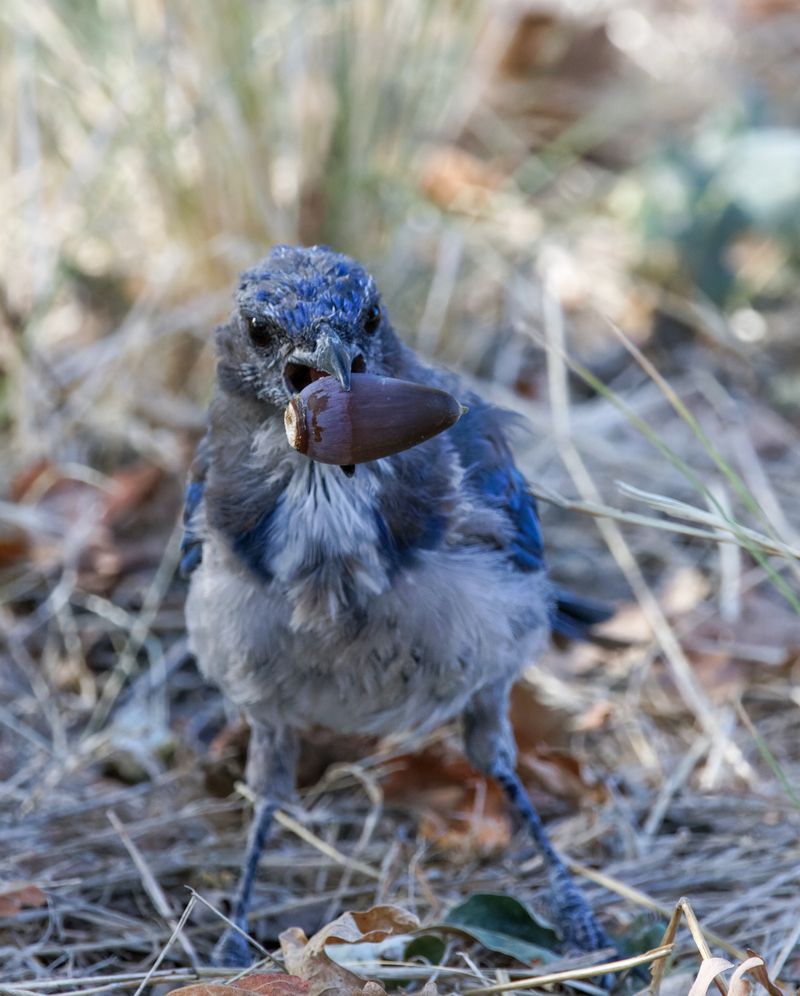
Gardens are part of the story. A Sacramento study, Acorn Dispersal by California Scrub-Jays in Urban Sacramento, recorded jays caching acorns in city neighborhoods.
It also noted that cached acorns can sprout in gardens.
So a yard can become a stop along the route an acorn travels from tree to soil. That is a real, documented payoff, and it is a nice thing to know when a jay is poking around your beds.
The same study offers a caution. Jay-planted oaks add less to urban landscapes than they do in wild ecosystems.
City and suburban yards are tidy, paved, mowed, and watered in ways that make it harder for a sprouted acorn to survive.
Scrub-jays are also not the only players. The study identifies squirrels as other acorn dispersers in urban areas.
If you find a seedling, a squirrel could have buried it just as easily.
The practical lesson is to enjoy the jay without assigning credit for every acorn or seedling. Treat the activity as a possibility, not a guarantee, and keep an eye out for small oaks after the winter rains.
A buried acorn still has a long way to go
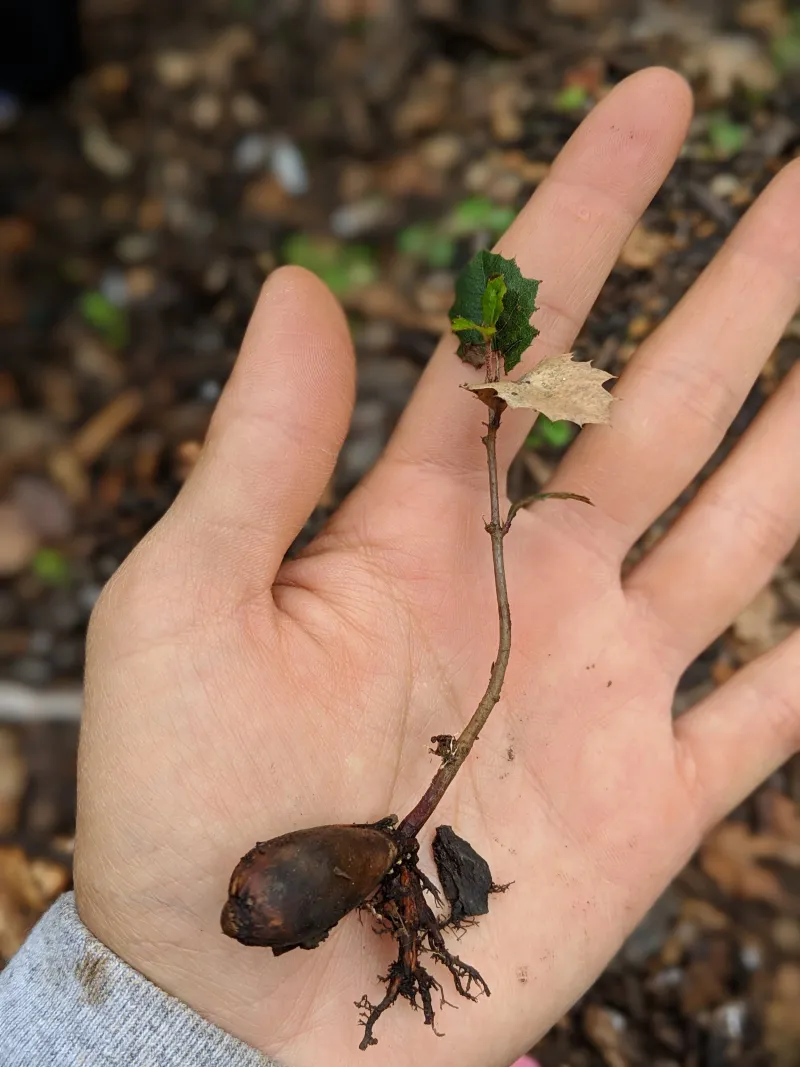
Between a buried acorn and a tall oak sit many obstacles. The jay may come back and dig it up to eat.
A squirrel may find it first. And if the acorn does stay put, a seedling still has to survive.
A USDA Forest Service study, Seedling Establishment of Coast Live Oak in Relation to Seed Caching by Jays, shows how uneven the outcome can be. In that older planting experiment, establishment varied across treatments, and drought and gopher deaths were substantial.
The authors cautioned that conclusions needed another growing season.
That is one experiment, so it is not a survival rate you can apply to your yard. It simply shows that many things can go wrong, from dry spells to hungry rodents to browsing animals.
It also helps to sort out a few common claims. Some caches can sprout, and that is true.
But saying a jay deliberately planted a tree goes too far, and so does saying the jay forgot an acorn.
A seedling may grow from an unrecovered cache, but the sprout alone does not tell you who buried it or why it stayed. Accept the mystery, and you will make better decisions about what to do next.
Would a volunteer oak fit your yard?
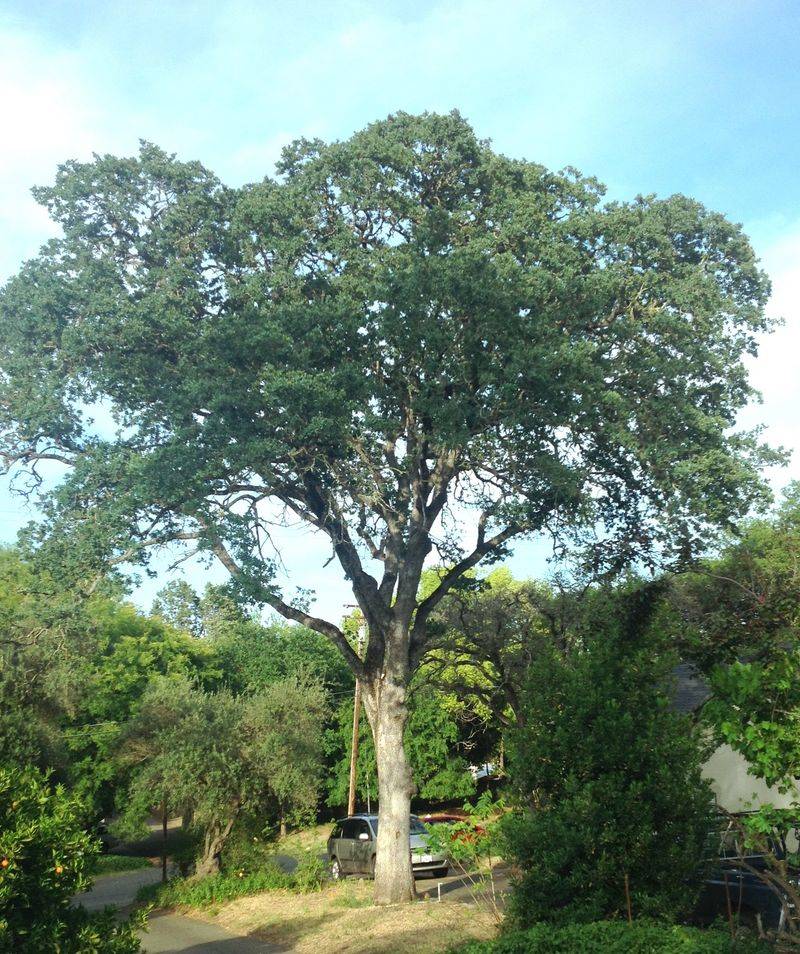
Finding a young oak you did not plant can feel like a gift, and also a puzzle. Before you decide anything, figure out what it is.
Not every seedling that looks like an oak is a native species, and species differ in size and needs.
Next, picture it fully grown. Does it have room?
UC guidance in Oaks in the Home Landscape notes that California oaks develop extensive roots. Landscaping, soil disturbance, or changes in irrigation can harm established trees.
That matters for placement. A seedling sprouting next to a patio, a septic line, a fence, or a lawn sprinkler zone may be growing in a spot where it will struggle or cause trouble later.
One growing in an open area with space to spread has a better outlook.
Give yourself a simple checklist:
Identify the species. Measure the open space around it.
Note nearby pipes, structures, and sprinklers. Then decide whether to keep it, move it while it is still small, or remove it.
Resist the urge to credit a jay just because a seedling appeared. Squirrels or other animals could have buried the acorn, and nothing in the sprout tells you which one did.
Want to grow an oak? Match the acorn to the place
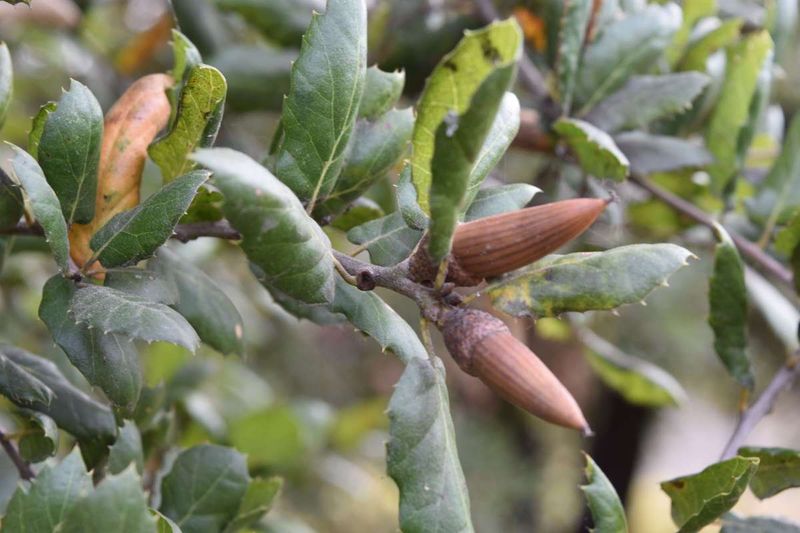
If you would rather plant on purpose than wait for a surprise, UC advice is to match the oak to your site. How to Grow California Oaks says to choose a species suited to your local environment and, where possible, a seed source from a similar environment.
The same guide recommends planting acorns from early November through early March, after the first rains have soaked the soil. It suggests setting them about half an inch to one inch below the surface.
Treat that as guidance, not a rule for every species or site.
Water is where yards often go wrong. Newly planted oaks need regular irrigation while they establish, according to UC guidance in Oaks in the Home Landscape.
Established native oaks are different.
For those, UC IPM water management advice warns that frequent summer watering can increase disease risk. So the sprinkler that helps a baby oak can hurt a mature one.
A practical plan: pick your spot with room to grow, plant in the winter window, protect the seedling from gophers and browsing, and water on a schedule that you taper as it matures. Keep sprinklers off the trunk area of older trees.
An oak is a slow partner, and the jay may never get the credit, but the tree will outlast every visit.