
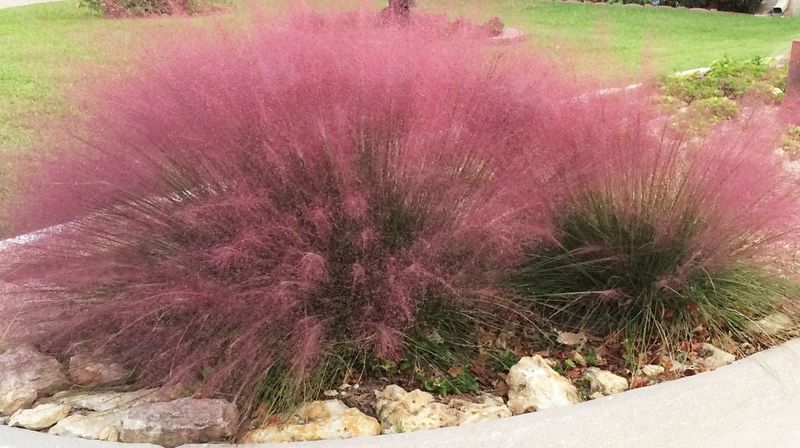
Gulf muhly is a Texas-native grass that turns a yard into a cloud of pink every fall. Some gardeners hope it also brings dragonflies to hunt mosquitoes near the patio.
The real story is smaller, but still useful for anyone planning a heat-tolerant planting. Here is what this grass can do, what dragonflies need, and what actually cuts down mosquitoes at home.
Gulf muhly brings fall color to a Texas yard
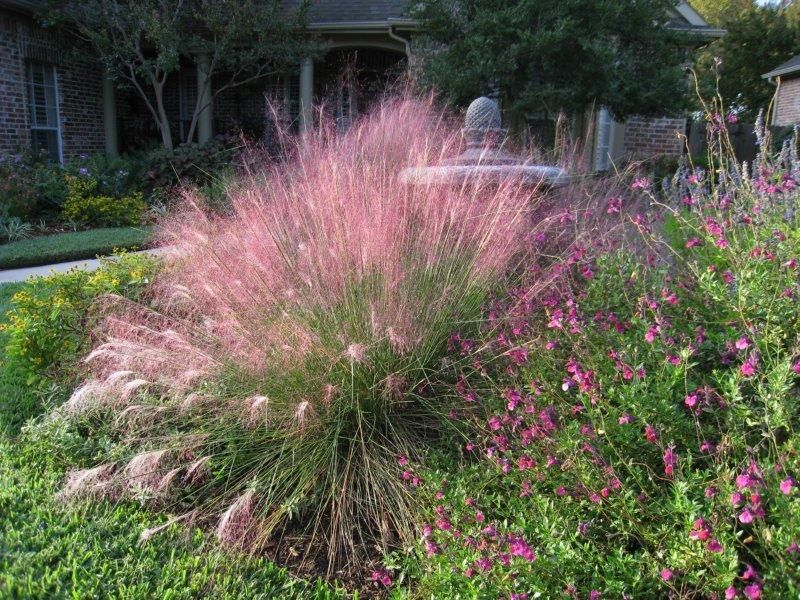
Gulf muhly (Muhlenbergia capillaris) is a clumping ornamental grass known for airy pink seed heads that show up in fall. Austin’s plant guide lists it as Texas-native, about 2.5 feet tall and wide, with pink fall color.
Texas Tech describes a similar clump, generally 2 to 4 feet tall and wide.
Texas-native does not mean native everywhere in Texas. Austin’s guide notes that Gulf muhly is not native to the Edwards Plateau or the Blackland Prairie.
If you garden in those regions, it can still be a fine landscape grass, but it is better described as a Texas-native plant that suits some areas more naturally than others.
Growing advice varies by source. Texas Tech’s plant sheet points to full sun, well-drained soil, low water needs, and high heat tolerance.
Austin lists sun to part shade and medium water needs. Those differences reflect different regions and soils, so check local extension or native plant society guidance and match the plant to your own site.
As a landscape plant, Gulf muhly earns its space on looks alone. Plant it in drifts along a sunny border, at the edge of a patio, or near a mailbox bed where the fall bloom can be seen from the street.
That is its clear payoff: a tough, heat-tolerant grass with a showy fall display, with no wildlife or mosquito promise attached.
Grass stems can give dragonflies a place to perch
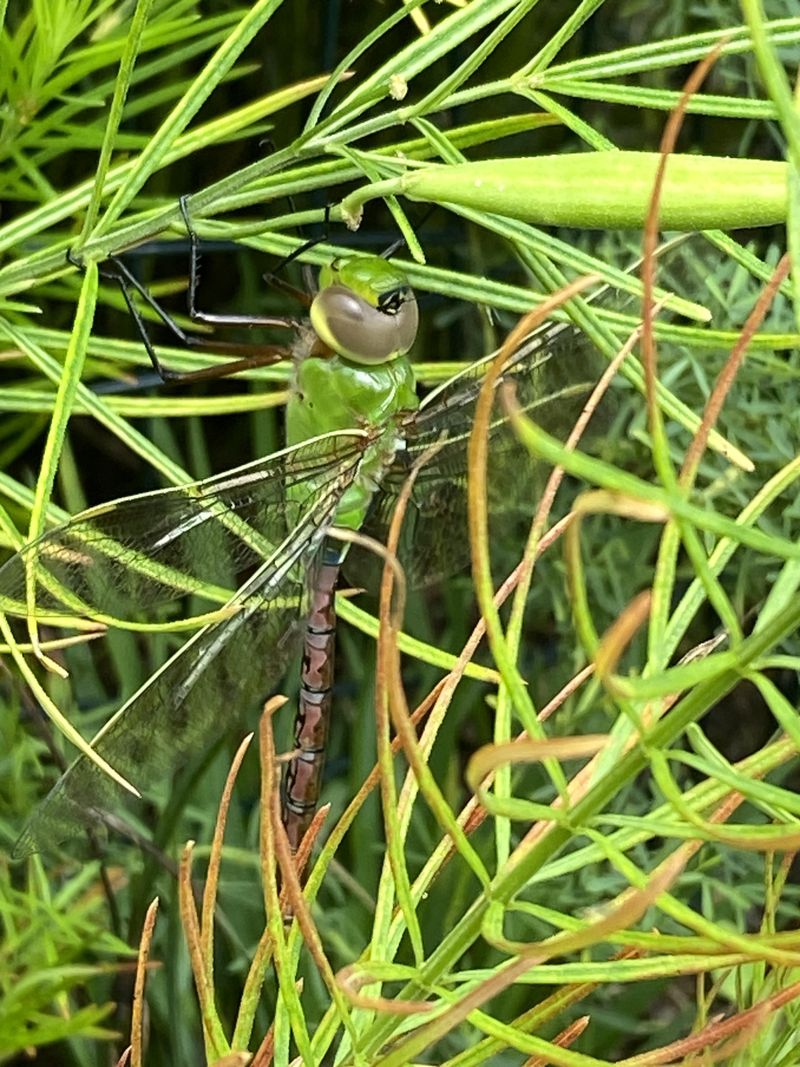
Dragonflies spend a lot of time sitting still. A city-hosted Houston native plant guide says dragonflies use grass stems for perches, which is where the grass connection comes from.
That guidance talks about native grasses in general. It does not single out Gulf muhly as a proven dragonfly attractant, and no source here shows that planting it brings dragonflies to a yard.
Think of it as a plausible bonus, not a guarantee.
University of Maryland Extension describes perching dragonflies waiting on vegetation before they go hunting. It also stresses that species and habitats differ, so what one dragonfly does in one place may not match what another does in your yard.
A practical way to use this idea is to treat a muhly clump as one feature of a wildlife-friendly yard. Mix grasses of different heights, leave a few stems standing, and watch which perches get used.
If dragonflies show up, enjoy them. If not, you still have a good-looking grass.
Adult dragonflies hunt more than mosquitoes
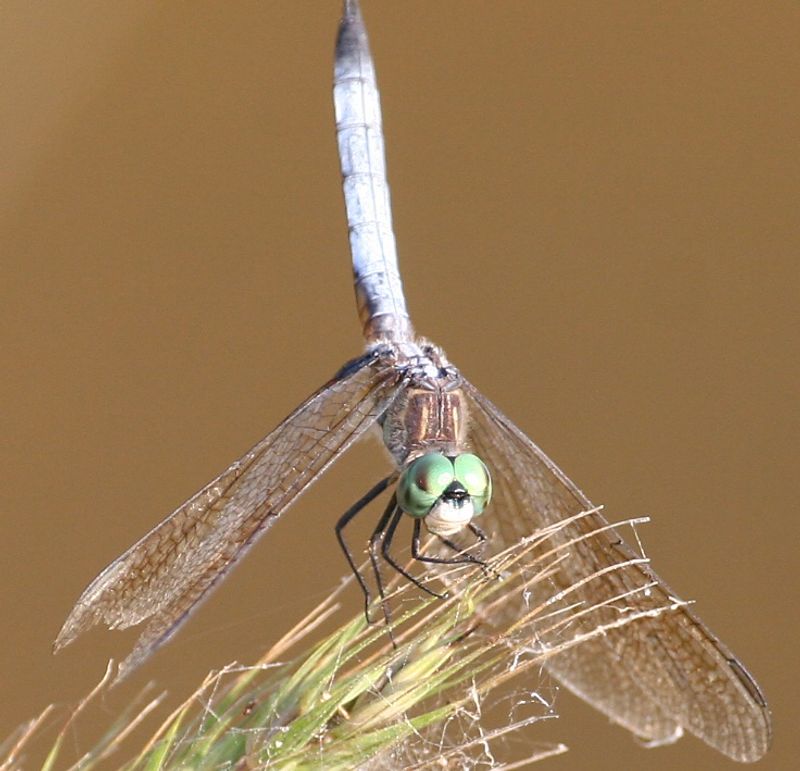
Adult dragonflies are generalist hunters. Texas Parks and Wildlife lists mosquitoes among the prey of the adult common green darner, but also wasps, butterflies, and other flying insects.
So yes, a dragonfly may eat a mosquito. That is different from a dragonfly keeping your patio free of them.
A hungry dragonfly takes whatever flying insect is convenient, and mosquitoes are only one choice on the menu.
A 2019 review of dragonfly ecosystem services reports that mosquitoes are seldom found in adult dragonfly gut-content samples in numbers suggesting adults would reduce mosquito populations. In plain terms, adults do not look like a dependable mosquito patrol.
For a homeowner, the takeaway is simple. Enjoy dragonflies for what they are, fast and fascinating insect hunters, but do not count on them to cut down the bites on your evening porch.
Nothing here shows that a muhly planting would change that.
Fall activity depends on the dragonfly species
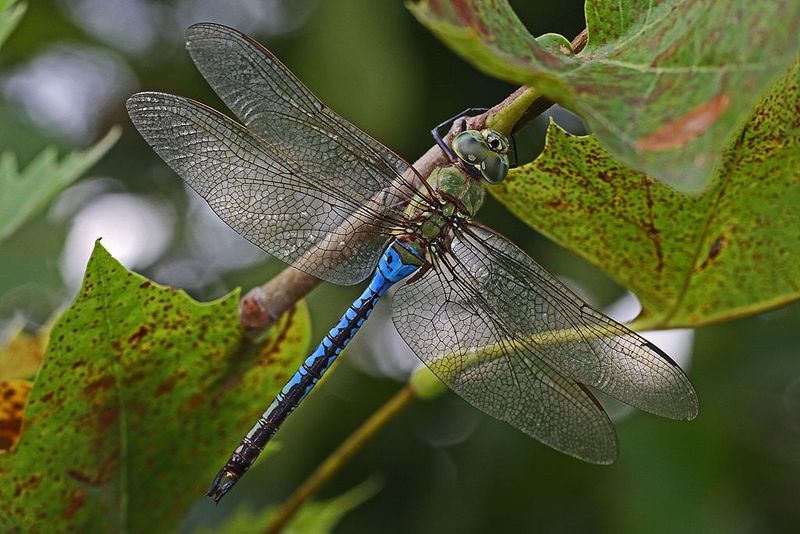
Dragonflies are not one uniform crowd, and their fall habits differ. Texas Parks and Wildlife says common green darners migrate in spring and fall, which means many of the ones you see in autumn may be passing through rather than settling into your yard.
Other species behave differently. University of Maryland Extension reports that eastern pondhawks may hunt through October.
That is a description of one species in the region it covers, so it should not be stretched to every Texas dragonfly or every backyard.
Place matters too. A yard near a creek, pond, or wetland may see more dragonflies than one in a dry subdivision, and weather can shift when they appear or leave.
A warm Texas evening in October may bring a few, or none.
Neither example tells you how long dragonflies will visit a particular yard. If you want to know what flies in your area, keep a simple notebook of dates and sightings, or use a local nature app.
That gives you real information about your own patio instead of a promise from a plant list.
The strongest mosquito evidence concerns aquatic nymphs
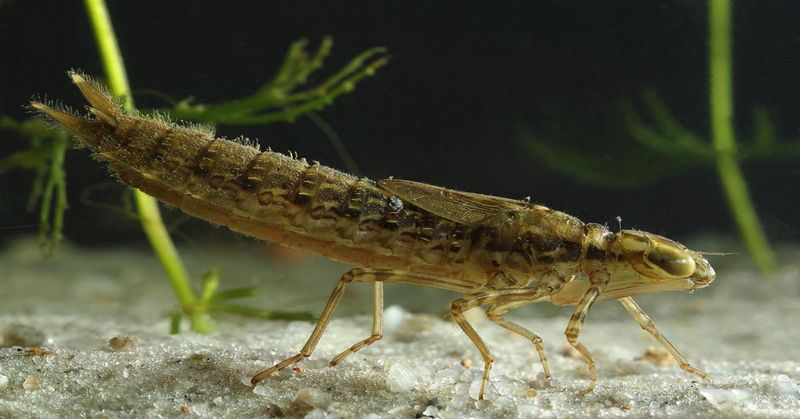
Dragonflies begin life in water. Texas Parks and Wildlife describes aquatic nymphs, and for the common green darner, eggs laid in submerged plants.
A clump of grass on dry ground cannot create that habitat.
The clearer mosquito evidence involves those nymphs. A 2023 meta-analysis of 31 studies found significant predation on mosquito larvae in experimental containers.
Its average estimate was about 40 larvae per nymph per day, with broad confidence intervals.
That number comes from experiments, not from real yards or ponds. It does not tell you how many larvae a nymph eats in a backyard, and it does not describe what adult dragonflies eat.
Treat it as a sign of what nymphs can do under test conditions.
None of this is a reason to leave water standing around your house. Unmanaged puddles, buckets, and clogged gutters are exactly where mosquitoes breed, and they do not reliably produce dragonflies.
If you want a water feature for wildlife, that is a separate project from mosquito control, and the next section covers what to do about breeding sites.
Manage patio mosquitoes with direct household steps
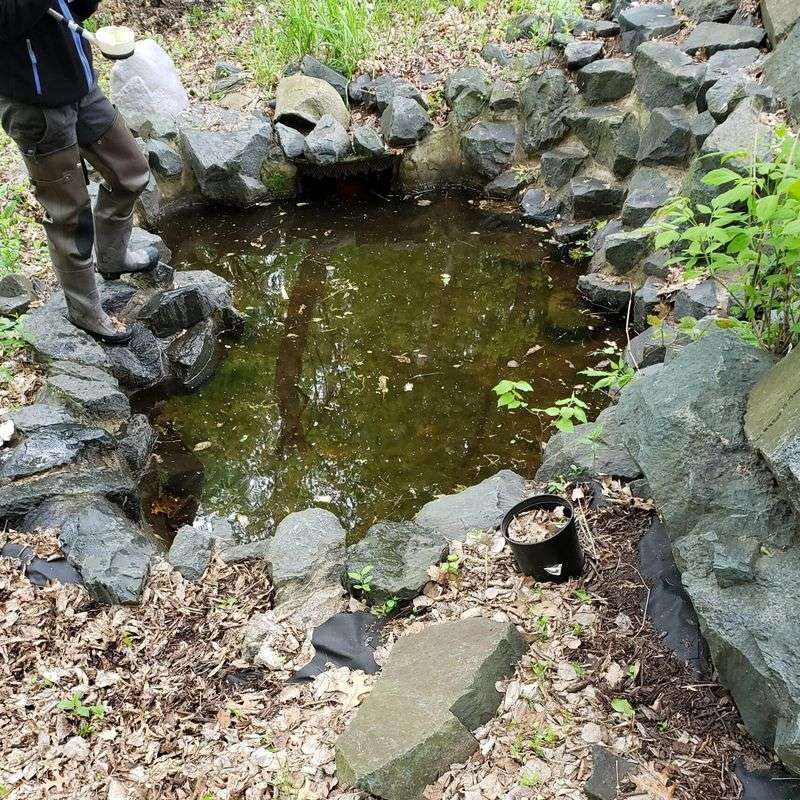
Start with the water. CDC guidance recommends emptying and scrubbing, turning over, covering, or discarding water-holding containers weekly.
Think of flowerpot saucers, buckets, toys, birdbath bowls, and tarps that hold rain.
For standing water you cannot remove or cover, CDC’s larvicide page advises using larvicides according to label directions. Read the label carefully and match the product to the type of water you are treating.
Bites still happen even in a tidy yard, so protect your skin. The CDC Yellow Book identifies EPA-registered repellents as effective when used as directed.
A garden planting is not a substitute for repellent or for public-health mosquito control.
Plant Gulf muhly for its pink fall plumes and its possible role as a perch, and treat any dragonfly visit as a pleasant extra. The mosquitoes get handled by the buckets you dump, not by the grass you plant.