
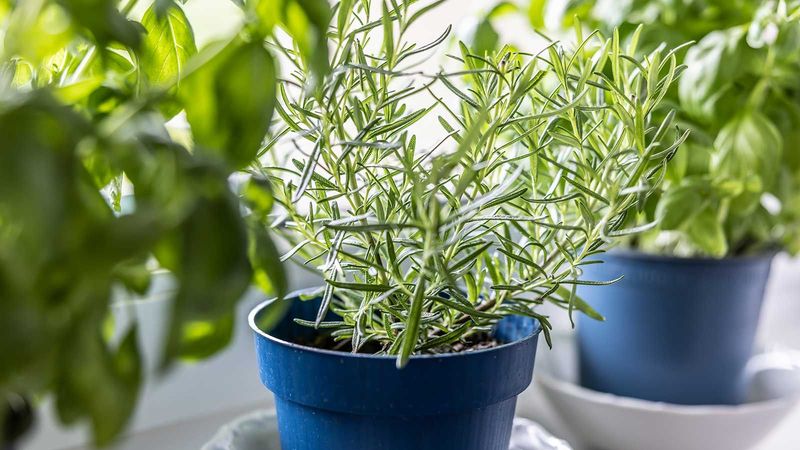
Walk past a rosemary shrub and brush its leaves, and a sharp, piney scent follows you to the door. Nobody has counted how many Florida homeowners plant it there, or asked them why.
Still, an entry is a smart place to ask what rosemary can actually do for you. Here is what the research says about its scent, its looks, and the spot it needs to thrive.
Why rosemary can work beside an entry
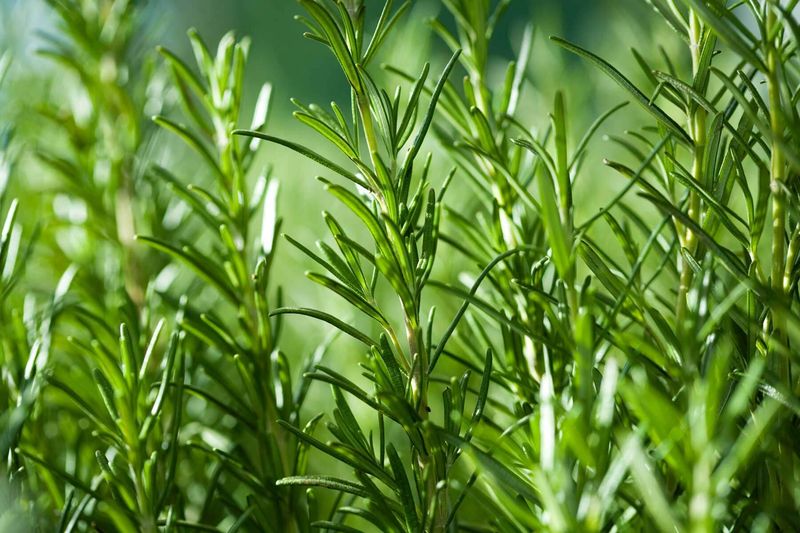
Sunlight, a doorstep, and a plant you can reach in one step: that is the practical case for putting rosemary near an entry. Nobody has surveyed Florida homeowners about this placement, so there is no data on how common it is or what motivates people.
What we can say is what the plant offers when it sits where you walk every day.
According to UF/IFAS Gardening Solutions, rosemary is a fragrant, evergreen, drought-tolerant plant with edible leaves that works in landscape beds. Its scent is strongest when the foliage is touched or crushed.
A spot beside the door puts the leaves within easy reach, so a quick brush on the way in releases the aroma.
The same convenience applies in the kitchen. If you cook with rosemary, snipping a sprig a few steps from the door beats walking across the yard with scissors.
Because the plant stays green all year, it also gives the entry some structure when seasonal flowers fade.
None of this means the fragrance protects the doorway from insects. Think of the entry as a handy, good-looking home for an herb you will actually use, and judge the spot by whether you will touch, smell, and harvest it.
Give the shrub room to grow
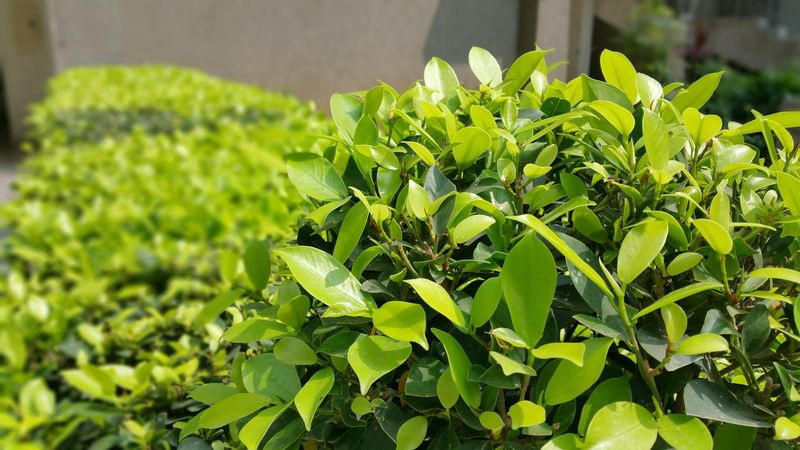
A small nursery pot can fool you. Rosemary is a woody evergreen shrub, and the little plant you buy will not stay little in the ground.
UF/IFAS says it can reach about 6 feet tall and 4 to 5 feet wide in the ground. Treat those numbers as a rough guide, since size varies by cultivar and by how you prune.
Upright types and low, spreading types behave very differently.
That matters beside a front door. A shrub wedged into a narrow strip will push into the walkway, snag sleeves, and need constant cutting back.
Measure the bed, then picture the plant at full width before you dig.
The north-central Florida guide from UF/IFAS Extension lists rosemary as nonnative and evergreen, so it is a garden herb and not a Florida native. Plan for it as a landscape shrub with a real footprint.
If space is tight, choose a compact cultivar or grow it in a large container with excellent drainage. Either way, leave a few feet of clearance from the path so the leaves can be touched on purpose, not by accident.
Its flowers add a separate landscape benefit
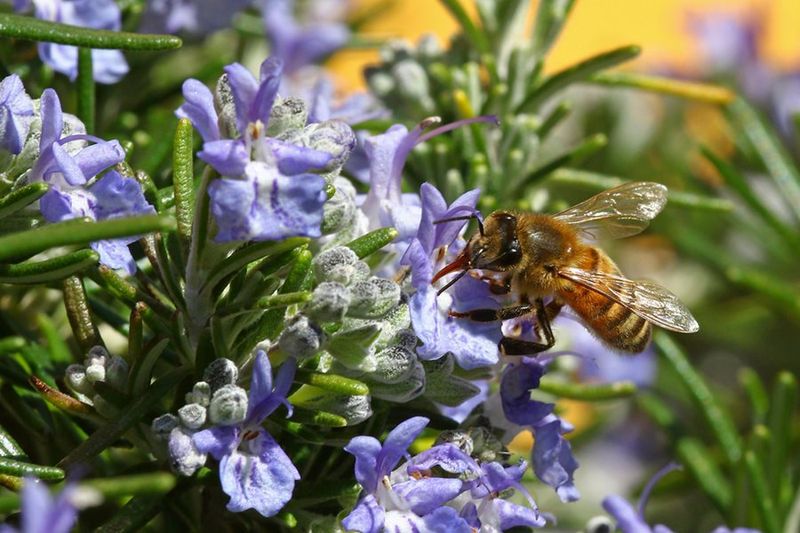
Rosemary does something else worth knowing about: it blooms. The small blue to lavender flowers are a different perk from the scent and the edible leaves, and they should be judged on their own.
UF/IFAS reports in its north-central Florida edible landscaping guide that the blooms are attractive to pollinators. If you plant rosemary near the entry, you may see bees stopping by when it flowers.
That is a modest bonus, not a reason to expect a wildlife garden from one shrub.
The same guide marks rosemary as nonnative to Florida. It is not a substitute for native plants that feed local insects through their whole life cycles.
If supporting wildlife is a goal, rosemary can sit alongside natives and not replace them.
Keep the benefits separate in your mind. Flowers help pollinators, fragrance comes from the foliage, and the leaves go in the kitchen.
None of these add up to mosquito control, a topic covered below.
Check sun, drainage, water, and cold exposure
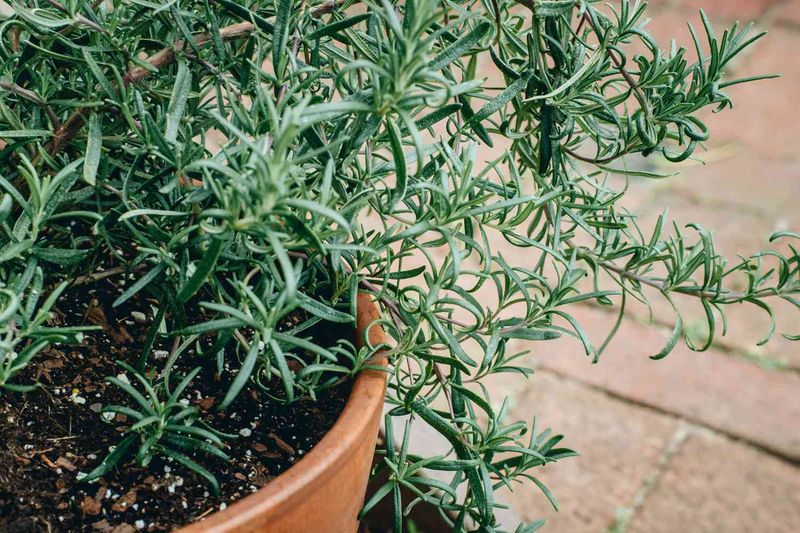
Before you buy a plant, spend a day studying the spot. UF/IFAS advises at least six hours of sun and well-drained soil.
Rosemary prefers dry conditions and suffers from frequent watering or soggy ground. Texas A&M AgriLife also recommends full sun and good drainage, with no overwatering.
Do not assume your yard is sandy. Some Florida sites drain fast, but others hold water or sit low.
Dig a hole, fill it with water, and see how long it takes to empty. Look for puddles after a storm, and check whether lawn sprinklers hit the bed.
Rosemary that gets sprayed every morning is likely to struggle.
Drought tolerance does not mean zero water at the start. UF/IFAS Extension Bay County notes that new plants need water while they establish.
After that, rosemary does well in a sunny, well-drained spot with good air circulation.
Cold is the last check. UF/IFAS says rosemary can thrive year-round in Florida, but plants in colder parts of the state may need freeze protection.
North Florida readers should keep a frost cloth handy and avoid planting in a low pocket where cold air settles.
If the bed fails the test, raise it with sandy loam, move the sprinkler head, or use a pot.
Do not count on rosemary to keep mosquitoes away
Short answer: do not rely on a living rosemary plant for mosquito protection. A 2026 Journal of Medical Entomology field study tested potted prostrate rosemary and found no significant mosquito repellency.
In disturbed conditions, catches of one mosquito species were higher near rosemary than in the control.
Keep the limits of that study in mind. It was done outdoors in California, with prostrate rosemary, so it does not cover every cultivar, pest, or Florida entryway.
Still, it is direct counter-evidence to the idea that a rosemary shrub guards your door.
You may have read that rosemary oil repels insects. The study notes that rosemary compounds have shown activity in concentrated or laboratory settings.
An extracted oil is not the same as an intact plant sitting in a garden bed, and the live-plant trials did not show the effect.
For real bite protection, the CDC Yellow Book points to EPA-registered repellents and says the effectiveness of non-registered products, including some natural ones, is unknown. Use a registered repellent as the label directs.
Rubbing crushed rosemary leaves on your skin is not a replacement.
Choose rosemary for the benefits it can provide
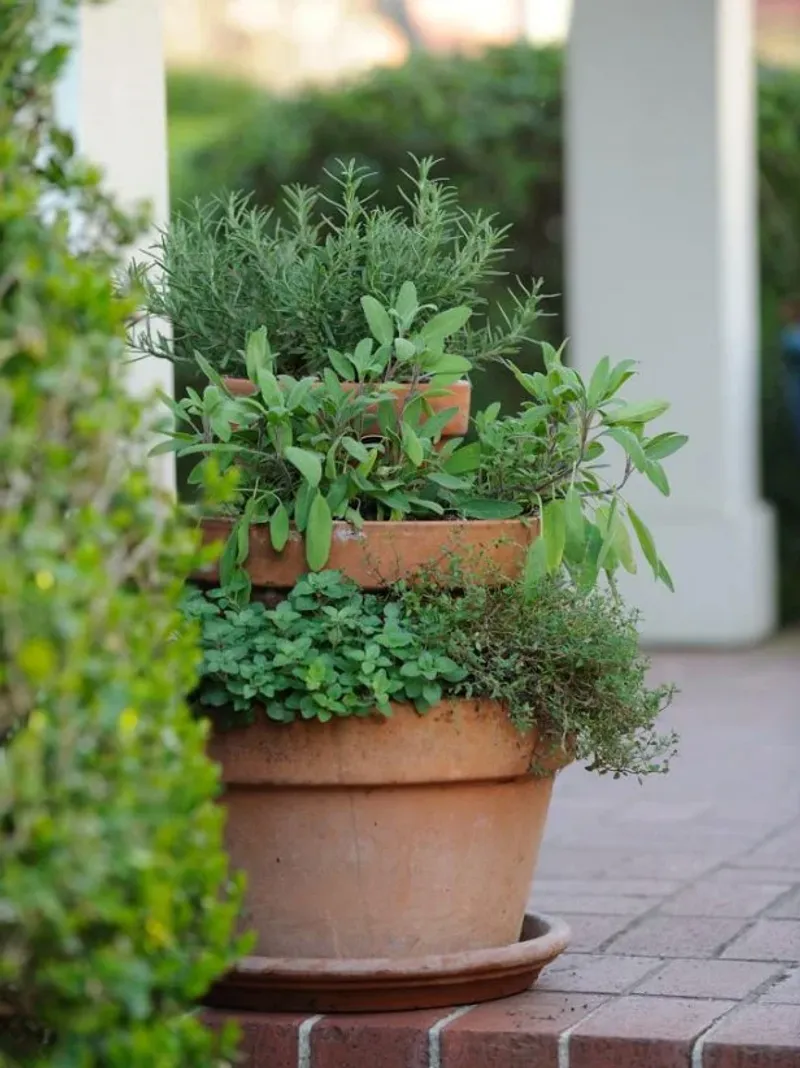
Here is a simple rule: plant rosemary by the door if the spot gets plenty of sun, drains well, and has room for a shrub that can grow several feet wide. Add a household that will enjoy brushing the leaves and snipping them for dinner, and the match makes sense.
Treat it as a landscape and herb choice, since the California field trial gives no reason to call it a mosquito shield. Its best work is quiet: a green, fragrant plant you can reach with one hand while the other holds your keys.