
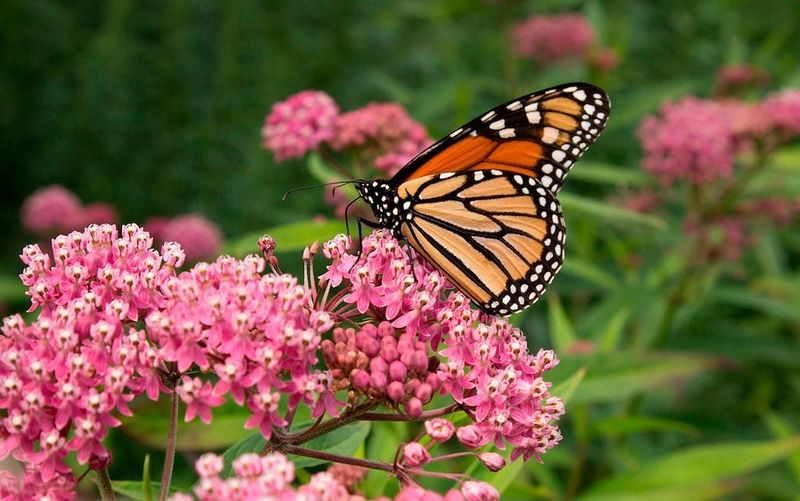
Most Southern gardeners have watched a monarch drift across the yard and keep going. Flowers feed adult butterflies, but caterpillars need a different kind of plant.
Milkweed fills that gap, and adding the right kind is a manageable project. Here is how to choose it, pair it with nectar, and keep it safe.
A Passing Monarch Does Not Diagnose Your Yard
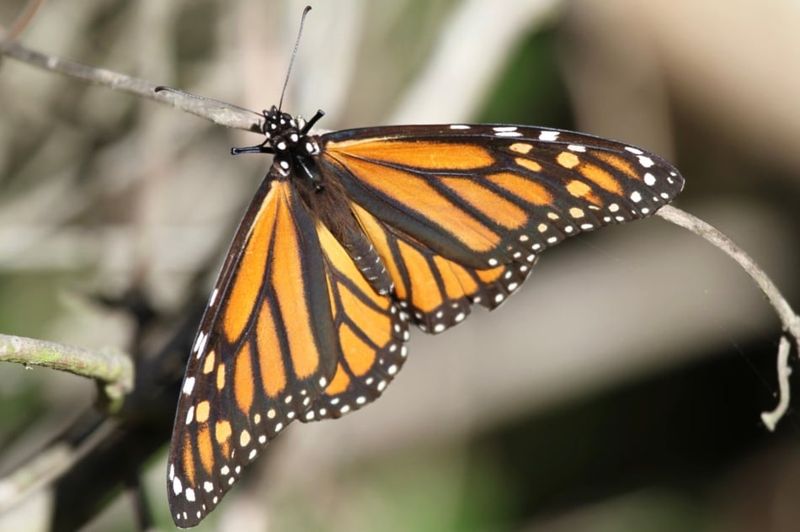
Seeing a monarch sail over your fence without landing tells you very little about your yard. Adults move with the seasons, and Texas sits on an important spring and fall migration corridor, so many butterflies are simply traveling through.
A butterfly might stop for nectar and never lay a single egg. Another might skip a yard that has plenty of flowers because of weather, timing, or what surrounds your property.
Texas Parks and Wildlife guidance notes how much monarch movement varies with season and conditions.
Milkweed matters for a different job: breeding. The Monarch Joint Venture explains that adults need nectar while caterpillars need host plants.
So a yard without milkweed has fewer chances to support young monarchs, but that gap alone does not explain why one butterfly kept flying.
Think of it as a fixable gap in what your yard offers, not a diagnosis based on one sighting. Adding habitat can make your space more useful if monarchs do find it, though no planting can promise a visit.
Milkweed Provides the Host Leaves Caterpillars Need
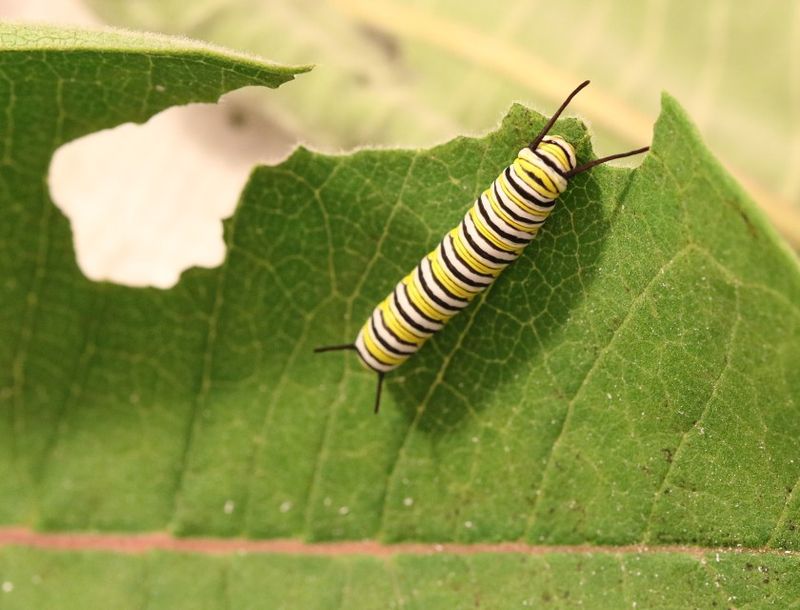
Picture a striped caterpillar chewing through a milkweed leaf. That leaf is its only food, which is why milkweed is called the host plant.
Nectar flowers cannot replace it, because they feed adults and do not give caterpillars anything to eat.
Female monarchs generally lay their eggs on milkweeds. Tiny caterpillars hatch and start eating right where they were laid, so having the right plant nearby makes a real practical difference.
Researchers have documented a female laying eggs on plants that are not suitable, such as invasive swallow-worts, in a study of monarch egg-laying on swallow-worts. Monarch larvae cannot feed on those plants, so the eggs are wasted.
That is a rare exception, not a reason to look for another host.
For a home garden, the working rule is simple: if you want to offer breeding habitat, plant milkweed. Keep nectar flowers too, since adults still need to eat.
Choose Milkweed for Your Part of Florida or Texas
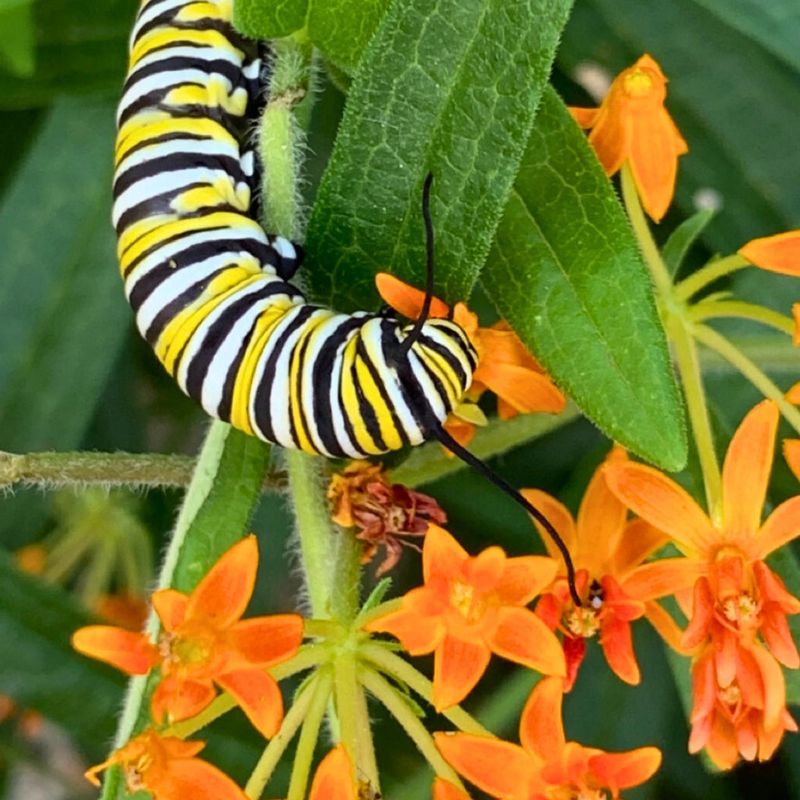
Milkweed is a whole group of plants, not one species. Texas Parks and Wildlife lists more than 35 milkweed species recorded in Texas, and UF/IFAS lists more than 20 native to Florida.
The best pick depends on where you live and what your soil and sun are like.
In Texas, examples used by monarchs include antelope horns, green antelopehorn, and zizotes. Each suits only some regions and soils, so treat them as starting points, not statewide answers.
Butterflyweed grows natively in parts of Texas and Florida. Texas Parks and Wildlife says monarchs use it less readily than some other milkweeds.
In Florida, swamp milkweed is another native example.
Before you buy, check a native-plant list from your county Extension office or a local native plant society. Match the species to your sun, drainage, and region, and your plants are more likely to settle in.
Pair Host Plants With Nectar Across the Season
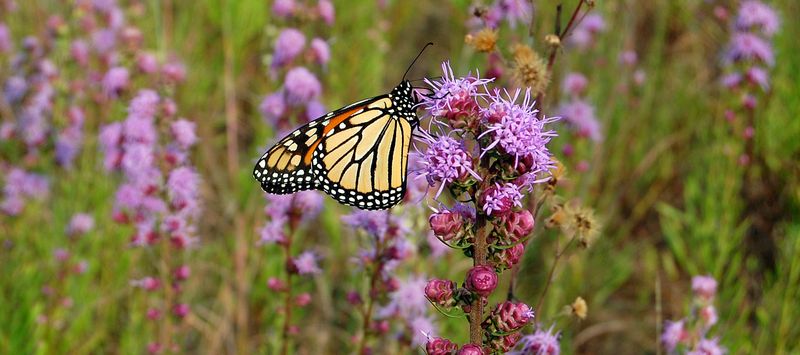
Milkweed handles the nursery side of monarch life. Adults, meanwhile, need fuel, and they get it from nectar.
The Monarch Joint Venture points out that adults rely on nectar, including during migration, so milkweed by itself is not a complete habitat planting.
The goal is something blooming in your yard across as many months as possible. In the long Southern growing season, that means mixing plants that flower in spring, summer, and fall instead of relying on one big burst.
Choose a varied planting of locally suited flowers, and ask your county Extension office or native plant society which ones do well nearby. There is no single magic mix, so variety and timing matter more than any one plant.
Group plants in sunny clusters where you can watch them. A small bed that blooms for months can be more useful than a large one that peaks for two weeks.
Ask About Insecticides and Check Local Guidance
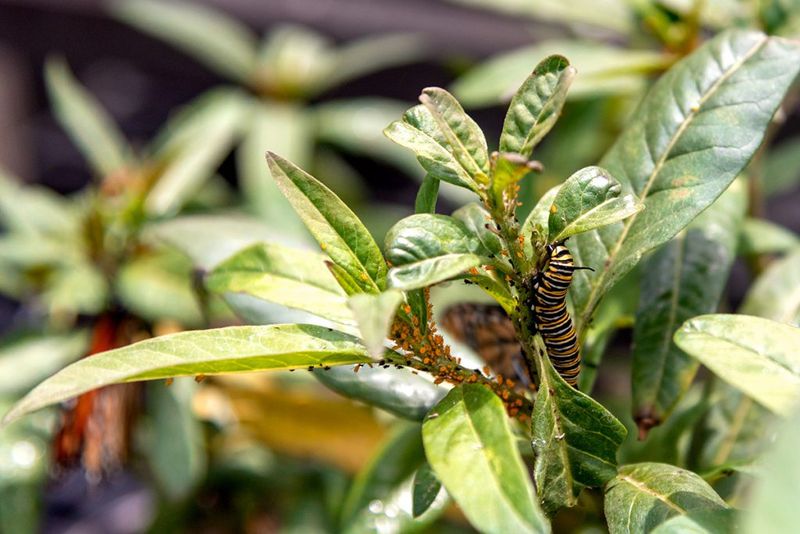
Before a milkweed goes in your cart, ask the nursery whether it was treated with insecticides. A plant labeled pollinator-friendly is not automatically pesticide-free.
The Monarch Joint Venture notes that some products can stay in plant tissues and may harm caterpillars and other helpful insects.
At home, avoid spraying insecticides on milkweed and on the flowers that feed adult butterflies. If pests show up, try other options first, such as hand removal or a hard spray of water.
Tropical milkweed needs separate attention. It is widely sold but nonnative, and UF/IFAS does not recommend it in Florida, where it has been assessed as invasive.
Because it can stay green through winter, concerns include disease buildup and disruption of normal seasonal behavior. UF/IFAS Hillsborough County describes these as potential risks, not certain outcomes.
Outside Florida, follow current guidance from your local Extension or wildlife agency.
A Garden Can Contribute Without Guaranteeing a Return
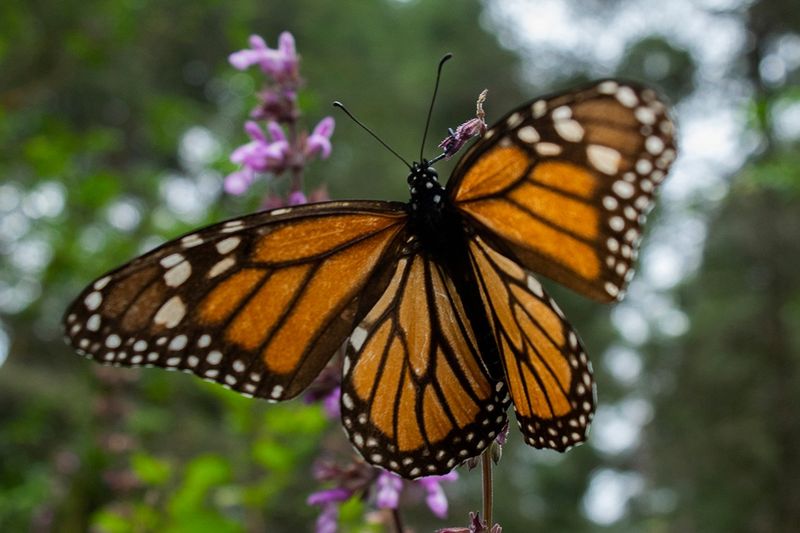
One study of butterfly gardens offers a useful reality check. Researchers found more monarch egg-laying in planted gardens than at nearby natural sites in two study years.
Overall survival of the young stages, however, did not differ significantly between the two.
The authors describe gardens as a partial contribution, not a stand-alone solution. Planting cannot guarantee that monarchs will visit, lay eggs, or develop successfully in your yard.
What you can control is the quality of what you offer. Pick milkweed suited to your region, add nectar flowers for the adults, and keep insecticides away from the whole planting.
Small, well-chosen habitat adds up, even when the butterflies keep their own schedule.