
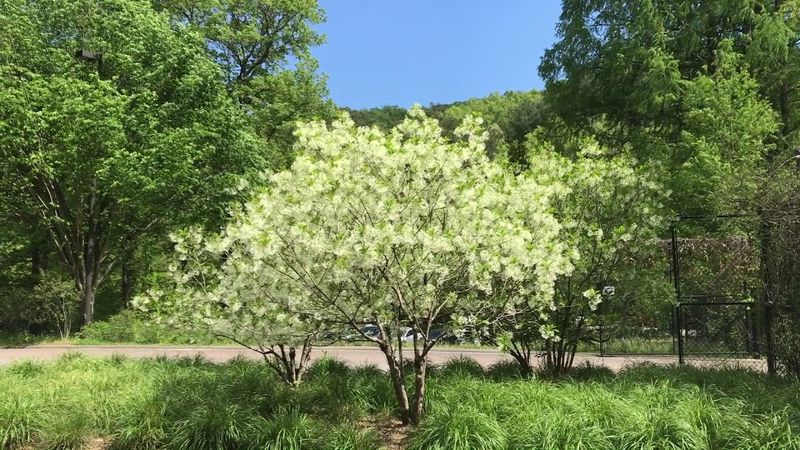
Picture a small tree that covers itself in white blooms each spring and still fits beside a driveway. White fringetree, a Florida native, can do that in some North and Central Florida yards.
It is not a spotless-driveway tree, but UF/IFAS rates its leaves and fruit as not a litter problem. Here is how to tell whether it fits your space, and what cleanup to expect.
White fringetree brings a small-yard scale
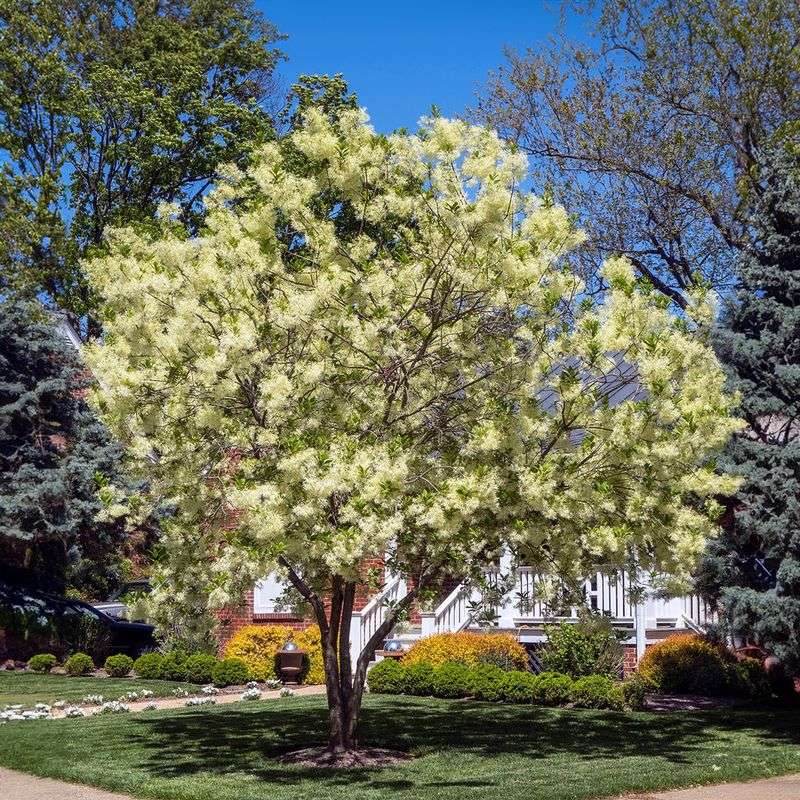
Many yards are too small for an oak or a magnolia. White fringetree (Chionanthus virginicus) is a native tree sized for tighter spaces.
According to the UF/IFAS species profile, it usually reaches about 12 to 20 feet tall with a spread of 10 to 15 feet.
It is also slow growing. That is a plus for a driveway edge, because you are not signing up for a tree that outgrows its spot in a few years.
Slow growth means a young tree will look modest for a while, so plan on patience rather than instant shade.
At that mature size, the canopy can sit comfortably in a front yard corner, near a patio, or along a driveway where a large shade tree would crowd the pavement and the house. A 15-foot spread still needs planning, though.
Measure the open ground around your chosen spot before you buy, and picture the full width of the canopy rather than the size of the nursery pot.
Size alone does not settle the question. A tree that fits on paper can still struggle in the wrong soil, light, or region, and not every Florida property suits it.
The sections ahead cover where it grows well, what it drops, and how much room it needs, so you can judge your own site instead of relying on a number from a plant tag.
Spring flowers are the main seasonal show
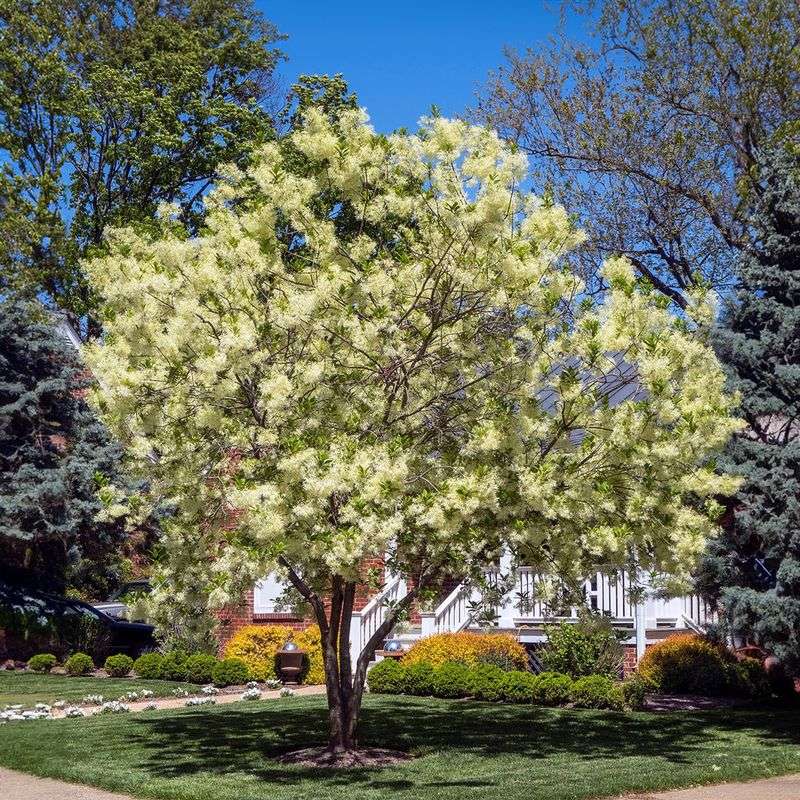
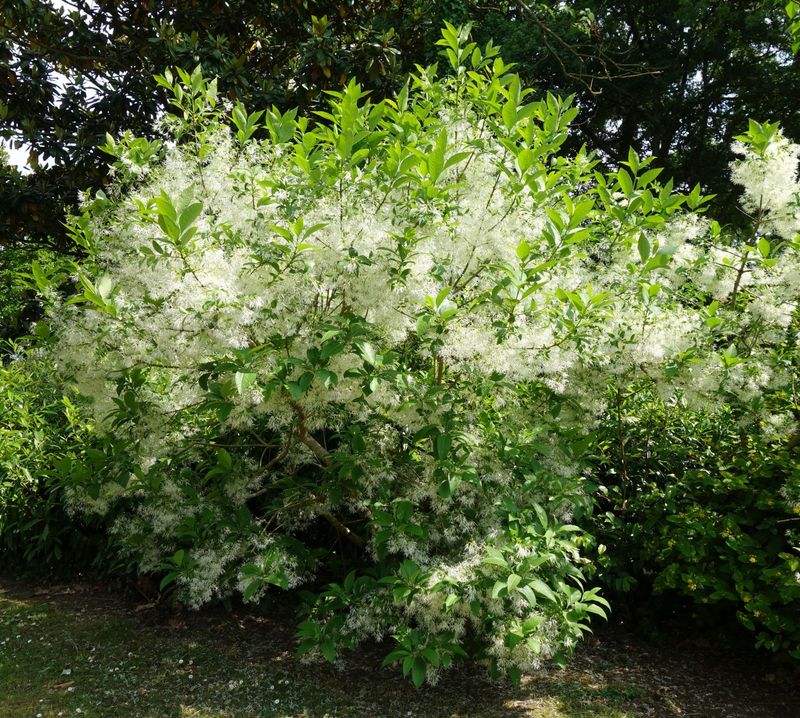
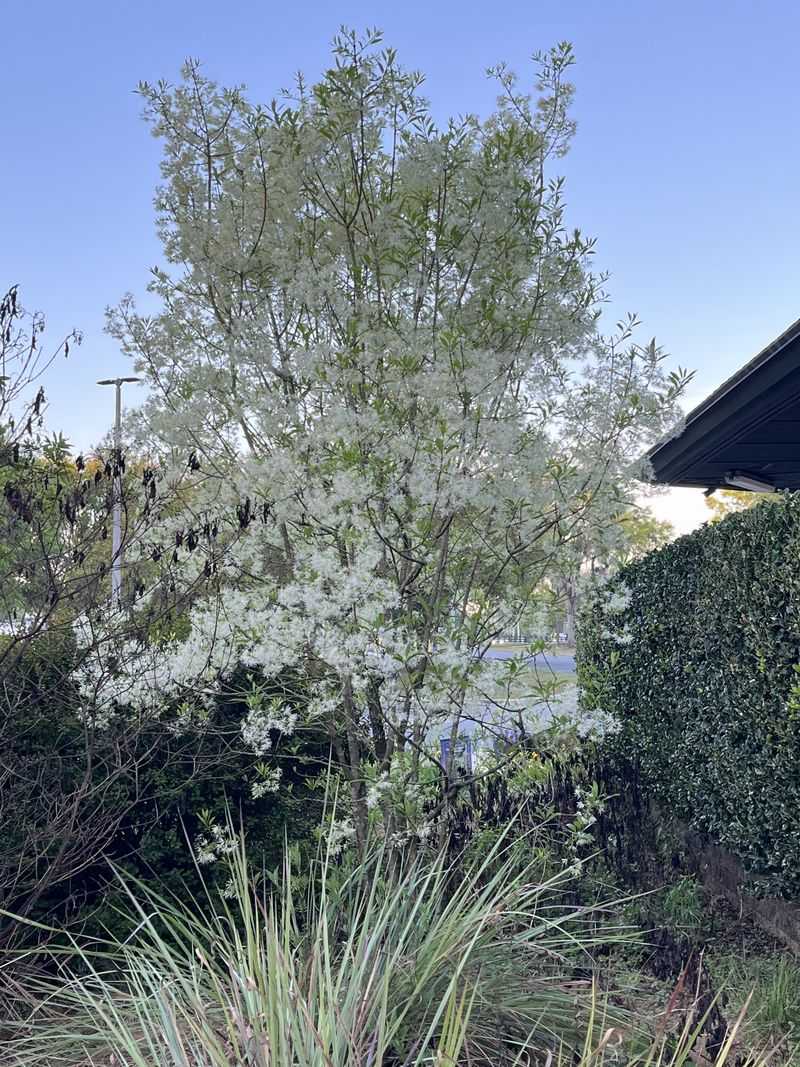
Spring is when white fringetree earns its place. UF/IFAS Gardening Solutions describes abundant white, lightly fragrant flowers that last about two weeks.
The blooms hang in loose, feathery clusters, so the whole tree can look frosted.
In a small yard, that display works hard. You can see it from a window, from the mailbox, or while pulling into the driveway.
Because the tree is compact, the flowers sit closer to eye level than they would on a tall canopy tree.
Two weeks is a short window, so think of the tree as a seasonal performer rather than a year-round showpiece. Before and after bloom, it is a modest, leafy small tree.
That is worth knowing if you want constant color near the entry.
A flowering tree also changes with the seasons near pavement. When bloom ends, expect some spent flowers to drift down, and plan a quick sweep or a blast with a leaf blower.
Nothing here suggests flowers never fall or that no cleanup is needed.
If a short, sweet, sweepable bloom season sounds fair, the spring show may be reason enough to plant one. If you want zero seasonal debris from any tree, no flowering plant near pavement will give you that.
Low litter is not the same as no cleanup
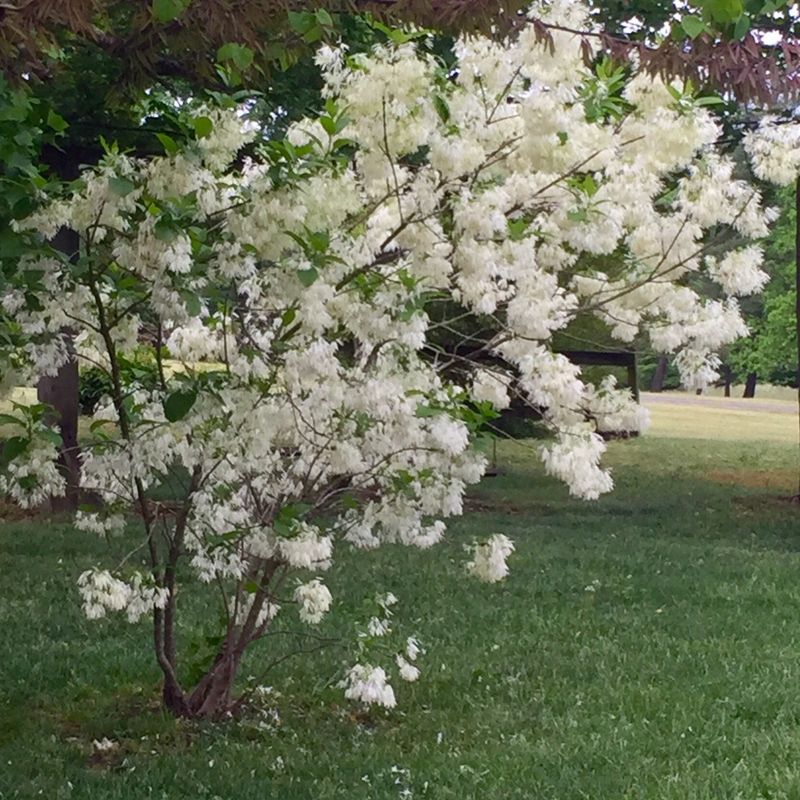
Here is the honest version of the pitch. The UF/IFAS profile labels the tree’s leaves and fruit as not a litter problem.
That is a favorable rating, and it is why white fringetree is described here as relatively low-litter.
It is not a promise of a clear driveway. The tree is deciduous, so it drops its leaves in the cooler months.
The guidance also does not predict how much debris will land on any one planting site, which depends on wind, placement, and how close the canopy sits to the pavement.
Fruit is the other variable. UF/IFAS Gardening Solutions notes that female trees may produce dark fruit in late summer or early fall.
Birds use that fruit, but UF/IFAS says it is not edible to humans, so keep it away from children and pets’ snack habits.
A practical approach is to budget a few light sweeps a year: some after spring bloom, a little in late summer if your tree fruits, and a pass in the cooler months when the leaves come down. Compared with many trees, that is manageable, but it is still maintenance.
Where in Florida will it fit?
Native does not mean right for every corner of the state. UF/IFAS Gardening Solutions says fringetrees grow well in North and Central Florida.
That is the range where this article recommends giving it a try.
The UF/IFAS small-tree guide places it in zone 9B and north. If you garden in South Florida, or on a salty coastal lot, this is not the tree to count on, and you should look at other small trees suited to your area.
When you shop, use the botanical name. You want white fringetree, Chionanthus virginicus.
Plant tags and online listings can blur the lines between similar plants.
Two lookalikes are worth avoiding. Chinese fringetree is a nonnative plant, and pygmy fringetree is rare and endangered, so it is not a typical yard purchase.
Ask the nursery staff to confirm the species, and skip any plant that lists only a vague common name.
A quick check of your zone and your distance from salt spray will tell you a lot before you spend a dollar.
Choose a sheltered spot with suitable soil
Good placement does more for this tree than any fertilizer. The UF/IFAS profile notes that full sun favors flowering, while some afternoon shade can improve the foliage.
In Florida, a spot with morning sun and a little relief from hot afternoon rays is a sensible target.
Soil matters, too. The tree prefers moist, acidic soil, which can be a challenge in fast-draining sand.
It can tolerate moderate drought, but that is not the same as thriving when dry. Plan on supplemental water, especially in the first years.
UF/IFAS advises sheltering the tree from wind. Planting near a building, fence, or larger trees on the windward side can help.
Do not treat it as storm-proof, and do not put it in an open, exposed spot and expect it to cope on its own.
Finally, UF/IFAS Gardening Solutions lists the tree as not salt tolerant. Coastal lots with spray or salty wind should look elsewhere.
A simple test: if your site is dry, windy, and baked all afternoon, consider another plant or improve the spot first.
Give the tree room beside pavement
A driveway edge looks tempting, but roots need space. UF/IFAS urban-forest guidance gives a small tree, under 30 feet at maturity, a minimum of a 10-by-10-foot soil area and 2 feet of separation from pavement.
Those are minimum design guidelines, and they assume at least 3 feet of rootable soil depth and good, well-drained conditions. They are not a guarantee against pavement problems.
If your soil is compacted, drains poorly, or is shallow over fill or rock, you may need more room. Builders often compact the soil near driveways and foundations, so a spot that looks open can be a tough place for roots.
The UF/IFAS species profile calls this tree’s roots not a problem. That is a favorable note about the species in general, but it does not promise anything about your particular site.
Use it as encouragement, not as permission to squeeze the tree against the curb.
Mark the spot with a hose or flour, measure the clearance, and picture the canopy at 10 to 15 feet wide. If the numbers feel tight, shift the tree farther from the pavement.
Establish the tree before expecting it to thrive
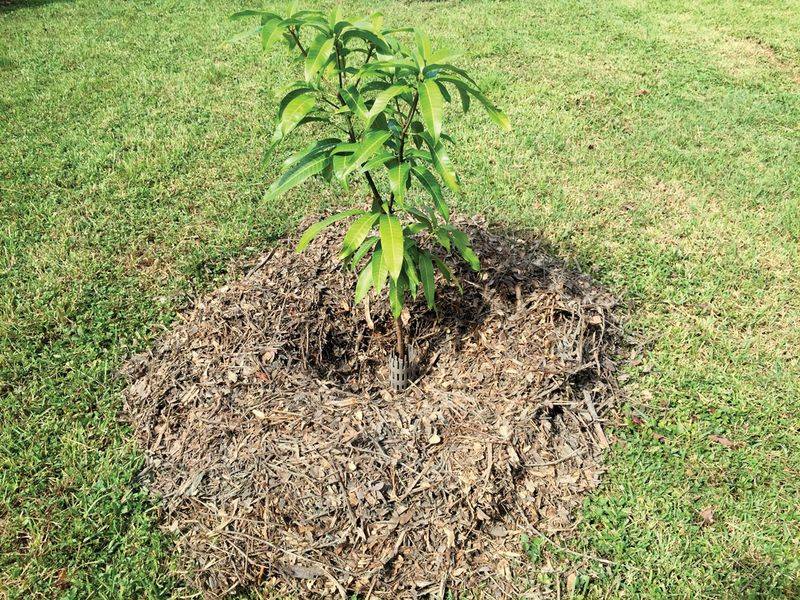
Planting day sets the tone for the next several years. UF/IFAS planting guidance starts with a wide planting hole, which gives young roots loose soil to spread into.
Set the tree so the trunk flare, where the trunk widens at the base, sits slightly above the surrounding soil. Planting too deep is a common mistake and can cause long-term trouble.
Next comes mulch. Spread about 3 inches deep, but pull it back so it stays 12 inches from the trunk.
Mulch piled against the bark holds moisture where it does not belong.
Then water regularly while the roots establish. Sandy Florida soil dries quickly, so check the root zone by hand instead of guessing.
A new tree that dries out in its first months can struggle.
These steps improve the odds, but they do not guarantee survival, and they cannot rescue a tree planted in the wrong place. Pair good technique with the right light, soil, shelter, and spacing, and give the tree a few seasons before judging it.
A useful fit when the site matches
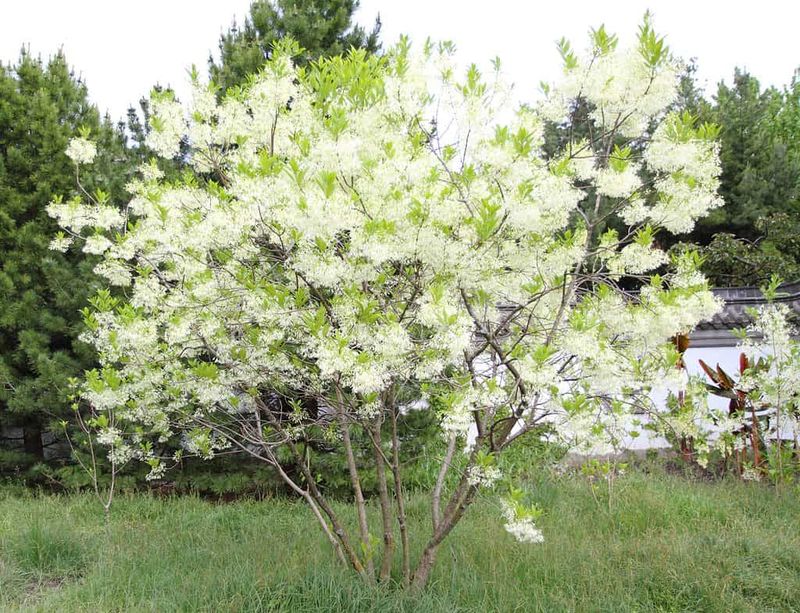
White fringetree may suit a small North or Central Florida yard when the site offers decent light, moist acidic soil, shelter from wind, and enough space from pavement. Check the species profile, the Gardening Solutions page, and the spacing guidance against your own lot before buying.
Relatively low litter still means some sweeping. If your region or site falls short, choose a different tree.
A good fringetree site gives you two weeks of white bloom and a quick broom job, which is a fair trade.