
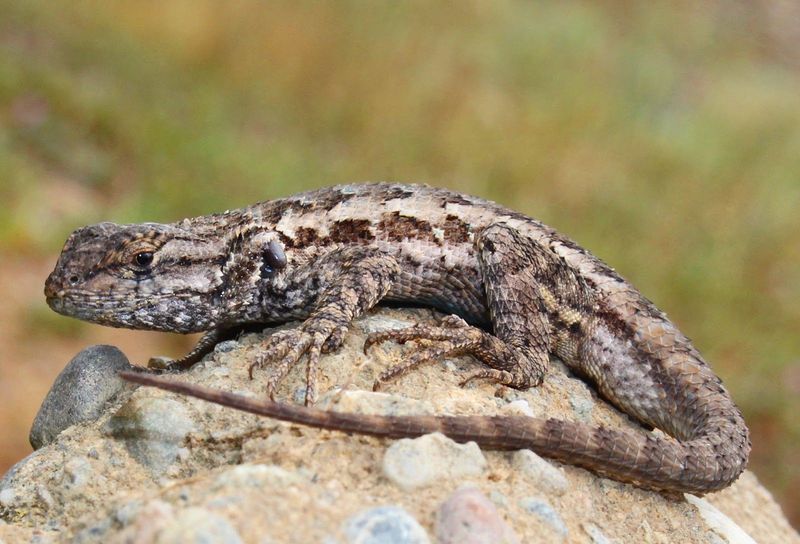
A small gray-brown lizard is flat against your warm stucco wall on a bright October afternoon. It is easy to read big stories into that sight, from bug counts to secret winter hideouts.
The truth is simpler, and knowing it helps you make better choices about your yard, your house, and your fire safety. Here is what the sighting can tell you and what it cannot.
A wall sighting shows a basking lizard, not a yard health report
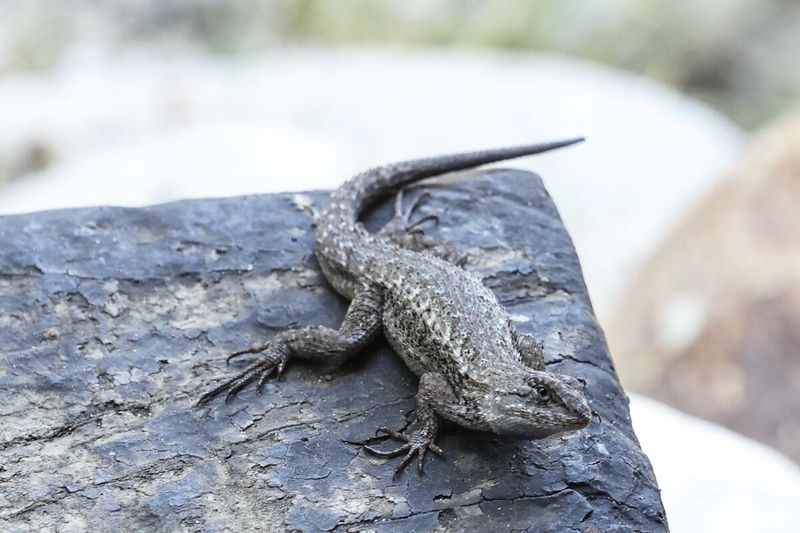
Picture the lizard on your wall at 2 p.m. What you can say for sure is that it found a warm, open spot and is using it while awake.
California Department of Fish and Wildlife’s life history account lists fences, building walls, tree trunks, and rock piles among the places western fence lizards use for basking or perching. Like all reptiles, they depend on outside warmth to get their bodies going.
That is all the sighting shows. It is tempting to treat one lizard as a report card for the whole yard, but several separate questions are hiding in there.
How many insects live in your garden? Is the yard healthy overall?
Where will this lizard spend the winter? A single animal on a wall does not answer any of them.
Yes, these lizards eat insects, mostly small invertebrates found on the ground and in plants. That makes them insect-eaters, but it does not make one basking individual a bug counter.
A lizard may sit on your wall simply because the wall is warm and has a good view.
The same goes for where it sleeps. The wall is a perch, and nothing about the perch reveals a retreat.
Treat each of these as its own question, and you will avoid chasing the wrong fix. If a lizard ever wanders indoors, UC Integrated Pest Management guidance on lizards covers what to do, which we will get to later.
Why a lizard may still bask in fall
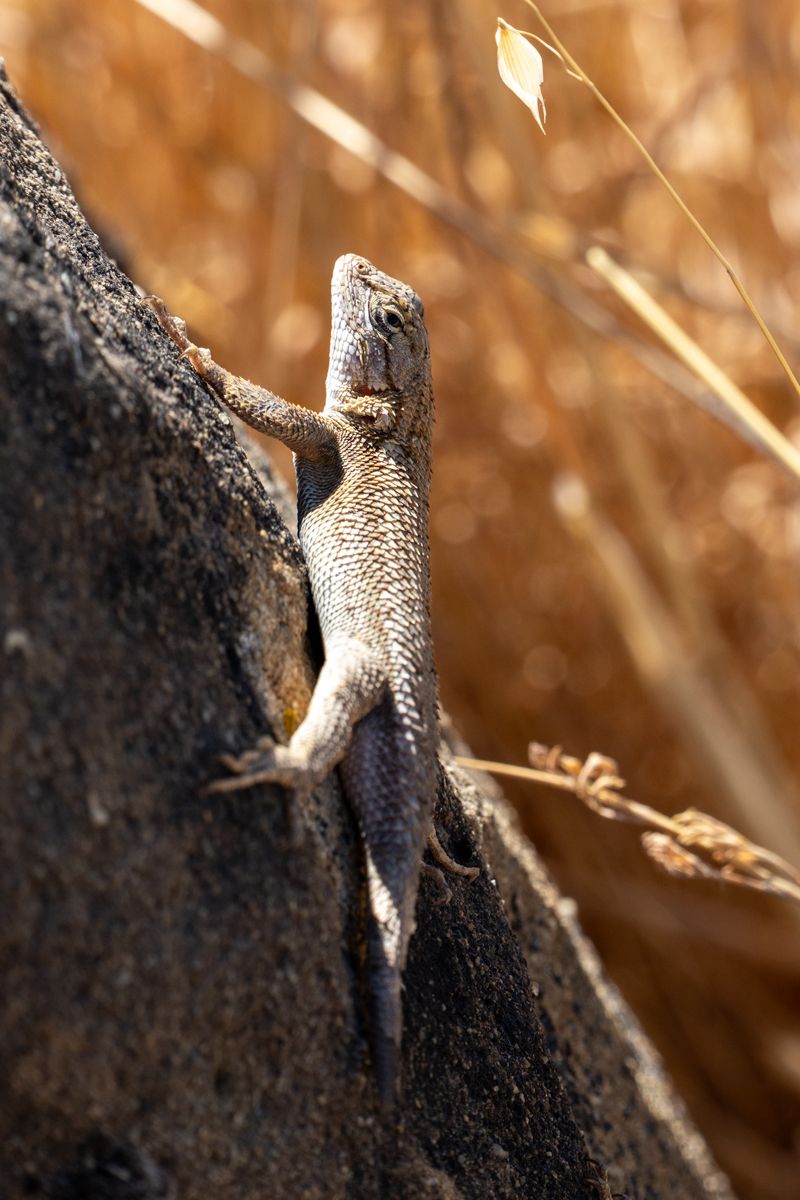
Lizards cannot make their own body heat, so they borrow it. Warm walls, fence rails, and rocks work like a free heating pad.
A study of preferred body temperature in the western fence lizard shows how closely the species ties its activity to environmental warmth.
Because California is so varied, there is no single calendar for every lizard. Coastal yards with mild fall days may see lizards out for much of the season.
Inland valleys and higher elevations cool off sooner, and activity there drops as temperatures fall. The Fish and Wildlife account notes that seasonal activity differs by location.
So a lizard on your wall in October fits an ordinary pattern: a sunny afternoon, a warm surface, an awake animal. It does not mean the lizard has stopped looking for shelter as nights get colder.
A lizard can bask at noon and still tuck into cover by dusk, and it will likely do more of that as the season shifts.
A practical clue is timing. Lizards you see on sunny midday walls and gone by evening are doing normal temperature management.
If you notice fewer each week as the weather cools, that is the seasonal slowdown playing out in your own neighborhood.
Where can a western fence lizard shelter?
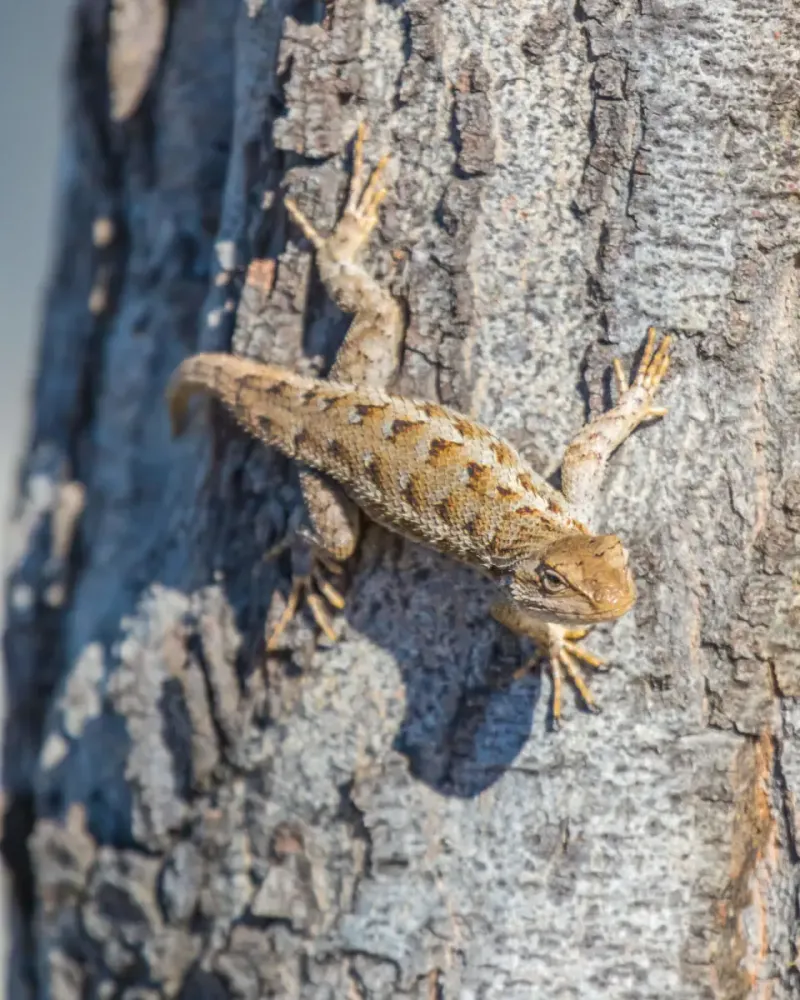
Western fence lizards use a range of hiding places. According to the Fish and Wildlife life history account, cover and retreats can include rocks, boards, crevices, burrows, and tree bark, including during cold periods.
Notice what that list does not say. It does not say the lizard on your wall chose the crack beside it or the rock pile across the yard.
A perch and a retreat are different things, and an animal can travel between them. Without tracking that individual, nobody can tell where it goes.
Research adds some context. A study of urban sites in Santa Barbara found that lizards were more likely to occupy sites with more potential rock refuges.
That is an association across survey sites. It does not prove that any one lizard overwinters in a particular rock pile, and it does not promise that adding rocks will bring lizards.
For a homeowner, the useful takeaway is modest. Cover matters to this species, and a yard with a mix of surfaces may suit it better.
But you cannot read a lizard’s winter plans off a wall sighting, so avoid guessing and tearing things apart to find out.
Retain habitat only where it fits defensible space

If you like having lizards around, you can keep some suitable cover in an appropriate part of the yard when safety and maintenance allow. A few rocks or boards set well away from the house are one example.
If you suspect a spot is occupied, try not to disturb it needlessly.
Keep expectations realistic. The Santa Barbara work on potential rock refuges and lizard occupancy found an association, not a guarantee.
Leaving cover is a reasonable gesture, not a promise of residents. The state life history account also lists boards and rocks among documented cover types.
Fire safety comes first. CAL FIRE’s defensible space guidance calls for an ember-resistant area right around structures, careful management of dry debris and vegetation, and clearance around exposed wood piles.
Do not keep combustible material beside the house for wildlife.
That means a lumber stack or board pile against the wall is a poor lizard feature. Rocks and gravel are a better fit close to the home, while any wood or brush belongs farther out and within the rules.
Your city, county, or fire district may set stricter requirements than the state, so check locally. Habitat choices never override fire rules.
Seal building entry points, not every outdoor crevice
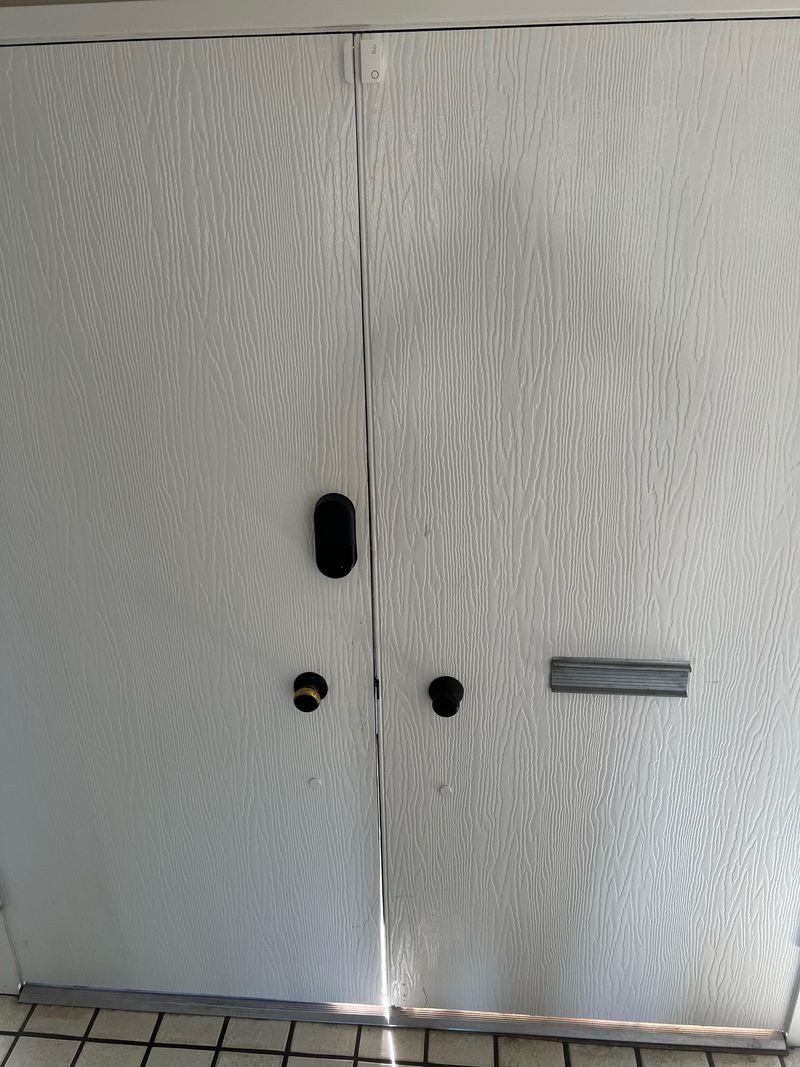
Keeping lizards out of the house is a separate job from managing the yard. Say you find one on the living room floor.
UC Integrated Pest Management advises capturing it and releasing it outdoors, then sealing the building openings it used so it cannot return.
Think of the usual suspects: gaps under doors, torn screens, openings around pipes, and loose vents. Weatherstripping and sealant handle most of them, and they also help with drafts and other pests.
Notice the limit of this advice. It targets openings into the building.
It does not say every outdoor crack, wall seam, or rock pile needs filling, and nothing supports the idea that sealing such gaps will clear lizards out before spring. Ordinary repairs are fine, and so is leaving a harmless outdoor crevice alone.
A simple rule works well. Fix what lets animals indoors, and handle outdoor habitat as a fire safety and upkeep decision.
Doing so keeps your home secure without turning a friendly yard visitor into a problem it was never causing.
Fence lizards do not guarantee fewer ticks

You may have heard that lizards protect you from Lyme disease. The real story is more tangled.
Western fence lizards are important hosts for immature western blacklegged ticks, yet they are poor reservoirs for Lyme bacteria. A tick that feeds on one is less likely to pick up the bacteria, but the lizard also feeds ticks.
Researchers tested this by removing lizards. An experimental lizard-removal study found lower density of infected nymphs the following year after removal, not higher.
That result came from its study setting. It does not predict what happens when a homeowner keeps a lizard, seals a crack, or moves a rock pile.
So keep lizards because you enjoy them, not as a tick shield. Your household risk depends on where you spend time, not on one animal on your wall.
Do not assume ticks are only a spring problem either. California Department of Public Health shows adult western blacklegged ticks active in fall and winter, with nymphs active in spring.
Risk varies by place and time.
Practical habits help year-round: check yourself and pets after time in brush or leaf litter, and wear light clothing so ticks are easy to spot.
Make the yard decision from the evidence
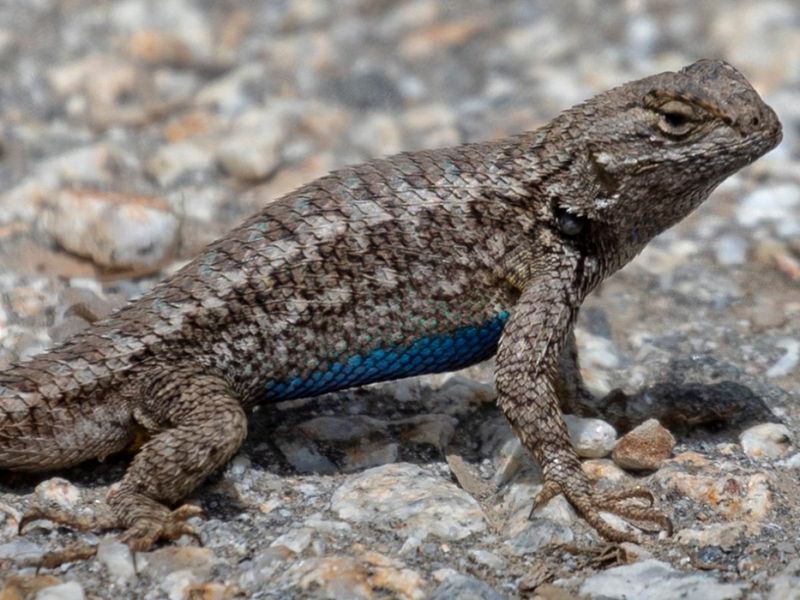
Start with what you saw: a lizard using a warm perch. It says nothing about insect numbers or where the animal sleeps.
Keep suitable cover in a spot that fits CAL FIRE defensible space guidance and any stricter local rules, and leave an occupied-looking refuge alone when you can.
If one gets inside, follow UC IPM advice and seal the building opening. Outdoors, the state species account is a good reference for how the animal lives.
A lizard on a wall is a small, sunny reminder to look closely before drawing conclusions.