
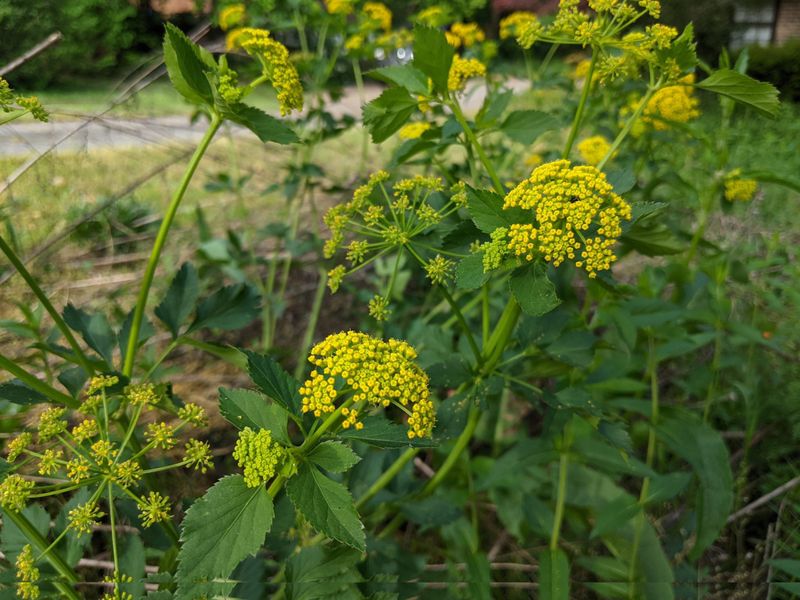
Aphids clustered under your fall kale and collards can make any gardener hunt for a quick fix. A native flower like golden Alexanders sounds like a perfect answer, since it draws helpful insects to North Carolina yards.
The truth is more careful than the hype, and knowing it will save you time and leaves. Here is what this plant can do, what it cannot, and what to do about the aphids you see right now.
Golden Alexanders supports beneficial insects, not aphid removal
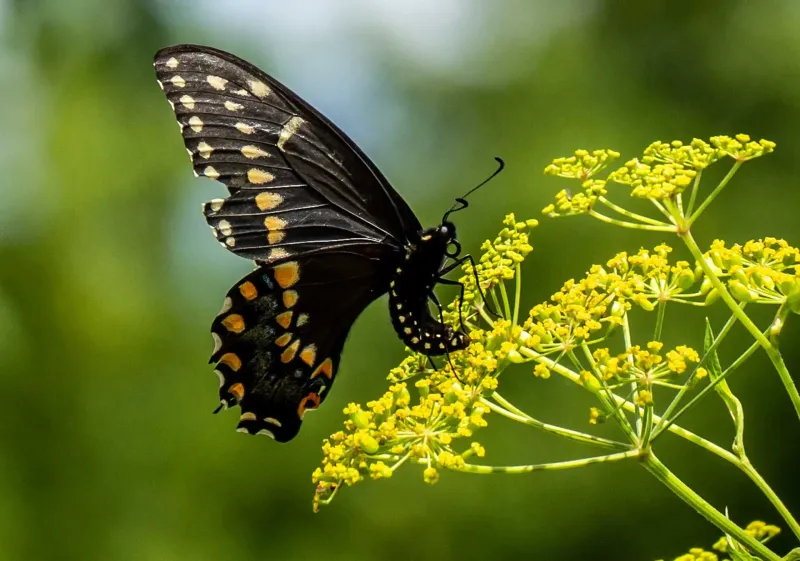
Golden Alexanders (Zizia aurea) is a tough, cheerful native wildflower with flat clusters of tiny yellow blooms. NC State Extension’s plant toolbox lists it as a North Carolina native that attracts predatory insects.
The Xerces Society also names it in its guide to Southeast plants that attract beneficial insects.
That is a real point in its favor, and it is why the plant deserves a spot on a native-friendly wish list. But attracting helpful insects is a different job from clearing aphids off your greens.
Neither source shows that golden Alexanders pulls aphids off fall kale or collards, or that it can bring an existing infestation under control.
Think of it as a plant that may help build a friendlier yard over time. It is not a treatment you can set beside a row of collards and expect results from.
Native status alone also does not guarantee more beneficial insects or better pest control, so treat any plant as one small piece of a bigger picture.
If aphids are on your leaves today, the useful moves are hands-on, and later sections walk through them. First, though, it helps to see why timing matters so much for this particular plant.
Its spring bloom does not match fall aphid pressure
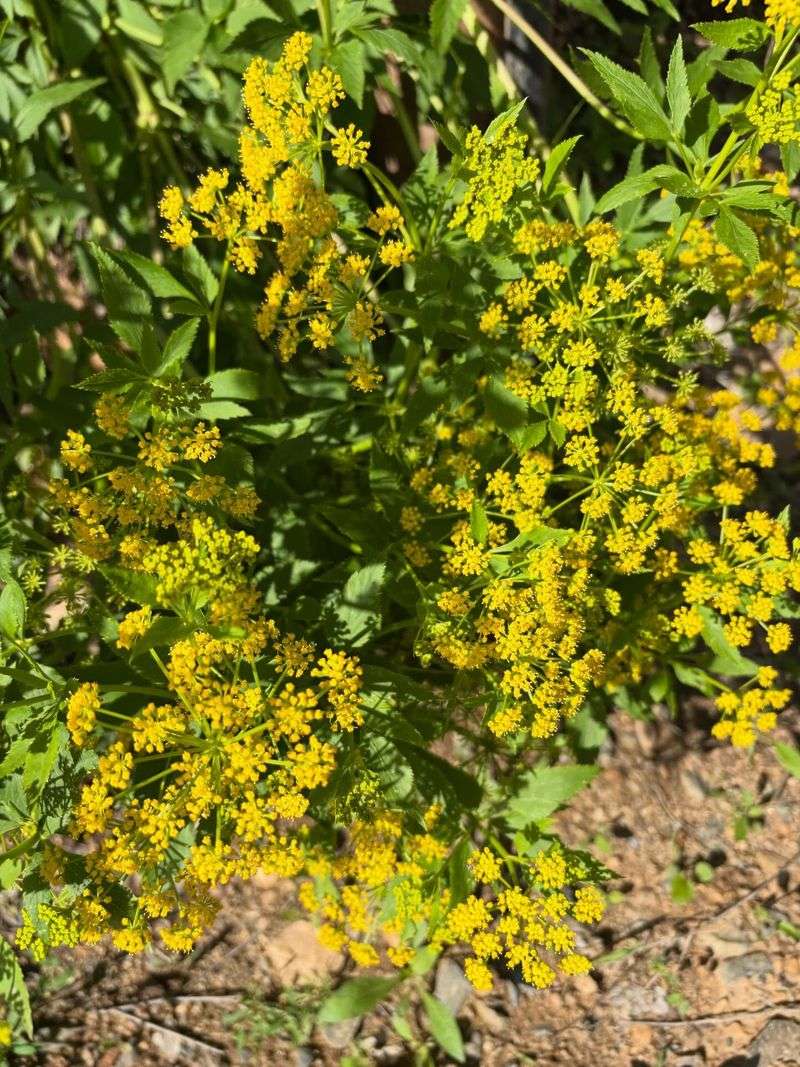
Calendars matter in the garden. NC State lists golden Alexanders as blooming in April and May, according to its plant toolbox entry.
Your fall kale and collards, with aphids tucked under the leaves, are growing months after those flowers have faded.
That gap means the plant cannot serve as a nectar source for a fall infestation happening now. It also means planting it today is not a rescue treatment for the colonies you see this week.
Even a thriving patch of blooms would not remove aphids already feeding on your greens.
What a spring-blooming native can do is offer seasonal food and habitat to some beneficial insects earlier in the year. Whether that carries over into fewer aphids on fall crops is not something the sources show, so it is best treated as a possible long-term bonus.
A practical way to think about it: spring flowers are about building a welcoming yard for the seasons ahead. Fall aphids call for action on the leaves in front of you.
Flowers feed allies; some life stages eat aphids
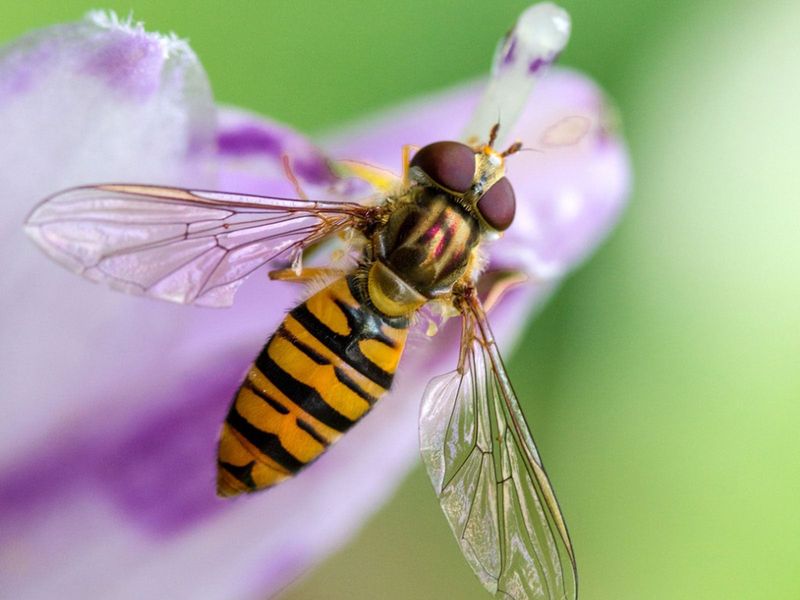
Not every beneficial insect is a hunter at every stage of life. Many adults sip nectar or eat pollen, while their young do the aphid eating.
Hoverflies are the classic example: adults visit flowers, and the larvae eat aphids, a split described in UC Statewide IPM guidance on insectary plants.
So flowers feed allies, but flowers do not remove aphids themselves. A lacewing, hoverfly, or wasp on a bloom is not automatically hunting aphids on the collards nearby.
Some adults are just there for the snack.
Extension educators in North Carolina make a similar point in an NC State article on attracting beneficial insects. A garden with steady blooms, shelter, and few disruptions can be more inviting to these helpers.
That is support, not a promise of pest control.
Here is a handy clue for the garden. If you spot small, legless, grub-like larvae moving among aphids, you may be seeing a predator at work.
If you only see adult flies hovering at flowers, the aphid-eating part of the story may be happening elsewhere, or not at all.
Research shows potential, not a golden Alexanders fix
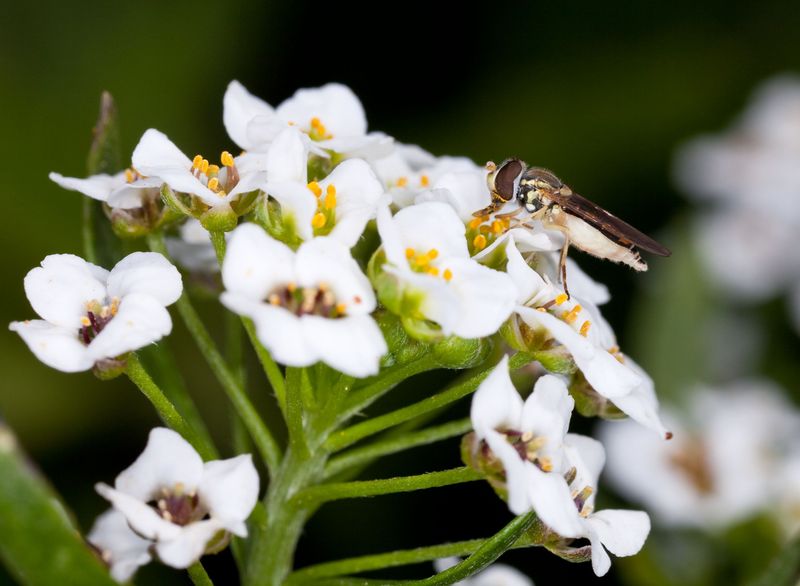
Some studies do show that flowers can help. In a study by Hogg and colleagues in California lettuce field cages, sweet alyssum increased hoverfly egg production and larvae and reduced aphids.
That is encouraging, but it tested one flower, one crop, and one setting.
It does not tell us the same thing happens with golden Alexanders, in North Carolina home gardens, or on fall kale and collards.
A different project was more cautious. In a University of New Hampshire report on insectary plants near brassicas, some flowers attracted hoverflies.
The researchers said more work was needed to learn whether those hoverflies meaningfully controlled crop aphids.
There is also a reality check on native plants. A two-year community-garden study in New York City, published by Matteson and Langellotto, found that small additions of native flowers did not strongly increase beneficial-insect richness.
Its setting is very different from a North Carolina vegetable bed, so it does not settle the question either.
Taken together, these studies show potential for flowers in some conditions. None of them proves that golden Alexanders controls aphids on North Carolina fall greens, so keep your expectations modest and your eyes on the leaves.
Aphids hide beneath leaves and can keep feeding
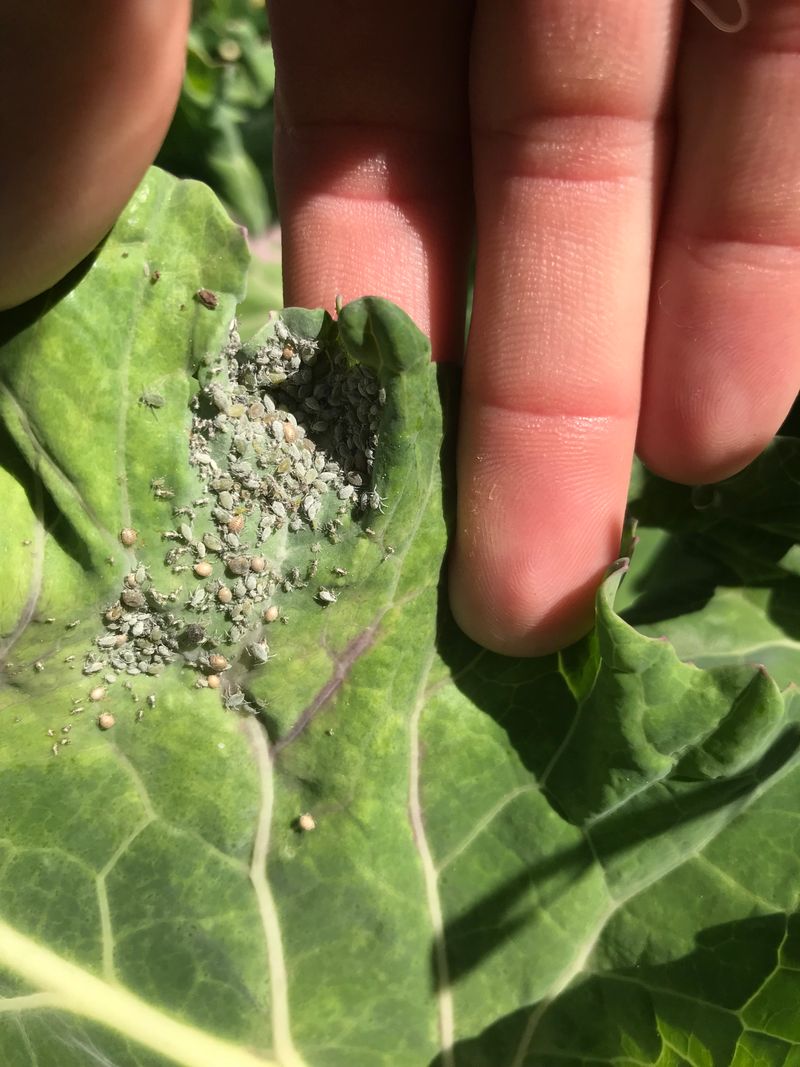
Flip over a collard leaf and you may find the culprits. According to NC State’s guide to pests of crucifers, cabbage aphids and turnip aphids feed on kale and collards in North Carolina.
They cluster beneath the leaves, which is why a quick glance from above can miss them.
They also do not quit when the weather cools. These aphids can keep feeding and reproducing through winter at a reduced rate, so a small colony in November can still be growing in January.
Nature does send help. Swollen, tan or bronze aphids called mummies are a sign that parasitoid wasps are active, and lady beetles, hoverfly larvae, and lacewings also eat aphids.
Those details come from NC State Extension’s advice on controlling aphids in vegetable crops.
The catch is timing. The same source warns that outbreaks in vegetable gardens may cause lasting damage before natural enemies catch up.
Seeing a few mummies is a good sign, but it is not a reason to stop checking your plants.
When colonies appear, act on the plants
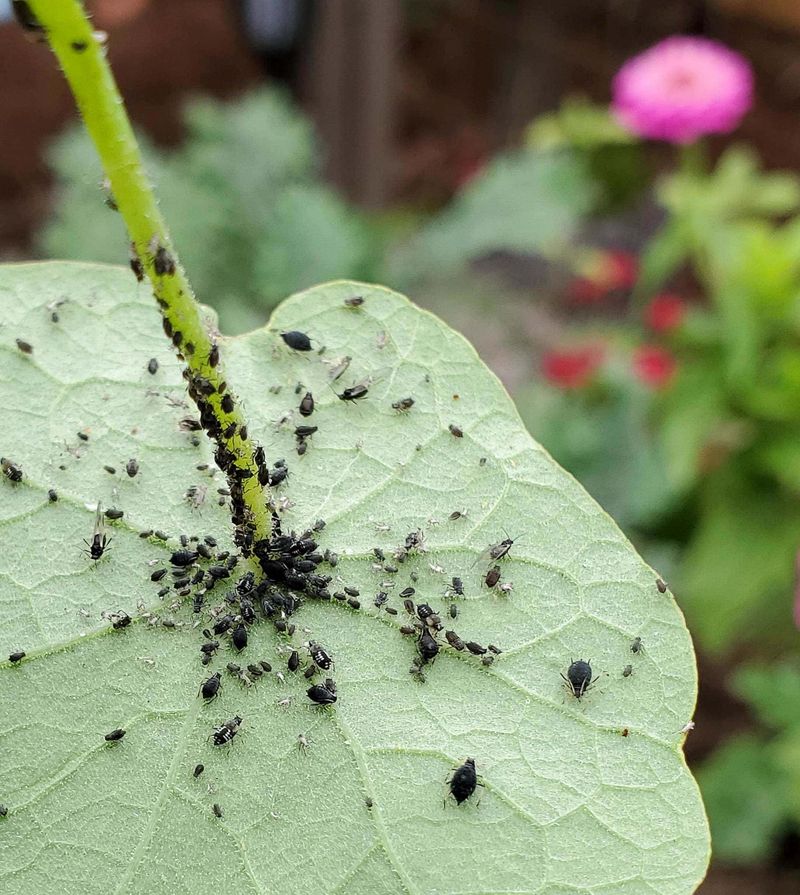
Start with a close look. Turn over leaves and check the undersides, especially on newer growth, where colonies like to settle.
When the group is small, NC State advises squashing a few aphids or removing infested leaves.
For larger clusters, a firm spray of water can knock aphids off the plant. University of Minnesota Extension describes this method too.
Then look again in a few days, because natural enemies may take time to catch up and survivors can rebuild.
Harvest time is less stressful than it looks. Greens can be washed under running water, and NC State Extension says greens that aphids have fed upon are safe to eat.
A thorough rinse, and a trim of badly crowded leaves, handles most kitchen worries.
If you are thinking about a pesticide, read the product label first and choose only one labeled for the crop you are growing. Contact products have to reach the aphids, including those hiding under leaves.
Broad-spectrum or residual products can also harm the lady beetles, lacewings, and wasps you want around.
Do not assume a homemade or unspecified organic spray is harmless to helpful insects. Hands-on steps are the safest first move.
Use golden Alexanders as habitat, not a rescue plan
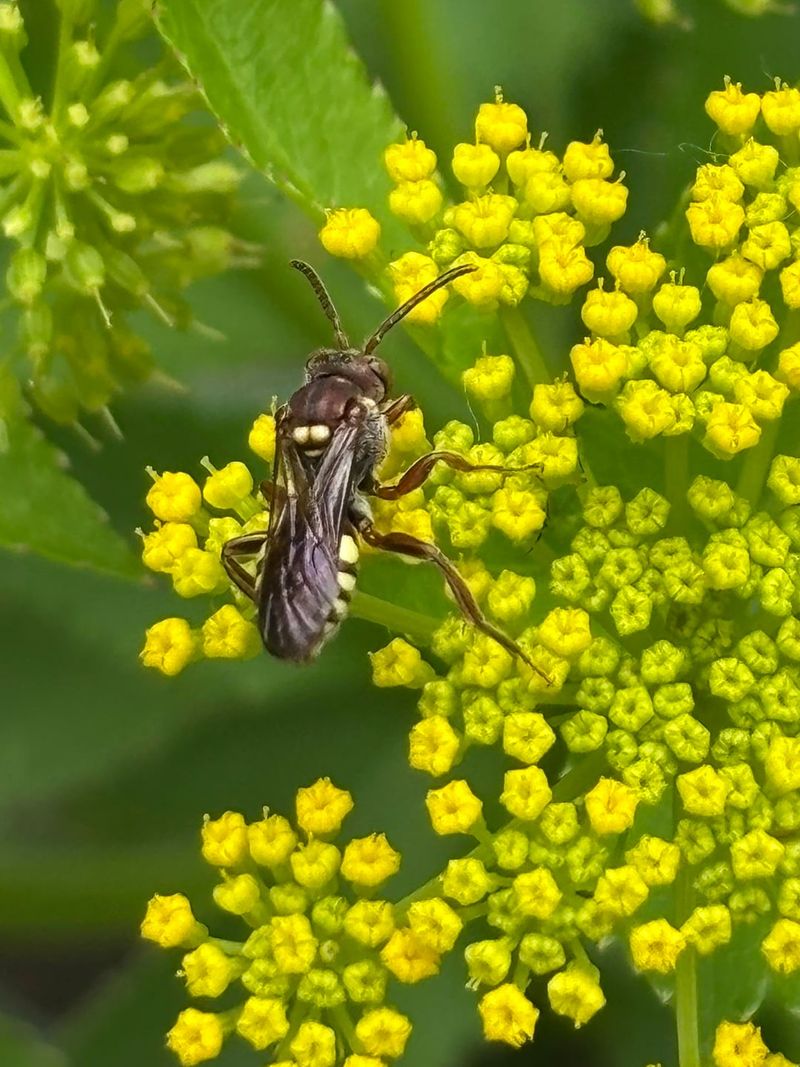
Golden Alexanders earns its place as a native that attracts beneficial insects, and NC State’s plant listing backs that up. Its April and May bloom just does not line up with a fall aphid problem.
Think of it as one possible piece of longer-term habitat, never a guaranteed no-spray fix.
For the colonies on your greens now, go back to the routine: check leaf undersides, squash or remove, rinse, and look again. The NC State aphid guidance lays out that approach.
Good habitat builds slowly, while aphids are happening today.