
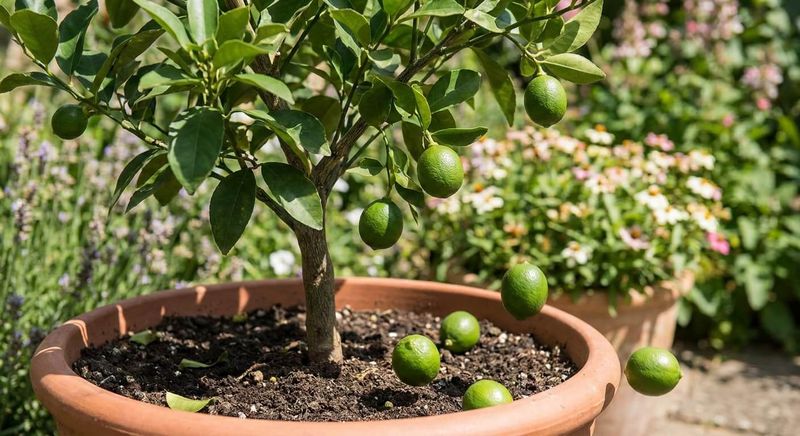
A lemon tree covered in glossy green leaves should feel like a win, so tiny fruit on the ground can be worrying. Some of that drop is a normal part of how citrus trees work.
Other times it can point to stress that is worth checking. Here is how to tell the difference and what fall care can do to support a healthy tree.
Some early fruit drop is normal
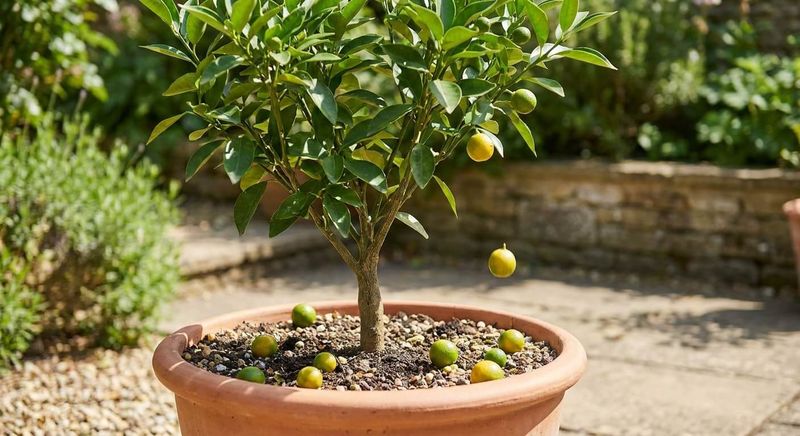
Seeing a few green specks under your lemon tree can feel like bad news, but Texas A&M citrus guidance describes several natural drop periods. Most flowers fall first.
Then some pea-size to marble-size fruitlets drop, and later some larger fruit may follow.
The later drop, often called June drop, can reflect competition between young fruit and new leaves for the tree’s resources, as UF/IFAS citrus problem guidance explains. In other words, a leafy tree losing a few tiny fruitlets does not by itself mean the tree is failing.
Timing is another reason to stay calm. In Florida, UF/IFAS lemon guidance says flower buds may begin forming in November, with bloom running from late December into March.
In Texas, lemons may flower and set fruit through much of the year. Bloom and fruiting dates also vary by cultivar and climate, so do not hold your tree to one Southern calendar.
Is this ordinary thinning or a warning sign?
Lush leaves cannot tell you why fruit is falling. Loss can come from normal thinning, weather or water stress, disease, or more than one factor, and UF/IFAS notes that a single cause can be hard to pin down.
Fruit drop alone does not diagnose anything.
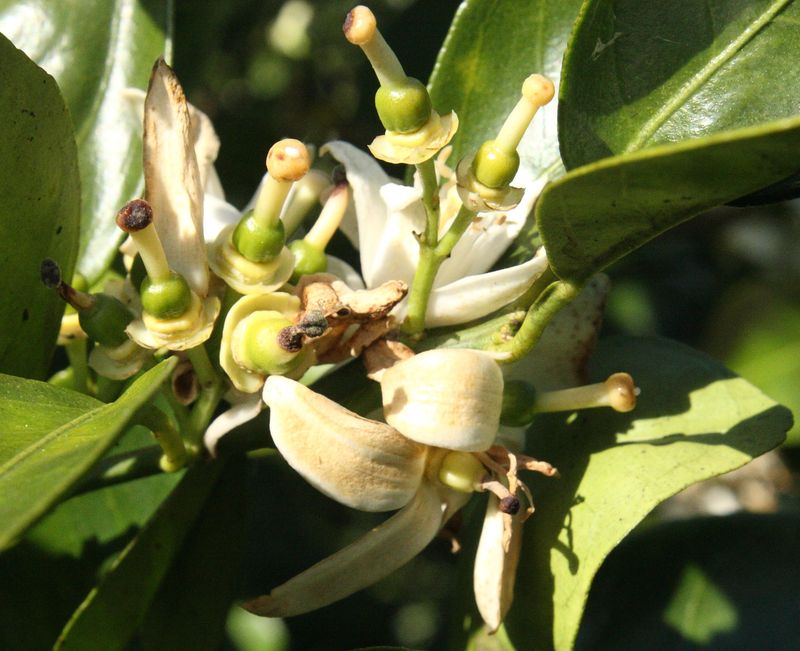
Look at the pattern and the clues that come with it. Postbloom fruit drop can follow rainy weather in Florida, and UF/IFAS describes water-soaked brown or orange lesions on the flowers.
Petals dry up, young fruitlets fall, and a small button, the calyx, sometimes stays attached to the twig.
Citrus greening is a more serious exception. USDA lists blotchy, uneven leaf mottling, twig dieback, premature fruit drop, and small, lopsided, partly green fruit among possible signs.
There is no cure. If you suspect it, contact your state plant-health authority or local extension office rather than guessing.
Water and drainage: the first check
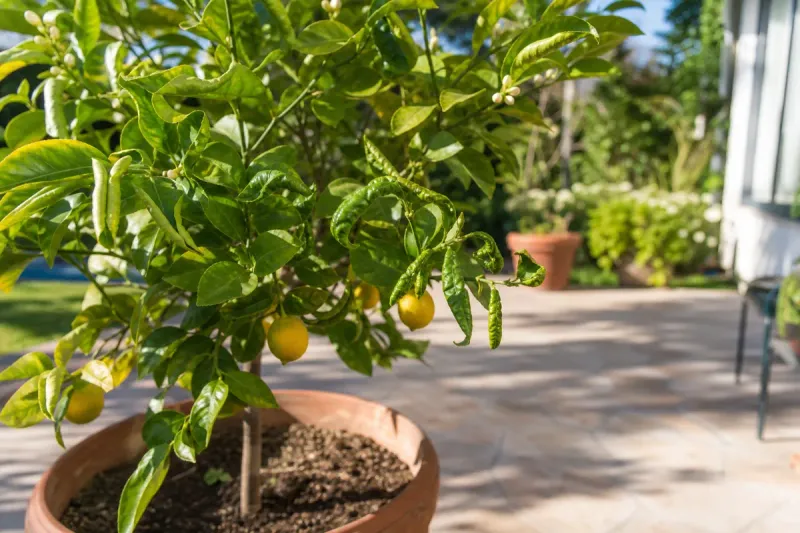
Skip the fixed watering calendar and check the soil instead. UF/IFAS notes that water stress can contribute to fruit loss, so a tree that swings between bone dry and soggy may drop more fruit.
For in-ground lemons, UF/IFAS home-lemon guidance says mature trees generally need extra water only during prolonged dry periods. Soil that stays persistently wet is a problem too, so look at where water pools after rain.
Pots work differently. Texas A&M advises letting the upper inch of potting mix dry, then watering thoroughly so the extra runs out the bottom.
Poke a finger in before you water.
As growth slows in winter, the tree uses less water, so ease off to match. Never keep a container lemon constantly wet.
Fall fertilizer timing depends on where you garden
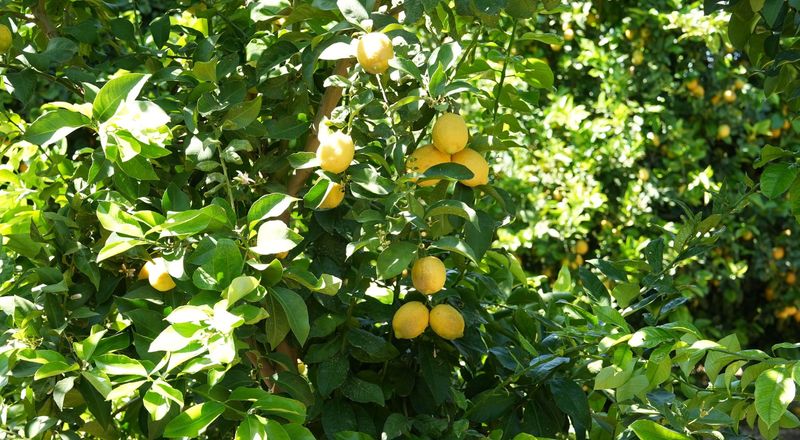
Extra fertilizer is not a reliable answer to dropped fruitlets. UF/IFAS warns that overfertilizing lemons can push lush growth at the expense of fruit production.
A tree that already looks leafy may not need more.
Timing also changes by location. For Florida home lemons, UF/IFAS gives March through September as the general window for granular fertilizer.
That means fall is mostly outside the window there.
Texas guidance reads differently. Texas A&M says September can be part of a split schedule for established citrus.
Do not blend these into one Southern schedule. Check with your county extension office, read your product label, and match the plan to your tree’s age, soil, and whether it grows in a pot or in the ground.
A leafy canopy is not a reason for hard pruning
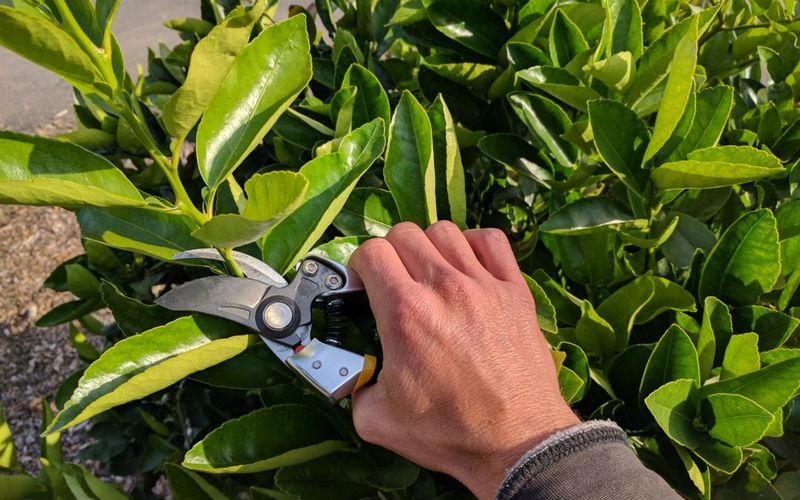
When a lemon is all leaves and little fruit, it is tempting to grab the loppers. Resist that urge.
A full canopy did not necessarily cause the fruit drop, and cutting it back will not automatically send energy to the fruit.
UF/IFAS lemon guidance notes that trees in shade may produce less. That is about light reaching the tree, not a reason to thin a healthy canopy in fall.
Home-citrus guidance in UF/IFAS citrus culture says mature citrus generally needs little pruning, and unnecessary or severe pruning can reduce production.
If you are unsure, leave the tree alone this fall. Pruning solely to push the tree toward fruit is not backed up by this guidance.
A container lemon’s cold-weather plan
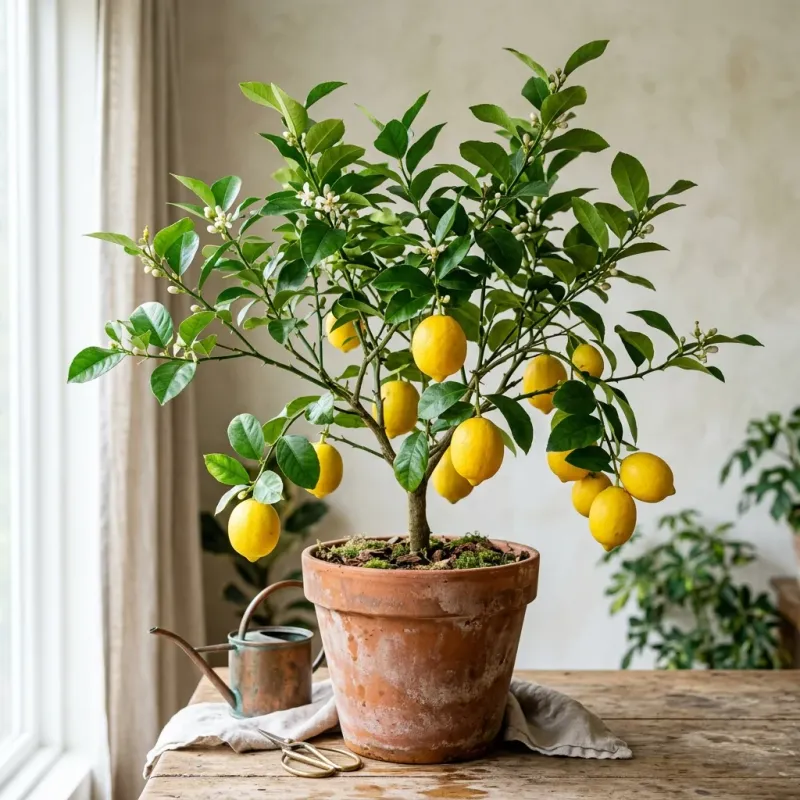
Potted lemons need their own fall plan. Texas A&M explains that roots in containers are more exposed to cold than roots in the ground, so a night that a planted tree shrugs off can stress a pot.
Watch your local forecast and be ready to shelter the pot before a freeze. Make sure each pot has drainage holes and that water is not sitting in a saucer.
If the tree must come indoors for the season, do not rush it. Moving it gradually to lower light over two to four weeks can reduce stress and leaf drop.
Moving a tree inside protects the roots and foliage, but it does not promise that fruit will hold. Treat it as tree care, not a crop guarantee.
Make tree health the goal, not a guaranteed crop
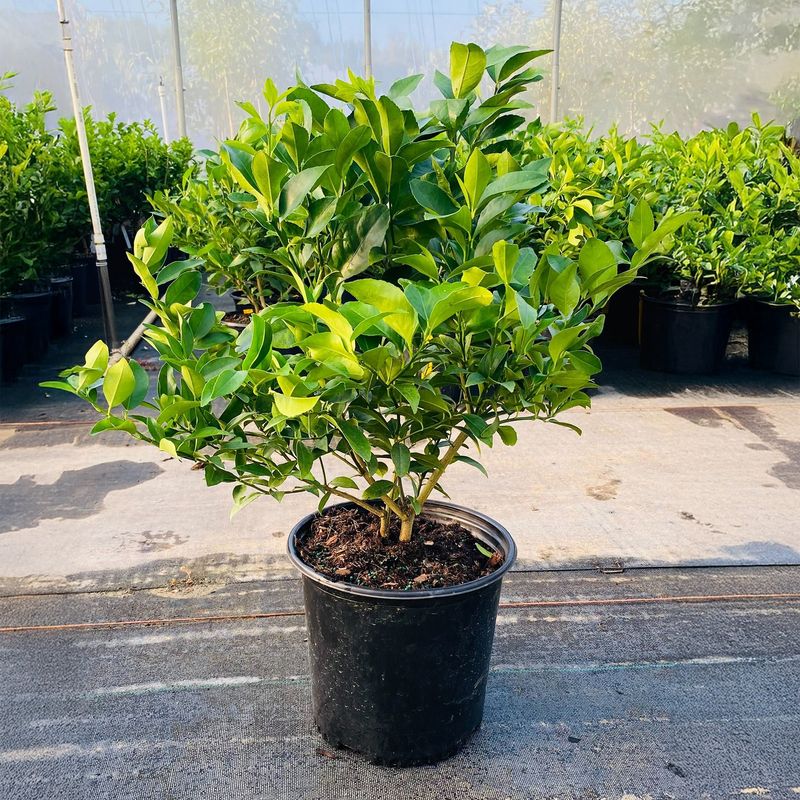
Start with the drop pattern, then check moisture and drainage, follow your region’s fertilizer guidance, skip hard pruning, and shelter potted roots from cold. Bloom and harvest timing also vary with cultivar and climate, so your tree’s calendar may not match a neighbor’s.
Fall care prepares a tree to be healthy, not to promise fruit. A steady tree gives you the best chance, and patience does the rest.