
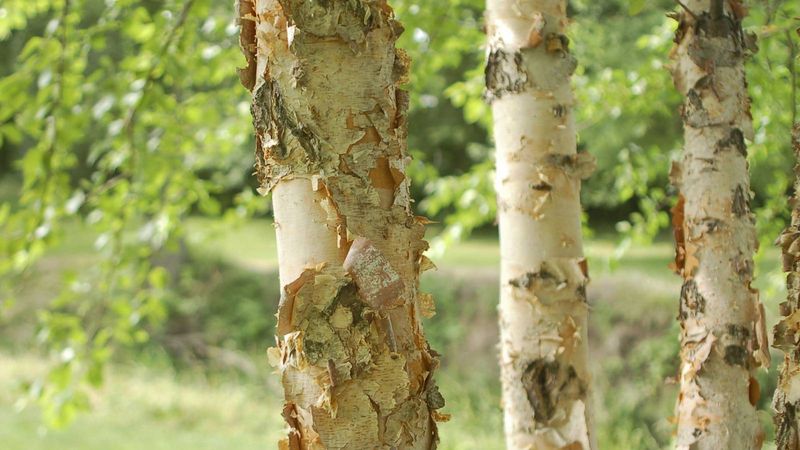
That shaggy, curling bark on your river birch can look like something has gone wrong. Many North Carolina homeowners spot the ragged strips and worry the tree is sick.
In most cases, the curls are just how this native tree grows. Knowing what normal looks like makes it much easier to spot the few signs that deserve a closer look.
Peeling is normal for a correctly identified river birch
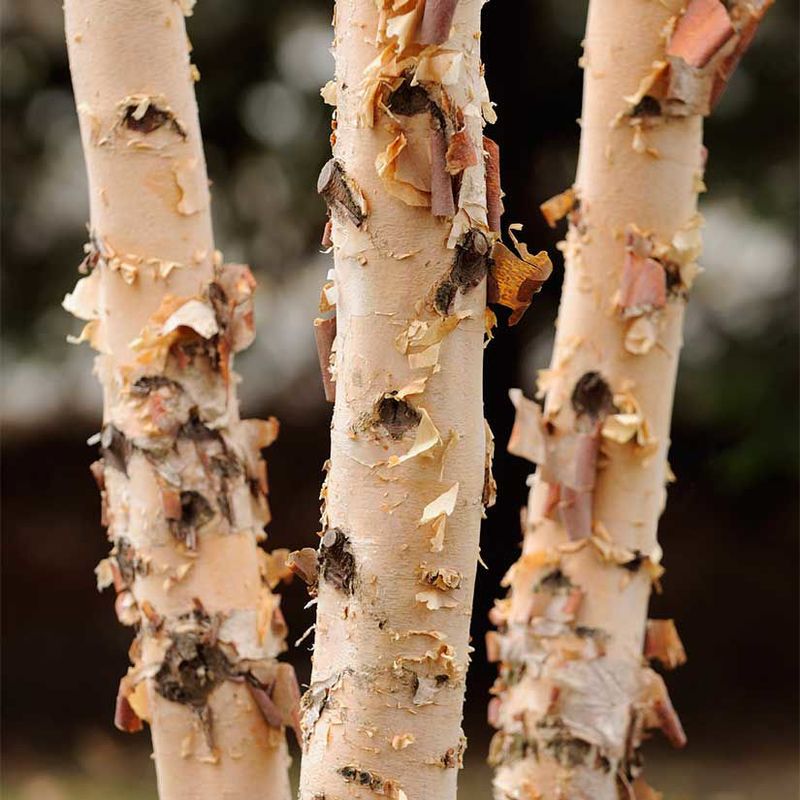
Walk past a river birch (Betula nigra) in a Piedmont or coastal plain yard and you will notice it right away: the bark looks like it is coming apart. Thin, papery curls hang from the trunk and branches, and the surface underneath can look patchy and ragged.
For a correctly identified river birch, that look is part of the tree’s normal makeup.
River birch is native to North Carolina. According to NC State Extension, the bark peels year-round, and young bark is reddish-brown and papery.
The inner bark can vary in color, so you may see shades of cream, salmon, or tan where curls have lifted. Another source, UF/IFAS, describes the bark as peeling in large, curling plates as the tree ages.
So if the curls are thin, papery, and still attached at one edge, there is no reason to treat the peeling itself as a problem. That is the reassuring part, and it is worth keeping in proportion.
Peeling bark tells you the tree is behaving like a river birch. It does not tell you the tree is healthy.
A birch can shed handsome curls and still be dealing with dry soil, an injury, or some other stress. Think of the bark as a feature of the species, then look elsewhere on the tree, such as the leaves and branches, for the real health clues covered below.
Before relying on any of this, make sure the tree really is a river birch. The advice here applies to that species in North Carolina, not to every birch or every tree with flaking bark.
Why doesn’t every trunk peel the same way?
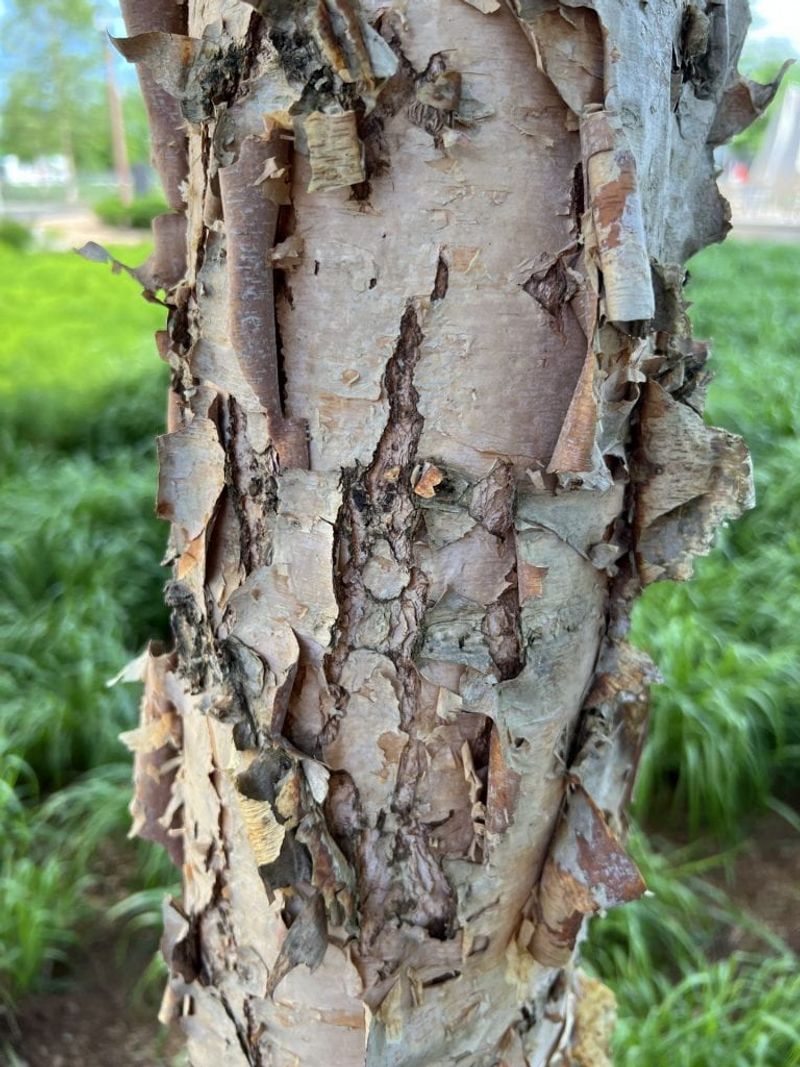
Two river birches on the same street can look surprisingly different. One may be draped in cinnamon curls while its neighbor looks tamer, grayer, and less dramatic.
Both can be perfectly normal.
Age plays a big part. NC State Extension notes that young river birch bark is reddish-brown and papery, which is the look most people picture.
As the tree matures, that picture changes.
Origin matters too. Virginia Tech notes that peeling characteristics differ among seedling-grown trees, so siblings from the same nursery can peel more or less than each other.
Large, mature trunks may also develop gray or blackish scales rather than peeling at all.
That means you should not expect every trunk to look uniformly white or to shed in the same pattern. A thick lower trunk with scaly bark and a peeling upper canopy of young branches can be one healthy-looking, ordinary tree.
A practical tip: compare the same tree over a couple of seasons rather than comparing it to a photo or a neighbor. Gradual, even change across the trunk is typical.
Sudden, patchy change in one spot is a better reason to look closer.
Attached bark should stay attached
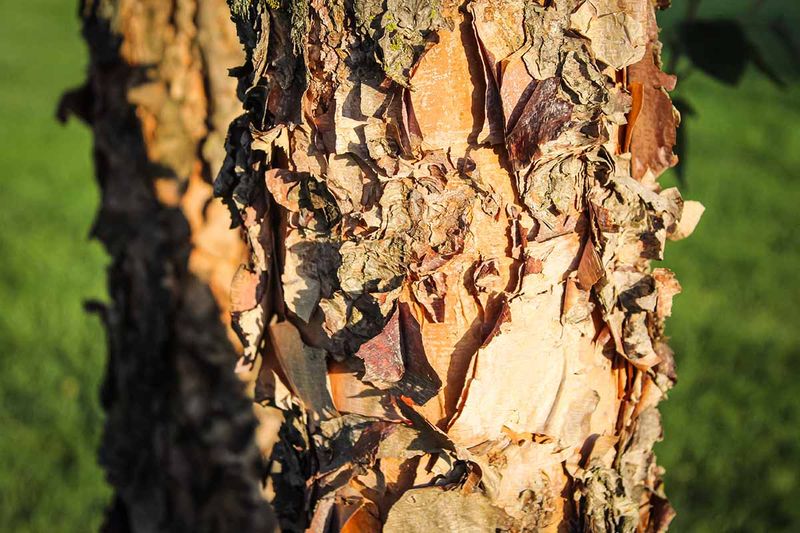
Curls hanging from the trunk are tempting to tug. Maybe the tree looks messy, or you want to show off the lighter bark underneath.
Resist that urge.
An Extension response from the University of Illinois cautions that exposing younger bark before it naturally exfoliates could harm it. Bark that is still attached is still doing a job, and the layer under it may not be ready to face sun, dry air, and weather.
So skip stripping, scraping, and peeling. Loose pieces that fall off on their own are fine to sweep up or leave on the ground.
If the look bothers you, a few easy choices help instead. Plant low shrubs or perennials around the base to soften the view.
Place the tree where its textured trunk reads as a feature, not a flaw. Keep string trimmers and mowers well back from the trunk, since those tools cause real wounds that peeling never does.
Leaving the bark alone costs nothing and avoids the one mistake that can actually injure the tree.
What bark loss deserves a closer look?
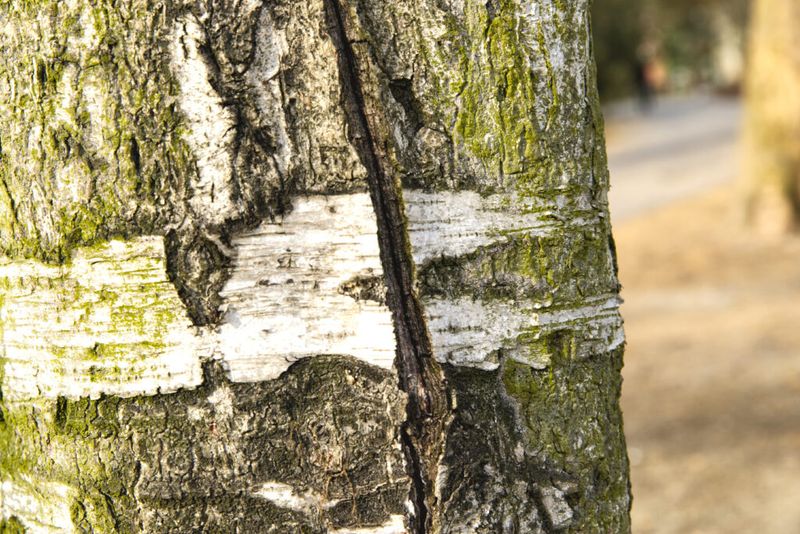
Not all bark loss looks like the friendly curls described earlier. Normal exfoliation is thin and papery.
Trouble looks different: dead bark, sunken areas, dark or discolored patches, wounds, or a branch that is clearly declining.
These signs are not interchangeable with peeling. They may call for an assessment, even though they do not tell you the cause.
A fresh gash from a mower and a dying branch are very different problems, and each needs its own explanation.
Look up as well as at the trunk. University of Minnesota Extension lists symptoms such as yellowing or wilting leaves, thinning foliage, and dieback starting in the crown as reasons to investigate the tree’s condition.
Those symptoms can have several causes, so the bark should not automatically get the blame.
Cankers are one possibility with sunken or discolored bark. Penn State Extension explains that canker symptoms vary by tree and pathogen.
That is why a description or a photo is not enough to name a specific disease.
A simple routine helps. Walk around the tree once a month in the growing season.
Note any patch that looks sunken, dark, or dead, and any branch with fewer or smaller leaves than the rest. If something stands out, write down where and when you saw it, then ask a certified arborist or your county Cooperative Extension office to take a look.
Bronze birch borer is not the default explanation
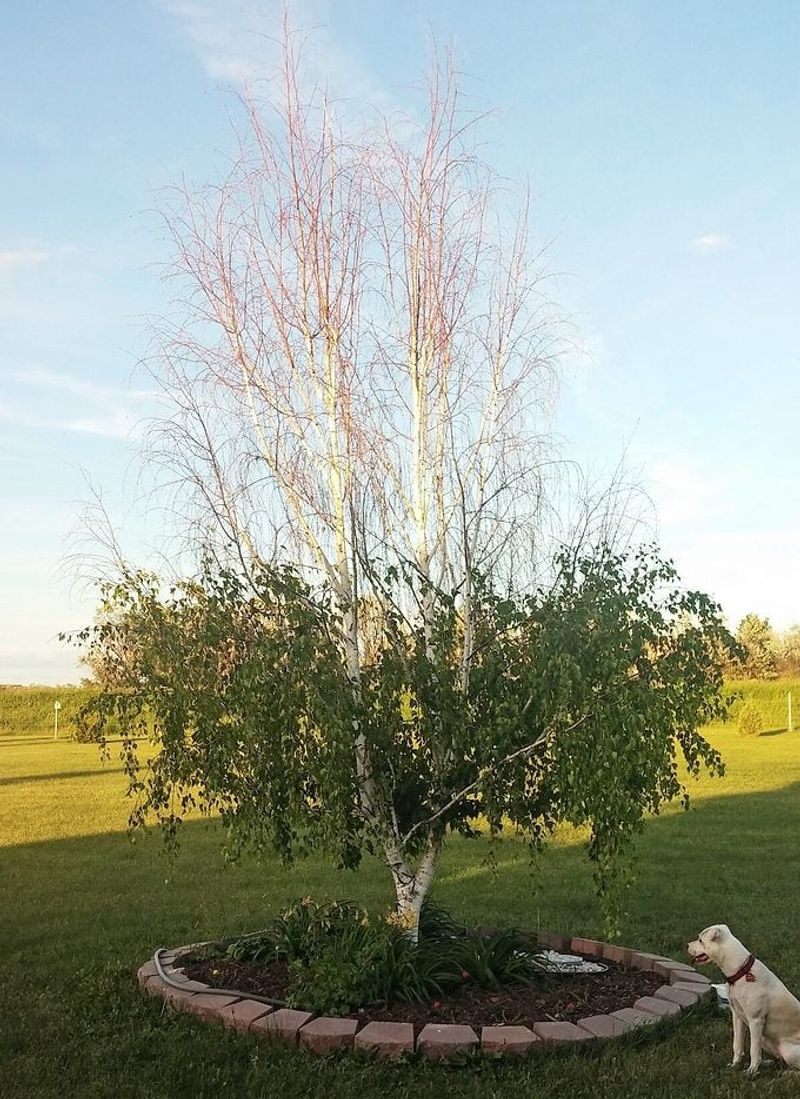
Bronze birch borer has a scary reputation, and it can make any birch owner nervous. For river birch, though, it deserves some perspective.
NC State Extension lists river birch as resistant to bronze birch borer, and Virginia Tech agrees.
Resistant does not mean immune. University of Minnesota Extension says healthy native birches are generally more resistant but may be attacked when stressed.
Its listed warning signs are separate clues. One is crown dieback.
Another is raised ridges over galleries, the tunnels the larvae make under the bark. A third is small D-shaped exit holes.
You do not need all three to take a closer look, and you should not assume any one of them means borers are present.
No single sign confirms borer activity. Dieback alone can come from other causes, and peeling by itself points to nothing at all.
Papery curls on an otherwise leafy tree are not a reason to reach for pesticides.
If you do notice one of these signs, treat it as a prompt to get the tree examined. A qualified person can look at the full picture before anyone decides what is going on.
Moisture stress can show up in the foliage
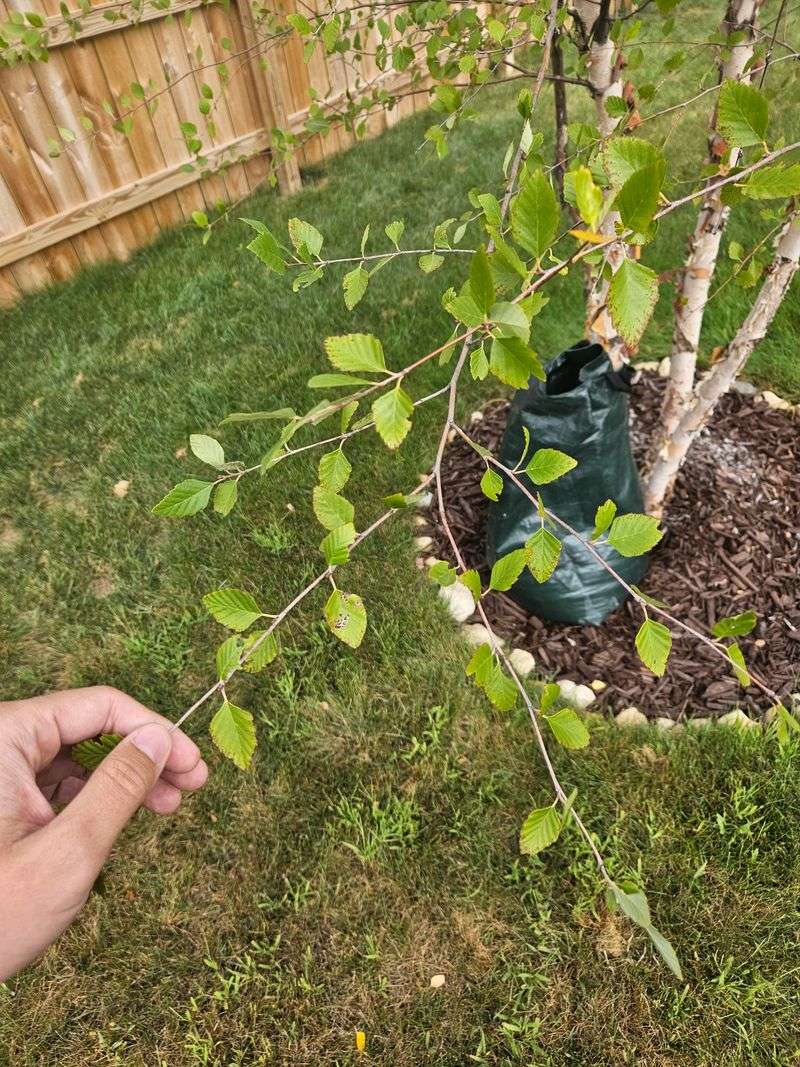
The name gives a hint: river birch likes water. NC State Extension recommends keeping the soil consistently moist and notes that the tree can shed interior leaves during summer drought or dry stretches.
If you see yellow leaves dropping from the inside of the canopy in a hot, dry spell, moisture is a sensible thing to check first.
UF/IFAS also emphasizes moisture and irrigation for this species. Nothing in these sources suggests river birch can handle drought on its own, so it is best not to treat it as a low-water tree.
Skip the fixed calendar. Instead, watch conditions.
Check how much rain has fallen, feel the soil a few inches down, and think about how sandy or clay-heavy your yard is. A young tree that was planted recently needs closer attention than one that has been in the ground for years.
Mulch can help conserve moisture. Keep it away from the trunk, though.
University of Minnesota Extension warns that mulch piled against bark can keep it too wet and contribute to decay. Spread it in a wide ring and leave a gap around the base.
Use the whole tree—not its curls—to decide what to do
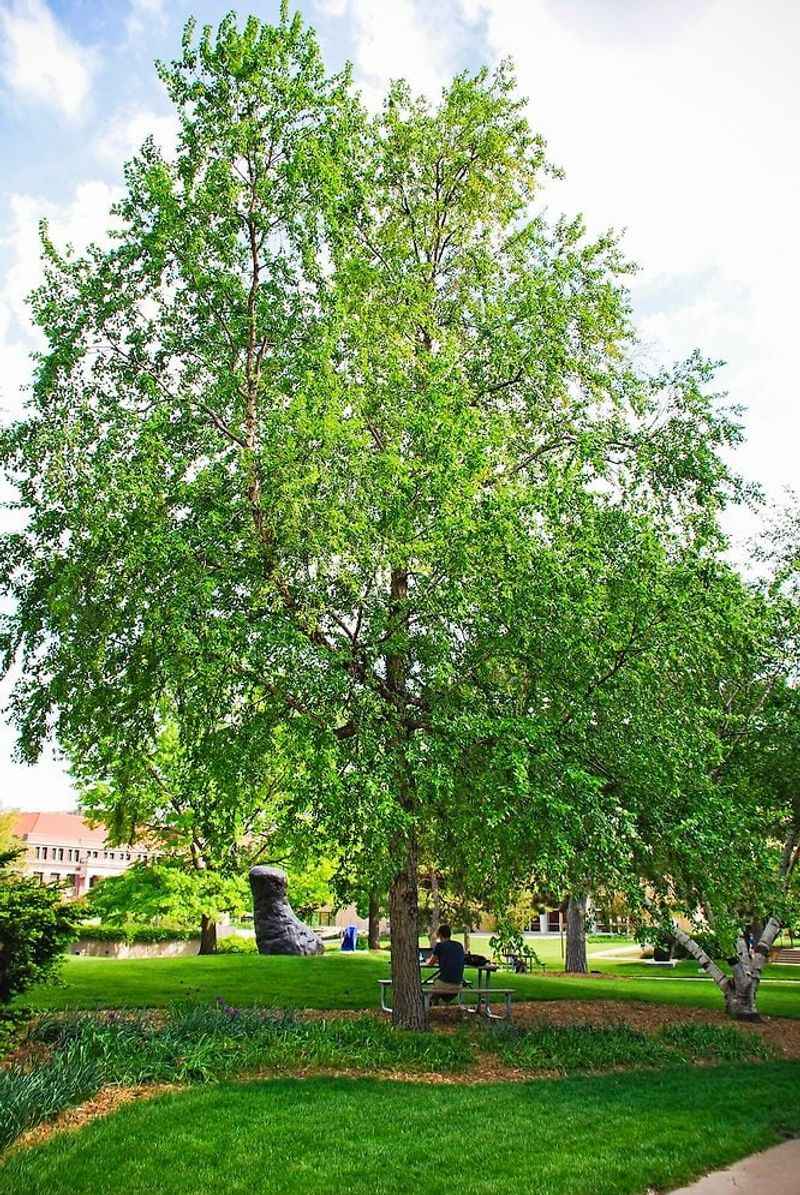
Here is a short path to follow. Treat thin, papery curls as normal on a correctly identified river birch, and leave attached bark alone.
Then step back and check for distinct bark damage and canopy changes, such as the yellowing, thinning, or dieback that call for investigation.
If those signs show up, ask a qualified arborist or your local Extension office for an assessment rather than guessing at a cause or a treatment.
The curls are only the tree’s wardrobe, and the leaves are where it tells you how it is really doing.