
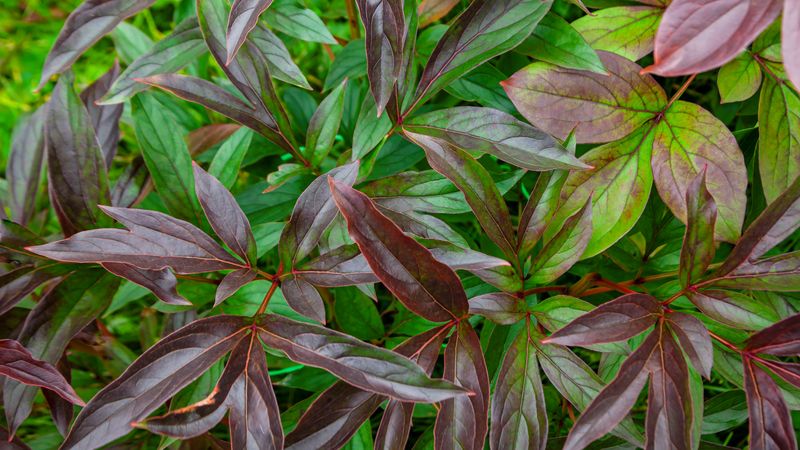
Peonies that look yellow, spotted, and flattened by autumn can make any gardener nervous. In most cases, the plant is simply winding down for the year.
Still, a few warning signs deserve a closer look, and the right cleanup steps can help keep disease from lingering into spring. Here is how to tell the difference and what to do next.
Yellowing foliage can be normal fall dieback
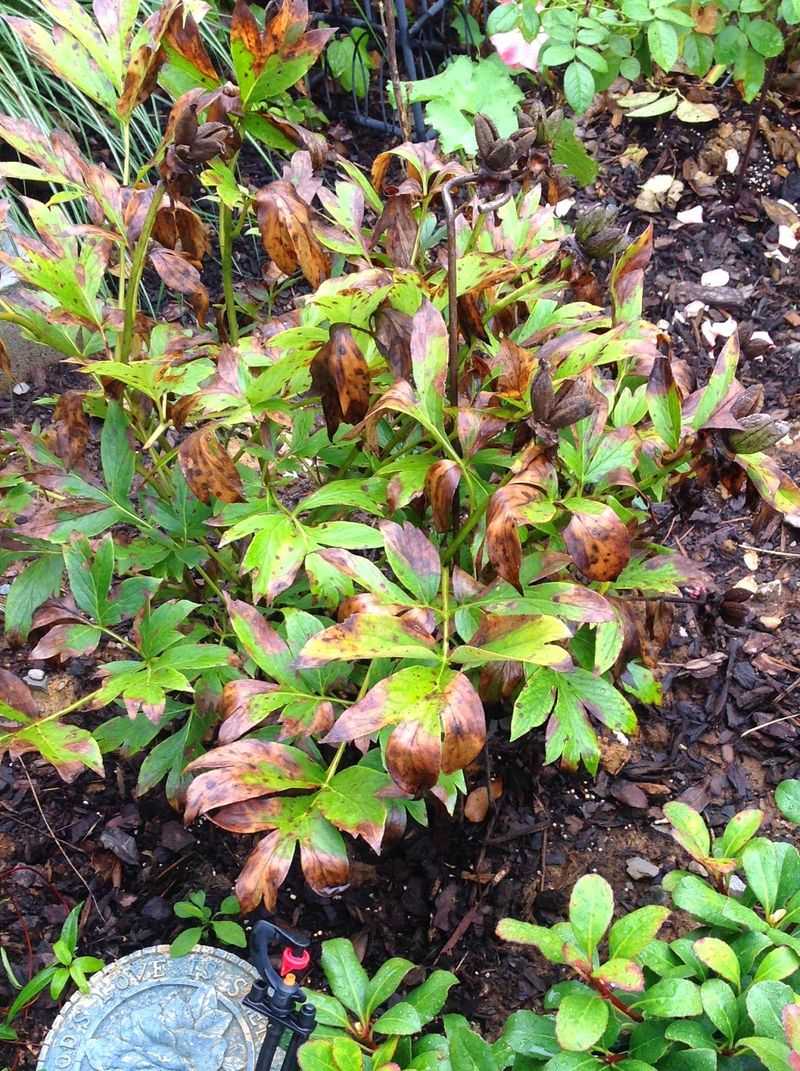
Late in the season, herbaceous peony leaves often turn yellow, bronze, or brown and then collapse. That is part of the plant’s yearly rhythm, and it does not mean the roots are failing.
The crown is getting ready to rest underground until spring growth begins.
Gardeners often describe their plants as spotted and floppy, but those two words alone cannot tell you what is going on. Tired foliage in autumn looks rough even on a healthy plant.
Guidance such as Iowa State Extension’s peony growing advice treats cutting back after a hard freeze as routine, which tells you that dying foliage is expected.
The goal is to separate ordinary decline from symptoms that need a closer look, such as rotting shoots or fuzzy growth. Extension advice, including this Ask Extension answer on cutting back peonies, focuses on waiting until the foliage is no longer green.
The next sections walk through those clues one at a time.
Spots can have more than one cause
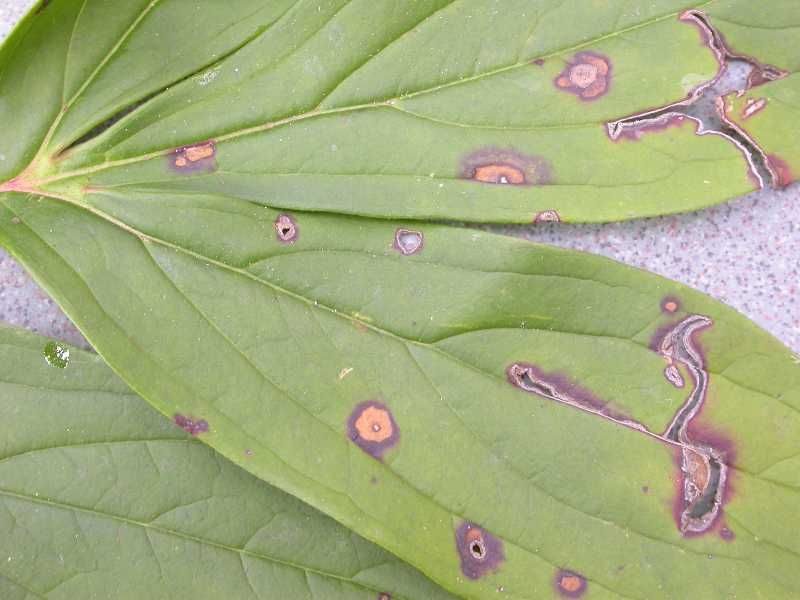
A spotted leaf is a clue, not a verdict. Several problems can mark peony foliage, so a spot by itself does not point to one disease.
A brief description of symptoms, or even a photo, may not be enough for a sure answer.
Irregular reddish-purple blotches can be a sign of peony leaf blotch, which is a different problem from Botrytis. Iowa State Extension notes that foliar diseases like leaf blotch and powdery mildew usually do not kill the plant.
Removing affected leaves in fall is the usual advice.
University of Minnesota Extension lists leaf blotch and other possible causes of spots, and says suspected virus symptoms may need lab testing. Wisconsin Extension also cautions that blights can be hard to diagnose in the field.
If your plant looks otherwise sturdy, spots are more likely a cosmetic issue than an emergency.
Botrytis can cause rot, collapse, and gray growth
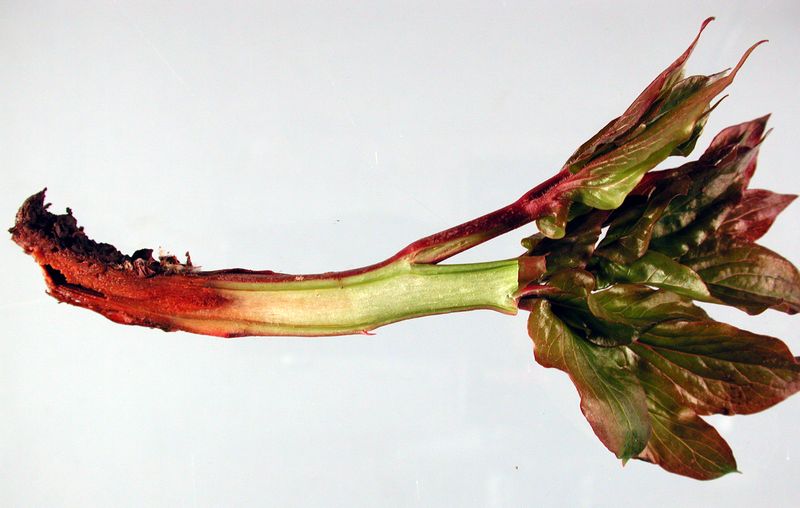
Some signs are more worrying than spots. Stems that rot or develop cankers, young shoots that wilt and collapse, buds that darken and never open, and fuzzy gray growth in humid weather all point toward Botrytis blight.
The Missouri Botanical Garden describes many of these signs.
Think of them as clues rather than proof. Wet, humid conditions favor the disease, which matters in much of the South, but other problems can look similar.
A single dark leaf or a few brown edges does not make the case.
When symptoms are severe or you cannot tell what you are seeing, get a reliable local diagnosis. Your county Extension office can help, and Wisconsin Extension notes that lab examination is sometimes needed.
Guessing and spraying may not help if the guess is wrong.
A floppy flower stem may simply need support
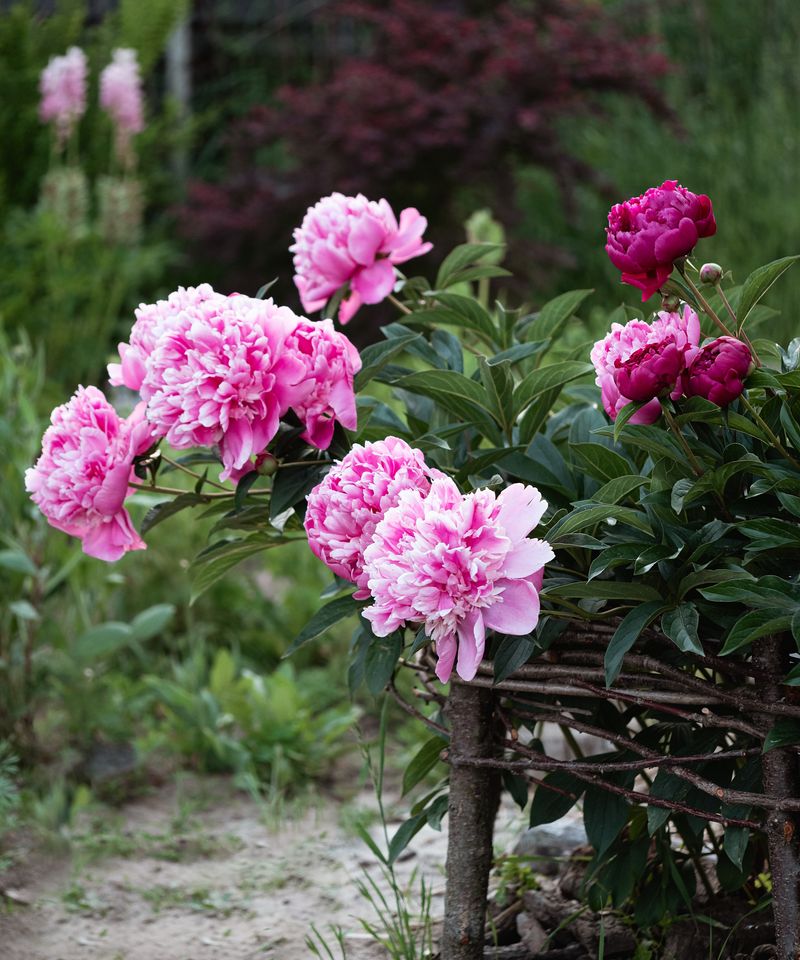
Heavy blooms can bend even healthy stems, especially after rain. Large, double-flowered peonies are the usual culprits, since all those petals weigh a lot.
A drooping flower stem on its own does not mean disease.
According to Iowa State Extension, these peonies may need support in spring to keep blooms upright. A grow-through ring or stakes set early, while shoots are young, can save you from a flopped bouquet.
Compare that with shoots that wilt and collapse, turn dark at the base, or show rot. Those are the signs associated with Botrytis.
A quick check helps: gently look at the stem base. If it is firm and green, the plant probably just needs a prop.
Identify the peony type before pruning
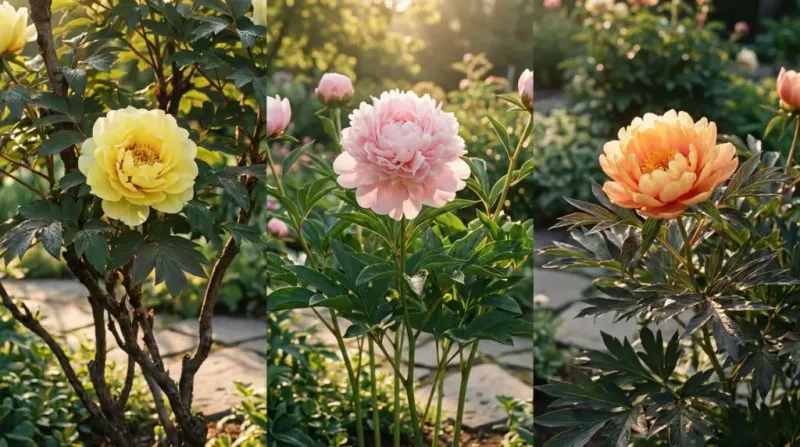
Not every plant called a peony gets the same haircut. Ground-level cutback in fall is for herbaceous peonies, which die back and regrow from the crown each year.
If you cut a woody peony that way, you could remove next season’s growth.
Tree peonies keep woody stems through winter, so they should not be cut to the ground. Itoh, or intersectional, hybrids also have short woody stems.
Clemson Extension’s peony guide and North Carolina State Extension both make this distinction.
If you inherited the plant or lost the tag, look closely at the base. Soft, hollow-looking stems that flop and brown are typical of herbaceous types.
Firm, bark-covered branches mean leave the pruners alone, except to remove clearly dead or damaged wood. When in doubt, wait and ask your local Extension office.
Wait until foliage dies back or frost damages it
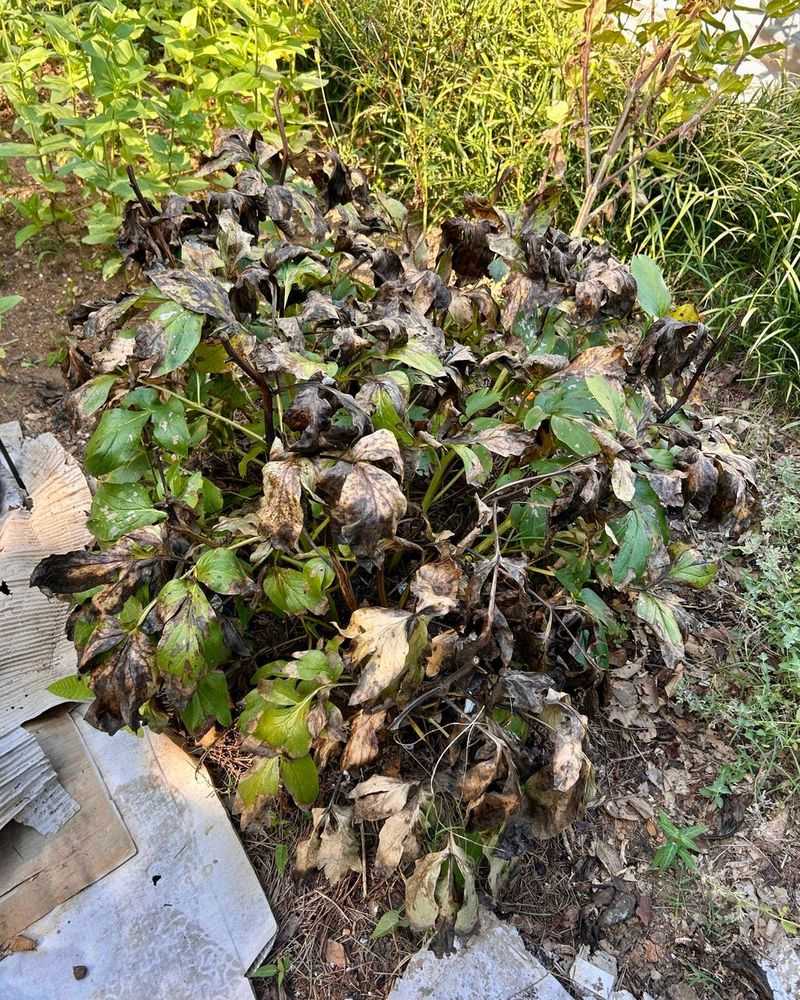
Let the plant tell you when it is ready. For herbaceous peonies, cut back once the leaves have died down or frost has damaged them.
Extension advice, such as Iowa State’s guidance, calls for cutting to the ground after a hard freeze.
Healthy green foliage is still working. It feeds the roots, so trimming it early just to tidy the bed is not a good trade.
Another Extension answer allows late fall or early winter cutting, as long as the leaves are no longer green.
In the South, skip the fixed calendar date. A Texas Panhandle garden may see a freeze in November, while a Gulf Coast or Central Florida yard may not see one until much later, if at all.
Watch the plant. When stems are brown and limp, cut them near the soil line.
Clean up debris to help manage disease
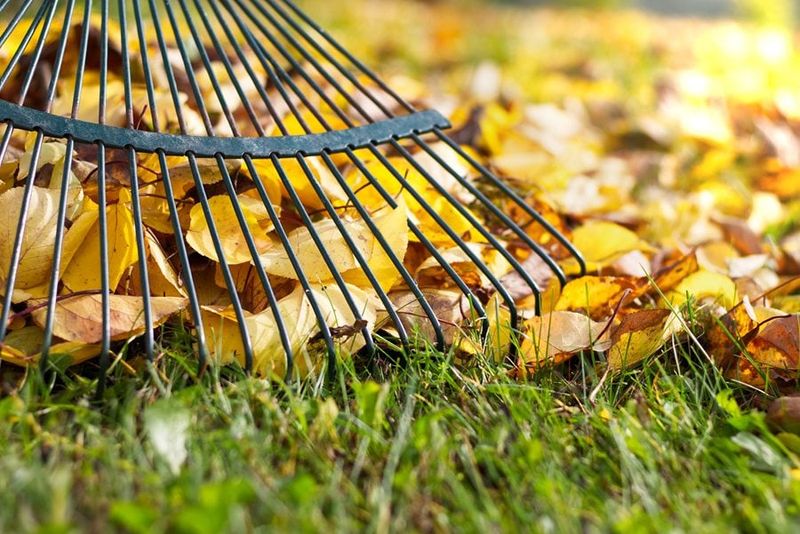
After cutting, rake up fallen leaves and old stems from around the plant. Fungal problems can linger on plant debris, so removing it helps cut down on carryover.
Put diseased material in the trash or yard waste rather than a home compost pile, as Iowa State Extension and Wisconsin Extension advise.
Cleanup is disease management. It may reduce problems next season, but it does not guarantee more flowers or set your bloom count.
Flowering depends on other things too, which the last section covers.
Fungicide is not a cure-all for spotted foliage. Iowa State notes that little can be done once some leaf diseases appear.
If symptoms are severe or unclear, ask your local Extension office before buying anything, and follow product label directions if a pesticide is ever recommended.
Warm winters can pose a separate flowering challenge
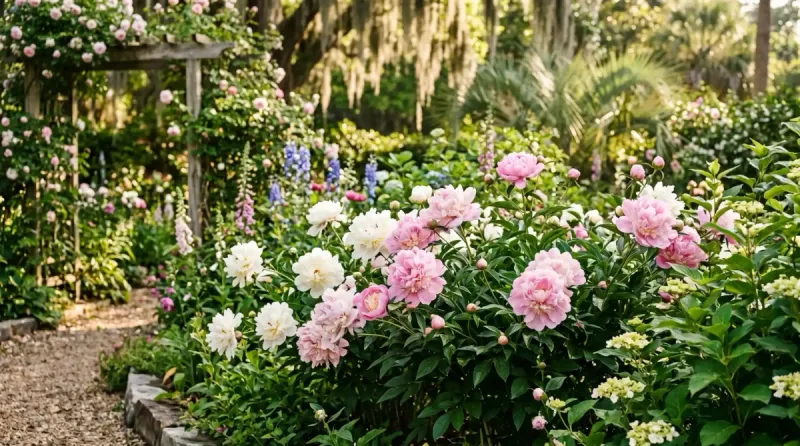
Peonies generally need a stretch of cold winter weather to bloom well. North Carolina State Extension notes that peonies can languish in warm areas and suggests low-chill types for warm regions.
That does not mean every Florida or Texas garden is out. North Texas and the Panhandle get far more chilling than the Gulf Coast or South Florida.
If winters in your area are mild, look into low-chill selections, and ask a local nursery or Extension office what has worked nearby. Treat this as a separate issue from fall cleanup.
Tidying leaves will not make up for too little cold.
Light and planting depth matter too. Iowa State Extension lists sunlight and depth among the factors that affect flowering.
Plants in shade, or with crowns buried too deep, may produce leaves but few blooms.
A clean bed protects plant health, but blooms come from the whole setup.