
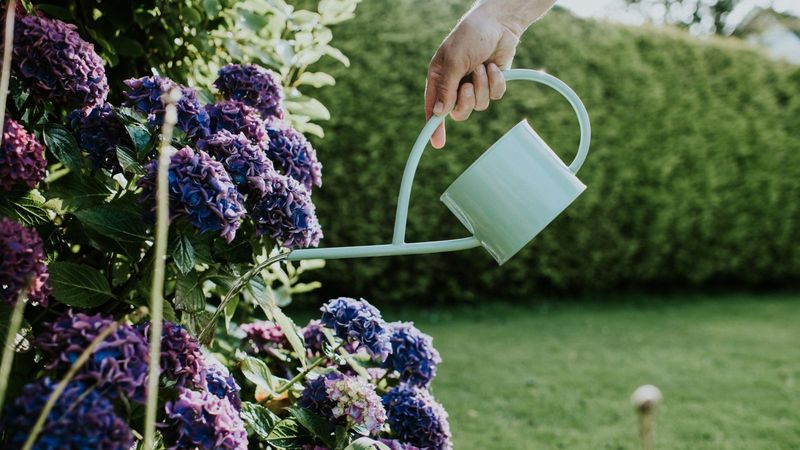
Once the blooms fade, most of us hang up the hose and forget about our hydrangeas. But fall can be dry across Florida, Texas, and much of the South, and the shrubs are still working underground.
A little attention to soil moisture can help reduce stress on the plant. Here is how to tell when watering helps, when it does not, and what else might be behind a disappointing shrub.
Watering dry soil can help reduce drought stress—but it does not make buds
The popular claim that skipping one fall watering will leave your hydrangea thin and leggy is not backed up by the sources gardeners rely on. No one has shown that a single missed watering predictably causes that result.
What the guidance does support is narrower and more useful.
Late-fall or winter drought is listed by Mississippi State Extension as one possible cause of poor flowering. Bigleaf hydrangeas form next season’s flower buds in late summer, and UGA Extension advises watering when rain is absent and the plant begins to wilt.
So the takeaway is simple. When the soil is dry and rain has not come, watering can help reduce drought stress.
Water does not create flower buds, though, and it is not a ritual every plant needs every fall.
Which hydrangeas are setting next season’s buds?
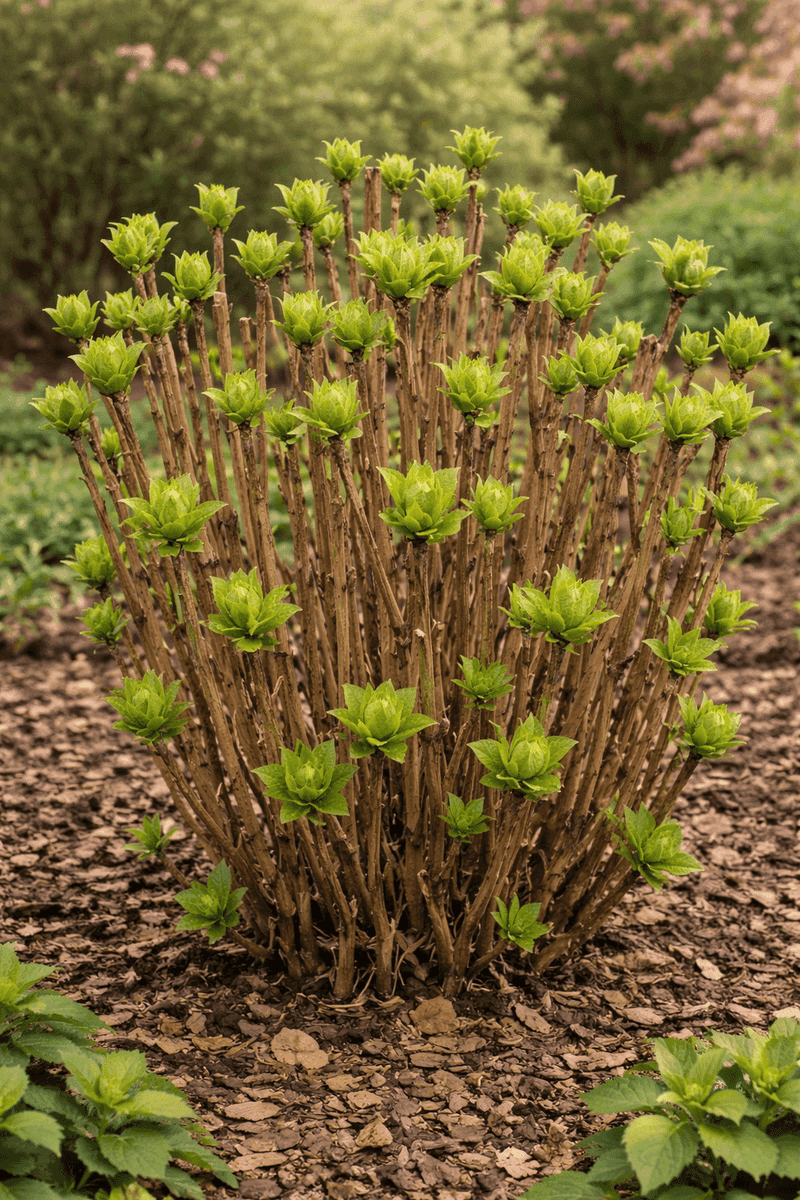
Your hydrangea type decides how much fall dryness matters for next year’s flowers. Bigleaf and oakleaf hydrangeas generally set flower buds on older stems in late summer or fall, according to University of Tennessee Extension.
Those buds are already on the stems heading into winter.
Panicle and smooth hydrangeas work differently. As UConn Extension explains, they bloom on current-season growth, so their flowers form next year on new wood.
That is why a long dry spell in fall ties more directly to the bud cycle of bigleaf and oakleaf types. It does not mean panicle or smooth hydrangeas never need a drink.
Any hydrangea can suffer in prolonged drought, so check the soil no matter which kind you grow.
Is the soil dry, or has the rain already done the job?
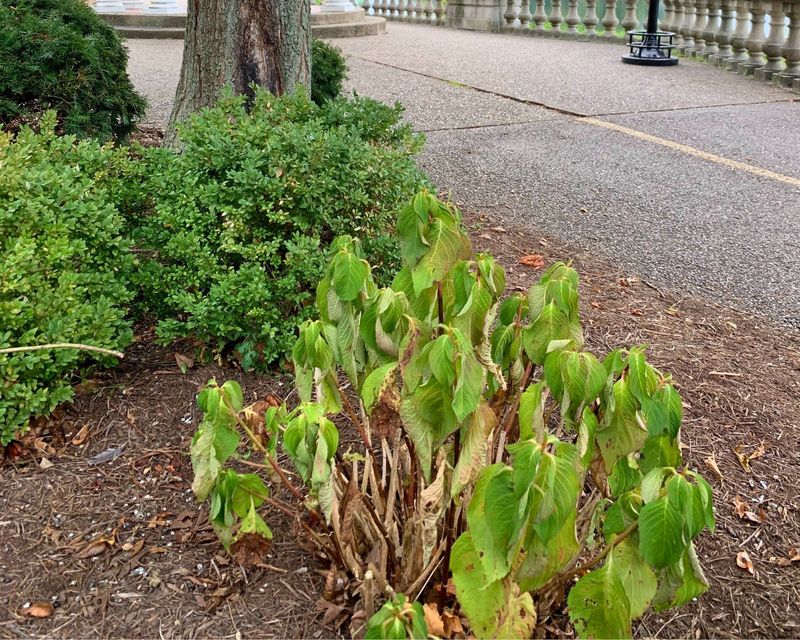
Before you uncoil the hose, push a finger a couple of inches into the soil near the plant. Then think about the last week of weather.
A good rain may have already done the work, even if the surface looks dry.
For established bigleaf hydrangeas, UGA guidance is to water when the plant begins to wilt and rain is absent. Treat that as a cue to check the soil, not as a calendar.
Drooping leaves alone do not prove the soil is dry. Tennessee Extension notes that midday wilting can happen even when soil is not dry.
For oakleaf hydrangeas in Texas, a Texas A&M AgriLife horticulturist suggests looking for wilting early in the morning. If leaves are still limp then, and the soil is dry, water.
Water slowly where the roots can use it
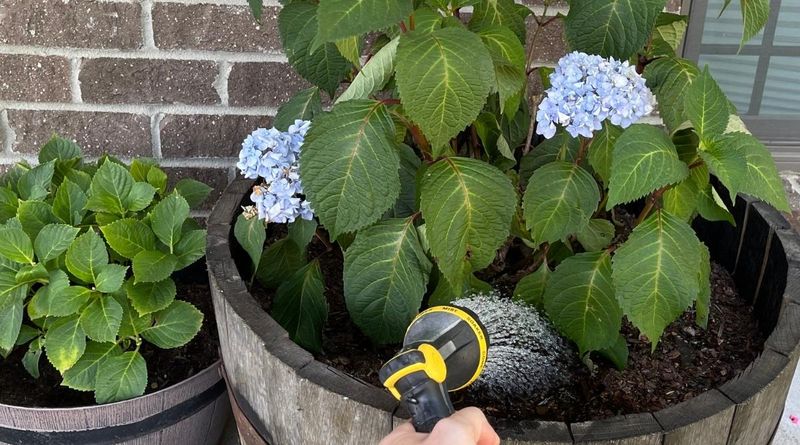
Once the soil check says the plant needs water, go slow. A gentle trickle at the base gives water time to soak down to the root zone instead of running off the surface.
A hose set to a slow stream or a soaker hose works well.
Hydrangeas like moisture, but they are not swamp plants. Tennessee Extension points out that overwatering can damage roots, and oakleaf hydrangea in particular should not stay too wet.
Iowa State Extension also stresses balance, with moisture but not soggy ground.
There is no single amount or interval that fits every yard. Sandy Florida soil dries faster than Texas clay, so let the soil guide you.
If it is still damp a few inches down, wait and check again in a day or two.
New plantings need a closer check
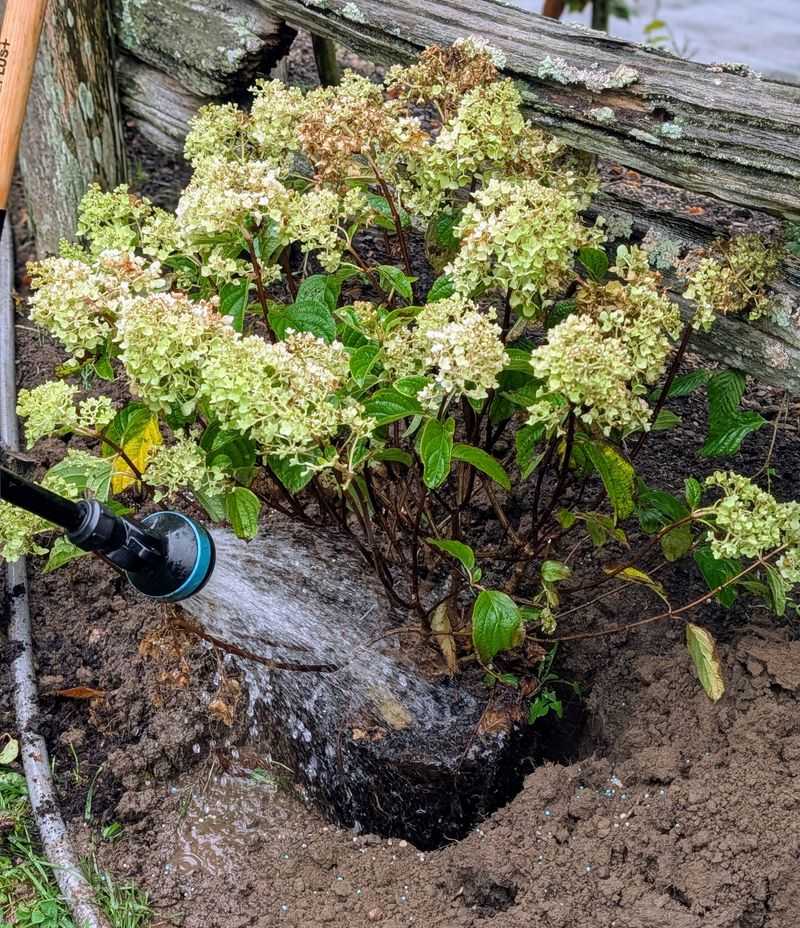
A hydrangea planted this year has a small root system and cannot reach far for moisture. That makes it less forgiving than an established shrub.
It deserves more frequent soil checks, especially during a dry stretch.
UF/IFAS guidance on establishing shrubs says irrigation should be adjusted to rainfall, weather, location, and how established the plant is. For new shrubs, it recommends low-volume water directed to the root ball.
In practice, that means checking the soil in the planting hole area and just around it. If the root ball is dry, give it a slow, small drink right there.
The sample intervals in Florida shrub guidance are general, not a hydrangea timetable. Rain, sun exposure, and soil type vary from one yard to the next, so rely on what the soil tells you.
Few flowers or lanky stems can have other causes
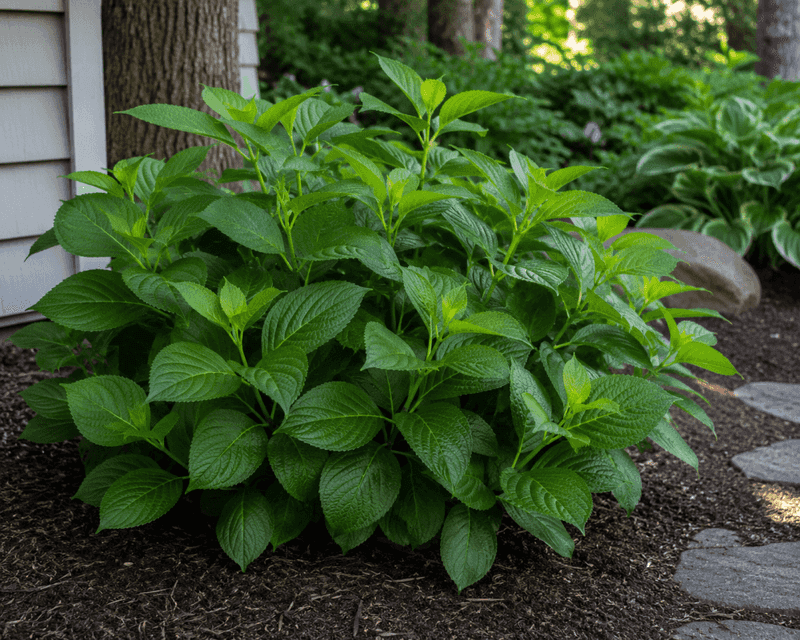
If your hydrangea disappoints next summer, fall watering is only one suspect. Few blooms, thin growth, and leggy stems are different problems.
Dry soil in late fall or winter may contribute to poor flowering, but the sources reviewed do not link fall drought to leggy stems.
UGA Extension and Tennessee Extension list other causes of poor flowering: pruning at the wrong time, winter injury, too much shade, and too much nitrogen fertilizer.
Pruning timing depends on type. UConn Extension notes that cutting back old-wood types in fall can remove next year’s flowers, while panicle and smooth hydrangeas flower on new wood and have different pruning windows.
Look at sunlight, your pruning dates, and your fertilizer habits before blaming the hose.
Let soil moisture set your fall watering rule
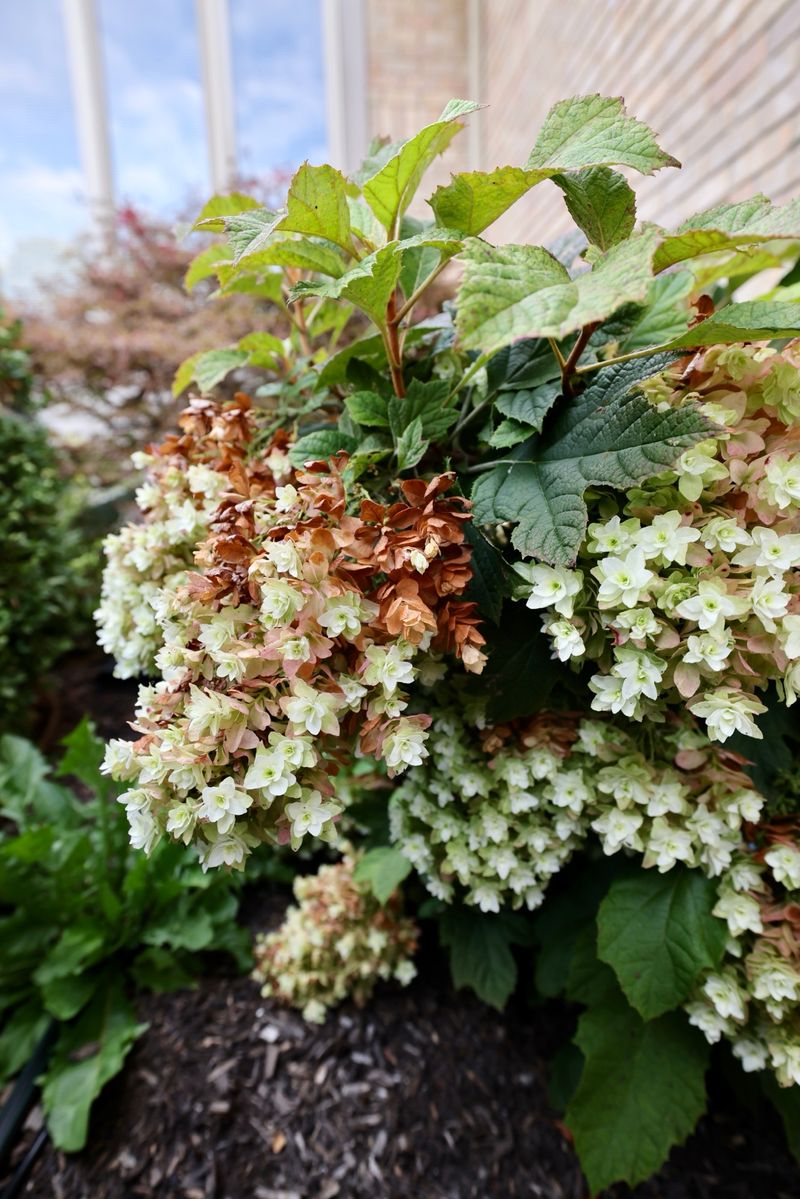
Start with recent rainfall, then check the soil by hand. If it is dry, water slowly at the base, then reassess a few days later instead of following a fixed schedule.
Southern falls vary, and UF/IFAS describes Florida’s dry season as generally running fall through spring, so local conditions still matter.
The goal is to avoid long droughts without leaving roots sitting in water. Water when the soil is dry, hold off when it is not.