
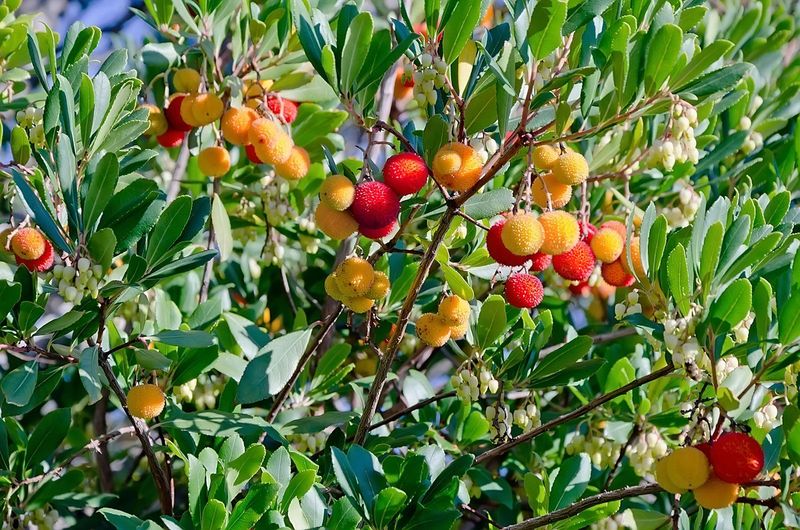
Red, bumpy fruits hanging from a dark green evergreen in October can stop a gardener mid-step. That is the strawberry tree, Arbutus unedo, a shrub or small tree often planted for its glossy leaves and tidy shape.
Its fall fruit is edible when ripe, though it may surprise you. Here is how to recognize it, taste it wisely, and decide how it fits your yard.
A familiar ornamental can carry a fall fruit crop
Strawberry tree, Arbutus unedo, is an evergreen shrub or small tree. Sources put its height anywhere from about 8 to 35 feet, depending on the source and growing conditions.
Its dark, glossy leaves look good all year, which is one reason it shows up in landscapes.
The fall show is easy to miss if you only glance at the foliage. According to NC State Extension, the round, rough-textured fruits turn red in autumn.
Each one is about the size of a large marble, with a bumpy surface that looks a bit like a lychee or a small strawberry.
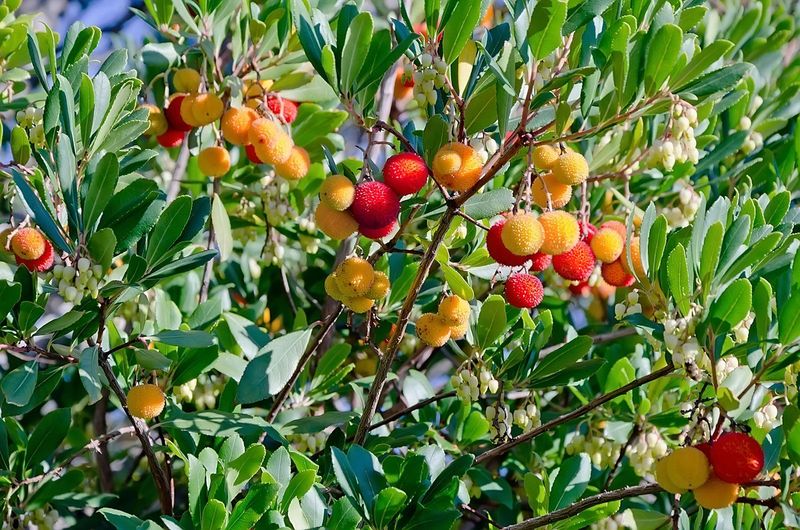
The timing is a little unusual. The fruit takes about a year to mature, so the berries you see this fall started as flowers the previous autumn.
A University of Washington Botanic Gardens plant profile notes that ripe fruit may appear alongside the next crop of small, bell-shaped flowers. That means one branch can show red fruit, green fruit, and pale blossoms at the same time.
If you already have one in your yard, take a slow walk around it this season. Look at the branch tips, check under the canopy, and notice how many fruits are forming.
Crops can vary from year to year, so what you see now is simply a snapshot of this season.
The fruit is edible, but it does not taste like a strawberry
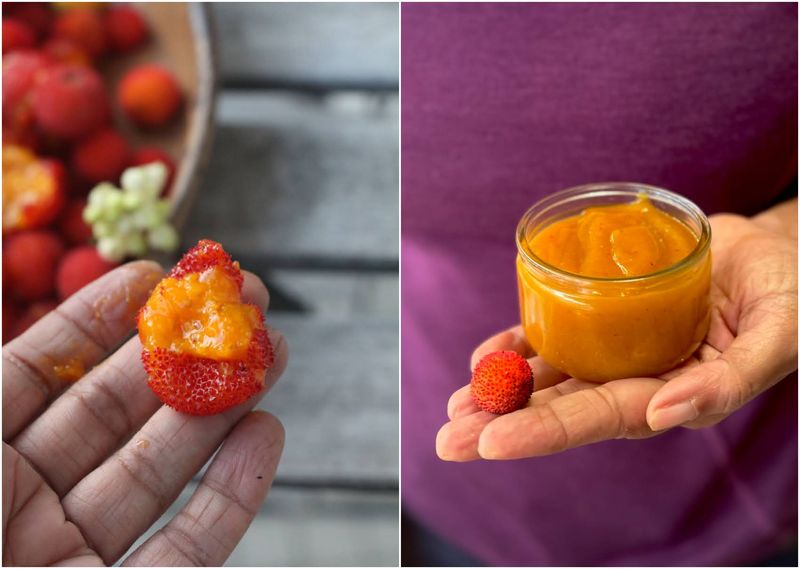
Correctly identified, ripe strawberry tree fruit is edible. Eaten fresh, it is often described as bland or mealy rather than sweet and juicy, so go in curious rather than expecting a strawberry.
Many gardeners find it more interesting when cooked, and the Atlanta Botanical Garden notes it can be used in jams and jellies.
Handling matters too. The fruit bruises easily, which makes it a poor candidate for shipping or long storage.
If you pick some, plan to eat or cook them soon.
Ripeness is the other cue to watch. A UW Botanic Gardens horticulturist describes ripe fruit as bright red and slightly soft, or ready when it falls from the tree.
Fruit that is still orange or yellow and firm has more ripening to do.
A simple routine works well: pick a few bright red, slightly soft fruits, rinse them, and taste one. If you like it, try a small batch of jam.
If you do not, you have lost nothing.
One firm rule applies. Confirm the plant is Arbutus unedo before eating any fruit from a yard.
This edibility applies to ripe fruit of that species, not to unidentified berries or other parts of the plant. Production also changes with weather, as NC State Extension points out, so a light crop one year is normal.
Where does strawberry tree fit in a California yard?
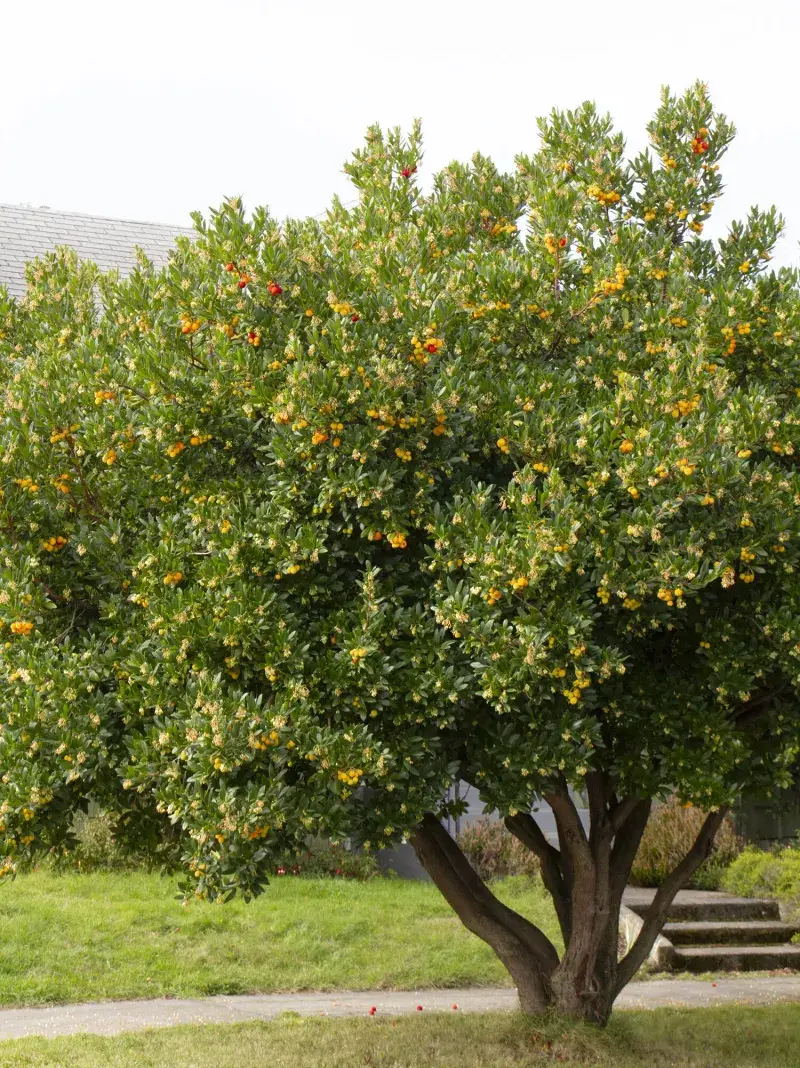
California is a big place, and a plant that thrives in one corner may struggle in another. The most specific local guidance comes from UC Master Gardeners in San Luis Obispo, who say strawberry tree performs well in the Central Coast’s Mediterranean climate.
They recommend full sun to partial shade.
That recommendation is regional. It does not mean the tree suits every yard from the coast to the desert or the high mountains.
Your own conditions count: summer heat, winter cold, soil, wind, and how much sun the spot gets.
Humidity is another limit. NC State Extension warns that the plant struggles in humid climates, so it should not be treated as a reliable pick for humid parts of the South, such as Florida or humid areas of Texas.
Before planting one, or before counting on fruit from an existing tree, check a few things. Look at how your microclimate compares with the Central Coast’s mild, dry-summer pattern.
Ask a local nursery or your county Master Gardener program what they see doing well nearby.
If you already have a mature tree and it looks healthy, that is useful local evidence. If it looks stressed year after year, the site may simply not suit it.
Water needs change after the tree gets established
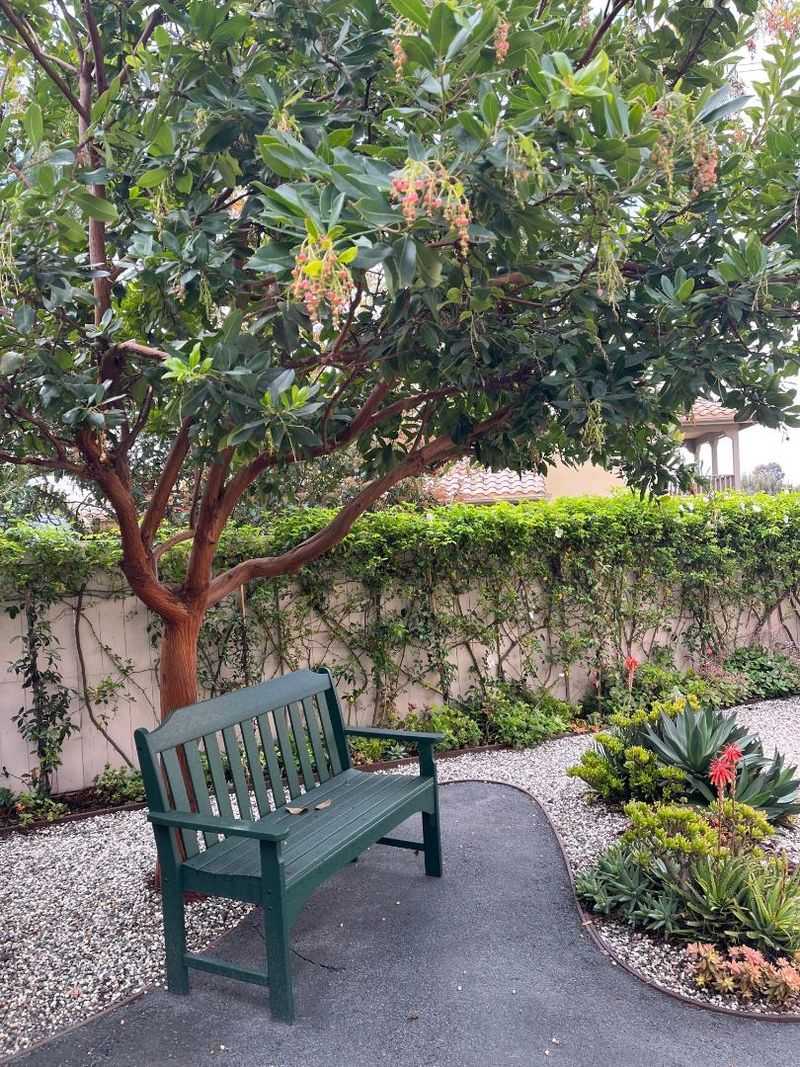
A newly planted strawberry tree and a mature one need different care. UC Master Gardeners recommend moderate water during the first year or two.
After that, they describe the established plant as fairly drought tolerant.
In practice, that means a young tree benefits from regular checks. Push a finger or trowel into the soil near the root zone.
If it is dry a few inches down, water deeply. Mulch can help hold moisture, which suits California’s long dry summers.
Numbers can add detail, if used carefully. A UC Cooperative Extension study of landscape plant water needs lists the compact cultivar ‘Compacta’ at 20 to 30 percent of reference evapotranspiration in WUCOLS climate zones 1 to 4.
For zones 5 and 6, it lists 40 to 60 percent.
Those are study values for an established plant. They are not a watering schedule for every cultivar, every site, or a young tree still putting down roots.
A good next step is to watch the tree itself. Leaves that stay glossy and firm suggest it is doing fine.
Heavy wilting or scorched leaf edges during a hot spell are a cue to check the soil and adjust.
Fallen fruit can be messy, while wildlife also uses the plant
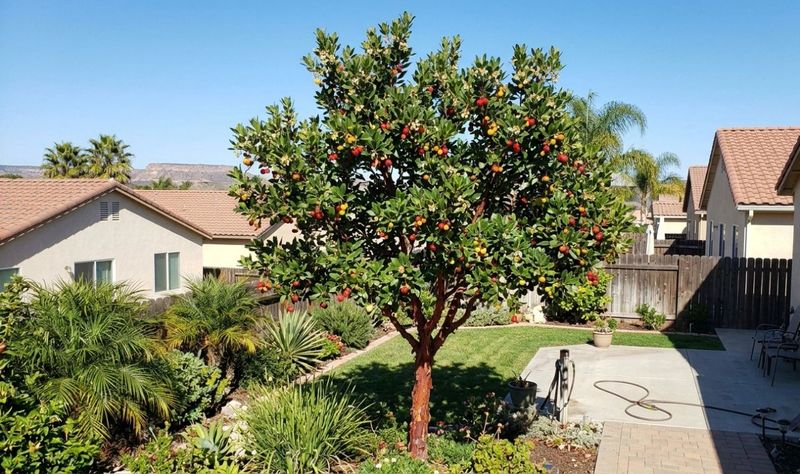
Anyone who has parked or lingered under a fruiting tree knows the tradeoff. Strawberry tree drops fruit, and that can get messy on patios, walkways, and driveways.
Soft, bruised berries can stain or get tracked indoors.
The plant also gets visitors. UC Master Gardeners report bees, birds, and butterflies.
NC State Extension says the flowers provide nectar and the fruit feeds birds and small mammals.
Those reports show the plant gets used. They do not measure how important the fruit is to local wildlife, and nothing in the sources shows that sweeping up fallen fruit causes harm.
So this is a comfort and placement decision, not an emergency either way.
If you are planning a new planting, think about where fruit will land. A spot over mulch, gravel, or a planting bed is easier to live with than one over a pale patio or a car space.
If your tree is already in a busy spot, you can set your own balance. Some people rake the paved areas and leave fruit that falls in the beds.
Others simply leave it and let birds and insects sort it out.
Strawberry tree is not California’s native Pacific madrone
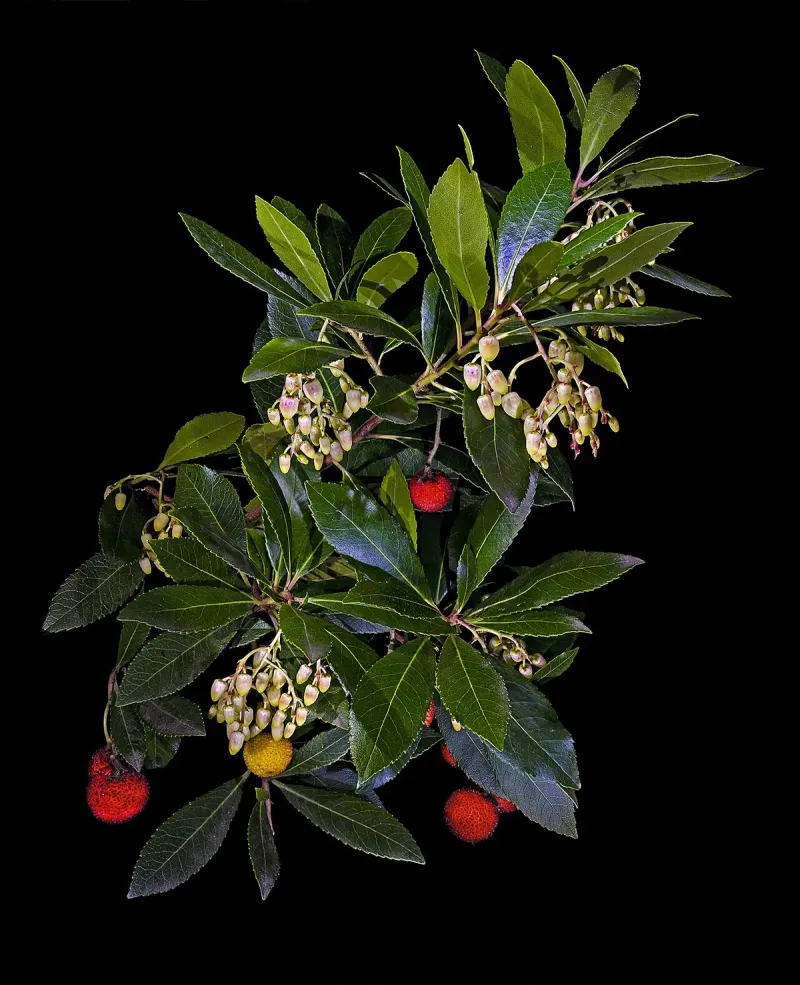
The two trees share a genus and a similar look, so people mix them up. Strawberry tree, Arbutus unedo, comes from Europe and the Mediterranean region.
Calflora’s taxon report lists it as nonnative to California.
Pacific madrone, Arbutus menziesii, is the native. A UC ANR article on Bidwell Park discusses madrone as a local tree in the Chico area, where it is rare in the lower park.
That same article also calls strawberry tree a popular landscape tree in Chico, which is a local observation, not a statewide count.
Nonnative does not automatically mean invasive. The California Invasive Plant Council’s Bay Area Don’t Plant a Pest page includes Arbutus unedo among recommended shrubs.
Treat that as regional context, not a blanket endorsement for everywhere in California.
Getting the name right helps with everything else in this article. The edibility, fruit timing, and water guidance here apply to Arbutus unedo.
If you are unsure which tree you have, check the fruit and bark against a reliable reference or ask a local nursery or Master Gardener before tasting anything.
Notice the fruit before deciding what to do with it
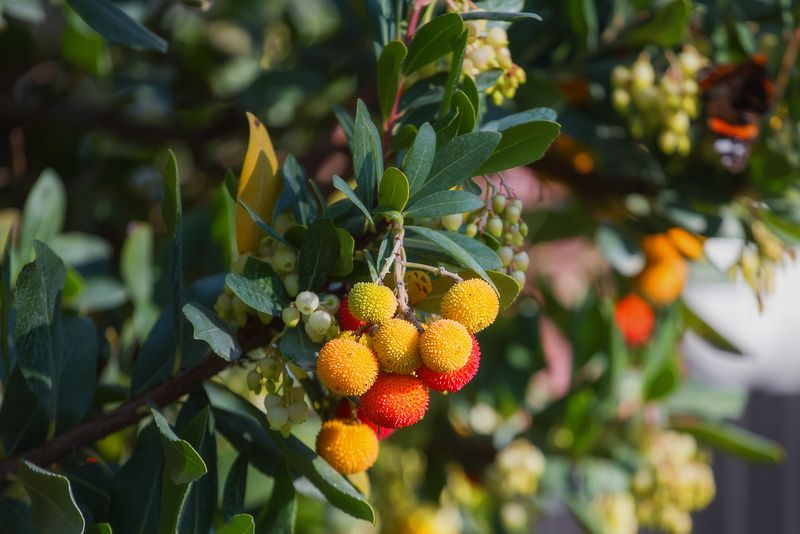
Start with identity: confirm the tree is Arbutus unedo. Then look at the fruit.
Bright red and slightly soft is the cue if you want to taste one.
Keep water and cleanup in mind, using UC Master Gardeners’ guidance on young versus established trees. Since crops vary with weather, you do not need to pick every fruit or clear every one that falls.
Some years the tree will give you a handful to try. Other years, it will just be a handsome evergreen with a quiet red surprise.