
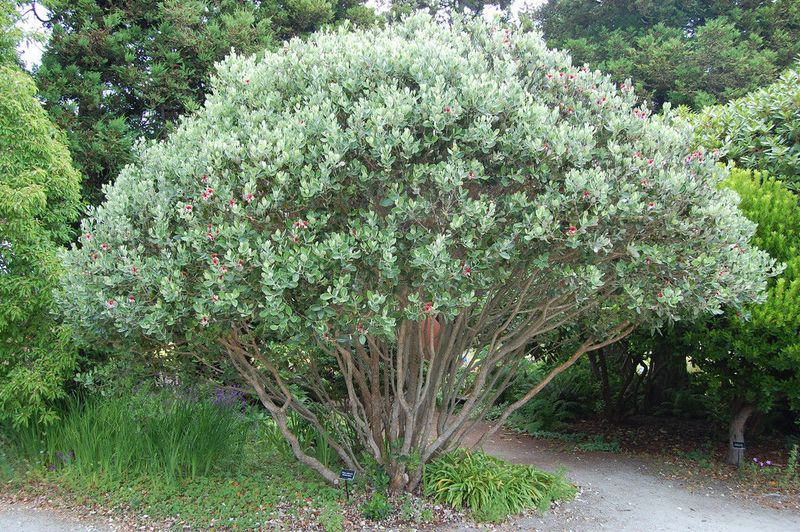
Pineapple guava is an evergreen shrub that can look good in a Florida yard long before it ever gives you a fruit. It has silvery leaves, showy spring flowers, and petals you can eat.
In the right spot, it may also drop tasty fruit in the fall. Here is how to choose a site, plant it, and care for it while you wait.
Pineapple guava offers a low-spray possibility, not a harvest guarantee
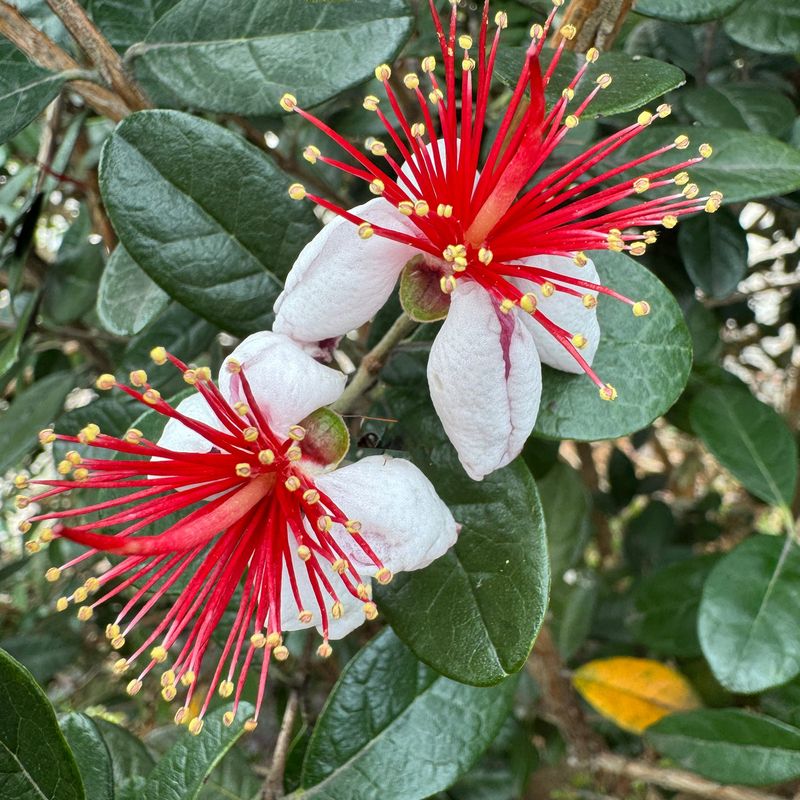
Pineapple guava, also called feijoa (Acca sellowiana), is an evergreen shrub or small tree. UF/IFAS describes it as well adapted to most Florida conditions, tolerant of heat and mild freezes, and free of consistent pest or pathogen threats in the Southeast.
That makes it a handy choice for a yard where you would like fewer chores.
The plant earns its spot even without fruit. Its gray-green leaves stay on year-round, and its spring blooms have fleshy petals that are edible.
In fall, some plants set fruit that you eat fresh by scooping out the inside, as UF/IFAS Gardening Solutions explains.
Still, a good landscape plant and a dependable fruit tree are two different things. Fruiting depends on where you live in Florida, how cold your winters get, which cultivar you pick, and how well flowers are pollinated.
Do not confuse this plant with common guava, which is a different species with its own pest concerns.
Low reported pest pressure is encouraging, but it does not mean pests or diseases never show up. Florida information on fungal problems is limited, so a no-spray season is a possibility, not a promise.
Think of this shrub as a relatively easygoing plant with a possible fruit bonus.
Give the shrub room, drainage, and a suitable Central Florida site
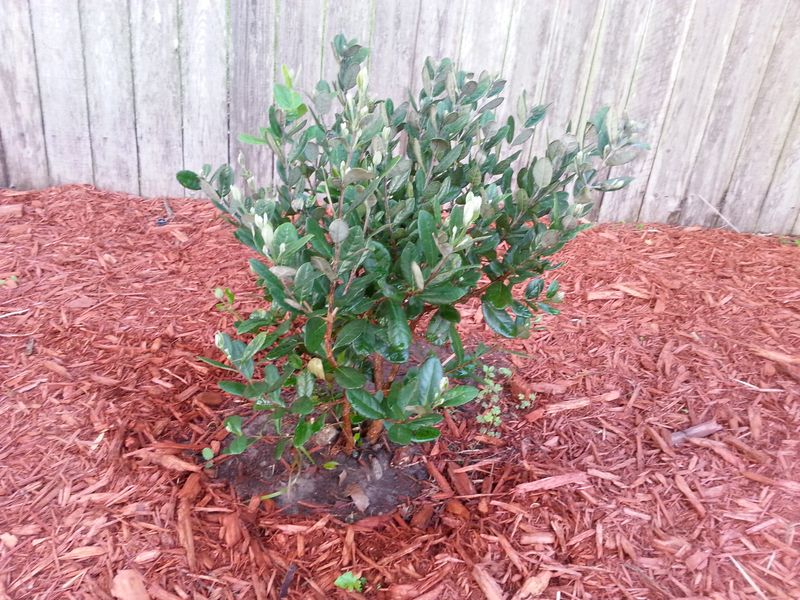
Before you buy, walk your yard and look for a spot with full sun to part shade. UF/IFAS lists well-drained soil and a pH between 5.5 and 7.0 as preferred.
Avoid low corners where water stands after summer storms, since persistently wet soil is a poor match.
Plan for size. Pineapple guava can reach roughly 10 to 15 feet tall and wide, and it can be trained as a shrub, a hedge, or a small tree.
Setting it too close to a walkway, wall, or power line means pruning battles later. A slow-growing plant still gets big over the years.
Wind is another factor. A site sheltered from strong gusts helps protect fruit from bruising and weaker branches from damage.
A spot near a fence or a building on the windward side can help.
Location also affects fruit. UF/IFAS reports little fruiting south of the I-4 corridor, even though the plant grows well in landscapes across much of the state.
Winter chill, local conditions, and cultivar all shape your odds. If you are in the southern part of Central Florida, treat fruit as a pleasant maybe and enjoy the foliage and flowers first, as Gardening Solutions guidance also suggests.
Fall planting works only if the root ball gets water
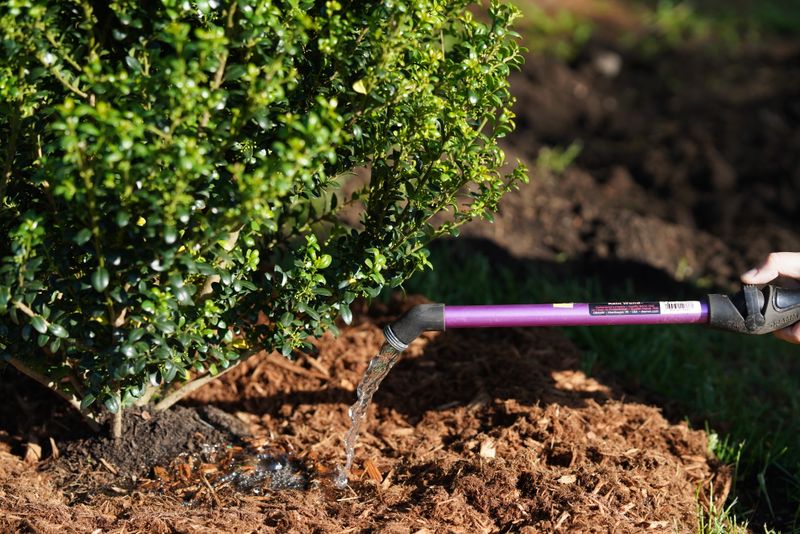
Fall is one possible time to plant, not a special feijoa window. UF/IFAS says shrubs can be established in any season, but hot, sunny, dry weather, including some fall stretches, can slow rooting unless you irrigate.
The guidance also points to planting at the start of the rainy season as a general strategy.
For a three-gallon shrub in Central Florida, UF/IFAS gives about one gallon per irrigation. The interval runs from every 2 to 4 days for more vigorous growth to every 8 days for basic establishment in well-drained soil.
That is general shrub guidance, not a feijoa-specific trial.
Treat those numbers as a starting point. Skip a watering after a good rain, and water sooner if leaves droop or the weather turns hot and breezy.
A bigger plant may need more, and a smaller one less.
Very sandy soil drains fast, so it can raise your watering needs. Push a finger a few inches into the soil near the root ball to check moisture before you water.
A ring of mulch, kept a few inches from the trunk, helps hold moisture while the roots spread.
Choose a named cultivar with pollination in mind
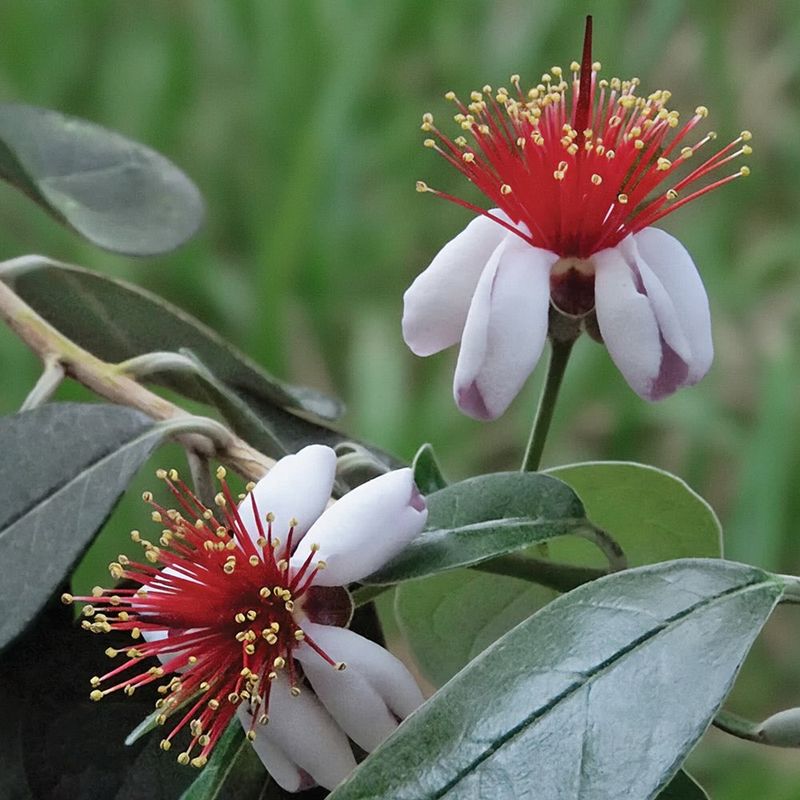
If you want fruit, pick a named cultivar over an unknown seedling. UF/IFAS notes that named selections are preferable when fruit quality matters, since seedlings vary a lot.
Pay attention to the wording on plant tags. ‘Coolidge’ appears as self-fertile in the UF/IFAS cultivar table, but only ‘Unique’ is identified there as reliably self-fertile. Most cultivars are only partially self-fertile, and even self-fertile ones can set larger crops with another variety nearby.
That is why a second compatible cultivar is a smart addition if you have the space. Two plants give bees more chances to move pollen between flowers, which can improve the chance and quantity of fruit.
It will not guarantee a particular yield, but it tilts the odds your way.
Ask the nursery which cultivars they carry and which ones are suited to Florida. UF/IFAS Gardening Solutions also recommends considering pollination partners.
Write down the names so you can match them later.
The edible flowers arrive before the long wait for fruit
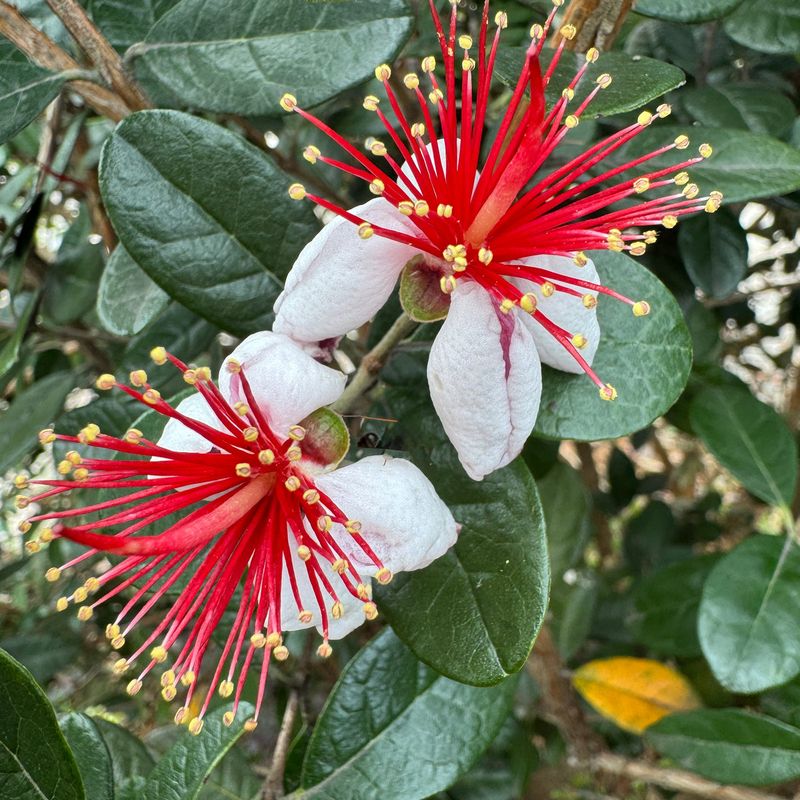
In Florida, pineapple guava flowers in April. Fruit may ripen from September through November, depending on the variety, according to UF/IFAS.
So fall fruit starts with spring blooms, and a plant set out this fall will not fruit this fall.
Patience is the real price. First harvest typically comes 2 to 4 years after planting, and full fruiting potential can take 8 to 10 years.
Cold snaps, dry spells, and weak pollination can set that schedule back.
The flowers give you something to enjoy sooner. UF/IFAS identifies the fleshy petals as the edible part, not the entire flower.
They taste mildly sweet and make a pretty garnish for salads or desserts. Pick only a few so the plant can still set fruit, and skip any flowers that have been sprayed unless the product label allows it.
When fruit does arrive, Gardening Solutions says you eat it fresh by scooping out the interior. Harvest when fruit begins to fall from the plant, or when it softens and turns a lighter green.
Checking the ground beneath the shrub every few days is the easiest way to catch ripe ones.
Low pest pressure still calls for attentive, restrained care
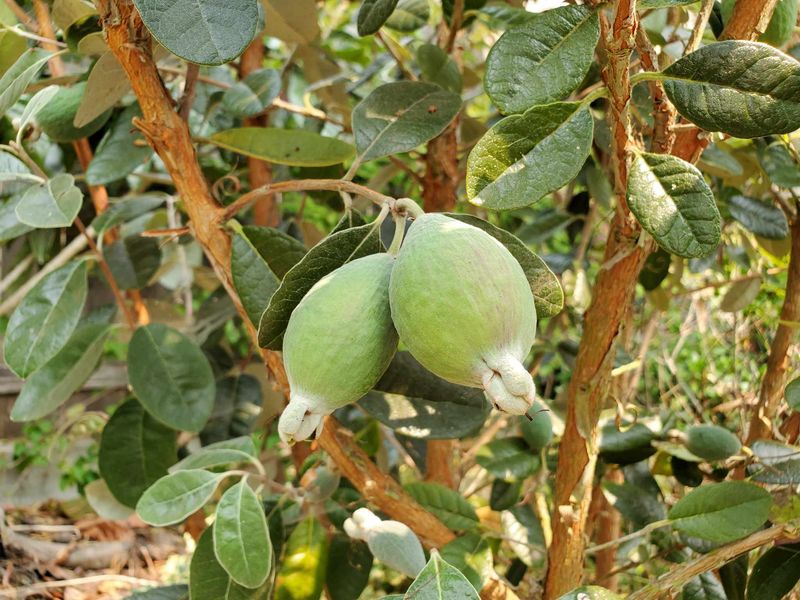
The low-spray appeal is real, but it comes with limits. UF/IFAS reports no consistent pest or pathogen threats in the Southeast.
Information on fungal disease in Florida is limited, though, and rainy-season weather overlaps with flowering and fruit development, so fungicide may occasionally be needed.
Do not spray on a schedule just in case. Instead, look over the plant now and then, especially after long wet spells.
Leaf spots, blossom problems, or fruit that looks off are clues worth tracking, and your county extension office can help identify them.
Weather causes trouble too. Prolonged dry weather can trigger fruit and leaf drop, which is another reason new plants need steady water in dry stretches, as the UF/IFAS shrub establishment guide suggests.
Wind can bruise fruit or snap weaker branches, so light structural pruning early on helps.
If you do use a pesticide or fungicide, read the label first. Confirm that the product allows use on the food you plan to eat before you harvest treated flowers or fruit.
The EPA’s labeling Q&A explains how to read those directions.
Plant for the landscape first and let fruit be the bonus
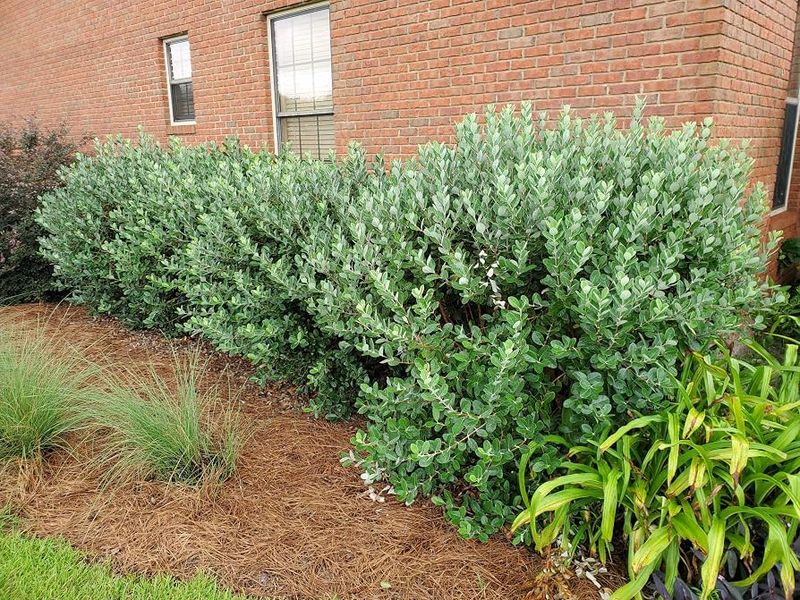
Pineapple guava suits gardeners who can offer well-drained soil, establishment water, room to grow, and years of patience. It is a better bet where local conditions favor fruiting, so check how far south of the I-4 corridor you are.
UF/IFAS and Gardening Solutions both frame it this way.
Evergreen leaves and edible petals give you value long before a harvest. Neither a fall planting nor low pest pressure guarantees fruit or a spray-free year.
Plant it for the silver foliage, and treat the first fruit as a gift.