
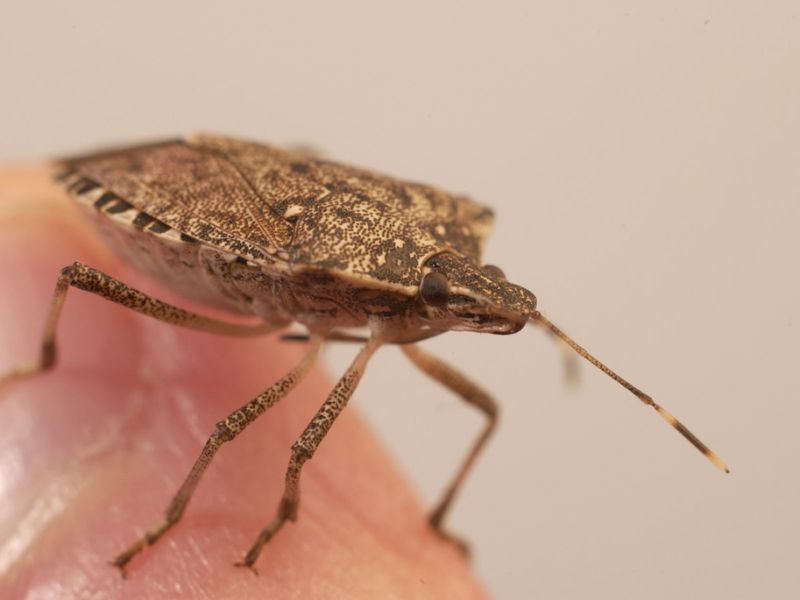
You flip off the kitchen light at night, and there it is, a shield-shaped bug clinging to the wall near the window. In fall, this scene plays out in many homes where brown marmorated stink bugs have settled in.
A cheap pan of soapy water and a light may catch some of the ones already inside. Here is how the trap works, where it falls short, and what keeps more bugs out next year.
Why brown marmorated stink bugs seek shelter in fall
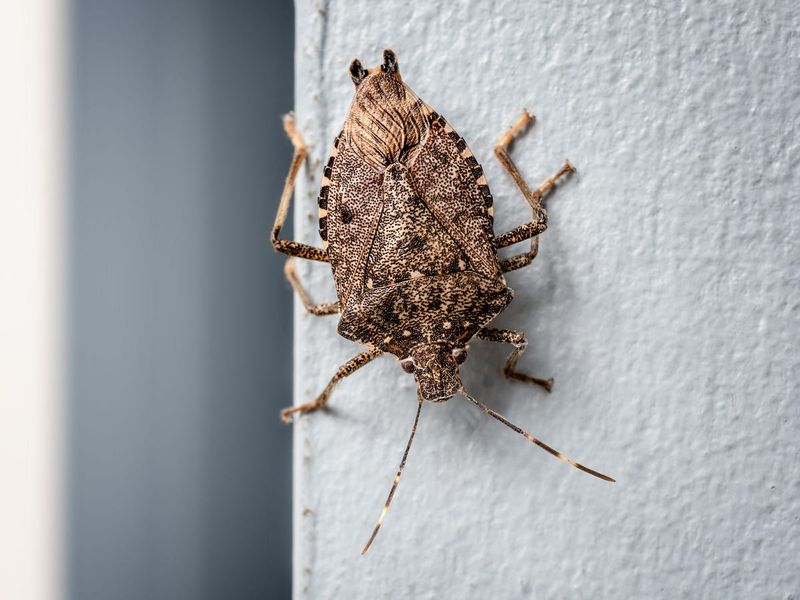
Picture a quiet evening in October. You reach for a glass, and a stocky, mottled bug sits on the windowsill, looking for somewhere warm.
That is a familiar fall scene for homeowners who have brown marmorated stink bugs (BMSB) nearby.
This article is about BMSB only. Many insects get called stink bugs, including native species, and they do not all behave or respond to traps the same way.
UC IPM guidance explains that adult BMSB look for protected overwintering sites in fall, and buildings fit that description.
Where you live matters too. BMSB is not equally common across the South.
UF/IFAS reports that many Florida records are single specimens, with a localized established population near a Lake County peach orchard. A trap only catches bugs that are already inside.
It does not stop new ones from coming in.
What a light-and-pan trap can—and cannot—do
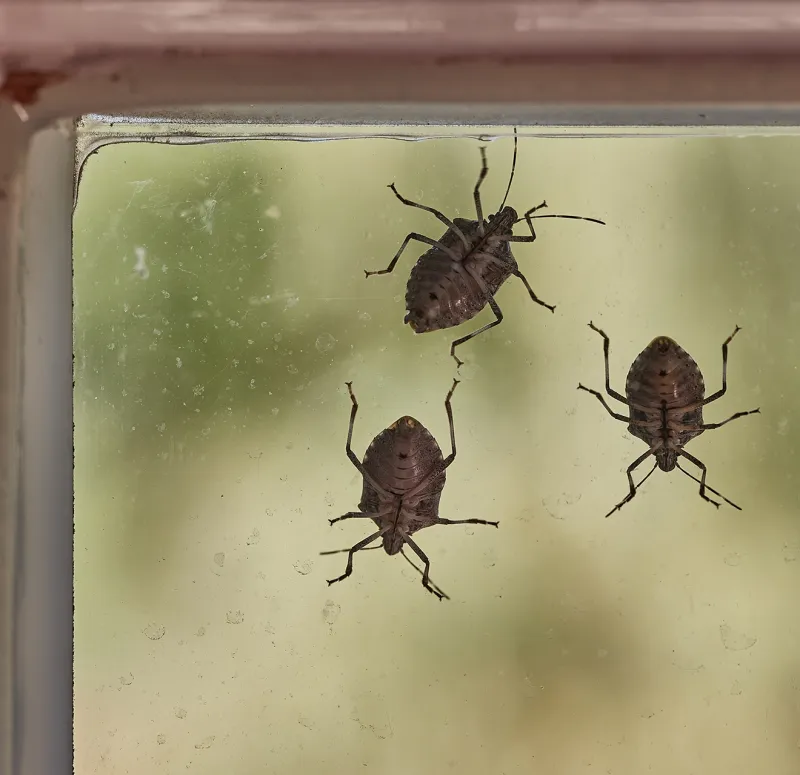
In this trap, the light is the lure. Bugs drawn toward it may fall into the soapy water and drown, according to UC IPM.
The soap helps break the surface tension so they sink instead of walking off.
Researchers have tested this idea. In a Virginia study, citizen scientists tried BMSB light traps in their homes during late winter and early spring.
The aluminum-pan water trap was the most effective of the light traps tested.
That makes it a reasonable option to try. It does not mean every home will see the same catch.
The study covered one species, one state, and one time of year, so fall results may differ.
Expect the trap to catch some bugs. Do not expect it to pull them off walls or windows, catch them all overnight, or clear an infestation.
Set up the pan with care
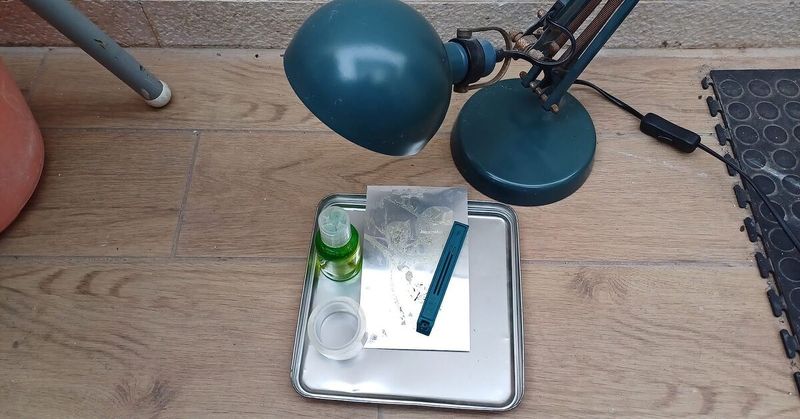
The materials are simple: a foil roasting pan, water, a few drops of dish soap, and a light. Add the soapy water to the pan, aim the light toward it, and use the setup in a dark room so the light stands out.
Go a bit deeper with the water than you might expect. UF/IFAS notes that stink bugs may need deeper water than a flea trap.
Check the pan each morning, and empty and refill it as needed, since UC IPM describes bugs drowning in the water.
Safety comes first. University of Tennessee Extension cautions about using an electrical light source near water, so an energized lamp beside an open pan is not risk-free.
Keep cords away from the water and use a stable surface. Avoid any spot where pets, kids, or a bump could knock the lamp or pan over.
Unplug it when you are not nearby.
Remove bugs the trap misses
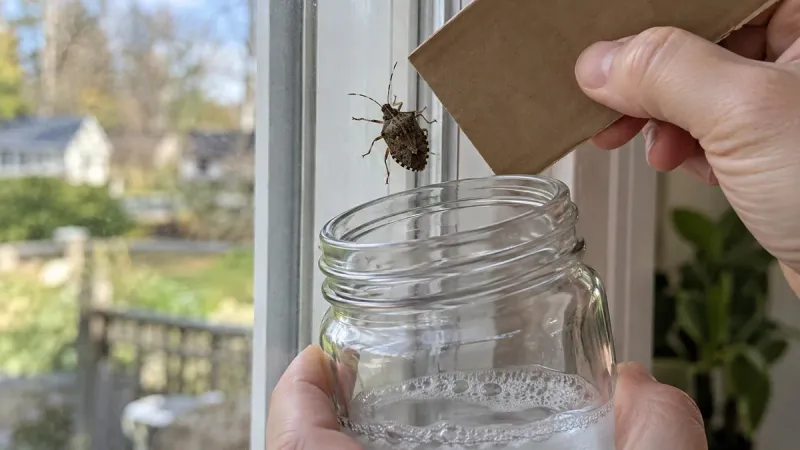
Some bugs will ignore the pan. For those you can see, hand removal works: knock or scoop the bug into a container of soapy water.
Move slowly, since a disturbed bug may release its defensive odor.
A vacuum is another choice. UC IPM lists it as an option, and NC State Extension notes that the vacuum can hold the odor, so some guidance suggests dedicating one to bug removal.
Before you act, check what you have found. Adult BMSB have white bands on the antennae and alternating light and dark markings along the edge of the abdomen, as described by UF/IFAS.
Other stink bug species may not show those features.
Skip indoor pesticides and foggers. Guidance from extension sources says indoor pesticide control is often ineffective.
Reduce future entry by sealing openings
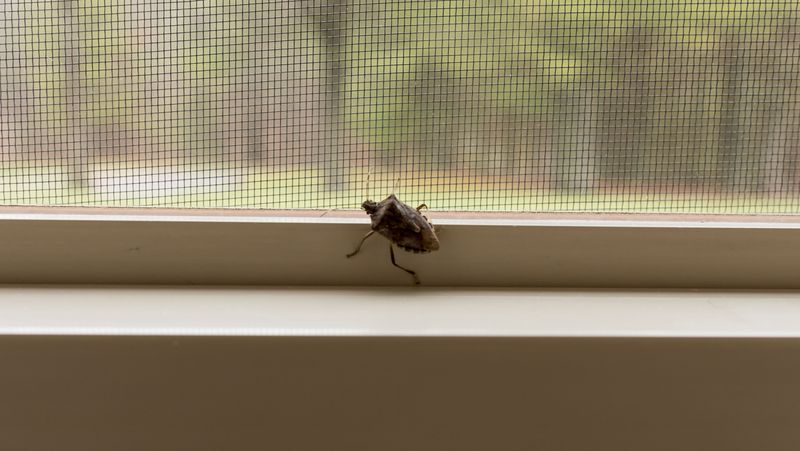
Catching bugs inside is one job. Keeping new ones out is another, and the pan trap does not do it.
For entry, UC IPM recommends repairing screens and sealing gaps around doors, windows, vents, pipes, and other openings. Walk the outside of your house on a dry day and look for tears in screens, loose weatherstripping, and cracks where utilities pass through the wall.
Caulk small gaps and patch or replace damaged screens. Check the door sweep at the bottom of exterior doors too, since a thin gap can be enough for a small insect.
Sealing can reduce how many bugs get in, but it will not guarantee none do. Some may already be inside walls or attics, and a few may still find a way.
Doing this work before bugs begin looking for shelter gives you the best chance of seeing fewer next fall.
Treat the trap as a catcher, not a cure
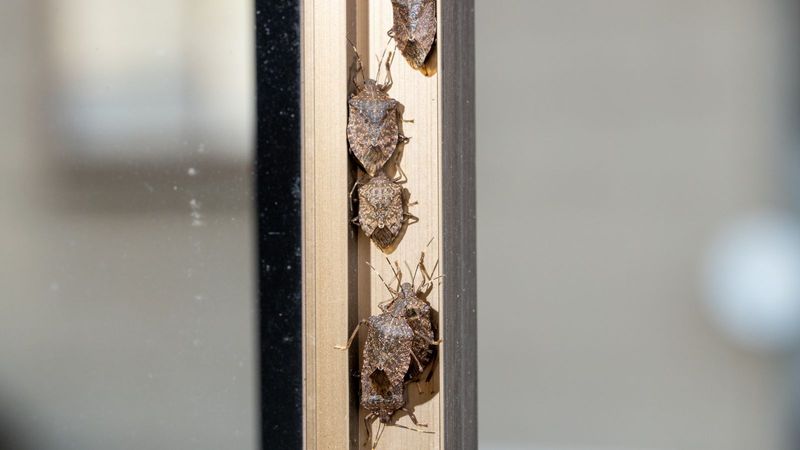
A light and a pan of soapy water can be a low-cost way to catch some BMSB already in a room. Pick off visible stragglers by hand or with a vacuum, and seal openings to reduce what comes in later, as UC IPM recommends.
A full pan in the morning does not prove the problem is solved, and an empty one does not prove the house is bug-free. Think of the trap as a net, not a lock on the door.