
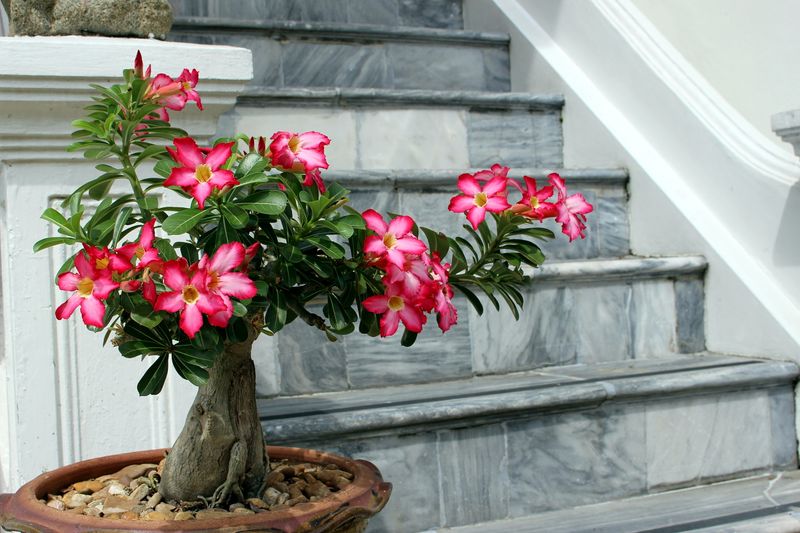
A desert rose can sit in a pot for months with thick, healthy-looking stems and not a single flower. In Florida, the missing piece is often light, not a special feeding or a clever watering plan.
Getting the light right now also sets you up for the cooler, wetter months ahead, when the plant needs a different kind of attention. Here is how to sort out what matters most and what to leave alone.
Low light can keep a desert rose from flowering
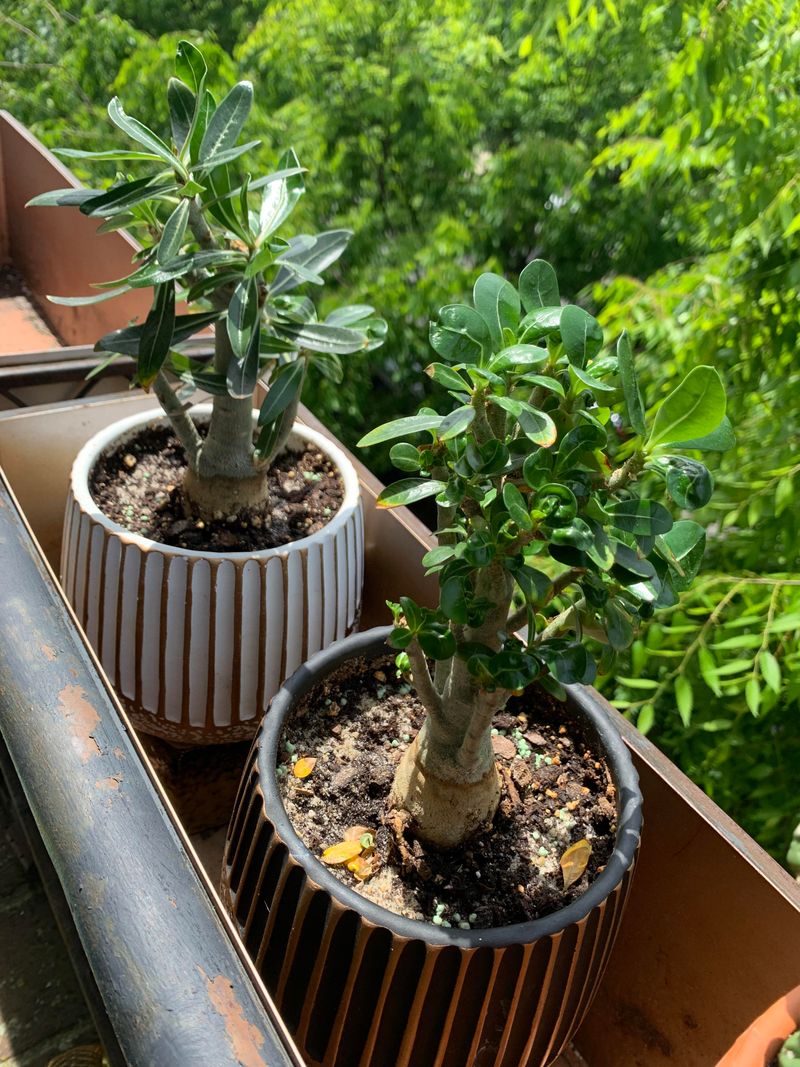
Picture a desert rose tucked under a porch roof or behind a tall hedge. The stems look fine and the leaves are green, but there are no flowers.
Low light is a common reason, and UF/IFAS guidance on Adenium obesum says the plant will not flower in low light.
The same guidance recommends bright sunlight for the best outdoor flowering. For summer flowering, it calls for six or more hours of sun per day.
That number applies to the summer bloom season. It is not a year-round rule, and it is not a promise that a plant will flower.
Think of light as a requirement, not a guarantee. A plant that gets plenty of bright light can still bloom late, bloom lightly, or skip a round.
Age, variety, and the weather all play a part. But a plant sitting in shade has very little chance of putting on a show, no matter what else you do for it.
A quick check can tell you a lot. Watch a spot from mid-morning to late afternoon and note how many hours direct sun actually lands on the plant.
Trees, rooflines, fences, and neighbors’ buildings can steal more hours than you expect. Stems that stretch long and thin with wide gaps between leaves are another clue that the plant is reaching for more light.
Desert rose is not a plant you can ignore and expect flowers. It does best when its light is right and its care follows the season.
Light comes first, and the rest of this article builds on it.
Choose bright light, not an absolute full-sun rule
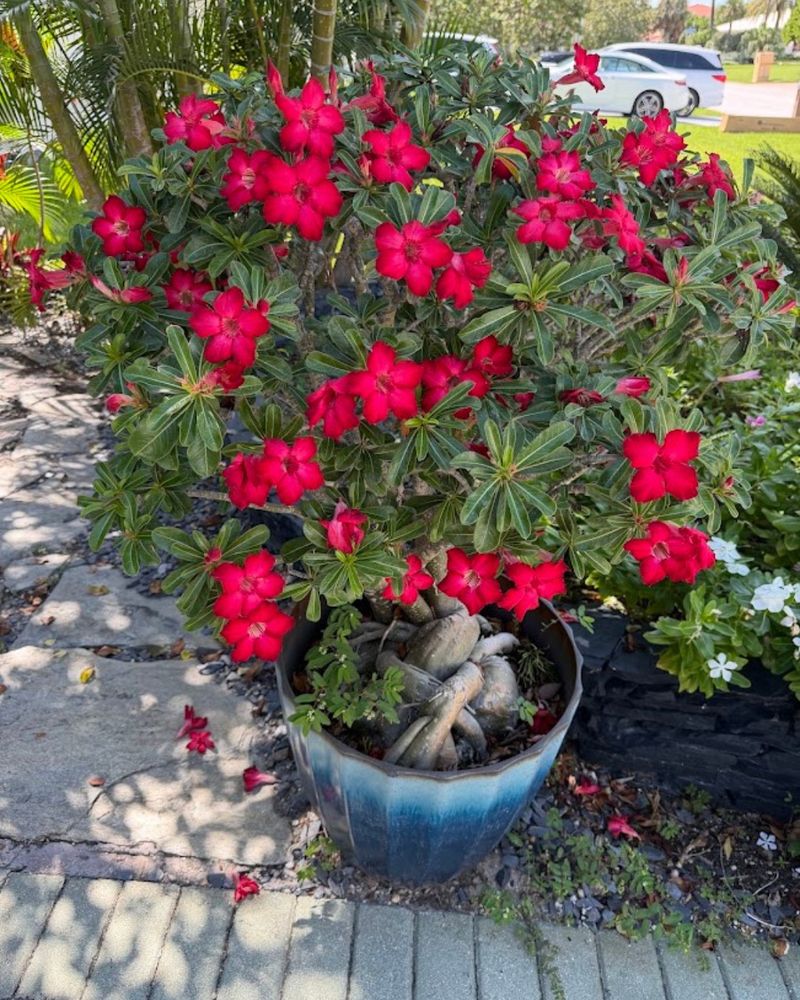
Once you know light matters, the next question is where to put the pot. Florida yards vary a lot, so it helps to think in terms of bright, not scorching.
The UF/IFAS recommendation is bright sunlight, and nothing in it says every plant needs unfiltered sun from dawn to dusk. You can read it in the UF/IFAS Adenium care sheet.
A University of Florida study backs up that flexibility. In a University of Florida dissertation, two cultivars, ‘Red’ and ‘Ice Pink’, flowered strongly in full sun and in 30% shade.
Plants under 50% shade were generally less favorable.
Keep the limits of that trial in mind. It used two cultivars in pots under controlled production conditions.
Its shade levels are not a set recipe for your backyard, where afternoon heat, reflected light, and rain patterns all differ.
For a practical approach, pick the brightest spot you have that you can still manage. A south or west facing yard, an open patio, or a sunny spot along a driveway can all work.
If a plant is moving from deep shade, bring it into more sun over a couple of weeks so the leaves do not scorch.
Mobility is a real advantage here. A potted plant can be shifted as the sun angle changes through the year.
If a spot gives under six hours in summer, consider a brighter one before changing anything else.
Protect roots from cold and excess moisture
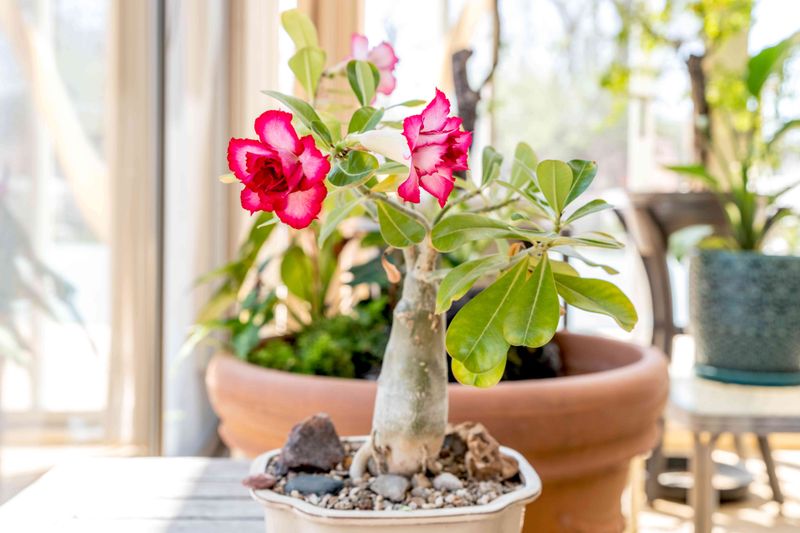
As fall turns toward winter, the focus changes from bloom support to risk management. Cool, wet conditions are hard on a desert rose, and roots sitting in soggy mix are the usual trouble spot.
A well-drained mix is the first line of defense, especially in Florida where heavy rain can arrive in long spells.
UF/IFAS Charlotte County suggests growing desert rose in containers when you need drainage or the ability to move the plant in rainy or cold weather. A pot with generous drainage holes and a gritty, fast-draining mix lets extra water leave quickly.
You can also slide the pot under an eave or onto a covered porch during a soaking stretch.
Cold needs the same careful attention. UF/IFAS lists Adenium as not freeze-tolerant, with year-round outdoor planting suited to USDA Zones 10B through 12.
Florida winters differ from the Panhandle to the Keys, and a cold night can hit harder in a low spot or open yard.
No single placement or temperature number guarantees safety. Watch your local forecast, and move potted plants to shelter before a cold snap, not after.
A spot near a south-facing wall or under a roof overhang can soften a chilly night, but it is not a promise.
Plants in the ground are harder to protect. If yours is planted out, make sure the soil drains well and be ready to cover it when cold is forecast.
Adjust watering when the plant becomes dormant
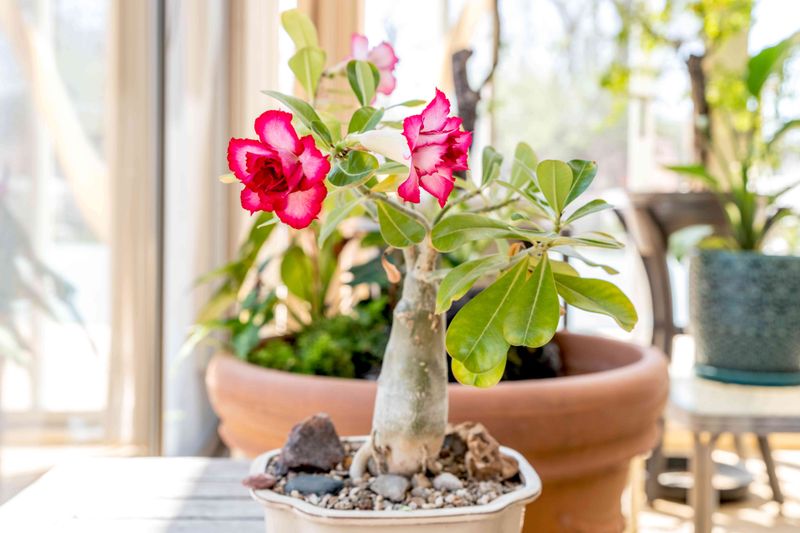
A watering schedule that works in July can cause trouble in January. When a desert rose slows down in cool conditions, it uses far less water, and wet soil can lead to rot.
That is why watering needs to follow the plant, not the calendar.
UF/IFAS advises withholding water during the plant’s cold-weather rest. University of Arizona Extension adds that dormant plants should generally be kept dry, especially in cool or poorly lit storage.
Treat this as protection, not a bloom trick. Cutting back water in fall does not have proof behind it as a way to make flowers appear.
It simply helps the plant get through cool weather without waterlogged roots.
Use the plant’s condition to guide you. If it has dropped most of its leaves, the trunk is firm, and nights are cool, it is likely resting.
If the plant still holds leaves and the weather is warm, it may still want an occasional drink. Check that the mix is fully dry before watering, and expect your Florida conditions to differ from Arizona’s.
Leaf drop in winter can worry new growers. UF/IFAS describes winter leaf and flower loss as part of the plant’s natural cycle, so bare stems alone are not a sign it is dying.
A soft, mushy trunk is different and worth a closer look.
Use fertilizer as support, not a bloom switch
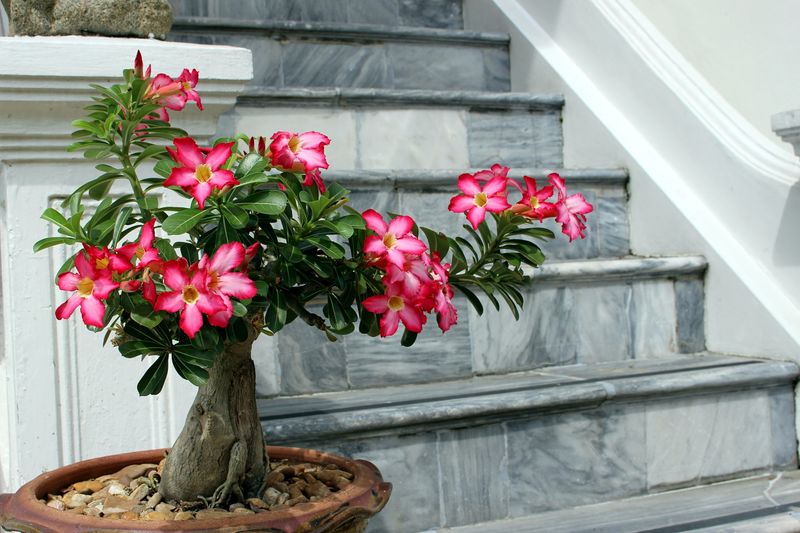
Fertilizer gets a lot of credit for flowers, but it plays a supporting part. A plant in too little light is unlikely to be rescued by a stronger feeding.
Light comes first, and feeding helps a healthy, actively growing plant do its job.
UF/IFAS describes two approaches. For plants grown indoors, a low-dose liquid fertilizer during summer growth is recommended.
Outdoors, a slow-release fertilizer applied as the label directs is the suggested route.
Labels matter because products differ in strength and schedule. Follow the directions for your product, apply during active growth, and skip feeding when the plant is resting in cool weather.
You may come across research that tested fertilizer levels. The University of Florida study of ‘Red’ and ‘Ice Pink’ did look at nutrition, but its fertilizer treatments were set up for commercial pot production.
Those rates are not a home recipe, and copying them could do more harm than good.
If your plant is not blooming, check light before you reach for the fertilizer bag. More feeding will not fix a shady spot, and it will not make a dormant plant flower.
Used sensibly, fertilizer keeps a well-placed plant healthy through its growing season.
Follow the season instead of forcing flowers
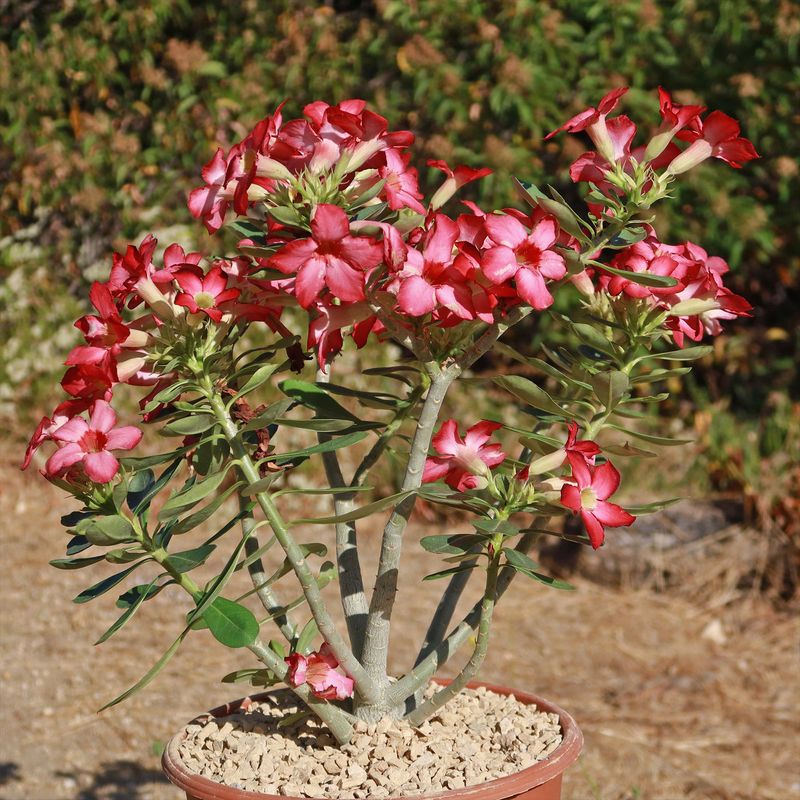
Bright light during active growth gives a desert rose its best shot at flowering, per UF/IFAS guidance. When cooler, wetter weather moves in, shift to drainage, cold protection, and a lighter hand with water.
None of it guarantees blooms, and this plant rewards steady attention, not shortcuts.
A bare winter stem is often just a plant taking its turn to rest.