
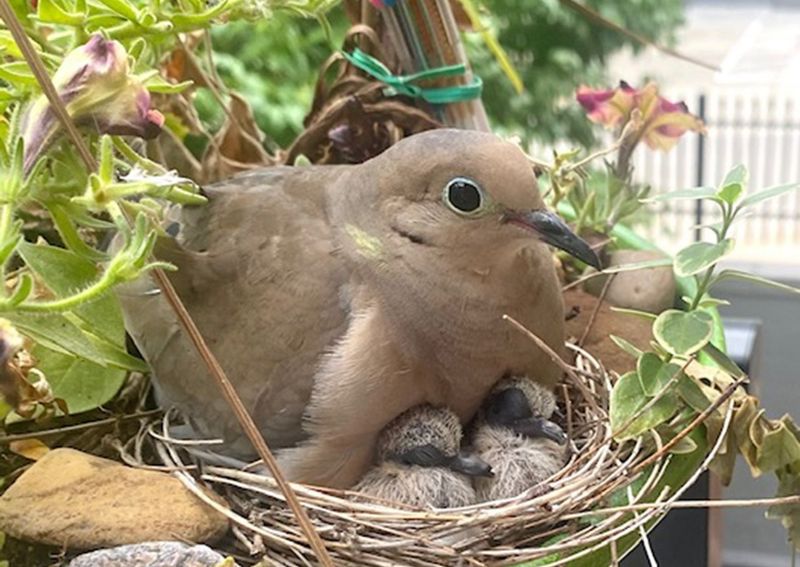
Maybe a pair of mourning doves has nested in the same corner of your California yard again. It is natural to wonder what they see in that spot.
Doves are flexible birds, so the answer is less simple than it seems. Here is what a repeat nest can and cannot tell you, and how to protect it.
A recurring nest spot suggests usable conditions, not a secret lure
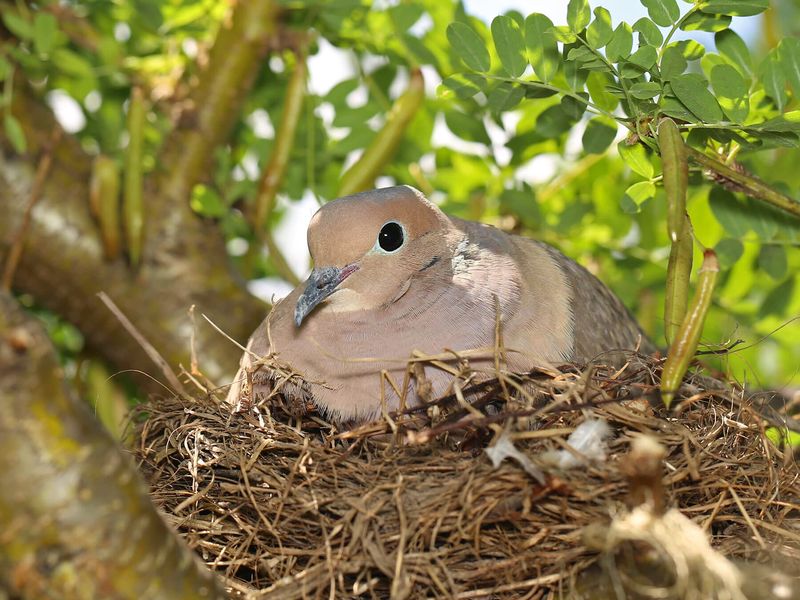
Seeing doves nest again and again in one part of your yard feels like a message. The safest reading is simple: that spot has worked well enough as a place to build.
It does not reveal one secret attraction.
Mourning doves are adaptable, and Cornell Lab life history information describes nests in many kinds of places. Because the sites vary so much, nobody can point to a single feeder, birdbath, or plant and say that explains the choice.
Nobody can say it about your doves either.
Think of a repeat nest as a reasonable clue. It likely means the location offers workable conditions, such as a steady place to rest a nest and some cover above.
You did not necessarily cause the choice, and you cannot pinpoint one feature behind it. Knowing those limits helps you enjoy the nest without overreading it.
What makes a perch workable?
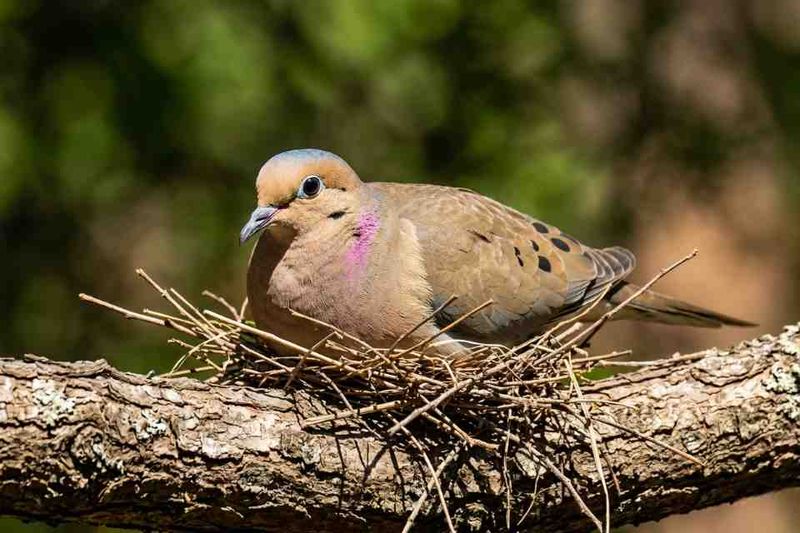
Doves build thin, loose nests, so they need something stable underneath. A sturdy horizontal branch, a forked limb, or a flat ledge can hold a few twigs in place.
Overhead leaves or a roof edge may add shade and some cover from the sky.
NestWatch gives a helpful picture of this. Its mourning dove guidance suggests that an optional nest cone go in a shady part of a tree, with branches overhead, secured in a horizontal limb crotch.
The cone gives the flimsy nest a firmer base.
Notice the word optional. Doves do not need a cone, and a cone does not explain why any given pair picked its spot.
Support and cover are useful qualities to look for, not a guaranteed recipe. Plenty of doves nest in places that do not match this description at all.
Mourning doves use more than one kind of nesting site
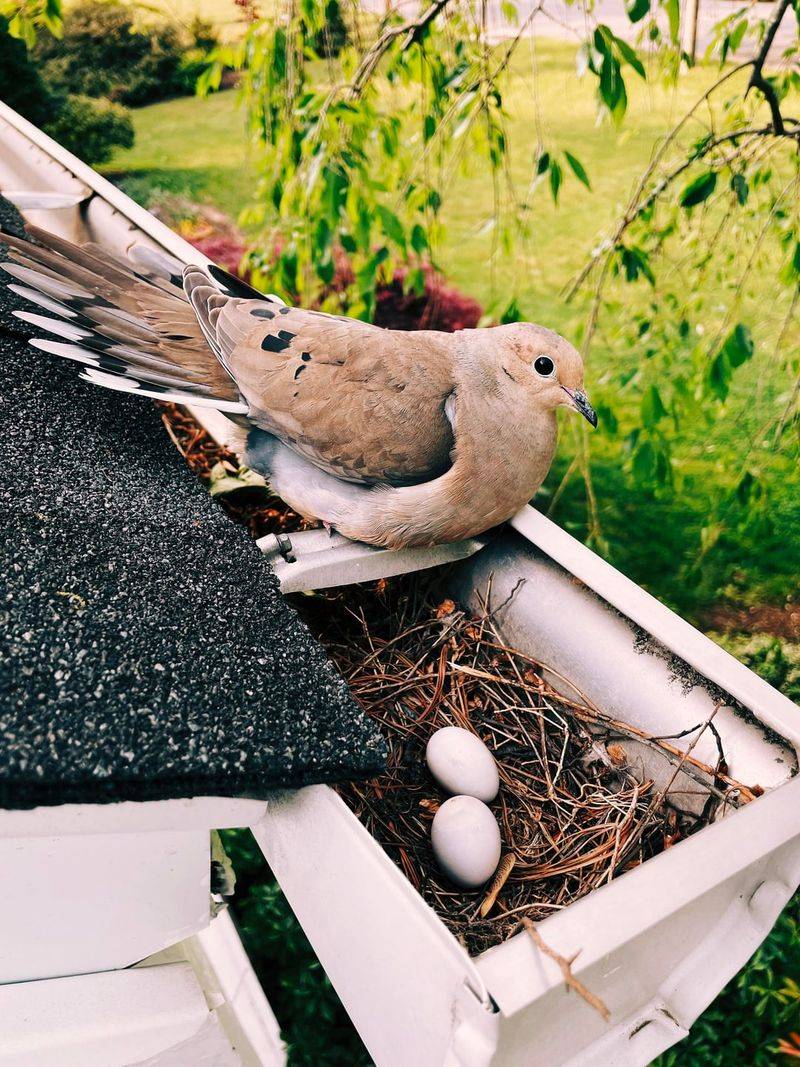
Ask where mourning doves nest and the honest answer is: lots of places. Cornell reports nests on horizontal branches of trees and shrubs, often among foliage.
Doves also use gutters, eaves, and other human-made structures, and in the West ground nests are common too.
The nest itself is a loose pile of twigs, pine needles, and grass. It looks too flimsy to trust, yet it is what these birds typically build.
You can read more in Cornell’s description of dove nesting.
This range is the reason no single yard feature can explain every repeat nest. A dove in a Sacramento Valley shrub, a pair on a Los Angeles porch light ledge, and another on bare ground under a Central Coast hedge may all be choosing for different reasons.
Check low spots and building edges before you work outdoors, since nests are not always in trees.
Does a return mean the same doves chose the same nest?
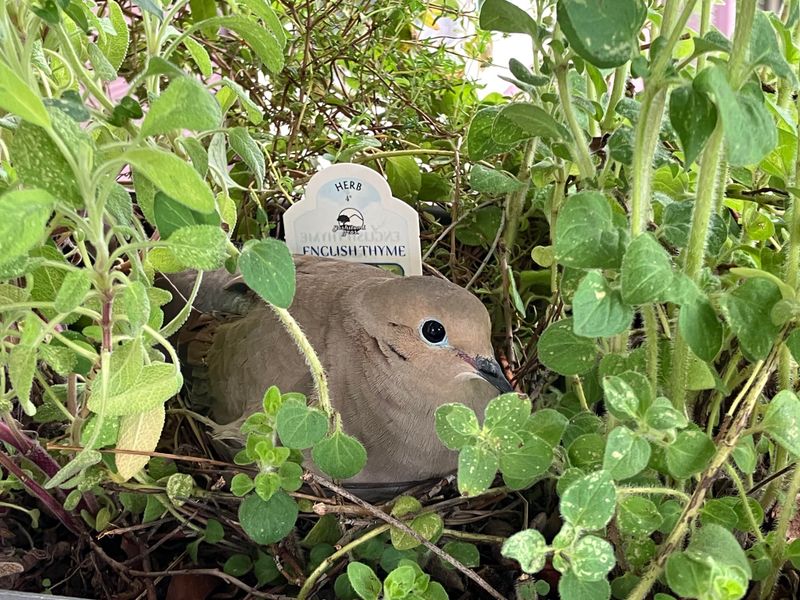
Not necessarily. A busy spot in one season can come from a single pair, since doves can attempt multiple broods.
Cornell also notes that doves sometimes reuse their own nests or even another species’ nests, so a fresh build is not guaranteed.
A return the next year is a different question. In a 1961 study, S.
W. Harris looked at homing in mourning doves.
Returning adults nested on average about 154 feet from their previous year’s nest site, and the study measured return to a 160-acre area.
That makes it evidence of area-level homing. It does not show loyalty to one fence post, hanging basket, or tree limb.
It also cannot predict what the doves in your California yard will do.
So a nest in the same general spot could come from the same birds, from new birds, or from a reused nest. From your window you usually cannot tell which.
What you can say is that the area has been used.
Give an active nest space and postpone nearby work
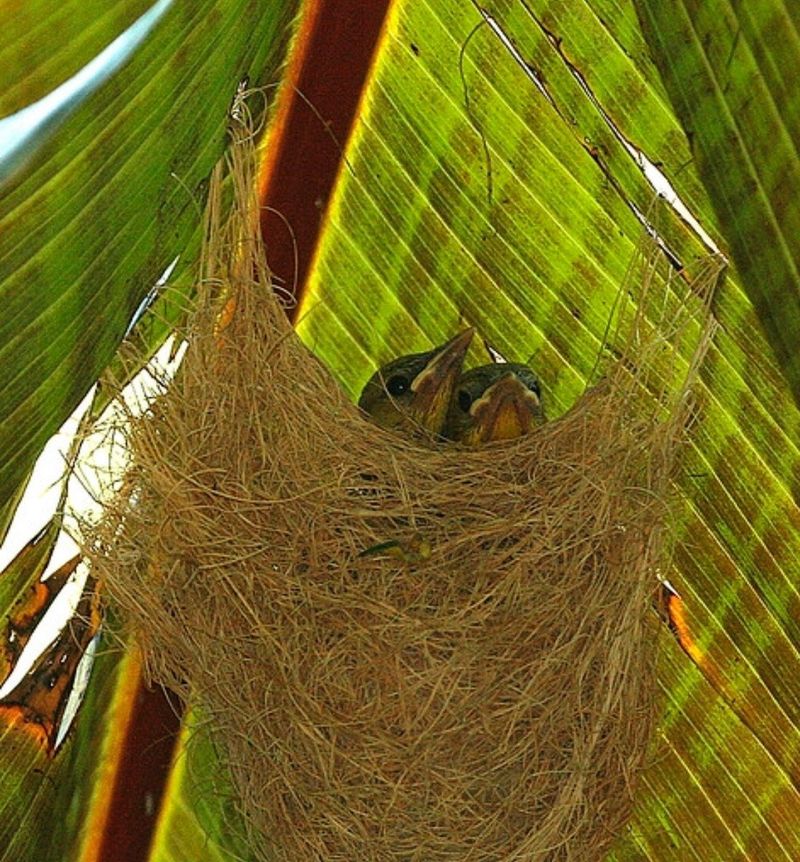
If you suspect a nest is active, watch from a distance. Binoculars or a quick look from a window work well.
Stay out of the immediate area so the parent is not flushed off the eggs or young.
Where you can, postpone trimming, hedge work, or ladder jobs nearby. Do not handle, move, or take apart an active nest, and do not prune around it.
Nothing needs to be done to it, and a short delay costs little.
On the legal side, California Fish and Game Code section 3503, quoted by the Department of Fish and Wildlife, makes it unlawful to needlessly destroy a bird’s nest or eggs. That wording is narrow, so it is wrong to say that removing any empty nest is always illegal.
Federal guidance draws a line too. As the U.S.
Fish and Wildlife Service explains about bird nests, an empty nest differs from one holding eggs, chicks, or dependent young. If you are unsure, check for activity from a distance first, and contact California Fish and Wildlife or the U.S.
Fish and Wildlife Service with legal questions.
Treat the choice as a clue, not proof of success
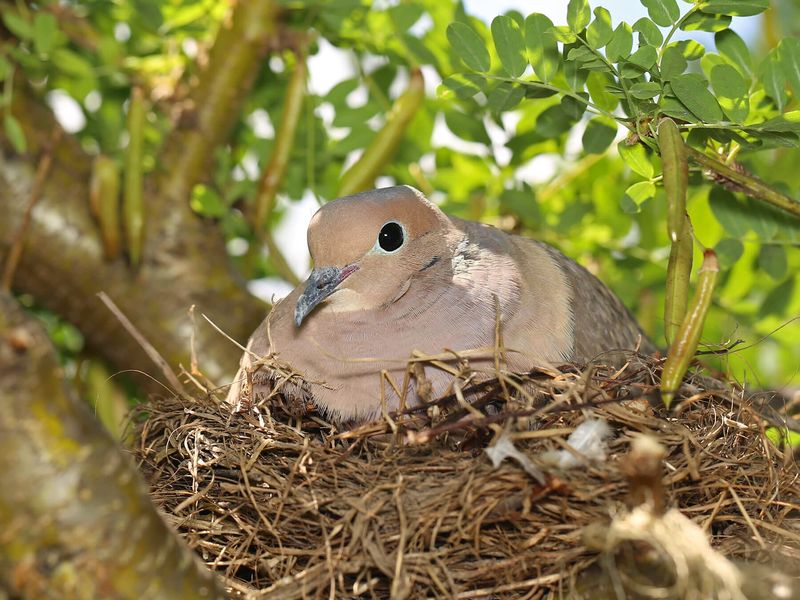
A nest in the same area shows that the location has been usable. It does not show that eggs hatched or that chicks flew.
The U.S. Forest Service species review notes that mourning dove nests face multiple predators, so using a spot is not proof of safety.
It also does not prove that one feature caused the choice. Cornell’s life history notes describe such varied sites that no tidy formula fits.
So skip the urge to engineer a guaranteed dove spot. Respect the nest that is there.
A quiet corner of the yard is the best gift you can give.