
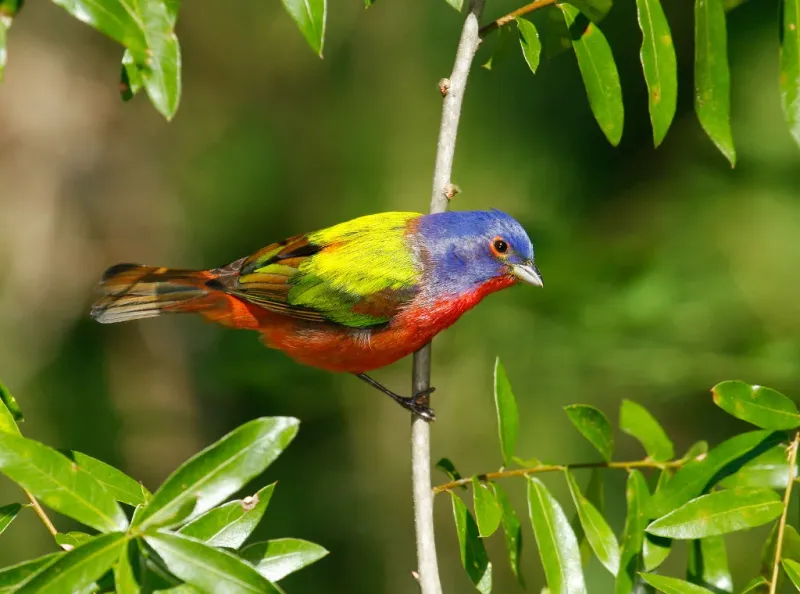
Painted buntings are some of the most colorful birds in Texas, with blue heads, red bellies, and green backs. By fall they are heading south, and many gardeners wonder what to do now to see them again in April.
No chore can promise that the same birds will show up in your yard. But a few smart fall choices can make your yard a better place for buntings and plenty of other wildlife.
When do painted buntings move through Texas?
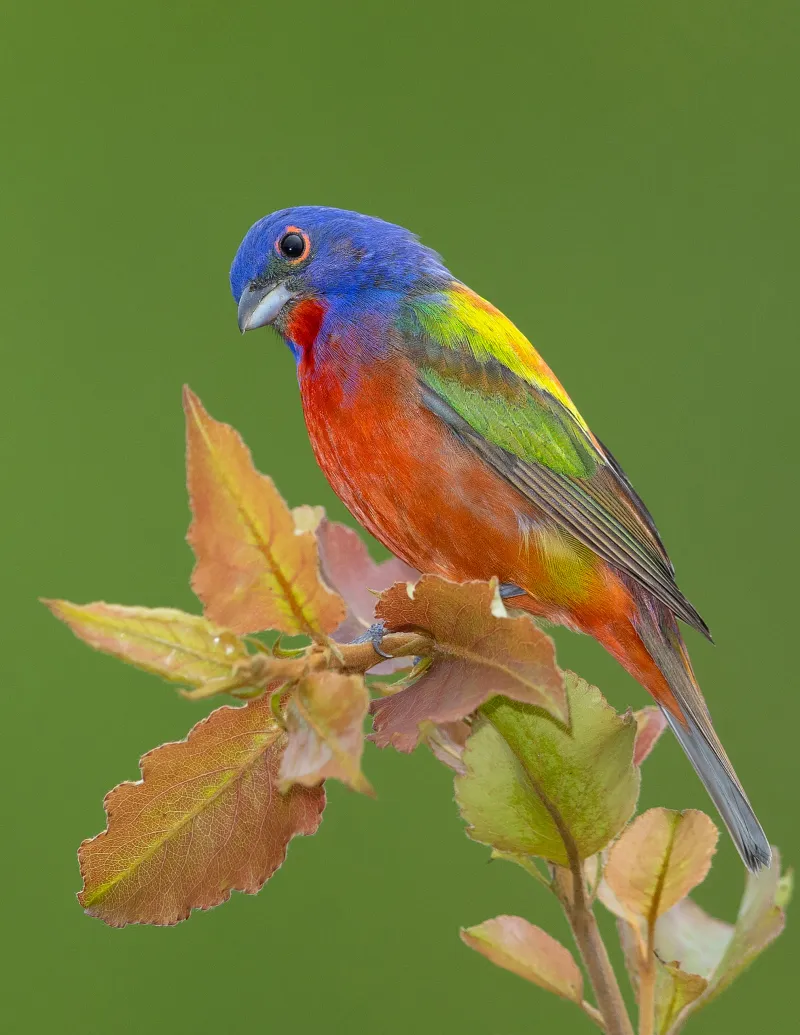
Painted buntings do not leave on a single day. The Texas Breeding Bird Atlas reports southbound movement from June 30 to December 7, with the heaviest flow from late July to mid-October.
Spring works the same way. Birds return across Texas from March 5 to May 22, and most arrive between April and mid-May.
Those dates describe movement across the whole state, so your neighbor across town may see a bunting a few weeks before or after you do.
That wide window matters for your fall plans. A bird might linger in a Hill Country pasture in October while another has already crossed the Rio Grande.
Nobody can tell you the exact week the last bunting leaves your yard, and nobody can promise that a particular bird will come back to it.
So think of fall gardening as habitat preparation. You cannot steer migration or order a return, but you can keep your yard useful to birds that pass through, to wintering birds, and to any buntings that look for a place to settle next spring.
The next sections cover the practical steps, starting with the kind of cover buntings tend to use.
Build varied cover instead of an all-thicket yard
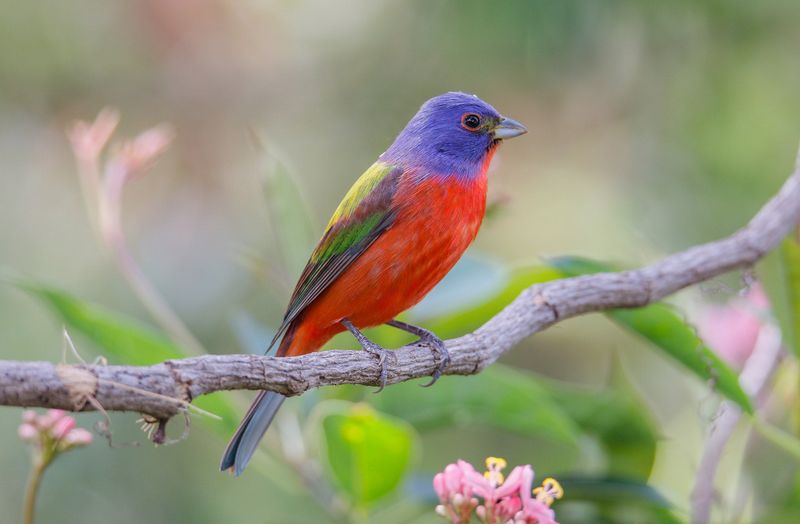
Walk the edge of a Texas pasture or brushy fence line and you will see what buntings seem to like: open patches mixed with shrubs. The Texas atlas describes semi-open habitat with scattered trees or shrubs, brush, grasses, and forbs.
It also notes the birds are scarce where trees are either sparse or too dense.
That points to a layered yard rather than a wall of thicket. Texas Parks and Wildlife says painted buntings prefer dense understory, so shrubby cover has a place.
The key word is mix.
Try a few simple moves this fall. Keep existing native shrubs instead of clearing them, and leave a brushy corner or fence line.
Let bunchgrasses and wildflowers fill open spaces between woody plants.
Skip the opposite mistake too. Clearing every bit of vegetation leaves birds exposed, and packing the yard with one tangled mass removes the open edges.
A yard with a few shrub clusters, some grass, and breathing room is a reasonable target.
None of this guarantees a visit. It simply makes your lot look more like the places buntings are known to use, and it helps many other Texas birds as well.
Leave selected native growth standing through winter
Fall cleanup is where many Texas gardeners reach for the shears. TPWD habitat guidance says native plants can feed birds with seeds, fruits, nuts, and nectar, and they support the insects birds eat.
It also advises planning vegetation removal in no-mow areas for after winter, because standing plants give wintering birds seeds and shelter.
The practical move is to choose patches, not the whole yard. Leave a section of native grasses and perennials uncut near a fence or bed edge, and keep the tidy lawn where you need it.
Pick plants suited to your part of Texas, since a species that thrives in the Piney Woods may struggle in the Panhandle.
Here is the honest limit. This is general wildlife advice, mainly for birds that stay through winter.
It does not show that painted buntings eat from those stems during fall migration, or that leaving them will bring buntings back.
Still, the payoff is real. Standing growth gives cardinals, sparrows, and finches food and cover, and it often looks good in low winter light.
When spring comes, cut the old stems back and let fresh growth start.
Treat feeders as a supplement to habitat
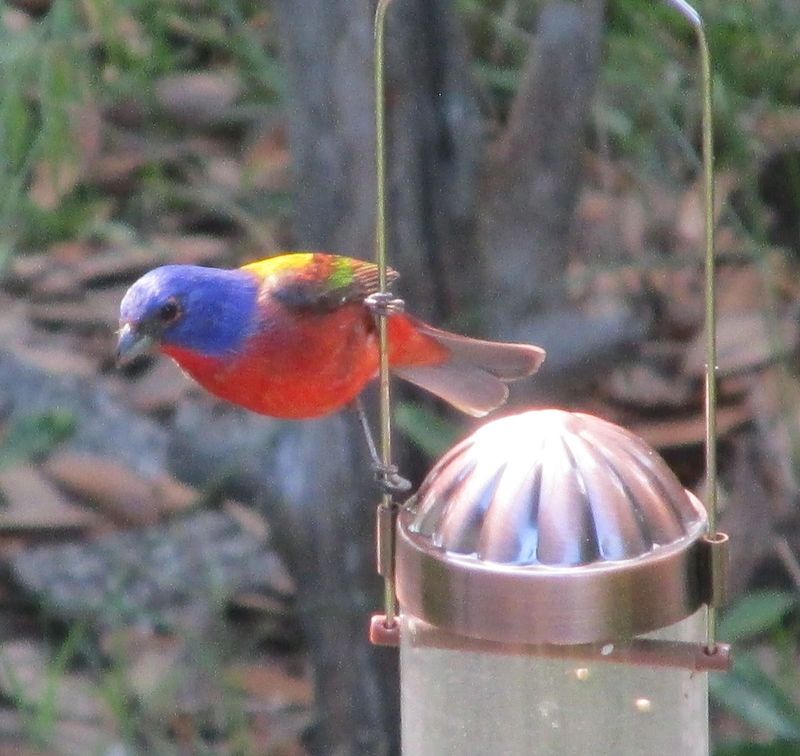
Painted buntings eat seeds, so a feeder seems like an easy invitation. Yet TPWD notes that they rarely visit backyard feeders when they are far from cover.
A feeder alone, in an open lawn, is not likely to do much for them.
That leads to a sensible inference, and it is only an inference. If you put out a feeder, place it near shrubs or other cover rather than out in the open.
No source reviewed gives a specific distance or promises a visit, so use your own yard and watch which spots birds seem to prefer.
What about millet? You will see it recommended often.
Cornell’s life history page describes buntings as seed eaters and discusses feeder use, but the sources reviewed do not show millet is necessary or uniquely effective for Texas buntings in fall.
So keep your priorities straight. Habitat does the heavy lifting, and a feeder is a bonus that also serves other birds.
If you decide to feed, the next section covers keeping it safe.
Keep feeders clean—or stop feeding when birds appear sick
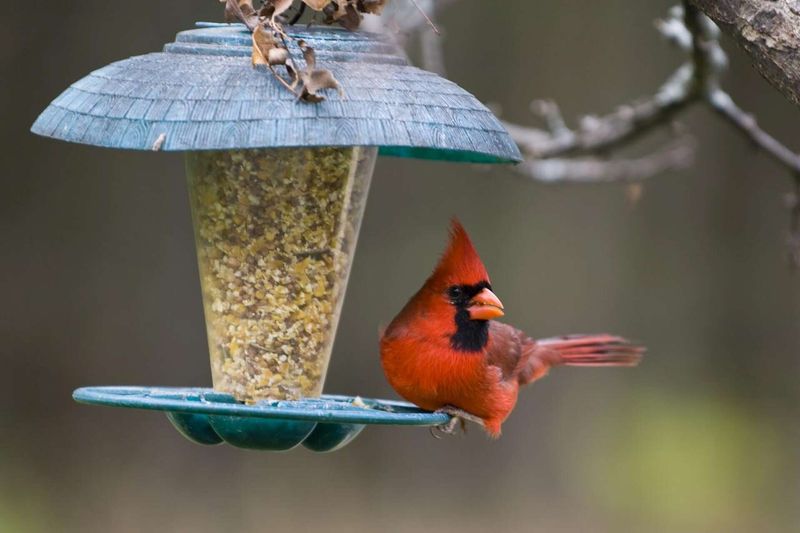
A feeder that draws birds can also pass disease between them. TPWD biologists advise cleaning feeders about every two weeks.
They also say to clean the area beneath the feeder, where spilled and spoiled seed collects.
Follow the agency’s cleaning directions rather than improvising. Afterward, let the feeder dry fully before you refill it, since damp seed spoils fast in warm, humid Texas weather.
A simple routine helps. Mark a two-week reminder on your phone, keep a spare feeder so one can dry while the other is in use, and rake or sweep the ground below every time you clean.
Watch the birds, too. If you find sick or dead birds, stop feeding completely.
Birds will find natural food elsewhere, and pausing gives the problem a chance to fade.
Responsible feeding is a small chore with a big payoff. It keeps the birds you attract healthier, whether they are buntings in spring or house finches in January.
Can you know whether the same buntings will return?
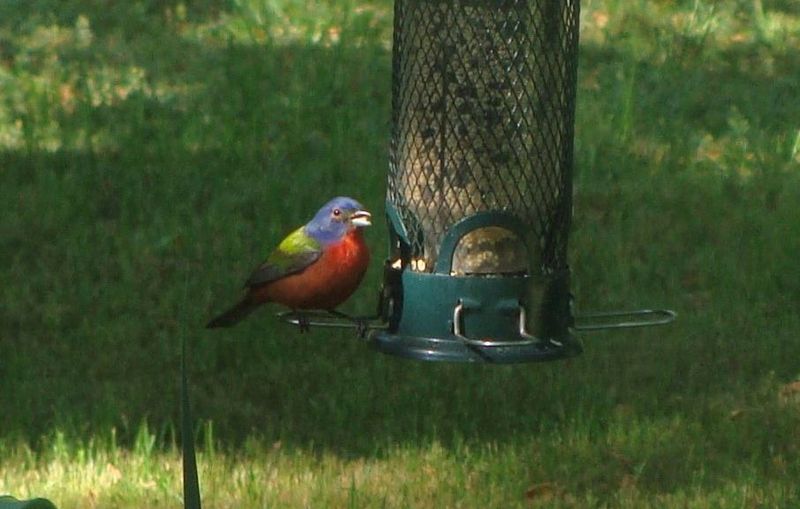
No, you cannot know. Good habitat makes a yard more suitable, but it cannot guarantee a return by the same birds to a private yard.
Research shows why the question is tricky. A 20-year USGS study found high site fidelity among resighted or recaptured adults, but it covered an eastern coastal population, not Texas, and it tracked a study site, not a backyard.
Its results do not predict what happens in your yard.
Spring timing is also loose, since atlas records show arrivals from March into late May. A quiet April does not mean a failed yard.
So plant natives, keep varied cover, and clean your feeders. Then enjoy whatever shows up.
A bright flash of blue in May is a gift, not a contract.