
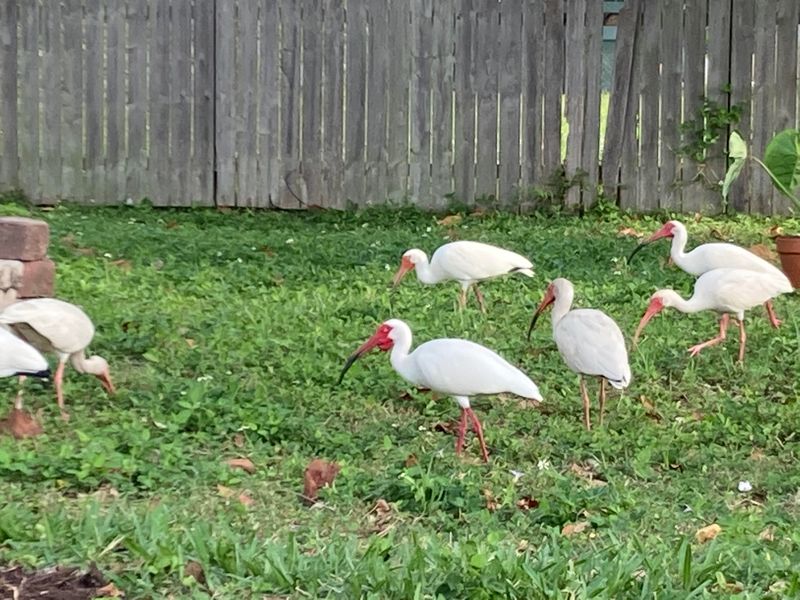
Few Florida yard visitors are as easy to spot as a white ibis, with its long curved bill and bright orange-red face. When one starts jabbing at your grass, it is natural to wonder what it knows that you do not.
The bird is hunting for a meal, and that is all its visit tells you. Here is how to enjoy the show and still make smart lawn decisions based on the turf itself.
An ibis probes for a varied menu
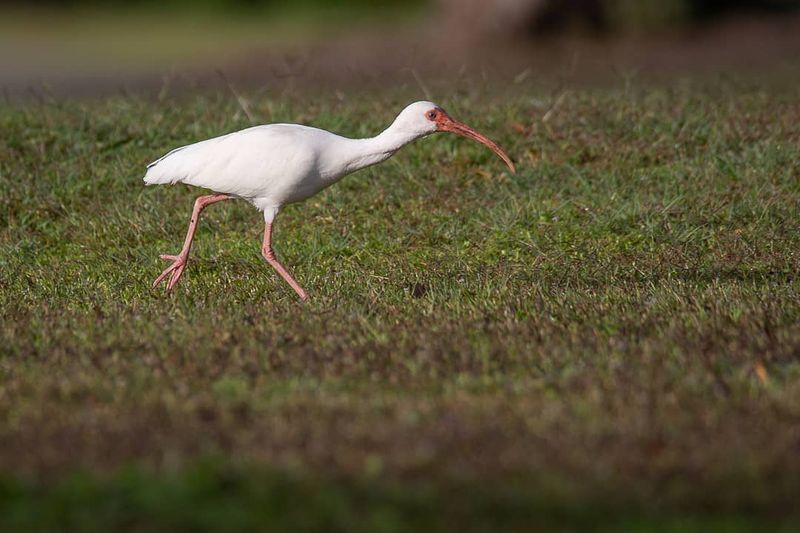
Watch a white ibis for a minute and the routine is easy to see. It walks along with its head low, then pushes that long, downward-curved bill into the grass and pulls it back out.
The bill works like a pair of tweezers, feeling for something edible below the surface.
What the bird finds is not limited to one thing. According to the Florida Fish and Wildlife Conservation Commission, white ibises eat a wide range of prey, including insects, earthworms, crustaceans, fish, and other small animals.
That broad menu means a probing bird could be after nearly any small creature that is easy to reach.
The Cornell Lab of Ornithology describes ibises probing for prey and also picking or catching food at the surface. So a bird that seems to be digging may just as easily be snatching something that was sitting on top of the grass.
Ibises are not strictly wetland birds, either. They forage on lawns and in parks, particularly in southern Florida, so a bird on your grass is behaving like a normal ibis.
You can call what you are seeing foraging, but you cannot tell from the sidewalk what, if anything, the bird is pulling out of your yard.
The visit is not a soil test
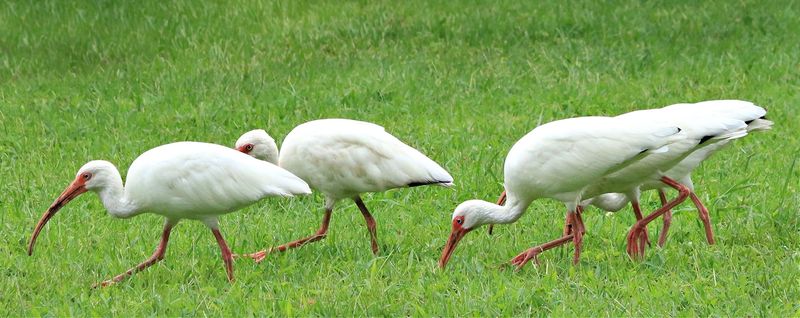
A bird searching for an easy meal cannot measure how many grubs live in your turf. It also cannot tell you whether the soil is damp, rich, or in good shape, or whether your lawn is healthy.
Those questions can only be answered by looking at the grass and the ground yourself.
Research on urban ibises shows why a lawn visit is a weak signal. A peer-reviewed study of ibises in urban areas found that city birds forage in places like lawns and parks, and that their food can include land-based prey as well as human-provided foods.
A bird may stop by your yard for reasons that have nothing to do with what is in your soil.
Since ibises eat so many kinds of prey, probing does not even mean the bird is eating grubs. It may be after worms, other insects, or a handout from a neighbor’s patio.
Here is the practical rule. If your turf is yellowing, browning, or thinning, go inspect that damaged area.
If the grass looks fine, an ibis walking across it is just a nice bit of Florida wildlife, and no change to your routine is needed.
Inspect damaged St. Augustinegrass before acting
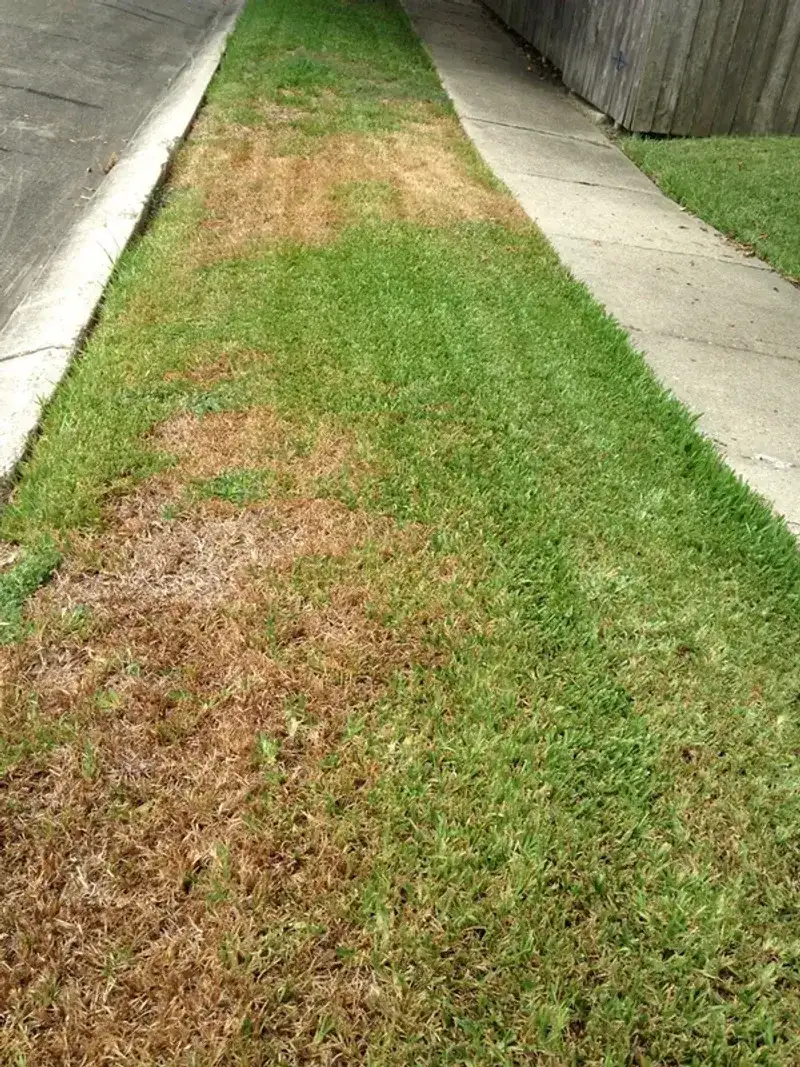
Say you have a patch of St. Augustinegrass that is turning yellow, brown, or thin, and an ibis happened to visit. Skip the guesswork and look at that spot directly.
Treating the whole lawn because a bird showed up is not a sound plan.
UF/IFAS guidance on St. Augustinegrass for Florida lawns explains that white grubs can be found by lifting the grass to a depth of about 2 inches and looking for grubs feeding on the roots. Work at the edge of the damaged area, where healthy and unhealthy turf meet, and check more than one spot.
Keep in mind what this check is. It is a way to learn what is going on in your turf.
It does not prove what the ibis ate, and finding nothing under the sod is useful information too.
Grubs are also not the only suspect. The same UF/IFAS publication points to other St. Augustinegrass pests, including chinch bugs and mole crickets, and describes different ways to check for each one.
Turf color alone cannot tell these problems apart, because several of them leave similar-looking patches.
The goal is to identify the cause before you act. This advice is specific to St. Augustinegrass, so do not borrow it for other turf types.
Use the lawn’s wilt signs to guide watering
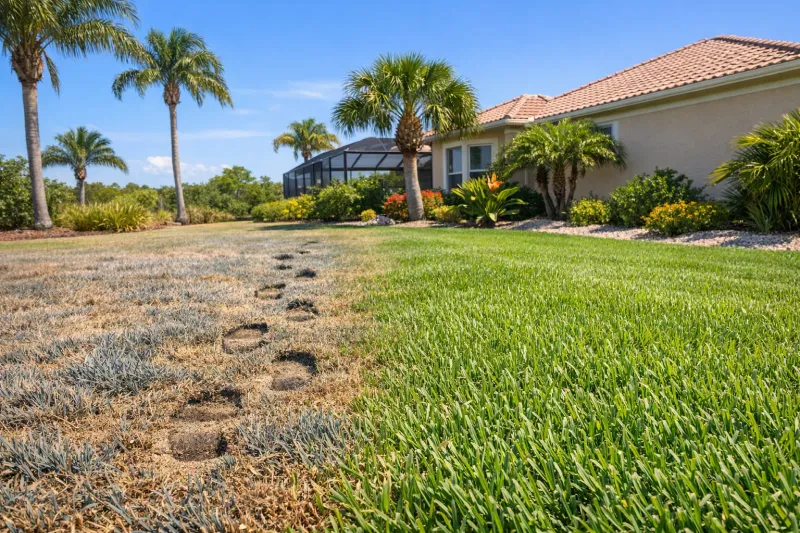
Dry or damp, your soil is not something an ibis can report on. Watering decisions should come from the grass, not from bird behavior.
UF/IFAS gives homeowners clear signs that an established Florida lawn needs water. According to UF/IFAS best management practices for the home lawn, look for blades that fold or curl, a bluish cast to the turf, or footprints that stay pressed into the grass after you walk across it.
When those signs show up, the general guidance is to apply about one-half to three-quarters of an inch of water per application. Treat that as a starting point rather than a rule for every yard.
Local watering restrictions come first, and many Florida counties and cities limit which days and hours you can irrigate. Site conditions matter too.
Sandy soil, shade, slopes, and sprinkler coverage can all change how much water a spot actually receives. If you have patches that wilt first, check your irrigation before blaming the soil or the birds.
Identify pests before considering treatment
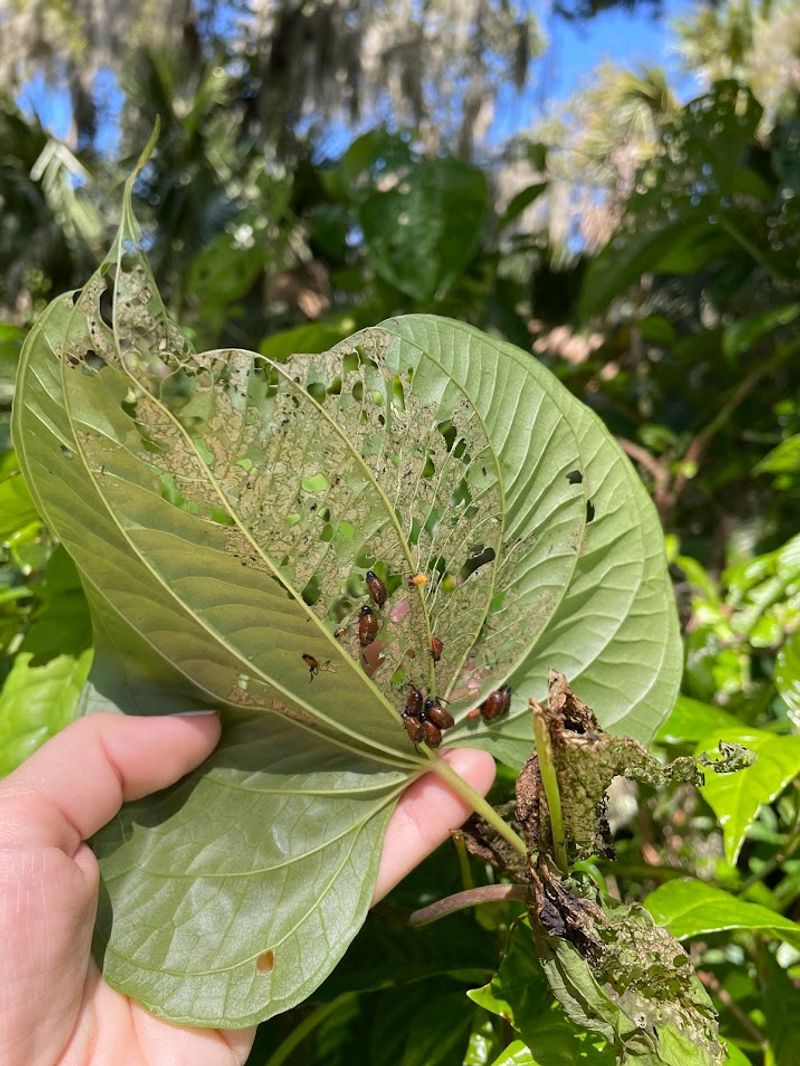
A wading bird on the grass is not a reason to spray. Pesticide applied on a calendar, applied automatically, or spread across the whole lawn because an ibis showed up solves a problem you may not have.
UF/IFAS takes a different approach, laid out in its landscape integrated pest management guidance. The steps are to identify the pest, monitor it, and then weigh whether any intervention is warranted.
Each step can change the answer.
Identification is the part many people skip. The St. Augustinegrass inspection described earlier, from UF/IFAS lawn guidance, helps you tell grubs from chinch bugs and mole crickets, and each has its own checks.
Monitoring then shows whether the problem is spreading or holding steady.
If you suspect a lawn pest, check current UF/IFAS guidance or call your county Extension office before buying anything. They can help confirm what you found and explain your options for your turf and site.
Avoid universal grub thresholds or treatment recipes you find elsewhere, since they may not fit Florida lawns or your grass type.
Enjoy the visit without feeding the ibis
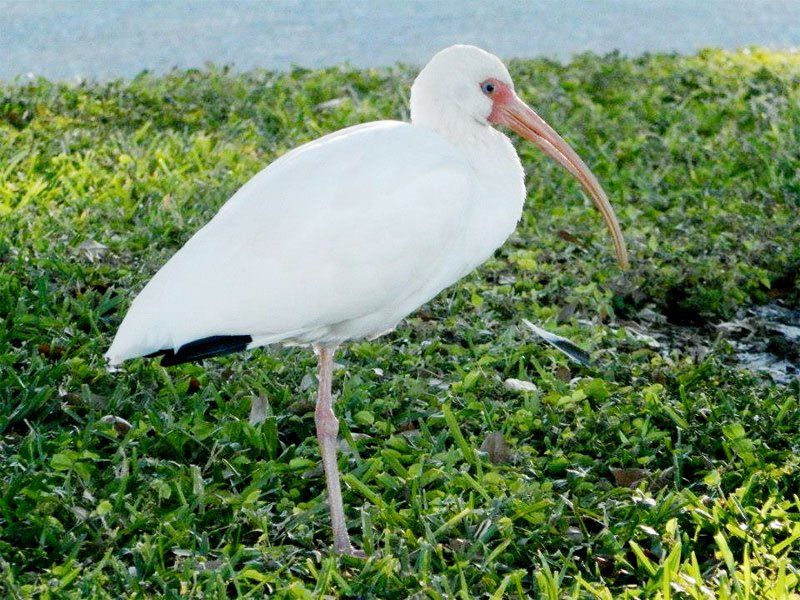
So here is the short version. Enjoy the bird, inspect your lawn only if the turf is damaged, and let the grass and reliable UF/IFAS guidance steer your watering and pest choices.
One more thing: do not feed ibises to bring them back. The Florida Fish and Wildlife Conservation Commission advises against feeding wildlife because it can change natural behavior and lead to nuisance and health problems.
The ibis will do its own shopping, and your lawn will tell you what it needs.