
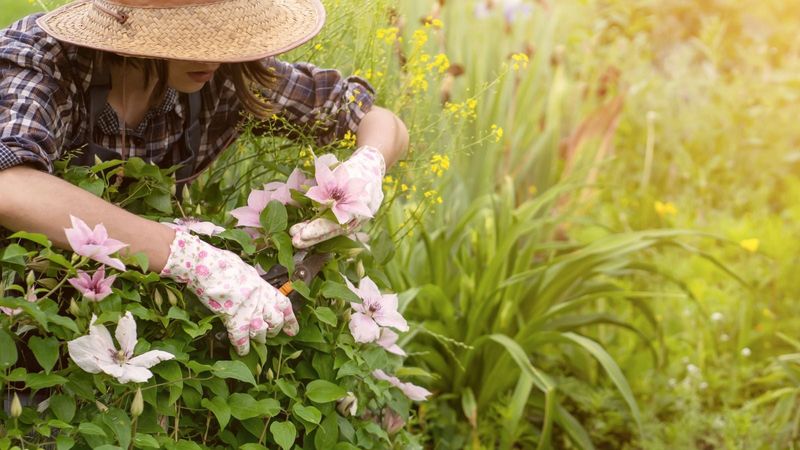
A thin, scraggly clematis makes many gardeners grab the shears in October. But a fall cut can snip off next spring’s flowers on some vines.
The smarter move is to find out which kind of clematis you have first. Once you know that, you can pick a pruning time that helps the vine bloom instead of hurting it.
Identify the pruning group before reaching for shears
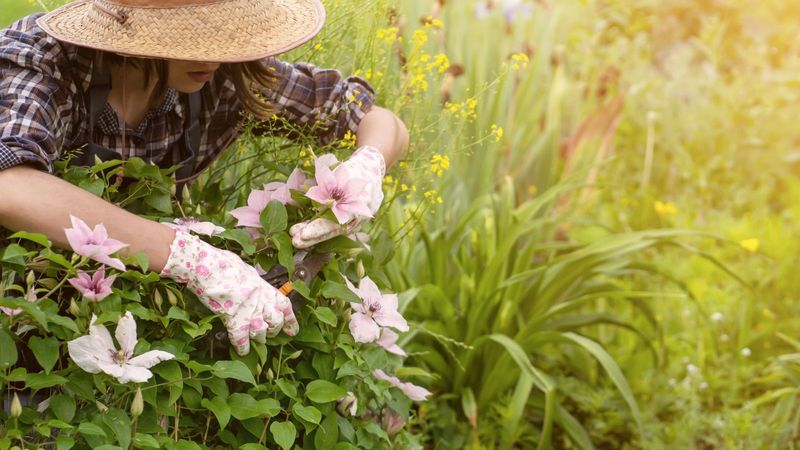
Before any hard cut, figure out which clematis you are growing. Start with the plant tag or the cultivar name, then look up its pruning group.
Clematis are sorted into groups based on when they flower and which stems carry the buds, and that sorting decides when to prune.
If the tag is long gone, do not guess. Clemson Extension advises watching the plant for a year to see when it blooms.
Jot down the dates in a notebook or on your phone. A vine that flowers in spring is treated differently from one that flowers in midsummer through fall.
October is not a universal no-prune month for every clematis. It is a caution for the vines that rely on last season’s stems.
As Illinois Extension explains, timing and severity depend on the group. The next sections walk through each one, so you can match your vine to the right plan.
An October cut can remove early flowers
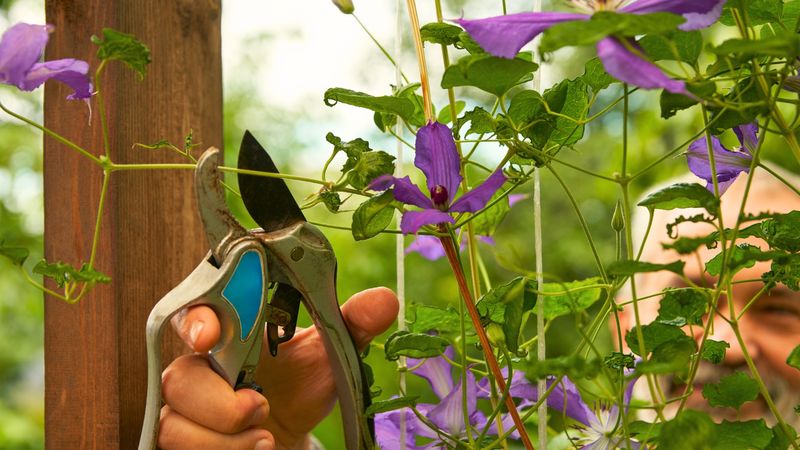
Group 1 clematis, the early spring bloomers, flower on shoots grown the previous season. They usually need little or no routine pruning.
If one gets too big, the RHS pruning guide points to trimming after flowering, not in fall.
Group 2 clematis are the repeat bloomers. Their early flowers grow from last year’s stems, and some set a second round on new growth later.
A hard cut in October removes that old framework, and with it the first flush of flowers. Iowa State Extension makes the same point about cutting off flower-bearing wood.
For Group 2, Clemson recommends light pruning in February or March. Remove dead or weak stems, then cut the rest back to strong buds.
Keeping healthy stems can protect the flowers you already have coming. It does not promise a fuller vine on its own, because growing conditions matter too.
Prune Group 3 clematis in late winter or early spring
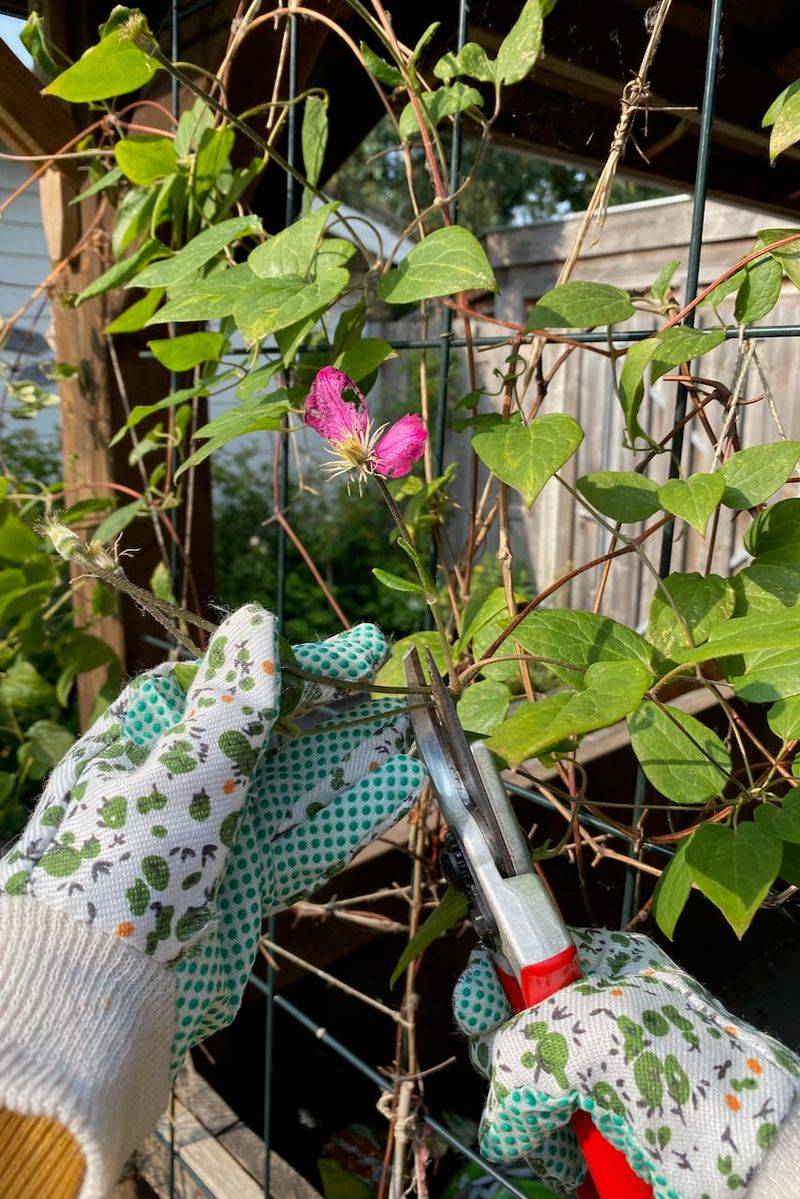
Summer-to-fall bloomers are a different story. Group 3 clematis flower on the current season’s growth, so they do not need last year’s stems to produce blooms.
Many of them do best with a hard cut in late winter or early spring, not as a blanket October job.
Illinois Extension says many of these vines benefit from cutting to about 8 to 12 inches. Treat that as an example, not a rule for every plant.
The RHS likewise recommends hard pruning in February, and in the South you may find your own window shifts a bit with local weather.
Skipping this cut forever has a cost. Left alone, Group 3 vines can turn into a tangle with bare lower stems and flowers perched high above eye level.
Pruning at the right time can encourage vigorous new shoots, but that is a spring task, so leave the shears in the shed this fall.
Newly planted vines have a separate spring task
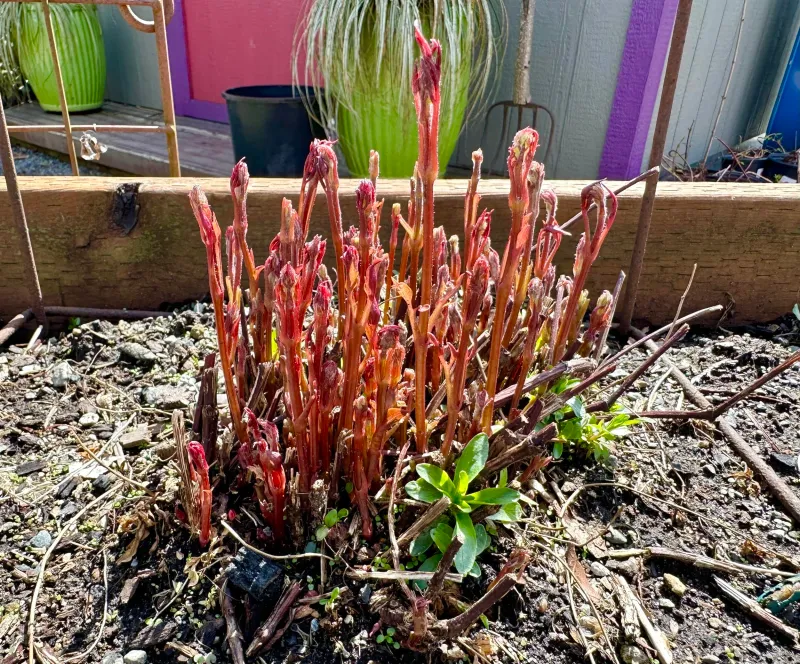
Young plants follow their own rule. Illinois Extension recommends cutting a newly planted clematis back to 12 inches in the spring after planting.
The goal is to encourage branching and a fuller plant.
That advice is narrow on purpose. It applies to a newly planted vine, and it happens in spring.
It is not a fall job, and it does not cover established clematis or ones you cannot identify.
Picture two gardeners in October. One has a clematis planted last month, and the other has a ten-year-old vine with no tag.
Neither should cut hard now. The first waits for next spring, and the second watches for bloom time before choosing a plan.
Support flowering with suitable growing conditions
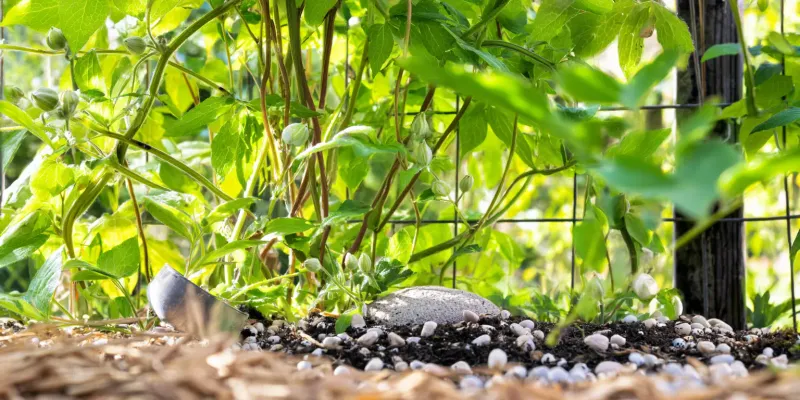
Pruning is only one piece of a flowering vine. Clematis generally do best with sun on the vine, cool roots, well-drained soil, and regular water.
Even a perfectly timed cut will not make up for a spot that misses most of these.
For South Carolina, Clemson advises at least six hours of sun for best flowering. It also suggests afternoon shade in hot conditions and a 2-inch layer of mulch to keep roots cool.
Those numbers come from one region, so adjust them for your own yard.
A Texas gardener with scorching summer afternoons may lean harder on shade and mulch than someone in a milder spot. Watch how your vine responds and tweak from there.
Keep the soil from sitting soggy, and water regularly through dry spells.
One local note for Florida readers: UF/IFAS advises against planting sweet autumn clematis because it is invasive there. Check before you buy any new vine.
Make October a plant-specific decision
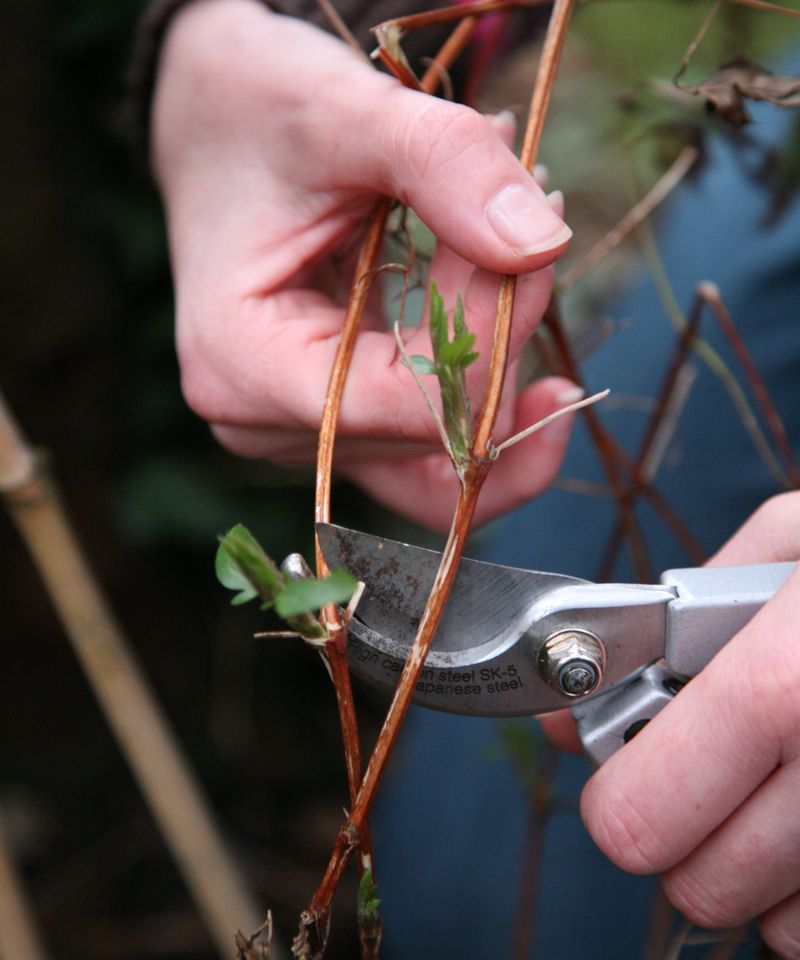
Here is the October plan in short. Identify your clematis from its tag, its cultivar, or a season of watching it bloom.
If it may rely on old stems, hold off on a hard fall cut, and put its pruning on the calendar for the right season. For guidance on groups and timing, Clemson Extension and Illinois Extension are good places to check.
Right timing can protect or support flowering, but no single skipped task guarantees a full vine. Sun, water, and soil still do their share.
A clematis rewards the gardener who learns its name before picking up the shears.